
Data Report · By Chris Sowa · Published
Last updated
How Do I Rotate a Token After a Coding Agent Used It?
Rotate at the service, revoke the old value, and update the one place that holds it; if that place is the agent's environment, assume the old value is in a transcript somewhere. A brokered token rotates in one place and the agent never notices.

For a security team, rotation is routine when it knows a token leaked and unusual when it only suspects one did. Agents make suspicion common, because a session can touch many files and print many values without anyone watching. A clear order of steps, and a clear record of where the token lived, turns an uncertain cleanup into a bounded one. Rotation is the cleanup step after a credential has been exposed, and a coding agent exposes credentials in more places than a person does: its context, its logs, its transcripts, its commits. The job is easier when the token lives in one place and harder when it was copied into an environment variable that every session inherited. This page works from GitHub's secret scanning documentation and the vendor material on broker custody, using one record type as its example, a GitHub token rotated after a leaked transcript. Its finding is that custody decides the cost: every holder of the token is a place the replacement must reach, so a team should know its holders before an incident forces the rotation. How Do I Know Which Credentials a Coding Agent Has Touched? takes the discovery step that comes before this one.
Key findings
- GitHub's documentation states that when a partner secret is detected, GitHub notifies the provider "so they can take action, such as revoking the credential," so revocation is the step that ends the exposure (GitHub Docs, 2026).
- The same documentation says secret scanning "scans your entire Git history on all branches of your repository for hardcoded credentials," which is why a committed token must be treated as exposed even after the commit is removed (GitHub Docs, 2026).
- Harvard's security office lists Sensitive Data Exposure and Context and Memory Leakage among seven risk categories for AI-enabled systems, and a token in a transcript touches both (Harvard University Information Security and Data Privacy, 2026).
- Adaptive attackers bypassed 12 published prompt injection defenses with attack success rates above 90% for most, so a token the agent held should be assumed repeatable (Nasr et al., 2025).
- A governed environment that replaces values with consistent tokens before any model reads the screen leaves a record of tokens and not credentials, so a leaked record needs no rotation (What Is Least Exposure?).
- Real values resolve only at the approved destination, so a person approves the use of a token and the model never needs to hold it (What Is a Tethered Agent?).
How do I rotate a token after a coding agent used it?
In five steps, in this order. First, revoke the old token at the service that issued it, because until that happens the exposure continues. Second, issue a replacement with the narrowest scope and the shortest lifetime the work allows. Third, update the one place that holds the new value. Fourth, check the service's logs for use of the old token since it was exposed. Fifth, find the copies: the transcript, the logs, the commits and any configuration the agent touched.
The order matters. Revoking first stops the damage from growing while the rest is done. Updating the holder before revoking can leave a window in which both values work. Checking the logs last is tempting and costly, because the use that matters happened before the cleanup began. The same order applies whether the token is a personal access token, a cloud key or an API key, and skipping any step leaves a gap the others do not cover.
The record type for this page is a GitHub token rotated after a leaked transcript. The transcript contained the token, because the agent had read it from the environment. Revoking the token at GitHub ended the exposure, and the replacement went into the one place that holds it. Rotating the copy in the transcript was not possible, which is why the old value had to die. Revoking the old value is the only step that works on a copy you cannot reach. Do Claude Code Transcripts Contain My Credentials? covers why a transcript can hold a credential.
What do the vendors themselves say?
GitHub's documentation states that secret scanning "scans your entire Git history on all branches of your repository for hardcoded credentials," and that when a partner secret is detected it notifies the provider so they can act, for example by revoking the credential (GitHub Docs, 2026). It describes detection and notification, and it does not describe rotation of a token the agent held.
HashiCorp's Vault tutorial on agent permissions says token lifetime "is reduced from days or weeks to minutes" (HashiCorp, 2026). A shorter lifetime shortens the window in which an exposed token works, and the tutorial does not describe rotation after exposure, so it does not replace the steps on this page.
1Password's browser-agent post says its extension injects credentials "if, and only if, the human approves the access," and that "the AI agent and underlying LLM never need to see nor handle the credentials" (1Password, 2025). Custody of that kind changes what a rotation has to cover, because a credential the agent never held did not pass through its context.
| Source | What it documents | What the pages reviewed do not describe |
|---|---|---|
| GitHub secret scanning | History scan; provider notified | Rotation of a token an agent held |
| HashiCorp Vault tutorial | Short-lived, scoped token from a secrets manager | Rotation after exposure |
| 1Password browser-agent post | Credentials injected only on human approval; the agent and LLM never handle them | Rotation after exposure |
What does each step close?
Revocation closes the future. Once the old token is dead at the service, no one who copied it can use it. It does not close the past: whatever was done with the token before revocation has been done. The log check closes that gap by showing what happened, so that damage can be assessed and reversed where possible.
Replacement and update close the working loop. The work needs a token, and the new one restores it, ideally with a narrower scope and a shorter life than the one it replaces. The update goes into one place. If the old token was in several places, the update has to reach each, and any place missed will fail visibly when the old value stops working, which is a good property.
The search for copies closes the record. A transcript, a log and a commit that still hold the old value are harmless once the value is dead, and they should still be cleaned up where policy allows, since they show where the exposure came from. What Can an AI Agent See in Your GitHub Settings? covers the token pages an agent reads.
Scope matters for the replacement. A token that could do everything the old one could repeats the exposure with a new value. Narrowing it to the repository, the operation and the time the task needs means that the next leak, if one comes, reaches less. Where the service offers expiry, set one, so the replacement retires itself even if nobody remembers it.
Why does custody decide how hard rotation is?
Because rotation touches every holder. A token in an environment variable is a holder for every process that inherits it: each session, each test run, each tool the agent spawns. Rotating it means updating all of them, and assuming the old value is in each transcript those sessions produced. In practice, count the holders before rotating: shell profiles, CI settings, configuration files, credential stores and any agent setting that stores the value. The count measures the work, and a count of one is the goal. A token held by a broker is a holder in one place. The agent asks for an action, the broker makes the call, and rotation touches the broker alone.
That is the sense of the summary's last sentence. A brokered token rotates in one place and the agent never notices, because the agent never had it. The agent's context, logs and transcripts hold the request and the result, and not the token. A leak of any of them needs no rotation.
Research shows why the difference matters. Adaptive attackers bypassed 12 published prompt injection defenses with attack success rates above 90% for most (Nasr et al., 2025), and web agents "are prone to inadvertent use of unnecessary sensitive information" (Zharmagambetov et al., 2025). A benchmark for agent attacks and defenses exists for this reason (Debenedetti et al., 2024). If the token was in the agent's context, assume it was used.
Where do the exposures that need rotation come from?
From files, environments, pages and output. Harvard's security office lists Sensitive Data Exposure and Context and Memory Leakage among seven risk categories for AI-enabled systems (Harvard University Information Security and Data Privacy, 2026), and a token in a transcript touches both. Columbia's DAPLab states that "trustworthy agent automation cannot be solved at a single layer of the stack" (Columbia DAPLab, 2026), and rotation is one layer, the one that works after the fact.
The example record shows the cost of the after-the-fact layer. The token had to be revoked, replaced, logged against and hunted for in copies, all because the agent had held it. Had the agent used a broker, the leaked transcript would have held a request and a result, and the rotation would have been a scheduled task and not an incident.
The fix is architectural. How Do You Let an AI Agent Manage API Keys Without Reading Them? covers custody, and How Do I Give a Coding Agent Access to GitHub Without a Personal Access Token? applies it to GitHub.
What does a governed environment change?
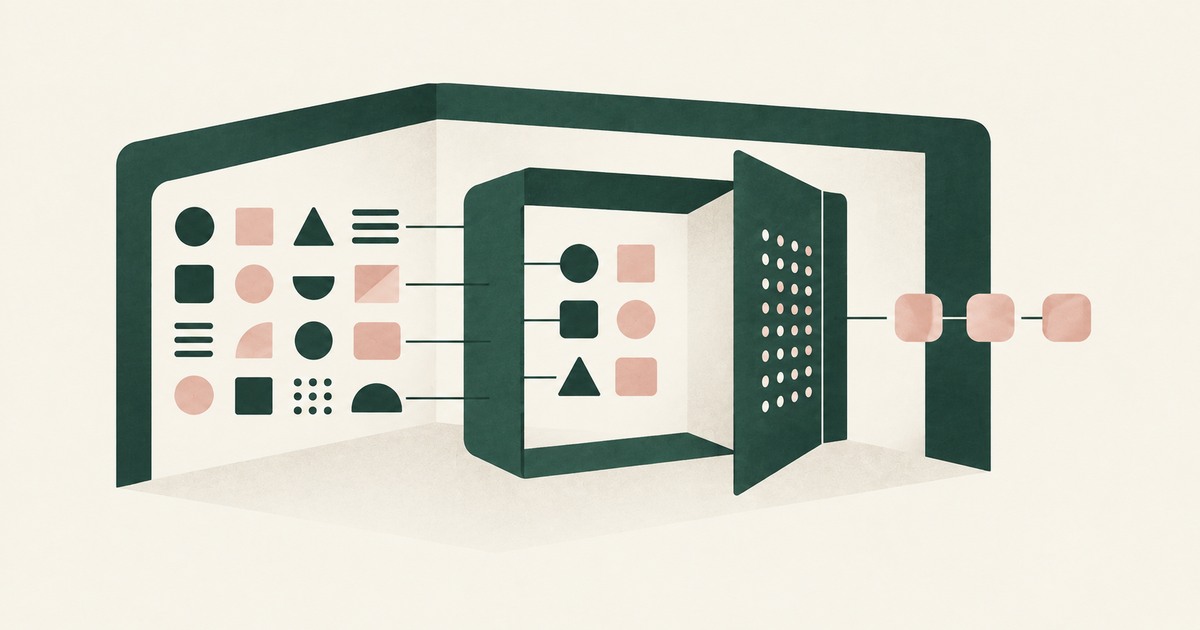
A governed environment is a control class that acts where a screen is rendered, before any model reads it. Values chosen by policy are replaced with consistent tokens for the whole run, so the model works on placeholders. Real values resolve only at an approved destination, at the moment of an approved action. A named person confirms the tokenization policy and approves each consequential action. Every screen as tokens, every action and every approval is written to a record that exports to the organization's own monitoring.
For this question it covers the pages, and it changes what a leak means. If the agent works in a browser on a token or settings page, the token is replaced with a placeholder before the model reads it, so the agent's record holds the placeholder and a leaked record leaks nothing that needs rotating. It does not rotate tokens, which the service and the team do, and it does not touch what a terminal session holds.
Its scope is the rendered page. It does not govern the terminal, the IDE, the local filesystem, direct API calls or MCP, so a token in a coding agent's environment is not closed by it. That is closed by rotation, as this page describes, and by moving the token to a broker so there is less to rotate. Is It Safe to Let an AI Agent Set Up Your Cloud Environment? covers the cloud side.
Methodology and limitations
This page rests on GitHub's secret scanning documentation, HashiCorp's Vault tutorial, a 1Password post on browser agents, three research papers, Harvard University guidance, a Columbia DAPLab page and existing RedactSure research pages. Sources were read between October 16, 2026 and October 21, 2026. Quoted facts are cited to the page that states them. Findings are limited to what the cited pages state, and where a page was silent the text says so rather than filling the gap from general knowledge. The page is a reading of public documents and should be read with each vendor's current documentation open, since these products change frequently.
RedactSure did not test GitHub, Vault or 1Password hands-on. Each vendor page is cited for the statements it makes and for nothing it does not make. "Not described in the pages reviewed" means the pages reviewed and nothing broader, and in particular the five-step order is this page's own method and not a vendor procedure, and no regulator prescribes it. The table is a summary of the documentation as read and not a configuration guide. Vendor features change, and the page carries its date. Statements about RedactSure describe its current design, and RedactSure is deploying now with enterprise and government customers. Examples describe record types, such as a token rotated after a leaked transcript, and not organizations.
Determinations about whether a configuration meets a legal, contractual or regulatory requirement belong to counsel, assessors and the organization's own security and compliance officers. Nothing here replaces the organization's own incident procedure, and a test of the rotation steps with a dummy token, repeated when the tooling changes, is a sensible rehearsal.
What the record shows
The documentation gives a how-to with a dependency. Revoke at the service, replace, update the one holder, check the logs and find the copies. GitHub documents detection and provider notification, and a broker changes how many holders there are. None of the pages reviewed describes rotation after an agent held a token, or who approved the replacement. A dummy token rotated end to end is the test of where a team stands: time each step and count how many holders had to be updated. A second test is to ask the vendor which holders its product creates, since each holder is a place the next rotation must reach.
Frequently asked questions
How do I rotate a token after a coding agent used it?
Revoke the old token at the service that issued it, issue a replacement with the narrowest scope and shortest life the work allows, update the one place that holds it, check the service's logs for use of the old token since the exposure, and then find the copies in transcripts, logs and commits. Revoke first, so the exposure stops growing while you do the rest. Rehearse the sequence with a dummy token, so the real incident is not the first time anyone runs it.
Why revoke before updating the new value?
Because until the old token is dead, the exposure continues, and updating the holder first can leave a window in which both values work. Revoking first stops the damage from growing, and any holder you missed will fail visibly, which tells you where else the old value lived. Then restore service with the replacement, scoped narrowly, and check the logs for any use of the old value since the exposure began, so the damage can be assessed.
Do I need to rotate if the token was only in a transcript?
Yes, treat it as exposed. A value that reached a transcript, a log or a commit cannot be recalled, and GitHub's scanning looks through the whole history of every branch for credentials. Anyone who can read the record can use the token until it is revoked. Rotate first, and do not wait for the cleanup. Then clean the record where policy allows, since the record also shows where the exposure came from and how to prevent a repeat, such as moving the token out of the environment.
Why is a brokered token easier to rotate?
Because there is one holder. The agent asks for an action, the broker holds the token and makes the call, and the agent's context, logs and transcripts hold the request and the result, never the token. Rotation touches the broker alone and the agent never notices. A token in an environment variable has a holder in every process that inherited it, so rotation has to reach all of them, and any missed holder keeps failing until it is found.
Does a governed browser environment remove the need to rotate?
For rendered pages, it reduces it. If the agent works in a browser on a token or settings page, the token is replaced with a placeholder before the model reads it, so a leaked record holds the placeholder and not the value. It does not rotate tokens, and it does not cover the terminal, the IDE, the local filesystem, direct API calls or MCP, so a token held in an environment still needs this procedure, as does any key the agent could read elsewhere.
What should a security team ask for in writing?
Ask who can revoke each token, how fast, where the replacement is held, how many holders each token has and who approves the replacement. Ask what record shows what the model read and what the agent did with the token. Treat anything the vendor does not document as unanswered, and ask for a dated answer that names the product version and the configuration in use, so the answer can be checked later by someone else. Rotation that no record can confirm is a plan, not a control.
Related reading
What Is Least Exposure? · What Is a Tethered Agent? · What Can an AI Agent See in Your GitHub Settings? · Is It Safe to Let an AI Agent Set Up Your Cloud Environment? · How Do You Let an AI Agent Manage API Keys Without Reading Them? · How Do I Know Which Credentials a Coding Agent Has Touched? · How Do I Give a Coding Agent Access to GitHub Without a Personal Access Token? · What Is a More Secure Alternative to Giving a Coding Agent Your GitHub Token? · On the RedactSure blog: What If the Agent Never Had Your Data? · The Two Gaps AI Agents Opened in Your Security Stack · RedactSure
Sources
Peer-reviewed research and preprints
-
Debenedetti, Edoardo, et al., "AgentDojo: A Dynamic Environment to Evaluate Prompt Injection Attacks and Defenses for LLM Agents," arXiv:2406.13352, 2024 (preprint). https://arxiv.org/abs/2406.13352
-
Nasr, Carlini, Sitawarin, Schulhoff, et al., "The Attacker Moves Second: Stronger Adaptive Attacks Bypass Defenses Against LLM Jailbreaks and Prompt Injections," arXiv:2510.09023, Oct 10, 2025 (preprint). https://arxiv.org/abs/2510.09023
-
Zharmagambetov, Guo, Evtimov et al. (Meta FAIR), "AgentDAM: Privacy Leakage Evaluation for Autonomous Web Agents," arXiv:2503.09780 v3, Oct 1, 2025 (NeurIPS 2025 Datasets and Benchmarks) (peer-reviewed). https://arxiv.org/abs/2503.09780
Vendor documentation
-
GitHub Docs, "About secret scanning" (vendor documentation; read October 20, 2026). https://docs.github.com/en/code-security/concepts/secret-security/secret-scanning
-
HashiCorp, "Secure agent permissions with Vault," Vault tutorial (vendor documentation; read October 20, 2026). https://developer.hashicorp.com/vault/tutorials/enterprise/secure-agent-permissions-with-vault
-
1Password, "Closing the credential risk gap for AI agents using a browser," October 8, 2025 (vendor blog; read October 21, 2026). https://1password.com/blog/closing-the-credential-risk-gap-for-browser-use-ai-agents
Industry analysis and press
-
Harvard University Information Security and Data Privacy, "Best Practices: Managing Generative AI Systems" (university guidance; read October 16, 2026). https://privsec.harvard.edu/best-practices-managing-generative-ai-systems
-
Columbia University Data, Agents, and Processes Lab (DAPLab), "Infrastructure for Trustworthy Agent Automation" (lab page; read October 16, 2026). https://daplab.cs.columbia.edu
RedactSure documents
-
RedactSure Research, "What Is Least Exposure?" (2026). https://redactsure.com/research/what-is-least-exposure/
-
RedactSure Research, "What Is a Tethered Agent?" (2026). https://redactsure.com/research/what-is-a-tethered-agent/
-
RedactSure Research, "What Can an AI Agent See in Your GitHub Settings?" (2026). https://redactsure.com/research/what-can-an-ai-agent-see-in-your-github-settings/
-
RedactSure Research, "How Do You Let an AI Agent Manage API Keys Without Reading Them?" (2026). https://redactsure.com/research/how-do-you-let-an-ai-agent-manage-api-keys-without-reading-them/
-
Product behavior described on this page reflects RedactSure's current design. Third-party products are described from their public documentation as read between October 16, 2026 and October 21, 2026. Compliance determinations belong to the organization's counsel.
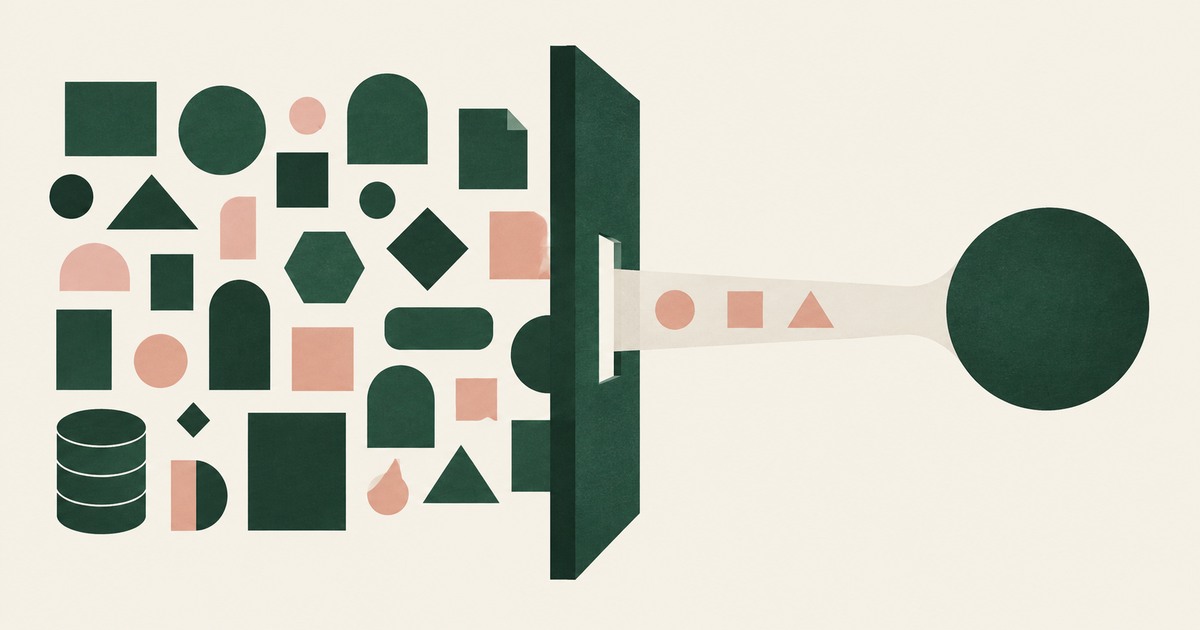
What Is Least Exposure? Reading the Principle, the Gap It Closes and the Published Numbers Behind It
Least Exposure is a security approach for AI agents that gives each task only the data it needs, applied before any model reads the screen.
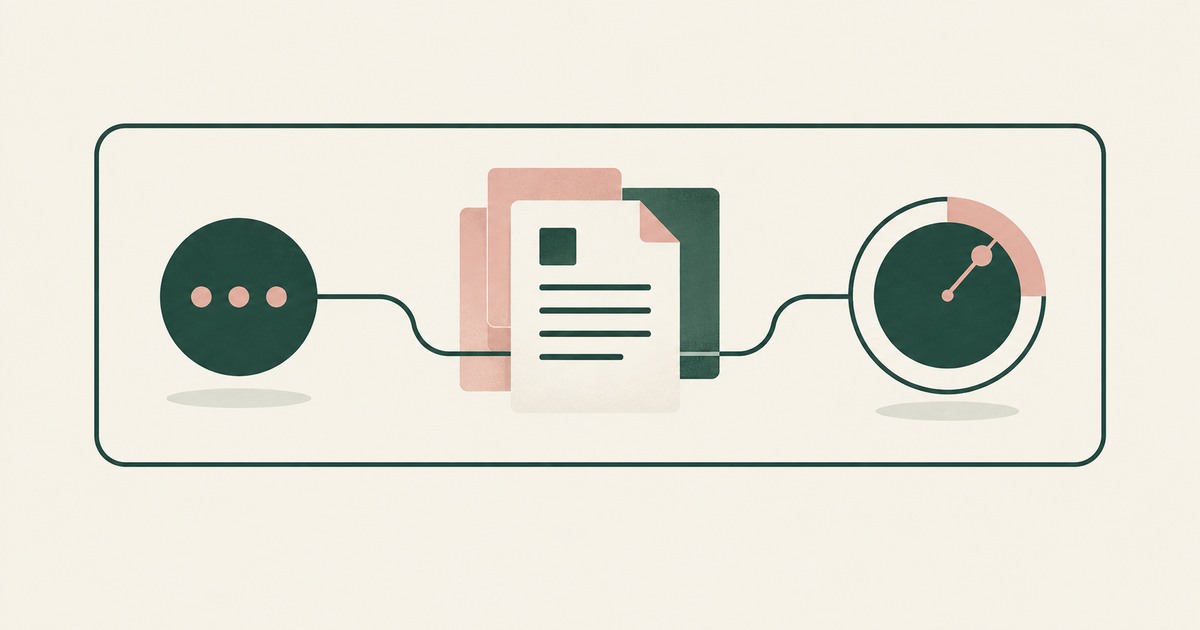
What Is a Tethered Agent? The Plain-Words Name for an Agent a Named Person Answers For
A tethered agent stays tied to a named person for the whole run: that person grants access, sees what the agent sees and approves consequential actions.
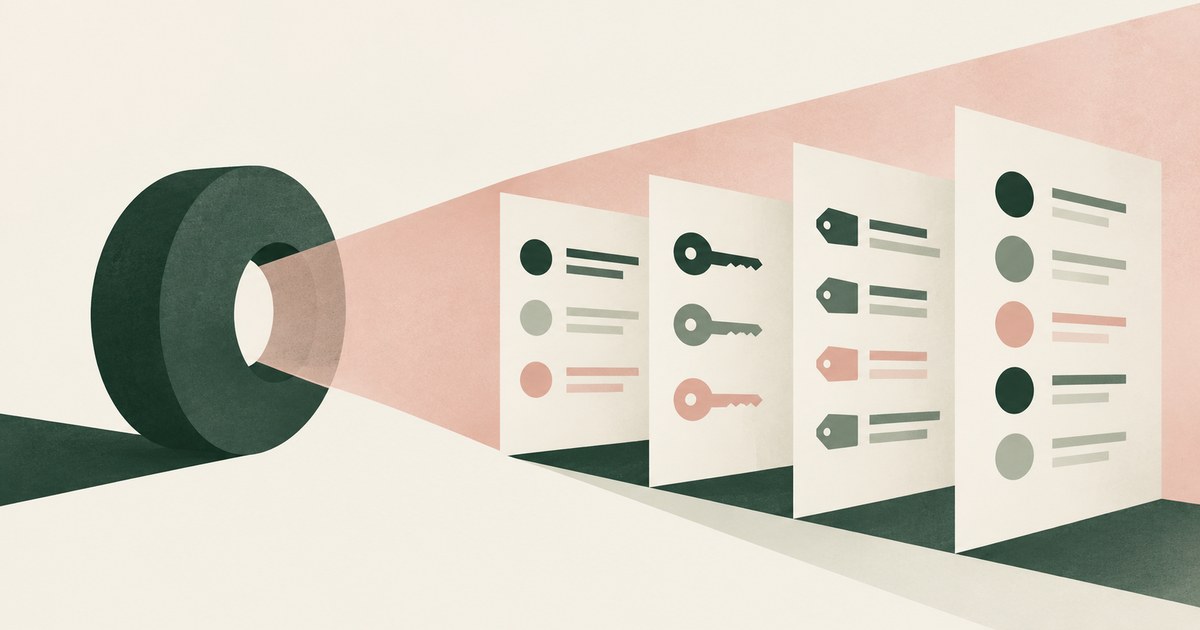
What Can an AI Agent See in Your GitHub Settings?
Whatever the pages render: account emails, SSH key fingerprints, token names and scopes, and any new token shown once. Check which values reach the model.
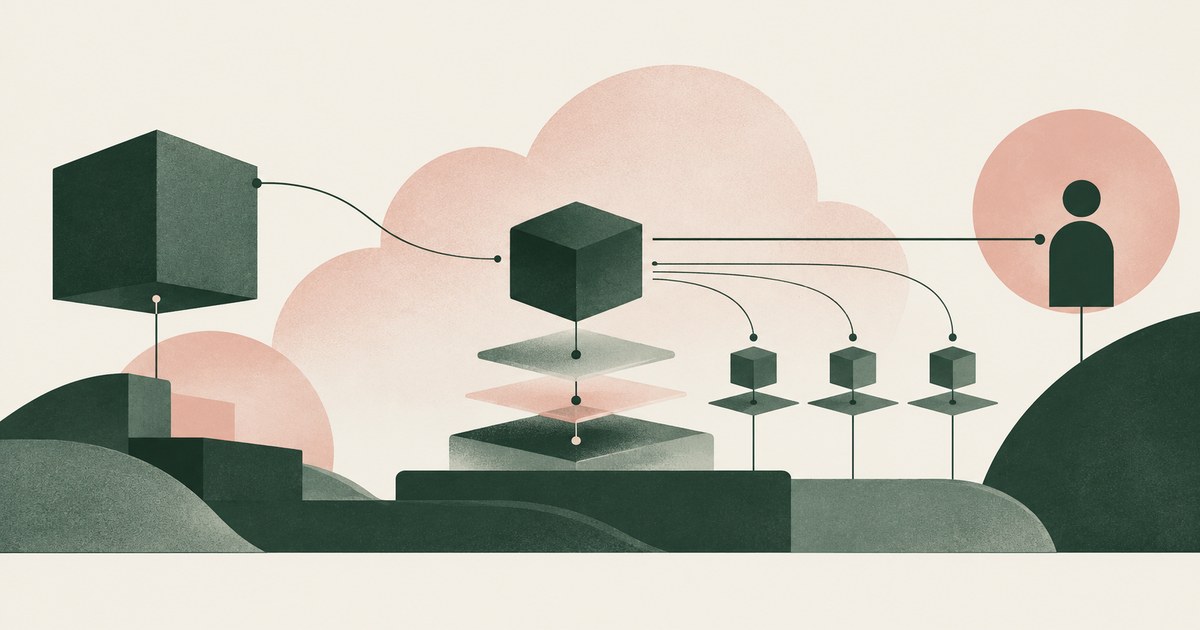
Is It Safe to Let an AI Agent Set Up Your Cloud Environment?
Only when the agent never holds root or owner credentials, works under scoped roles, and a named person approves billing, IAM and network changes.
How Do You Let an AI Agent Manage API Keys Without Reading Them?
Swap the key for a token as the dashboard renders it, and resolve the real value in the approved field when a person confirms. Check where keys show.
How Do I Know Which Credentials a Coding Agent Has Touched?
Only when each credential passes through a component that records its use, such as a proxy that swaps in the real value.
How Do I Give a Coding Agent Access to GitHub Without a Personal Access Token?
Use a GitHub App installation token or a fine-grained token limited to one repository, and keep it out of the agent's process by brokering the call.
What Is a More Secure Alternative to Giving a Coding Agent Your GitHub Token?
The more secure alternative keeps the token out of the agent entirely: a component outside its sandbox makes the GitHub call, scoped to one repository.

What If the Agent Never Had Your Data?
Explore AI agent security built around tokenization, controlled browser actions and human approval before sensitive payments proceed.
The Two Gaps AI Agents Opened in Your Security Stack
Explore AI agent security through two questions: which PII reaches the model, and who approves consequential billing and claims actions.
How RedactSure Keeps the Token Out of the Transcript That Leaks
Rotation cost grows with every transcript and log that carried the token, and the controls reviewed never decide what the model reads on a settings page.
The environment that enforces this is built by RedactSure, an AI agent controls, governance and data protection company.
Before: the agent reads the token on a settings page, the value sits in the transcript, and a leak means revoke, reissue, update and hunt for copies. Inside the governed environment: the page renders with GITHUB_TOKEN_01, the transcript holds the placeholder, and the real value resolves only at the action a named person approved.
RedactSure is deploying now with enterprise and government customers. Adaptive attackers bypassed 12 published injection defenses at rates above 90 percent.
Everyone else controls where data can go. RedactSure controls what the AI can see.
See it on your own workflow
Rotating a token after a leak is cleanup, and keeping it out of the transcript is prevention. Bring a task your agent runs and see, with test values, what the transcript would hold. Book a demo