
Data Report · By Chris Sowa · Published
Last updated
Does GDPR Apply When a Coding Agent Reads Customer Data in a Test Database?
Yes, when the seeded rows identify a person: a test label changes the environment and not the data, so the same obligations follow the copy. Check whether the rows are real customer records and whether the model receives identifiers or tokens.

A seeded test database is a copy, and for the engineering teams that build one from production, a copy keeps the property that made the original sensitive. Teams load it from production because invented rows do not reproduce the duplicate email, the address a customer changed twice or the order that failed halfway, and a coding agent asked to fix a query or verify a migration reads those rows to do its work. What changes in the test environment is the label, not the record: the regulation's obligations attach to data that identifies a person, wherever the copy sits. The answer starts with where the read happens, because a rendered console and a shell command sit on different sides of the line a browser environment draws, then moves to the personal-data test, the vendor pages, the isolation claim, and the cheaper route of never seeding real rows at all. Two of those sections reach a negative answer, which is the useful part: neither a sandbox nor a test label removes the question. What Is Render-Layer Tokenization? covers the mechanism; this page covers the review question a developer has to answer in writing.
Key findings
- A test label describes the environment and not the data: if the seeded rows identify a person, the obligations follow the copy, and the regulation's own minimization principle requires that personal data be "adequate, relevant and limited to what is necessary in relation to the purposes for which they are processed" (GDPR Article 5, 2016).
- A sandbox hardens where code runs and does not change what a record contains, and gVisor's documentation draws the limit itself: "a sandbox is not a substitute for a secure architecture" (gVisor, 2026).
- A mounted test database stays readable inside the sandbox, because "the sandbox sees your actual host files, so changes in either direction are instant with no sync process involved" (Docker, 2026).
- A governed environment replaces the identifiers on a rendered page with consistent tokens before any model reads it, so the model works with CUST_014 and EMAIL_014 and its transcript never holds the customer's name (What Is Render-Layer Tokenization?).
- Real values resolve only at the approved destination at the moment of an approved action, which separates a token in a test run from a production record pasted into a prompt (What Is the PII Wall?).
- Agents that see personal data during a task give some of it up: injections that ask for it reached "average attack success rates (ASR) around 20 percent" (Alizadeh et al., 2025), and agents given privacy-enhancing prompts still "leak sensitive information in 25.68% and 38.69% of cases" (Shao et al., 2024).
Where does the agent actually read the test records?
A governed browser environment covers what an agent reads and does on a rendered page: an admin console, a dashboard, a settings page, a sign-up form. It does not cover the terminal, the IDE, the local filesystem, direct API calls or MCP. The record here is a seeded test database holding 38,000 customer rows, with a query that fails on the accounts table. The suite and the schema sit outside a browser control. The agent then opens the internal admin console to see the rows, which is inside, and that third read is the one that puts a name, an email address and a phone number in front of a model.
The console is where the exposure sits because the console is drawn for a person. A support agent needs the whole record, so the page renders every field, and an agent that loads it receives them too. The enterprise browser, the category sold for this layer, governs what a person copies, pastes, uploads and downloads on a managed device; it does not describe what a model reading a permitted page receives (Enterprise Browser or Render-Layer Tokenization?). The measured case comes from sign-up and checkout forms, where an environmental injection attack on generalist web agents reached a success rate of up to 70 percent in stealing users' specific personal information (Can an AI Agent Sign Up for Developer Services Without Seeing Your Payment Card or Identity?).
| Route | What the agent reads | Covered by a browser environment |
|---|---|---|
| Internal admin console | Every field the customer record renders | Yes, the rendered page |
| Test suite in the terminal | Rows printed by a failing assertion | No |
| Schema or fixture in the tree | Column names and sample values | No |
| Direct database call | The JSON the driver returns | No |
| MCP server for the database | Rows the server passes through | No |
The review question is where the rows entered the context: through the console, where the render layer is a control point, or through the agent's own connection, where the control belongs to the database, the network and the credential.
Does a test label change whether the data is personal data?
Not on its own. A test label describes where a copy sits and who can reach it; the regulation's test asks what the record contains. If a row carries a name, an email address, a phone number or an account number that points to one person, it is personal data in the test database as it was in production. Minimization applies at the copy: the query needs the shape of the records and the distribution that breaks it, not the identities.
What moves a record out of the personal-data category is de-identification, which the guidance treats as a standard with named methods. The HHS guidance on the Privacy Rule describes "two methods that can be used to satisfy the Privacy Rule's de-identification standard," Expert Determination and Safe Harbor (HHS Office for Civil Rights, 2012); NIST's guidance on the same problem carries both halves in its title, techniques and governance (NIST, 2023). The HIPAA standard is not the GDPR test, and the mapping is counsel's work, but the shape travels: a documented method on a dataset someone owns.
A vendor record carries a bank account, a routing number and a tax identifier, and for a sole trader those identify a person; a model matching an invoice against the whole record holds all of it, as Can AI Work NetSuite Payables Without Bank Details? sets out. Google's guidance for Workspace administrators states that the super admin account should be used only when needed, a rule that applies with more force to an agent, as Does an AI Agent Need Your Admin Login to Set Up a SaaS Tool? sets out.
What do the vendors themselves say?
The vendor pages reviewed describe isolation of execution, not the status of the data, which is the scope of the product category.
gVisor's security model states that "no system call is passed through directly to the host" (gVisor, 2026), and the same page says the sandbox relies on the host operating system and the platform for defense against hardware attacks.
Docker's Sandboxes documentation describes the mount plainly: "the sandbox sees your actual host files, so changes in either direction are instant with no sync process involved" (Docker, 2026). It adds that "all outbound TCP traffic from the sandbox routes through a proxy on your host" (Docker, 2026), a control over where bytes go and not over which values the process read.
NVIDIA's OpenShell page separates the two jobs: "openshell-sandbox shares the boundary with the untrusted agent, so it never makes policy decisions" (NVIDIA, 2026). Browser Use documents the convenience that makes the read easy, telling users to "connect to your existing Chrome browser to preserve login sessions, cookies, and extensions for authenticated tasks" (Browser Use, 2026); an agent in that mode reads the console with the developer's logged-in sessions.
| Dimension | What the pages reviewed state | What a buyer should verify |
|---|---|---|
| Execution boundary | gVisor: no system call passed through to the host | Which host paths and devices the sandbox can reach |
| Mounted data | Docker: the sandbox sees actual host files, with instant two-way changes | Whether the seeded database is mounted read-only |
| Policy decision | NVIDIA: the sandbox shares the agent's boundary and makes no policy decisions | Who decides which fields a model may see |
| Identity | Browser Use inherits the developer's sessions | Whose permissions the read lands in the provider's log |
| Data status | Not addressed | Whether the rows still identify a person |
What happens to the legal status of a copy of production data placed inside a sandbox is not described in the pages reviewed, so a buyer should treat it as an open item in a vendor review.
Does a sandbox or a test environment settle the question?
No. A sandbox is a boundary around execution: gVisor intercepts system calls rather than passing them to the host, and Docker routes outbound traffic through a proxy; neither changes what a row contains. The rows in a seeded test database are the rows someone copied from production, refreshed on the team's schedule, and the copy keeps the identifiers because they are what made the failing case worth reproducing.
The isolation has a documented dependency. gVisor's security model states that it "relies on the host operating system and the platform for defense against hardware-based attacks" (gVisor, 2026), so the sandbox is one layer in a stack rather than a property of the data.
What isolation does change is the machines that hold the copy. A test database usually lives on a build agent or a developer's laptop, where packages come from public registries and the agent has network access. Sonatype's count of malicious packages reports that "56% of the malware discovered in Q1 2025 was related to data exfiltration," a "dramatic increase from 26% in Q4 2024" (Sonatype, 2025).
A second path out is not the database. An agent's tool configuration holds the connection string that reaches the test database, and those files travel through repositories and chat. GitGuardian's count, as the research on agent key handling reports it, found "28,649,024 new secrets exposed in public GitHub commits across 2025," and "24,008 unique secrets exposed in MCP configuration files" (How Do You Let an AI Agent Manage API Keys Without Reading Them?).
What takes the question off the table?
Two things do, and neither needs an answer to the legal question.
The first is to stop seeding rows that identify people. Synthetic records with invented names, addresses on reserved example domains and account numbers that point at nobody carry no person, so there is nothing for the obligations to attach to, and the failing query still fails if the fixture reproduces the shape that breaks it.
The second is to let the model read tokens. Substitution before the render layer keeps the structure of the record and removes the identifier, and the research record on that trade is favorable: swapping identifiers for consistent pseudonyms and restoring them afterward "reduces semantic utility errors by a factor of 5 compared to baseline techniques" (Serenari and Lee, 2025). A query written against CUST_014 behaves the same as one written against the real value.
The routes differ in what they leave open. Synthetic data removes the question at the source. Tokens keep the real values in a store the model does not read, which matters when the agent writes back to the test record. That the choice arrives at scale is the argument of What Is the PII Wall?: McKinsey's research finds 62% of organizations at least experimenting with AI agents and 23% scaling them anywhere, and the gap between those numbers is where the wall stands.
What does a governed environment change?
A governed environment is a control class that acts at the point a screen is rendered. Values chosen by policy are replaced with consistent tokens before any model reads it, so the model works with the same CUST_014 and EMAIL_014 for the whole run. Real values resolve only at an approved destination, at the moment of an approved action. A named person confirms the tokenization policy and approves each consequential action, and writing a corrected value back to a customer record is one. Every screen as tokens, every action and every approval is written to a record that exports to the organization's own monitoring.
For this question the change is narrow and real. The console page that made the exposure easy no longer puts a name, an email address or a phone number into the model's context; it puts placeholders there, and a query written against a placeholder runs the same. The record matters as much as the substitution, because a review of a test-data read asks three things: what the model received, what it did with it, and who approved the action that used it. A governed environment answers all three from the same artifact.
The limit belongs in the same breath. The environment acts on the rendered page and stops there: a terminal session, an IDE, a local file, a direct API call or an MCP server is outside it. It also does not decide the legal question. A token that the environment can resolve is pseudonymous data for the organization holding the mapping, and whether that counts as personal data, and who is the controller or processor of the model's copy, remain determinations for counsel.
Methodology and limitations
This page rests on the text of the regulation's minimization principle as published on gdpr-info.eu, de-identification guidance from HHS and NIST, three research papers on personal data leakage and pseudonym replacement, vendor documentation from four sandbox and browser vendors, and existing RedactSure research pages. Vendor pages were read as of October 20, 2026, and each Sources line carries the date for its page. Quoted facts appear in quotation marks and are cited to the page that states them, and figures from those papers are given as their recorded facts state them.
RedactSure did not test any of the named products hands-on. Sandbox and browser behavior comes from vendor documentation, and where a page is silent the text says so; "not described in the pages reviewed" means those pages and no others. Vendor features change, and the page carries its date, so a release after that date is unreviewed until the checks above are repeated. Statements about RedactSure describe its current design, and RedactSure is deploying now with enterprise and government customers. The example describes a record type, a seeded test database read through an internal admin console, and not an organization.
The reading applied here is that a model reading customer rows forms part of the processing the organization carries out, and that the model provider's role is set by its contract rather than by the page; the statutory definitions and that allocation were not among the pages reviewed, and this page does not settle them. Whether a particular test database falls within the GDPR, and which de-identification standard satisfies it, are determinations for counsel, assessors and the organization's own security and compliance officers.
What the record shows
On this page's question the record points one way. A seeded copy of production is personal data while it identifies a person, and the label on the environment does not change that; the minimization principle applies to the copy as it applies to the original. The sandbox pages describe where code runs and are explicit that they do not make policy decisions, and the research record says agents leak personal data they have seen at rates measured in double digits. That does not settle the controller question, which is counsel's, but it settles the engineering one. The cheapest route is to seed rows that identify nobody; the next is to let the model read tokens while the real values stay at the destination. The practical test takes one agent and one task: open the console page it reads and write down every field the model received that could identify a person.
Frequently asked questions
Does GDPR apply when a coding agent reads customer data in a test database?
Yes, when the rows identify a person. The label on the environment describes where the copy sits, not what the record contains, and the regulation's obligations attach to personal data wherever an organization processes it. A seeded copy of production carries names, email addresses and account numbers unless someone removes them, and a model reading that copy receives what the page renders. The answer changes only when the data stops being personal data, through synthetic fixtures or a documented de-identification method.
Does a sandbox make a test database out of scope?
No. A sandbox bounds where code runs and which calls it can make. gVisor's documentation states that a sandbox is not a substitute for a secure architecture, and Docker's states that the sandbox sees the host files it mounts. Neither statement touches whether a row identifies a person. What a sandbox does change is the set of machines that hold a copy and the routes out of them, which is a security question that sits beside the legal one.
What makes a test database fall outside GDPR's scope?
Rows that identify nobody. If names are invented, email addresses sit on reserved example domains and account numbers map to no person, the records are not personal data and the obligations that attach to personal data have nothing to attach to. De-identification guidance treats that as a standard with named methods rather than a checkbox, so the change needs an owner and a record of what was altered. Keeping a mapping table back to the original rows brings the question back.
Is synthetic test data as good as a copy of production?
Not always, and the difference is the reason teams copy production. A synthetic fixture reproduces the shape of a record and the distribution a query trips over; it does not reproduce the odd value a real customer typed. The trade is fixture maintenance against answering a data-protection review each time the copy refreshes. A middle route keeps the structure and replaces the identifiers with consistent tokens that resolve at the destination.
Who is the processor when the model is hosted by a vendor?
That is a contract question for counsel, and it turns on who decides why the data is processed and who acts on those instructions. What an engineering team can establish is the factual part: which vendor's infrastructure received the rows, in what form, for how long and under which agreement. A governed environment narrows that part, because the model receives tokens rather than records, and the exported record shows what was sent.
What should a team record about a test-data read?
The fields the model received, the route the rows took into the context, the person who approved the read or the action that followed, and the date. A transcript showing a page of customer rows is evidence of a disclosure; one showing tokens is evidence of a control. Keep the fixture definition with it, so the next review can tell whether the same identifiers were in the copy.
Related reading
What Is Render-Layer Tokenization? · What Is the PII Wall? · Enterprise Browser or Render-Layer Tokenization? · How Do You Let an AI Agent Manage API Keys Without Reading Them? · Does an AI Agent Need Your Admin Login to Set Up a SaaS Tool? · Can AI Work NetSuite Payables Without Bank Details? · Can an AI Agent Sign Up for Developer Services Without Seeing Your Payment Card or Identity? · What Does Least Privilege Look Like for Coding Agents? · Which SOC 2 Controls Apply to Coding Agents That Hold Credentials? · How Do I Know Which Credentials a Coding Agent Used? · On the RedactSure blog: Your AI Doesn't Need to Know Who You Are · The Two Room Thought Experiment · RedactSure
Sources
Peer-reviewed research and preprints
-
Alizadeh, Samei, Stetsenko, Gilardi (University of Zurich), "Simple Prompt Injection Attacks Can Leak Personal Data Observed by LLM Agents During Task Execution," arXiv:2506.01055, June 1, 2025 (preprint). https://arxiv.org/abs/2506.01055
-
Serenari and Lee, "Semantically-Aware LLM Agent to Enhance Privacy in Conversational AI Services," arXiv:2510.27016, October 30, 2025 (preprint). https://arxiv.org/abs/2510.27016
-
Shao (Stanford), Li and Shi (Northeastern), Liu (Harvard), Yang (Stanford), "PrivacyLens: Evaluating Privacy Norm Awareness of Language Models in Action," NeurIPS 2024 Datasets and Benchmarks, arXiv:2409.00138 (peer-reviewed). https://arxiv.org/pdf/2409.00138
Vendor documentation
-
gVisor, "Security Model," gVisor documentation (vendor documentation; read October 20, 2026). https://gvisor.dev/docs/architecture_guide/security/
-
Docker, "Architecture," Docker Sandboxes documentation (vendor documentation; read October 20, 2026). https://docs.docker.com/ai/sandboxes/architecture.md
-
NVIDIA, "Architecture," NVIDIA OpenShell docs v0.1.1 (vendor documentation; read October 20, 2026). https://docs.nvidia.com/openshell/v0.1.1/about/architecture.md
-
Browser Use, "Real Browser," open-source documentation (vendor documentation; read October 20, 2026). https://docs.browser-use.com/open-source/customize/browser/real-browser.md
Regulation, standards and official guidance
-
GDPR Article 5(1)(c), data minimisation, Regulation (EU) 2016/679 (regulation; gdpr-info.eu text). https://gdpr-info.eu/art-5-gdpr/
-
HHS Office for Civil Rights, "Guidance Regarding Methods for De-identification of Protected Health Information," 2012, page updated March 20, 2026 (regulator guidance). https://www.hhs.gov/hipaa/for-professionals/special-topics/de-identification
-
NIST, "De-Identifying Government Datasets: Techniques and Governance," SP 800-188 (2023; official guidance). https://csrc.nist.gov/pubs/sp/800/188/final
Industry analysis and press
- Sonatype, "Nearly 18,000 Malicious Packages Discovered in Q1," April 2, 2025 (vendor research). https://www.sonatype.com/en/press-releases/18000-new-malicious-packages-discovered-in-q1
RedactSure documents
-
RedactSure Research, "What Is Render-Layer Tokenization?" (2026). https://redactsure.com/research/what-is-render-layer-tokenization/
-
RedactSure Research, "What Is the PII Wall?" (2026). https://redactsure.com/research/what-is-the-pii-wall/
-
Product behavior described on this page reflects RedactSure's current design. Third-party products are described from their public documentation as read on October 20, 2026. Compliance determinations belong to the organization's counsel.

What Is Render-Layer Tokenization? The Control at the Layer Where the Agent Actually Reads
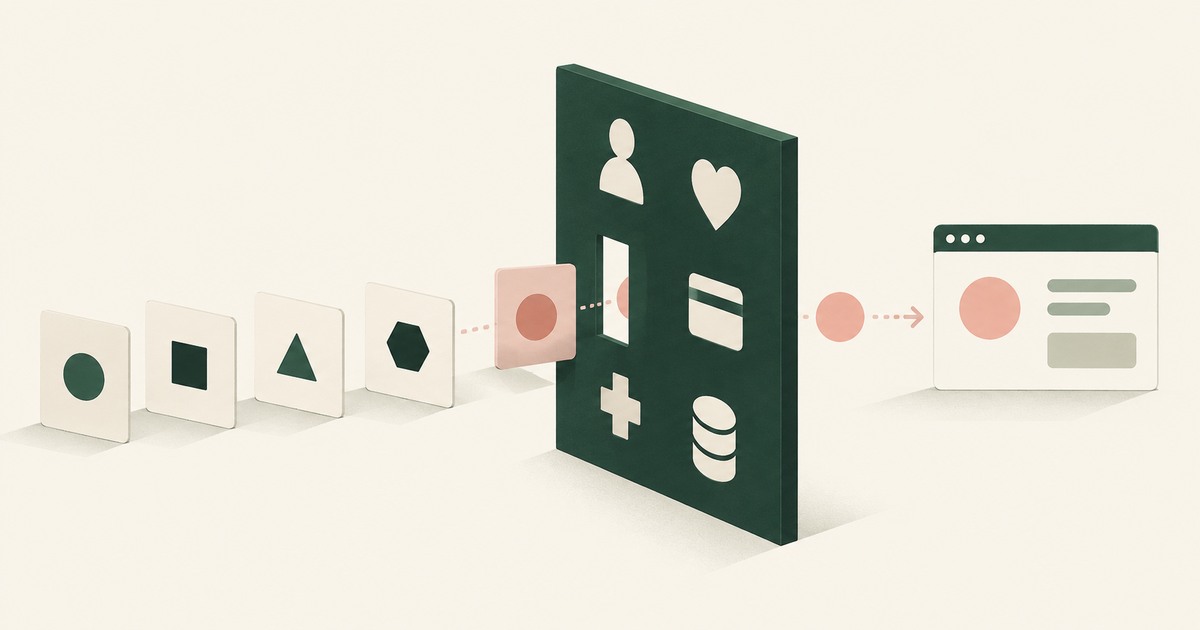
Render-layer tokenization swaps sensitive values for consistent stand-in tokens such as SSN_001 as the screen renders, before any AI model reads it.
What Is the PII Wall? Where AI Programs Stop, and the Published Numbers Behind the Pattern
The PII Wall is the point where an AI program's most valuable workflow needs personal, financial, health or student records a model may not see, and stops.

Enterprise Browser vs. Render-Layer Tokenization: Two Different Answers to AI Data Exposure
They answer different questions. Enterprise browsers control where human data can go; render-layer tokenization replaces values before the model reads.
How Do You Let an AI Agent Manage API Keys Without Reading Them?
Swap the key for a token as the dashboard renders it, and resolve the real value in the approved field when a person confirms. Check where keys show.

Does an AI Agent Need Your Admin Login to Set Up a SaaS Tool?
No. The agent should run under a delegated session with a scoped admin role, never the administrator's password. Check which identity the session runs as.

Can an AI Agent Work Accounts Payable in NetSuite Without Exposing Vendor Bank Details? Yes, Through the Three-Way Match, With Payment Approval Kept by a Person
Yes. An AI agent can run the NetSuite three-way match and queue payment for the controller while reading placeholders for vendor tax IDs and bank accounts.
Can an AI Agent Sign Up for Developer Services Without Seeing Your Payment Card or Identity?
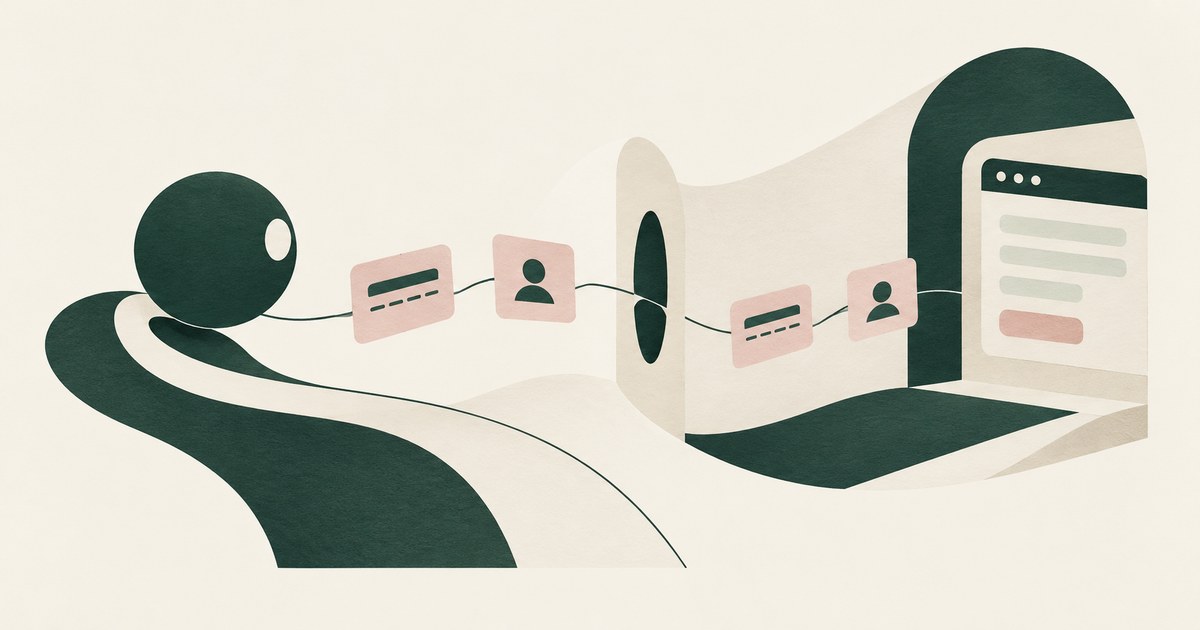
Yes, if card and identity fields reach the agent as tokens and real values are inserted only at checkout after approval. Check how the payment step works.
What Does Least Privilege Look Like for Coding Agents?
A grant written before the task starts: one task, one scope, a credential the agent never holds, and a named approval for anything consequential.
Which SOC 2 Controls Apply to Coding Agents That Hold Credentials?
An agent holding a credential is tested against the same trust services criteria as any service account: logical access, change management and monitoring.
How Do I Know Which Credentials a Coding Agent Used?
Only a broker that logs each release can tell you; an agent holding credentials in its own environment leaves you grepping transcripts.
Your AI Doesn't Need to Know Who You Are
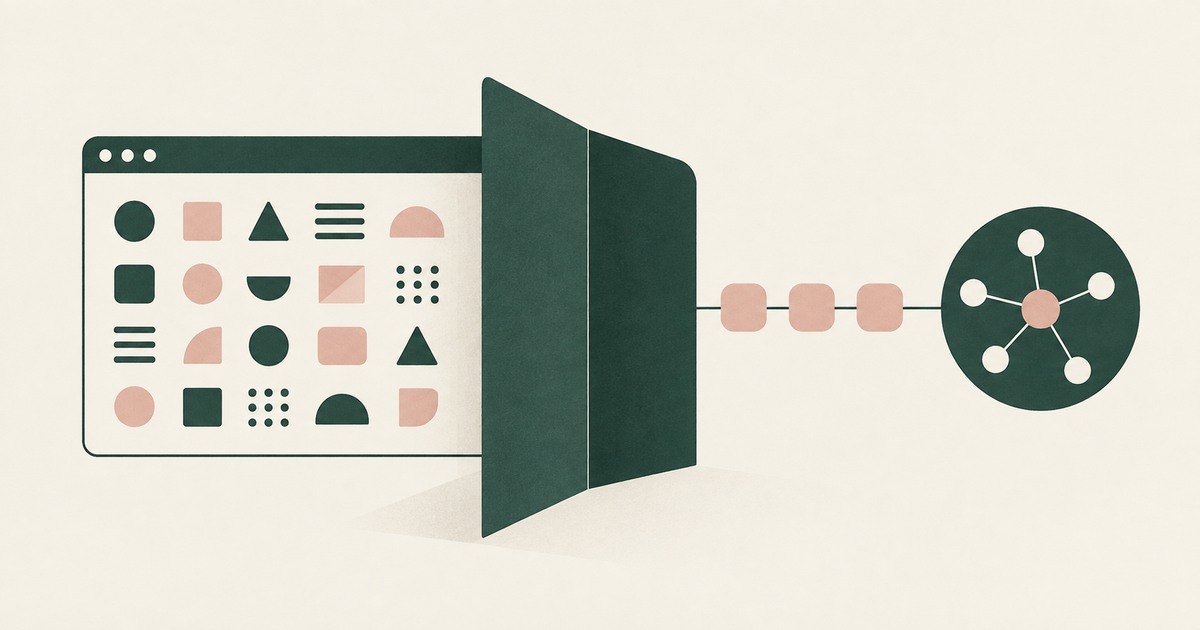
Explore why AI agents can perform sensitive workflows using tokenization while names, account details and other PII stay out of view.
The Two Room Thought Experiment
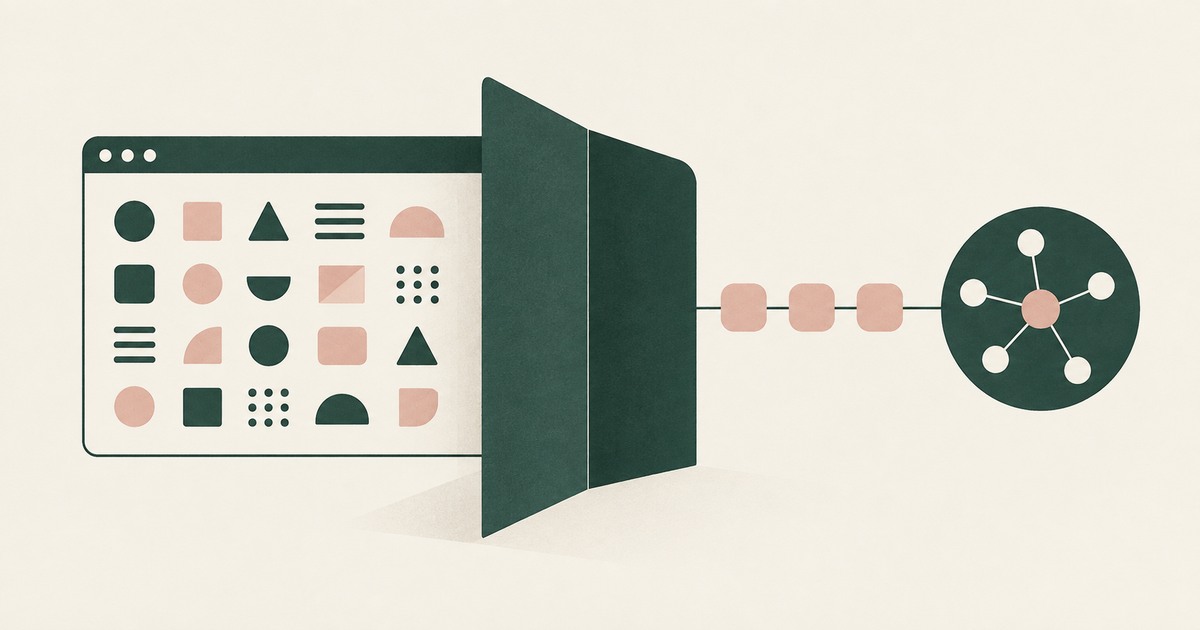
Explore a thought experiment about AI agents, tokenization and how useful reasoning can be separated from access to sensitive PII.
How RedactSure Keeps Customer Rows Out of a Test Agent's Context
Each approach reviewed governs where code runs, which files open or whose permissions apply, and none of them decides what a page shows the model.
The environment that enforces this is built by RedactSure, an AI agent controls, governance and data protection company.
Before: the seeded database reaches the console as 25 customer rows with names and email addresses, and the model reads the page and the query it drafts. Inside: the console renders CUST_014 and the real address resolves only into the record an engineer approved.
RedactSure is deploying now with enterprise and government customers. The study cited above measured "average attack success rates (ASR) around 20 percent" for injections that ask an agent to leak personal data it saw.
Everyone else controls where data can go. RedactSure controls what the AI can see.
See it on your own workflow
A coding agent reading customer rows is processing personal data, and your privacy team will ask which rows. Bring a test database task and see, with test values, what the model reads in the console. Book a demo