
Data Report · By Chris Sowa · Published
Last updated
How Do I Give a Coding Agent a Short-Lived Credential?
Use the platform's temporary credential, such as an STS token, a short-lived Vault token or a fine-grained token with an expiry, and hand it to an adapter. Short-lived limits the damage window; custody limits the damage.

Short-lived credentials are the standard advice for non-human identities, and most cloud platforms can issue them. The advice leaves open who holds the credential during its lifetime and what it can do in that time. A token that lasts an hour still gives an hour of full access to whoever has it, which is why lifetime is only one of the controls. A credential that expires in an hour is a better thing to lose than one that never does, and every major platform offers some form of it. What an expiry does not do is decide who holds the credential while it is valid. This page works from HashiCorp's Vault tutorial for agent permissions and from the research on agent design, using one record type as its example, a 60-minute token that leaked at minute two. The finding is that a short lifetime limits how long a leaked token works, while an adapter outside the agent decides who holds it, and neither records what the model read on a rendered page. How Do I Scope a Cloud Key to a Single Agent Task? takes up the scope half of the same problem. The vendor pages cited here were read on October 20, 2026, and each section says which statements come from them.
Key findings
- HashiCorp's Vault tutorial on agent permissions, as reviewed, shows a read-only, repo-only, short-lived delegated token that a wrapper script exports into the agent's environment as VAULT_TOKEN (HashiCorp, 2026).
- A short lifetime limits how long a leaked credential works, and it does not change what the credential can do during that time or who can read it (HashiCorp, 2026).
- Coder's documentation says agents should not hold "full permissions on behalf of a user" and should run under "separate identities with limited scope" (Coder, 2026).
- Researchers describe "principled design patterns for building AI agents with provable resistance to prompt injection," which keep the model away from the values it should not handle (Beurer-Kellner et al., 2025).
- A governed environment that replaces values with consistent tokens before any model reads the screen keeps a credential out of the context on rendered pages, so an expiry never has to be tested (What Is Least Exposure?).
- Real values resolve only at the approved destination, so a person approves the use of a credential and the model never needs to hold it (What Is a Tethered Agent?).
How do I give a coding agent a short-lived credential?
Ask the platform that issues the credential for a temporary one. On AWS that is a token from the Security Token Service, issued for a limited time and, where the task allows, narrowed with a session policy. In Vault it is a delegated token with a lifetime set in minutes or hours. On GitHub it is a fine-grained token with an expiry date. Each replaces a key that never expires with one that does.
Then decide who holds it. The simplest arrangement hands the token to the agent as an environment variable or a file. The better arrangement hands it to an adapter, a small program that makes the call on the agent's behalf, so the agent asks for an action and never sees the credential. The tutorial from HashiCorp shows the first arrangement, with a wrapper script that exports the short-lived token into the agent's environment, and it illustrates the gap between a short lifetime and custody (HashiCorp, 2026).
The record type for this page is a 60-minute token that leaked at minute two. The expiry limited the exposure to the 58 minutes that remained. It did not stop whoever received the token from using it in that time. Can a Coding Agent Read My AWS Credentials File? covers the long-lived version of the same credential.
What do the vendors themselves say?
HashiCorp's tutorial on securing agent permissions with Vault, as reviewed, shows a short-lived delegated token that a wrapper script exports as VAULT_TOKEN before launching the agent (HashiCorp, 2026). It documents the expiry and not an approver for the use of the token, and the page does not say whether the model can read it.
The Coder documentation states that "LLMs and agents can be dangerous if not run with proper boundaries" and calls for separate identities with limited scope when agents work autonomously (Coder, 2026). It governs the identity an agent runs as and does not describe credential lifetimes.
AWS's Well-Architected guidance for agents says "audit logs attribute every action unambiguously to either an agent or a human actor" (AWS, AGENTSEC03-BP02, 2026). It states a design goal for attribution and does not describe a credential lifetime.
| Source | What it documents | What the pages reviewed do not describe |
|---|---|---|
| HashiCorp Vault tutorial | Short-lived token; passed to the agent in its environment | An approver; what the model read |
| Coder best practices | Separate identities with limited scope | Credential lifetimes |
| AWS agentic AI lens | Attribution of agent and human actions | A credential lifetime |
What does a short lifetime change, and what does it leave open?
It changes the window. A credential that lives for an hour is worth less to a thief than one that lives for a year, and it needs no rotation because it rotates itself. A narrow session policy shrinks what can be done in the window. Together they limit the damage to a bounded time and a bounded scope.
It leaves open what happens inside the window. While the token is valid, whoever holds it can use it, and the agent holding it in its context has put it where it can be repeated, logged or sent to a tool. A prompt injection that runs in the first minutes of the hour can use the token before it expires. An expiry that is short on paper may be long enough for the harm.
| Property | Changed by a short lifetime | Note |
|---|---|---|
| Time the credential works after a leak | Yes | Bounded by the lifetime |
| Who can read it while valid | No | Custody decides |
| What it can do while valid | Only with a narrow scope | Add a session policy |
The practical reading is to combine the three controls: a short lifetime, a narrow scope and custody outside the agent. How Do You Let an AI Agent Manage API Keys Without Reading Them? covers the custody side, and How Do I Give a Coding Agent Access to GitHub Without a Personal Access Token? applies it to GitHub.
Why does the adapter matter more than the expiry?
Because it changes who holds the credential. An agent that calls an adapter, and receives only the result, never has the token in its context. The credential lives in the adapter or the credential service. A leak of the agent's context then leaks no credential, and the expiry becomes a second line and not the only one.
Design research points the same way. Researchers propose "principled design patterns for building AI agents with provable resistance to prompt injection" (Beurer-Kellner et al., 2025), patterns that limit what untrusted content can influence. Strong results on four public benchmarks were reported for a modular defense at the agent-tool interface (Bhagwatkar et al., 2026), a sign that the route between tool and model is where a control belongs. Indirect prompt injection was named as an attack on applications that retrieve content, where the attacker never talks to the user (Greshake et al., 2023).
OWASP's list for agentic applications names identity and privilege abuse among the risks for autonomous systems (OWASP GenAI Security Project, 2025). A credential in the agent's hands is the shortest route to that risk. An expiry shortens how long that route stays open; an adapter removes it.
Where does the exposure show up in practice?
In agents given more reach than the task needed. The incidents Columbia's DAPLab collected include an agent that deleted a production database, one that rebuilt a production environment and one that exfiltrated data (Columbia DAPLab, 2026). The list concerns reach, whatever the credential's lifetime, and it is cited for the pattern that damage follows from how far an agent can reach.
Harvard's security office lists Sensitive Data Exposure and Privilege and Identity Misuse among seven risk categories for AI-enabled systems (Harvard University Information Security and Data Privacy, 2026). A temporary credential in an agent's context touches both for as long as it lives.
The example record shows the pattern at small scale. The token leaked at minute two, and the lifetime guaranteed only that it would stop working at minute sixty. The fix is architectural. Does AWS Bedrock Keep Company Credentials Away From Agents? describes a managed version of custody, and Is It Safe to Let an AI Agent Set Up Your Cloud Environment? covers the cloud side.
What does a governed environment change?
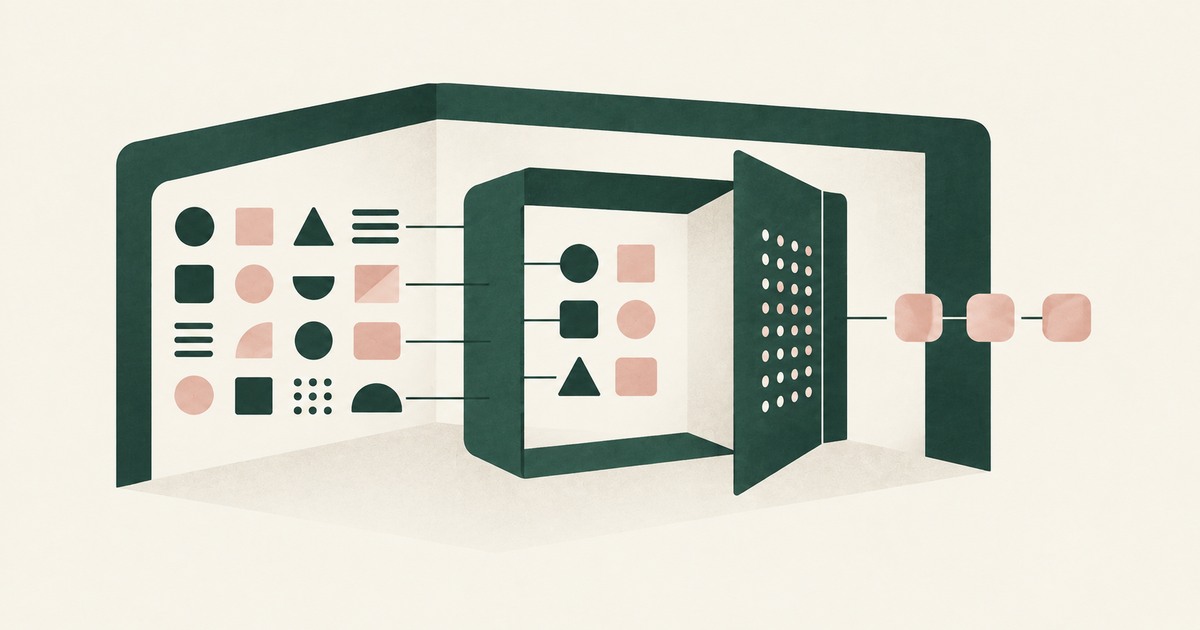
A governed environment is a control class that acts where a screen is rendered, before any model reads it. Values chosen by policy are replaced with consistent tokens for the whole run, so the model works on placeholders. Real values resolve only at an approved destination, at the moment of an approved action. A named person confirms the tokenization policy and approves each consequential action. Every screen as tokens, every action and every approval is written to a record that exports to the organization's own monitoring.
For this question it covers the pages. If the agent works in a browser on a console where a temporary credential is shown, for example a token page that displays a fresh value, the value is replaced with a placeholder before the model reads it, so the agent never holds it. It does not issue the credential or set its lifetime, which the platform does, and it leaves the choice of scope to the team that configures access. The two controls are complementary: one limits how long a credential works, and the other limits who reads it.
Its scope is the rendered page. It does not govern the terminal, the IDE, the local filesystem, direct API calls or MCP, so a token handed to an agent as an environment variable is not closed by it. That is closed by the adapter and by keeping the credential out of the agent's reach.
Methodology and limitations
This page rests on HashiCorp's Vault tutorial, Coder's documentation, AWS guidance, OWASP guidance, four research papers, a Columbia DAPLab post, Harvard University guidance and existing RedactSure research pages. Sources were read between October 16, 2026 and October 20, 2026. Quoted facts are cited to the page that states them. The page is a reading of public documents and should be read with each vendor's current documentation open, since these products change frequently.
RedactSure did not test Vault or any cloud platform hands-on. "Not described in the pages reviewed" means the pages reviewed and nothing broader. The table is a summary of the documentation as read and not a configuration guide. The research papers concern agent design in general and are cited for the principle only. Vendor features change, and the page carries its date. Statements about RedactSure describe its current design, and RedactSure is deploying now with enterprise and government customers. Examples describe record types, such as a token that leaked early in its life, and not organizations. Each vendor page is cited for the statements it makes and for nothing it does not make. A statement that changes in a later release should be treated as unreviewed until the test is repeated.
Determinations about whether a configuration meets a legal, contractual or regulatory requirement belong to counsel, assessors and the organization's own security and compliance officers. Nothing here replaces a read of the platform's own documentation on temporary credentials, and a test of the organization's own setup with a dummy token, repeated after each release, since a change to the platform would change the answer.
What the record shows
The documentation gives a how-to with a limit. A platform's temporary credential limits the window in which a leaked credential works, and an adapter limits who holds it. HashiCorp's tutorial shows a short-lived token passed to the agent process in its environment, which is the gap between the two. None of the pages reviewed describes who approved a use of the token or what the model read, which is the gap a record fills. A one-minute dummy token makes a cheap test for a given setup: give it to the agent in the way you plan to, check whether the agent's context contained it, and repeat the check after each release.
Frequently asked questions
How do I give a coding agent a short-lived credential?
Ask the platform for a temporary one: a token from AWS's Security Token Service with a session policy, a delegated Vault token with a lifetime in minutes or hours, or a fine-grained token with an expiry. Then hand it to an adapter that makes the call for the agent, so the agent never holds it. A short lifetime limits the window, and the adapter limits who reads the credential. Test with a dummy token, and repeat the test after each release because behavior can change.
Is a short-lived token safe if the agent holds it?
Safer, not safe. HashiCorp's tutorial shows a short-lived token passed to the agent process in its environment. While the token is valid, whoever holds it can use it, and a prompt injection in the first minutes can spend it before it expires, and the leak itself may go unnoticed until the logs are read. A short lifetime limits the damage window, and custody limits the damage, so use both, and add a narrow scope so the window holds little.
What is an adapter, and why use one?
An adapter is a small program, owned by the team, that makes a call on the agent's behalf. The agent asks for an action, the adapter holds the credential and makes the call, and the agent receives only the result. A leak of the agent's context then leaks no credential, and a person can approve the consequential calls the adapter makes. It adds a component to maintain, and it is the control that decides who holds the credential, which a lifetime alone cannot do.
How short should the lifetime be?
As short as the task allows, with a narrow scope. The right figure depends on the platform and the work, so this page names none. Test with a dummy token, check how long the task actually needs to run, and set the lifetime to that plus a margin. Review it whenever the task changes, and log each issue and revocation, and do not assume a short figure is short enough for a fast attacker, since an automated one can act within seconds.
Does a governed browser environment help with temporary credentials?
Only on rendered pages. If the agent works in a browser on a console that shows a fresh token, a governed environment replaces the value with a placeholder before the model reads it. It does not issue the credential, set its lifetime, or cover the terminal, the IDE, the local filesystem, direct API calls or MCP, so a token handed over as an environment variable needs the adapter, and the two controls complement each other, each closing a different route.
What should a security team ask for in writing?
Ask which credentials are temporary and for how long, what scope each carries, who holds them while valid, whether an adapter makes the calls, who approves a consequential use and who can revoke the credential early. Ask what record shows what the model read. Treat anything the vendor does not document as unanswered, and ask for a dated answer that names the version in use. A credential that outlives the task it was issued for is the first gap to close.
Related reading
What Is Least Exposure? · What Is a Tethered Agent? · How Do You Let an AI Agent Manage API Keys Without Reading Them? · Is It Safe to Let an AI Agent Set Up Your Cloud Environment? · Does AWS Bedrock Keep Company Credentials Away From Agents? · How Do I Scope a Cloud Key to a Single Agent Task? · Can a Coding Agent Read My AWS Credentials File? · How Do I Give a Coding Agent Access to GitHub Without a Personal Access Token? · On the RedactSure blog: What If the Agent Never Had Your Data? · The Two Gaps AI Agents Opened in Your Security Stack · RedactSure
Sources
Peer-reviewed research and preprints
-
Beurer-Kellner, Buesser, Cretu, Debenedetti et al., "Design Patterns for Securing LLM Agents against Prompt Injections," arXiv:2506.08837, v3 June 27, 2025 (preprint). https://arxiv.org/abs/2506.08837
-
Bhagwatkar, Kasa, Puri, Huang, Rish, Taylor, Dvijotham, Lacoste (ServiceNow, Mila, Universite de Montreal, University of Guelph, Vector Institute), "Indirect Prompt Injections: Are Firewalls All You Need, or Stronger Benchmarks?" arXiv:2510.05244v2, March 23, 2026 (preprint). https://arxiv.org/abs/2510.05244
-
Greshake, Kai, et al., "Not What You've Signed Up For: Compromising Real-World LLM-Integrated Applications with Indirect Prompt Injection," arXiv:2302.12173, 2023 (preprint; also AISec 2023). https://arxiv.org/abs/2302.12173
Vendor documentation
-
HashiCorp, "Secure agent permissions with Vault," Vault tutorial (vendor documentation; read October 20, 2026). https://developer.hashicorp.com/vault/tutorials/enterprise/secure-agent-permissions-with-vault
-
Coder, "Best Practices: Run AI Coding Agents in Coder," Coder Docs (vendor documentation; read October 16, 2026). https://coder.com/docs/ai-coder/best-practices
Regulation, standards and official guidance
-
OWASP GenAI Security Project, "OWASP Top 10 for Agentic Applications: The Benchmark for Agentic Security in the Age of Autonomous AI," genai.owasp.org, Dec 9, 2025 (standard). https://genai.owasp.org/2025/12/09/owasp-top-10-for-agentic-applications-the-benchmark-for-agentic-security-in-the-age-of-autonomous-ai/
-
AWS, "AGENTSEC03-BP02 Separate agent and human user permission," Well-Architected Agentic AI Lens (2026; vendor guidance). https://docs.aws.amazon.com/wellarchitected/latest/agentic-ai-lens/agentsec03-bp02.html
Industry analysis and press
-
Columbia DAPLab (Ang, Huang, Liargkovas, Liu, Liu, Pagonas, Summers, Wang, Xu, Zhou, Zhang, Yu, Zhang, Peng, Kaffes, Wu), "The Need for Agentic Data Environments," DAPLab Blog, May 21, 2026 (position paper summary). https://daplab.cs.columbia.edu/general/2026/05/21/the-need-for-agentic-data-environments.html
-
Harvard University Information Security and Data Privacy, "Best Practices: Managing Generative AI Systems" (university guidance; read October 16, 2026). https://privsec.harvard.edu/best-practices-managing-generative-ai-systems
RedactSure documents
-
RedactSure Research, "What Is Least Exposure?" (2026). https://redactsure.com/research/what-is-least-exposure/
-
RedactSure Research, "What Is a Tethered Agent?" (2026). https://redactsure.com/research/what-is-a-tethered-agent/
-
RedactSure Research, "How Do You Let an AI Agent Manage API Keys Without Reading Them?" (2026). https://redactsure.com/research/how-do-you-let-an-ai-agent-manage-api-keys-without-reading-them/
-
RedactSure Research, "Does AWS Bedrock Keep Company Credentials Away From Agents?" (2026). https://redactsure.com/research/does-aws-bedrock-keep-company-credentials-away-from-agents/
-
Product behavior described on this page reflects RedactSure's current design. Third-party products are described from their public documentation as read between October 16, 2026 and October 20, 2026. Compliance determinations belong to the organization's counsel.

What Is Least Exposure? Reading the Principle, the Gap It Closes and the Published Numbers Behind It
Least Exposure is a security approach for AI agents that gives each task only the data it needs, applied before any model reads the screen.

What Is a Tethered Agent? The Plain-Words Name for an Agent a Named Person Answers For
A tethered agent stays tied to a named person for the whole run: that person grants access, sees what the agent sees and approves consequential actions.
How Do You Let an AI Agent Manage API Keys Without Reading Them?
Swap the key for a token as the dashboard renders it, and resolve the real value in the approved field when a person confirms. Check where keys show.

Is It Safe to Let an AI Agent Set Up Your Cloud Environment?
Only when the agent never holds root or owner credentials, works under scoped roles, and a named person approves billing, IAM and network changes.

Does AWS Bedrock Keep Company Credentials Away From Agents?
Partly. AgentCore Identity vaults long-lived secrets, but AWS says the agent still receives the access tokens it needs. Check which tokens reach the agent.
How Do I Scope a Cloud Key to a Single Agent Task?
Write the grant as five fields, service, resource, operation, destination and lifetime, then issue a credential that can do only that via a session policy.
Can a Coding Agent Read My AWS Credentials File?
Any agent with filesystem access can read ~/.aws/credentials unless the harness blocks the path. Claude Code and Cursor document path blocks;
How Do I Give a Coding Agent Access to GitHub Without a Personal Access Token?
Use a GitHub App installation token or a fine-grained token limited to one repository, and keep it out of the agent's process by brokering the call.

What If the Agent Never Had Your Data?
Explore AI agent security built around tokenization, controlled browser actions and human approval before sensitive payments proceed.
The Two Gaps AI Agents Opened in Your Security Stack
Explore AI agent security through two questions: which PII reaches the model, and who approves consequential billing and claims actions.
How RedactSure Keeps a Temporary Credential Out of the Agent's Context
A short lifetime and a narrow scope bound what a leaked credential can do, and the tutorial reviewed still puts the token in the agent's environment.
The environment that enforces this is built by RedactSure, an AI agent controls, governance and data protection company.
Before: a 60-minute token renders in the clear, an injected instruction repeats it at minute two, and 58 minutes remain. Inside the governed environment: the console shows the model KEY_001 throughout, and the real token reaches the adapter only on a named person's approval.
RedactSure is deploying now with enterprise and government customers. Coder advises against giving agents full permissions on behalf of a user.
Everyone else controls where data can go. RedactSure controls what the AI can see.
See it on your own workflow
A short-lived token can still be repeated by a hijacked agent long before it expires. Bring a task that uses a temporary token and see, with test values, what the model reads on the console. Book a demo