
Data Report · By Chris Sowa · Published
Last updated
Can an AI Agent Configure Webhook Secrets Without Reading Them?
Not on an ordinary configuration form, because the agent that types the signing key holds it, and a form that shows the saved signing key on edit hands it back on every later visit. Check whether your webhook forms echo the signing key, where the receiving code gets its copy, and who approves the save.

A webhook secret is unusual among credentials because it has to exist in two places at once: on the sender's configuration form, and in the code that verifies each delivery. An agent asked to set up a webhook touches both. On the form it types or reads the value, and in the repository it writes the verification code and decides where that code loads its copy. Whether the agent can do either job without the value in its context depends on how the form behaves on edit and on where the receiving code is told to look. This page takes one record, a webhook secret on an edit form, and follows it from the form to the code. The record gives the two ends different answers: the receiving code can load its copy without the agent reading it, while an agent that fills the sender's form holds the value, and the attack and leak records show what that costs once a value is in an agent's context, which is where a governed environment changes the rendered page. The scope is set in the first section, since a browser control and a shell control answer different ends of the webhook.
Key findings
- A governed environment that replaces values with consistent tokens before any model reads the screen lets an agent work a webhook form on a placeholder, so the signing key never enters its context (What Is Render-Layer Tokenization?).
- Real values resolve only at the approved destination at the moment of an approved action, so the submission carries the real signing key after a named person approves the save (What Is the PII Wall?).
- GitHub's Actions documentation says to "Mask all sensitive information that is not a GitHub secret by using
::add-mask::VALUE," which covers logs, not an agent that read the value earlier (GitHub, Using, 2026). - HashiCorp's Vault tutorial for agents says "Token lifetime is reduced from days or weeks to minutes" and the agent receives a token that is "read-only, repo-only, scoped to a single secret, and short-lived" (HashiCorp, 2026).
- A study of prompt injection against agentic coding editors reports that "attack success rates can reach as high as 84% for executing malicious commands," so a held signing key is one an injection can ask for (Liu et al., Your, 2026).
- Wiz reports that of the 50 AI companies it examined, "65% had leaked verified secrets" in public repositories, where a pasted webhook secret ends up (Wiz, 2025).
Why does a webhook secret pass through the agent twice?
Because a webhook has two ends. The sender, a repository, a payment service or a ticketing system, stores a signing key and signs each delivery. The receiver, the organization's own endpoint, holds the same signing key and checks the signature. An agent asked to set up the webhook configures the sender on a form and writes the receiver's code, and the signing key appears at both steps.
On the form, the agent either generates a value and types it or reads one already saved. Many configuration pages mask the signing key after the first save, and some show it in full on the edit screen. Either way the agent that filled the field had the value in its context, since it produced the characters, and an agent that later opens a form that displays the saved value reads it again. What Can an AI Agent See in Your GitHub Settings? walks through the settings pages where this happens; the same reading applies to any provider's webhook page.
The scope of this page follows that split. A governed browser environment covers what the agent reads and does on a rendered page: the webhook form, the settings page that lists it and the dashboard that shows the last delivery. It does not cover the terminal, the IDE, the local filesystem, direct API calls or MCP, where the receiving code lives. No browser control governs a shell; where the code loads its copy is answered by the credential store and the pipeline. The record used throughout is one webhook secret on an edit form, with a handler that must read the same value.
What do the vendors themselves say?
GitHub's Actions secrets page says to "Mask all sensitive information that is not a GitHub secret by using ::add-mask::VALUE" and that "secrets are not passed to the runner when a workflow is triggered from a forked repository" (GitHub, Using, 2026). Its secure use reference adds that "It's good security practice to set the default permission for the GITHUB_TOKEN to read access only for repository contents" and to "Audit how secrets are used, to help ensure they're being handled as expected" (GitHub, Secure, 2026). Its personal access token page says to "Treat your access tokens like passwords" and that fine-grained tokens can be "limited to only access specific repositories" (GitHub, Managing, 2026). GitHub describes push protection as a control that "acts as a frontline defense mechanism by scanning code for hardcoded secrets at the time of the push" (GitHub, Push, 2026).
Firecracker's design document says it "is designed to assure secure isolation using multiple layers" and that "All egress traffic from a guest is therefore considered untrusted, and should be filtered at the host-level" (Firecracker, 2026). It says nothing about credentials inside the guest.
Together the pages document a store for the receiver, a scope for the token, a scan at push time and a filter on guest egress. None describes what a browser agent receives on the webhook form; each control acts after or beside that read.
How does the receiving code get its copy without the agent?
This half has a documented answer. The handler needs the signing key at run time, not at write time, so an agent can write one that loads the value from a store, test it against a dummy value, and never see the production signing key. Actions secrets referenced by name are one such store.
HashiCorp's tutorial for agent permissions describes the scoping that makes a store safe to hand to an agent: it receives a token that is "read-only, repo-only, scoped to a single secret, and short-lived," and "Token lifetime is reduced from days or weeks to minutes" (HashiCorp, 2026). Its wrapper script "obtains a short-lived delegated RAR token, exports it as VAULT_TOKEN, and launches the agent," so the token sits in the agent's environment while it runs; whether the agent can read it is not stated on the page. The grant is narrow and short, which is the limit that matters, since a token in the environment is one a command can print.
Other credential flows match. OIDC settles how a pipeline authenticates to a cloud, so no long-lived key sits in the repository, as How to Set Up S3 and GitHub With Cowork or Dots shows. AWS's AgentCore Identity documentation states that centralized credential management eliminates the need to embed credentials in agent code or configuration (Does AWS Bedrock Keep Company Credentials Away From Agents?). A webhook handler can do the same: it names the signing key, the store supplies it, and the agent that wrote it never held it. The pattern does not reach the sender's form.
What happens on the form itself?
The form is where the documented controls run out. The agent opens the provider's settings page, fills the payload URL, chooses the events and enters the signing key. If the agent generates the signing key, the characters are in its context from the moment it produced them. If a person pastes it in, the agent reads the field on the next screenshot or DOM read. And if the edit form shows the saved signing key, every later edit, including a payload URL change months later, puts the value in front of the model again.
That is the capture this page is about, and token scope does not reach it. A token limited to one repository still opens that repository's webhook page. Scope decides which pages the agent can reach, not what the model receives from a page it may open. A read-only default has the same shape: it limits writes, and a form that renders a signing key renders it to a reader with read permission.
The control that fits the form is the one in How Do You Let an AI Agent Manage API Keys Without Reading Them?: the agent works a placeholder and the real value is supplied at the destination. For a webhook, the agent fills WEBHOOK_SECRET_01 into the field, a named person approves the save, the submission carries the real value, and every later edit form shows WEBHOOK_SECRET_01 to the model. Skyflow describes tokenization the same way, as exchanging a sensitive value for a pseudorandom token that carries no exploitable value on its own (RedactSure vs Skyflow: 2026 Comparison & Alternative), except that a webhook form needs the exchange on the rendered page.
What does the research record say once the agent holds the value?
It says the value is reachable by anyone who can put an instruction in front of the agent. A study of prompt injection against agentic coding editors, the tools likely to be writing the handler, reports that "attack success rates can reach as high as 84% for executing malicious commands" (Liu et al., Your, 2026). An agent with the signing key in context and a shell can be told to post it.
The defenses have been compared and the results are modest. A benchmark covering "5 prompt injection attacks and 10 defenses with 10 LLMs and 7 tasks" gives future attacks and defenses common ground (Liu et al., Formalizing, 2024). Agent Security Bench reports results that "reveal critical vulnerabilities in different stages of agent operation" with "limited effectiveness shown in current defenses" (Zhang et al., 2025). Neither abstract states which defense did best or by how much, and this page claims no figure they do not give.
For the webhook record the reading is a chain of three links: the model that configured the form holds the signing key unless something replaced it before the read, the model can be redirected at rates the research puts well above zero, and an agent with shell or network access has somewhere to send what it holds. Isolation shortens the third link, since filtered egress leaves fewer places to send a signing key; it does not shorten the opening link, the one a form control reaches. Can a Credential Vault Protect What an AI Agent Reads? reaches the same conclusion for vaults: a vault that releases a value into the agent's context has protected it at rest and not in use.
What does the leak record show about where the signing key ends up?
In repositories, with the agent's help. GitGuardian's study of Copilot found that among the repositories it examined "over 1,200 leaked at least one secret" and that "Copilot generates 2702/900 = 3.0 valid secrets for one prompt on average" (GitGuardian, 2025). The page does not confirm whether the extracted credentials were still active, and the figure concerns generation from a prompt rather than a webhook form, but it shows the direction of travel: a value a coding assistant has seen is one it can reproduce in code.
Wiz's exposure report took the other end. Of the 50 AI companies it examined, "65% had leaked verified secrets" in public repositories, which the report describes as almost two-thirds of the companies analyzed (Wiz, 2025). The report does not state how many of the 50 had no public code presence.
For a webhook secret the path from form to leak is short. The agent reads the signing key on the form, writes the handler, and pastes the value in as a test fixture because it is in context and the handler needs something to compare against. Push protection catches that paste at the push, and the audit advice covers the review after it. Both act after the agent held the value. The leak record argues for keeping the value out of the agent's context, so that a paste reproduces a placeholder and not a signing key, and for a handler that loads from a store rather than from anything the agent typed.
What does a governed environment change?
A governed environment is a control class that acts where a screen is rendered, before any model reads it. Values chosen by policy are replaced with consistent tokens for the whole run, so the model works on placeholders. Real values resolve only at an approved destination, at the moment of an approved action. A named person confirms the tokenization policy and approves each consequential action. Every screen as tokens, every action and every approval is written to a record that exports to the organization's own monitoring.
For a webhook secret on an edit form it changes the first link in the chain. The agent opens the webhook settings page and the model receives WEBHOOK_SECRET_01 in the signing key field, whether the provider masks the saved value or not. When the agent fills a new signing key, it fills the placeholder, a named person approves the save, and the submission carries the real value. Every later edit shows the same placeholder, so a payload URL change months later does not re-expose the signing key. The record shows the form as the model saw it, the save and the approver's name, an audit none of the pages reviewed describes for a browser session.
Its scope is the rendered page. It does not govern the terminal, the IDE, the local filesystem, direct API calls or MCP, so the handler is outside it. That half stays with the credential store, the short-lived grant and push protection. A team that uses both has closed both ends of the webhook; a team that uses only the store has left the form open.
Methodology and limitations
This page rests on GitHub's documentation for Actions secrets, the secure use reference, personal access tokens and push protection, Firecracker's design document, HashiCorp's Vault tutorial for agent permissions, three research preprints, two vendor research reports from GitGuardian and Wiz, and existing RedactSure research pages. Sources were read between October 20, 2026 and October 21, 2026. Quoted facts are cited to the page that states them, the preprints are cited for what their abstracts state and not for figures in their full text, and the vendor research figures are cited as the vendors report them, not as independent measurements.
RedactSure did not test any provider's webhook form, GitHub Actions, Firecracker or Vault hands-on. "Not described in the pages reviewed" means the pages reviewed and nothing broader. The statement that some edit forms show a saved signing key and others mask it describes common form behavior, not a named provider, and a reader should check each provider's form directly. Vendor features change, and the page carries its date. Statements about RedactSure describe its current design, and RedactSure is deploying now with enterprise and government customers. Examples describe record types, a webhook secret on an edit form and a verification handler, and not organizations.
Determinations about whether a configuration meets a legal, contractual or regulatory requirement belong to counsel, assessors and the organization's own security and compliance officers. Nothing here replaces a test on the organization's own webhook forms with a dummy signing key, repeated after each provider change, since a form that masks today may display the value tomorrow.
What the record shows
The two ends of a webhook have different answers. The receiving end can be configured without the agent reading the signing key, because a handler that loads from a store, a short-lived scoped grant and push protection together keep the value out of the code the agent writes. The sending end cannot, on an ordinary form, because the agent that fills the field holds the value and a form that shows the saved signing key hands it back on every visit. The research record puts the cost of that read well above zero, and the leak record shows where a value in context tends to go. The only control that reaches the form is one that replaces the value before the model reads the page, which is where RedactSure's design sits. Opening the edit form with a dummy signing key is a test any team can run on its own setup: name one agent and one webhook, then ask what the model received in the signing key field and who approved the save.
Frequently asked questions
Can an AI agent configure a webhook secret without reading it?
Not on an ordinary form. The agent that generates or types the signing key holds it, and if the provider's edit form shows the saved value, every later edit puts it in front of the model again. The receiving handler is different: it can load the signing key from a store at run time and the agent that wrote it need never see the production value. An answer that covers only the handler has answered half the question, and the form is the half most providers leave open.
Does GitHub Actions masking protect the signing key from the agent?
It protects the logs. GitHub's documentation says to mask any sensitive value that is not already a secret with ::add-mask::, and that credentials are withheld from workflows triggered by forks. Both act inside the workflow run. An agent that read the signing key on the webhook form before the run, or that pasted it into the handler, held it outside the scope of masking. Treat masking as log hygiene and settle what the agent read as a separate question.
Where should the verification handler get the signing key?
From a store, by name, at run time. GitHub Actions secrets, an environment variable supplied by the pipeline, or a vault that issues a short-lived scoped token all let the handler compare signatures without the value appearing in code. HashiCorp's tutorial describes a grant that is read-only, scoped to a single credential and measured in minutes, which is the shape to ask for. Test the handler against a dummy value so the real one never enters the agent's session.
Does a scoped token stop the agent from seeing the signing key on the form?
No. A fine-grained token limited to one repository and a read-only default for the workflow token decide which pages the agent can open and what it can change there. They do not change what the model receives from a page it is allowed to open. If the webhook edit form renders the saved signing key, a read-only reader receives it. Scope is the right control for reach, and a different control is needed for what the page renders.
What happens if the agent is prompt-injected after configuring the webhook?
If the signing key is in its context, an injected instruction can ask the agent to send it, and the research on coding editors puts success rates for malicious commands as high as 84%. Egress filtering at the host, as Firecracker's design describes, limits where the value can go. It does not remove the value from the model. A placeholder in context gives the injection nothing to exfiltrate, which is why the read matters more than the filter.
Can an edit form that masks the signing key still expose it?
Yes, at the moment of entry. Masking after the save hides the value from later readers, but the agent that typed it had the characters in context, and a screenshot or DOM read of the field before the save captures them. A form that never shows the saved value closes the repeat visit and not the first fill. Rotate the signing key after any agent session that filled it in the open, and note which session it was so the rotation can be tied to it.
Related reading
What Is Render-Layer Tokenization? · What Is the PII Wall? · What Can an AI Agent See in Your GitHub Settings? · How Do You Let an AI Agent Manage API Keys Without Reading Them? · Can a Credential Vault Protect What an AI Agent Reads? · What Can a Browser Agent See in My GitHub Settings? · What Happens When an AI Agent Creates a GitHub Token in the Browser? · Can a Browser Agent Fill In a Form Without Seeing the Values? · On the RedactSure blog: Your AI Doesn't Need to Know Who You Are · The Two Room Thought Experiment · RedactSure
Sources
Peer-reviewed research and preprints
-
Liu, Zhao, Lyu et al., "Your AI, My Shell: Demystifying Prompt Injection Attacks on Agentic AI Coding Editors," arXiv:2509.22040 (preprint, revised 2026-04-28). https://arxiv.org/abs/2509.22040
-
Liu, Jia, Geng et al., "Formalizing and Benchmarking Prompt Injection Attacks and Defenses," arXiv:2310.12815 (preprint; USENIX Security 2024 per authors; arXiv v5 dated 2025-11-12). https://arxiv.org/abs/2310.12815
-
Zhang, Huang, Mei et al., "Agent Security Bench (ASB): Formalizing and Benchmarking Attacks and Defenses in LLM-based Agents," arXiv:2410.02644 (preprint, v4 2025-05-30). https://arxiv.org/abs/2410.02644
Vendor documentation
-
GitHub, "Using secrets in GitHub Actions," GitHub Docs (vendor documentation; read October 20, 2026). https://docs.github.com/en/actions/security-for-github-actions/security-guides/using-secrets-in-github-actions
-
Firecracker, "Design," firecracker-microvm repository docs (vendor documentation; read October 20, 2026). https://github.com/firecracker-microvm/firecracker/blob/main/docs/design.md
-
GitHub, "Managing your personal access tokens," GitHub Docs (vendor documentation; read October 20, 2026). https://docs.github.com/en/authentication/keeping-your-account-and-data-secure/managing-your-personal-access-tokens
-
HashiCorp, "Secure agent permissions with Vault," Vault tutorial (vendor documentation; read October 21, 2026). https://developer.hashicorp.com/vault/tutorials/enterprise/secure-agent-permissions-with-vault
Regulation, standards and official guidance
-
GitHub, "Secure use reference," GitHub Actions documentation (vendor documentation; read October 20, 2026). https://docs.github.com/en/actions/reference/security/secure-use
-
GitHub, "Push protection," GitHub Docs (vendor documentation; read October 20, 2026). https://docs.github.com/en/code-security/secret-scanning/introduction/about-push-protection
Industry analysis and press
-
GitGuardian, "Yes, GitHub's Copilot can Leak (Real) Secrets," March 27, 2025 (vendor research). https://blog.gitguardian.com/yes-github-copilot-can-leak-secrets/
-
Wiz, "Exposure Report: 65% of Leading AI Companies Found with Verified Secret Leaks," November 10, 2025 (vendor research). https://wiz.io/blog/forbes-ai-50-leaking-secrets
RedactSure documents
-
RedactSure Research, "What Is Render-Layer Tokenization?" (2026). https://redactsure.com/research/what-is-render-layer-tokenization/
-
RedactSure Research, "What Is the PII Wall?" (2026). https://redactsure.com/research/what-is-the-pii-wall/
-
RedactSure Research, "How Do You Let an AI Agent Manage API Keys Without Reading Them?" (2026). https://redactsure.com/research/how-do-you-let-an-ai-agent-manage-api-keys-without-reading-them/
-
Product behavior described on this page reflects RedactSure's current design. Third-party products are described from their public documentation as read between October 20, 2026 and October 21, 2026. Compliance determinations belong to the organization's counsel.
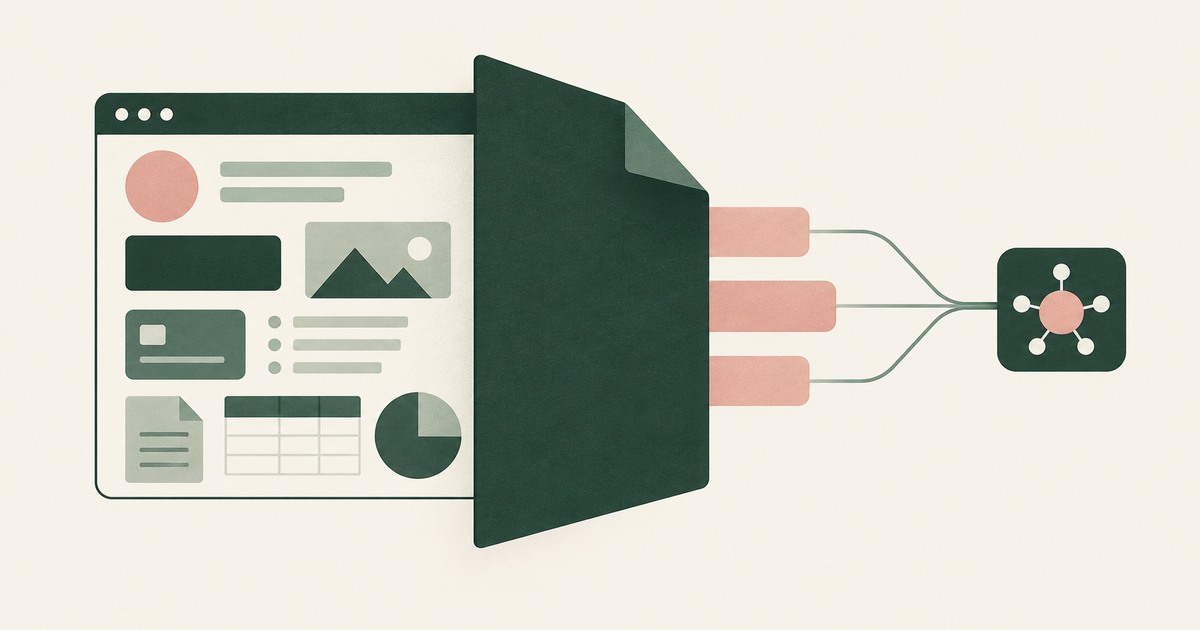
What Is Render-Layer Tokenization? The Control at the Layer Where the Agent Actually Reads
Render-layer tokenization swaps sensitive values for consistent stand-in tokens such as SSN_001 as the screen renders, before any AI model reads it.
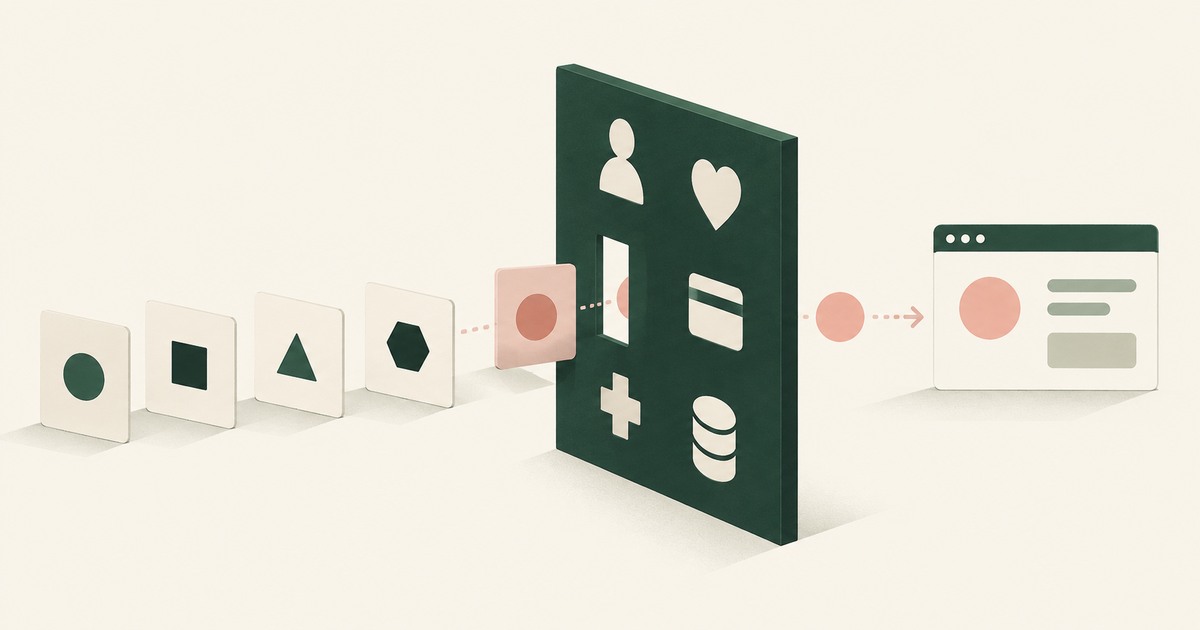
What Is the PII Wall? Where AI Programs Stop, and the Published Numbers Behind the Pattern
The PII Wall is the point where an AI program's most valuable workflow needs personal, financial, health or student records a model may not see, and stops.

What Can an AI Agent See in Your GitHub Settings?
Whatever the pages render: account emails, SSH key fingerprints, token names and scopes, and any new token shown once. Check which values reach the model.
How Do You Let an AI Agent Manage API Keys Without Reading Them?
Swap the key for a token as the dashboard renders it, and resolve the real value in the approved field when a person confirms. Check where keys show.

Can a Credential Vault Protect the Data an AI Agent Reads? It Protects What You Deposit, Not What the Agent Encounters
No. A credential vault protects what a user deposits, such as a password or card, not the records an AI agent reads on screen. Check what covers the read.
What Can a Browser Agent See in My GitHub Settings?
Every field the page renders: a token at creation, SSH key titles and fingerprints, an app's client secret on the page that generates it.
What Happens When an AI Agent Creates a GitHub Token in the Browser?
GitHub shows the new token once, the agent reads it as it renders, and from then on the string sits in its context and transcript.
Can a Browser Agent Fill In a Form Without Seeing the Values?
Yes, through placeholder substitution at fill time, which Browser Use and Skyvern document. The gap is the next page, where the typed value can reappear.
Your AI Doesn't Need to Know Who You Are
Explore why AI agents can perform sensitive workflows using tokenization while names, account details and other PII stay out of view.
The Two Room Thought Experiment
Explore a thought experiment about AI agents, tokenization and how useful reasoning can be separated from access to sensitive PII.
How RedactSure Keeps a Webhook Secret Off the Configuration Form
A webhook signing key passes through the agent on the form and on every edit that echoes it, and the controls reviewed above act on the other end.
The environment that enforces this is built by RedactSure, an AI agent controls, governance and data protection company.
Before: the agent opens the webhook settings page, reads the saved signing key in the clear, and pastes it into the handler as a test fixture. Inside the governed environment: the model receives WEBHOOK_SECRET_01, a named person approves the save, the provider receives the real signing key, and a later edit shows the same token.
RedactSure is deploying now with enterprise and government customers. Injection against coding editors succeeds up to 84 percent of the time.
Everyone else controls where data can go. RedactSure controls what the AI can see.
See it on your own workflow
A webhook signing key the agent reads tends to reappear in code as a test fixture. Bring a webhook your team configures and see, with test values, what the model reads on the settings page and what the provider receives. Book a demo