
Data Report · By Chris Sowa · Published
Last updated
What Is Zero-Knowledge Credential Handling for AI Agents?
A design in which the platform can route and enforce a credential without being able to read it: the value is encrypted to the developer's key and released into an enclave or an adapter, so neither the operator's console nor the model holds the plaintext. Ask which component can read the value, and when.

The phrase borrows its authority from cryptography, and the borrowing is loose. A credential is zero-knowledge here in one narrow sense: the platform that routes it, logs the run and enforces the policy cannot read it. The value is encrypted to a key the developer holds, released into an enclave or an adapter at the moment of use, and never rendered in plaintext where an operator console or the agent's model can see it.
Three shapes appear in vendor documentation: a wrapped single-use token that carries a credential to one request, a hosted connected account that acts for the user, and a proxy or gateway that substitutes the value after the model has written the request. Each shape leaves a different component able to read the plaintext, and that component is the answer to the only test the term supports: who could read it, and when.
The decision a buyer faces is whether a vendor ships a real design or a masked field, and the five vendors quoted below can be sorted on that question. The record throughout is one connector credential on a settings page in a platform operator's console, the entry an agent opens to rotate a provider key.
Key findings
- The Teleport Agentic Identity Framework states that "Your agents need a verifiable, cryptographic identity tied to where they're running, not a shared API key," a design for what an agent may reach rather than for what its model reads, and marks most capabilities "In-progress" or "Not started" (Teleport, 2026).
- 1Password's post on its OpenShell integration states that "Inside the sandbox, the agent sees placeholders rather than real credentials, including a placeholder for its model key," with the gateway holding the value (1Password, 2026).
- A token substituted before any model reads the screen keeps the value out of the context for the whole run, so an agent that rotates a connector key on a settings page works with CRED_001 and the plaintext stays in the adapter (Enterprise Browser or Render-Layer Tokenization?).
- Real values resolve only at the approved destination at the moment of an approved action, so the plaintext meets one request while the transcript keeps CRED_001 (What Is Least Exposure?).
- Veracode's press release states that "GenAI models make the wrong choices nearly half the time, and it's not improving," which puts the code an agent writes around a credential in the same review (Veracode, 2025).
What does zero-knowledge credential handling mean for an AI agent?
The term names a property of the platform, not of the agent. The platform can route a credential to the service that needs it, enforce a policy on the request and record what happened, and still cannot read the value: the value is encrypted to a key the developer holds, released into an enclave or an adapter rather than a general-purpose store, and never written in plaintext to a log, a console or the page a model reads.
The test the term supports is a question about readers. Ask who could read the credential at each step and name the component: the operator who runs the console, the engineer with database access, the model that reads the screen, the adapter that terminates the request, the key holder. A vendor that says it cannot see your credentials has answered for one of those readers, and the documented designs differ on which reader they answer.
The term is about readability, not about trust: a platform that cannot read the value can still route it, revoke it and log the action.
One control class here sits at the rendered page. A governed browser environment covers what the agent reads and does on a rendered page: dashboards, consoles, settings pages and sign-up forms. It does not cover the terminal, the IDE, the local filesystem, direct API calls or MCP. The vendor designs quoted below sit elsewhere, in proxies, gateways and identity frameworks.
The record for this page is one connector credential on a settings page in a platform operator's console, the entry an agent opens when it rotates the provider key a connector uses. The field shows dots until someone clicks it, and the value is stored by reference. The question is what the model receives when the agent opens that page.
Which party can read the credential in each design?
The first design holds ciphertext and moves it under a wrapper. The platform stores the credential encrypted to the developer's key and issues a wrapping token that the client exchanges for the value. HashiCorp's Vault documentation states that "A new single-use token is generated with the TTL supplied by the client", a wrapper that carries a response to one request, and the page gives no default or maximum TTL (HashiCorp, 2026). The reader is whoever redeems the token, usually the workload, and the platform's role is to hand it over once.
The second terminates the connection. A proxy that only forwards encrypted traffic cannot insert a credential into a request, so the documented designs decrypt at the proxy, add the value and re-encrypt. Infisical's write-up states that "In a traditional proxy, that tunnel remains opaque, simply forwarding encrypted traffic", and describes terminating TLS so the proxy can insert the credential, which puts the plaintext in the proxy at the moment of the request (Infisical, 2026). The reader is the proxy operator, its logs and anyone who can change its rules.
The third and fourth shapes are variants of a custody decision. A hosted connection has the user sign in on the vendor's page, and the vendor holds and refreshes the account. A placeholder gateway holds the value and gives the model a stand-in for an approved host.
| Design | Who can read the plaintext | What the model receives | What to verify |
|---|---|---|---|
| Encrypted to the developer's key, opened by a wrapping token | The workload that redeems the token | Whatever the page renders | Token lifetime, single use, and what the platform can decrypt |
| Proxy that terminates TLS | The proxy, at the moment of the request | The page content, not the credential | Whether the proxy logs request bodies |
| Hosted connected account | The vendor that holds the account | The page content, not the credential | Refresh and revocation behavior, and storage |
| Placeholder gateway | The gateway, on a request to an approved host | A placeholder | Which hosts are approved, and who changes the list |
What do the vendors themselves say?
Teleport's framework is the closest to an identity answer. It lists "Comprehensive audit trails and behavior analysis for agent actions across infrastructure", which is a record of what an agent did and not of what its model read (Teleport, 2026).
Composio's documentation states that "The user signs in on the hosted link and Composio stores the resulting connected account", so the vendor holds a token the model never touches (Composio, 2026). The same documentation states that "If a refresh token is revoked or expires, the connection moves to EXPIRED and the user has to reconnect", a lifecycle the platform runs without the model's involvement (Composio, 2026).
1Password's post states that "1Password stores them by reference rather than by value", which keeps the value out of the agent's context and leaves 1Password as the component that resolves it (1Password, 2026). Independent testing or audit of the integration is not described in the pages reviewed.
The same identity logic appears in privileged access: CyberArk's approach to agentic AI is described as "an identity-first approach to agentic AI security built on tight privilege controls", which governs the identity rather than the model's view (RedactSure vs CyberArk: 2026 Comparison & Alternative).
| Vendor | What its documentation states | What it leaves to another component |
|---|---|---|
| Teleport | A cryptographic identity tied to where the agent runs, with audit trails for actions | What the model reads; most capabilities marked in progress |
| Composio | A hosted connection the vendor stores and refreshes | Encryption and storage, delegated to a token custody page |
| 1Password | A gateway that swaps a placeholder on an approved host | Independent testing of the integration |
| HashiCorp | A single-use wrapper token with a client-supplied TTL | The value the token opens, and who can decrypt it |
| Infisical | A proxy that terminates TLS to insert the credential | The plaintext in the proxy at request time |
Where does the borrowed term stop being true?
The term answers one question and leaves three others.
Authority is the first gap. A tether, in the sense that What Is a Tethered Agent? uses the word, describes authority rather than capability: the agent goes where its supervisor could go and does real work there. Google's guidance for Workspace administrators holds that "the super admin account should be used only when needed", a rule for people that applies with more force to an agent (Does an AI Agent Need Your Admin Login to Set Up a SaaS Tool?). The design can be zero-knowledge and still leave every page visible.
Action is the second gap. Five of the steps in a cloud account launch commit the account to something you cannot take back, and those five stop for approval (How to Use AI Agents to Launch an EC2 GPU Instance). An approval gate governs what the agent does with a credential and not the value it read first.
Read-side controls are the third gap. Willison writes that "These design patterns constrain the actions of agents to explicitly prevent them from solving arbitrary tasks", which limits what a run may do and not what it may read (Willison, 2025). One pattern holds that "Agents can trigger tools, but cannot be exposed to or act on the responses from those tools", a read-side limit rather than a custody design (Willison, 2025). Outside its scope: trust in the enclave operator, the endpoint, and the injection the model meets on a permitted page.
What breaks a zero-knowledge design in practice?
Three failures show up in the record.
The approval step is forgeable. OWASP's attack page describes a class of attack that "manipulates the content and presentation of approval dialogs, deceiving users into authorizing malicious operations", which a tokenized screen does not prevent (OWASP Foundation, n.d.). The model can hold a token and the person can still approve the wrong action.
The record can misattribute the actor. AWS's guidance states that "audit logs attribute every action unambiguously to either an agent or a human actor", which is what a record needs before it can answer who used a credential (AWS, 2026). An agent acting under the developer's own login leaves a record in the developer's name.
The masking that exists may be off. Salesforce's Trailhead states that "data masking for LLMs is currently disabled for agents", which leaves the screen itself as the exposure (Which Enterprise AI Agents Can Work on Screens With PII Today, and What Does Each One Read?). Leaked credentials arrive in bulk: How Do You Let an AI Agent Manage API Keys Without Reading Them? counts "28,649,024 new secrets exposed in public GitHub commits across 2025".
Each failure is about a reader the custody design did not name: the person at the dialog, the auditor reading the log, the agent reading the screen.
What does a governed environment change?
A governed environment is a control class that acts where a screen is rendered, before any model reads it. Values chosen by policy are replaced with consistent tokens for the whole run, so a credential field shows CRED_001 and the model works on that token. Real values resolve only at the approved destination, at the moment of an approved action. A named person confirms the tokenization policy and approves each consequential action, and a credential rotation or a payment is one. Every screen as tokens, every action and every approval is written to a record that exports to the organization's own monitoring.
For this page's question it changes which reader is answered. The designs above answer the operator, the log and the vendor; the governed environment answers the model. The page the agent reads is rendered with tokens, so a value the platform could not read is also a value the model cannot read, and the plaintext meets one destination after a person approves it.
It also changes what a successful injection collects. A model holding CRED_001 can still be induced to act, the action still requires approval, and the record shows which page rendered which token. What it cannot collect is the credential, because the environment never rendered it to the model.
The record is the second change. An audit log says who did what; a record of screens as tokens says what the model saw before it acted, the half the custody designs above leave unrecorded.
Its scope is the rendered page, and it does not govern the terminal, the IDE, the local filesystem, direct API calls or MCP.
Methodology and limitations
This page rests on five vendor documentation pages, an OWASP community attack page, AWS Well-Architected guidance, one practitioner analysis of agent design patterns, one vendor press release reporting a research result, and existing RedactSure research pages. The RedactSure pages linked in the body supply the least-exposure definition and the API key account, cited as design statements rather than as independent evidence. Vendor pages were read as of October 20, 2026, and each Sources line carries the date for its page. Quotations are given in the wording of the page that states them, and the Veracode figures are cited as that release reports them.
RedactSure did not test any of the named products hands-on. Where this page says a behavior is not described in the pages reviewed, it means the recorded facts for that vendor page do not cover it, not that the vendor does not do the thing. Vendor features change, and the page carries its date; a release after that date is unreviewed until a reader repeats the check. Statements about RedactSure describe current design, and RedactSure is deploying now with enterprise and government customers. The example describes a record type, one connector credential on a settings page in a platform operator's console, and not an organization. Nothing on this page was measured on a live account.
Determinations about whether a credential-handling design meets a contractual, statutory or regulatory requirement belong to counsel, assessors and the organization's own security and compliance officers. Nothing here replaces a test of the organization's own agent against its own connector, repeated after each vendor release, with the record of what the model received kept beside it.
What the record shows
The documented designs answer the first reader and leave the others. A wrapping token, a terminating proxy, a hosted connection and a placeholder gateway each keep the plaintext from the operator, the log or the vendor, and each resolves the value in a component the design names. None of them governs what a model reads on the page where the credential is displayed, and none of them turns an approval dialog into evidence. A buyer who asks only whether the platform can read the credential will get a true answer and an incomplete one. RedactSure's environment sits on that missing step, at the render layer. To test a design, a buyer should name one agent and one task, ask which component could read the credential at each step, and write down what the model received on the settings page where the credential lives.
Frequently asked questions
What is zero-knowledge credential handling for an AI agent?
A design in which the platform can route a credential, enforce policy on its use and record what happened without being able to read the value. The value is encrypted to a key the developer holds and released into an enclave or adapter at the moment of use. The term is narrower than it sounds: it describes what the platform can read, not what the agent's model reads on a page. Ask which component could read the plaintext at each step, and write the answer down for the run.
Is a masked field the same thing?
No. A masked field hides the value from a person looking at the screen and often reveals it on a click, and the browser still holds the real value in order to submit it. A zero-knowledge design keeps the platform from holding the plaintext at all, or releases it only into a component that terminates the request. Check whether the mask is a display setting or a boundary, and what the page returns when the field is revealed. A display setting is not a boundary.
Which component reads the credential in a proxy design?
The proxy. A proxy that forwards encrypted traffic without terminating it cannot insert a credential into a request, so the documented designs terminate TLS and add the value there. That places the plaintext in the proxy at the moment of the request, which is a real trust boundary: the proxy operator, its logs and its configuration can reach the value. Ask whether the proxy records request bodies and who can change its rules. Get the logging configuration in writing.
Does zero-knowledge handling stop prompt injection?
No. It changes what an injection collects. If the model never reads the plaintext, an injected instruction can still act with the credential through the adapter, and it can still misdescribe an approval. The failure is bounded by what the model can see and what the approver can check, not removed. Run a test with an injected page and read the record for what the model held before it acted. A token is still an authority that injection can use.
What should a buyer ask a vendor that claims it?
Which component can read the plaintext, at which step, and who operates that component. Whether the value is encrypted to a key the buyer holds and what the vendor can decrypt without it. What the model receives on the page where the credential is displayed. What the record shows about reads as well as actions, and who approved each use. An answer that covers only storage leaves the moment of use open. Ask for the record, not the architecture diagram.
Can an agent rotate a credential it cannot read?
Yes, if the rotation runs through a connector or an adapter that holds the value. The agent requests the rotation, the adapter performs it against the provider, and the model sees a token or a confirmation rather than the new credential. The limit is the control plane: an agent that can rotate a credential can usually revoke one too, so the approval belongs on the action rather than on the reading. The approval is the control, not the rotation.
Related reading
What Is Least Exposure? · What Is a Tethered Agent? · How to Use AI Agents to Launch an EC2 GPU Instance · Does an AI Agent Need Your Admin Login to Set Up a SaaS Tool? · How Do You Let an AI Agent Manage API Keys Without Reading Them? · Enterprise Browser or Render-Layer Tokenization? · RedactSure vs CyberArk: 2026 Comparison & Alternative · Which Enterprise AI Agents Can Work on Screens With PII Today, and What Does Each One Read? · Can a Vendor Read Credentials Encrypted to My Own Key? · Why Should the Developer's Private Key Be the Root of Authority for Agents? · What Does It Mean to Encrypt a Credential to the Developer's Public Key? · On the RedactSure blog: Accountable AI and Workflow Governance · What If the Agent Never Had Your Data? · RedactSure
Sources
Vendor documentation
-
Teleport, "Teleport Agentic Identity Framework," Teleport documentation (vendor documentation; read October 20, 2026). https://goteleport.com/docs/ver/19.x/agentic-identity-framework/
-
Composio, "Authentication," Composio documentation (vendor documentation; read October 20, 2026). https://docs.composio.dev/auth/introduction
-
Infisical, "Agent Vault: The Open Source Credential Proxy and Vault for Agents," April 22, 2026 (vendor blog; read October 20, 2026). https://infisical.com/blog/agent-vault-the-open-source-credential-proxy-and-vault-for-agents.md
-
HashiCorp, "Response Wrapping," Vault documentation (vendor documentation; read October 20, 2026). https://developer.hashicorp.com/vault/docs/concepts/response-wrapping
-
1Password, "Secure agent access in development workflows with 1Password + NVIDIA OpenShell," September 28, 2026 (vendor blog; read October 20, 2026). https://1password.com/blog/1password-nvidia-openshell
Regulation, standards and official guidance
-
OWASP Foundation, "HITL Dialog Forging (aka Lies-in-the-Loop)," OWASP Community attacks page (standard body). https://community.owasp.org/attacks/Lies_in_the_Loop
-
AWS, "AGENTSEC03-BP02 Separate agent and human user permission," Well-Architected Agentic AI Lens (2026; vendor guidance). https://docs.aws.amazon.com/wellarchitected/latest/agentic-ai-lens/agentsec03-bp02.html
Industry analysis and press
-
Willison, "Design Patterns for Securing LLM Agents against Prompt Injections," June 13, 2025 (practitioner analysis). https://simonwillison.net/2025/Jun/13/prompt-injection-design-patterns/
-
Veracode, "AI-Generated Code Poses Major Security Risks in Nearly Half of All Development Tasks," July 30, 2025 (press release). https://www.veracode.com/press-release/ai-generated-code-poses-major-security-risks-in-nearly-half-of-all-development-tasks-veracode-research-reveals/
RedactSure documents
-
RedactSure Research, "What Is Least Exposure?" (2026). https://redactsure.com/research/what-is-least-exposure/
-
RedactSure Research, "How Do You Let an AI Agent Manage API Keys Without Reading Them?" (2026). https://redactsure.com/research/how-do-you-let-an-ai-agent-manage-api-keys-without-reading-them/
-
RedactSure Research, "Enterprise Browser or Render-Layer Tokenization?" (2026). https://redactsure.com/research/enterprise-browser-vs-render-layer-tokenization/
-
Product behavior described on this page reflects RedactSure's current design. Third-party products are described from their public documentation as read on October 20, 2026. Compliance determinations belong to the organization's counsel.

What Is Least Exposure? Reading the Principle, the Gap It Closes and the Published Numbers Behind It
Least Exposure is a security approach for AI agents that gives each task only the data it needs, applied before any model reads the screen.

What Is a Tethered Agent? The Plain-Words Name for an Agent a Named Person Answers For
A tethered agent stays tied to a named person for the whole run: that person grants access, sees what the agent sees and approves consequential actions.
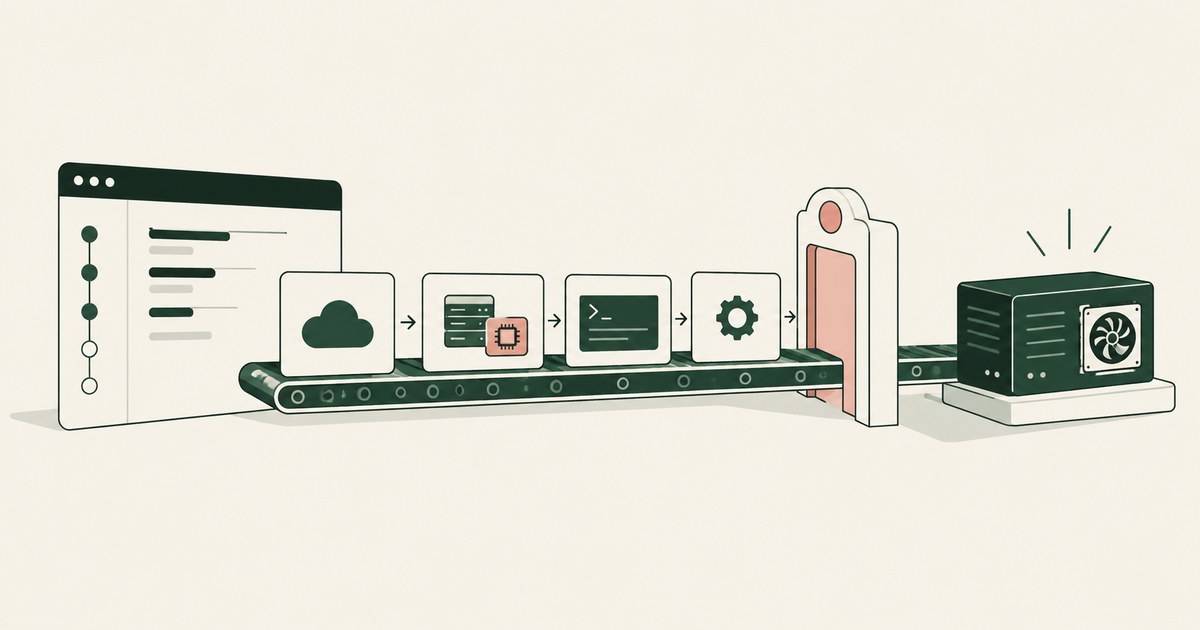
How to Use AI Agents to Launch a GPU-Accelerated Amazon EC2 Instance and Configure Drivers and Software
Launch a GPU EC2 instance with an AI agent that works the console from quota request to nvidia-smi while the five spending steps wait for a named person.

Does an AI Agent Need Your Admin Login to Set Up a SaaS Tool?
No. The agent should run under a delegated session with a scoped admin role, never the administrator's password. Check which identity the session runs as.
How Do You Let an AI Agent Manage API Keys Without Reading Them?
Swap the key for a token as the dashboard renders it, and resolve the real value in the approved field when a person confirms. Check where keys show.

Enterprise Browser vs. Render-Layer Tokenization: Two Different Answers to AI Data Exposure
They answer different questions. Enterprise browsers control where human data can go; render-layer tokenization replaces values before the model reads.
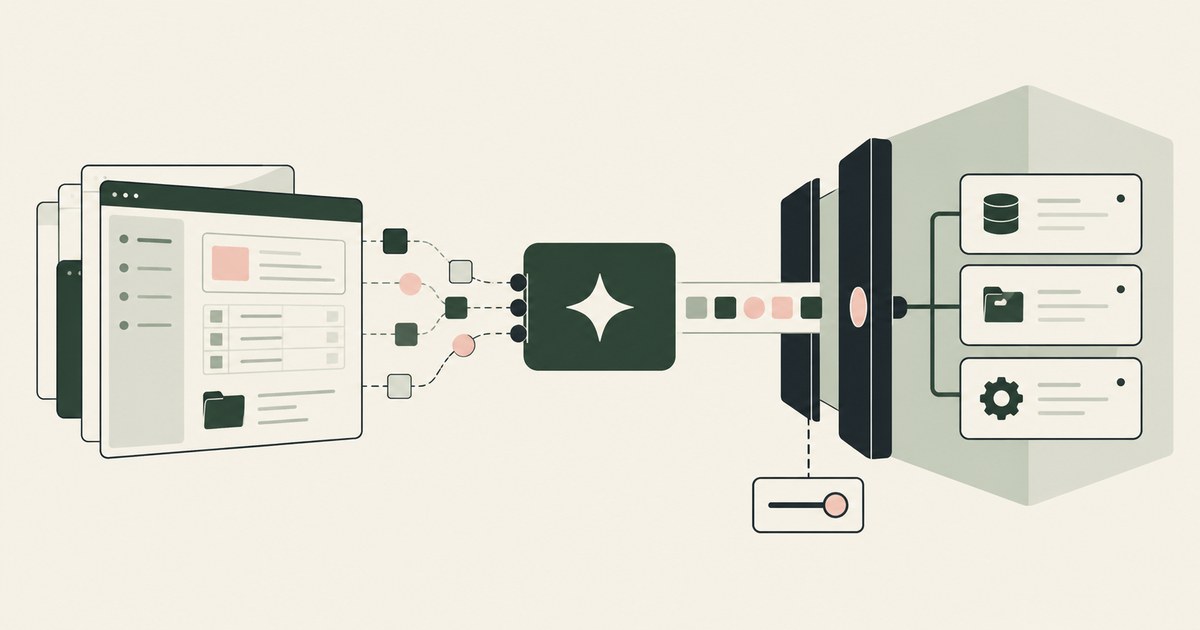
RedactSure vs CyberArk: 2026 Comparison & Alternative
CyberArk, now Idira, controls which agent and which tool call reach a system, while RedactSure controls what the model reads on the rendered record.
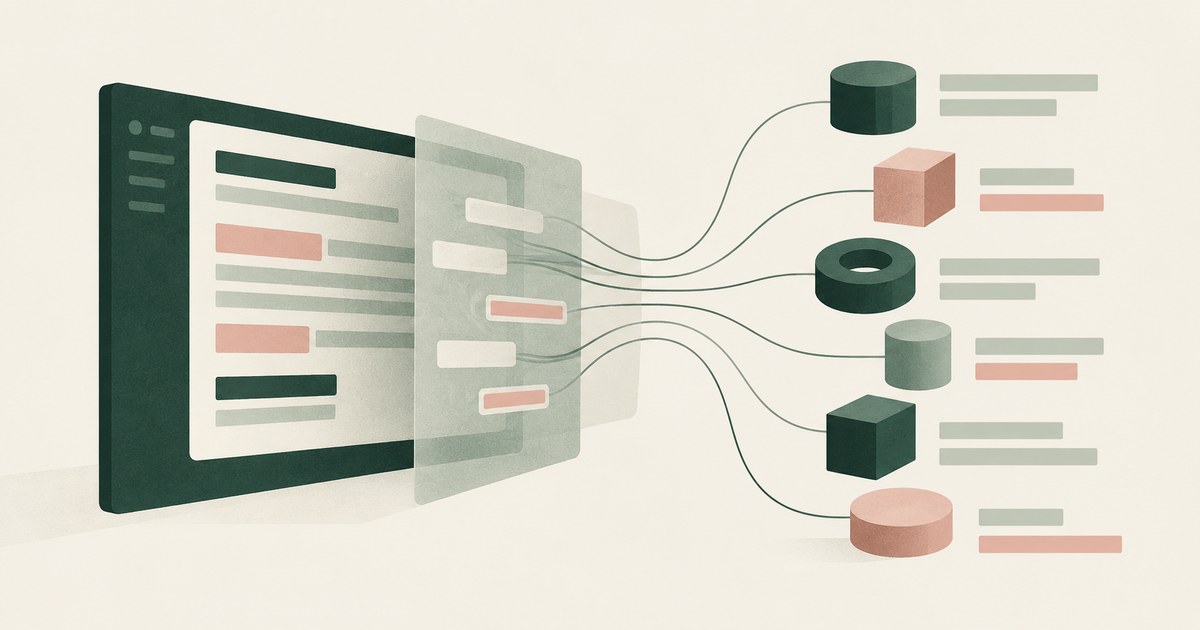
Which Enterprise AI Agents Can Work on Screens With PII Today, and What Does Each One Read?
Seventeen enterprise agents can work on screens with PII today, and for most the model receives whatever the account may see. Check for tokens first.
Can a Vendor Read Credentials Encrypted to My Own Key?
Not from stored ciphertext if the private key never leaves you, but a service that acts with the credential must decrypt it.
Why Should the Developer's Private Key Be the Root of Authority for Agents?
Because the developer is the party who can be held to the grant; a vendor-held key makes the vendor the authority, and a vendor breach breaks it.
What Does It Mean to Encrypt a Credential to the Developer's Public Key?
Encrypting with the developer's public key so only the matching private key can decrypt it, and every relay holds ciphertext.
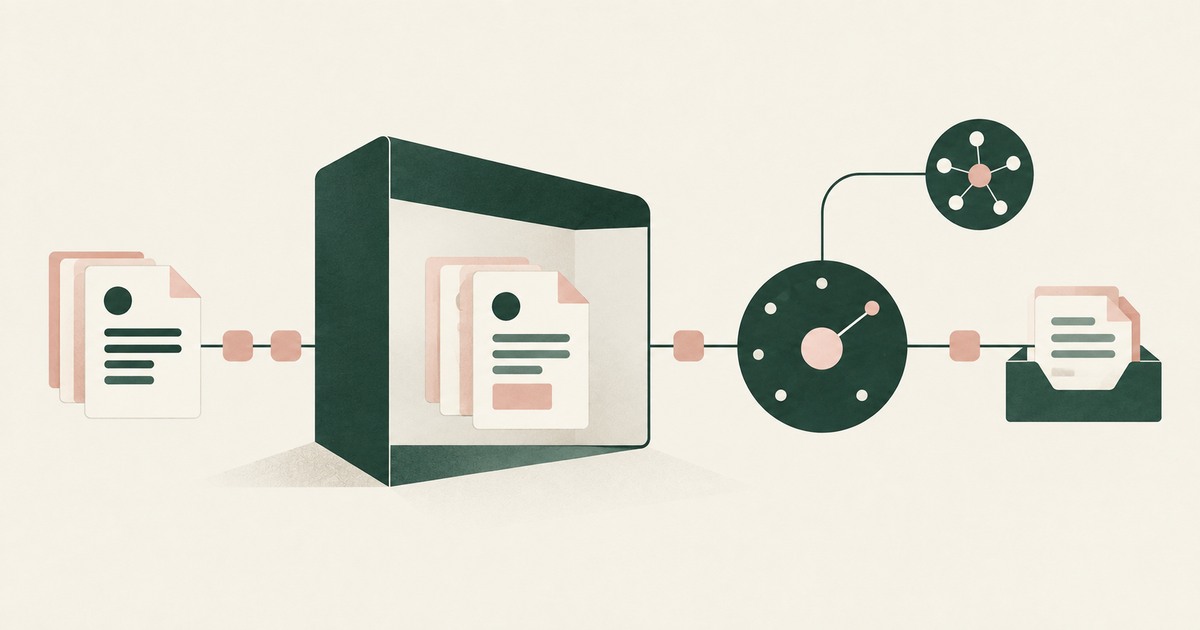
Accountable AI and Workflow Governance
Explore AI agent governance for billing and claims, with named supervisors, data masking, approval boundaries and a useful audit record.

What If the Agent Never Had Your Data?
Explore AI agent security built around tokenization, controlled browser actions and human approval before sensitive payments proceed.
How RedactSure Keeps a Connector Credential Out of the Model
The designs above keep the plaintext from the operator, the log and the vendor, yet each still resolves the value on a page the model reads.
The environment that enforces this is built by RedactSure, an AI agent controls, governance and data protection company.
Before: the agent opens the connector settings page, clicks the masked field and copies the provider key into the rotation request. Inside the governed environment the page renders CRED_001, and the real key reaches the connector's approved endpoint after a named operator approves.
RedactSure is deploying now with enterprise and government customers. Veracode reports that GenAI models make the wrong choices nearly half the time.
Everyone else controls where data can go. RedactSure controls what the AI can see.
See it on your own workflow
Rotating a connector key should not require the model to hold the key it is rotating. Bring a connector rotation your team performs and see, with test values, what the model reads in the masked field. Book a demo