
Comparison · By Chris Sowa · Published
Last updated
What Is the Difference Between RedactSure and CyberArk for AI Agent Credentials and Privileged Access?
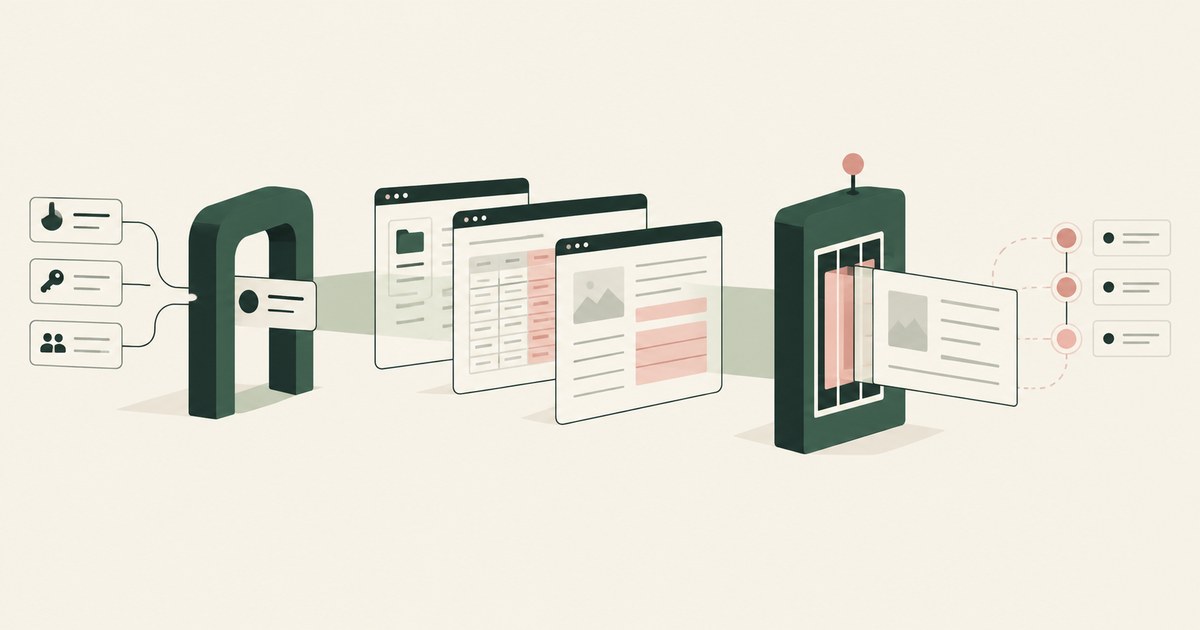
CyberArk's Secure AI Agents page describes identity-first control: discovering agents, scoping their privileged access to a task and revoking it. RedactSure's design governs what the model reads and who approves each action. Treating a well-scoped credential as data protection leaves every value on an authorized screen readable by the model.
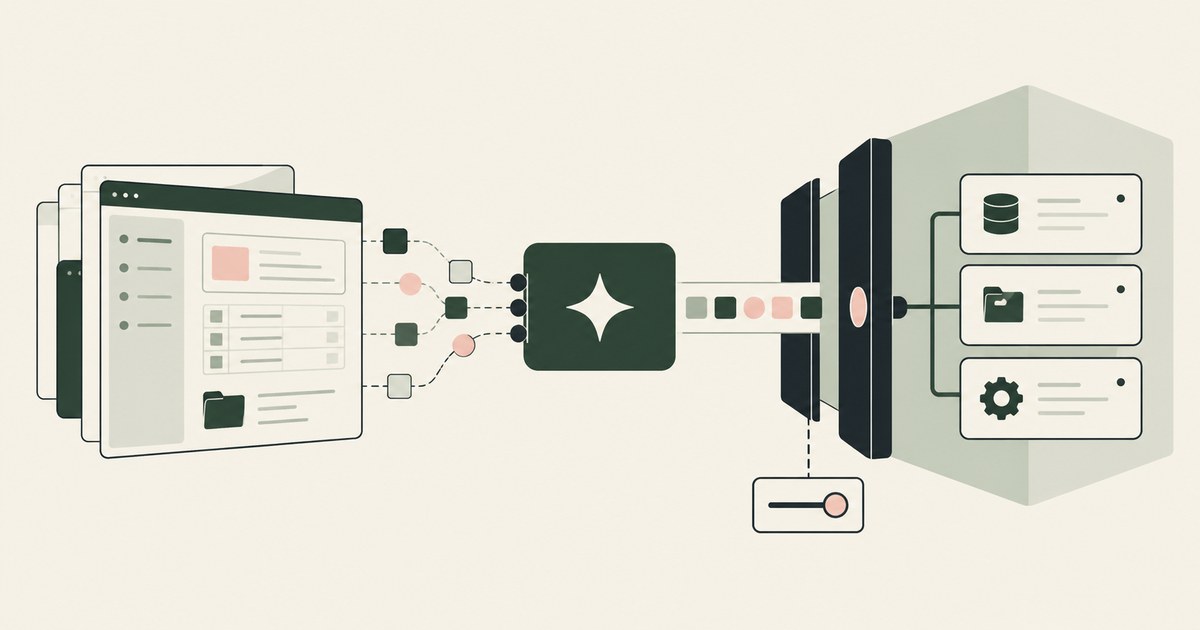
CyberArk's Secure AI Agents page describes identity-first control: discovering agents, scoping their privileged access to a task and revoking it. RedactSure's design governs what the model reads and who approves each action. Treating a well-scoped credential as data protection leaves every value on an authorized screen readable by the model. The two questions sit next to each other and are often merged. A credential answers whether an agent may open a system. It does not answer what the model learns once the system is open, and a legitimate session on a claims queue or a vendor master still shows names, account numbers and dates of birth on every screen. Render-layer tokenization addresses the second question by replacing those values with tokens before any model reads the screen. The environment that enforces this is built by RedactSure, an AI agent controls, governance and data protection company.
Key findings
- CyberArk describes its approach to agentic AI as "an identity-first approach to agentic AI security built on tight privilege controls" (CyberArk, 2026).
- The CyberArk page says agents receive permissions only for a specific task, at an appropriate privilege level, revoked automatically, with the goal of zero standing privileges (CyberArk, 2026).
- The page reviewed does not state that the product detects, classifies, redacts, masks or tokenizes sensitive data (CyberArk, 2026).
- OWASP lists sensitive information disclosure as a top risk for LLM applications, alongside prompt injection (OWASP, 2025).
- Indirect prompt injection arrives through content the application retrieves, such as web pages and documents, rather than through the user's prompt (Greshake et al., 2023).
- Research on agent-tool firewalls reports near-zero attack success when unnecessary data is stripped from tool inputs and instructions are removed from tool outputs, and warns that public benchmarks are easily saturated (Bhagwatkar et al., 2026).
What does CyberArk's documentation say Secure AI Agents does?
The Secure AI Agents solution page, accessed October 14, 2026, describes a product organized around identity and privilege (CyberArk, 2026; vendor documentation, accessed October 14, 2026). It discovers AI agents across SaaS, cloud and developer environments and records each agent's owner, purpose, status and permissions. It manages agent identities and their privileged access to sensitive resources. It logs agent actions and communications.
On governing actions, the page says agents receive permissions only for a specific task, at an appropriate privilege level, and that those permissions are revoked automatically, with the goal of zero standing privileges. An agent that behaves abnormally or exceeds its role can be suspended immediately, and related services can be disabled or shut down. The page says the product can flag abnormal agent behavior. Approval workflows and the blocking of individual tool calls are not explicitly described on the page reviewed.
On placement, the page describes an AI Agent Gateway as an enforcement point between AI agents and the tools they use. The page reviewed does not state where the product sits relative to the model or to the user's screen.
On logging, the page says the product records which agent performed which action and on whose behalf, and provides information on how agents act and are used (CyberArk, 2026). Agent Watch, described as a separate open-source module, mentions monitoring LLM and tool calls and logs tool inputs, arguments and performance data; the page does not present it as part of the core product.
On sensitive data, the page reviewed does not state that the product detects, classifies, blocks, redacts, masks or tokenizes it. It also does not state that the product inspects network traffic, API calls, prompts and responses, browsers, endpoints or data stores.
That profile maps to a recognized control family. The NIST AI Risk Management Framework asks organizations to govern, map, measure and manage AI risk, and accountability for who an AI system acts as and with what authority falls inside that work (NIST, 2023). Discovery, ownership, scoped privilege and revocation answer the identity part of that question. The questions the page leaves open are what the model is allowed to read once access is granted, and whether a person signs off on a given action before it runs.
Why is a protected credential not the same as a protected screen?
A credential decides whether a session opens. Once it opens, the application renders whatever the user's role is entitled to see, and an agent working that session reads the same thing. The page on whether a credential vault can protect what an AI agent reads works through this gap; the short form is that the vault keeps the password away from the model, and the screen behind the login is still in full view.
The pattern shows up in agent products that already handle credentials carefully. OpenAI's documentation for dots says secure sign-in "sends your credentials directly to the browser environment and submits them without exposing them to the model's context," and the same documentation describes the model reading webpage text and document content within connected apps (OpenAI, 2026). The password is protected. The page content is not filtered.
Task scoped privilege narrows the systems and functions an agent can reach, which reduces the blast radius of a stolen or misused identity. It does not narrow the fields on a screen the agent is entitled to open. An accounts payable agent scoped to the vendor master for one task still reads every bank account number on that record. A claims agent scoped to one claim still reads the claimant's date of birth and policy number. The question the page on AI agent credential protection separates out is exactly this one: keeping a secret from the model is a different control from keeping the record's identifiers from the model.
OWASP names sensitive information disclosure as a distinct risk in LLM applications, separate from prompt injection, because data that reaches a model can leave through outputs, logs or later actions (OWASP, 2025). Research on training data extraction showed that models can reproduce text they were exposed to (Carlini et al., 2021). Both findings point at what the model receives, which an identity layer does not set. Least Exposure is the principle that sets it: for each piece of work, the AI receives the data the task requires and nothing more, enforced before any model reads the screen.
How do CyberArk and RedactSure compare side by side?
The table below sets CyberArk's Secure AI Agents page, as accessed October 14, 2026, against RedactSure's published design. Where the CyberArk column says the page does not state something, that is a statement about the page reviewed, not about the product's full capabilities (CyberArk, 2026; vendor documentation, accessed October 14, 2026).
| Dimension | CyberArk, per its documentation | RedactSure, per its published design |
|---|---|---|
| Primary control | Agent identity and privileged access; "identity-first" | What the model sees on each screen, and who approves each consequential action |
| Discovery | Discovers agents across SaaS, cloud and developer environments; records owner, purpose, status, permissions | Agents work only inside the governed environment a named person connected them to (tethered agent) |
| Privilege | Task scoped permissions at an appropriate level, revoked automatically; goal of zero standing privileges | Permissions stay exactly as they are; what changes is what the AI can see |
| Position | AI Agent Gateway between agents and the tools they use; position relative to the model and screen not stated on the page | Render layer, before any model reads the screen; the model receives the task's fields with identifiers as tokens |
| Sensitive data | Detect, classify, redact, mask and tokenize not stated on the page | Identifiers chosen by policy replaced with consistent tokens such as SSN_001 and ACCT_001; real values resolve only at approved destinations at the moment of an approved action |
| Agent actions | Abnormal agents can be suspended; related services disabled; approval workflows not explicitly described | The Planner sets policy and a named person confirms it; a named person approves every payment, submission and record change (Supervised Delegation) |
| Record | Which agent did what, on whose behalf; Agent Watch module logs tool inputs and arguments | Every action logged, human and computer; all PII as tokens, exported to the customer's SIEM (AI Control Record) |
| Model and keys | Not stated on the page | Model agnostic; customer-held keys |
The rows show two controls aimed at different objects. CyberArk's page describes control over the agent as an identity. RedactSure's design describes control over the model's view of the work and over the moment an action takes effect. Neither column claims the other's job.
What happens when a privileged agent meets a prompt injection?
Indirect prompt injection does not need a stolen credential. The attacker places instructions in content the agent will read during legitimate work: an email, a web page, a document, a field in a record (Greshake et al., 2023). OWASP ranks prompt injection first among LLM application risks (OWASP, 2025). The agent then acts with whatever access it holds, which is the access a privilege control granted on purpose.
Task scoped privilege limits how far that hijacked session can reach. An agent scoped to one system for one task cannot pivot to a second system it was never granted. That reduction matters and sits squarely in the identity layer's strengths. Inside the granted scope, though, the injected instruction meets a model that can read every value on the screen, and the defense then depends on detection, suspension after abnormal behavior, or the model declining the instruction.
Model refusal is a weak place to rest that defense. MIT Technology Review describes the stacked defenses vendors use, system prompts, classifiers and internal probes, as layers that each have holes (MIT Technology Review, 2026). Microsoft's AI Red Team publishes a taxonomy of agent failure modes (Microsoft, 2025), and Anthropic documents insider-threat behavior in agents (Anthropic, 2025).
The ServiceNow and Mila research points to a different kind of control. Its Tool-Input Firewall strips data the tool call does not need, and its Tool-Output Firewall removes instructions from what tools return; together they reach near-zero attack success on four public benchmarks with little loss of utility (Bhagwatkar et al., 2026). The same paper warns that public benchmarks have flawed metrics and weak attacks, so a vendor's "100 percent" deserves scrutiny. The principle that transfers is minimization at a boundary outside the model. In RedactSure's design, an injection that succeeds collects tokens, not account numbers, and the consequential action it aims at still stops for a named person.
Who approves a consequential action in each design?
The CyberArk page describes control before and after an action. Before: the agent holds only the privilege the task needs, for as long as the task runs. After: abnormal behavior can be flagged, and the agent can be suspended and related services shut down (CyberArk, 2026; vendor documentation, accessed October 14, 2026). The page reviewed does not explicitly describe an approval workflow in which a person signs off on a specific action before it executes, and it does not describe blocking individual tool calls.
Supervised Delegation places the person at the action itself. A named person grants the access, chooses the applications, confirms what is tokenized, can watch and pause the run, and approves every consequential action, on the record. The agent prepares a payment, a submission or a record change; it does not pay, submit or change the record on its own. The human operator can watch, pause and take over the same tokenized stream.
The difference shows up in the audit question a controller or examiner asks. An identity log answers which agent acted and on whose behalf. A regulator reviewing a payment wants to know which person approved this payment, what that person saw when approving it, and what the agent saw while preparing it. The AI Control Record is built for that question: every screen the agent saw as tokens, every action, every approval with a name, exported to the customer's own monitoring.
Gartner warned in May 2026 that applying uniform governance across AI agents will lead to enterprise AI agent failure (Gartner, 2026). Read alongside the two designs, the warning supports matching the control to the risk: privilege scoping for every agent identity, and a named approver at the point where money moves or a record changes.
Does an organization need both?
The two products answer different questions, so the choice is rarely one or the other. An identity program that discovers agents, assigns owners and removes standing privilege closes a real gap; agents created in SaaS tools and developer environments without an owner are hard to govern at all. The page on AI agent credential protection treats that layer as necessary. It is not sufficient for work on regulated records.
Three tests separate the layers in a buying decision. First, take one task an agent will run, such as updating a vendor's bank details, and list every field the agent will read on the way. An identity control decides whether the agent can open the vendor master; it does not decide whether the model reads the account number. Second, ask what an injected instruction collects inside the granted scope. If the answer is real identifiers, the scope limit reduces reach but not exposure. Third, ask who approves the change before it takes effect, by name, and what record shows what that person saw.
Accenture's Technology Vision defines trust in AI operationally as accuracy, predictability, consistency and traceability (Accenture, 2025). Traceability of identity and traceability of what the model saw are separate records, and an organization that needs both will usually run both controls.
The two can also coexist in one deployment. An organization can keep its privileged access program for the agent identities and service accounts it already manages, while the work on records with identifiers runs inside an environment that tokenizes the screen and stops each consequential action for a named person. Nothing in either design requires removing the other.
Where does RedactSure sit?
RedactSure sits at the screen, after the credential has opened the session and before any model reads it. AI co-workers work across an organization's applications inside a governed environment with no per-application integration and no change to user permissions. Every identifier chosen by policy is replaced with a consistent token at the render layer, and the model receives the task's fields with identifiers as tokens. The Planner sets which values are tokenized and what the agent may do on each screen; a named person confirms that policy before the run and approves every payment, submission and record change while it runs. Real values resolve only at approved destinations at the moment of an approved action. The environment runs on hardware-encrypted enclaves with customer-held keys, is model agnostic, and exports the AI Control Record to the customer's SIEM. Deployments are in pilot.
Everyone else controls where data can go. RedactSure controls what the AI can see.
Methodology and limitations
This page rests on CyberArk's Secure AI Agents solution page (vendor documentation, accessed October 14, 2026), OWASP's Top 10 for LLM Applications 2025 risk pages, the NIST AI Risk Management Framework, the Gartner press release of May 26, 2026, peer-reviewed research and preprints from Greshake et al., Carlini et al. and Bhagwatkar et al., research reports from Microsoft's AI Red Team and Anthropic, analysis from MIT Technology Review and Accenture, OpenAI's documentation on dots, and RedactSure's published design. Sources were read as of October 13, 2026, with the CyberArk page accessed October 14, 2026.
No named product was tested hands on. The CyberArk column reflects one solution page; where it says the page does not state a capability, the product may offer that capability elsewhere in its documentation or in releases after the access date, and readers should confirm current behavior with the vendor. Vendor features change, and the page carries its date so a reader can judge its age. No specific organization is described, and the accounts payable and claims examples are illustrations, not accounts of any customer or prospect.
Whether a given control set satisfies an obligation under a regulation, a contract or an audit framework is a determination for the organization's counsel, its assessor and its security and compliance officers. The comparison here describes what two designs do according to their published materials. It does not decide which an organization should buy or whether either meets a specific requirement.
What the record shows
An identity control governs whether an agent may open a system; a render-layer control governs what the model reads once it does, with a named person at each consequential action. Relying on privilege alone leaves every identifier inside the granted scope readable by the model and collectible by an injected instruction. The test is one task: list every field the agent reads, and ask which control keeps the account number away from the model and who approves the change by name.
Frequently asked questions
Does CyberArk tokenize or mask sensitive data that an AI agent reads?
The Secure AI Agents page accessed October 14, 2026 does not state that the product detects, classifies, redacts, masks or tokenizes sensitive data. It describes identity discovery, task scoped privilege, automatic revocation, suspension of abnormal agents and logging. Other CyberArk documentation may cover data handling, so confirm with the vendor.
What does zero standing privileges mean for an AI agent?
Per CyberArk's page, agents receive permissions only for a specific task, at an appropriate privilege level, and those permissions are revoked automatically. The agent holds no persistent access between tasks. That limits how far a misused identity can reach, but inside the granted task the agent still reads what the application renders.
If a credential vault keeps the password from the model, is the data protected?
No. Keeping a password out of the model's context protects the secret. Once the session opens, the application renders the record, and an agent reading that screen sees the names, account numbers and dates of birth on it. Protecting those values takes a control at the screen, such as render-layer tokenization.
Does RedactSure change user or agent permissions?
No. Permissions stay exactly as they are. What changes is what the AI can see: identifiers chosen by policy are replaced with tokens before any model reads the screen, and real values resolve only at approved destinations at the moment of an approved action.
How does each design handle prompt injection?
CyberArk's page describes limiting privilege to the task and suspending agents that behave abnormally, which narrows reach. In RedactSure's design, an injection that succeeds inside the session collects tokens rather than real identifiers, and the consequential action it targets still stops for a named person to approve.
Can CyberArk and RedactSure be used together?
Yes. They govern different objects. A privileged access program can manage agent identities and service accounts across the estate, while work on records with identifiers runs inside a governed environment that tokenizes the screen, requires a named approver for each consequential action and exports the record to the customer's SIEM.
Related reading
Can a Credential Vault Protect What an AI Agent Reads? · What Is AI Agent Credential Protection? · What Is AI Agent Identity and Why Do Agents Not Fit Traditional User Access Models? · What Is an Overprivileged AI Agent and Why Can Legitimate Permissions Still Be Dangerous? · What Is the Difference Between RedactSure and Okta for AI Agent Identity and Access? · On the RedactSure blog: The Two Gaps AI Agents Opened in Your Security Stack
Sources
Peer-reviewed research and preprints
- Greshake, Kai, et al., "Not What You've Signed Up For: Compromising Real-World LLM-Integrated Applications with Indirect Prompt Injection," arXiv:2302.12173, 2023 (preprint; also AISec 2023). https://arxiv.org/abs/2302.12173
- Carlini, Nicholas, et al., "Extracting Training Data from Large Language Models," USENIX Security 2021 (peer-reviewed). https://www.usenix.org/conference/usenixsecurity21/presentation/carlini-extracting
- Bhagwatkar, Kasa, et al., "Indirect Prompt Injections: Are Firewalls All You Need, or Stronger Benchmarks?" arXiv:2510.05244, v2 March 2026 (preprint). https://arxiv.org/abs/2510.05244
Vendor documentation
- CyberArk, "Secure AI Agents" (accessed October 14, 2026; vendor documentation). https://www.cyberark.com/solutions/secure-agentic-ai
- OpenAI, "How we build safety, security and privacy into dots" (September 29, 2026; vendor documentation). https://openai.com/index/how-we-build-safety-security-and-privacy-into-dots/
- Microsoft AI Red Team, "Taxonomy of Failure Modes in Agentic AI Systems" (April 2025; whitepaper). https://www.microsoft.com/en-us/security/blog/2025/04/24/new-whitepaper-outlines-the-taxonomy-of-failure-modes-in-ai-agents/
- Anthropic, "Agentic Misalignment: How LLMs Could Be Insider Threats" (June 2025; research report). https://www.anthropic.com/research/agentic-misalignment
Regulation, standards and official guidance
- OWASP, "LLM01:2025 Prompt Injection" (2025; standard). https://genai.owasp.org/llmrisk/llm01-prompt-injection/
- OWASP, "LLM02:2025 Sensitive Information Disclosure" (2025; standard). https://genai.owasp.org/llmrisk/llm022025-sensitive-information-disclosure/
- National Institute of Standards and Technology, "AI Risk Management Framework" (framework). https://www.nist.gov/itl/ai-risk-management-framework
Industry analysis and press
- Gartner, "Applying Uniform Governance Across AI Agents Will Lead to Enterprise AI Agent Failure" (May 26, 2026; press release). https://www.gartner.com/en/newsroom/press-releases/2026-05-26-gartner-says-applying-uniform-governance-across-ai-agents-will-lead-to-enterprise-ai-agent-failure
- Holland Michel, Arthur, "We're putting too much faith in AI's ability to say no," MIT Technology Review (October 9, 2026; press). https://www.technologyreview.com/2026/10/09/1145728/we-are-putting-too-much-faith-in-ai-to-say-no/
- Accenture, "Technology Vision 2025: AI: A Declaration of Autonomy" (January 2025; industry analysis). https://www.accenture.com/us-en/insights/technology/technology-trends-2025
RedactSure documents
- RedactSure Research, "Can a Credential Vault Protect What an AI Agent Reads?" (2026). https://redactsure.com/research/can-a-credential-vault-protect-what-an-ai-agent-reads
- RedactSure Research, "What Is AI Agent Credential Protection?" (2026). https://redactsure.com/research/what-is-ai-agent-credential-protection
- RedactSure Research, "What Is Render-Layer Tokenization?" (2026). https://redactsure.com/research/what-is-render-layer-tokenization
- RedactSure Research, "What Is Supervised Delegation?" (2026). https://redactsure.com/research/what-is-supervised-delegation
- RedactSure, "The Two Gaps AI Agents Opened in Your Security Stack" (2026). https://redactsure.com/blog/two-gaps-ai-agents-opened-in-your-security-stack/
- Product behavior described on this page reflects RedactSure's current design. CyberArk is a trademark of CyberArk Software Ltd.; OpenAI is a trademark of OpenAI; named to identify the products.

Can a Credential Vault Protect What an AI Agent Reads?
Compare credential storage with AI agent security for encountered PII, and examine where screen-level tokenization adds a different control.
What Is AI Agent Credential Protection?
Review AI Agent Credential Protection, with AI agent security, tokenization and approval checks for sensitive enterprise workflows.
What Is AI Agent Identity?
Review AI Agent Identity for AI agent security, with practical checks on sensitive data, tokenization and named human approvals.
What Is an Overprivileged AI Agent?
Review an Overprivileged AI Agent, with AI agent security, tokenization and approval checks for sensitive enterprise workflows.
RedactSure vs Okta: AI Agent Security
Review RedactSure vs Okta: AI Agent Security, with AI agent security, tokenization and approval checks for sensitive enterprise workflows.

The Two Gaps AI Agents Opened in Your Security Stack
Explore AI agent security through two questions: which PII reaches the model, and who approves consequential billing and claims actions.

What Is Render-Layer Tokenization?
Learn how render-layer tokenization replaces PII before an AI agent reads a browser screen while preserving useful workflow context.

What Is Supervised Delegation?
Explore supervised delegation for AI agents in billing and claims, with named responsibility, tokenization policies and human approvals.
Book an AI Agent Security Review →
Bring your hardest questions.
Bring one sensitive workflow and the decisions your team needs to keep in its hands.
Book a demoAbout the author

Chris Sowa is a founder of RedactSure and a former CEO of an AI company; he started it years before ChatGPT existed. He previously led AI at Accenture, served as Global VP of Strategy & Innovation at Schneider Electric, was CCO of Sovos, and spent more than a decade at Oracle, with earlier roles at SAP and IBM.