
Data Report · By Chris Sowa · Published
Last updated
Can I Grant a Coding Agent Clone Access but Not Push Access?
Yes, by operation: a credential can read a repository without permission to write to it, and a grant can name clone as the operation so a push is refused even when the credential would allow one. Ask which of the two layers refuses the write, and what record shows the refusal.

A coding agent usually needs the repository before it can do anything useful, and the access request rarely separates reading the code from changing it. The separation exists, but it lives in two places. A code host can issue a credential whose permission stops at reading, so a write has nothing to authorize it. The environment the agent works inside can also name the operation the run may perform, so a push is refused because clone was the granted operation, not because the credential happened to be narrow.
The two layers fail differently. The credential is a decision made once and remade later, sometimes wider; the operation named in the grant belongs to this run and is checked where the action is attempted. This page takes the question in review order: where the line is enforced, what a read-level credential can refuse, what GitHub and Firecracker document, why the credential alone is not enough, what a refused push leaves in a record, and what a governed environment changes. The worked example is a record type, a repository page where an agent composes a commit the grant does not cover. A reader who cannot say which layer refuses the write has described a setting, not answered the question.
Key findings
- GitHub's token page tells a creator to "choose the minimal permissions necessary," which is the instruction behind a read-level credential and says nothing about which operation a run may attempt (GitHub, Managing, 2026).
- GitHub's push protection page states that push protection "acts as a frontline defense mechanism by scanning code for hardcoded secrets at the time of the push," a scan of what a write carries rather than a decision to permit it (GitHub, Push, 2026).
- Wiz "looked at 50 leading AI companies and found that 65% had leaked verified secrets on GitHub," which is the population a write path reaches when a push lands (Wiz, 2025).
- A governed environment replaces the values a repository page would show the model with consistent tokens before any model reads the screen, so a read grant does not hand over every credential the page renders (What Is Least Exposure?).
- A grant that names clone as its only operation refuses a write at the approver, so a push stops even when the credential in the agent's hand would have allowed it (What Is Supervised Delegation?).
- Real values resolve only at the approved destination at the moment of an approved action, so the placeholder on the page is not a copy of what the repository stores (What Is Least Exposure?).
Where is the line between clone access and push access enforced?
The line is enforced twice, and the two enforcements answer different questions: a credential answers what the agent may do with a repository across every task it runs, and a grant answers what this run was approved to do.
The credential layer sits with the code host. A token issued for reading carries a permission that stops before writing, so the host has nothing to authorize a ref update and the push fails there. The grant layer can sit in the environment the agent works inside. Where the agent works through a rendered page, the grant names clone as the operation, and a commit composed in the web editor is a write the grant did not include.
That second layer reaches the rendered page and no further. A governed browser environment covers what the agent reads and does on a repository page, a file view, an access settings page or a commit form. It does not cover the terminal, the IDE, the local filesystem, direct API calls or MCP. An agent that clones from a shell is outside it, and for that route the credential is the only control in play.
Least privilege, the identity industry's standard answer to agent risk, governs actions and credentials rather than the content of the screen an agent reads, so a read-level token can still be fully in view of the model while it works (What Is Least Exposure?). A tether describes authority rather than capability, which is why the operation, not the agent's identity, is the thing to bound here, as What Is a Tethered Agent? puts it.
The record type for this page is a repository page in a code host. An agent holding a clone grant opens a file in the web editor, composes a commit, and the commit is refused because clone was the operation granted.
| Layer | What it decides | What a refusal looks like | What it leaves open |
|---|---|---|---|
| Credential permission | Which operations the token may perform, for every task | The host rejects the write | Whether this run needed the write |
| Operation named in the grant | Which operation this run may perform | The approver declines the commit | Operations the token permits and the grant does not |
| Sandbox and egress rules | Where the process may reach | The connection fails | Which repository operation was attempted |
| The record | What the model saw and who decided | An entry with a name | Nothing, if it is exported and read |
What does a read-level credential actually refuse?
It refuses the write and nothing else. A read-level credential does not refuse a read of a committed credential or a read of the access page that displays its own value. Those are reads, and a read grant permits them. The distinction between clone and push is a distinction about one operation, not a statement that the run is safe.
GitHub's page on personal access tokens is candid about the posture. It says to "Treat your access tokens like passwords," which places the emphasis on custody of the value rather than on what the value may do (GitHub, Managing, 2026).
What the page does not do is tie a token to one operation on one repository for one task. A token that is replaced, copied into another tool or reissued with more permission changes the answer without changing the intent. The read-level permission is true of the token at the moment it is inspected; nothing in the credential records that this run was a clone.
An identity layer does not close that gap either. Okta's developer documentation says Okta for AI Agents "manages the registration, configuration, and lifecycle of AI agents," which settles whether the agent may connect and not which operation it may perform (RedactSure vs Okta: 2026 Comparison & Alternative).
A read-level token that refuses a push is evidence that the first layer works, not that a push would be refused if the token were wider.
What do the vendors themselves say?
The vendor pages reviewed describe permissions, scanning and isolation, and each page states its own limit. None of them describes a grant that names one git operation for one run; the closest is a token permission that a creator chooses.
GitHub's token page states that each token "can be further limited to only access specific repositories for that user or organization," a boundary on where the credential works rather than on what the run does (GitHub, Managing, 2026). A token for a clone can be cut to one repository and still be reused for another task in it.
The push protection page, cited above, places its scan at the push itself, which is the moment a write carries content. The control inspects what the push contains; it does not decide whether the push is permitted, and the page describes the scan and its bypass alerts rather than a rule about operations.
Firecracker's design documentation states that it "is designed to assure secure isolation using multiple layers" and that "All egress traffic from a guest is therefore considered untrusted, and should be filtered at the host-level" (Firecracker, 2026). That is isolation of the machine and its network path. It says nothing about the repository operation the isolated process performs, and a confined process can still hold a credential with write permission.
| Dimension | GitHub, per its documentation | Firecracker, per its documentation | What a buyer should verify |
|---|---|---|---|
| What the control bounds | Repository reach and token permission level | The guest's isolation and its egress path | Which control bounds the operation, not just the token |
| When it acts | At token creation and at each request | At the machine and host boundary | Whether the decision is made per run |
| What it does not settle | Which operation this run was approved for | Which repository operation the guest attempts | That a named person approved the write |
Why is the credential layer not enough on its own?
Because a credential is a value before it is a decision. It can be copied, reissued or replaced by one with more permission, and none of those changes announces itself to the run. GitHub's own page says that "Personal access tokens (classic) are less secure" (GitHub, Managing, 2026).
A detector is the next thing teams reach for, and the research on it concerns content. The LlamaFirewall paper describes PromptGuard 2 as "a universal jailbreak detector that demonstrates clear state of the art performance" (Chennabasappa et al., 2025). It screens what the model is about to read, not which operation the run may perform.
Privilege control is the research line that bounds operations. Progent, a privilege-control design for agents, "significantly reduces attack success rates while maintaining high utility" (Shi et al., 2026).
The risk OWASP names for non-human identities has the same shape. Overprivileged identities are one of its ten risks, and secret leakage is the "leakage of sensitive NHIs such as API keys, tokens, encryption keys, and certificates to unsanctioned data stores" (OWASP, 2025).
OWASP's excessive agency entry covers a model given more functionality, permission or autonomy than its task requires, which is what one login that bundles workflow access with value access produces by construction (How Do You Give AI Agents Access to Workflows Without Exposing Sensitive Data?).
What does a refused push look like in a record?
The record type is a repository page where the agent composes a commit the grant does not cover; the attempt does not reach the branch. What it leaves behind is an entry that names the page as the model saw it, the operation the run attempted, the operation the grant allowed, and the person who decided.
A team reading that entry can answer what the credential alone cannot: whether the write was refused because the token was narrow or because the operation was never granted. The material a cloned repository brings is why the answer matters. A study of agentic coding editors reports that "attack success rates can reach as high as 84% for executing malicious commands," so a read operation is not a quiet one (Liu et al., 2026).
GitHub is where much of the material already sits. GitGuardian's 2026 report, as carried by CIO Dive, counts about 29 million credentials leaked on public GitHub in 2025, and its chief executive says that "AI agents need local credentials to connect across systems" (GitGuardian, 2026).
A separate count puts it at "28,649,024 new secrets exposed in public GitHub commits across 2025," with commits co-authored by an AI coding agent leaking credentials at roughly double the baseline rate (How Do You Let an AI Agent Manage API Keys Without Reading Them?).
The page is also a delivery route. A measured environmental injection attack on generalist web agents stole users' specific personal information at an attack success rate of up to 70 percent (Can an AI Agent Sign Up for Developer Services Without Seeing Your Payment Card or Identity?). The surface that lets an agent act on a page lets a page act on the agent.
What does a governed environment change?
A governed environment is a control class that acts where the action is attempted. Values a page would show are replaced with tokens before any model reads the screen, and real values resolve only at the approved destination at the moment of an approved action. For this page's question, the operation is part of the grant. A push is a record change, and a record change needs its own approval from a named person, so an operation the grant did not name is refused at the approver rather than at the credential.
That refusal is the property a credential cannot supply. A read-level token is a fact about a value; the named operation is a fact about this run. When the two disagree the run stops, and the stop is recorded with the page as the model saw it and the name attached to the decision. Every screen as tokens, every action and every approval lands in a record that exports to the organization's own monitoring.
The scope is the rendered page. A governed browser environment covers the repository page, the file view, the access settings page and the commit form, and it does not govern the terminal, the IDE, the local filesystem, direct API calls or MCP. A clone run in a shell is governed by the credential and the code host, which is why this page describes the two layers separately.
What changes for a reviewer is the question the record answers. It is no longer whether the token was configured correctly, which is a question about a value, but whether the operation the agent attempted had an approval and a name, which is a question about the run.
Methodology and limitations
This page rests on GitHub's token page and its push protection page, Firecracker's design documentation, three research preprints on guardrails, privilege control and coding-editor injection, OWASP's non-human identity list, Wiz's exposure report, GitGuardian's 2026 secrets report as carried by CIO Dive, and existing RedactSure research pages. Vendor pages were read as of October 20, 2026, and each Sources line carries the date for its page. Quoted facts are cited to the page that states them, and figures from vendor research are reported as the vendor states them, not as independently measured. Every quoted phrase on this page is on the page cited for it.
RedactSure did not test any of the named products hands-on. No page reviewed describes a grant that names one git operation for one run, and that is what "not described in the pages reviewed" means here: the pages reviewed do not record it, not that a vendor does not offer it. Vendor features change and the page carries its date, so a release after it should be treated as unreviewed until the test below is repeated. Statements about RedactSure describe its current design, and RedactSure is deploying now with enterprise and government customers. The example describes a record type, a repository page where an agent composes a commit the grant does not cover, and not an organization.
Determinations about whether a particular access design meets a contractual, audit or regulatory requirement belong to counsel, assessors and the organization's own security and compliance officers. Nothing here replaces a test of the organization's own agent against its own repository and its own credential, and a control that is not tested against that repository remains a claim on paper.
What the record shows
The two layers answer the title in different currencies. A read-level credential answers what the agent may do with the repository, and it is only as good as the decision made when the token was issued, stored and replaced. A grant that names clone as the operation answers what this run may attempt, and it refuses the push at the approver rather than at the token. The GitHub pages reviewed cover the first and stop there; the research on privilege control and the record of credentials on GitHub explain why the second is worth having. RedactSure's environment is built on the second. A security lead should test this with one agent and one repository: grant clone only, attempt a commit and see which layer refuses it, then read the refusal in the record, including the name attached to it. A refusal that leaves no entry is the same answer a wider token would have given.
Frequently asked questions
Can I grant a coding agent clone access but not push access?
Yes, by using two controls rather than one. Issue a credential whose permission stops at reading, so the code host has nothing to authorize a write, and write the grant so clone is the operation the run may perform. The credential answers what the agent could do for any task; the grant answers what this run was approved to do. Check which of the two refuses a push, because only the second is independent of how the token was made and of any token that replaces it.
Is a read-only token enough on its own?
It is one layer, and it holds only while the token is configured as intended. GitHub's page advises choosing the minimal permissions necessary and treating access tokens like passwords, and nothing there ties the token to a single run or operation. A token replaced later, or issued with more permission than the task needed, changes what the clone grant means. The operation named in the grant is the part that does not move.
What happens when the agent tries to push anyway?
The push is refused before the repository accepts a write. In a governed run the refusal happens at the approver: the grant named clone, the commit is a record change the grant did not cover, and the person who approves actions declines it. The record then holds the page as the model saw it, the attempted operation, the grant's operation, and the name attached to the decision. Without that layer, the refusal depends on the credential, and the record cannot say whether a wider token would have passed.
Does a sandbox or an allowlist stop a push?
Not by itself. A sandbox confines the process and filters its network egress, which is what Firecracker's documentation describes as isolation built from multiple layers and egress treated as untrusted. Confinement limits where a process can reach; it does not decide which repository operation the run was approved to perform. An agent can be confined and still hold a credential with write permission. The operation grant is a separate control from the sandbox.
Can the agent push through the repository's web page instead of git?
Yes, a rendered commit form is a write path, and it is the one a browser control can govern. An agent that opens a file in the web editor and commits the change performs the same kind of operation as a push from a terminal, without a shell. That is why the operation has to be named for the page as well as for the credential, and why a refusal recorded on the page is evidence a terminal-only control would not produce.
What should I ask before approving a clone grant?
Ask which credential the agent holds, what permission level it carries, and who can replace it. Ask whether the grant names clone as the operation, and what happens when the run attempts a write. Ask what the record shows after a refused attempt: the page the model read, the operation it tried, the operation that was granted, and the person who decided. An answer that covers only the token leaves the second layer unverified.
Related reading
What Is Least Exposure? · What Is a Tethered Agent? · How Do You Let an AI Agent Manage API Keys Without Reading Them? · Can an AI Agent Sign Up for Developer Services Without Seeing Your Payment Card or Identity? · How Do You Give AI Agents Access to Workflows Without Exposing Sensitive Data? · What Is Supervised Delegation? · RedactSure vs Okta: 2026 Comparison & Alternative · How Do I Give a Coding Agent Read-Only Access to One Repository? · Do GitHub Fine-Grained Tokens Give Coding Agents Least Privilege? · How Do I Give a Coding Agent Access to Staging but Not Production? · On the RedactSure blog: Your AI Strategy Is Probably Wrong · What If the Agent Never Had Your Data? · RedactSure
Sources
Peer-reviewed research and preprints
-
Chennabasappa, Nikolaidis, Song et al. (Meta), "LlamaFirewall: An open source guardrail system for building secure AI agents," arXiv:2505.03574 (preprint, May 2025). https://arxiv.org/abs/2505.03574
-
Shi, He, Wang et al., "Progent: Securing AI Agents with Privilege Control," arXiv:2504.11703 (preprint, v3 May 2026). https://arxiv.org/abs/2504.11703
-
Liu, Zhao, Lyu et al., "Your AI, My Shell: Demystifying Prompt Injection Attacks on Agentic AI Coding Editors," arXiv:2509.22040 (preprint, revised 2026-04-28). https://arxiv.org/abs/2509.22040
Vendor documentation
-
GitHub, "Managing your personal access tokens," GitHub Docs, 2026 (vendor documentation). https://docs.github.com/en/authentication/keeping-your-account-and-data-secure/managing-your-personal-access-tokens
-
GitHub, "Push protection," GitHub Docs (vendor documentation; read October 20, 2026). https://docs.github.com/en/code-security/secret-scanning/introduction/about-push-protection
-
Firecracker, "Design," firecracker-microvm repository docs (vendor documentation; read October 20, 2026). https://github.com/firecracker-microvm/firecracker/blob/main/docs/design.md
Regulation, standards and official guidance
- OWASP, "Top 10 Non-Human Identities Risks 2025" (standard). https://owasp.github.io/www-project-non-human-identities-top-10/2025/top-10-2025/
Industry analysis and press
-
Wiz, "Exposure Report: 65% of Leading AI Companies Found with Verified Secret Leaks," November 10, 2025 (vendor research). https://wiz.io/blog/forbes-ai-50-leaking-secrets
-
GitGuardian, State of Secrets Sprawl 2026 press release via CIO Dive, March 17, 2026 (industry research). https://www.ciodive.com/press-release/20260317-ai-is-fueling-secrets-sprawl-gitguardian-reports-an-81-surge-of-ai-servic/
RedactSure documents
-
RedactSure Research, "What Is Least Exposure?" (2026). https://redactsure.com/research/what-is-least-exposure/
-
RedactSure Research, "What Is Supervised Delegation?" (2026). https://redactsure.com/research/what-is-supervised-delegation/
-
RedactSure Research, "How Do You Let an AI Agent Manage API Keys Without Reading Them?" (2026). https://redactsure.com/research/how-do-you-let-an-ai-agent-manage-api-keys-without-reading-them/
-
Product behavior described on this page reflects RedactSure's current design. Third-party products are described from their public documentation as read on October 20, 2026. Compliance determinations belong to the organization's counsel.
What Is Least Exposure? Reading the Principle, the Gap It Closes and the Published Numbers Behind It
Least Exposure is a security approach for AI agents that gives each task only the data it needs, applied before any model reads the screen.
What Is a Tethered Agent? The Plain-Words Name for an Agent a Named Person Answers For
A tethered agent stays tied to a named person for the whole run: that person grants access, sees what the agent sees and approves consequential actions.
How Do You Let an AI Agent Manage API Keys Without Reading Them?
Swap the key for a token as the dashboard renders it, and resolve the real value in the approved field when a person confirms. Check where keys show.
Can an AI Agent Sign Up for Developer Services Without Seeing Your Payment Card or Identity?
Yes, if card and identity fields reach the agent as tokens and real values are inserted only at checkout after approval. Check how the payment step works.
How Do You Give AI Agents Access to Workflows Without Exposing Sensitive Data?
Separate workflow access, meaning navigating and filling fields, from access to screen values, granted at approved destinations. Check what a platform has.
What Is Supervised Delegation? Who Answers for an AI Agent, and What the Record Shows
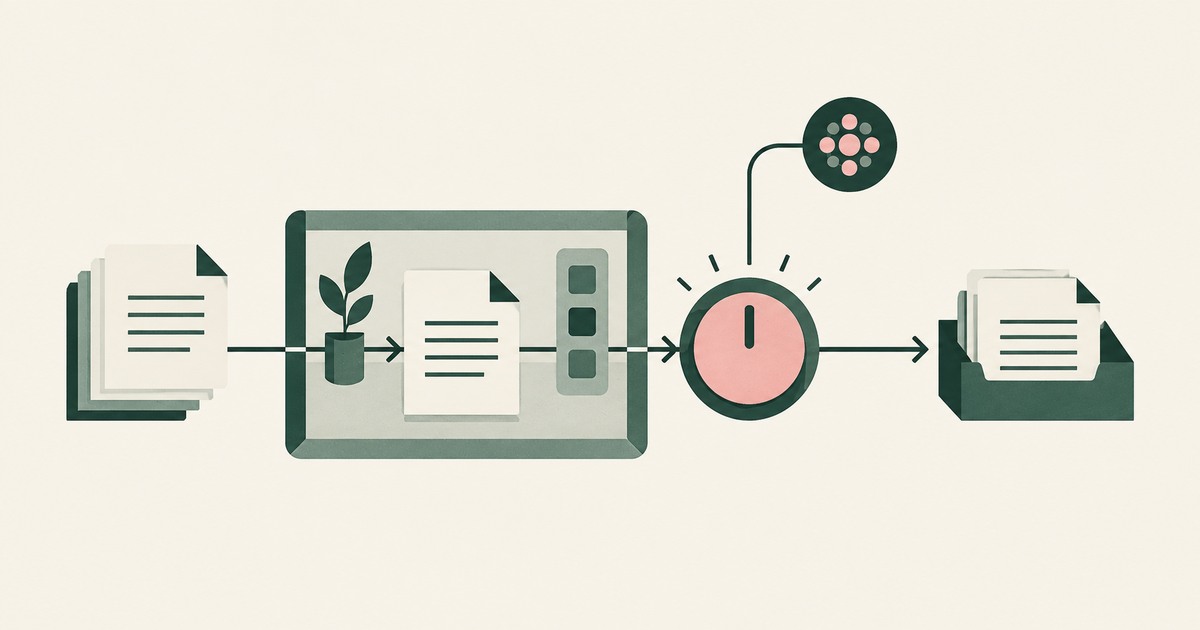
Supervised Delegation is the operating model in which an AI agent works for a named person who grants its access, approves actions and answers for it.
RedactSure vs Okta: 2026 Comparison & Alternative
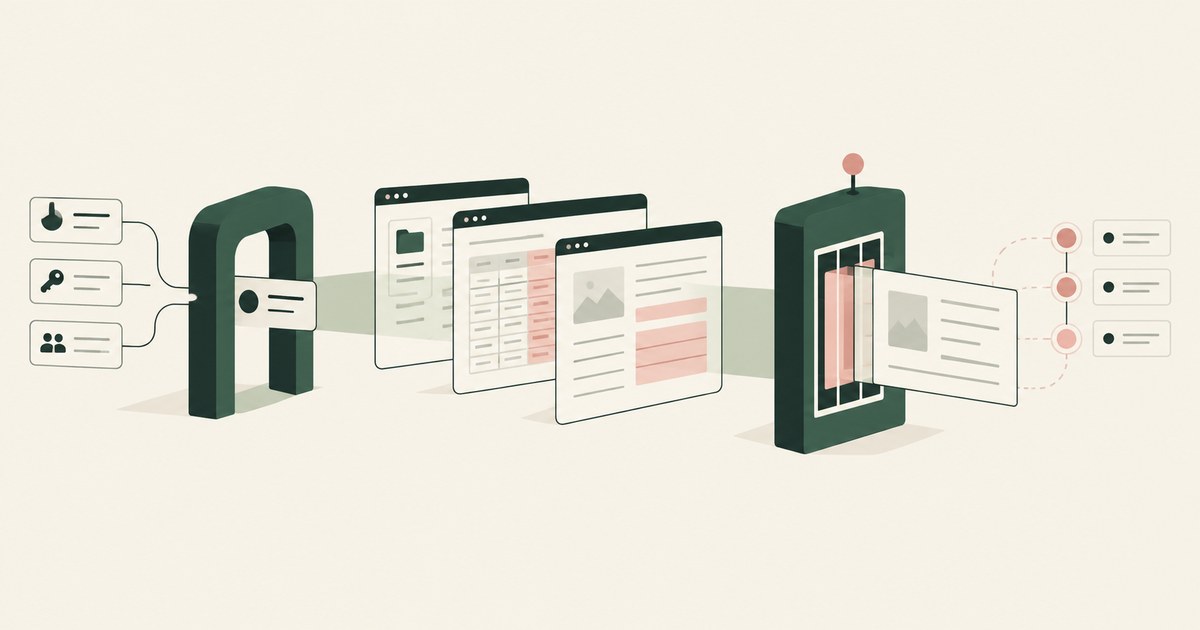
Okta registers each agent and scopes its reach per resource app through token exchange; RedactSure replaces values on the screen before a model reads it.
How Do I Give a Coding Agent Read-Only Access to One Repository?
Scope a fine-grained token or app installation to that repository with contents read, hand it to an adapter, and write the grant as one repository.
Do GitHub Fine-Grained Tokens Give Coding Agents Least Privilege?
For the token, yes: one repository, a short permission list and an expiry. It does not change who holds the credential, so check where the string sits.
How Do I Give a Coding Agent Access to Staging but Not Production?
Make the environment the resource the grant names, with each environment's credential in its own adapter. Is production reachable from the sandbox?
Your AI Strategy Is Probably Wrong
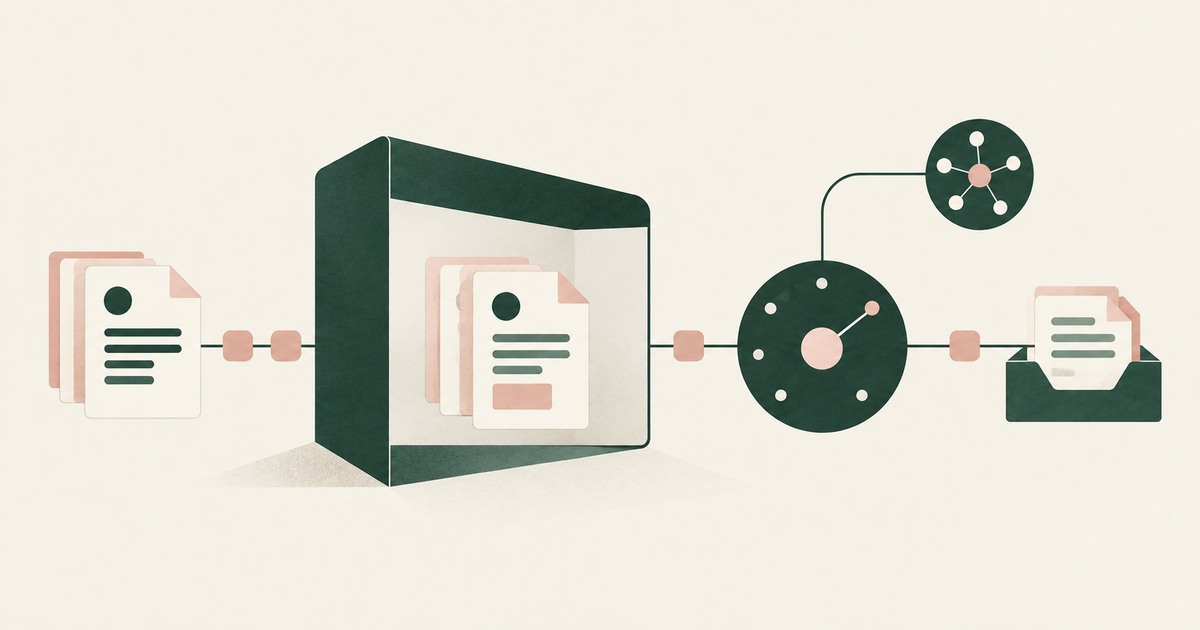
Compare AI agent operating models for billing and claims, from isolated assistants to governed workflows with tokenization and approval.
What If the Agent Never Had Your Data?
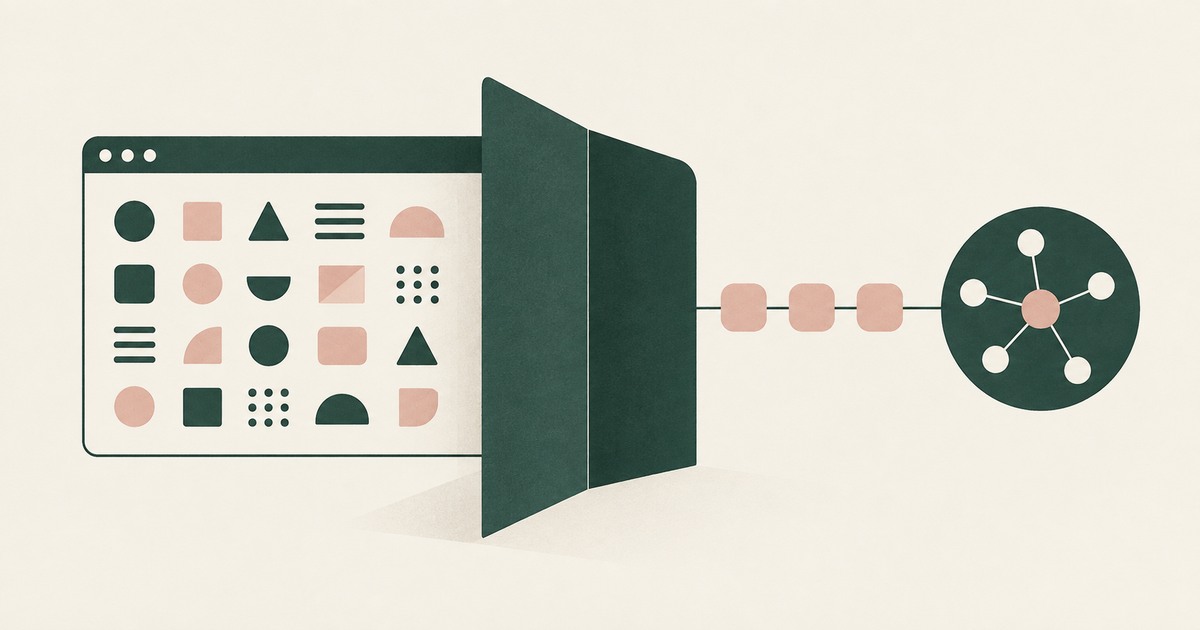
Explore AI agent security built around tokenization, controlled browser actions and human approval before sensitive payments proceed.
How RedactSure Refuses a Push the Grant Never Named
A read-level credential holds only while its value stays as narrow as it was issued, so the gap is a decision about the operation this run may perform.
The environment that enforces this is built by RedactSure, an AI agent controls, governance and data protection company.
Before: the access settings page shows the credential in full. Inside: the page renders it as TOKEN_002, the grant names clone, and the commit stops at the approver, who declines it.
RedactSure is deploying now with enterprise and government customers. The study cited above puts command execution through a hijacked coding editor at up to 84 percent.
Everyone else controls where data can go. RedactSure controls what the AI can see.
See it on your own workflow
Clone access is easy to grant, and the part worth testing is what happens when the agent tries to push. Bring a repository task and see, with test values, the commit stop at a person who can decline it. Book a demo