
Data Report · By Chris Sowa · Published
Last updated
Is It Safe to Give Grok Bot Access to Your Company Systems?
Not on its shared computer with your own logins, because every Bot on an account shares one cloud computer, its browser sessions and its app logins. Ask what the model receives on each screen and who approves each consequential action before you connect anything sensitive.
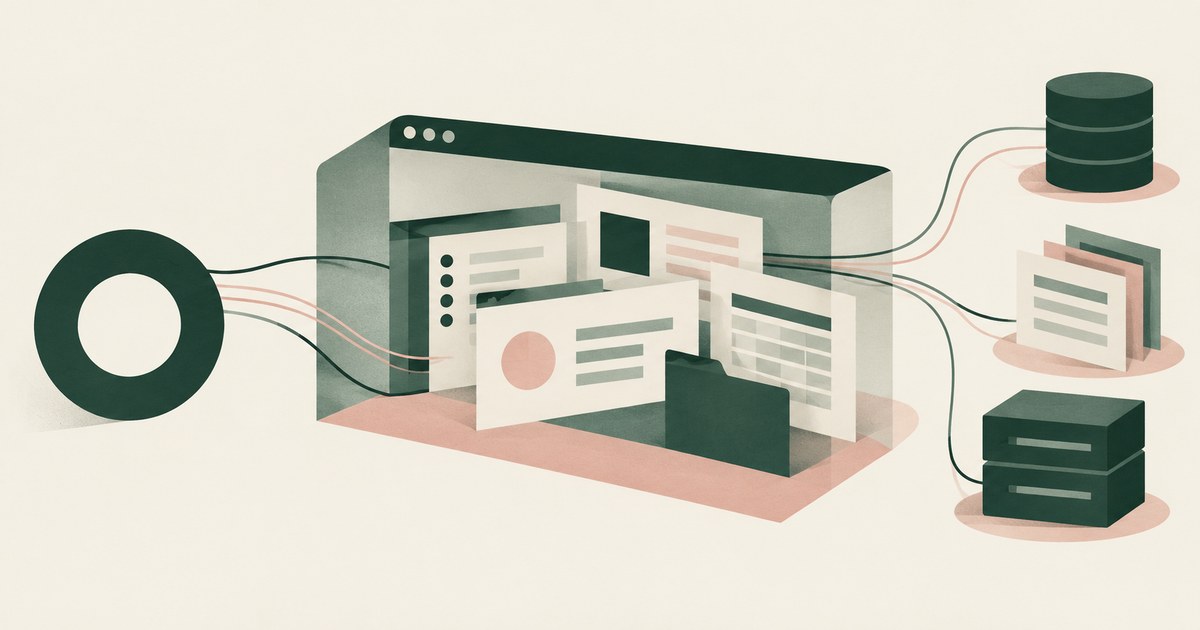
Not on its shared computer with your own logins, because every Bot on an account shares one cloud computer, its browser sessions and its app logins. Ask what the model receives on each screen and who approves each consequential action before you connect anything sensitive. The question is live because Grok Bot launched in beta on August 11, 2026 as a set of always-on agents that "sign into the tools you already use," run on a cloud computer and keep working while the user is away (xAI, 2026). The launch drew 334 comments on Hacker News, and the audience that read the demo, which showed a Bot logging in with a user's own credentials, reacted with far more concern than enthusiasm. The pattern is familiar from OpenAI Dots and Meta Muse: the vendor's controls govern what the agent may do, and leave open what the agent's model is shown.
Key findings
- In the Hacker News launch thread for Grok Bot (334 comments, August 2026), three times as many comments raised security, privacy or credential concerns (15%) as said anything positive (5%). Of the 117 comments that took a position, 85% were negative.
- Eight comments objected specifically to the launch demo showing a Bot logging in with the user's own username and password. Three independently asked about bank accounts.
- Six comments cited a 2% to 5% prompt injection failure rate as unacceptable at scale. The figure came from Anthropic's Boris Cherny describing Anthropic's own models, and commenters rejected the accompanying claim that injection is "largely solved."
- Grok Bot's documentation states that all Bots on an account use one cloud computer, "sharing its files, browser sessions, and app logins," and that "the computer belongs to your account, not to an individual Bot." A Bot is not a security boundary.
- The documentation says its layered controls "reduce, but do not eliminate, risk from malicious content," that Auto-review "does not review every side effect," and that "dedicated data loss prevention hooks are not available." Audit logs, action recording and network allowlists are Enterprise-only features.
What does Grok Bot connect to, and what does it receive?
Grok Bot is a roster of named agents, each with its own job, memory and routines, that work "across apps, inboxes, and websites, including platforms with no clean API or MCP" (xAI, 2026). The announcement names a CRM, Gmail, a product UI and a ticketing workflow as examples. Bots use connectors where a service offers one and computer use, meaning a browser on the Bot's cloud machine, for everything else (xAI docs, 2026). Routines run on a schedule or in response to events, so a Bot can start work without a prompt (xAI, 2026).
The announcement says each Bot "has its own computer." The documentation is more specific: the computer belongs to the account, every Bot on the account shares it, and each Bot gets its own screen on it. Files placed on it, browser sessions and app logins are available to every Bot. Isolation is strict between users, not between Bots. Connector tokens are held on the vendor's backend and "never stored on the computer," but browser logins persist on a durable disk across sessions (xAI docs, 2026). Steps a site reserves for a human, such as a password, a two-factor code or a CAPTCHA, are handed to the user through a takeover of the Bot's screen rather than typed by the Bot.
What that means for exposure: whatever a Bot can see on a screen, its model receives. A Bot assigned to update a CRM reads every field the CRM renders for the account, and a second Bot on the same account inherits the same browser session. Nothing in the documentation describes a control that limits which values the model is shown once a screen is open. The computers run in Cursor's cloud in the United States, and Anysphere, the company behind Cursor, holds ISO/IEC 27001 and 42001 certifications with Grok Bot in scope (xAI docs, 2026).
| Property | What the documentation states | Why it matters to a security team |
|---|---|---|
| Computer | One per account, shared by all Bots, with shared files, browser sessions and app logins | A compromised or misdirected Bot has the same reach as every other Bot on the account |
| Identity | Bots sign into the tools the user already uses; no separate agent identity is described | Access logs show the user, not the Bot. Accountability for a Bot's action lands on the person whose login it used |
| Credentials | Connector tokens on the vendor backend; browser logins persist on the Bot's disk; human-only steps handed to the user | Persisting sessions are the asset an injected Bot would use. Signing out of unneeded services is left to the user |
| Scope of reading | Not addressed | The model receives whatever the screen renders |
| Residency and certification | US only today; ISO 27001 and 42001 held by Anysphere | Residency commitments outside the US require the account team |
What did the launch audience object to?
This review classified all 334 comments in the Hacker News launch thread (Hacker News, August 11 to September 8, 2026). The thread reached 351 points. The audience is developers and security practitioners, which is the audience this page is written for.
| Measure | Count | Share of 334 |
|---|---|---|
| Negative toward Grok Bot or always-on agents of this kind | 100 | 30% |
| Positive | 17 | 5% |
| Neutral, off topic or unclassifiable | 217 | 65% |
| Raised security or prompt injection | 37 | 11% |
| Raised privacy, data access or credential exposure | 21 | 6% |
| Raised security or privacy (combined, deduplicated) | 50 | 15% |
| Questioned trust in the vendor | 42 | 13% |
| Raised cost or pricing | 33 | 10% |
| Raised reliability (blocked by anti-bot controls, wrong answers, ignored deny lists) | 16 | 5% |
| Raised accountability or liability for a Bot's actions | 7 | 2% |
Three findings stand out. First, of the 117 comments that took a position, 100 were negative, a ratio of six to one. Second, the credential handover was the moment people objected to: eight comments singled out the demo of a Bot logging in with the user's own username and password on the vendor's servers (example), three raised bank accounts, and one separate HN submission was titled "Would you give Grok bot access to your bank accounts?" Third, only two of the 17 positive comments came from people reporting sustained use, one month and six months respectively. The rest were first impressions.
Trust in the vendor was the single largest objection at 13%, ahead of security. A third of all negative comments were about the vendor rather than the product. That finding is specific to Grok Bot and does not transfer to agents in general; the security and privacy findings do.
What does Auto-review cover, and what does it not?
Auto-review is an independent review model that evaluates risky Bot actions before they run, including shell commands, plugin calls, computer use, automation writes and delegation, and can allow, require approval or deny each one (xAI docs, 2026). Users add "Ask first" rules, which always stop a matching action, and "Allow automatically" rules, which let an action proceed only when the reviewer finds no other reason to stop it. Enterprise admins can enforce Auto-review so members cannot turn it off.
The documentation is candid about the limits. Auto-review "does not review every side effect"; memory writes and most settings changes are excluded, and the vendor describes it as "a complement to explicit boundaries and least privilege." For execution on the user's local computer, per-command approval is the default and the vendor recommends "Never allow" unless a Bot has a specific reason to touch local files. Network allowlists, audit logs, action recording (off by default, 90-day retention) and OpenTelemetry export are Enterprise only; self-serve teams do not get the audit log. The conversation export redacts known credential patterns, with the note that "pattern matching cannot catch every secret."
Two design points matter for a security review. The reviewer is the vendor's own model reviewing the vendor's own agent, which raises the question examined in Can an AI Vendor Review Its Own Agent Safely?. And the whole approval model governs actions. It does not change what the acting model was shown before it proposed the action.
What happens when prompt injection gets through?
Grok Bot marks outside content as untrusted when presenting it to the model and layers Auto-review, network policy, per-action approvals and per-user isolation on top. The documentation then states: "These controls reduce, but do not eliminate, risk from malicious content," and gives that as a reason to keep consequential actions behind approval (xAI docs, 2026). That is the correct framing, and it matches the research record. Indirect injection through web pages, documents and tool outputs has been demonstrated since 2023 (Greshake et al., 2023), instruction-hierarchy training lowers but does not remove susceptibility (Wallace et al., 2024), and injection firewalls tested against stronger benchmarks still let attacks through (Bhagwatkar et al., 2026).
The launch audience applied the same standard. Six commenters cited a 2% to 5% prompt injection failure rate as unacceptable at scale. The figure came from a post by Anthropic's Boris Cherny describing Anthropic's own models, shared in the thread alongside a claim that injection is "largely solved" (Hacker News). One reply compared a 2.6% rate to shipping an operating system with known exploitable holes (Hacker News); another noted that "largely solved" means models fall for injections less often, not that the underlying issue is fixed (Hacker News). The point generalizes to every vendor, Grok Bot included: a defense that fails a few percent of the time is a defense that fails daily at enterprise volume.
So the useful question is not whether injection can be stopped but what the attacker collects when it succeeds. On Grok Bot's shared computer, a successful injection reaches a model holding whatever the open screens showed, with persistent browser sessions to act through, and Auto-review as the last gate. If the model had been shown tokens instead of values, the injection collects tokens. What Does Prompt Injection Get From a Token-Only Agent? walks through that scenario. Exposure control is what makes a non-zero failure rate survivable.
What should a developer or security team ask for in writing?
| Control | Grok Bot (from documentation) | What the review asks for |
|---|---|---|
| What the model receives | Whatever the screen or connector returns | A per-task policy on which values the model may be shown |
| Who decides exposure | Not addressed | A named person, per workflow |
| Agent identity | Bots sign in as the user | A separate identity so logs show the Bot, not the person |
| Isolation between agents | One computer per account; Bots are not a boundary | One environment per task or per agent |
| Action gating | Auto-review plus Ask first rules; enforceable on Enterprise | Approval outside the model for every consequential action |
| Reviewer independence | Vendor's own review model | Approval by the customer's person, not the vendor's model |
| Record | Audit log and action recording Enterprise only, recording off by default | Per-run record of what the model saw, did, and who approved, exported to the customer's SIEM |
| Data loss prevention | "Dedicated data loss prevention hooks are not available" | Egress and content controls the customer can inspect |
| Injection outcome | Controls reduce but do not eliminate risk | A statement of what a successful injection can collect |
| Residency and keys | US only; certifications held by Anysphere | Written residency and key custody commitments |
For a developer evaluating the beta on a personal plan, the practical checklist is shorter: use connectors over browser logins wherever a service offers one, sign the shared computer out of every service a Bot does not need, set "Never allow" on local execution, write "Ask first" rules for send, purchase, delete, publish and production changes, and treat webhook URLs and keys on the Bot's computer like any other secret, rotated if exposed. None of that changes what the model reads; it narrows what the model can do.
Where does RedactSure sit?
The environment that enforces this is built by RedactSure, an AI agent controls, governance and data protection company. It governs the contrast the table above asks for: it governs the agent's run rather than the agent's identity: render-layer tokenization replaces values chosen by policy with consistent tokens before any model reads the screen, so a Bot working a CRM record sees CUST_014 and ACCT_002 and the work proceeds on them. A named person connects the agent, chooses the applications, confirms what is tokenized, can watch and pause the run, and approves each consequential action, which is Supervised Delegation. Every screen the agent saw as tokens, every action and every approval with a name is exported to the customer's own monitoring as the AI Control Record. The environment is model-agnostic, so the same controls hold whether the model is Grok, Claude, GPT or an open-weights deployment. Enterprise deployments are in pilot; the behavior described here reflects RedactSure's current design.
Methodology and limitations
The Hacker News figures are RedactSure's manual classification of all 334 comments in thread 49261514, retrieved through the Algolia Hacker News API, covering August 11 to September 8, 2026. Each comment was assigned one sentiment (positive, negative, or neutral and off topic) and zero or more concern tags, so tags do not sum to 100%. Classification was performed on close paraphrases of the comments rather than full text; counts of eight or fewer should be read as indicative. The sample is one forum's reaction to a launch, weighted toward developers and security practitioners and toward first impressions rather than sustained use. It measures what that audience raised, not how Grok Bot performs. The 2% to 5% injection figure is Anthropic's, about Anthropic's models, as shared and discussed in the thread; it is cited here as the benchmark the audience applied, not as a measurement of Grok Bot.
Product statements come from xAI's announcement, design write-up and documentation as published on the dates cited. Grok Bot is in beta and the vendor says it changes frequently; the documentation is branded Grok Bot while referring to Cursor's cloud, dashboard and policies, so a buyer should confirm which contracts apply. RedactSure did not test Grok Bot hands-on. Compliance determinations belong to the organization's counsel.
What the record shows
Grok Bot's own documentation answers most of the review. One shared computer per account, Bots that sign in as the user, persistent browser sessions, an approval model that excludes some side effects, Enterprise-only logging, no DLP hooks, and controls that reduce but do not eliminate injection risk. The launch audience read the same facts and reacted accordingly: 85% of those who took a position were negative, and security, privacy and credentials drew three times the comment that praise did. None of that makes Grok Bot unusable. It makes the terms of use specific. Give it a separate identity and scoped access rather than your own logins, keep it off local execution, write "Ask first" rules for anything consequential, and recognize that every one of those controls governs what the Bot does, not what its model reads. For the second question, which is the one a non-zero injection rate makes unavoidable, the control has to sit before the model, at the point the screen is rendered.
Frequently asked questions
Does each Grok Bot really have its own computer?
The announcement says so, and the documentation clarifies it: the computer belongs to the account, every Bot on the account shares its files, browser sessions and app logins, and each Bot gets its own screen on it. Isolation is strict between users. A separate Bot is not a security boundary; a separate account is.
Does Grok Bot store my passwords?
Connector tokens are held on the vendor's backend and are never stored on the Bot's computer, according to the documentation. Passwords, two-factor codes and CAPTCHAs are handed to the user through a screen takeover rather than typed by the Bot. Browser logins created that way persist on the Bot's durable disk across sessions, so the live session, not the password, is what a misdirected Bot would use.
Can a Bot read my repository or local files?
Only if local execution is allowed. The default is per-command approval with the exact command shown, and the vendor recommends "Never allow" unless a Bot has a specific reason to work on local files. On the cloud computer, a Bot reads whatever the screens and connectors it has been given return; nothing in the documentation limits which fields the model is shown.
Is Auto-review enough to stop prompt injection?
The vendor says no. The documentation states that Auto-review, network policy, per-action approvals and isolation "reduce, but do not eliminate, risk from malicious content," and that Auto-review does not review every side effect. The research record agrees. The question to settle is what an attacker collects when the controls miss, which depends on what the model was shown.
Where did the 2% to 5% prompt injection figure come from?
From a post by Anthropic's Boris Cherny about Anthropic's models, shared in the Hacker News thread with a claim that injection is "largely solved." Six commenters rejected the rate as unacceptable at scale. It is not a Grok Bot figure. It is the benchmark the audience applied, and it applies to any agent that reads untrusted content.
What would a security team need from Grok Bot before approving it?
An Enterprise plan, since audit logs, action recording, network allowlists and enforced Auto-review are Enterprise only. A separate account or identity for the Bots. Written residency and key custody commitments. And a control, from the vendor or from the environment the Bot runs in, over which values the model is shown on each screen, because the documentation does not describe one.
Related reading
Do OpenAI Dots Rules Control What the Agent Sees? · What Should a Meta Muse Security Review Check? · Can an AI Vendor Review Its Own Agent Safely? · What Does Prompt Injection Get From a Token-Only Agent? · Can a Credential Vault Protect What an AI Agent Reads? · What Is AI Agent Identity and Why Do Agents Not Fit Traditional User Access Models? · On the RedactSure blog: The Two Gaps AI Agents Opened in Your Security Stack
Sources
Vendor documentation 1. xAI, "Introducing Grok Bot" (August 11, 2026; vendor announcement). https://x.ai/news/introducing-grok-bot 2. xAI, "Designing Grok Bot for a world of persistent agents" (September 2026; vendor design write-up). https://x.ai/news/designing-grok-bot 3. xAI, "Grok Bot overview," Grok Bot documentation (accessed October 16, 2026; vendor documentation). https://docs.x.ai/grok-bot/overview 4. xAI, "Security," Grok Bot documentation (accessed October 16, 2026; vendor documentation). https://docs.x.ai/grok-bot/security
Peer-reviewed and preprint research 5. Greshake, Kai, et al., "Not What You've Signed Up For: Compromising Real-World LLM-Integrated Applications with Indirect Prompt Injection," arXiv:2302.12173, 2023 (preprint; also AISec 2023). https://arxiv.org/abs/2302.12173 6. Wallace, Eric, et al., "The Instruction Hierarchy: Training LLMs to Prioritize Privileged Instructions," arXiv:2404.13208, 2024 (OpenAI preprint). https://arxiv.org/abs/2404.13208 7. Bhagwatkar, Kasa, et al., "Indirect Prompt Injections: Are Firewalls All You Need, or Stronger Benchmarks?," arXiv:2510.05244, v2 March 2026 (preprint). https://arxiv.org/abs/2510.05244
Standards and guidance 8. OWASP, "LLM01:2025 Prompt Injection," Top 10 for LLM Applications 2025 (industry standard). https://genai.owasp.org/llmrisk/llm01-prompt-injection/ 9. OWASP, "LLM02:2025 Sensitive Information Disclosure," Top 10 for LLM Applications 2025 (industry standard). https://genai.owasp.org/llmrisk/llm022025-sensitive-information-disclosure/ 10. OWASP, "LLM06:2025 Excessive Agency," Top 10 for LLM Applications 2025 (industry standard). https://genai.owasp.org/llmrisk/llm062025-excessive-agency/ 11. NIST, "Artificial Intelligence Risk Management Framework (AI RMF 1.0)," NIST AI 100-1, 2023 (official guidance). https://www.nist.gov/itl/ai-risk-management-framework
Community discussion and press 12. Hacker News, "Grok Bot" launch thread, item 49261514, August 11 to September 8, 2026 (community discussion; 334 comments classified by RedactSure). https://news.ycombinator.com/item?id=49261514 13. Hacker News, comment citing Anthropic's Boris Cherny on prompt injection, item 49265108 (community discussion). https://news.ycombinator.com/item?id=49265108 14. Hacker News, comments on the 2% to 2.6% injection rate, items 49265215 and 49265185 (community discussion). https://news.ycombinator.com/item?id=49265215 15. Hacker News, comment on the credential login demo, item 49263639 (community discussion). https://news.ycombinator.com/item?id=49263639 16. Unite.AI, "xAI Launches Grok Bot: Always-On AI Teammates With Their Own Cloud Computers" (2026; press). https://www.unite.ai/xai-launches-grok-bot-always-on-ai-teammates-with-their-own-cloud-computers/ 17. Reworked, "xAI Launches Grok Bot AI Agents in Beta" (2026; press). https://www.reworked.co/collaboration-productivity/xai-launches-grok-bot-ai-agents-in-beta/
RedactSure research 18. RedactSure Research, "What Is Render-Layer Tokenization?" (2026). https://redactsure.com/research/what-is-render-layer-tokenization/ 19. RedactSure Research, "What Is Supervised Delegation?" (2026). https://redactsure.com/research/what-is-supervised-delegation/ 20. RedactSure Research, "What Is an AI Control Record?" (2026). https://redactsure.com/research/what-is-an-ai-control-record/ 21. RedactSure Research, "What Does Prompt Injection Get From a Token-Only Agent?" (2026). https://redactsure.com/research/prompt-injection-agent-sees-only-tokens/ 22. RedactSure Research, "Can an AI Vendor Review Its Own Agent Safely?" (2026). https://redactsure.com/research/can-an-ai-vendors-own-model-be-the-safety-reviewer/ 23. RedactSure, "The Two Gaps AI Agents Opened in Your Security Stack" (2026). https://redactsure.com/blog/two-gaps-ai-agents-opened-in-your-security-stack/ 24. Product behavior described on this page reflects RedactSure's current design. Grok and Grok Bot are trademarks of xAI; Cursor is a trademark of Anysphere, Inc.; Claude is a trademark of Anthropic, PBC; GPT is a trademark of OpenAI; named to identify the products. Compliance determinations belong to the organization's counsel.

Do OpenAI Dots' Custom Rules Control What the Agent Sees?
Review OpenAI Dots Custom Rules, AI agent security and tokenization before connecting billing, claims or other workflows that expose PII.

What Should a Security Team Check Before Allowing Meta Muse for Business?
Review Meta Muse AI agent security, PII exposure, tokenization and approval evidence before connecting billing, sales or payment systems.
Can an AI Vendor's Own Model Be the Safety Reviewer for Its Agent?
Review AI agent security, automated action reviewers and PII controls for regulated claims and payments, with customer approval evidence.
What Does a Prompt-Injection Attack Get From an Agent That Sees Only Tokens? Walking the Attack That Succeeds and Collects Nothing
Follow a prompt-injection scenario to examine AI agent security, PII exposure and the limits of tokenization when an attack succeeds.

Can a Credential Vault Protect the Data an AI Agent Reads? It Protects What You Deposit, Not What the Agent Encounters
Compare credential storage with AI agent security for encountered PII, and examine where screen-level tokenization adds a different control.
What Is AI Agent Identity and Why Do Agents Not Fit Traditional User Access Models?
Review AI Agent Identity for AI agent security, with practical checks on sensitive data, tokenization and named human approvals.
The Two Gaps AI Agents Opened in Your Security Stack
Explore AI agent security through two questions: which PII reaches the model, and who approves consequential billing and claims actions.
Book an AI Agent Security Review →
Bring your hardest questions.
Bring one sensitive workflow and the decisions your team needs to keep in its hands.
Book a demoAbout the author

Chris Sowa is a founder of RedactSure and a former CEO of an AI company; he started it years before ChatGPT existed. He previously led AI at Accenture, served as Global VP of Strategy & Innovation at Schneider Electric, was CCO of Sovos, and spent more than a decade at Oracle, with earlier roles at SAP and IBM.