
Comparison · By Chris Sowa · Published
Last updated
What Is the Difference Between RedactSure and Check Point Lakera for AI Agent Security?
Check Point Lakera inspects the prompts, outputs and tool calls passing between a client and a model and flags sensitive data leakage. RedactSure decides what an agent's model receives from each screen and who approves each action. Treating detection as a substitute for exposure control leaves real values in the model's context whenever a check passes.
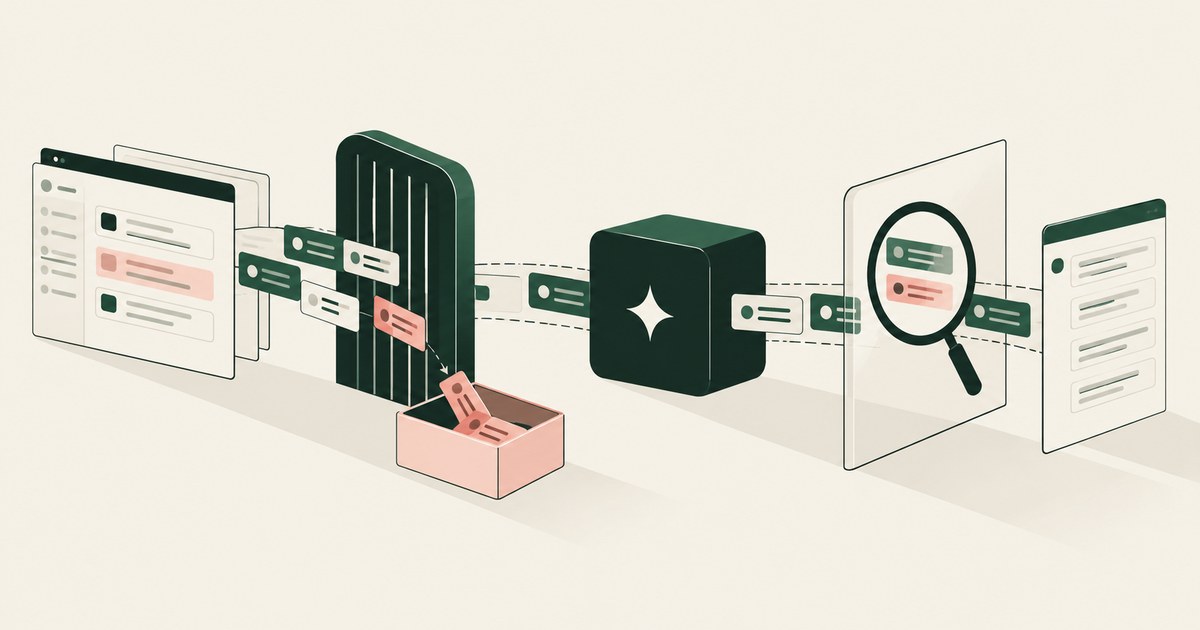
Check Point Lakera inspects the prompts, outputs and tool calls passing between a client and a model and flags sensitive data leakage (Check Point, 2026). RedactSure decides what an agent's model receives from each screen and who approves each action. Treating detection as a substitute for exposure control leaves real values in the model's context whenever a check passes. The difference matters most once an AI system stops answering questions and starts working records: an agent that reads a claims screen or a vendor master file holds whatever that screen showed, and a detector that clears the traffic does not change what was shown. RedactSure works earlier in the sequence, through render-layer tokenization, so identifiers become tokens before any model reads the screen, and a named person approves each consequential step. The two designs answer different questions, and the comparison below runs on what each inspects, where it sits, what it does with sensitive values, and how actions are governed. The environment that enforces this is built by RedactSure, an AI agent controls, governance and data protection company.
Key findings
- Check Point describes the product this way: "Check Point AI Agent Security secures the AI applications and agents your organization builds and deploys" (Check Point, 2026).
- Check Point's documentation places Lakera Guard between the client and the model, inspecting prompts, outputs, tool calls, tool responses and tool descriptions, and detecting and flagging leakage of sensitive information and PII (Check Point, 2026).
- OWASP ranks prompt injection first (LLM01) and sensitive information disclosure second (LLM02) in its Top 10 for LLM Applications 2025 (OWASP, 2025).
- Indirect prompt injection arrives through content an application retrieves, such as a web page or document, rather than through the user's own prompt (Greshake et al., 2023).
- Researchers at ServiceNow, Mila and partner institutions report that a Tool-Input Firewall (Minimizer) and a Tool-Output Firewall (Sanitizer) at the agent and tool boundary reach about 0 percent attack success on four public benchmarks, and that those benchmarks have flawed metrics and weak attacks (Bhagwatkar et al., 2026).
- MIT Technology Review describes vendors' stacked defenses (system prompts, classifiers, activation probes) as a "Swiss cheese" model, and reports Anthropic saying one classifier type added 24 percent to its chatbots' compute costs (MIT Technology Review, 2026).
What does Lakera describe Lakera Guard as doing?
Check Point documents Lakera Guard as part of Check Point AI Agent Security, which "secures the AI applications and agents your organization builds and deploys" (Check Point, 2026). The page says Guard sits between the client and the model, called through its API for each user interaction or agent step (Check Point, 2026). The product therefore belongs to the category of runtime guardrails for language model applications: a control that examines content on its way into or out of a model and reports when that content looks like an attack or a disclosure.
The two threats a guardrail on this path is placed to screen are the two OWASP ranks highest. Prompt injection is LLM01 in the OWASP Top 10 for LLM Applications 2025 (OWASP, 2025), and sensitive information disclosure is LLM02 (OWASP, 2025). A control that screens for both addresses the risks most security teams list first when a language model enters a workflow.
The research record explains why the category exists. Perez and Ribeiro catalogued prompt attacks that override an application's instructions (Perez and Ribeiro, 2022). Greshake and colleagues showed the same effect arriving indirectly, through content the application retrieves on the user's behalf (Greshake et al., 2023). Model vendors have responded inside the model, for example by training models to rank privileged instructions above retrieved text (Wallace et al., 2024). A guardrail product adds a check outside the model that the application owner controls.
The page also describes controls on agent actions. A Dangerous Deviation detector flags actions outside the agent's trusted mandate, a Tool Allow/Deny List controls which tools an agent may call, policies configure the defenses, and Project mode sets the response, such as blocking or logging (Check Point, 2026). The page reviewed does not state whether Guard redacts, masks, tokenizes or blocks sensitive data itself, where it sits relative to the screen, or whether it supports approval workflows. Buyers evaluating the product should put those questions to Check Point directly and read the answers against the dimensions used here.
Where does each control sit relative to the model and the screen?
A detection guardrail sits on the path between an application and its model. Content arrives, the guardrail evaluates it, and the application decides what to do with the verdict. That position is described in more general terms on the page covering what an AI agent security gateway is: the control sees the traffic, and its power comes from inspecting what crosses it. The unit of inspection is the message, whether a prompt, a retrieved document or a model response.
RedactSure sits at a different point. Its environment is a secure virtual machine in which an AI co-worker works the organization's existing applications as rendered, with no per-application integration and no change to user permissions. Before any model reads a screen, the values chosen by policy, starting with identifiers such as names, SSNs, account numbers and dates of birth, are replaced by consistent tokens at the render layer. The environment hands the model the task's fields, with identifiers as tokens, rather than a picture of the screen. The unit of control is the screen and the action, not the message.
The two positions answer different questions. A guardrail on the model path asks whether a given piece of content is dangerous. The render layer asks what the model should receive for this piece of work at all. The first is a verdict about content that already exists in the model's path. The second decides what enters that path. An agent that opens a vendor record under a guardrail has the vendor's bank details in its context if the guardrail clears the message. The same agent under render-layer tokenization holds ACCT_001, and the real number resolves only at an approved destination at the moment of an approved action.
Position also determines what a control can see. A guardrail that inspects text sees the text it is given. An agent that reads screens receives content an application assembled for a human, including fields the task never needed. Controlling that content requires a control placed where the screen is rendered, which is where RedactSure applies its policy.
How do the two products compare side by side?
The table places both designs on seven dimensions. Where the Check Point page reviewed does not state an answer, the cell says so instead of inferring one.
| Dimension | Check Point Lakera, per its documentation | RedactSure, per its published design |
|---|---|---|
| What it is | Part of Check Point AI Agent Security, which "secures the AI applications and agents your organization builds and deploys" (Check Point, 2026) | AI agent controls, governance and data protection for supervised AI co-workers working existing applications |
| What it inspects or controls | Prompts, outputs, tool calls, tool responses and tool descriptions; agent configurations and an inventory of agents, tools and connected MCP servers (Check Point, 2026) | The rendered screen the agent reads, and every consequential action the agent proposes |
| Position relative to the model and the screen | Between the client and the model as an intermediary; the gateway or app calls the Guard API for each interaction or agent step (Check Point, 2026). The page reviewed does not state its position relative to the screen | At the render layer, before any model reads the screen, inside a governed virtual environment |
| Sensitive data | Detects and flags leakage of sensitive information and PII in prompts and outputs (Check Point, 2026). The page reviewed does not state redaction, masking, tokenization or blocking of the data itself | Values chosen by policy replaced by consistent tokens (SSN_001, ACCT_001) before the model reads them |
| Agent actions and approval | Dangerous Deviation detector flags actions outside the agent's mandate; Tool Allow/Deny List controls which tools an agent may call; Project mode sets blocking or logging (Check Point, 2026). The page reviewed does not state approval workflows | A named person confirms the Planner's policy before the run and approves every payment, submission and record change while it runs |
| Record | SaaS: full request and event logs in a dashboard, SIEM integration and real-time analytics; self-hosted: structured logs to stdout and metrics endpoints (Check Point, 2026) | Every action logged, human and computer; all PII as tokens, in the AI Control Record exported to the customer's SIEM |
| Model dependence | The page reviewed does not state it | Model agnostic; models swap without moving the controls |
The table is not a ranking. A detection guardrail covers chat assistants, retrieval applications and customer-facing bots that never touch a screen, which RedactSure does not claim to govern. RedactSure covers the moment an agent reads a rendered record and the moment it proposes to change one; the page reviewed does not state named approval of actions for Lakera Guard.
What does a prompt injection reach in each design?
Prompt injection is the threat both kinds of control address, from opposite ends. The question that separates them is what an injection collects when it succeeds, because every detector has a miss rate and every benchmark has limits.
Under a detection guardrail, the defense is recognition. If the guardrail identifies the injected instruction, the application can refuse the content. If it does not, the injected instruction reaches a model that already holds whatever the agent read. Greshake and colleagues demonstrated that retrieved content can carry instructions an application then follows (Greshake et al., 2023). The page on AI agent prompt injection traces how that content reaches an agent through the screens and documents it opens. Recognition rates matter, and Bhagwatkar and colleagues warn that public agent security benchmarks contain flawed success metrics, implementation bugs and weak attacks, so a high score on one deserves scrutiny (Bhagwatkar et al., 2026). They report attack success falling from 70 percent to 9.25 percent in one setting once forced injection was removed, a sign of how much a benchmark's construction shapes its numbers (Bhagwatkar et al., 2026).
Under render-layer tokenization, the defense is reduction. The model holds SSN_001 and ACCT_001 in place of identifiers, so an injection that succeeds collects tokens and the task context the policy left in clear. The consequential action the attacker wanted still stops for a named person. The research page on prompt injection when the agent sees only tokens works through that sequence step by step.
The same research supports reduction as a principle. Bhagwatkar and colleagues found that a Minimizer, which strips data a tool call does not need, and a Sanitizer, which removes instructions from tool results, together reached about 0 percent attack success with little loss of utility on AgentDojo, Agent Security Bench, InjecAgent and tau-Bench (Bhagwatkar et al., 2026). Minimizing what reaches the model and the tools is the same idea as deciding what a screen shows the model.
The two defenses are not exclusive. A detector lowers how often an injection lands. Tokenization and named approval lower what a landed injection can do. MITRE ATLAS catalogs adversary techniques against AI systems across the full attack sequence (MITRE, 2025), a reminder that controls at more than one stage of that sequence cover each other's gaps.
Why does detection alone leave a question open for agents that act?
A chat assistant produces text that a person reads. An agent produces actions in systems of record. That shift changes what a security control has to answer. For text, the question is whether the content is harmful. For actions, two more questions arrive: what the agent was shown, and who allowed the step it took.
MIT Technology Review describes the defenses vendors stack around models (system prompts, classifiers and probes on internal activations) as a "Swiss cheese" arrangement in which each layer has holes and the stack is expected to cover them (MIT Technology Review, 2026). The same piece reports Anthropic saying one type of safety classifier added 24 percent to its chatbots' compute costs, and that vendors are moving toward cheaper probes (MIT Technology Review, 2026). Classifiers, inside or outside the model, are judgments about content, with a cost and an error rate.
The Microsoft AI Red Team's taxonomy of failure modes in agentic systems lists failures that arise from what an agent is permitted to do, not only from what it is told (Microsoft, 2025). Anthropic's research on agentic misalignment examined models acting against their operators' interests when given autonomy and access (Anthropic, 2025). Neither failure needs an injected instruction for a detector to catch.
For those cases, the control has to sit on the action. Under Supervised Delegation, a named person grants the access, chooses the applications, confirms what is tokenized, can watch and pause the run, and approves every consequential action, on the record. The AI never pays, submits or decides. The NIST AI Risk Management Framework places that kind of decision in its Manage function (NIST, 2023): a response to risk made while the work is in progress, by someone accountable for it.
Where does RedactSure sit?
For an agent working records, RedactSure governs what the model receives and what the agent may do. The Planner sets which values are tokenized and what the agent may do on each screen, and a named person confirms that policy before the run. Values chosen by policy become consistent tokens at the render layer before any model reads the screen, and the model receives the task's fields with identifiers as tokens. Real values resolve only at approved destinations at the moment of an approved action, and a named person approves every payment, submission and record change. Every screen as tokens, every action and every approval with a name lands in the AI Control Record and exports to the customer's own SIEM, with keys the customer holds. The environment is model agnostic and needs no per-application integration. Deployments are in pilot.
A detection guardrail can run in the same organization, on the chat and retrieval applications RedactSure does not govern, and on the content paths around them. Everyone else controls where data can go. RedactSure controls what the AI can see.
Methodology and limitations
The comparison rests on Check Point's Lakera Guard documentation page, "Introduction to AI Agent Security," accessed October 14, 2026 and cited as vendor documentation. Where that page does not state a capability, the comparison says so rather than inferring it. Framework sources are the OWASP Top 10 for LLM Applications 2025, the NIST AI Risk Management Framework and MITRE ATLAS. Research sources are preprints and research reports from Greshake and colleagues, Perez and Ribeiro, Wallace and colleagues, Bhagwatkar and colleagues, the Microsoft AI Red Team and Anthropic, with press analysis from MIT Technology Review. RedactSure statements are limited to the design the company publishes.
No product was tested. No guardrail was run against an agent, no injection was attempted, and no detection rate is reported. Cells saying the page reviewed does not state a capability reflect that page, not a finding that the capability is absent. Vendor features change; the page carries its date and is revised when the documentation changes. Pricing, deployment options and regional availability were out of scope. The vendor record and claims screen examples describe record types, not any organization, and no customer or prospect is described.
Whether either product, or the two together, meets an organization's requirements for a given workflow is a determination for its counsel, its assessor, and its security and compliance officers, who hold the policies, the data inventory and the risk tolerance that decision depends on.
What the record shows
Detection and exposure control meet prompt injection and data leakage from opposite ends. A detection guardrail judges content on its way to and from a model; render-layer tokenization decides what the model receives from each screen, and named approval stops each consequential action for a person. Relying on detection alone for agents that work records means that every check that passes, correctly or not, leaves real identifiers in the model's context. The test to apply is one question to each vendor: for one screen of one workflow, show what the model received and who approved the step that changed the record.
Frequently asked questions
Does Check Point Lakera do the same job as RedactSure?
No. Check Point describes Lakera Guard as inspecting prompts, outputs and tool calls between the client and the model and flagging sensitive data leakage. RedactSure tokenizes identifiers on rendered screens before an agent's model reads them and puts every consequential action in front of a named person. One judges content; the other decides what the model receives and who approves what the agent does.
Can a detection guardrail and RedactSure run together?
Yes. They sit at different points. A guardrail can screen chat and retrieval applications and the content paths around them. RedactSure governs an agent run inside its environment: which values become tokens, what the agent may do on each screen, and who approves each payment, submission or record change. Running both adds a check on content to a control on exposure and action.
What does a successful prompt injection collect under RedactSure?
Tokens and the task context the policy left in clear. The model holds values such as SSN_001 and ACCT_001 in place of identifiers, and real values resolve only at approved destinations at the moment of an approved action. The consequential step the attacker wanted still stops for a named person, so a landed injection has neither the real identifiers nor the authority to act.
Does Lakera Guard mask or tokenize sensitive values?
The Check Point page reviewed says Guard detects and flags leakage of sensitive information and PII in prompts and outputs (Check Point, 2026). It does not state whether detected values are redacted, masked, tokenized or blocked, so buyers should ask Check Point directly and read the answer against what the agent's model receives when a check passes.
Why is a high benchmark score not enough on its own?
Bhagwatkar and colleagues found that public agent security benchmarks contain flawed success metrics, implementation bugs and weak attacks, and they propose stronger, adaptive attack sequences. A detector's score depends on the benchmark that produced it. A control that reduces what the model holds, and a named approval on each consequential action, limit the damage whatever the score.
Which product should an organization look at first?
Start from the workload. Chat assistants, retrieval applications and customer-facing bots that never act in systems of record raise a content question that a detection guardrail is built to address. Agents that read rendered records and propose payments, submissions or record changes raise questions about exposure and approval, and those are the questions to put to RedactSure.
Related reading
Prompt Injection When the Agent Sees Only Tokens · What Is AI Agent Prompt Injection? · What Is an AI Agent Security Gateway? · What Is AI Agent Runtime Security? · What Is AI Agent Tool Access? · What Is AI Agent Oversharing? · On the RedactSure blog: The Two Gaps AI Agents Opened in Your Security Stack
Sources
Peer-reviewed research and preprints
- Greshake, Kai, et al., "Not What You've Signed Up For: Compromising Real-World LLM-Integrated Applications with Indirect Prompt Injection," arXiv:2302.12173, 2023 (preprint; also AISec 2023). https://arxiv.org/abs/2302.12173
- Perez, Fábio, and Ian Ribeiro, "Ignore Previous Prompt: Attack Techniques for Language Models," arXiv:2211.09527, 2022 (preprint). https://arxiv.org/abs/2211.09527
- Wallace, Eric, et al., "The Instruction Hierarchy: Training LLMs to Prioritize Privileged Instructions," arXiv:2404.13208, 2024 (OpenAI preprint). https://arxiv.org/abs/2404.13208
- Bhagwatkar, Kasa, et al., "Indirect Prompt Injections: Are Firewalls All You Need, or Stronger Benchmarks?," arXiv:2510.05244, v2 2026 (preprint). https://arxiv.org/abs/2510.05244
- Microsoft AI Red Team, "Taxonomy of Failure Modes in Agentic AI Systems," Microsoft, April 2025 (whitepaper). https://www.microsoft.com/en-us/security/blog/2025/04/24/new-whitepaper-outlines-the-taxonomy-of-failure-modes-in-ai-agents/
- Anthropic, "Agentic Misalignment: How LLMs Could Be Insider Threats," June 2025 (research report). https://www.anthropic.com/research/agentic-misalignment
Vendor documentation
- Check Point, "Introduction to AI Agent Security," Check Point AI Security, Lakera Guard documentation (vendor documentation, accessed October 14, 2026). https://docs.lakera.ai/guard
Regulation, standards and official guidance
- OWASP, "LLM01:2025 Prompt Injection," Top 10 for LLM Applications 2025 (standard). https://genai.owasp.org/llmrisk/llm01-prompt-injection/
- OWASP, "LLM02:2025 Sensitive Information Disclosure," Top 10 for LLM Applications 2025 (standard). https://genai.owasp.org/llmrisk/llm022025-sensitive-information-disclosure/
- NIST, "Artificial Intelligence Risk Management Framework (AI RMF 1.0)," NIST AI 100-1, 2023 (official guidance). https://www.nist.gov/itl/ai-risk-management-framework
- MITRE, "ATLAS: Adversarial Threat Landscape for Artificial-Intelligence Systems" (knowledge base). https://atlas.mitre.org/
Industry analysis and press
- Arthur Holland Michel, "We're putting too much faith in AI's ability to say no," MIT Technology Review, October 9, 2026 (press). https://www.technologyreview.com/2026/10/09/1145728/we-are-putting-too-much-faith-in-ai-to-say-no/
RedactSure documents
- RedactSure Research, "What Is Render-Layer Tokenization?" (2026). https://redactsure.com/research/what-is-render-layer-tokenization
- RedactSure Research, "Prompt Injection When the Agent Sees Only Tokens" (2026). https://redactsure.com/research/prompt-injection-agent-sees-only-tokens
- RedactSure Research, "What Is AI Agent Prompt Injection?" (2026). https://redactsure.com/research/what-is-ai-agent-prompt-injection
- RedactSure Research, "What Is an AI Agent Security Gateway?" (2026). https://redactsure.com/research/what-is-an-ai-agent-security-gateway
- RedactSure, "The Two Gaps AI Agents Opened in Your Security Stack" (2026). https://redactsure.com/blog/two-gaps-ai-agents-opened-in-your-security-stack/
- Product behavior described on this page reflects RedactSure's current design. Check Point, Lakera and Lakera Guard are trademarks of Check Point Software Technologies Ltd. or its affiliates; Microsoft is a trademark of Microsoft Corporation; named to identify the products.
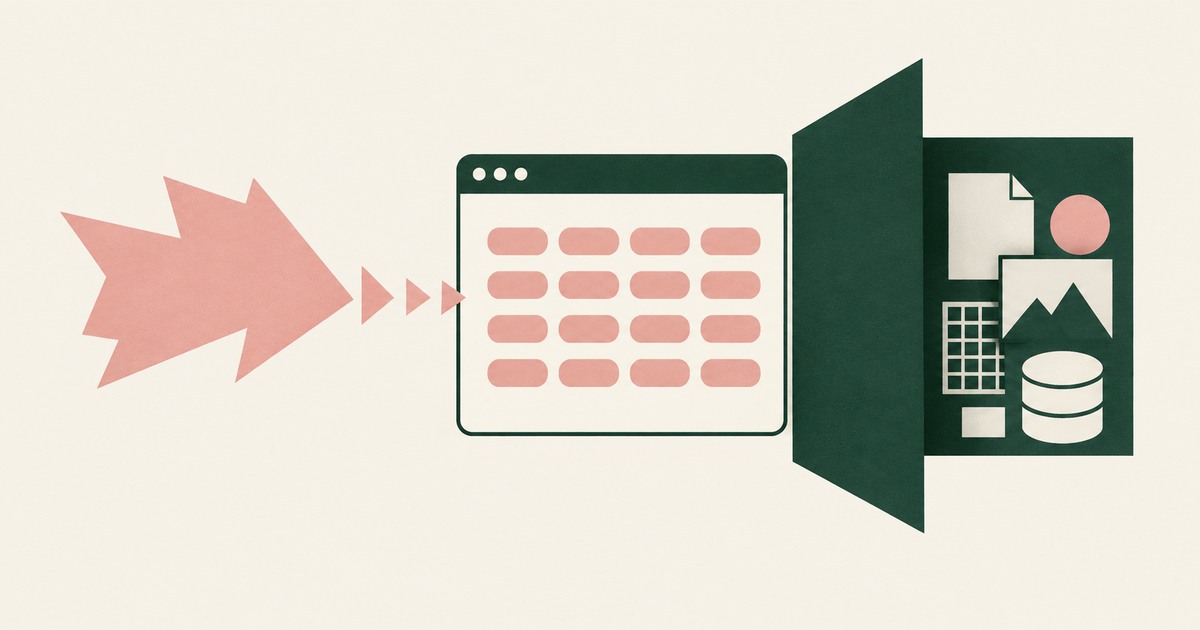
What Does Prompt Injection Get From a Token-Only Agent?
Follow a prompt-injection scenario to examine AI agent security, PII exposure and the limits of tokenization when an attack succeeds.
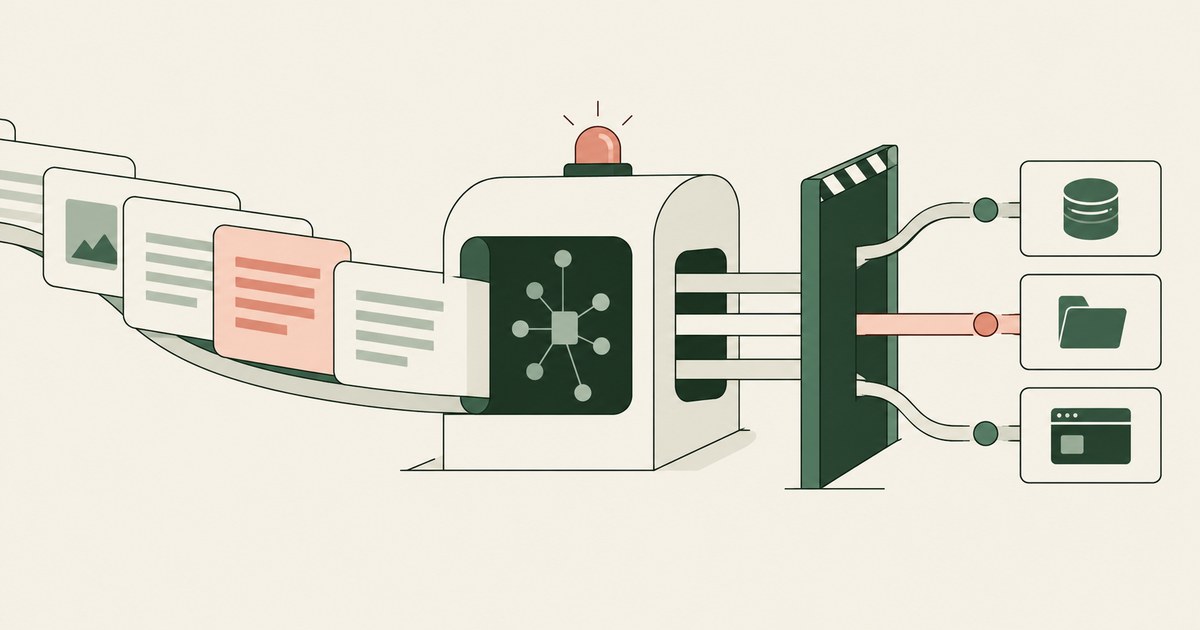
What Is AI Agent Prompt Injection?
Review AI Agent Prompt Injection, with AI agent security, tokenization and approval checks for sensitive enterprise workflows.
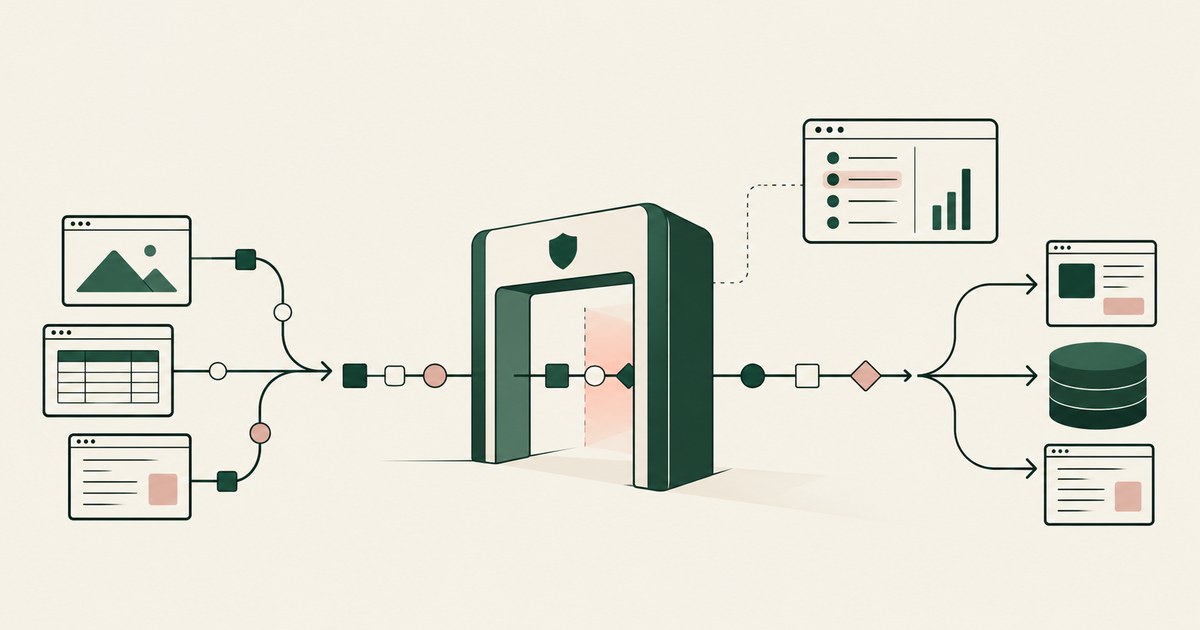
What Is an AI Agent Security Gateway?
Review an AI Agent Security Gateway, with AI agent security, tokenization and approval checks for sensitive enterprise workflows.
What Is AI Agent Runtime Security?
Review AI Agent Runtime Security, with AI agent security, tokenization and approval checks for sensitive enterprise workflows.
What Is AI Agent Tool Access?
Review AI Agent Tool Access, with AI agent security, tokenization and approval checks for sensitive enterprise workflows.

What Is AI Agent Oversharing?
Review AI Agent Oversharing, with AI agent security, tokenization and approval checks for sensitive enterprise workflows.

The Two Gaps AI Agents Opened in Your Security Stack
Explore AI agent security through two questions: which PII reaches the model, and who approves consequential billing and claims actions.

What Is Render-Layer Tokenization?
Learn how render-layer tokenization replaces PII before an AI agent reads a browser screen while preserving useful workflow context.
Book an AI Agent Security Review →
Bring your hardest questions.
Bring one sensitive workflow and the decisions your team needs to keep in its hands.
Book a demoAbout the author

Chris Sowa is a founder of RedactSure and a former CEO of an AI company; he started it years before ChatGPT existed. He previously led AI at Accenture, served as Global VP of Strategy & Innovation at Schneider Electric, was CCO of Sovos, and spent more than a decade at Oracle, with earlier roles at SAP and IBM.