
Data Report · By Chris Sowa · Published
Last updated
Can a Coding Agent Accidentally Commit an API Key?
Yes, in the same ways a person can, and secret scanning catches it only after the commit. An agent that never held the API key cannot commit it, which is prevention that scanning is not.

Most leaked credentials reach a repository by accident, through a staged file or a pasted value, and an agent adds a new author to that old failure. It works quickly, it reads broadly, and it commits what it wrote without the pause a person sometimes takes. The controls that exist today mostly act after the commit, so the order in which they act matters as much as whether they exist. A coding agent writes files, stages them and commits them, and it does so with whatever it has read. If a key sat in a file the agent opened, in the output of a test it ran, or in a configuration it copied, the key can end up in a diff. This page works from GitHub's secret scanning documentation, Stripe's key documentation and the leak research, using one record type as its example, a key committed to a branch and caught by push protection. The decision a team faces is whether its controls stop a key before the push or only find it in history afterward, and who approved the agent's use of that key. How Do I Rotate a Token After a Coding Agent Used It? covers the cleanup when prevention fails. The vendor pages cited here were read on October 20, 2026, and each section says which statements come from them.
Key findings
- GitHub's secret scanning documentation states that it "scans your entire Git history on all branches of your repository for hardcoded credentials," which makes it a detection control that works on what has been committed (GitHub Docs, 2026).
- GitGuardian's data, as reported by Help Net Security, found Claude Code co-authored commits "leaked secrets at roughly double the baseline rate," so an agent in the loop raises the odds (Help Net Security, 2025).
- Stripe's documentation says a live secret key is displayed "one time" and that restricted keys tagged for an autonomous agent "are automatically subject to approval rules" (Stripe, 2026).
- OWASP's non-human identity list names secret leakage as the "leakage of sensitive NHIs such as API keys, tokens, encryption keys, and certificates to unsanctioned data stores" (OWASP, Top, 2025).
- A governed environment that replaces values with consistent tokens before any model reads the screen keeps a key out of the agent's context on rendered pages, so there is nothing for the agent to commit from them (What Is Least Exposure?).
- Real values resolve only at the approved destination, so a person approves the use of a key and the model never needs to hold it (What Is a Tethered Agent?).
Can a coding agent accidentally commit a credential?
Yes, in the same ways a person can. A credential enters a commit when it is in a file that gets staged, in a configuration that was copied, in a debug print saved to a fixture or in a script that hardcodes a value for convenience. The agent does these things for the same reason a person does: it was solving a task and the value was at hand. Nothing about the commit looks unusual to the tool that makes it.
What differs is the volume and the speed. An agent can write, stage and commit many files in a session, and it does not feel the hesitation a person sometimes does before committing a file called config. GitGuardian's data, as reported by Help Net Security, found Claude Code co-authored commits "leaked secrets at roughly double the baseline rate" (Help Net Security, 2025). The figure describes public commits and does not isolate the cause.
The record type for this page is a key committed to a branch and caught by push protection. The key reached the diff because the agent had read it, and it had read it because it was in a file the task touched. The scan flagged it before or after the push, depending on the control, and the key still has to be treated as exposed. How Do You Let an AI Agent Manage API Keys Without Reading Them? covers the prevention side.
What do the vendors themselves say?
GitHub's secret scanning documentation states that secret scanning "scans your entire Git history on all branches of your repository for hardcoded credentials," that when a partner secret is detected GitHub notifies the provider so they can act, for example by revoking the credential, and that it runs automatically and free on public repositories while private repositories need GitHub Secret Protection on a Team or Enterprise Cloud plan (GitHub Docs, 2026). The pages reviewed do not describe how push protection behaves with an agent's commit, and an approver for the use of a key is not described there.
Stripe's key documentation states that a live secret key is displayed "one time" and that restricted keys tagged for an autonomous agent "are automatically subject to approval rules," with a designated reviewer for payouts, refunds and configuration changes (Stripe, 2026). It documents approval for the actions a key can take and does not address what an agent commits.
OWASP's Secrets Management Cheat Sheet gives general practice for keeping credentials out of the places where they leak (OWASP, Secrets, 2024), and it is cited here for its title's coverage.
| Source | What it documents | What the pages reviewed do not describe |
|---|---|---|
| GitHub secret scanning | Scans Git history; notifies partners; plan limits | Push protection with an agent's commit |
| Stripe API keys | Key shown once; approval rules for agent-tagged restricted keys | What an agent commits |
| OWASP secrets cheat sheet | General practice for credentials | An agent-specific control |
What does secret scanning do, and what does it leave open?
It detects. GitHub's scanning looks through the history of every branch for credentials that match known patterns, and for partner secrets it tells the provider so the key can be revoked. Run before a push, a scanner can stop a commit from leaving the machine. Run after, it finds the credential in history.
It leaves open what detection cannot do. A credential that was pushed has been exposed, even if it was removed in the next commit, because history keeps it. Scanning depends on patterns, so a value with no recognizable shape may not match. And scanning acts after the agent has already read the key, which means the key is already in the context, the logs and the transcripts. Open-source scanners such as gitleaks and TruffleHog work in this category, and this page cites no vendor page for their behavior.
| Control | When it acts | Note |
|---|---|---|
| Scanner on a commit or push | After the credential is in a file | Detects patterns; a miss is a leak |
| Scanner on repository history | After the push | The key must be rotated |
| Keeping the key from the agent | Before any file is written | Nothing to commit |
The practical reading is to use scanning as a net and not as the plan. The plan is to keep the key out of the agent's reach. Can an AI Agent Sign Up for Developer Services Without Seeing Your Payment Card or Identity? covers a related case.
Why is prevention different from detection?
Because detection works on a value the agent already holds. Once a credential is in the context, it can reach many places at once: a commit, a log, a transcript, a tool call. A scanner covers the commit, and the rest are outside its view. Prevention removes the value before any of those routes exist. How Do I Give a Coding Agent Access to GitHub Without a Personal Access Token? describes one way to give the agent the access it needs without the token.
The design idea has precedent in the research. A system design goal states that "the untrusted data retrieved by the LLM can never impact the program flow" (Debenedetti et al., 2025). It is a goal about injected instructions and not about credentials, and it points the same way: constrain what the model touches, not only what it does afterward. Language models also reveal private information where humans would not, in 39% and 57% of cases for the two models tested (Mireshghallah et al., 2024), so a model that holds a credential cannot be counted on to keep it.
Human approval is a standard way to limit egregious failures, and actions that can only be reviewed after the fact should be more easily reversible (Shavit et al., 2023). A pushed credential is not reversible, which is the argument for acting before the commit and for keeping the value from the agent in the first place.
Where do the leaked keys come from in practice?
From files, configuration and output that were never meant to be in a repository. GitGuardian's research, as reported, put the count at about 29 million credentials leaked on public GitHub in 2025, with AI-service credential leaks up 81% year over year (GitGuardian, State of Secrets Sprawl 2026, 2026). The same research reported "28,649,024 new secrets exposed in public GitHub commits across 2025" and "24,008 unique secrets exposed in MCP configuration files" (Help Net Security, 2025).
The figures describe public repositories and do not say how many came from agents. They support a modest conclusion: credentials travel from working files into commits, and an agent that reads and writes files is part of that path. The example record shows it in miniature. The key was in a file the agent opened, it landed in a diff, and the scan was the last line.
The fix is architectural. A key the agent never held cannot be committed by it, so the strongest control is what the agent can read, and a scoped, short-lived credential limits the loss when one slips through. What Happens When an AI Agent Can See API Keys in a Console or Settings Page? takes up the rendered-page case.
What does a governed environment change?
A governed environment is a control class that acts where a screen is rendered, before any model reads it. Values chosen by policy are replaced with consistent tokens for the whole run, so the model works on placeholders. Real values resolve only at an approved destination, at the moment of an approved action. A named person confirms the tokenization policy and approves each consequential action. Every screen as tokens, every action and every approval is written to a record that exports to the organization's own monitoring.
For this question it covers the pages. If the agent works in a browser on a console or settings page where a key is displayed, the key is replaced with a placeholder before the model reads it, so the agent has nothing real to copy into a file. It does not read the working tree or the output of a local run, which the harness and the scanners govern. The two controls are complementary: one prevents the read on a page, and the other detects what reached a commit. A team that uses both has closed two different routes, and a team that uses one has closed one. The governed environment also keeps a record of what the model saw, which the pages reviewed do not describe for a scanner.
Its scope is the rendered page. It does not govern the terminal, the IDE, the local filesystem, direct API calls or MCP, so a key already in a local file is not closed by it. That is closed by keeping keys out of the tree and by scanning as a net.
Methodology and limitations
This page rests on GitHub's secret scanning documentation, Stripe's key documentation, OWASP guidance, three research papers, an OpenAI governance paper, a press release and a press report of GitGuardian research and existing RedactSure research pages. Sources were read as of October 20, 2026. Quoted facts are cited to the page that states them, and the press figures are cited as reported, not as independently measured. The page is a reading of public documents and should be read with each vendor's current documentation open, since these products change frequently.
RedactSure did not test any scanner hands-on. "Not described in the pages reviewed" means the pages reviewed and nothing broader, and in particular push protection and the open-source scanners gitleaks and TruffleHog are described here only as a category, with no page cited for their behavior. The tables are a summary of the documentation as read and not a configuration guide. The research papers concern models and agent design in general and are cited for the principle only. Vendor features change, and the page carries its date. Statements about RedactSure describe its current design, and RedactSure is deploying now with enterprise and government customers. Examples describe record types, such as a key committed to a branch, and not organizations.
Determinations about whether a configuration meets a legal, contractual or regulatory requirement belong to counsel, assessors and the organization's own security and compliance officers. Nothing here replaces a test of the organization's own scanners against a dummy key committed on purpose to a test branch, repeated after each release, since a change to any of these tools would change the answer.
What the record shows
The documentation gives a direct answer with a limit. A coding agent can commit a credential in the same ways a person can, GitHub's scanning detects credentials in history after the fact, and Stripe documents approval rules for agent-tagged keys but not for commits. The leak record shows why the risk is real, and the design record shows why prevention differs from detection. None of the pages reviewed describes how push protection treats an agent's commit or who approved the use of a key. A dummy key committed to a test branch through the agent will show a team whether its controls stopped the key before the push or detected it after.
Frequently asked questions
Can a coding agent accidentally commit an API key?
Yes, in the same ways a person can: a key in a staged file, a copied configuration, a debug print saved to a fixture or a script that hardcodes a value. Secret scanning catches it after the commit, and a pushed credential must be treated as exposed. An agent that never held the key cannot commit it, so keep keys out of its reach and treat scanning as a net. Test with a dummy key on a test branch, and repeat the test after each release because behavior can change.
Does secret scanning stop it?
It detects, and the timing depends on the control. GitHub documents scanning of the entire Git history on all branches for hardcoded credentials, and it notifies partners so a key can be revoked. A scan before a push can stop a commit leaving the machine, and a scan after finds the credential in history. A pushed credential has been exposed, so rotate it, check whether the provider notified you or revoked it, and note that plan limits decide whether private repositories are scanned, so confirm yours and repeat the check.
Why is prevention better than detection?
Because detection works on a value the agent already holds, and by then the value may be in a commit, a log, a transcript and a tool call. A scanner covers the commit and not the rest, which is why detection alone is a poor plan. Prevention removes the value before any of those routes exist, and it avoids rotating a key that was never lost. It also leaves less to clean afterward, since a value the agent never held cannot turn up in a log or transcript.
What should I do if an agent committed a key?
Treat the key as exposed and rotate it, even if the commit was removed in a later change, because history keeps it. Check the provider's logs for use of the key since the commit, remove it from history where policy allows, and find how it reached the agent so the route can be closed, whether a file, a log or a page. Do not rely on a force-push to undo the exposure, because clones and caches may already hold the history, and the provider may have seen it.
Does a governed browser environment help?
Only on rendered pages. If the agent works in a browser on a console or settings page that shows a key, such as an API keys page, a governed environment replaces the value with a placeholder before the model reads it, so there is nothing real to copy into a file. It does not cover the terminal, the IDE, the local filesystem, direct API calls or MCP, so scanning and a clean working tree are still needed, and the controls complement each other.
What should a security team ask for in writing?
Ask which scanners run before a push and which after, whether they cover an agent's commits and branches, where real keys are stored and who approves a consequential use of a key. Ask what record shows what the model read, and who owns each answer. Treat anything the vendor does not document as unanswered, and ask for a dated answer that names the version and the configuration, so it can be checked again after the next release.
Related reading
What Is Least Exposure? · What Is a Tethered Agent? · How Do You Let an AI Agent Manage API Keys Without Reading Them? · Can an AI Agent Sign Up for Developer Services Without Seeing Your Payment Card or Identity? · What Happens When an AI Agent Can See API Keys in a Console or Settings Page? · Does an AI Agent Need Your Admin Login to Set Up a SaaS Tool? · How Do I Rotate a Token After a Coding Agent Used It? · How Do I Give a Coding Agent Access to GitHub Without a Personal Access Token? · What Is a More Secure Alternative to Giving a Coding Agent Your GitHub Token? · On the RedactSure blog: What If the Agent Never Had Your Data? · The Two Gaps AI Agents Opened in Your Security Stack · RedactSure
Sources
Peer-reviewed research and preprints
-
Mireshghallah, Kim, Zhou, Tsvetkov, Sap, Shokri, Choi, "Can LLMs Keep a Secret? Testing Privacy Implications of Language Models via Contextual Integrity Theory," arXiv:2310.17884, v2 June 2024 (preprint; ICLR 2024 proceedings listing). https://arxiv.org/abs/2310.17884
-
Shavit, Agarwal, Brundage et al. (OpenAI), "Practices for Governing Agentic AI Systems," late 2023 (whitepaper). https://cdn.openai.com/papers/practices-for-governing-agentic-ai-systems.pdf
-
Debenedetti, Shumailov, Fan, Hayes, Carlini et al. (Google, Google DeepMind, ETH Zurich), "Defeating Prompt Injections by Design" (CaMeL), arXiv:2503.18813, v2 June 24, 2025 (preprint). https://arxiv.org/abs/2503.18813
Vendor documentation
-
GitHub Docs, "About secret scanning" (vendor documentation; read October 20, 2026). https://docs.github.com/en/code-security/concepts/secret-security/secret-scanning
-
Stripe, "API keys," Stripe Docs, 2026 (vendor documentation). https://docs.stripe.com/keys
Regulation, standards and official guidance
-
OWASP, "Top 10 Non-Human Identities Risks 2025" (standard). https://owasp.github.io/www-project-non-human-identities-top-10/2025/top-10-2025/
-
OWASP, "Secrets Management Cheat Sheet" (2024; standards). https://cheatsheetseries.owasp.org/cheatsheets/Secrets_Management_Cheat_Sheet.html
Industry analysis and press
-
GitGuardian, State of Secrets Sprawl 2026 press release via CIO Dive, March 17, 2026 (industry research). https://www.ciodive.com/press-release/20260317-ai-is-fueling-secrets-sprawl-gitguardian-reports-an-81-surge-of-ai-servic/
-
Help Net Security, "29 million leaked secrets in 2025: Why AI agents credentials are out of control," Apr 14, 2026 (press, reporting GitGuardian State of Secrets Sprawl). https://www.helpnetsecurity.com/2026/04/14/gitguardian-ai-agents-credentials-leak/
RedactSure documents
-
RedactSure Research, "What Is Least Exposure?" (2026). https://redactsure.com/research/what-is-least-exposure/
-
RedactSure Research, "What Is a Tethered Agent?" (2026). https://redactsure.com/research/what-is-a-tethered-agent/
-
RedactSure Research, "How Do You Let an AI Agent Manage API Keys Without Reading Them?" (2026). https://redactsure.com/research/how-do-you-let-an-ai-agent-manage-api-keys-without-reading-them/
-
Product behavior described on this page reflects RedactSure's current design. Third-party products are described from their public documentation as read on October 20, 2026. Compliance determinations belong to the organization's counsel.

What Is Least Exposure? Reading the Principle, the Gap It Closes and the Published Numbers Behind It
Least Exposure is a security approach for AI agents that gives each task only the data it needs, applied before any model reads the screen.

What Is a Tethered Agent? The Plain-Words Name for an Agent a Named Person Answers For
A tethered agent stays tied to a named person for the whole run: that person grants access, sees what the agent sees and approves consequential actions.
How Do You Let an AI Agent Manage API Keys Without Reading Them?
Swap the key for a token as the dashboard renders it, and resolve the real value in the approved field when a person confirms. Check where keys show.
Can an AI Agent Sign Up for Developer Services Without Seeing Your Payment Card or Identity?
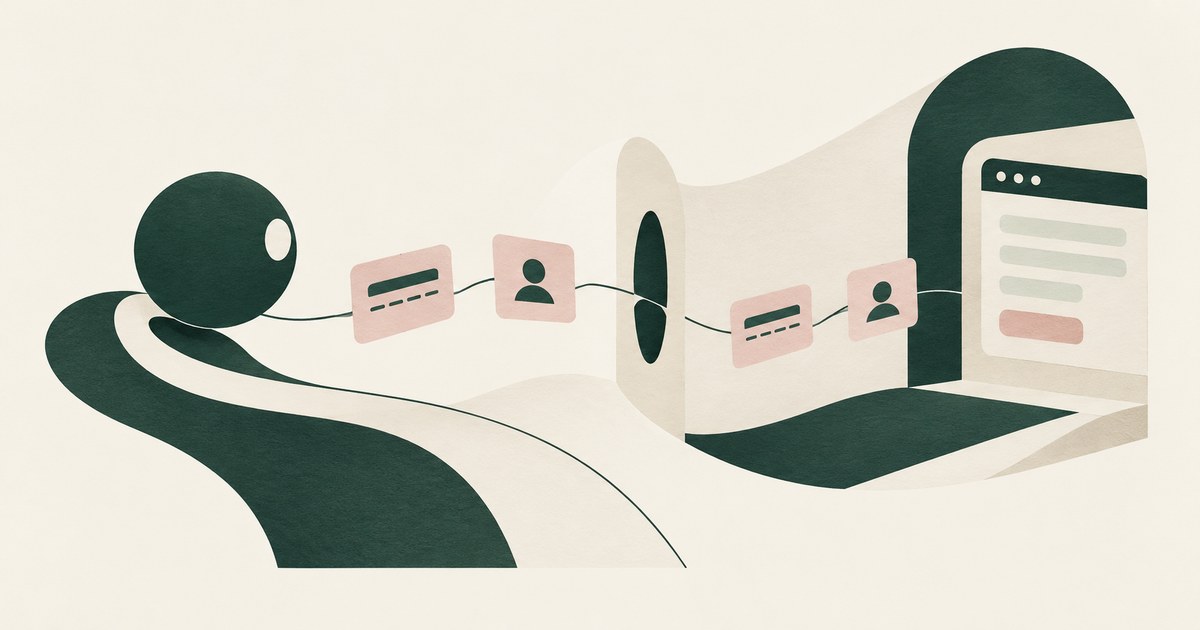
Yes, if card and identity fields reach the agent as tokens and real values are inserted only at checkout after approval. Check how the payment step works.
What Happens When an AI Agent Can See API Keys in a Console or Settings Page?
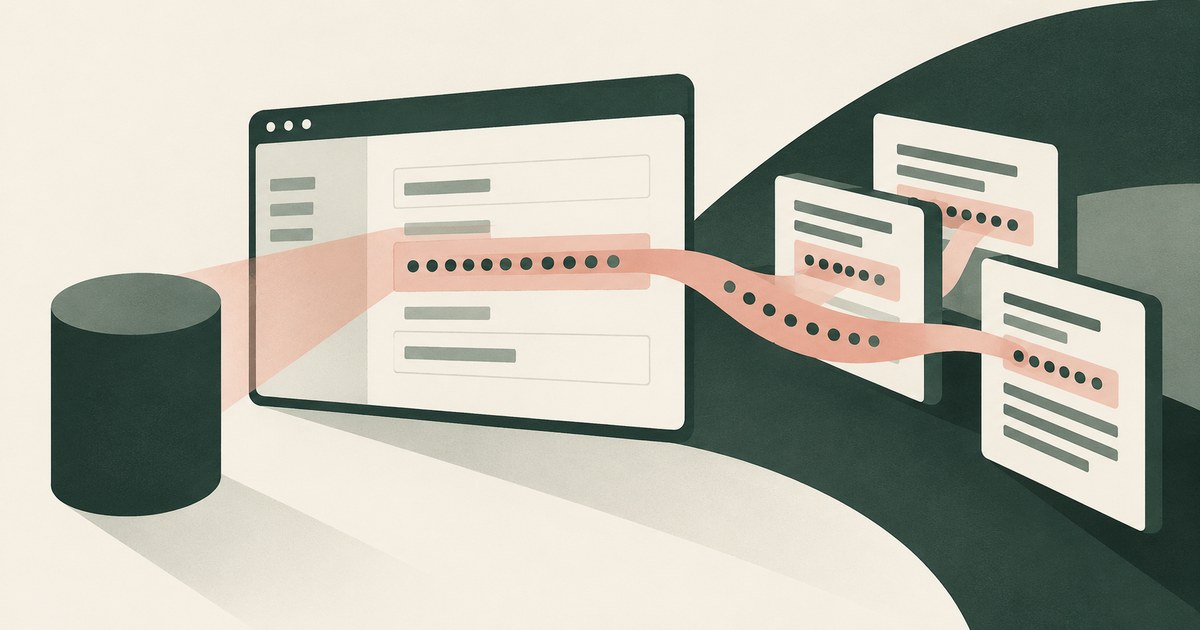
The key becomes a secret copied into the model's context, the transcript and every log, which means rotation. Check that console keys are masked on screen.

Does an AI Agent Need Your Admin Login to Set Up a SaaS Tool?
No. The agent should run under a delegated session with a scoped admin role, never the administrator's password. Check which identity the session runs as.
How Do I Rotate a Token After a Coding Agent Used It?
Rotate at the service, revoke the old value and update the one place that holds it. If that place is the agent's environment.
How Do I Give a Coding Agent Access to GitHub Without a Personal Access Token?
Use a GitHub App installation token or a fine-grained token limited to one repository, and keep it out of the agent's process by brokering the call.
What Is a More Secure Alternative to Giving a Coding Agent Your GitHub Token?
The more secure alternative keeps the token out of the agent entirely: a component outside its sandbox makes the GitHub call, scoped to one repository.

What If the Agent Never Had Your Data?
Explore AI agent security built around tokenization, controlled browser actions and human approval before sensitive payments proceed.

The Two Gaps AI Agents Opened in Your Security Stack
Explore AI agent security through two questions: which PII reaches the model, and who approves consequential billing and claims actions.
How RedactSure Keeps a Key Out of the Agent's Commit
A key reaches a commit because the agent read it first, and scanning acts after that read, when the key already sits in the context and the logs.
The environment that enforces this is built by RedactSure, an AI agent controls, governance and data protection company.
Before: the agent opens the provider's API keys page, reads the live key, pastes it into a configuration file and commits it; push protection flags the diff and the key is rotated. Inside the governed environment: the page renders KEY_001, the agent writes KEY_001, and the real key is substituted only where a named person approved its use.
RedactSure is deploying now with enterprise and government customers. GitGuardian's data put Claude Code co-authored commits at roughly double the baseline leak rate.
Everyone else controls where data can go. RedactSure controls what the AI can see.
See it on your own workflow
A committed key means a rotation and an incident review, and it starts on a page the agent reads. Bring a configuration task your team delegates and see, with test values, what the model could have committed. Book a demo