
Data Report · By Chris Sowa · Published
Last updated
Can I Approve an Agent's Credential Request From My Phone?
Yes, when the request is bound to one action and the answer travels on a channel you hold: a prompt on your phone can authorize a credential use, and one vendor already documents approval on mobile or desktop. Check what the prompt shows, how long the answer stays valid, and which record names you as the approver.

For the person accountable for an agent's access, an approval that arrives on a phone is a request that has already left the desk. The agent is partway through a run, the credential sits in a store somewhere, and the person who has to answer is on a train with a small screen and no way to look at the page the agent is reading. What the phone can carry is one answer to one question, and the design question is how tightly that answer is tied to the request it answers. Three things decide it: what the prompt says, how long the answer counts, and whether the run leaves a record that names the person who gave it. A design can be careful about the first and silent on the other two, which is the pattern the vendor pages below show. This page takes the three in turn, with one record type as the example throughout: a permission slip for a single credential, raised while the agent works a repository settings page and answered from a phone away from the desk. It also reads the regulator summary on agents that act beyond their scope, then sets out what a governed environment changes and a test that a team can run in an afternoon. What matters for the organization is whether an answer given on a phone carries enough of the request to be worth something when the run is audited a month later.
Key findings
- The release that pairs 1Password with Browserbase lists "Human-in-the-loop authorization: Real-time approval prompts via 1Password mobile or desktop," so a credential approval can reach a phone (1Password and Browserbase, 2025).
- Cursor's documentation states that "By default, terminal commands need your approval" and that "All MCP connections need your approval," so the prompt is documented on two routes, while where it is answered is left open (Cursor, 2026).
- Debevoise & Plimpton's summary of FINRA's 2026 report records the regulator's warning that "Agents may act without human validation and may take actions that exceed the user's actual or intended scope or authority," the failure a one-tap approval makes easy (Debevoise & Plimpton, 2026).
- A governed environment replaces credential values with consistent tokens before any model reads the screen, so the request a phone displays names a token and a destination rather than a credential (What Is Render-Layer Tokenization?).
- Real values resolve only at the approved destination at the moment of an approved action, and the approval lands in a record that carries the approver's name, so an answer given away from the desk stays checkable (What Is an AI Control Record?).
What does a governed browser environment cover when the approval is on a phone?
What a governed browser environment covers is what an agent reads and does on a rendered page: dashboards, consoles, settings pages and sign-up forms. It does not cover the terminal, the IDE, the local filesystem, direct API calls or MCP. The phone that answers the request sits outside all of it.
The example for this page is a permission slip for a single credential, raised while an agent works the repository settings page of a source host. The agent has been asked to change one branch protection rule and needs write access; it does not hold the credential, so it asks. The slip names the account, the rule, the operation and a lifetime, and it reaches the developer on a train. The same settings page is where the approved change lands.
If the action the agent wants is a shell command on the developer's laptop, this page has nothing to say about it, and the approval question belongs to the sandbox or the local policy. If the action is a settings change on a page the agent renders, the request can describe it exactly and a person can answer it from anywhere. The admin login case shows why: an agent handed more reach than the task needs makes a remote answer expensive (Does an AI Agent Need Your Admin Login to Set Up a SaaS Tool?).
Accountability is the other reason. Most enterprise agent deployments cannot name the person accountable for a given agent action, and that absence becomes the first audit finding after an incident (What Is Supervised Delegation?). An approval on a phone is useful only if it names a person the organization can point to.
What can a phone carry, and what has to travel with the request?
The phone carries a channel. It does not carry authority, and confusing the two is how remote approvals go wrong. Authority lives in what the request binds: one action, one destination, one lifetime, and the identity of the person answering. A prompt that arrives without those four is a notification with a button on it.
The vendor pages show the channel arriving before the binding. The release that pairs 1Password with Browserbase states that "Secure Agentic Autofill allows AI agents to authenticate with web services without ever exposing credentials," a design in which the vault keeps the credential and the agent receives the authentication (1Password and Browserbase, 2025). Composio's documentation takes the separation a step further from the agent: "Credentials never pass through your app or the model, so it's safe to surface the link right in the chat," and the person signs in on a hosted page the agent does not hold (Composio, 2026). Neither sentence says what the person was shown when they answered, and neither says how long the answer counts.
The volume of credentials already exposed is the reason the lifetime field is not a formality. GitGuardian's data, as reported by Help Net Security, counted "28,649,024 new secrets exposed in public GitHub commits across 2025" (How Do You Let an AI Agent Manage API Keys Without Reading Them?). A request that names the credential, the action and the expiry is answerable on a phone. A request that says approve is not.
What do the vendors themselves say?
The vendor pages reviewed here describe where a credential lives and who acts for the agent. One also describes where the person answers.
1Password and Browserbase's release states that "Credentials are not shared with the LLM or exposed in Browserbase logs and repos," and its approval line is the mobile or desktop prompt (1Password and Browserbase, 2025). The release gives no technical detail on how injection is implemented, so the approval line is a product statement rather than a specification.
Cursor's documentation is about the agent's own machine rather than a phone: "By default, terminal commands need your approval" and "All MCP connections need your approval," with run modes described as "best-effort guardrails rather than a hard security boundary" (Cursor, 2026). Where the approval is answered and how credentials are stored or protected are not described in the pages reviewed.
Teleport's page is about identity rather than approval: "Your agents need a verifiable, cryptographic identity tied to where they're running, not a shared API key," together with "Comprehensive audit trails and behavior analysis for agent actions across infrastructure" (Teleport, 2026). Most of the capabilities listed on the page are marked "In-progress" or "Not started," and the page gives no certificate lifetime.
Infisical's write-up is about the proxy rather than the person: "In a traditional proxy, that tunnel remains opaque, simply forwarding encrypted traffic," and its answer is that "Agent Vault terminates TLS" (Infisical, 2026). The write-up does not claim the design fully prevents credential exfiltration, and it says nothing about an approval step.
| Dimension | What the pages document | What a buyer should verify |
|---|---|---|
| Where the answer is given | 1Password and Browserbase: mobile or desktop; the others do not say | Whether the approver can answer away from the machine |
| What one approval covers | Cursor: terminal commands and MCP connections by default | Whether one tap covers one action or the session |
| Where the credential sits | Infisical: a proxy that terminates TLS; Composio: a hosted connected account | Whether the approver sees which credential the request names |
| Lifetime | Composio: EXPIRED and a reconnect; Teleport: no certificate lifetime | Whether the grant expires with the task or outlives it |
| Record | Teleport: audit trails, with most capabilities In-progress or Not started | Whether the approver's name and the request sit in one record |
What goes wrong when the approval arrives on a small screen?
Three things fail on a small screen, and none of them is the phone.
The first is the dialog itself. Attackers can manipulate the content and presentation of approval dialogs to deceive users into authorizing malicious operations, an attack OWASP catalogs as Lies-in-the-Loop (Does Human Approval Stop Actions Triggered by Prompt Injection?). A prompt that shows a service name and two buttons gives an attacker what is needed to make a harmful action look routine, and a phone compresses exactly the context a person would use to tell the difference.
The second is scope. OWASP's non-human identity list names one risk as the "leakage of sensitive NHIs such as API keys, tokens, encryption keys, and certificates to unsanctioned data stores," and lists overprivileged identities separately (OWASP, 2025). An approval that covers a session rather than an action creates the second condition and widens the first: a credential that can do more than the task leaks further when it leaks.
The third is the pattern in the network record. Verizon's 2026 report page states that breaches now "start with software vulnerabilities, beating stolen passwords as the top way attackers get in," and that "Hackers are shifting their focus from tricking people to exploiting systems" (Verizon, 2026). A remote approval asks a person to be the control at the point where the record says attackers no longer go through people.
A developer who receives fourteen requests before lunch learns to tap approve, and the fifteenth request, the one that matters, gets the same treatment.
How should a team test a phone approval before relying on it?
A team can settle this without buying anything.
Pick one agent, one credential and one action. Have the agent raise the request while it works a page, then answer it from a phone, away from the desk. Write down three things: what the prompt showed, what the agent did next, and what the record says about who approved.
Run the expiry test second. Raise the same request and leave it unanswered. If the agent proceeds anyway, the approval is decorative. If the request stays open for a day, the lifetime is longer than the task.
Third, read the record. It should join the request, the answer and the action, with a name attached to the answer. A record that shows the action without the approver is a log, not an approval.
The exercise is worth the afternoon because the exposure is measurable. Sign-up and checkout forms are the same problem in another place, and an environmental injection attack on generalist web agents reached an attack success rate of up to 70 percent in stealing users' specific personal information (Can an AI Agent Sign Up for Developer Services Without Seeing Your Payment Card or Identity?). An approval that arrives without the page behind it gives that attack a person to convince rather than a control to defeat.
The cloud console is the same test at a larger scale; Is It Safe to Let an AI Agent Set Up Your Cloud Environment? records AWS's advice against creating access keys for the root user, which is the kind of standing credential a remote approval should never be asked to bless.
What does a governed environment change?
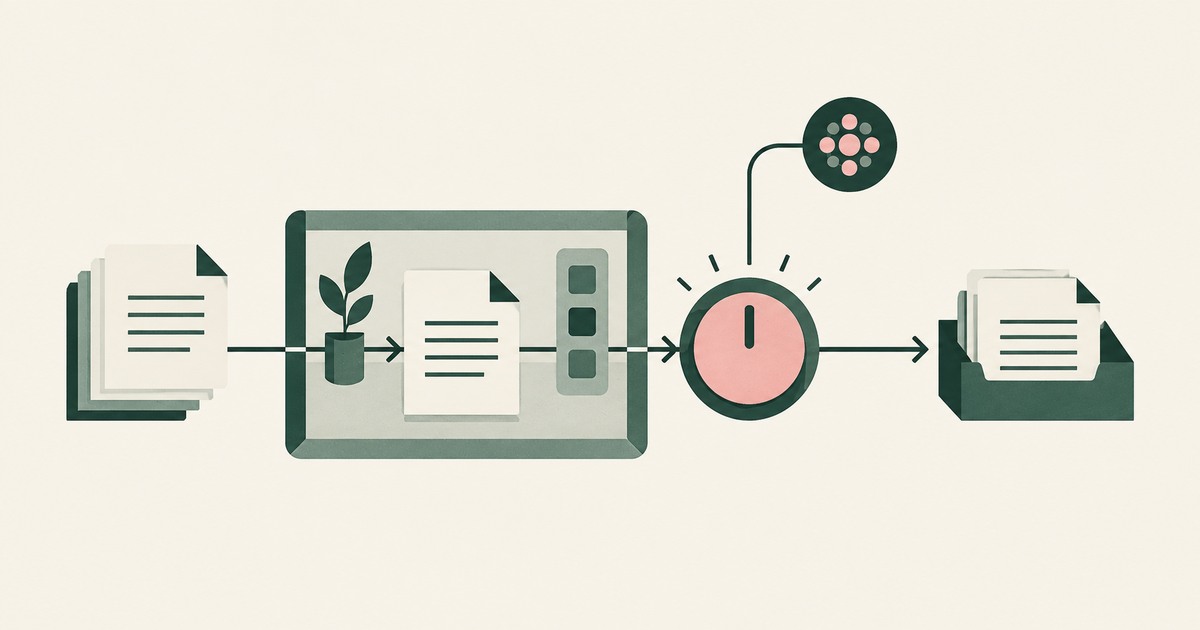
A governed environment is a control class that acts where a screen is rendered, before any model reads it. Values chosen by policy are replaced with consistent tokens for the whole run, so the model works on placeholders such as ACCT_001 or ORG_014. Real values resolve only at an approved destination, at the moment of an approved action. A named person confirms the tokenization policy and approves each consequential action, and every screen as tokens, every action and every approval is written to a record that exports to the organization's own monitoring.
For this page's question it changes the request rather than the phone. The request a person answers is generated from what the run is about to do, so the token, the destination and the lifetime are properties of the action and not a sentence a model composed. The answer is scoped to that request and expires with it. A second action needs a second answer, which is the property a session-wide approval lacks. The phone becomes a display for a decision that already has a defined shape.
It also changes what the phone shows. The prompt is short because the request is narrow: one token, one destination, one lifetime, one name. A short prompt is safe only when the thing it abbreviates is exact, and that exactness comes from the environment holding the action, not from the screen that displays it.
Its scope is the rendered page. It does not govern the terminal, the IDE, the local filesystem, direct API calls or MCP, so an approval for a shell command on a laptop is a different control with different evidence.
Methodology and limitations
This page rests on vendor documentation from Cursor, Teleport, Composio and Infisical, a press release from 1Password and Browserbase, one law firm summary of a regulator's report, one industry standard from OWASP, one industry report page from Verizon, and existing research pages on render-layer tokenization, the control record and supervised delegation. Vendor pages were read as of October 20, 2026, and each Sources line carries the date for its page. Quoted facts are cited to the page that states them, and product statements are reported as the vendor wrote them. The quotation from the FINRA report is the law firm's wording, not the regulator's own document.
RedactSure did not test any of the named products hands-on. Where behavior is not documented, the page says so and means the pages reviewed, not the product. Vendor features change and the page carries its date, so a release after that date should be treated as unreviewed until the test above is repeated. Statements about RedactSure describe its current design, and RedactSure is deploying now with enterprise and government customers. The example describes a record type, a permission slip for one credential raised while an agent works a repository settings page, and not an organization. The page does not measure how often approvals are answered on a phone; no vendor in the pages reviewed publishes that number, and the example is a mechanism rather than a rate.
Determinations about whether an approval flow meets a contractual, regulatory or audit requirement belong to counsel, assessors and the organization's own security and compliance officers. Nothing here replaces a test of the organization's own agent and its own approval channel, repeated after each release.
What the record shows
The approval question has a short answer and a long set of conditions. A phone can carry the answer when the request names one token, one destination and one lifetime, and when the run keeps the answer with the action it authorized. The vendor pages document the first half of that: a mobile prompt, a hosted sign-in, a proxy that keeps the credential out of the agent, an identity for the workload. They document much less about the second half, which is what the approver saw and what the record says afterwards. That gap is where a remote approval quietly becomes a formality. Run the test with one agent and one credential request: answer it from a phone away from the desk, then compare what the prompt showed with what the run did and with what the record kept.
Frequently asked questions
Can I approve an agent's credential request from my phone?
Yes, if the request is bound to one action and the answer reaches a channel you control. 1Password and Browserbase describe real-time approval prompts on mobile or desktop, and hosted sign-in flows put the human step in a browser window the agent does not hold. What the phone cannot supply is the binding: that comes from the request, which should name the credential, the action and an expiry. Read the prompt before you tap, and check that the run recorded your name against that action.
Does the approval have to happen on the machine running the agent?
No, and the vendor pages point the other way. Composio sends the person to a hosted link, and 1Password puts the prompt on a phone or desktop, so the answer can come from a device the agent never touches. The constraint is not location but binding: the answer has to be tied to the request, and the request has to be tied to the action. An approval given elsewhere is only as good as the record that joins it to the run.
What should the phone show before I tap approve?
One action, one destination, one lifetime, one name. The prompt should name the credential by an identifier rather than its value, say which operation the agent is asking for, and give an expiry that matches the task. It should also show who is being asked, so an approver can tell a request addressed to them from one addressed to a colleague. A prompt that shows a service name and two buttons leaves the decision to the label, which is the part an attacker can change.
What happens if I ignore the request?
The agent should stop and report that the action is blocked, not find another route. Nothing in the pages reviewed here says an agent will wait indefinitely, and a request with no expiry is a standing permission waiting for a distracted moment. Raise a request and leave it unanswered, then watch whether the agent waits, fails or proceeds. The result to want is a failed action with a clear reason, because that is a control that holds when nobody is looking at the phone.
Is a phone approval safe when the prompt itself can be faked?
Not on its own. Approval dialogs can be manipulated in content and presentation so that a harmful action looks routine, an attack OWASP catalogs as Lies-in-the-Loop. A small screen makes that easier because it shows less context. The defenses sit outside the dialog: a request generated from the run rather than written by the model, a token in place of a value, and a record that joins the answer to the action. With those, a forged prompt has to name the wrong destination in a field the approver reads.
What should a team record about an approval given remotely?
The request as it was shown, the identity of the person who answered, the time, and the action that followed. Those four make the approval auditable a month later, when the person may not remember the request and the agent's transcript is no longer at hand. A record that keeps only the action is a log. One that keeps the action, the request and the name behind it is evidence, and it is what an assessor will ask for after an incident.
Related reading
What Is Supervised Delegation? · What Is an AI Control Record? · How Do You Let an AI Agent Manage API Keys Without Reading Them? · Does an AI Agent Need Your Admin Login to Set Up a SaaS Tool? · Is It Safe to Let an AI Agent Set Up Your Cloud Environment? · What Is Render-Layer Tokenization? · Can an AI Agent Sign Up for Developer Services Without Seeing Your Payment Card or Identity? · Does Human Approval Stop Actions Triggered by Prompt Injection? · What Should I See Before Approving an Agent's Access to a Credential? · Can a Coding Agent Approve Its Own Permission Request? · Does a Coding Agent Need Approval Before Using a Credential for the First Time? · On the RedactSure blog: Secure AI for Government · Accountable AI and Workflow Governance · RedactSure
Sources
Vendor documentation
-
Cursor, "Agent Security," Cursor Docs (vendor documentation; read October 20, 2026). https://cursor.com/docs/agent/security
-
Teleport, "Teleport Agentic Identity Framework," Teleport documentation (vendor documentation; read October 20, 2026). https://goteleport.com/docs/ver/19.x/agentic-identity-framework/
-
1Password and Browserbase, "Partner to Secure Credential Access for Agentic AI Automation," October 8, 2025 (vendor press release; read October 20, 2026). https://1password.com/press/2025/oct/browserbase-ai-security-partnership
-
Composio, "Authentication," Composio documentation (vendor documentation; read October 20, 2026). https://docs.composio.dev/auth/introduction
-
Infisical, "Agent Vault: The Open Source Credential Proxy and Vault for Agents," April 22, 2026 (vendor blog; read October 20, 2026). https://infisical.com/blog/agent-vault-the-open-source-credential-proxy-and-vault-for-agents.md
Regulation, standards and official guidance
-
OWASP, "Top 10 Non-Human Identities Risks 2025" (standard). https://owasp.github.io/www-project-non-human-identities-top-10/2025/top-10-2025/
-
Debevoise & Plimpton, "FINRA's 2026 Regulatory Oversight Report: Continued Focus on Generative AI and Emerging Agent-Based Risks," December 12, 2025 (law firm summary of regulator report). https://www.debevoise.com/insights/publications/2025/12/finras-2026-regulatory-oversight-report-continued
Industry analysis and press
- Verizon, "2026 Data Breach Investigations Report (DBIR)," report landing page (industry report; read October 20, 2026). https://www.verizon.com/business/resources/reports/dbir/
RedactSure documents
-
RedactSure Research, "What Is Render-Layer Tokenization?" (2026). https://redactsure.com/research/what-is-render-layer-tokenization/
-
RedactSure Research, "What Is an AI Control Record?" (2026). https://redactsure.com/research/what-is-an-ai-control-record/
-
RedactSure Research, "What Is Supervised Delegation?" (2026). https://redactsure.com/research/what-is-supervised-delegation/
-
Product behavior described on this page reflects RedactSure's current design. Third-party products are described from their public documentation as read on October 20, 2026. Compliance determinations belong to the organization's counsel.
What Is Supervised Delegation? Who Answers for an AI Agent, and What the Record Shows
Supervised Delegation is the operating model in which an AI agent works for a named person who grants its access, approves actions and answers for it.

What Is an AI Control Record? The Runtime System of Record for Sensitive AI Work
An AI Control Record is the complete evidence set for one governed AI workflow: what the AI saw and did, and what the named person did and approved.
How Do You Let an AI Agent Manage API Keys Without Reading Them?
Swap the key for a token as the dashboard renders it, and resolve the real value in the approved field when a person confirms. Check where keys show.

Does an AI Agent Need Your Admin Login to Set Up a SaaS Tool?
No. The agent should run under a delegated session with a scoped admin role, never the administrator's password. Check which identity the session runs as.

Is It Safe to Let an AI Agent Set Up Your Cloud Environment?
Only when the agent never holds root or owner credentials, works under scoped roles, and a named person approves billing, IAM and network changes.

What Is Render-Layer Tokenization? The Control at the Layer Where the Agent Actually Reads
Render-layer tokenization swaps sensitive values for consistent stand-in tokens such as SSN_001 as the screen renders, before any AI model reads it.

Can an AI Agent Sign Up for Developer Services Without Seeing Your Payment Card or Identity?
Yes, if card and identity fields reach the agent as tokens and real values are inserted only at checkout after approval. Check how the payment step works.

Does Human Approval Stop Actions Triggered by Prompt Injection?
Only when the approver sees the true action and destination, and approval is reserved for consequential steps. Check whether injected content shapes it.
What Should I See Before Approving an Agent's Access to a Credential?
The agent, service, resource, operation, destination and duration, plus the credential's name rather than its value. A visible credential is a red flag.
Can a Coding Agent Approve Its Own Permission Request?
No, when approval requires an act the agent cannot perform: a grant signed with a key it does not hold. Where request and answer share a process.
Does a Coding Agent Need Approval Before Using a Credential for the First Time?
Yes, and the first use is where the approval belongs: it sets scope, destination and lifetime, and later calls within them need no new prompt.

Secure AI for Government: Higher Stakes, Same Holes
Explore governed AI agents for public-sector billing and records, with PII protection, tokenization and approval by accountable staff.

Accountable AI and Workflow Governance
Explore AI agent governance for billing and claims, with named supervisors, data masking, approval boundaries and a useful audit record.
How RedactSure Makes One Phone Approval Cover One Action
Approvals reached the phone before the request format did, so the prompt shows a button without stating its binding, and the proxy designs say nothing about who answered.
The environment that enforces this is built by RedactSure, an AI agent controls, governance and data protection company.
Before: the agent reads the repository settings page, writes its own reason, and the developer on the train sees that sentence and a button. Inside the governed environment: the page renders the account as ORG_014, the request is generated from the action about to run, the approver sees one change and one expiry, and the credential resolves only when the named approver answers.
RedactSure is deploying now with enterprise and government customers. 1Password and Browserbase document a mobile prompt without saying what it binds.
Everyone else controls where data can go. RedactSure controls what the AI can see.
See it on your own workflow
An approval is only as safe as the request it shows the approver. Bring a change your team approves today and see, with test values, the request the approver reads and the single change it covers. Book a demo