
Explainer · By Chris Sowa · Published
Last updated
Do API Connectors Give an AI Agent More Data Than the Task Needs?
Yes, when a connector forwards fields the task does not need. The result depends on the API, scopes, field selection and filtering. Inspect a real response and the final model input instead of assuming all connectors behave alike.

Yes, when a connector forwards fields the task does not need. The result depends on the API, scopes, field selection and filtering. Inspect a real response and the final model input instead of assuming all connectors behave alike. A task that needs an invoice balance and due date may receive additional customer fields if its connector forwards the whole object. Other APIs support field selection, and a customer-controlled adapter can filter or tokenize the response. The control question is whether minimization is enforced before the data reaches the model, whichever channel carries it. RedactSure, an AI agent controls, governance and data protection company, applies Least Exposure and render-layer tokenization to this problem.
Key findings
- Muse for Small Business connects to Shopify, Stripe, Intuit QuickBooks, Slack, Asana, Notion and eleven more. By Meta's description it "knows what a business sells, how a brand sounds, and what customers ask about most" (TechCrunch). The review needs to establish which customer fields reach the model.
- OpenAI's Dots "connect to more than 4,000 apps through plugins" (The Next Web). OpenAI's safety document states that the model sees webpage text and document content within connected apps, page content within its permitted access (OpenAI).
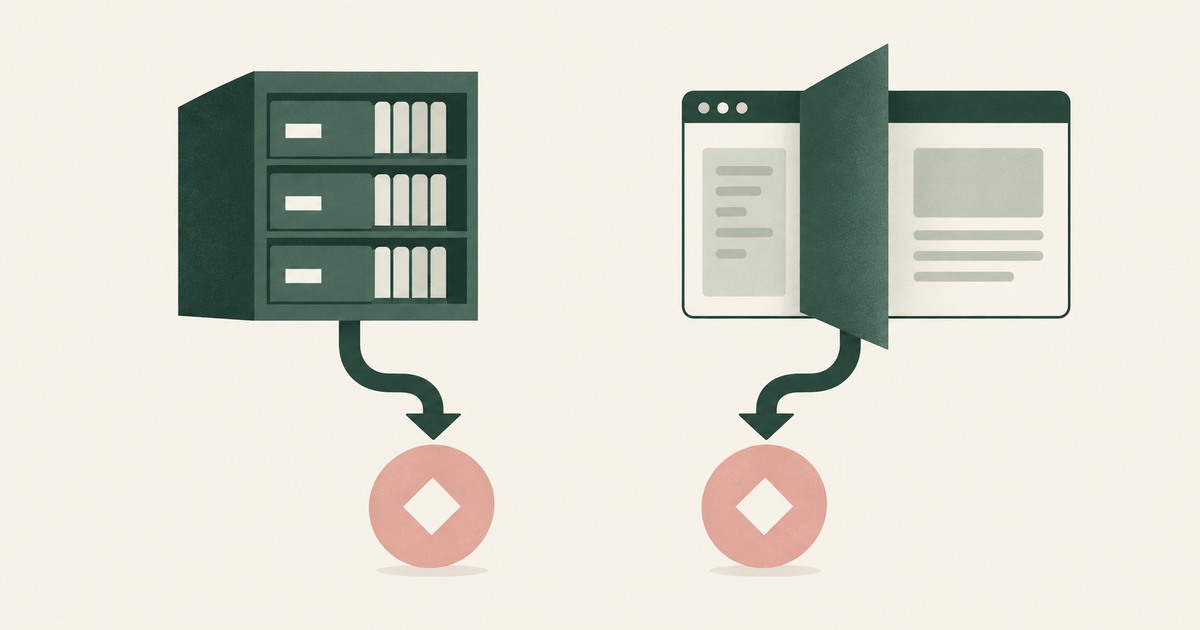
- An OAuth scope may authorize more records or fields than a task needs. The final payload depends on the endpoint, field selection and adapter. Available scopes, endpoint selection and adapter controls determine what can be restricted (Data Privacy Vault vs Screen-Level Tokenization).
- A no-training default does not reduce exposure. OpenAI's business workspaces "don't use your content to train our models by default"; the record is still in model context for the run. Futurum finds Meta's enterprise platform has no binding no-training commitment (Futurum Group).
- The minimum necessary standard at 45 CFR 164.502(b) and FERPA's PII definition at 34 CFR 99.3 are written around what the reader receives. A full patient resource or student object in model context reads the same as a full screen.
What is a connector, and what does it return?
A connector is an authorized channel between the agent and an application's API. The user or administrator signs in, grants a scope, and from then on the agent calls the API on the user's behalf. Muse for Small Business ships connectors for Shopify, Stripe, QuickBooks, Slack, Asana, Notion, Zoom, Canva, Figma, Lovable, Dropbox, Box, Klaviyo, HighLevel and Meta's own advertising and page products, plus custom connectors (TechCrunch). Dots reach 4,000 apps through plugins, each dot working from its own cloud computer and browser (The Next Web).
What comes back through the channel is what the API returns. OAuth scopes can be broader than a single task: read customers, read invoices, read contacts. The scope does not say which fields of a customer. An unfiltered customer response may carry the name, email, phone, billing and shipping address and the payment and order history. A vendor object in an accounting API carries the tax ID and, where the system holds it, bank details. A patient resource from an EHR API carries the identifiers, demographics and contacts alongside the encounter. A student object from a student information system carries the guardian's name, address and phone alongside the enrollment. If those fields are forwarded without filtering, a task needing only a balance, due date and status receives more than it needs.
Meta's description of Muse for Small Business as an agent that "knows what a business sells, how a brand sounds, and what customers ask about most" is a description of that payload. The agent is valuable because it holds the records. For a small business owner working their own customer list that is the intended trade. For a hospital, a district, an insurer or a controller working other people's records under a data-minimization obligation, it is the exposure question unanswered.
Why does "we use connectors, not screens" not settle the exposure question?
Because the record arrives as JSON instead of pixels, and the model holds it either way.
The argument for connectors is real on its own terms: an API call is structured, deterministic, faster than driving a browser, and does not carry the noise of a rendered page. None of that changes what is in model context. A screen-reading agent on the user's machine takes a screenshot, and the SSN on the screen is in the image. A connector-first agent calls the API, and the SSN is in the response body. The Dots safety document is explicit that the model sees document content within connected apps, and Meta's Muse write-up is explicit that the agent reads page content within its permitted access (Meta). Neither vendor claims the connector trims the record to the task.
What a successful injection collects follows from that. Prompt injection, per OWASP LLM01:2025, works by placing instructions in content the model reads. A connector-fed agent reads customer notes, ticket bodies, invoice memos and document text. An instruction hidden in any of them can direct the agent to send what it holds, and what it holds is the payload. Both OpenAI and Meta name injection through observed data as a known risk and mitigate it with checks before actions and monitoring. Neither mitigation changes what was in context when the check ran.
Can a connector be scoped to fields?
Yes, where the API and connector support it. Field-selection parameters, narrow endpoints and filtering adapters can reduce the response before it reaches the model. A customer that builds or controls the adapter can enforce those transformations; a packaged connector may expose fewer configuration choices.
OAuth authorization and response minimization are related but distinct. A scope can constrain access without specifying every field the task needs. Review the endpoint, requested fields, returned data and final model request. This article did not inspect the QuickBooks or Shopify connector implementations, so it cannot claim that they always forward complete records.
Where does exposure get enforced for a bought application?
In one of two places, and both can sit in front of a connector payload.
A data privacy vault sits in the data layer. For pipelines the organization builds, the vault holds the real values and hands tokens to the systems around it, and a connector payload that passes through the vault's pipeline comes out tokenized. The vault does not reach an application the organization bought and does not reach a connector whose code the organization does not run.
The render layer sits between the application and the model. Whatever the application shows is tokenized before any model reads it, with no per-application integration. That covers a claims screen, a chart, a student record, a vendor page, or a connector payload rendered inside the governed environment. The Planner decides per task which values are tokenized and what the agent may do on each screen, and a named person confirms the policy before the run. A task that needs three fields receives three fields; the identifiers around them arrive as tokens. In an EHR, the patient resource the API would return in full becomes an encounter for PATIENT_001. In a student information system, the student object with its guardian data becomes STUDENT_001 with a balance and an enrollment status. In a claims platform, the claimant record with its SSN and bank account becomes CLAIMANT_001 with a reserve and a date of loss. In an accounting system, the vendor record with its bank details becomes VENDOR_001 with an invoice and a due date.
What does a regulator see in each design?
The minimum necessary standard at 45 CFR 164.502(b) asks that each use and disclosure be limited to what the purpose requires. A connector that returns the full patient resource for a task that needed the encounter status has disclosed the full resource to the model. FERPA's definition of personally identifiable information at 34 CFR 99.3 reaches the guardian's name and address and any indirect identifier, all of which a student object carries. The NAIC Model Bulletin asks an insurer to document its governance over AI systems, including the data those systems use. The GLBA Safeguards Rule asks a financial institution to oversee service providers handling customer information.
A connector review should include scopes, payload filtering, contractual terms and a captured model request. In a governed environment with an exposure policy the answer is the confirmed policy for the task, the tokenized screens the model received, and the named approvals. All three sit in an AI Control Record the organization exports to its own monitoring. Compliance determinations belong to the organization's counsel and compliance officer. The second answer is the one that can reduce the data exposure under review.
How do the three agent designs compare?
| Control | Connector-first agent (Muse for Business, Dots) | Screen-reading agent on the user's machine | Governed environment with exposure policy (RedactSure) |
|---|---|---|---|
| What the model receives | The fields forwarded by the configured API and connector | Screenshots of whatever is on the screen, in full | The task's fields, identifiers as tokens |
| Who decides what it sees | The application's API and the connector vendor's code | The user, by what is on screen | A named workflow owner, per task, confirming the Planner's policy |
| Coverage of applications without an API | None | Any application on the machine | Any application the governed environment can render, no per-application integration |
| Record | Activity View or activity log in the vendor's app | Local history, if any | Every screen as tokens, every action, every approval with a name, exported to the customer's SIEM |
| Keys | Vendor-held; Meta and OpenAI do not disclose the key holder | The user's machine | Customer-held; RedactSure holds ciphertext it cannot decrypt |
| What a successful injection collects | The payload in context | The screen in context | Tokens and remaining task context |
Where does RedactSure sit?
RedactSure enforces the exposure policy between the record and the model, whether the original data comes from a screen or an integrated system. It does not use per-application connectors and does not require them. AI co-workers do real work across an organization's applications inside a governed environment: the ERP, the claims platform, the EHR, the student information system, and the payer portals and email around them. Each application is worked as rendered, with no per-application integration and no change to user permissions. Every sensitive value chosen by policy, starting with identifiers, is replaced by a consistent token at the render layer before any model reads the screen. The environment hands the model the task's fields rather than a picture. The Planner sets which values are tokenized and what the agent may do on each screen. A named person confirms that policy before the run and approves every payment, submission and record change while it runs (Supervised Delegation).
What the organization avoids is a model that holds the whole customer, vendor, patient or student record for a task that needed three fields, and an injection that collects it. Real values resolve only at approved destinations at the moment of an approved action. The environment is a secure virtual machine on hardware-encrypted enclaves with keys the customer holds. It is model-agnostic: Claude, GPT, Gemini or open-weights models, swappable without moving the controls. Every screen as tokens, every action and every approval lands in the AI Control Record and exports to the customer's own SIEM. Prompt injection can expose tokens and any remaining task context, and the consequential action still stops for a named person. Deployments on this design are in pilot.
Methodology and limitations
The HIPAA minimum necessary standard has exceptions, including certain treatment disclosures. Its application depends on the purpose and parties. Replacing direct identifiers does not by itself establish HIPAA de-identification or remove all PHI from the remaining context.
The vendor documents are Meta's Muse safety write-up (September 2026) and OpenAI's Dots safety document (September 29, 2026), cited with their dates. Muse for Small Business comes from TechCrunch, Help Net Security and Runtime, and the Dots app count from The Next Web, all September 29, 2026, cited as press. Futurum's analysis is cited as that analyst's view. Regulation is cited from the text of 45 CFR 164.502(b), 34 CFR 99.3, 16 CFR Part 314 and the NAIC Model Bulletin. Case law and enforcement actions are not surveyed. All were read as of September 30, 2026.
No hands-on testing of Muse for Small Business, Dots or any connector was performed; the workflow examples are architectural inferences from the cited documents, not captured model requests. The fields an API returns per scope were not checked against QuickBooks, Shopify or other API references; that scopes are coarse describes general OAuth practice. Neither Meta nor OpenAI documents whether its connector code trims a payload; that silence is reported as silence. Meta's enterprise terms were not available and could address training commitments. The patient, student, claimant and vendor examples describe record types, not any specific organization; no customer or prospect is described. Vendor features change; the page carries its date and is revised when the documentation changes.
Whether a deployment meets the minimum necessary standard, FERPA's PII definition, the NAIC bulletin or the Safeguards Rule belongs to the organization's counsel, not to this page.
- Meta AI Research, "How We Built Safety Into Muse: Security and Safety for AI Agents" (September 2026)
- OpenAI, "How we build safety, security and privacy into dots" (September 29, 2026)
- 45 CFR 164.502(b), HIPAA minimum necessary standard
We did not run the vendor products or capture their model requests. Workflow examples are analysis, and RedactSure behavior is described from its current design.
What the record shows
Yes, when a connector forwards fields the task does not need. The result depends on the API, scopes, field selection and filtering. Inspect a real response and the final model input instead of assuming all connectors behave alike. Name the fields a task needs, then compare them with the API response and final model request. Enforce any filtering in code the organization can review.
Frequently asked questions
Is a connector safer than a screen?
Either can be configured to expose too much. Compare the fields in the final model input, the action permissions and the audit record. A filtered API response can be narrower than a screenshot; an unfiltered response can contain more than the task needs.
Can a connector be scoped to fields?
Yes, depending on the API and adapter. Some APIs support field selection or narrow endpoints, and a customer-controlled adapter can filter or tokenize responses before passing them to the model. Check the actual implementation rather than assuming a scope always returns a complete record.
What does Muse for Business receive from QuickBooks?
The cited launch material names QuickBooks as a connector but does not specify its exact response fields. Inspect the endpoint, configured scopes, field selection and a captured model request. This article did not test that connector.
Does RedactSure use connectors?
No. There is no per-application integration. The AI co-worker works the application as rendered inside the governed environment, on the screens a named person chose. Every sensitive value chosen by policy is tokenized at the render layer before any model reads it. Connectors are not required, which is also why applications without an API, a claims platform, a payer portal or a legacy finance system, are covered the same way.
Does a no-training default reduce exposure?
No. A no-training commitment governs what the vendor does with the data after the run. Exposure is what the model holds during the run. A full customer record in context is exposed to that run's reasoning, its outputs and any injection that reaches it. OpenAI's business workspaces do not train on content by default; Futurum finds Meta's enterprise platform has no binding no-training commitment. Neither statement changes the payload.
What does a successful injection collect through a connector?
The payload in context. An instruction hidden in a customer note, a ticket body or an invoice memo can direct a connector-fed agent to send what it holds. What it holds is the object the API returned: the customer with address and payment history, the vendor with tax ID and bank details, the patient or student with identifiers and contacts. Checks before actions and monitoring can stop the send; they do not change what was in context when the check ran. Inside RedactSure's environment the same injection collects tokens.
Sources
Vendor documentation
- Meta AI Research, "How We Built Safety Into Muse: Security and Safety for AI Agents" (September 2026). https://research.meta.ai/blog/security-and-safety-for-ai-agents-our-approach-with-muse
- OpenAI, "How we build safety, security and privacy into dots" (September 29, 2026). https://openai.com/index/how-we-build-safety-security-and-privacy-into-dots/
Regulation and standards
- 45 CFR 164.502(b), HIPAA minimum necessary standard. https://www.ecfr.gov/current/title-45/subtitle-A/subchapter-C/part-164/subpart-E/section-164.502
- 34 CFR 99.3, FERPA definitions including personally identifiable information. https://www.ecfr.gov/current/title-34/subtitle-A/part-99/subpart-A/section-99.3
- 16 CFR Part 314, GLBA Safeguards Rule. https://www.ecfr.gov/current/title-16/chapter-I/subchapter-C/part-314
- NAIC, Model Bulletin on the Use of Artificial Intelligence Systems by Insurers, adoption map. https://content.naic.org/sites/default/files/legal-adoption-map-ai-model-bulletin.pdf
- OWASP, LLM01:2025 Prompt Injection, Top 10 for LLM Applications 2025. https://genai.owasp.org/llmrisk/llm01-prompt-injection/
Independent analysis and press
- TechCrunch, "Meta is expanding its AI agent Muse to small businesses" (September 29, 2026). https://techcrunch.com/2026/09/29/meta-is-expanding-its-ai-agent-muse-to-small-businesses/
- Help Net Security, "Meta gives small businesses an AI agent that knows their work" (September 29, 2026). https://www.helpnetsecurity.com/2026/09/29/meta-muse-for-small-business/
- Runtime, "Meta puts Muse models, agents and coding tools under a new enterprise platform" (September 2026). https://runtimewire.com/article/meta-enterprise-platform-muse-cj-desai
- The Next Web, "OpenAI launches dots, always-on AI agents with their own cloud computers" (September 29, 2026). https://thenextweb.com/news/openai-dots-always-on-ai-agents-cloud-computers-devday
- Futurum Group, "Meta Makes Pitch to Enterprises With Consumer-Grade Trust" (September 2026). https://futurumgroup.com/insights/meta-makes-pitch-to-enterprises-with-consumer-grade-trust/
RedactSure documents
- RedactSure, "Secure AI That Crosses Every Silo" (2026). https://redactsure.com/blog/secure-ai-that-crosses-every-silo/
- RedactSure, "The Two Gaps AI Agents Opened in Your Security Stack" (2026). https://redactsure.com/blog/two-gaps-ai-agents-opened-in-your-security-stack/
- RedactSure, "Your AI Strategy Is Probably Wrong" (2026). https://redactsure.com/blog/your-ai-strategy-is-probably-wrong/
- RedactSure Research, "What Is Least Exposure?" (2026). https://redactsure.com/research/what-is-least-exposure
- RedactSure Research, "What Is Render-Layer Tokenization?" (2026). https://redactsure.com/research/what-is-render-layer-tokenization
- RedactSure Research, "What Is Supervised Delegation?" (2026). https://redactsure.com/research/what-is-supervised-delegation
- RedactSure Research, "What Is an AI Control Record?" (2026). https://redactsure.com/research/what-is-an-ai-control-record
- RedactSure Research, "What Does Prompt Injection Get From a Token-Only Agent?" (2026). https://redactsure.com/research/prompt-injection-agent-sees-only-tokens
- Product behavior described on this page reflects RedactSure's current design. Meta and Muse are trademarks of Meta Platforms, Inc.; OpenAI, ChatGPT and Dots are trademarks of OpenAI; QuickBooks is a trademark of Intuit Inc.; Shopify is a trademark of Shopify Inc.; named to identify the products. Compliance determinations belong to the organization's counsel.
Related research

What Is Least Exposure?
Explore Least Exposure for AI agent security, limiting PII to what a workflow needs through tokenization and explicit human decisions.

What Should the AI See for This Piece of Work?
Define what an AI agent should see in one billing or claims workflow, using tokenization, clear PII boundaries and named human approval.
Data Privacy Vault or Screen-Level Tokenization?
Compare data privacy vaults and screen-level tokenization for AI agents, including PII protection, workflow fit and where tokens are made.

What Should a Meta Muse Security Review Check?
Review Meta Muse AI agent security, PII exposure, tokenization and approval evidence before connecting billing, sales or payment systems.

Do OpenAI Dots Rules Control What the Agent Sees?
Review OpenAI Dots Custom Rules, AI agent security and tokenization before connecting billing, claims or other workflows that expose PII.
Secure AI That Crosses Every Silo
Explore AI agents that work across billing, collections and enterprise systems while tokenization protects PII at each workflow step.
See it on your workflow.
Bring one billing, collections, claims or patient-account workflow and your questions.
Book a demo