
Data Report · By Chris Sowa · Published
Last updated
How Do I Revoke a Coding Agent's Access Mid-Task?
Revoke the grant where the service enforces it, at the identity provider, gateway or adapter, and the next call fails; clearing the token from the agent's context is a race against the copy it already holds. Ask which system decides, what the agent kept, and what record shows the revocation.

Teams that let coding agents hold credentials find that access is easy to give and awkward to withdraw. A coding agent receives a grant, spends it across a run, and by the time someone decides the run should stop, the value behind the grant may already sit in the model's context, in an environment variable, in a transcript or in a saved browser session. That is why the question in the title is two questions in one: which object does a revocation act on, and how quickly does the effect reach the place where the next request is checked. The answer turns on enforcement. A revocation at the issuer, the gateway or the adapter that attaches the credential stops the next call that passes through that point. A deletion of the token from the conversation, or a restart of the agent's process, acts on a copy, and a copy is not the authority. This means whoever answers for the run should revoke where the credential is checked and treat any value the agent already read as a separate exposure. The worked record throughout is a grant revoked between two API calls, viewed from the repository settings page where the grant and the key appear, and the page closes with a check a reader can run on it.
Key findings
- HashiCorp's Vault documentation states that "When a lease is revoked, it invalidates that secret immediately and prevents any further renewals," which makes the issuer the switch (HashiCorp, 2026).
- 1Password's post on agent access describes a gateway that "replaces a placeholder with the real value only when the agent sends a request to an approved host," so the approved host list, not the model's memory, is what a revocation changes (1Password, 2026).
- Teleport's documentation states that "Your agents need a verifiable, cryptographic identity tied to where they're running, not a shared API key," which gives a revocation a per-agent object, though the page marks most listed capabilities "In-progress" or "Not started" and gives no certificate lifetime (Teleport, 2026).
- Browserbase's authentication guidance tells teams to "Log in once, then reuse the saved authentication state," and a saved state outlives the process, so revoking the agent is not revoking the session (Browserbase, 2026).
- A governed environment replaces a value with a consistent token before any model reads the screen, so the copy a model keeps is a placeholder (What Is an AI Control Record?).
- Real values resolve only at the approved destination at the moment of an approved action, so withdrawing the approval acts before the value is placed (What Is Supervised Delegation?).
What does a mid-task revocation actually revoke?
Three objects can be revoked, and only one of them is authority. The grant is the record at the service or gateway that says this agent may present this credential, for this operation, until this time. The copy is whatever the agent holds: a token in its context, a value in an environment variable, a string it wrote into a file. The session is what a browser keeps after a login. A revocation that does not name which of the three it acts on is a gesture.
The scope comes first because the answer changes with the layer. A governed browser environment covers what an agent reads and does on a rendered page, such as a dashboard, a console, a repository settings page or a sign-up form, and it does not cover the terminal, the IDE, the local filesystem, direct API calls or MCP. A grant for a repository API is enforced by the service that accepts the call, which sits outside that scope; the page layer governs what the agent reads on the settings screen where the grant and its expiry are displayed.
The worked record is a grant revoked between two API calls. An agent holds a scoped grant for one repository, read and write, enough for the task. It makes a read call, then a write call, both accepted. Before the third call, a person with authority over the repository revokes the grant at the service. What the third call returns, and what the agent still holds, is the question the rest of this page answers.
A revocation is also an accountable act, and What Is Supervised Delegation? sets out who answers for it.
| Object | Where it lives | What revoking it stops |
|---|---|---|
| Grant | The issuer, identity provider or gateway | Calls that check the issuer after the change |
| Copy | The model's context, a variable, a transcript or a file | Nothing by itself; the value may still be accepted elsewhere |
| Session | A browser profile or a saved context | Requests that reuse the session, once the service invalidates it |
Why is a token the agent already holds a race to revoke?
Because a token is a copy of authority, not authority itself. The issuer keeps the record; the holder keeps the string. When the record changes, the string does not, and whether it still works depends on the next system that checks it. Vault's documentation states that "Vault promises that the data will be valid for the given duration, or Time To Live (TTL)," and "All dynamic secrets in Vault are required to have a lease" (HashiCorp, 2026).
Three windows make a mid-task revocation a race. The first is propagation: the revocation happens at the issuer, and every place that validates the credential has to learn about it. The second is the copy: a value the agent read can be presented to a system that does not consult the issuer. The third is timing: a call already in flight when the person clicks revoke has left the agent.
The model's context is the copy that is easiest to overlook. Model Context Protocol guidance warns that "Poor scope design increases token compromise impact, elevates user friction, and obscures audit trails," which is another way of saying that a broad credential is harder to revoke in effect (Model Context Protocol, 2026).
What the agent has already read is the part no revocation reaches. SecretBench records "a labeled dataset of source codes containing 97,479 secrets (of which 15,084 are true secrets)," and each of those was a value someone had already written down (Basak et al., 2023). A revoked grant ends future calls. It does not edit the transcript, the commit or the file the agent produced while the grant was live.
What do the vendors themselves say?
Three vendor pages bear on the question, and each documents one piece of the enforcement path rather than a revocation procedure.
1Password's post describes a gateway that holds credentials by reference. "Inside the sandbox, the agent sees placeholders rather than real credentials, including a placeholder for its model key," and "OpenShell Gateway replaces a placeholder with the real value only when the agent sends a request to an approved host" (1Password, 2026). The post adds that "1Password stores them by reference rather than by value," which is what makes the host list the switch: a host removed from the list no longer receives the value, whatever the agent's context still contains. The post does not describe independent testing or audit of the integration.
Teleport's page lists "Comprehensive audit trails and behavior analysis for agent actions across infrastructure," an account of what agents did on a page that marks most listed capabilities "In-progress" or "Not started" and gives no certificate lifetime (Teleport, 2026). An audit trail records a revocation after the fact, and the page does not state how quickly a revocation takes effect.
Browserbase's guidance concerns the session rather than the grant. It advises teams to "Apply Contexts" and to "Store cookies, session tokens, and local storage to prevent repeated logins," and it recommends that "For an authentication flow requiring some level of security, try to create an app password" (Browserbase, 2026). A context is a saved login, and the page does not explain how usernames and passwords are stored or handled in automated sessions, so how a saved session is invalidated mid-run is not described in the pages reviewed.
| Dimension | 1Password, per its documentation | Teleport, per its documentation | What a buyer should verify |
|---|---|---|---|
| What the agent holds | A placeholder, including for its model key | An identity tied to where it runs | Whether a real value ever enters the agent's context |
| Where the real value sits | Stored by reference, released to an approved host | Not the subject of the page | Which component holds it, and what that component can reach |
| What a revocation acts on | The approved host list or the reference | The identity | That the switch is outside the agent's process |
| Audit | Not described | Audit trails and behavior analysis | Whether the record includes the revocation and the failed call |
| Stated gaps | No independent testing or audit described | Capabilities marked in progress; no certificate lifetime | The vendor's answer in writing, tested on one agent |
What has to be true before a grant can be revoked between two calls?
Four conditions decide whether a revocation can land between two calls.
The first is a single audience. Model Context Protocol guidance states that "MCP servers MUST NOT accept any tokens that were not explicitly issued for the MCP server," which gives a revocation one place to act (Model Context Protocol, 2026). The same page warns that "MCP servers run with the same privileges as the client," so a server keeps its reach after the agent's grant is withdrawn (Model Context Protocol, 2026).
The second is a bounded action set. Willison's design patterns "constrain the actions of agents to explicitly prevent them from solving arbitrary tasks," and in one of them "Agents can trigger tools, but cannot be exposed to or act on the responses from those tools" (Willison, 2025). An agent that cannot act on a response has fewer calls to catch, and the patterns have no empirical tests.
The third is privilege control at the tool boundary. Progent's abstract reports that the approach "significantly reduces attack success rates while maintaining high utility," a result about restricting calls rather than revoking after the fact (Shi et al., 2026).
The fourth is a record with a name on it. A control record, What Is an AI Control Record?, answers what the model saw and who answered for what it did, and an export makes a revocation reviewable after the run (How Do You Send an AI Agent's Activity Record to Microsoft Sentinel or CrowdStrike Falcon?).
How should a team test a revocation mid-task?
The test needs one agent, one grant and a task with at least three calls. Record the grant's scope and expiry, and the value the agent holds at the start. Let the first two calls succeed, revoke the grant at the service, and keep the response to the third call, the log lines and the transcript.
A pass has three parts. The third call fails at the service, not in the agent's own reasoning. The transcript holds no value that still works at another service. The record shows the revocation, the failed call and the name of the person who acted. A test that checks only the first part proves the agent noticed, not that the credential stopped working.
Detection is not a substitute for the test. LlamaFirewall's abstract reports a detector that "shows stronger efficacy at preventing indirect injections in general scenarios than previously proposed approaches," a claim about blocking a request rather than withdrawing a grant (Chennabasappa et al., 2025).
Custody decides what the test can show. If a broker holds the value, the test asks whether the broker kept a copy, which How Do You Let an AI Agent Manage API Keys Without Reading Them? takes up. If the agent held a stored browser session, the test invalidates the session at the service.
A clone-only grant fails differently from a push grant (Can I Grant a Coding Agent Clone Access but Not Push Access?), and an agent that asks for more access tests whether the revocation is checked at all (Can a Coding Agent Escalate Its Own Permissions?). The read-only case, How Do I Give a Coding Agent Read-Only Access to One Repository?, is the cleanest first test.
What does a governed environment change?
A governed environment is a control class that puts the value outside the model and makes the grant the thing that releases it. Values chosen by policy are replaced with consistent tokens before any model reads the screen, so a page that shows a repository token, a cloud key or a customer record renders as REPO_014, KEY_003 or ACCT_002 for the whole run. The real values resolve only at approved destinations, at the moment of an approved action, so placing a value requires a live grant and a live approval at the same time.
For this page's question, that changes what a revocation acts on. In the page layer, revoking means withdrawing the policy or the approval that would resolve the value, and the next action fails to resolve. The model's context is not the object of the revocation, because the model never held the value; the copy that remains is a token with no meaning outside the environment that issued it. A record of the run then shows what each screen rendered as tokens, which action was approved, and which approval was withdrawn.
The class has a scope, and the scope is the rendered page. It does not cover the terminal, the IDE, the local filesystem, direct API calls or MCP, so a token exported into a shell environment is governed by the sandbox and by the issuer.
Two properties make the revocation testable. The token is consistent for the whole run, so a record of REPO_014 on the settings page and REPO_014 in the action log refers to the same value without either record holding it. Every approval is a named event, so the moment the grant stops being honored is a timestamp rather than an inference from a failed call.
Methodology and limitations
This page rests on vendor documentation from 1Password, Teleport, Browserbase and HashiCorp, the Model Context Protocol security guidance, three research preprints and one practitioner analysis, and RedactSure research pages. Vendor pages were read as of October 20, 2026, and each Sources line carries the date for its page. Quoted sentences are reproduced as the page states them. The vendor pages supply the enforcement mechanisms, the specification supplies the token rules, and the preprints supply the research record on credentials and privilege control. Figures are cited as the pages report them, not as measurements this page made, and the preprints are cited for what their abstract pages state.
RedactSure did not test any product named here hands-on or run a revocation against a live service. Where the page says a behavior is not described in the pages reviewed, the statement covers those pages and not the product's full behavior. Vendor features change, and the page carries its date; a release after that date is unreviewed until the test above is repeated. Statements about RedactSure describe its current design, and RedactSure is deploying now with enterprise and government customers. The worked example describes a record type, a grant revoked between two API calls, not an organization.
Determinations about whether a revocation satisfies a contractual, regulatory or audit requirement belong to counsel, assessors and the organization's own security and compliance officers. Nothing here replaces a test on the organization's own agent, with a credential issued for the test, repeated after each change to the issuer or the gateway that enforces the grant.
What the record shows
The record supports a narrow answer. A revocation takes effect where a service or gateway checks the credential, so the useful unit is the grant and the useful moment is the next call. The approaches reviewed each hold one part of that path: a gateway that releases a value only to an approved host, an identity that belongs to one agent, a saved session that outlives the run. None of them reaches a copy the agent already read, and the count of credentials in public source shows what happens to a value that escapes. RedactSure's design places the value outside the model and ties its resolution to a live grant and a named approval, which is the version of revocation that does not depend on the agent forgetting. Before relying on any of these, a team should test one agent and one task: revoke the grant between the second and third call, and record what the third call returned, what the agent still held, and which record shows both.
Frequently asked questions
Can a coding agent's access be revoked in the middle of a task?
Yes, if the grant is enforced somewhere the next call passes through. Revoke it at the identity provider, gateway or adapter, and the following request fails there. What does not change is anything the agent already read or wrote: the copy in its context, a transcript, a commit. Treat the revocation as the stop and the copy as a separate cleanup. The order matters, because revoking first limits what a still-valid copy can do. The copy stays wherever it was written.
What is the difference between revoking a token and revoking a grant?
A grant is the record at the issuer that says what may be done; a token is a value that carries the grant's authority. Revoking a lease invalidates the credential and prevents renewals, which is the strongest documented form. A token copied out of the agent's context is not recalled by that action, and it may keep working at a service that does not check the issuer. Name the object before promising an effect.
Does restarting the agent or clearing its context revoke access?
No. A restart ends the process, not the credential. The value can persist in an environment variable, a saved browser context, a file the agent wrote or a server-side session created during the run. The service that issued the credential is the place to end it. Clearing the context is still worth doing, because it removes one copy, but it is a cleanup step and not the revocation. A saved context can be reused by the next run unless the service has invalidated the underlying session.
How quickly does a mid-task revocation take effect?
At the next check by the system that enforces the grant. If every call is checked against the issuer, the next call fails. If the service relies on a cached token or a fixed lifetime, the effect waits for expiry. The vendor pages reviewed give no propagation time, and Teleport's page gives no certificate lifetime, so the interval is something to measure on the organization's own path rather than assume.
What should a revocation record contain?
The grant and the agent identity, the person who revoked it, the time, and the scope that ended. The calls before and after, with the response each returned. What the agent held at the moment of the revocation, including any transcript or file it had written. Whether a copy was still accepted anywhere after the revocation. A record with those fields answers the two questions an auditor asks: what ended, what was already done under it, and on what date.
What should a team ask a vendor before relying on mid-task revocation?
Where the grant is enforced, and whether that point sits outside the agent's process. What the agent holds when it makes a call, and whether a real value ever enters its context. How long a revoked grant stays valid at each service that accepts it. What the record shows, and whether it exports. Ask for the answer in writing and then run the two-call test, because a documented mechanism and a working revocation are not the same claim.
Related reading
What Is Supervised Delegation? · What Is an AI Control Record? · How Do You Send an AI Agent's Activity Record to Microsoft Sentinel or CrowdStrike Falcon? · How Do You Let an AI Agent Manage API Keys Without Reading Them? · Can a Coding Agent Escalate Its Own Permissions? · Can I Grant a Coding Agent Clone Access but Not Push Access? · How Do I Give a Coding Agent Read-Only Access to One Repository? · On the RedactSure blog: Your AI Doesn't Need to Know Who You Are · Accountable AI and Workflow Governance · RedactSure
Sources
Peer-reviewed research and preprints
-
Basak, Neil, Reaves, Williams, "SecretBench: A Dataset of Software Secrets," arXiv:2303.06729 (preprint, 2023). https://arxiv.org/abs/2303.06729
-
Chennabasappa, Nikolaidis, Song et al. (Meta), "LlamaFirewall: An open source guardrail system for building secure AI agents," arXiv:2505.03574 (preprint, May 2025). https://arxiv.org/abs/2505.03574
-
Shi, He, Wang et al., "Progent: Securing AI Agents with Privilege Control," arXiv:2504.11703 (preprint, v3 May 2026). https://arxiv.org/abs/2504.11703
Vendor documentation
-
Teleport, "Teleport Agentic Identity Framework," Teleport documentation (vendor documentation; read October 20, 2026). https://goteleport.com/docs/ver/19.x/agentic-identity-framework/
-
1Password, "Secure agent access in development workflows with 1Password + NVIDIA OpenShell," September 28, 2026 (vendor blog; read October 20, 2026). https://1password.com/blog/1password-nvidia-openshell
-
Browserbase, "Authentication best practices," Browserbase documentation (vendor documentation; read October 20, 2026). https://docs.browserbase.com/best-practices/authentication
-
HashiCorp, "Lease, Renew, and Revoke," Vault documentation (vendor documentation; read October 20, 2026). https://developer.hashicorp.com/vault/docs/concepts/lease
Regulation, standards and official guidance
- Model Context Protocol, "Security Best Practices," modelcontextprotocol.io specification (standard; read October 20, 2026). https://modelcontextprotocol.io/specification/latest/basic/security_best_practices
Industry analysis and press
- Willison, "Design Patterns for Securing LLM Agents against Prompt Injections," June 13, 2025 (practitioner analysis). https://simonwillison.net/2025/Jun/13/prompt-injection-design-patterns/
RedactSure documents
-
RedactSure Research, "What Is Supervised Delegation?" (2026). https://redactsure.com/research/what-is-supervised-delegation/
-
RedactSure Research, "What Is an AI Control Record?" (2026). https://redactsure.com/research/what-is-an-ai-control-record/
-
RedactSure Research, "How Do You Send an AI Agent's Activity Record to Microsoft Sentinel or CrowdStrike Falcon?" (2026). https://redactsure.com/research/how-do-you-send-an-ai-agents-activity-record-to-microsoft-sentinel-or-crowdstrike-falcon/
-
Product behavior described on this page reflects RedactSure's current design. Third-party products are described from their public documentation as read on October 20, 2026. Compliance determinations belong to the organization's counsel.
What Is Supervised Delegation? Who Answers for an AI Agent, and What the Record Shows
Supervised Delegation is the operating model in which an AI agent works for a named person who grants its access, approves actions and answers for it.

What Is an AI Control Record? The Runtime System of Record for Sensitive AI Work
An AI Control Record is the complete evidence set for one governed AI workflow: what the AI saw and did, and what the named person did and approved.

How Do You Send an AI Agent's Activity Record to Microsoft Sentinel or CrowdStrike Falcon?
Post a per-run record of screens as tokens, actions and approvers via the Logs Ingestion API or HTTP Event Collector, then add a parser and a denial rule.
How Do You Let an AI Agent Manage API Keys Without Reading Them?
Swap the key for a token as the dashboard renders it, and resolve the real value in the approved field when a person confirms. Check where keys show.
Can a Coding Agent Escalate Its Own Permissions?
It can ask, and in documented tools the default answer is a prompt, not a boundary. An agent that can edit its own permission file has escalated.
Can I Grant a Coding Agent Clone Access but Not Push Access?
Yes, by operation: a credential can read a repository without permission to write, and a grant can name clone so a push is refused.
How Do I Give a Coding Agent Read-Only Access to One Repository?
Scope a fine-grained token or app installation to that repository with contents read, hand it to an adapter, and write the grant as one repository.

Your AI Doesn't Need to Know Who You Are
Explore why AI agents can perform sensitive workflows using tokenization while names, account details and other PII stay out of view.
Accountable AI and Workflow Governance
Explore AI agent governance for billing and claims, with named supervisors, data masking, approval boundaries and a useful audit record.
How RedactSure Makes a Revoked Grant Stop the Next Call
Revoking a grant is easy once decided, yet the agent already holds a copy, and an identity, a host list or a saved session covers one part.
The environment that enforces this is built by RedactSure, an AI agent controls, governance and data protection company.
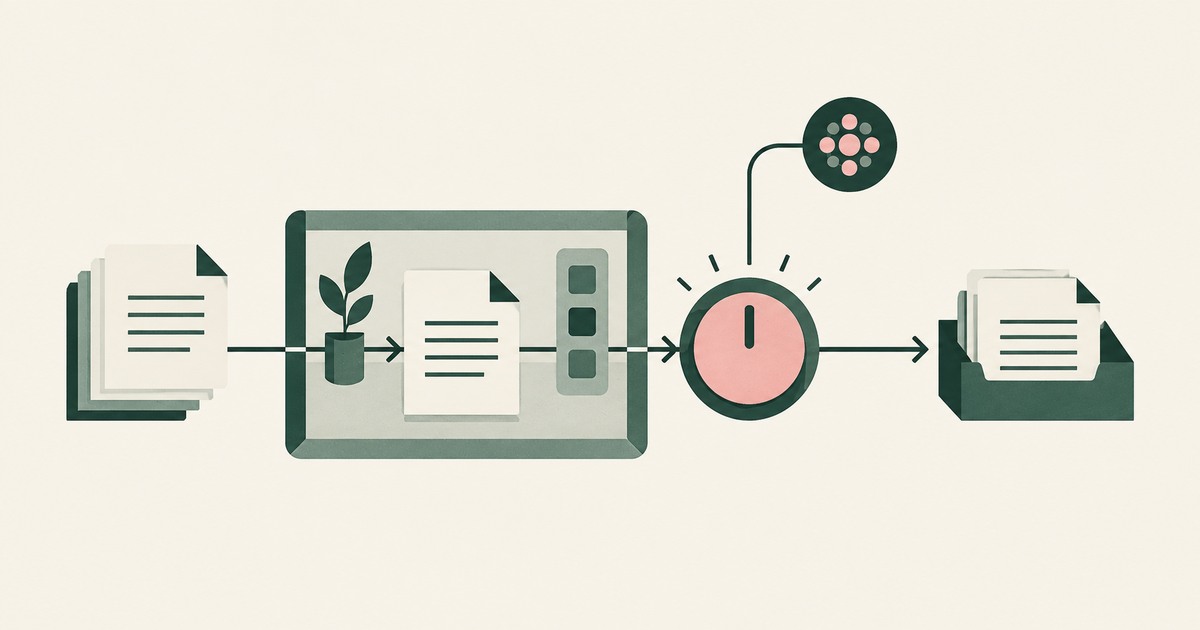
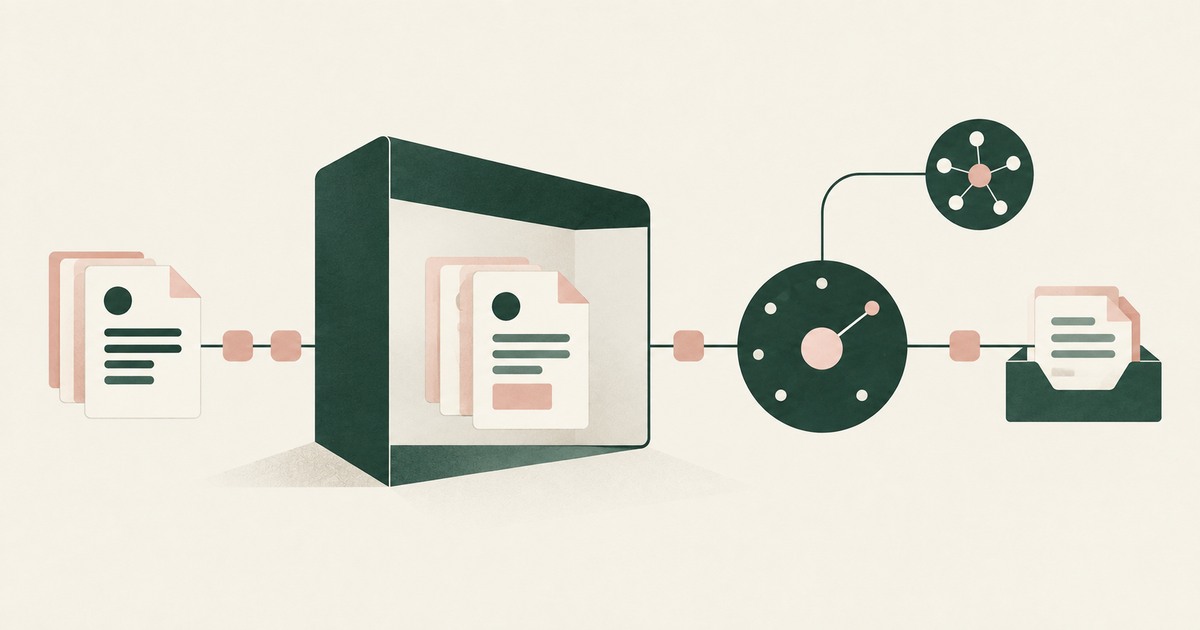
Before: the repository settings page renders the access token and deploy key as themselves, the model holds both strings, and revoking the grant stops the next call but not the copy. Inside: the page renders REPO_014 and DEPLOY_002, and the real values reach the approved host only on a named approval.
RedactSure is deploying now with enterprise and government customers. SecretBench counts 15,084 true credentials in public source.
Everyone else controls where data can go. RedactSure controls what the AI can see.
See it on your own workflow
Revoking a grant stops the next call but not a copy the model already holds. Bring a repository task and see, with test values, what the model holds before any revocation is needed. Book a demo