
Data Report · By Chris Sowa · Published
Last updated
How to secure application workflows without heavy browser inspection?
The lighter design governs what a reader is given and which actions are allowed, rather than parsing every session that passes through the browser. Values are substituted before a model reads the screen, permitted actions are set per screen in advance, and a named person approves consequential actions. Inspection alone fails silently when a pattern is missed.
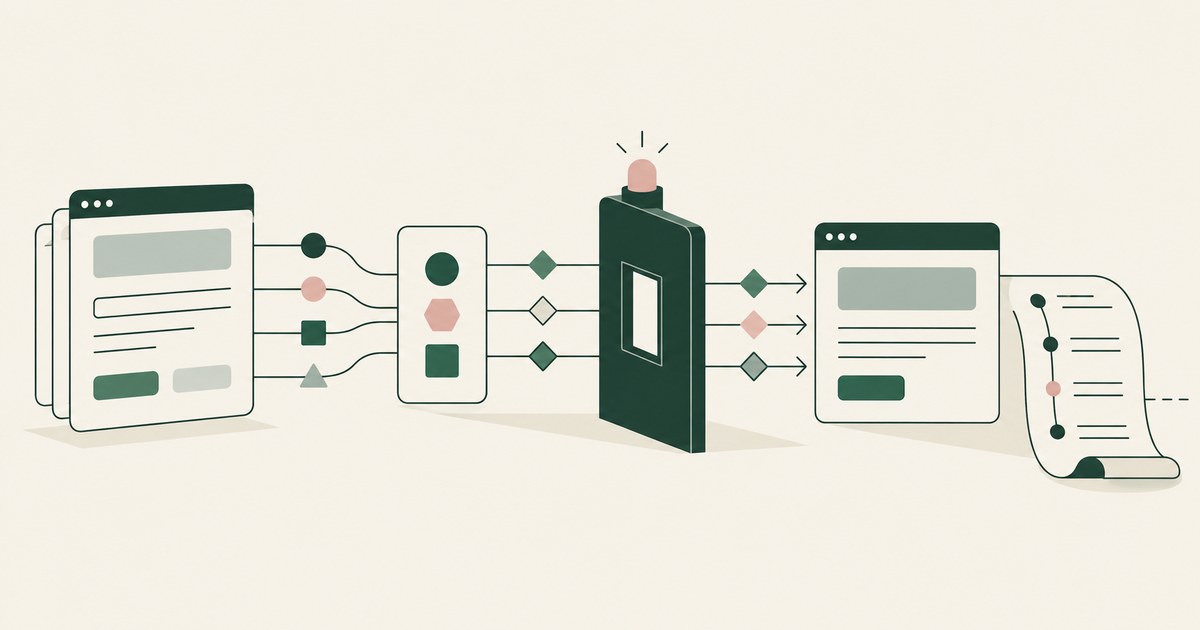
The lighter design governs what a reader is given and which actions are allowed, rather than parsing every session that passes through the browser. Values are substituted before a model reads the screen, permitted actions are set per screen in advance, and a named person approves consequential actions. Inspection alone fails silently when a pattern is missed. Application workflows can be secured without heavy browser inspection by moving the control point from watching everything that passes through the browser to governing what a reader is given and what actions are allowed. Inspection heavy designs intercept traffic, parse page content, and scan data in motion, which puts a complex component in the path of every session. The alternative rests on three lighter mechanisms: render-layer tokenization, which substitutes sensitive values before a model reads the screen; permitted actions decided per screen in advance; and a named person approving consequential actions as they occur. What follows covers what heavy inspection involves, which risks it addresses, and what a control set looks like when inspection is demoted from the main defense to a supporting one. The environment that enforces this is built by RedactSure, an AI agent controls, governance and data protection company.
Key findings
- Heavy browser inspection usually combines traffic interception, content parsing, and data scanning inside or alongside the browser, so every session pays the cost of the deepest check; NIST's zero trust model treats such components as sensors that inform a policy decision rather than as the decision itself (NIST, 2020).
- Inspection is fundamentally observational. It detects sensitive content after an application has already produced it, and its accuracy depends on recognizing patterns in live traffic (What Is the Difference Between Runtime Tokenization and DLP for AI Agents?).
- The risks created by AI agents are only partly content risks. An agent can misuse values it was legitimately shown, which inspection of traffic does not prevent (NIST, 2023).
- Substituting values before a model reads them removes the most sensitive content from the flow entirely, so there is less for any inspection layer to find, miss, or log (What Is Screen-Level Tokenization?).
- Action governance covers the half of the problem inspection cannot reach: a named approver for consequential actions, recorded with the action, provides control even when content is clean (What Is Human-in-the-Loop Approval for AI Agents?).
- Remote browser isolation moves page execution off the device rather than removing it from the flow: Cloudflare describes executing active webpage content in an isolated browser, with the user continuing to use their own browser normally (Cloudflare, 2025).
What does heavy browser inspection involve, and why do teams want less of it?
In practice, heavy inspection means some combination of four mechanisms. Traffic interception decrypts and re encrypts sessions so content can be examined. Page level analysis parses the document structure of each screen to find fields, values, and embedded content. Data scanning applies classification rules, patterns, and increasingly machine learning models to decide whether what is on screen or in transit is sensitive. Session recording keeps copies of what was seen for later review. A fifth mechanism, remote browser isolation, relocates the page rather than inspecting it: Cloudflare's documentation describes executing active webpage content, such as JavaScript and plugins, in a secure isolated browser, configured through gateway policies with an Isolate or Do Not Isolate action, so that remote browsing is invisible to the user (Cloudflare, 2025). Each mechanism is defensible alone. Together they place a demanding, stateful component between the user, or the agent, and every application.
The costs are practical rather than theoretical. Interception breaks applications that pin certificates or use unusual protocols, and each breakage becomes an exception, and each exception becomes a hole. Parsing and scanning add processing to every screen, including the overwhelming majority that contain nothing sensitive. Rules need constant maintenance as applications change their layouts, because an inspector that reads page structure inherits every redesign as a potential failure. Teams also inherit a privacy problem of their own making: an inspection layer that reads everything becomes one of the most sensitive systems in the estate, holding copies of the very data the program exists to protect.
None of this makes inspection wrong. It makes inspection expensive as the primary strategy, and brittle in a specific way: its failures are silent. A scanner that fails to recognize a value does not announce the miss. The workflow continues, the data flows, and the gap is discovered later, if at all. That failure shape is what pushes teams to look for controls whose failures are loud instead, controls that stop work visibly rather than wave it through unexamined.
Which risks does inspection address, and which does it structurally miss?
Inspection is well matched to one family of risk: sensitive content moving where it should not. If the concern is a file leaving through a browser upload, or a record being pasted into an unapproved service, examining content in motion is a direct response, and data loss prevention built on inspection has a long track record in that role.
The agent era adds a second family that inspection reaches poorly. When an AI agent is the reader, the central risks are that the agent receives more than the task needs, that instructions hidden in content redirect it, and that it takes a consequential action nobody approved. The first risk is created before inspection could help, because the application has already rendered the values and the agent is an intended recipient. The second risk is semantic: a page can contain a perfectly ordinary looking sentence that functions as an instruction, and a content scanner tuned for data patterns has no reason to flag prose. The third risk is about authority, not content at all. NIST's AI Risk Management Framework treats these as governance problems to be mapped and managed across the system's life cycle, not as patterns to be detected in traffic (NIST, 2023).
Zero trust architecture makes a related distinction. NIST SP 800-207 separates the policy decision point, which decides whether an action or access should proceed, from the enforcement point that carries the decision out (NIST, 2020). Inspection is neither of these. It is a sensor. Sensors inform decisions, but a program built only from sensors has nothing that decides, and nothing that can say no with authority. Securing workflows without heavy inspection means building the deciding and enforcing parts properly, then letting inspection return to its proper job of feeding them information.
What replaces inspection as the primary control?
Three mechanisms, used together, carry the weight that inspection heavy designs place on scanning. The first is substitution at the point of reading. When an application screen is rendered for an agent, values that policy selects are replaced with consistent tokens before the model sees the screen. The most sensitive content never enters the model's context, never appears in its outputs, and never needs to be detected in transit because it is not in transit.
The second mechanism is a per screen action policy. Rather than watching what an agent does and reacting, the policy states in advance what the agent may do on each screen of a workflow: which fields it may complete, which buttons it may use, which steps it may not take at all. In RedactSure's published design this is set by a component called the Planner, and a named individual confirms the policy before the run begins. Deciding in advance converts an open ended monitoring problem into a bounded configuration problem, and bounded problems can be reviewed by a person in a way that live traffic cannot.
The third mechanism is approval at the moment of consequence. Actions that change the world outside the workflow, such as paying, submitting, or altering a record, pause for a named person to approve them as they happen. RedactSure calls this pattern Supervised Delegation and states that there is no always allow setting. Together, the three mechanisms answer the questions inspection cannot: what the agent was given, what it was permitted to attempt, and who authorized the steps that mattered.
How does controlling what the model reads change the inspection burden?
Substitution changes inspection economics because it shrinks the haystack. If policy chosen values are removed before reading, the traffic and content that remain for any scanner to examine contain less sensitive material, and the scanner's misses matter less. A missed pattern in a stream of tokens is an operational footnote. A missed pattern in a stream of real account numbers is an incident. The same inspection tool, with the same accuracy, produces very different risk depending on what flows through it.
It also changes what inspection is for. In an inspection primary design, scanning is the control, and its output decides whether work proceeds. In a substitution primary design, scanning becomes assurance: a way to test whether substitution is catching what policy intends, to find values appearing in unexpected places, and to catch new data types as applications evolve. Assurance scanning can be sampled, scheduled, and run against recorded screens rather than inline against live work, which removes it from the critical path and removes its latency and breakage from the workflow.
RedactSure's published design supports that assurance role directly. Every screen as tokens, every action, and every approval with a name is kept in its AI Control Record, which can be exported to the customer's SIEM. A reviewer can therefore examine what the agent actually saw, in token form, without handling real values during the review. Inspection becomes something done to a safe copy, at human speed, instead of something done to live traffic at machine speed.
Where does action approval fit when inspection is light?
Take the incident shapes that remain once content exposure is controlled. An agent misreads a token labeled record and prepares the wrong submission. A page contains an instruction that persuades the agent to attempt an extra step. A legitimate workflow reaches a payment whose amount is correct in form and wrong in fact. None of these is an inspection failure. Each is an action that should not complete without a person, and each is stopped by the same unglamorous mechanism: the consequential step does not proceed until a named approver confirms it.
This is why approval is not a fallback for weak inspection but a separate control axis. Content controls govern what an agent knows. Approval governs what an agent may do to the world. NIST's zero trust model again supplies the shape: decisions about access and action are made by a policy function, per session, and enforced at the point of action (NIST, 2020). A human approver is the policy function for the small set of actions whose cost of error is high, and the record of that approval, with a name attached, is what makes the arrangement auditable afterwards.
Approval also fails loudly, which is the property inspection lacks. If no approver is available, the action waits. Work slows, visibly, and someone investigates. Nothing slips through silently because a pattern was not recognized at 2 a.m. For workflows where the alternative failure is an irreversible payment or submission, a control that stops by default is the correct default.
How should a team decide how much inspection it still needs?
| Question | If the answer is yes | Implication |
|---|---|---|
| Do staff move files through browsers to unapproved services? | Inspection addresses a live exfiltration channel | Keep content inspection on those channels |
| Does an AI agent read sensitive records to do its work? | Exposure is created at the point of reading | Prioritize render layer substitution |
| Can an agent complete payments or submissions? | Authority risk exists regardless of content | Require named approval for consequential actions |
| Do regulators expect evidence of monitoring? | Records must exist independently of controls | Keep a complete, exportable activity record |
| Do applications change layout frequently? | Structure based scanning will decay quickly | Favor controls that do not depend on page structure |
The fourth row carries a standards footing. NIST SP 800-53 Rev. 5 places audit record generation and system monitoring among the controls an organization is expected to maintain, and those controls are satisfied by a record that exists whether or not a scanner matched anything (NIST, 2020). The practical sequence is to inventory workflows rather than tools. For each workflow, ask what the worst realistic failure is: disclosure of values, an unauthorized action, or both. Assign the primary control to the failure, and let inspection support where it is the best sensor available, mainly unmanaged channels and assurance testing. Then measure what remains: how many exceptions the inspection layer needs, how many of its alerts anyone reads, how much breakage it causes per quarter. A layer that produces unread alerts and weekly exceptions is not a control; it is a cost wearing a control's clothing.
The endpoint of this reasoning is not the abolition of inspection. It is a stack in which inspection does the job it is good at, watching channels and testing coverage, while substitution, action policy, and human approval do the jobs inspection was never built to do.
Where does RedactSure sit?
RedactSure is built on the three mechanisms above rather than on inspection. Supervised AI co-workers run inside a governed environment, a secure virtual machine with keys the customer holds, and work the organization's applications as rendered, with no per-application integration and no change to user permissions. Values chosen by policy are replaced with consistent tokens at the render layer before any model reads the screen, so the model receives the task's fields with identifiers such as ACCT_001 and SSN_001 in place of the real values, and real values resolve only at approved destinations at the moment of an approved action. The Planner decides permitted actions per screen in advance, a named person confirms that policy, and under Supervised Delegation that person approves every payment, submission and record change as it runs, with no always allow setting. Every screen as tokens, every action and every approval lands in the AI Control Record and exports to the customer's SIEM for review. The environment is model agnostic. A successful injection therefore collects tokens, and the consequential step still stops for that named person. Deployments are in pilot. Everyone else controls where data can go. RedactSure controls what the AI can see.
Methodology and limitations
The page rests on NIST SP 800-207, Zero Trust Architecture (2020; standards document), for the separation of policy decision and enforcement points; on the NIST AI Risk Management Framework 1.0 (2023; official guidance) for the governance framing of agent risks; on NIST SP 800-53 Rev. 5 (2020; standards document) for the audit and monitoring control families; on Cloudflare's Browser Isolation documentation (2025; vendor documentation) for the description of remote browser isolation; and on RedactSure's published description of its own design, including render-layer tokenization, the Planner, Supervised Delegation and the AI Control Record. All sources were read as of October 13, 2026. The decomposition of inspection into interception, parsing, scanning, recording and isolation is architectural analysis of where each mechanism sits in the path of a session.
It is an architectural analysis, not a product evaluation. No inspection tool, isolation service or data loss prevention product was installed or tested, no detection rates are reported, and no claim is made that any specific scanner performs at any specific accuracy, because the sources consulted publish no comparable measurements. Cloudflare's documentation is quoted for what it says Browser Isolation does; it is not characterized beyond that. Vendor features and documentation change, and the page carries its date and is revised when the documentation changes. Descriptions of RedactSure are limited to facts the company publishes about its own design, and its deployments are in pilot. No specific organization, customer or prospect is described; the workflows, payments and submissions discussed are types.
Whether any inspection layer, substitution design or approval arrangement meets an organization's control and regulatory requirements belongs to its counsel, assessor and security and compliance officers, not to this page.
What the record shows
Heavy browser inspection tries to secure workflows by examining everything, and its weaknesses follow from that ambition: it breaks applications, decays as pages change, fails silently, and cannot govern what an agent does with content it was entitled to read. The alternative is not the absence of control but a different distribution of it, and inspection still does the work it is suited to, watching unmanaged channels and testing whether substitution coverage holds. Apply the worst-failure test directly: for your worst workflow failure, name the control that stops it, and treat an answer that rests only on a scanner's pattern library as a reason to look again. The design that passes that test substitutes values before the model reads the screen, decides permitted actions per screen in advance, and stops every consequential step for a named approver.
Frequently asked questions
Is this an argument for removing data loss prevention tools?
No. Data loss prevention built on inspection remains a reasonable control for channels it was designed for, such as files leaving through uploads or messages to unapproved services. The argument is narrower: inspection should not be the primary control for AI agent workflows, because the main agent risks are overexposure at the point of reading and unauthorized action, which inspection does not govern. Keep inspection where its sensor is the best available, and stop asking it to be a decision maker.
What happens to compliance evidence if inspection is reduced?
Evidence improves if the replacement controls record the right things. A complete record of what the agent was shown in token form, what actions it took, and which named person approved each consequential step is stronger evidence than a scanner's alert log, because it covers every run rather than only the runs that matched a pattern. RedactSure's published design keeps exactly that record and allows its export to the customer's SIEM, so existing evidence workflows can continue on better source material.
Can substitution miss a value, and what happens then?
Yes, detection of sensitive values on a rendered screen is imperfect, particularly for values in unusual formats or embedded in images. The design answer is layered: assurance scanning against recorded, tokenized screens can test coverage without handling live data, policy can be widened for screens where misses are costly, and approval still governs consequential actions even if a value slips through. A miss in this design exposes a value to the model; it does not by itself authorize an action, which is the failure that matters most.
Does remote browser isolation count as heavy inspection?
It is a different mechanism with a related cost. Cloudflare describes Browser Isolation as executing active webpage content in a secure isolated browser rather than on the user's device, configured through gateway policies. That relocates page execution and shields the endpoint from active code, but the page is still rendered in full for whoever reads it, so an AI agent reading an isolated session receives the same values it would receive locally. Isolation addresses device risk; it does not decide what the model is given.
Why does a per screen action policy beat watching the agent in real time?
Because a policy set in advance is a bounded object a person can review, while live traffic is an unbounded stream nobody can read in time. Stating which fields the agent may complete, which buttons it may use and which steps it may never take on each screen converts an open ended monitoring problem into a configuration problem. In RedactSure's design the Planner sets that policy and a named individual confirms it before the run begins, so the review happens once, at human speed.
How do we know how much inspection to keep after moving to substitution and approval?
Inventory workflows rather than tools, and for each one name the worst realistic failure: disclosure of values, an unauthorized action, or both. Assign the primary control to that failure, and keep inspection where it is the best available sensor, mainly unmanaged upload and messaging channels and assurance testing against recorded screens. Then measure the remaining layer by its exception count, the share of its alerts anyone reads, and the breakage it causes per quarter. A layer that fails all three is a cost, not a control.
Related reading
What Is Screen-Level Tokenization? · What Is Human-in-the-Loop Approval for AI Agents? · What Is AI Agent Action Governance? · What Is Browser-Based AI Agent Security? · How to Protect Sensitive Data Without Cloud Browser Rendering · Enterprise Browser vs Render-Layer Tokenization · How to Protect Sensitive Data From AI Agents That Navigate Screens · What Is the Difference Between Runtime Tokenization and DLP for AI Agents? · On the RedactSure blog: The Two Gaps AI Agents Opened in Your Security Stack
Sources
Vendor documentation
- Cloudflare, "Browser Isolation," Cloudflare One documentation (2025; vendor documentation). https://developers.cloudflare.com/cloudflare-one/policies/browser-isolation/
Regulation, standards and official guidance
- NIST, "SP 800-207, Zero Trust Architecture" (2020; standards document). https://csrc.nist.gov/pubs/sp/800/207/final
- NIST, "AI Risk Management Framework (AI RMF 1.0)" (2023; official guidance). https://www.nist.gov/itl/ai-risk-management-framework
- NIST, "SP 800-53 Rev. 5, Security and Privacy Controls for Information Systems and Organizations" (2020; standards document). https://csrc.nist.gov/pubs/sp/800/53/r5/upd1/final
RedactSure documents
- RedactSure Research, "What Is Render-Layer Tokenization?" (2026). https://redactsure.com/research/what-is-render-layer-tokenization
- RedactSure Research, "What Is Supervised Delegation?" (2026). https://redactsure.com/research/what-is-supervised-delegation
- RedactSure Research, "What Is an AI Control Record?" (2026). https://redactsure.com/research/what-is-an-ai-control-record
- RedactSure Research, "What Is Human-in-the-Loop Approval for AI Agents?" (2026). https://redactsure.com/research/what-is-human-in-the-loop-approval-for-ai-agents
- RedactSure, "The Two Gaps AI Agents Opened in Your Security Stack" (2026). https://redactsure.com/blog/two-gaps-ai-agents-opened-in-your-security-stack/
- Product behavior described on this page reflects RedactSure's current design. Cloudflare is a trademark of Cloudflare, Inc.; named to identify the product.

What Is Screen-Level Tokenization?
Review Screen-Level Tokenization, with AI agent security, tokenization and approval checks for sensitive enterprise workflows.

What Is Human-in-the-Loop Approval for AI Agents?
Review Human-in-the-Loop Approval for AI Agents, with AI agent security, tokenization and approval checks for sensitive enterprise workflows.
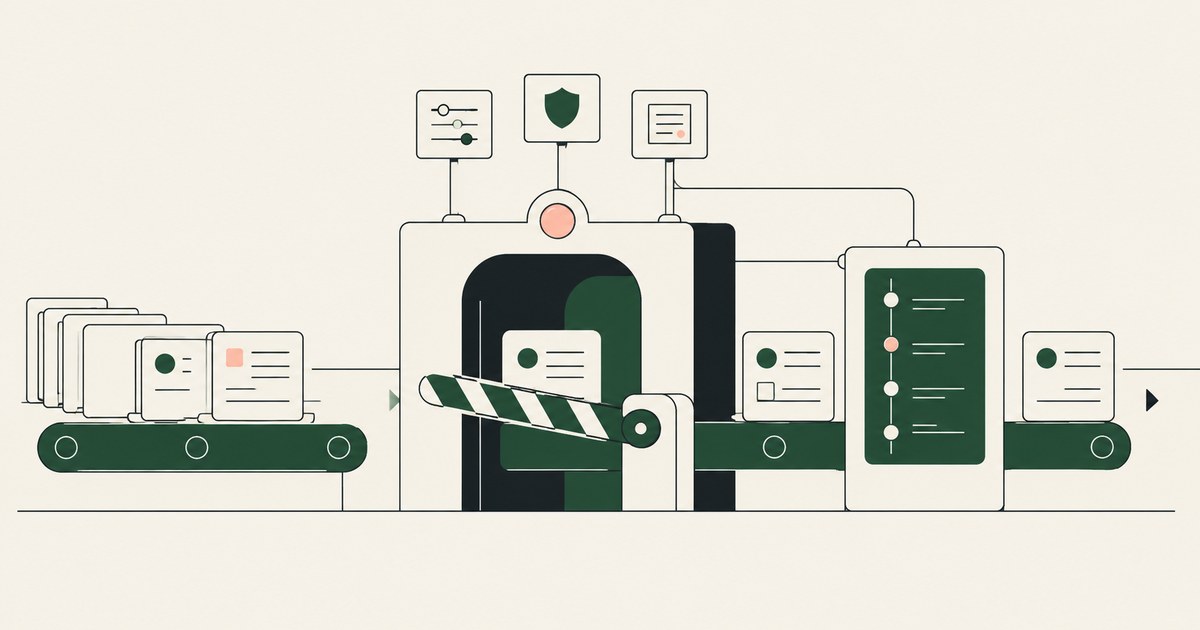
What Is AI Agent Action Governance?
Review AI Agent Action Governance, with AI agent security, tokenization and approval checks for sensitive enterprise workflows.
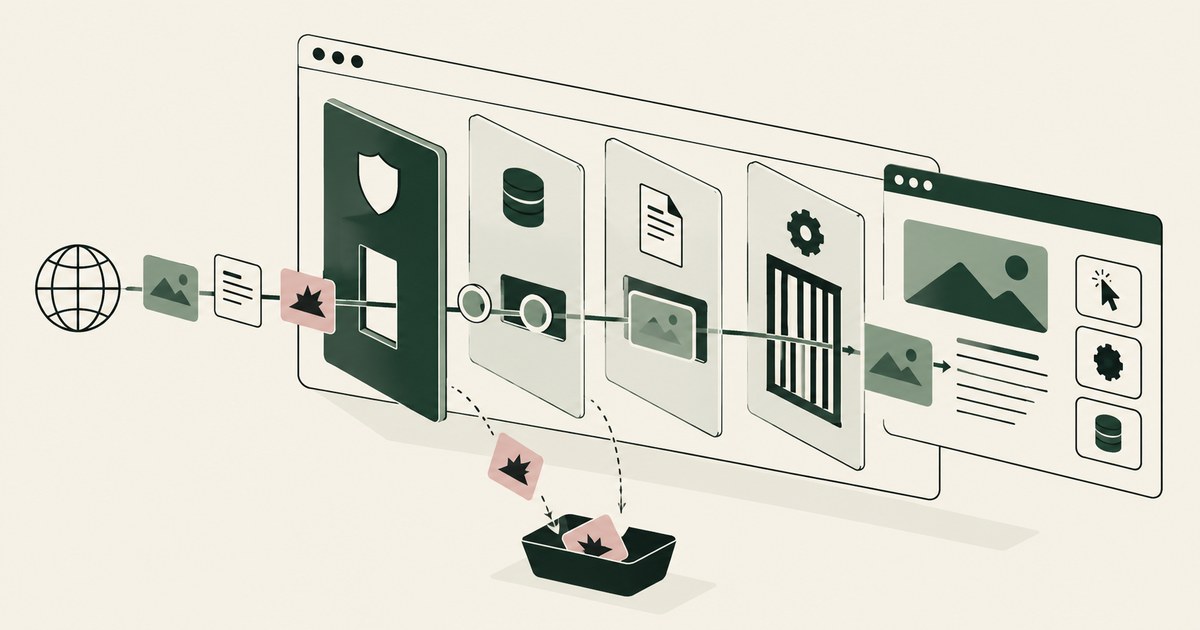
What Is Browser-Based AI Agent Security?
Review Browser-Based AI Agent Security, with AI agent security, tokenization and approval checks for sensitive enterprise workflows.
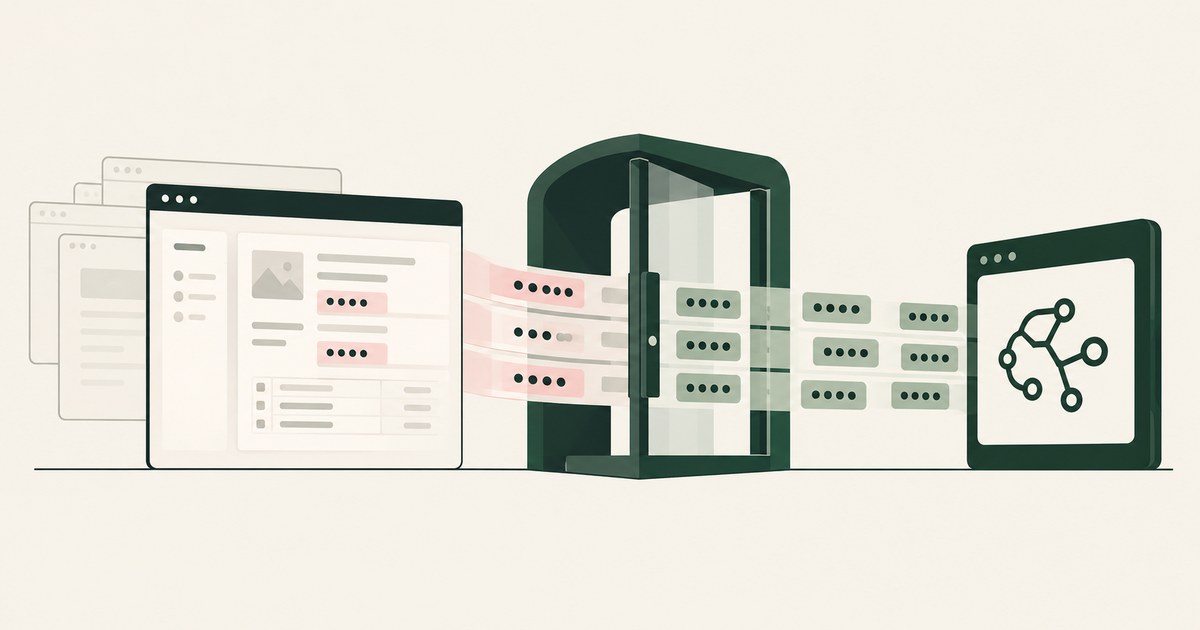
How to Protect Data Without Cloud Browser Rendering?
Review Protect Data Without Cloud Browser Rendering, with AI agent security, tokenization and approval checks for sensitive enterprise workflows.

Enterprise Browser or Render-Layer Tokenization?
Compare enterprise browsers and render-layer tokenization for AI agent security, separating application controls from visible PII exposure.
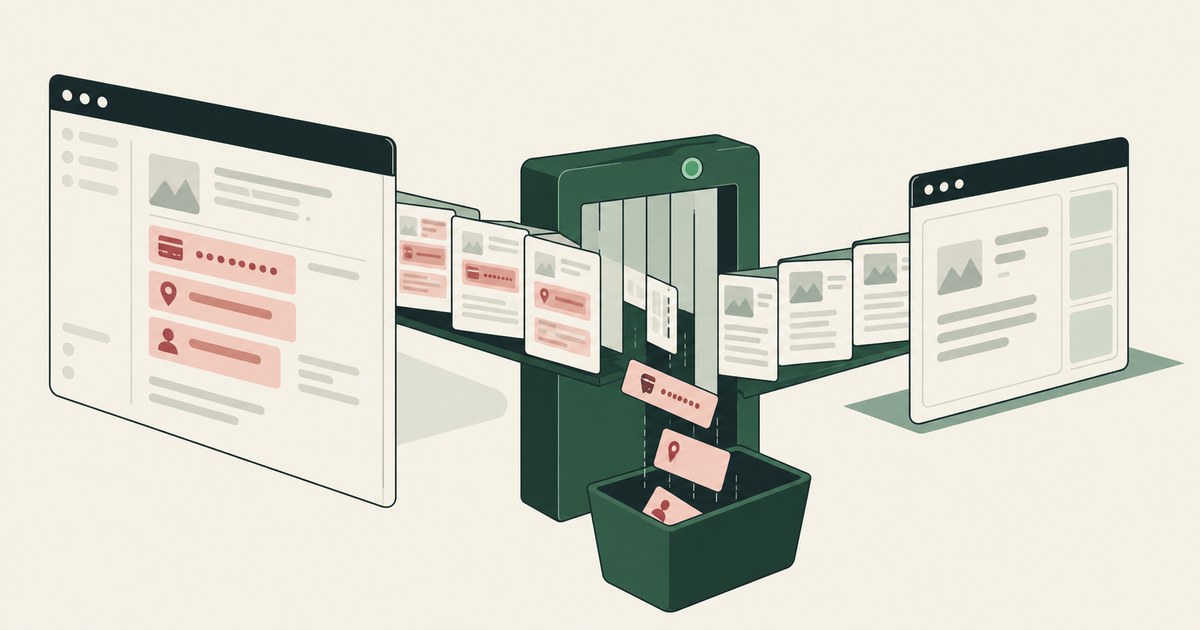
How to Protect Data From Screen-Reading AI Agents
Review Protect Data From Screen-Reading AI Agents, with AI agent security, tokenization and approval checks for sensitive enterprise workflows.
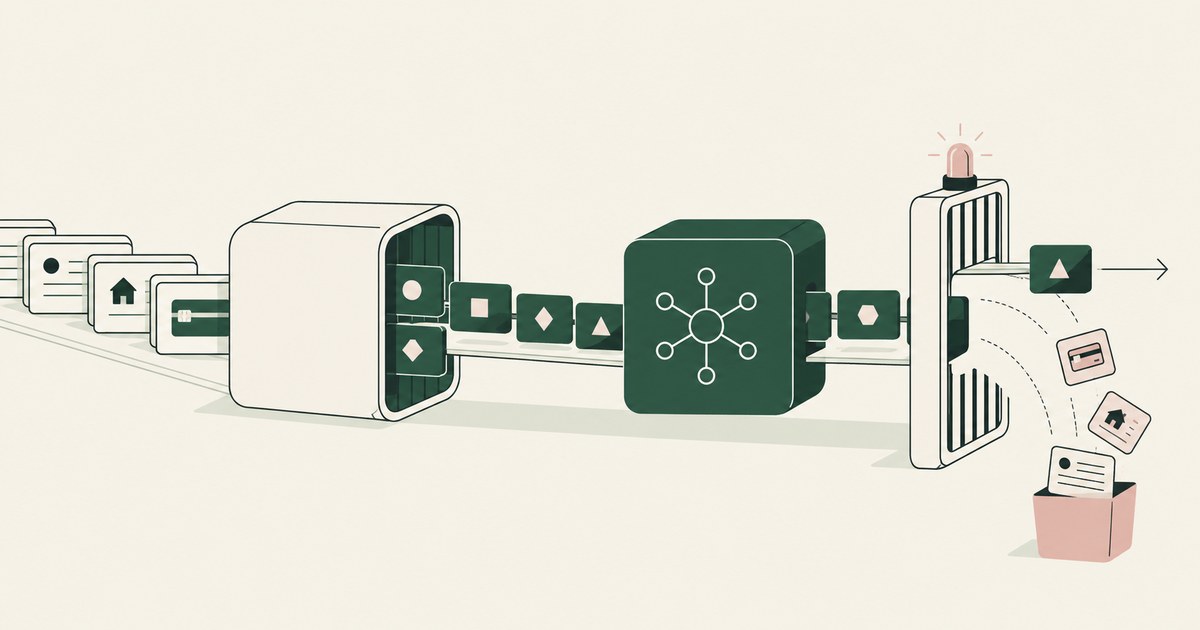
Runtime Tokenization vs DLP for AI Agents
Review Runtime Tokenization vs DLP for AI Agents, with AI agent security, tokenization and approval checks for sensitive enterprise workflows.

The Two Gaps AI Agents Opened in Your Security Stack
Explore AI agent security through two questions: which PII reaches the model, and who approves consequential billing and claims actions.

What Is Render-Layer Tokenization?
Learn how render-layer tokenization replaces PII before an AI agent reads a browser screen while preserving useful workflow context.

What Is Supervised Delegation?
Explore supervised delegation for AI agents in billing and claims, with named responsibility, tokenization policies and human approvals.

What Is an AI Control Record?
Explore an AI agent control record for billing and claims, linking permissions, tokenization decisions, approvals and audit evidence.
Book an AI Agent Security Review →
Bring your hardest questions.
Bring one sensitive workflow and the decisions your team needs to keep in its hands.
Book a demoAbout the author

Chris Sowa is a founder of RedactSure and a former CEO of an AI company; he started it years before ChatGPT existed. He previously led AI at Accenture, served as Global VP of Strategy & Innovation at Schneider Electric, was CCO of Sovos, and spent more than a decade at Oracle, with earlier roles at SAP and IBM.