
Explainer · By Chris Sowa · Published
Last updated
What Is AI Agent Action Governance?
AI agent action governance is the system that decides, constrains, records and reviews everything an agent may do; approval is only one component inside it, alongside policy setting, permission scoping, logging, accountability, and the handling of exceptions and incidents. Without the rest, a deployment with careful approval prompts can still be ungoverned.
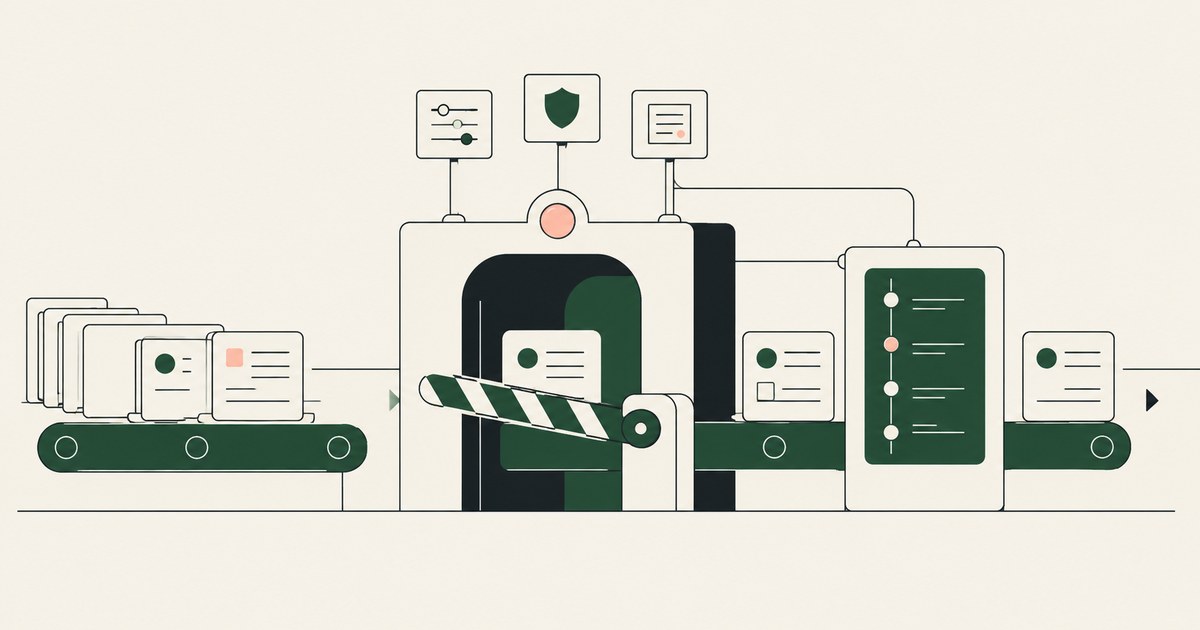
AI agent action governance is the system that decides, constrains, records and reviews everything an agent may do; approval is only one component inside it, alongside policy setting, permission scoping, logging, accountability, and the handling of exceptions and incidents. Without the rest, a deployment with careful approval prompts can still be ungoverned. Governance includes who sets policy, how permissions are scoped for a task, which actions need a person's decision, how actions are logged, who is accountable when an action is wrong, and how exceptions and incidents are handled. Human-in-the-loop approval covers the single moment when a consequential action waits for a named person; governance also covers the periods before and after that moment. The record that joins those periods into one account, every screen the agent saw as tokens, every action, every approval with a name, is what an AI Control Record holds. The components map onto established control frameworks, and the system has to be maintained in regular use rather than set once. The environment that enforces this is built by RedactSure, an AI agent controls, governance and data protection company.
Key findings
- Action governance is a system, not a single gate: policy setting, permission scoping, in-run controls, logging, accountability, audit, and exception handling each perform a different function (NIST, 2023).
- The NIST AI Risk Management Framework distributes this work across Govern, Map, Measure, and Manage, addressing accountability, context, evidence, and response (NIST, 2023).
- Established security control families map directly onto agent actions: Access Control for scoping, Audit and Accountability for records, and Incident Response for unwanted actions (NIST, 2020).
- OWASP treats Excessive Agency as a failure of governance over functionality, permissions, and autonomy, and recommends minimizing all three, with authorization enforced downstream rather than by model judgment (OWASP, 2025).
- Joint agentic AI guidance recommends progressive expansion: begin with lower risk tasks and increase access and autonomy only as controls demonstrate that they work, preferring reversibility and containment while practices are immature (CISA, 2026).
What does action governance cover beyond a single approval?
An approval prompt answers a narrow question about one proposed step. Governance answers the questions surrounding every step. Which agent may work on which systems? Under whose authority does it act? When something goes wrong, who is notified, who can halt the work, and what evidence explains what occurred?
Organizing those questions into components makes gaps easier to spot. A deployment can have strong approval prompts and still lack governance if nobody owns the policy behind them, if permissions were granted broadly and never revisited, or if logs capture model conversation but not the actions executed in destination systems.
| Governance component | Core question | Typical evidence |
|---|---|---|
| Policy setting | What may agents do, and who decided? | Approved policy, named owner, review date |
| Permission scoping | What can this agent reach for this task? | Scoped credentials, allowed systems and operations |
| In-run controls | What checks apply before an action commits? | Automated rule checks, approval records |
| Logging and accountability | Who did what, under whose authority? | Action log tied to agent, task, and approver |
| Audit and review | Did controls operate as intended? | Sampled run reviews, control test results |
| Exception and incident handling | What happens when rules are breached or cannot be met? | Exception register, incident records, corrective actions |
Who sets policy, and how is it scoped before a run begins?
Governance starts with an accountable owner. Someone must be responsible for deciding which workflows agents may perform, which systems they may touch, and what risk the organization accepts in each case. NIST places this responsibility under the Govern function of its AI Risk Management Framework, covering policies, roles, and accountability structures for managing AI risk (NIST, 2023). ISO/IEC 42001 expresses a similar expectation at management system level, with leadership, AI policy, and defined responsibilities among its requirements as summarized by ISO (ISO, 2023). Without a named owner, policy decisions default to whoever configured the tool, rarely the person accountable for the outcome.
Scoping translates organizational policy into a per task boundary. For a given piece of work, scope should specify the applications involved, the records in scope, the operations permitted on each screen or through each tool, value or volume limits, and the data the agent may receive. Access control practice from SP 800-53 applies directly here. Its Access Control family includes least privilege and separation of duties, which translate for agents into narrow task specific permissions and a separation between the party that configures a run, the agent that executes it, and the person who approves consequential steps (NIST, 2020).
Scoping also determines identity. An agent acting through a person's session inherits that person's permissions, which may be far wider than the task requires. Governance should state whether the agent acts under the user's identity, a dedicated agent identity, or a restricted session, and record that choice, because it determines both the blast radius of an error and the clarity of later attribution.
Pre-run confirmation belongs here: when a person confirms the policy for a specific run, that act sets the terms the run will follow, and later decisions operate inside that boundary.
How are permissions and actions limited while work is under way?
During execution, governance is enforced through layered limits, because no single check catches every kind of error. The first layer is capability restriction: the agent is offered only the tools, screens, and operations its scope requires. OWASP identifies excessive functionality as a root cause of Excessive Agency and recommends minimizing extensions and the functions within them, so an agent that only needs to read cannot modify or delete (OWASP, 2025). The second layer is permission enforcement in the destination system, applying the rights of the scoped identity rather than trusting the agent to stay within bounds. The third layer is automated policy checking on each proposed action, validating destination, amount, and operation type against rules set in advance.
The fourth layer is human approval for consequential steps, the component treated in depth in its companion definition. In governance terms its role is specific: it introduces individual judgment at the point of commitment for actions whose cost of error exceeds what rules can reliably assess.
OWASP adds a structural point: authorization should be mediated completely and enforced downstream, instead of relying on the model to determine whether a request is allowed (OWASP, 2025). The component deciding whether an action may proceed should not be the component that proposed it. Governance should also define who can pause or terminate a run, and how that instruction reaches the executing environment.
Why do records and audit matter to governing actions?
Governance without records is a claim. Records allow an organization to show that a policy existed, that it was enforced for a specific run, and that a specific person made a specific decision. The Audit and Accountability family in SP 800-53 covers selection of auditable events, content of audit records, their protection, and their review, which maps closely onto agent needs (NIST, 2020). For agents, the record should capture more than system events. It should link the task and its confirmed policy, the screens or data the agent worked from, each action attempted and its outcome, automated check results, approvals and rejections with names, and any exception granted.
Content matters because agent records are often fragmented across model transcripts, application logs, and approval tools. If those cannot be joined by a common run identifier, reconstructing an incident requires manual correlation, and some questions may be unanswerable.
Audit records need protection from alteration, including by the agent itself, and retention consistent with obligations for the underlying business records. Guidance associated with CISA and partner agencies emphasizes detailed logging of agent decisions and actions to support auditing and accountability, together with monitoring for anomalous behavior (CISA, 2026).
Audit is the periodic activity that uses those records. Where logging is continuous and automatic, audit is selective and evaluative: sampling runs, testing whether approvals were obtained where policy required them, checking whether scoped permissions matched actual use, and following exceptions to resolution.
How are exceptions, denials, and incidents handled?
Every governance system meets situations its rules did not anticipate. A legitimate task may need access outside its usual scope, an approver may be unavailable, or an automated check may block an action that should proceed. Exception handling is the governed route through those situations: a request with a reason, a decision by a person with authority to grant it, a time limit, and a record. An exception without a time limit quietly becomes new policy, adopted without normal review. Governance should therefore maintain an exception register, review it on a schedule, and either retire exceptions or convert recurring ones into explicit policy changes.
Denials deserve equal attention. When a check blocks an action or a person rejects one, the event carries information: the agent may have misunderstood the task, source material may contain an injected instruction, policy may be misaligned with real work, or a requester may be testing a boundary. Aggregated denial patterns can also indicate that an agent is being probed.
Incidents are the third category, where an unwanted action was executed or data was exposed. The Incident Response family of SP 800-53 provides the established structure: preparation, detection, handling, reporting, and recovery, with defined responsibilities (NIST, 2020). Applied to agents, handling adds specific steps: halting the run and revoking its session, preserving the run record, identifying other runs that used the same policy or source material, and determining whether the cause was model error, a policy gap, excess permission, or external manipulation.
ISO/IEC 42001 builds continual improvement into the management system it specifies, which here means findings from exceptions, denials, and incidents should change policy, scope templates, or approval thresholds, with those changes documented (ISO, 2023).
How should a governance system be reviewed and improved?
A governance system set once and left alone will fall behind the work it governs, because agents are typically extended to new workflows, new systems, and larger volumes after initial deployment. Review should run on a defined cycle and also be triggered by events: a new workflow type, a new destination system, an incident, a change of model, or a material change in volume.
Useful review questions are concrete. Which permissions were never used, and can they be withdrawn? Which exceptions remain open past their intended end date? Can a randomly selected completed run be reconstructed in full, including its policy, actions, and approvals?
Progressive expansion is the pattern recommended in recent agentic AI guidance: begin with lower risk tasks, and increase access and autonomy only as controls demonstrate that they work, preferring reversibility and containment while practices are immature (CISA, 2026). Governance review makes that progression defensible, because it supplies the evidence on which an expansion decision can rest. Governance should also be tested, not only reviewed on paper, with exercises that reveal whether scoping, checking, approval, and stopping behave as designed.
Where does RedactSure sit?
The gap between an approval prompt and a governance system is the chain around it, and RedactSure's design supplies that chain for agent actions rather than leaving governance to the prompt alone. Before a run, a Planner sets which values are tokenized and what the agent may do on each screen, and a named person confirms that policy; that confirmation is the pre-run act that sets the terms the run will follow. During the run, every identifier chosen by policy is replaced by a token at the render layer before any model reads the screen, so the model receives the task's fields rather than the record, and real values resolve only at approved destinations at the moment of an approved action. Each consequential action waits for that person's approval in the moment, with no always-allow setting, which is Supervised Delegation.
After the run, the AI Control Record joins the screens as tokens, the actions taken and the approver's name into one account that exports to the customer's SIEM, so the reconstruction test can be applied to any run. User permissions do not change, no per-application integration is needed, the model is swappable, and keys stay with the customer. Deployments are in pilot. Everyone else controls where data can go. RedactSure controls what the AI can see.
Methodology and limitations
The page rests on published primary sources, read as of October 13, 2026: the NIST AI Risk Management Framework 1.0 (official guidance) for the Govern, Map, Measure and Manage functions; NIST SP 800-53 Revision 5 (standard) for the Access Control, Audit and Accountability, and Incident Response control families; the OWASP Top 10 for LLM Applications 2025 entry on Excessive Agency (industry standard); ISO/IEC 42001 as summarized on ISO's own page (standard summary); and the joint guidance on adopting and operating agentic AI services released by CISA with partner agencies in 2026 (official guidance). Each is cited for what its text says, with the date it carries, and the mapping of its control families onto agent actions is the author's reading rather than a statement those sources make about agents.
No organization was audited, no product was evaluated hands-on, and no governance control was tested directly. No measurement is offered of how widely the components described here are implemented, because the sources consulted do not provide a consistent primary measurement of that adoption. Vendor features and agency guidance change; the page carries its date and is revised when the sources change. The examples of scoping, denial and incident handling describe control patterns, not any organization; no customer or prospect is described. RedactSure is described only through the design facts set out in its own published material.
Whether a governance system meets an organization's obligations, and how the control families cited here apply to its agents, is a determination for its counsel, assessor, and security and compliance officers, not for this page.
What the record shows
Action governance is the system around the moment of action, not the moment itself. Approval is one component inside it, alongside a named policy owner, task level scoping of permissions and data, layered in-run enforcement that does not rely on the model policing itself, records that join policy, actions, and decisions into one reconstructable account, and a governed route for exceptions, denials, and incidents. A deployment can look controlled at the approval prompt and still be ungoverned if permissions were granted broadly, nobody owns the policy, or the logs cannot show what the agent actually did in destination systems. The test is reconstruction: pick one completed run and establish, from records alone, what the agent was asked to do, under which confirmed policy, what it did in sequence, and who approved each consequential step.
Frequently asked questions
How does action governance differ from human approval?
Approval is a single decision about a single proposed action, made by a named person before that action commits. Governance is everything that makes such decisions meaningful: who set the policy behind them, how permissions were scoped for the task, which automated checks ran first, how the decision was recorded, and what happens after a denial or an incident. Approval without governance can be diligent and still sit inside an uncontrolled system.
Who should own agent action policy?
A named, accountable owner, not whoever happened to configure the tool. The owner decides which workflows agents may perform, which systems they may touch, and what risk is accepted in each case, in line with the Govern function of the NIST AI Risk Management Framework. Without that ownership, policy drifts toward the settings of individual deployments, and no one is clearly answerable when an action turns out to be wrong.
What is the quickest test of whether governance is working?
Reconstruction. Select one completed run and try to answer, from records alone, what the agent was asked to do, under which confirmed policy, what it did in sequence, and who approved each consequential step. Gaps in that account point directly at the missing component, whether it is scoping evidence, action logging in destination systems, or approval records that cannot be joined to the run.
Does an agent acting through a user's session inherit that user's permissions?
Yes. An agent working through a person's session carries that person's rights, which may be far wider than the task requires. Governance should state whether the agent acts under the user's identity, a dedicated agent identity, or a restricted session, and record the choice, because it sets both the blast radius of an error and the clarity of later attribution. Scoping then narrows what the agent may reach and receive within that identity.
What should an agent action log contain?
More than system events. The log should link the task and its confirmed policy, the screens or data the agent worked from, each action attempted and its outcome, the results of automated checks, approvals and rejections with the names of the people who made them, and any exception granted, all joined by a common run identifier. Records need protection from alteration, including by the agent, and retention consistent with the underlying business records.
Why should the model not decide whether its own action is allowed?
Because the component that proposes an action should not be the component that authorizes it. OWASP's guidance on Excessive Agency is that authorization be mediated completely and enforced downstream, in the destination system and in checks set in advance, rather than left to the model's judgment of whether a request is permitted. A model can be misled by an injected instruction; a downstream check and a named approver are not reading the same page.
Related reading
What Is Human-in-the-Loop Approval for AI Agents? · What Is a Governed AI Workflow? · What Is AI Agent Least Privilege? · Should an AI Agent Have an Always-Allow Setting? · How Do You Audit AI Agent Activity? · What Is an AI Control Record? · How to Reduce Rogue AI Agent Decisions · How to Secure AI Agents That Act Without Human Approval · How to see exactly why a security policy blocked an action? · How to prevent conflicting security policies from disrupting workflows? · What Is AI Agent Runtime Security and What Happens After an Agent Gets Access? · On the RedactSure blog: Accountable AI and Workflow Governance
Sources
Regulation, standards and official guidance
- NIST, "Artificial Intelligence Risk Management Framework (AI RMF 1.0)," 2023 (official guidance). https://www.nist.gov/itl/ai-risk-management-framework
- NIST, "Security and Privacy Controls for Information Systems and Organizations," SP 800-53 Revision 5, 2020 (standard). https://csrc.nist.gov/pubs/sp/800/53/r5/upd1/final
- OWASP, "LLM06:2025 Excessive Agency," OWASP Top 10 for LLM Applications, 2025 (industry standard). https://genai.owasp.org/llmrisk/llm062025-excessive-agency/
- ISO, "ISO/IEC 42001:2023 Artificial intelligence management system," 2023 (standard summary). https://www.iso.org/standard/42001
- CISA and partner agencies, "Guidance on Adopting Agentic AI Services," 2026 (official guidance). https://www.cisa.gov/resources-tools/resources/careful-adoption-agentic-ai-services
RedactSure documents
- RedactSure Research, "What Is Human-in-the-Loop Approval for AI Agents?" (2026). https://redactsure.com/research/what-is-human-in-the-loop-approval-for-ai-agents
- RedactSure Research, "What Is AI Agent Least Privilege?" (2026). https://redactsure.com/research/what-is-ai-agent-least-privilege
- RedactSure Research, "What Is Supervised Delegation?" (2026). https://redactsure.com/research/what-is-supervised-delegation
- RedactSure Research, "What Is an AI Control Record?" (2026). https://redactsure.com/research/what-is-an-ai-control-record
- RedactSure, "Accountable AI and Workflow Governance" (2026). https://redactsure.com/blog/accountable-ai-and-workflow-governance/
- Product behavior described on this page reflects RedactSure's current design.

What Is Human-in-the-Loop Approval for AI Agents?
Review Human-in-the-Loop Approval for AI Agents, with AI agent security, tokenization and approval checks for sensitive enterprise workflows.

What Is a Governed AI Workflow?
Review a Governed AI Workflow, with AI agent security, tokenization and approval checks for sensitive enterprise workflows.
What Is AI Agent Least Privilege?
Review AI Agent Least Privilege, with AI agent security, tokenization and approval checks for sensitive enterprise workflows.

Should AI Agents Have an Always Allow Setting?
Review AI agent approval settings for claims, billing and payments, including standing permissions, named approvers and recorded decisions.

How Do You Audit What an AI Agent Saw and Did?
Explore AI agent audit evidence for sensitive claims and billing, including tokenization policies, approvals and logs that avoid raw PII.

What Is an AI Control Record?
Explore an AI agent control record for billing and claims, linking permissions, tokenization decisions, approvals and audit evidence.

How to Reduce Rogue AI Agent Decisions
Review Reduce Rogue AI Agent Decisions, with AI agent security, tokenization and approval checks for sensitive enterprise workflows.
How to Secure AI Agents That Act Without Human Approval
Review Secure AI Agents That Act Without Human Approval, with AI agent security, tokenization and approval checks for sensitive enterprise workflows.
How to see exactly why a security policy blocked an action?
Review see exactly why a security policy blocked an action, with AI agent security, tokenization and approval checks for sensitive enterprise workflows.
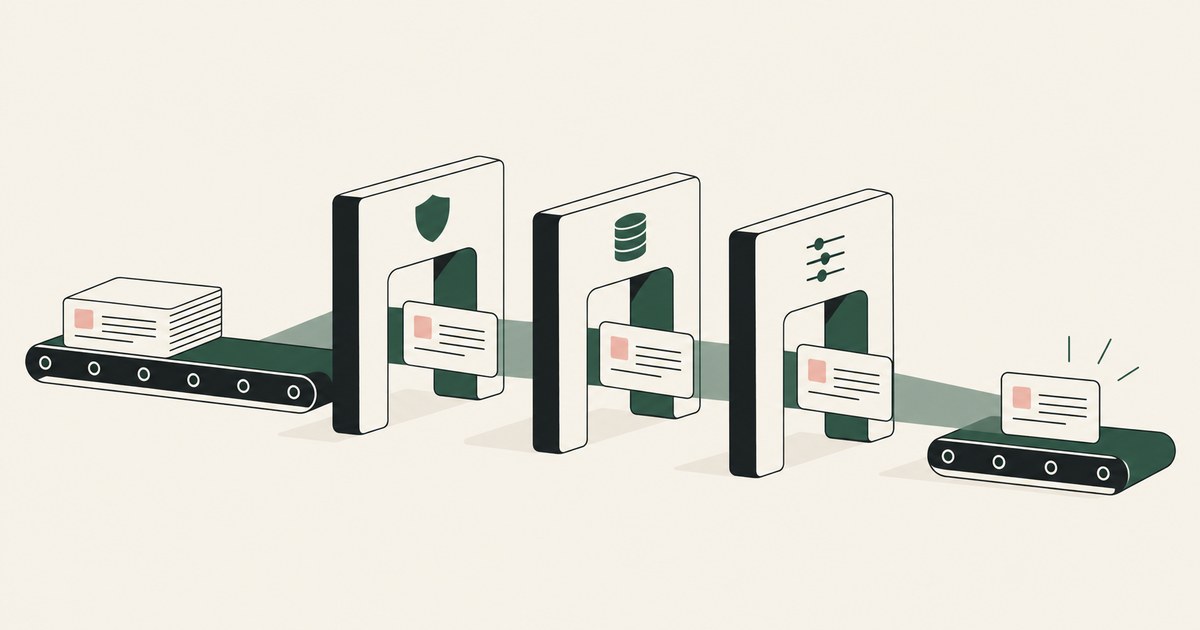
How to Prevent Security Policy Conflicts in Workflows?
Review Prevent Security Policy Conflicts in Workflows, with AI agent security, tokenization and approval checks for sensitive enterprise workflows.
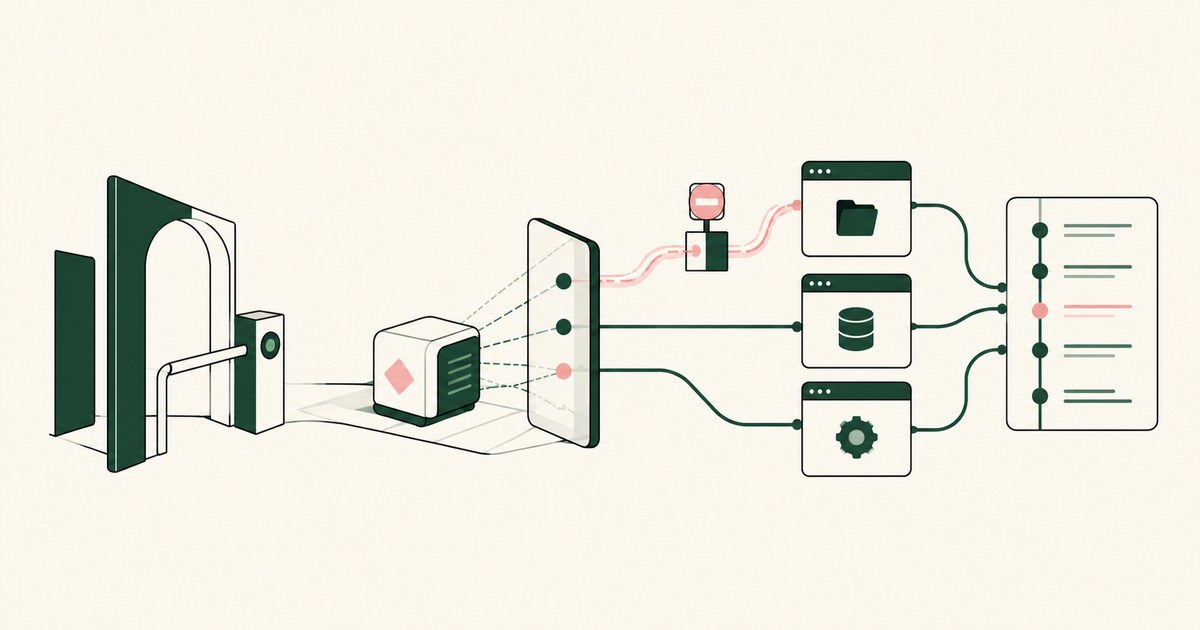
What Is AI Agent Runtime Security?
Review AI Agent Runtime Security, with AI agent security, tokenization and approval checks for sensitive enterprise workflows.

Accountable AI and Workflow Governance
Explore AI agent governance for billing and claims, with named supervisors, data masking, approval boundaries and a useful audit record.

What Is Supervised Delegation?
Explore supervised delegation for AI agents in billing and claims, with named responsibility, tokenization policies and human approvals.
Book an AI Agent Security Review →
Bring your hardest questions.
Bring one sensitive workflow and the decisions your team needs to keep in its hands.
Book a demoAbout the author

Chris Sowa is a founder of RedactSure and a former CEO of an AI company; he started it years before ChatGPT existed. He previously led AI at Accenture, served as Global VP of Strategy & Innovation at Schneider Electric, was CCO of Sovos, and spent more than a decade at Oracle, with earlier roles at SAP and IBM.