
Data Report · By Chris Sowa · Published
Last updated
Is It Safe to Let AI Agents Access Financial Records?
It can be, if the deployment meets expectations financial regulators already hold: scope limited to what the task needs, consequential actions confirmed by a person, and an incident response program that can see what the agent did. Check whether your agent's view of a record reduces or expands your PCI and Safeguards Rule scope, and who approves each payment.

It can be, if the deployment meets expectations financial regulators already hold: scope limited to what the task needs, consequential actions confirmed by a person, and an incident response program that can see what the agent did. Check whether your agent's view of a record reduces or expands your PCI and Safeguards Rule scope, and who approves each payment. Financial services did not wait for agents to decide how sensitive data and consequential actions should be handled; the payments industry wrote its tokenization and scoping guidance more than a decade ago. The FTC's Safeguards Rule and the SEC's Regulation S-P set out what a covered firm must do to protect customer information and what it must do when protection fails. FINRA has now named agents specifically, with a concern about actions that exceed the user's authority. An agent that reads a cardholder dispute record or a brokerage account is a new kind of user, but the expectations it must meet are the old ones, and they are specific. This page sets out what an agent receives when it reads a financial record, what the regulators have said, how tokenization affects compliance scope, what the authority concern means in practice, how incident response applies when the actor is a process, and how a firm should pilot an agent on financial records before extending it, following the approach described for securing agents against financial fraud.
Key findings
- FINRA's 2026 Regulatory Oversight Report flags that agents may act without human validation and may take actions that exceed the user's actual or intended scope or authority, as summarized by Debevoise & Plimpton (Debevoise & Plimpton, 2025).
- The SEC's 2024 amendments to Regulation S-P require covered firms to maintain an incident response program for unauthorized access to customer information and generally to notify affected individuals within 30 days (SEC, 2024).
- The FTC Safeguards Rule requires covered financial institutions to maintain a written information security program with safeguards for customer information, which encompasses any agent process that handles it (FTC, 16 CFR Part 314).
- PCI scoping guidance treats systems that store, process or transmit cardholder data as in scope, and tokenization guidance describes replacing the account number with a surrogate so that systems holding only tokens may be considered for reduced scope (PCI Security Standards Council, 2016).
- OWASP's LLM06:2025 entry identifies excessive permissions and autonomy as root causes of agent harm, the concern FINRA states in regulatory terms (OWASP, 2025).
- A record of every screen an agent saw, every action it took and every approval that preceded it is what an incident response program needs when the actor is a process (What Is an AI Control Record?).
What does an agent receive when it reads a financial record?
Take a cardholder dispute record in a card servicing system as the worked example. The screen shows the cardholder's name and address, the full primary account number, the card expiry, the disputed transaction with merchant name and amount, the last ninety days of transactions, the account balance and credit limit, the cardholder's contact history, and a status field. An agent asked to determine whether the dispute qualifies for provisional credit needs the disputed amount, the transaction date, the merchant category, the dispute reason and the status. It needs the account as a key, to match the dispute to the transaction history. It does not need the full account number, the expiry, the address or the balance.
A screen-reading agent receives the whole record. The primary account number enters the model's context, and with it every obligation that attaches to a system holding cardholder data. The ninety days of transactions enter too, and so does the balance, and all of it is available to every decision the model makes for the rest of the run, including what it writes in the case notes and what it fills in on the provisional credit form.
This is the first way the title question is answered badly by default. An agent operating under a dispute analyst's credentials has the analyst's view, which was sized for the analyst's whole job. The analyst's training, habit and accountability govern what the analyst does with that view. The agent's behavior is governed by a model, and the safeguards that financial regulators expect were written on the assumption that the actor could be held to account. The page on securing agents that access customer data sets out the general problem; the financial case adds the compliance scope consequences of the account number being in context at all.
What have financial regulators said about agents and customer information?
| Regulator or standard | What it requires or flags | How it bears on an agent reading financial records |
|---|---|---|
| FINRA, 2026 Regulatory Oversight Report | Agents may act without human validation and exceed the user's scope or authority | A named person confirms consequential actions before they execute |
| SEC, Regulation S-P as amended 2024 | Incident response program; notification generally within 30 days | An agent-caused disclosure is an incident the program must be able to see |
| FTC, Safeguards Rule, 16 CFR Part 314 | Written information security program for customer information | The agent process is inside the program's scope |
| FFIEC, Authentication Supplement, 2011 | Layered security proportionate to risk | Covers agent-initiated transactions |
FINRA's 2026 report, in Debevoise & Plimpton's summary, flags that agents may act without human validation and may take actions that exceed the user's actual or intended scope or authority (Debevoise & Plimpton, 2025). The SEC's amendments to Regulation S-P require covered firms to maintain an incident response program and generally to notify affected individuals within 30 days of unauthorized access to customer information (SEC, 2024). The FTC's Safeguards Rule requires non-bank financial institutions to maintain a written information security program for customer information (FTC, 16 CFR Part 314).
The FFIEC's supplement on authentication in an internet banking environment asks for layered security and controls proportionate to the risk of the transaction (FFIEC, 2011). An agent initiating a provisional credit is initiating a transaction. Across all four, regulators expect scope, confirmation and a record, and none exempts an agent.
How does tokenization change compliance scope for an agent?
The payments industry answered this for other systems before agents existed. PCI's scoping guidance treats any system component that stores, processes or transmits cardholder data, or that can affect the security of such components, as in scope for PCI DSS (PCI Security Standards Council, 2016). A model that receives a screen carrying the full primary account number is processing cardholder data, and its serving infrastructure, logs and downstream agents become candidates for scope. An organization that lets an agent read dispute records with the account number in the clear has expanded its cardholder data environment to the agent's entire pipeline.
PCI's tokenization guidance describes the alternative: the account number is replaced with a token maintained in a mapping by the tokenization system, and systems that hold only tokens, with no ability to retrieve the account number, may be considered for reduced scope (PCI Security Standards Council, 2011). If the dispute record reaches the model with the account number as ACCT_001, the model, its logs and its downstream agents hold a token rather than cardholder data. Whether that removes them from scope is for the organization's qualified security assessor; the design makes the question available to ask.
The same reasoning applies, less formally, to the Safeguards Rule: an agent pipeline that holds tokens handles less customer information than one that holds the record. A design that tokenizes the account number, address and contact history before the model reads the screen, and keeps the disputed amount and merchant category readable, gives the agent what the decision needs and keeps the pipeline out of the cardholder data path, as described on the page on payments security in the age of AI.
What does the authority concern mean for a specific action?
FINRA's concern is that an agent may act without human validation and may exceed the user's intended scope or authority. In the dispute example, the authority question is concrete. The analyst has authority to grant provisional credit up to a limit, to request documentation from the cardholder, and to escalate. The analyst does not have authority to close the account, to adjust the credit limit or to reverse unrelated transactions, though the screen offers all of those actions to the analyst's identity. An agent working under that identity can reach every action the screen offers, and the model decides which to take.
OWASP's LLM06:2025 entry names the same structure: excessive functionality, excessive permissions and excessive autonomy, each a way an agent can act beyond its task (OWASP, 2025). Excessive autonomy is the one FINRA's phrase "without human validation" points to. The control that answers it is a confirmation step: before the agent grants the provisional credit, submits a documentation request or changes the record, a named person reviews the proposed action and approves or declines it. The agent proposes; the person decides; the record shows both.
Two design points make the confirmation meaningful. The person must see the proposed action with its amount, account and reason, not a generic prompt to continue. And the confirmation must be attached to the action by the system, so that the action cannot execute without it. A confirmation that the agent itself can satisfy, or that can be bypassed by an instruction the agent reads on a page, is not the validation FINRA describes. The page on what stops an agent from changing financial records without authorization treats the record-change case; the point here is that the authority boundary is a regulatory expectation.
How does incident response apply when the actor is a process?
Regulation S-P's incident response program is built around unauthorized access to or use of customer information, with assessment and, where required, notification of affected individuals generally within 30 days (SEC, 2024). The program assumes the firm can determine which information was accessed, by whom, and whether it was used or disclosed. When a person is the actor, access logs, interviews and system records answer those questions. When an agent is the actor, the access log shows that its identity opened the dispute record, and stops there.
What the program needs is a record of what the model received and what the agent did with it. If the agent included the account number in a case note, sent the cardholder's address to a documentation vendor's form, or granted a credit outside the analyst's limit, the program must be able to find that from the record, not from reconstruction. A record of each screen as the model saw it, each action taken and each approval that preceded it is the form that answers the program's questions. The AI Control Record is one description of that form, and the audit methodology for sensitive data access across enterprise applications describes how to read it.
Tokenization changes the incident calculus too. If the model received ACCT_001 rather than the account number, an inadvertent inclusion in a case note or a disclosure to a hostile page carried a token. Whether that constitutes unauthorized access to customer information under the firm's program is for counsel, but the question is different in kind from the one that arises when the account number itself traveled. A program that can show, from the record, that the model never held the account number is in a different position from one that must prove the account number did not leave.
What does a governed environment change?
In a governed environment, an agent opens the same account screen the analyst would, but the account number, card number and balances on it arrive as tokens, so the model that performs the task never becomes a system that stores, processes or transmits the cardholder data in the clear.
The mechanism is a class of control between the rendered screen and the model. Sensitive values are replaced with consistent tokens before any model reads the page, and the task runs on those tokens. Real values resolve only at an approved destination at the moment of an approved action, such as the payment field in the executing system. A named person confirms what is tokenized and approves consequential actions, including payments, submissions and record changes. Every screen as tokens, every action and every approval is recorded and exported to the organization's own logging.
This bears on the title question through each of the three pilot tests described above. The scope test passes by design when the account number never reaches the model, which is the condition under which scoping guidance allows systems holding only surrogates to be considered for reduced scope (PCI Security Standards Council, 2016). The authority test is answered by the approval gate: a planted note suggesting a credit limit increase produces a proposed change waiting on a named person, not an executed one. The record test is answered by the export, which gives the incident response program Regulation S-P requires something to reconstruct from (SEC, 2024).
The control does not make the scope or compliance determinations; the qualified security assessor, compliance and counsel still make them, and the environment changes only what the firm can show them.
Where does RedactSure sit?
The environment that enforces this is built by RedactSure, an AI agent controls, governance and data protection company. Its design meets the three regulatory expectations at the point where the agent works. The agent runs inside a governed environment in the customer's cloud, and substitution happens at the render layer, before any model reads the screen, so the primary account number, expiry, address and contact history on a dispute record reach the model as consistent tokens such as ACCT_001 for the whole run, while the disputed amount and merchant category the task reads stay readable. Real values resolve only at approved destinations at the moment of an approved action. A named person confirms the tokenization policy and approves every payment, submission and record change under Supervised Delegation, which is the human validation step FINRA describes. Every screen as tokens, every action and every approval lands in the AI Control Record and exports to the customer's SIEM, which is the record an incident response program needs. The design is model agnostic, needs no per-application integration, and leaves user permissions unchanged.
Deployments are in pilot. A pilot on the reader's own dispute or servicing workflow would show whether the account number ever reached the model and who approved each credit. Everyone else controls where data can go. RedactSure controls what the AI can see.
Methodology and limitations
This page rests on Debevoise & Plimpton's summary of FINRA's 2026 Regulatory Oversight Report, on the SEC's 2024 press release on the Regulation S-P amendments, on the text of the FTC Safeguards Rule at 16 CFR Part 314, on the PCI Security Standards Council's tokenization guidelines and scoping guidance, on the FFIEC's 2011 supplement on authentication in an internet banking environment, on OWASP's LLM06:2025 entry, and on earlier RedactSure research and blog pages on financial fraud, the AI Control Record, customer data, auditing and payments. All sources were read as of October 16, 2026. The FINRA finding is cited as summarized by the law firm, not from the report's own text.
No hands-on testing of any agent, model or product was performed for this page, and no firm's dispute or servicing workflow was examined. Where a vendor capability is mentioned, the description is confined to the pages reviewed; what is not described there should be read as not described, not as absent. Vendor features change, and the page carries its date. Statements about RedactSure describe its current design, with deployments in pilot. The cardholder dispute record, provisional credit decision and analyst authority limits used as examples describe a record type and a workflow, not any organization; no customer, prospect or cardholder is described.
Whether a tokenized agent pipeline is out of PCI DSS scope, whether a confirmation step satisfies FINRA's expectations, whether a given disclosure triggers Regulation S-P notification, and whether a deployment meets the Safeguards Rule are determinations for the organization's qualified security assessor, its compliance function, its counsel and its own security officers, not for a research page.
What the record shows
Agents can access financial records safely to the extent that the deployment meets expectations regulators had already written. FINRA expects human validation and a scope the agent cannot exceed; Regulation S-P and the Safeguards Rule expect a program that can see what happened to customer information; PCI expects cardholder data to be confined, and describes tokenization as the way to confine it. An agent that receives a dispute record with the account number in the clear expands scope and leaves the authority question to the model. One that receives the record with the account number as a consistent token, proposes each consequential action for a named person's approval, and leaves a record of every screen and decision meets the expectations as stated; RedactSure's design does this at the render layer. The test is to name one agent and one task and ask whether the account number ever reached the model, and who approved the credit.
Frequently asked questions
Does letting an agent read card records put the model in PCI scope?
If the primary account number reaches the model in the clear, the model, its serving infrastructure, its logs and any downstream agent are processing cardholder data, and PCI scoping guidance treats such components as in scope. If the account number is replaced with a token before the model reads the screen, the pipeline holds a surrogate, and PCI tokenization guidance describes such systems as candidates for reduced scope. The determination belongs to the qualified security assessor; the design decides whether it can be asked.
What does FINRA mean by agents exceeding the user's authority?
That an agent working under a person's credentials can reach every action that person's identity is offered, and a model rather than the person decides which to take. A dispute analyst's screen may offer account closure and credit limit changes the analyst would never use for a dispute. FINRA's flagged concern, as summarized, is action without human validation and beyond intended scope. A confirmation step attached to each consequential action, with a named person deciding, is the control the concern points to.
Is a confirmation step enough if the agent can be instructed by content it reads?
Only if the step is enforced by the system rather than by the agent. Content on a page or in a record can instruct a model, and an agent that has been steered toward raising a credit limit will propose it. The confirmation must be a gate the action cannot pass without a person's approval, presented with enough detail to judge, and not something the agent can satisfy itself. The instruction then produces a proposal that a person declines, not an action.
Does an agent-caused disclosure count as an incident under Regulation S-P?
The amended rule's program addresses unauthorized access to or use of customer information, and does not distinguish between a person and a process as the cause. An agent that sent a cardholder's details to a hostile form has caused the kind of event the program exists for. Whether notification is required is a determination for counsel. What the program needs in either case is a record of what the agent received and did, which an access log alone does not supply.
Why cite a 2011 banking authentication supplement for agents?
Because the FFIEC's principle of layered security proportionate to transaction risk was written for transactions, not for a type of actor, and an agent initiating a provisional credit is initiating a transaction. The supplement does not mention agents and is cited only for the structure it describes. A firm applying it asks whether the controls around an agent-initiated transaction are proportionate to its risk, as it would for any channel.
What should a firm do first?
Run one task on one record type in a pilot and capture each screen as the model received it. If the account number appears in the clear, the scope question is already answered unfavorably. List every action the agent's identity could take and mark which the task needs. Check whether anyone who did not watch the run can reconstruct it from the record. Those three findings go to the assessor, compliance and counsel, who make the determinations.
Related reading
How to secure AI agents against financial fraud? · What Is an AI Control Record? · How to Secure AI Agents That Access Customer Data · How Can Agencies Use AI on Privacy Act Records? · How to audit sensitive data access across enterprise applications? · What Stops an AI Agent From Changing Financial Records Without Authorization? · What Sensitive Records Do Moveworks Agents Access? · How Can AI Agents Process Personally Identifiable Information in Financial Services? · On the RedactSure blog: Payments Security in the Age of AI · Your AI Does Not Need to Know Who You Are · RedactSure
Sources
Regulation, standards and official guidance
- SEC, "SEC Adopts Rule Amendments to Regulation S-P to Enhance Protection of Customer Information," Press Release 2024-58, May 16, 2024 (regulator). https://www.sec.gov/newsroom/press-releases/2024-58
- 16 CFR Part 314, Standards for Safeguarding Customer Information, FTC (regulation). https://www.ecfr.gov/current/title-16/chapter-I/subchapter-C/part-314
- PCI Security Standards Council, "Information Supplement: PCI DSS Tokenization Guidelines" (2011; industry standard). https://listings.pcisecuritystandards.org/documents/Tokenization_Guidelines_Info_Supplement.pdf
- PCI Security Standards Council, "Guidance for PCI DSS Scoping and Network Segmentation," 2016 (official guidance). https://www.pcisecuritystandards.org/documents/Guidance-PCI-DSS-Scoping-and-Segmentation_v1.pdf
- FFIEC, "Supplement to Authentication in an Internet Banking Environment," 2011 (official guidance). https://www.ffiec.gov/press/pr062811.htm
- OWASP, "LLM06:2025 Excessive Agency," OWASP Top 10 for LLM Applications, 2025 (standard). https://genai.owasp.org/llmrisk/llm062025-excessive-agency/
Industry analysis and press
- Debevoise & Plimpton, "FINRA's 2026 Regulatory Oversight Report: Continued Focus on Generative AI and Emerging Agent-Based Risks," December 12, 2025 (law firm summary of regulator report). https://www.debevoise.com/insights/publications/2025/12/finras-2026-regulatory-oversight-report-continued
RedactSure documents
- RedactSure Research, "How to secure AI agents against financial fraud?" (2026). https://redactsure.com/research/how-to-secure-ai-agents-against-financial-fraud/
- RedactSure Research, "What Is an AI Control Record?" (2026). https://redactsure.com/research/what-is-an-ai-control-record/
- RedactSure Research, "How to Secure AI Agents That Access Customer Data" (2026). https://redactsure.com/research/how-to-secure-ai-agents-that-access-customer-data/
- RedactSure Research, "How to audit sensitive data access across enterprise applications?" (2026). https://redactsure.com/research/how-to-audit-sensitive-data-access-across-enterprise-applications/
- RedactSure, "Payments Security in the Age of AI" (2026). https://redactsure.com/blog/payments-security-in-the-age-of-ai/
- Product behavior described on this page reflects RedactSure's current design. Third-party products are described from their public documentation as read on October 16, 2026. Compliance determinations belong to the organization's counsel.
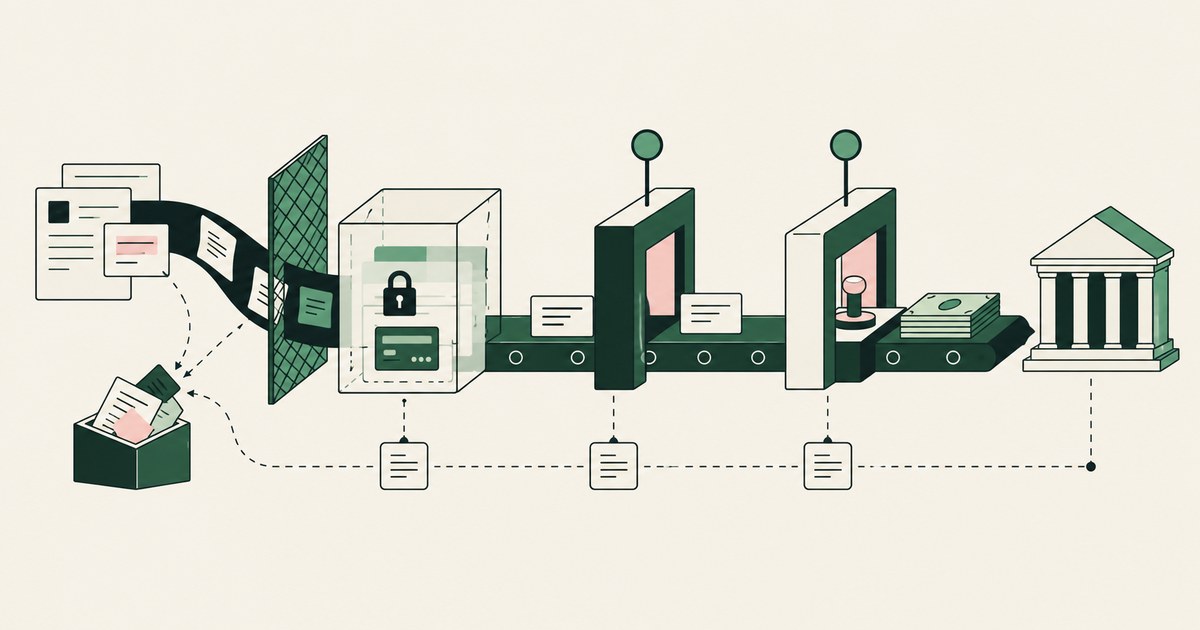
How to secure AI agents against financial fraud?
Review secure AI agents against financial fraud, with AI agent security, tokenization and approval checks for sensitive enterprise workflows.

What Is an AI Control Record? The Runtime System of Record for Sensitive AI Work
Explore an AI agent control record for billing and claims, linking permissions, tokenization decisions, approvals and audit evidence.
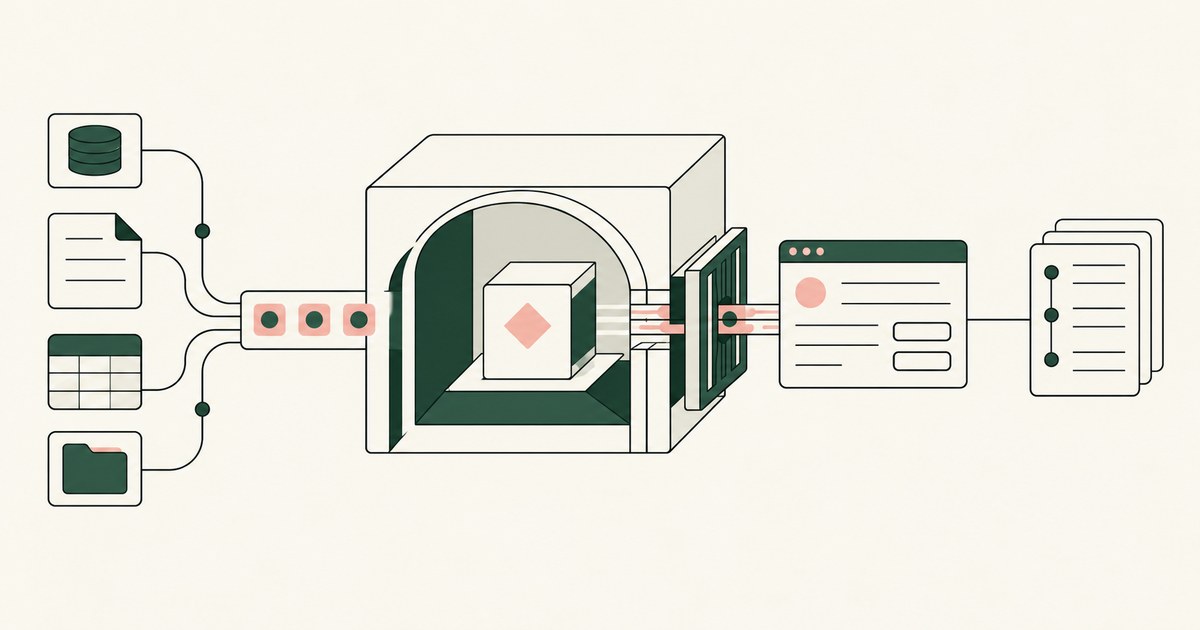
How to Secure AI Agents That Access Customer Data
Review Secure AI Agents That Access Customer Data, with AI agent security, tokenization and approval checks for sensitive enterprise workflows.

How Can an Agency Use AI on Records Covered by the Privacy Act? Reading the Statute, the OMB Direction and the Architecture Question
Examine AI agents working with federal records, using PII tokenization and named oversight to frame Privacy Act and workflow questions.
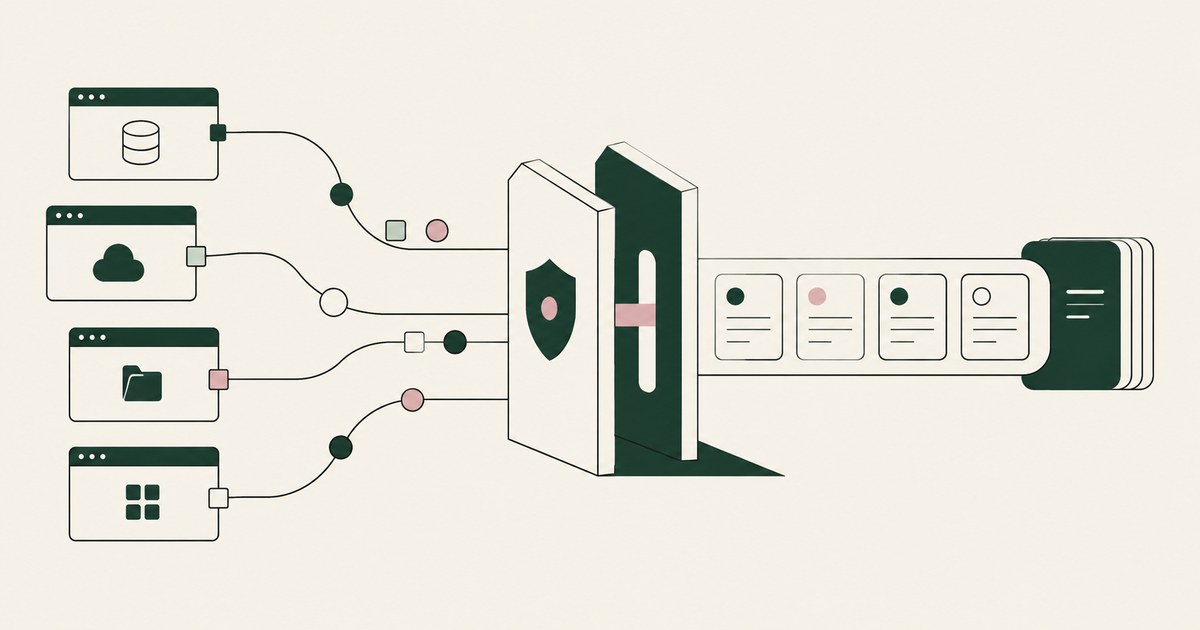
How to audit sensitive data access across enterprise applications?
Review Audit Sensitive Data Access Across Apps, with AI agent security, tokenization and approval checks for sensitive enterprise workflows.

What Stops an AI Agent From Changing Financial Records Without Authorization?
Separation of duties applied to the agent: it prepares the entry, a named person with posting authority commits it, and the record attributes each step.

What Sensitive Records Do Moveworks Agents Access?
Whatever the service accounts behind each connector can read, which for HR and IT means tickets, cases and profiles at table level. Check connector scope.

How Can AI Agents Process Personally Identifiable Information in Financial Services?
They can, if the model never receives nonpublic personal information: identifiers are tokenized on screen and resolve only at approved destinations.

Payments Set the Gold Standard for Security. AI Just Moved the Bar.
Explore AI agent security for payments operations, where PCI controls, tokenization and human approval address new data-exposure risks.

Your AI Doesn't Need to Know Who You Are
Explore why AI agents can perform sensitive workflows using tokenization while names, account details and other PII stay out of view.
Book an AI Agent Security Review →
Bring your hardest questions.
Bring one sensitive workflow and the decisions your team needs to keep in its hands.
Book a demoAbout the author

Chris Sowa is a founder of RedactSure and a former CEO of an AI company; he started it years before ChatGPT existed. He previously led AI at Accenture, served as Global VP of Strategy & Innovation at Schneider Electric, was CCO of Sovos, and spent more than a decade at Oracle, with earlier roles at SAP and IBM.