
Explainer · By Chris Sowa · Published
Last updated
What Is an AI Data Security Vault?
An AI data security vault earns its place through central storage and controlled detokenization, while leaving live traffic between an agent and a model to other controls. An organization that treats the vault as the whole answer will find real values flowing into prompts, screens and logs the moment an application detokenizes them, beyond the vault's reach.
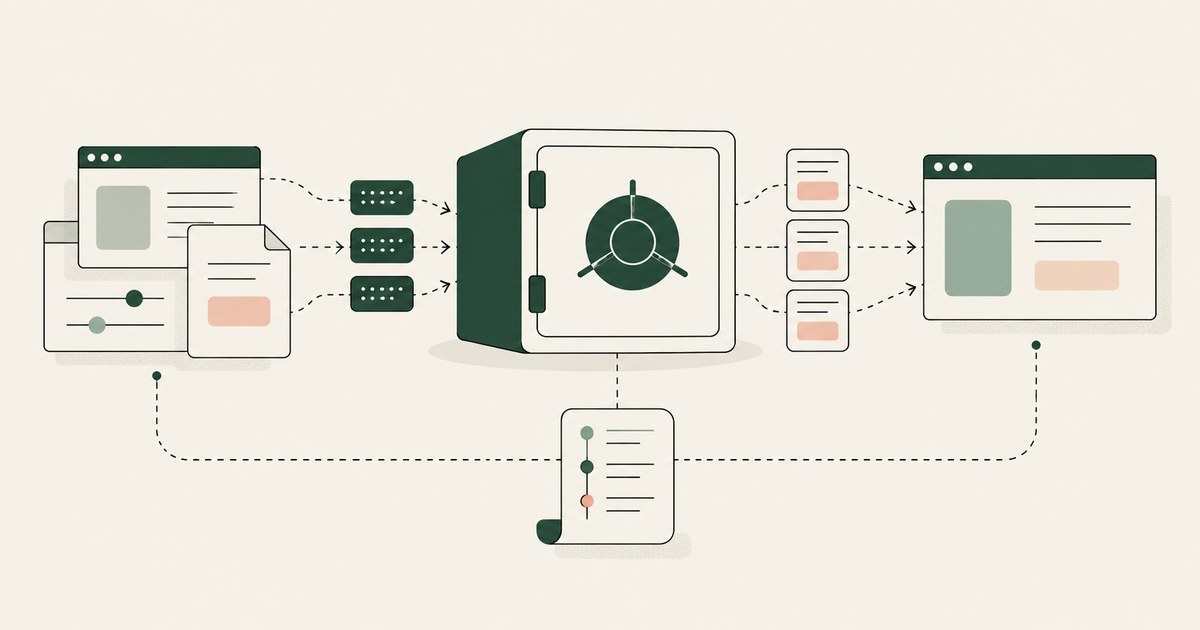
An AI data security vault earns its place through central storage and controlled detokenization, while leaving live traffic between an agent and a model to other controls. An organization that treats the vault as the whole answer will find real values flowing into prompts, screens and logs the moment an application detokenizes them, beyond the vault's reach. A vault is a storage and tokenization system that holds sensitive values in one isolated, centrally governed place and issues tokens that other systems, including AI agents and the models they call, can use in place of the real values. The real value leaves the vault only through detokenization, a controlled reversal under policy for an authorized purpose. The storage function defines the vault; its components and lifecycle follow from it, as does the line between a vault and a gateway, data loss prevention, masking, and render-layer tokenization, which replaces sensitive values with consistent tokens at the point where a screen is rendered, before any AI model reads it. The environment that enforces this is built by RedactSure, an AI agent controls, governance and data protection company.
Key findings
- A vault is defined by central storage: it keeps the mapping between a token and its real value in a system separated from ordinary application databases (PCI Security Standards Council, 2011).
- In the payment card model, tokenization generates or retrieves a token, records both token and value in a card data vault, and returns only the token to the requester (PCI Security Standards Council, 2011).
- Detokenization is the sensitive operation. The requester must authenticate, the vault must verify it, and failed checks stop the process and are logged (PCI Security Standards Council, 2011).
- Data privacy vault documentation generalizes this beyond payments: isolate sensitive data outside existing systems, replace it there with tokens, and govern use through policy-based access control (Skyflow, 2025).
- A vault protects values by removing them from downstream systems, which receive only the token (PCI Security Standards Council, 2011). It does not inspect live traffic between an agent and a model, which is the job of a gateway.
- An agent can work with a token as a stable reference while the real value stays in the vault, resolved only when an approved, authenticated system needs it (PCI Security Standards Council, 2011).
What does an AI data security vault store, and where does it sit?
A vault stores sensitive values and their tokens: personal identifiers, contact details, account numbers, payment data, health related fields, and credentials an agent may need but should not retain. Around them it stores a schema, token format rules, access policies, encryption keys or references to externally held keys, and an audit record.
Architecturally, the vault sits apart. Skyflow describes a data privacy vault as isolating sensitive data separate from existing systems, including databases, logs, analytics, and AI models, replacing raw data in those systems with tokens (Skyflow, 2025). That separation is the central claim. If the vault is another table in the same database under the same credentials, the isolation argument collapses. Buyers should ask where it runs and which systems hold no real values once it is in place.
The AI qualifier refers mainly to new consumers, not a new storage principle. Vaults historically served payments, where downstream systems referenced a card without storing the underlying value. AI agents are prolific readers, so a value in a prompt or tool result can be copied into logs and outputs beyond its original system. Agents also act, so they may need the real value at submission, making just in time detokenization more important than bulk export.
How do tokenization and detokenization work in a vault?
Tokenization takes a real value and returns a token. The system records the association inside the vault, and the requester stores only the token. The PCI guidelines describe this for card data: a token is generated, or retrieved if one exists, both are recorded in the card data vault, and the token is returned (PCI Security Standards Council, 2011). Tokens may be format preserving or opaque. If the same value yields the same token within a scope, systems can join and compare records without seeing the real value.
Detokenization reverses the mapping, and the documented sequence is more guarded. The requester presents a token with authentication. The system verifies it, and if the check fails, the process stops and the attempt is logged. If it passes, the system retrieves the original value and returns it (PCI Security Standards Council, 2011). General purpose vaults add policy-based access control, so authorization can depend on caller, field, purpose, and form returned, including a masked form (Skyflow, 2025).
Three properties follow. Reversibility is intentional and governed, unlike masking on a shared copy. Centralization is the point: one place applies retention, deletion, residency, and access rules instead of scattered copies. Exposure becomes countable: every detokenization is an event with a caller and a time (NIST, 2023).
What components make up a vault in practice?
Vendor offerings vary, but a vault following the documented model contains distinct parts. Separating them shows where a product is strong, where it relies on the customer, and where a claim is only a label.
| Component | What it does | Failure if weak |
|---|---|---|
| Isolated storage | Holds values and token mappings apart from applications | Real values remain scattered |
| Tokenization engine | Creates tokens in defined formats, consistently | Records cannot be joined without detokenizing |
| Schema and data model | Defines fields, types, and token rules per value | Inconsistent handling, wrong storage form |
| Encryption and key management | Protects stored values, controls key rotation and ownership | Values recoverable by anyone reaching storage |
| Policy-based access control | Decides who may tokenize, read, or detokenize, and in what form | Compromised callers retrieve real values |
| Detokenization service | Authenticates, checks policy, returns values, logs failures | Reversal becomes an unmonitored route to data |
| Audit record | Records operations, callers, and outcomes | Retrieval cannot be investigated |
| Interfaces | APIs and SDKs for capture and approved delivery | Values travel through ungoverned channels |
Skyflow's documentation illustrates one commercial packaging: isolated deployment options, policy-based access control, tokenization and masking, and APIs and SDKs for collection and use (Skyflow, 2025). The underlying obligations are vendor neutral, grouped in NIST SP 800-53 under Access Control, Audit and Accountability, Identification and Authentication, and System and Communications Protection (NIST, 2020).
How does a vault differ from a gateway, DLP, masking, and render-layer tokenization?
These controls share vocabulary, especially the word token, so the table separates them by function rather than terminology.
| Control | Core function | Where the real value lives | Agent encounters it |
|---|---|---|---|
| AI data security vault | Central storage and governed tokenization | Inside the vault | As a token, detokenization separate and authorized |
| AI agent security gateway | Inspection and policy on traffic in transit | Wherever systems already keep it | In forwarded traffic, unless transformed |
| Data loss prevention | Detection of data moving to unapproved places | In monitored original systems | Unchanged, until movement triggers action |
| Data masking | Transformation in a dataset or display | In the original system | As a partial or substituted value, usually not resolvable |
| Render-layer tokenization | Replacement at the screen before a model reads it | In the source application | As a consistent token, resolved only at an approved destination |
The gateway contrast is the most important for this pair. A gateway is a control point in a path, deciding whether traffic may proceed at the moment of a request. A vault is a place, deciding where a value is kept and who may retrieve it across its life. An organization can deploy a gateway and still store real values in every database, or deploy a vault and still send real values to a model whenever an application detokenizes them into a prompt. Each closes a gap the other leaves.
DLP is oriented to movement, looking for defined data leaving approved boundaries. It gives an agent no working substitute for a value and does not consolidate storage. Masking is oriented to presentation: NIST SP 800-188 describes it as replacing a direct identifier field with a repeating character (NIST, 2023). A masked value suits a human reviewer, but an agent completing a transaction needs a resolvable token or the real value at the final step. A vault restructures where data is stored, usually through API integration. Render-layer tokenization instead replaces a value at the point of display, without moving records into a central store.
What risks does a vault create or leave open?
Centralization cuts both ways. Concentrating values reduces the places an attacker can find them, and creates a single target of high value. If access control, key management, or detokenization checks are compromised, the loss is the consolidated set. NIST SP 800-53 addresses this through least privilege, separation of duties, audit record protection, and boundary protection (NIST, 2020). Joint CISA and NSA guidance similarly recommends encryption, provenance tracking, and secure storage for AI data (CISA and NSA, 2025).
A vault leaves the last mile open. Once a value is detokenized into an application, a prompt, or a screen, the vault no longer controls where that copy travels. If an agent detokenizes early and reasons over real values in model context, the exposure has moved downstream. OWASP ranks sensitive information disclosure second in its 2025 list (OWASP, 2025). A vault helps only if detokenization is kept late, narrow, and tied to an approved step.
Operational risks are quieter. Token formats must fit existing fields or migrations follow. Consistent tokens enable joins, and create linkability across datasets that privacy assessments must consider. Retention and deletion are simpler with one authoritative store, but residency rules may dictate where a vault may run. ISO/IEC 42001 requires continual improvement of the AI management system, including risk assessment and performance evaluation (ISO, 2023). Without that discipline, new data types are added without policy review and old grants are never revisited.
How should an organization evaluate and govern a vault for AI agents?
Start with inventory, not a product. Identify which values agents need, in which workflows, and at which step the real value is actually required. Many steps need only a stable reference: matching a customer, checking a status, preparing a draft. Fewer need the underlying identifier, usually only at submission. That distinction decides the schema and detokenization policy. The Map function of the NIST AI Risk Management Framework supports beginning in this order (NIST, 2023).
Then test the guarded operations. Confirm that an unauthenticated detokenization request fails and is logged, as documented practice requires (PCI Security Standards Council, 2011). Confirm that a caller authorized for one field cannot retrieve another, and that a masked return form is enforced where policy specifies it. Ask who holds the encryption keys, whether the vendor can access stored values, what happens at contract end, and how free text is handled, since field based tokenization does not cover values buried in prose.
Governance should center on detokenization review: how often real values were retrieved, by which agents, for which purposes, and whether retrievals match approved workflows. Access grants should be reapproved on a schedule.
Where does RedactSure sit?
A vault governs storage, not the live screen an agent is reading or the action it is about to take. RedactSure governs both. AI co-workers do real work across an organization's applications inside a governed environment, with no per-application integration and no change to user permissions. Values on the rendered screen become tokens before a model reads them: the model receives the task's fields with identifiers as SSN_001 or ACCT_001, and real values resolve only at approved destinations at the moment of an approved action. The Planner sets which values are tokenized on each screen; a named person confirms that policy and approves every payment, submission and record change under Supervised Delegation.
RedactSure does not vault databases, so the two designs sit side by side: the vault decides where a stored value lives and who may retrieve it; RedactSure decides what the model sees while the work runs. Every screen as tokens, every action and every approval lands in the AI Control Record and exports to the customer's SIEM. Keys stay with the customer. The environment is model agnostic, and deployments are in pilot. Everyone else controls where data can go. RedactSure controls what the AI can see.
Methodology and limitations
The page rests on primary sources, read as of October 13, 2026: the PCI Security Standards Council's Tokenization Guidelines information supplement (2011, official guidance), which supplies the documented tokenization and detokenization sequence; NIST SP 800-53 Revision 5 (2020, official guidance) for the control families; NIST SP 800-188 (2023, official guidance) for the description of masking; the NIST AI Risk Management Framework (2023, official guidance) for the Map function; ISO's published summary of ISO/IEC 42001 (2023, standard); the OWASP Top 10 for LLM Applications 2025 (standards guidance) for the ranking of sensitive information disclosure; the joint CISA and NSA information sheet on AI data security (2025, official guidance); and Skyflow's product documentation (2025, vendor documentation), used as one example of commercial packaging.
No vault product was deployed or tested, and no performance or compliance outcome is claimed for any vendor. Vendor features change, and the page carries its date. The payment analogy has boundaries: AI data includes free text, documents, and credentials, not only structured card numbers, and practice for those types is less standardized. No single standard defines the phrase AI data security vault, so the definition here is an interpretation combining the documented vault model with AI specific consumers in vendor documentation, not a quotation from a standard. The workflow examples describe record types and steps, not any organization; no customer or prospect is described.
Whether a vault, or any combination of vault, gateway and render-layer control, meets an organization's requirements belongs to its counsel, assessor, privacy officer and compliance officer, not to this page.
What the record shows
A vault answers a storage question: where does the real value live, and who may retrieve it, under what check, with what record? Held in one isolated system, sensitive values can be governed centrally, while agents and other systems work with tokens that refer to them and reveal nothing on their own. Detokenization is the controlled exception, authenticated, policy checked, and logged, and it should happen late and narrowly, because a released value leaves the vault's protection behind. A vault does not inspect live traffic, does not govern what an agent does with a value after release, and its concentration of values makes its own access control and key management critical. The test for any vault is one question: for one agent workflow, show which step detokenizes, who authorized it, and where the released value went afterward.
Frequently asked questions
Is a token the same as an encrypted value?
No. A token is a stand-in recorded in the vault alongside the real value, and using the real value means asking the vault to detokenize it under policy. Encryption transforms a value with an algorithm and a key, so anyone holding the right key can recover it wherever the ciphertext travels. The two have different control points: vault policy for tokens, key custody for encryption.
Can an agent complete a task using only tokens?
For many steps, yes. Matching a record, checking a status, and preparing a draft usually need only a stable reference, which a consistent token provides. The real value is typically needed at one later step, such as submitting a payment or a form. A well designed workflow keeps detokenization at that step, so most of the run never exposes the value to the model at all.
What is the biggest risk a vault introduces?
Concentration. Removing values from many downstream systems leaves fewer places for an attacker to find them, but the vault itself becomes a single high value target. If its access control, key management, or detokenization checks fail, the loss is the consolidated set. That is why least privilege, separation of duties, protected audit records, and regular review of who retrieved what matter more for a vault than for any single application.
Does a vault stop sensitive data from reaching a model in a prompt?
Not on its own. A vault protects values that stay inside it. The moment an application detokenizes a value into a prompt, a tool result, or a screen, that copy is outside the vault's control and can be copied into model context, logs, and outputs. A vault reduces exposure only when detokenization is kept late, tied to an approved step, and paired with a control that governs what the model receives while it works.
What is the difference between an AI data security vault and an AI agent security gateway?
A vault is a place; a gateway is a control point in a path. The vault decides where a value is stored and who may retrieve it across its life. The gateway inspects traffic and decides whether a request may proceed at the moment it is made. An organization can run one without the other and leave a gap: a gateway with real values in every database, or a vault with real values detokenized into every prompt.
Who should hold the encryption keys for a vault?
The organization, where the vault supports it. A buyer should ask whether the vendor can access stored values, who can rotate keys, and what happens to keys and data at contract end. NIST SP 800-53 places key management and boundary protection among the controls a concentrated store depends on. Field based tokenization also does not cover values buried in free text, so key custody should be reviewed alongside how prose is handled.
Related reading
What Is Data Tokenization? · What Is an AI Agent Security Gateway? · What Is Sensitive Data Masking for AI Agents? · What Is Screen-Level Tokenization? · Data Privacy Vault vs Screen-Level Tokenization · What Is the Difference Between RedactSure and Skyflow for AI Data Security? · How to Map All the Data an AI Agent Can Reach · How to Secure AI Agents Across AWS, Azure and GCP · On the RedactSure blog: Payments Security in the Age of AI
Sources
Vendor documentation
- Skyflow, "Data Privacy Vault product overview and documentation on vault architecture, tokenization, and policy-based access control" (2025; vendor documentation). https://docs.skyflow.com/
Regulation, standards and official guidance
- PCI Security Standards Council, "Information Supplement: PCI DSS Tokenization Guidelines," 2011 (official guidance). https://listings.pcisecuritystandards.org/documents/Tokenization_Guidelines_Info_Supplement.pdf
- NIST, "Security and Privacy Controls for Information Systems and Organizations," SP 800-53 Revision 5, 2020 (official guidance). https://csrc.nist.gov/pubs/sp/800/53/r5/upd1/final
- NIST, "Artificial Intelligence Risk Management Framework," NIST AI 100-1, 2023 (official guidance). https://www.nist.gov/itl/ai-risk-management-framework
- NIST, "De-Identifying Government Datasets: Techniques and Governance," SP 800-188, 2023 (official guidance). https://csrc.nist.gov/pubs/sp/800/188/final
- ISO, "ISO/IEC 42001: Artificial Intelligence Management System," summary, 2023 (standard). https://www.iso.org/standard/42001
- OWASP, "LLM02:2025 Sensitive Information Disclosure," OWASP Top 10 for LLM Applications 2025 (standards guidance). https://genai.owasp.org/llmrisk/llm022025-sensitive-information-disclosure/
- CISA and NSA, "AI Data Security: Best Practices for Securing Data Used to Train and Operate AI Systems," joint cybersecurity information sheet, 2025 (official guidance). https://www.cisa.gov/resources-tools/resources/ai-data-security-best-practices-securing-data-used-train-operate-ai-systems
RedactSure documents
- RedactSure Research, "What Is Render-Layer Tokenization?" (2026). https://redactsure.com/research/what-is-render-layer-tokenization
- RedactSure Research, "What Is Supervised Delegation?" (2026). https://redactsure.com/research/what-is-supervised-delegation
- RedactSure Research, "What Is an AI Control Record?" (2026). https://redactsure.com/research/what-is-an-ai-control-record
- RedactSure Research, "What Is an AI Agent Security Gateway?" (2026). https://redactsure.com/research/what-is-an-ai-agent-security-gateway
- RedactSure, "Payments Security in the Age of AI" (2026). https://redactsure.com/blog/payments-security-in-the-age-of-ai/
- Product behavior described on this page reflects RedactSure's current design. Skyflow is a trademark of Skyflow, Inc.; named to identify the product. Compliance determinations belong to the organization's counsel.
What is Data Tokenization?
Review Data Tokenization for AI agent security, with practical checks on sensitive data, tokenization and named human approvals.
What Is an AI Agent Security Gateway?
Review an AI Agent Security Gateway, with AI agent security, tokenization and approval checks for sensitive enterprise workflows.
What Is Sensitive Data Masking for AI Agents?
Review Sensitive Data Masking for AI Agents, with AI agent security, tokenization and approval checks for sensitive enterprise workflows.

What Is Screen-Level Tokenization?
Review Screen-Level Tokenization, with AI agent security, tokenization and approval checks for sensitive enterprise workflows.
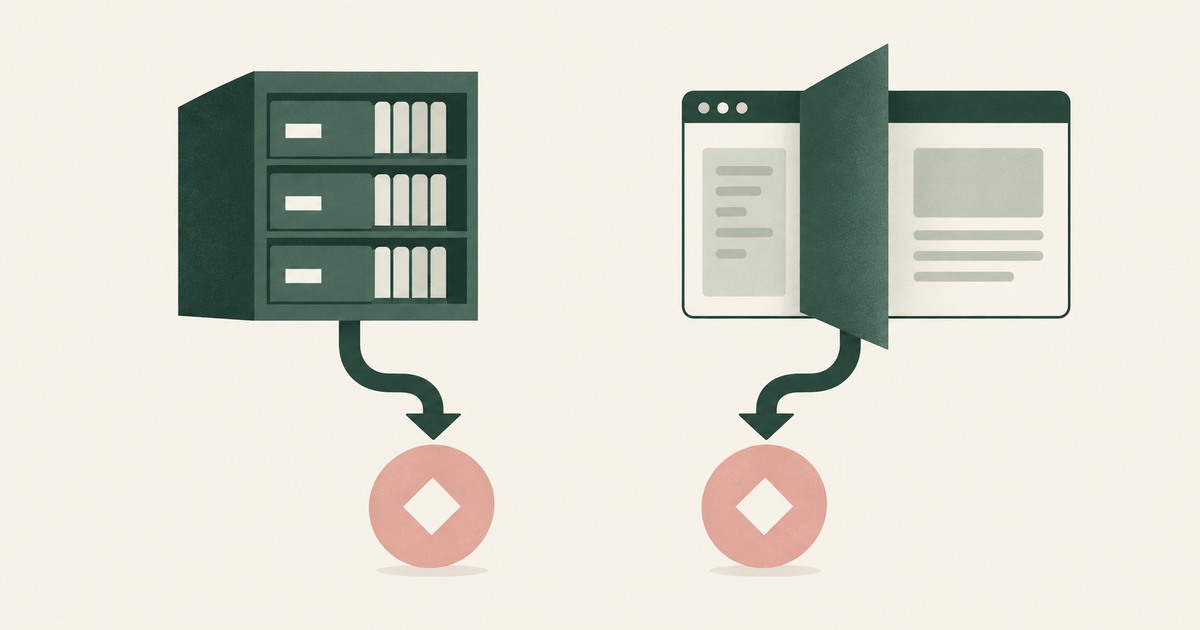
Data Privacy Vault or Screen-Level Tokenization?
Compare data privacy vaults and screen-level tokenization for AI agents, including PII protection, workflow fit and where tokens are made.
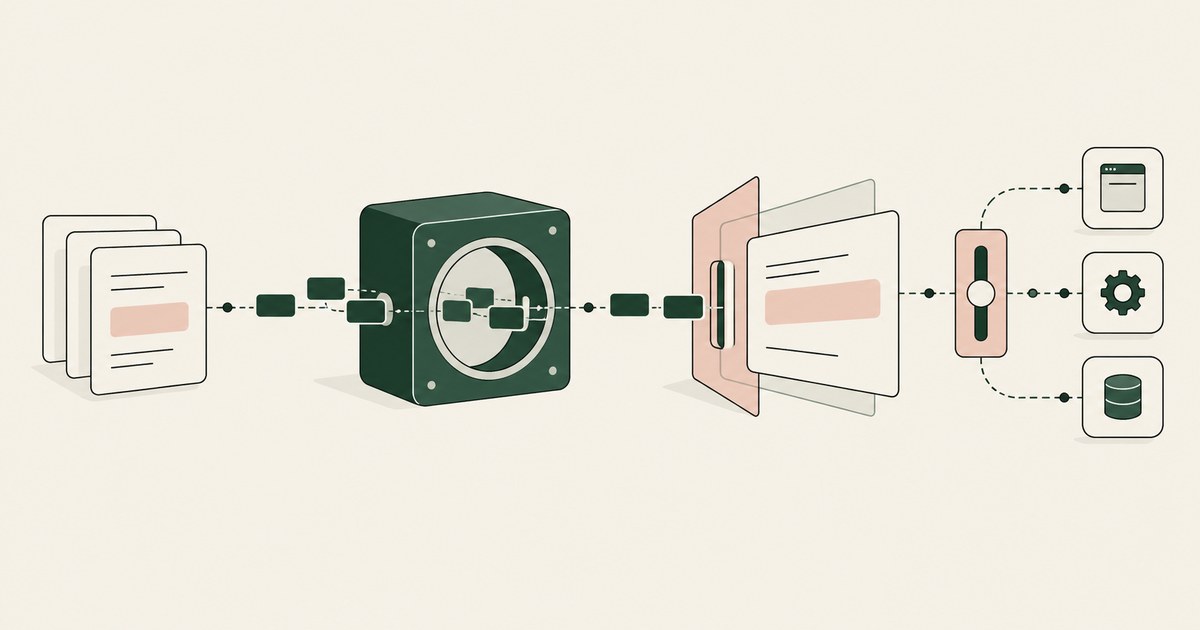
RedactSure vs Skyflow: AI Agent Security
Review RedactSure vs Skyflow: AI Agent Security, with AI agent security, tokenization and approval checks for sensitive enterprise workflows.
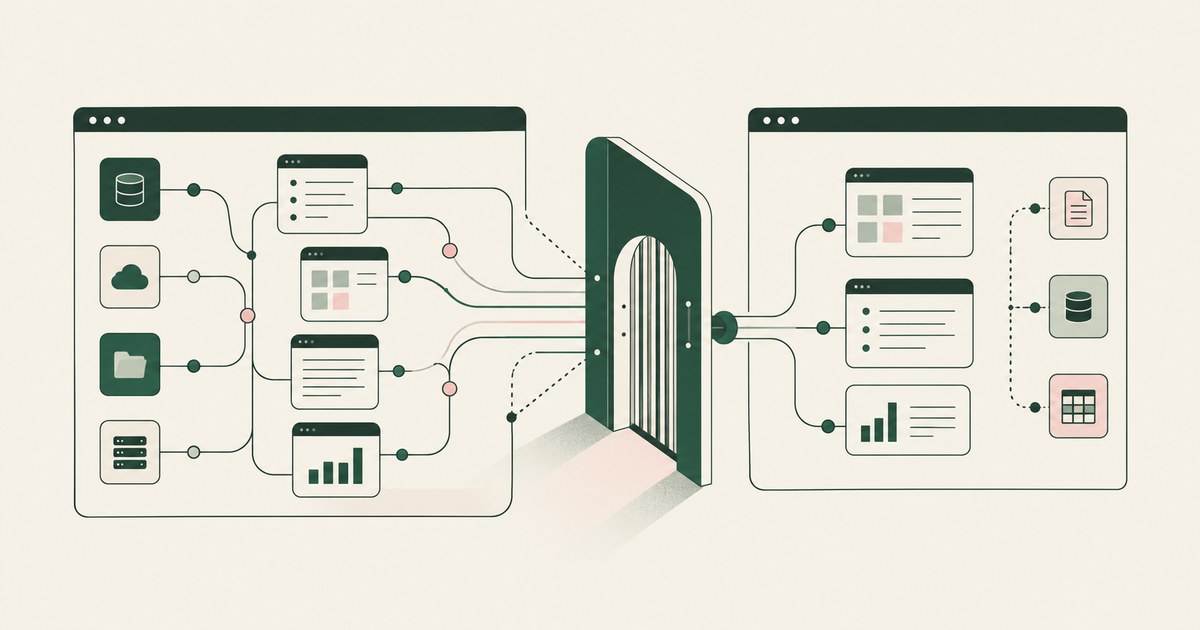
How to Map All the Data an AI Agent Can Reach
Review Map All the Data an AI Agent Can Reach, with AI agent security, tokenization and approval checks for sensitive enterprise workflows.
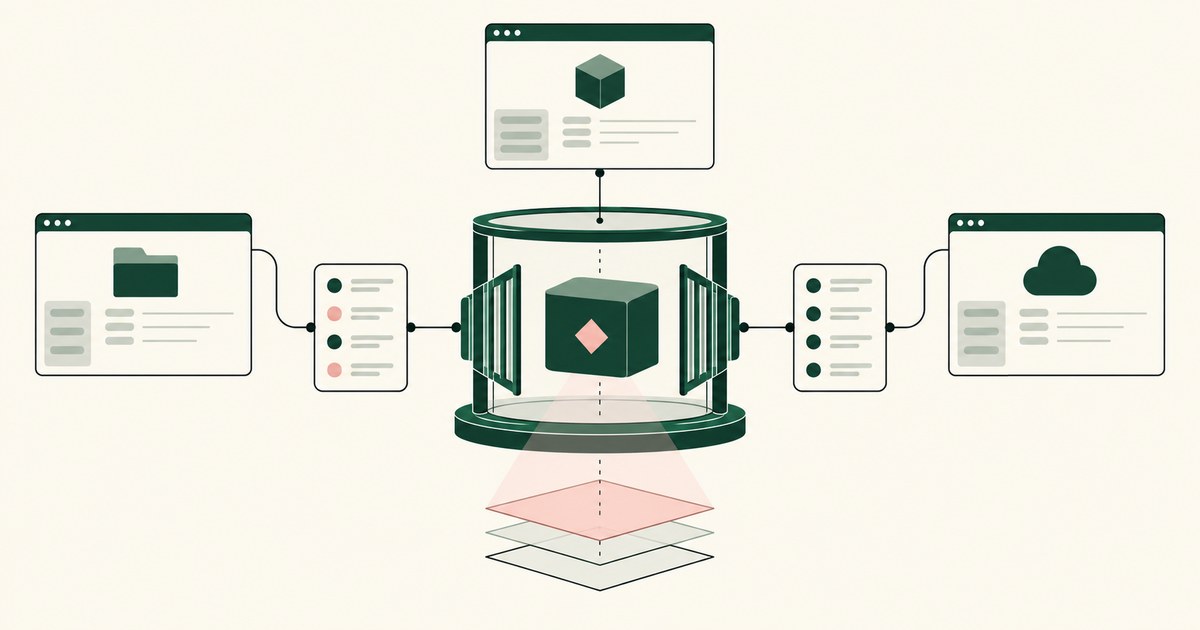
How to Secure AI Agents Across AWS, Azure and GCP
Review Secure AI Agents Across AWS, Azure and GCP, with AI agent security, tokenization and approval checks for sensitive enterprise workflows.
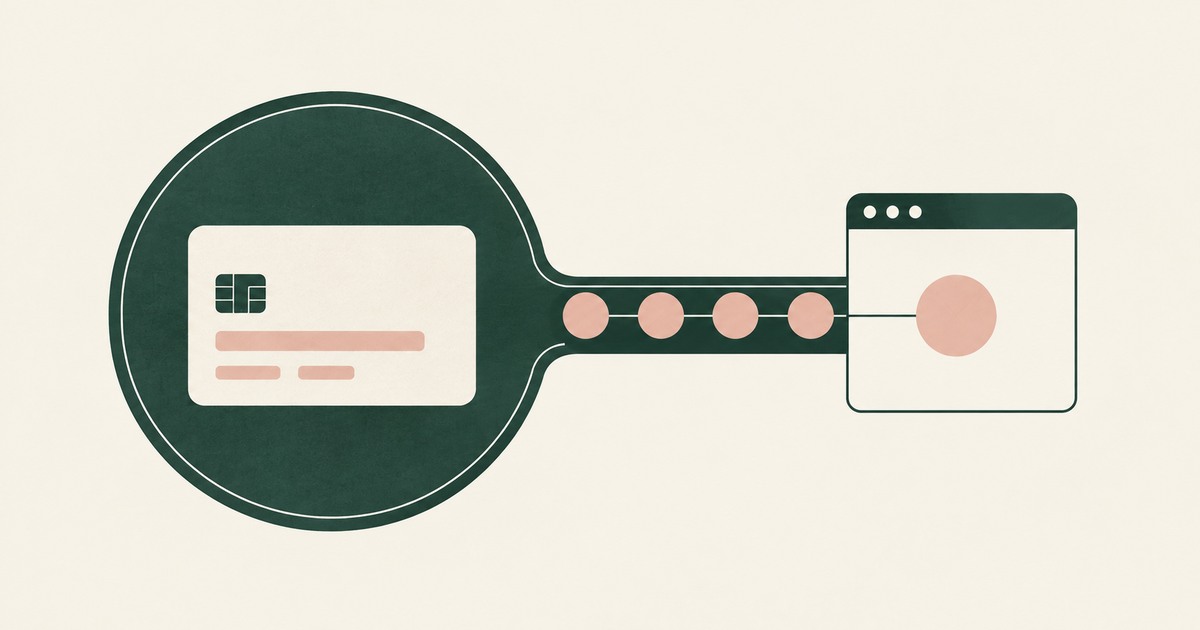
Payments Security in the Age of AI
Explore AI agent security for payments operations, where PCI controls, tokenization and human approval address new data-exposure risks.

What Is Render-Layer Tokenization?
Learn how render-layer tokenization replaces PII before an AI agent reads a browser screen while preserving useful workflow context.

What Is Supervised Delegation?
Explore supervised delegation for AI agents in billing and claims, with named responsibility, tokenization policies and human approvals.

What Is an AI Control Record?
Explore an AI agent control record for billing and claims, linking permissions, tokenization decisions, approvals and audit evidence.
Book an AI Agent Security Review →
Bring your hardest questions.
Bring one sensitive workflow and the decisions your team needs to keep in its hands.
Book a demoAbout the author

Chris Sowa is a founder of RedactSure and a former CEO of an AI company; he started it years before ChatGPT existed. He previously led AI at Accenture, served as Global VP of Strategy & Innovation at Schneider Electric, was CCO of Sovos, and spent more than a decade at Oracle, with earlier roles at SAP and IBM.