
Comparison · By Chris Sowa · Published
Last updated
What Is the Difference Between RedactSure and Nightfall AI for PII Reaching AI Tools and Agents?
Nightfall AI inspects prompts, uploads and MCP tool calls, then detects, blocks or redacts sensitive data in that traffic. RedactSure replaces identifiers with tokens on the screen before any model reads it and stops every consequential action for a named person. Treating one as the other leaves either the screen or the traffic unexamined.
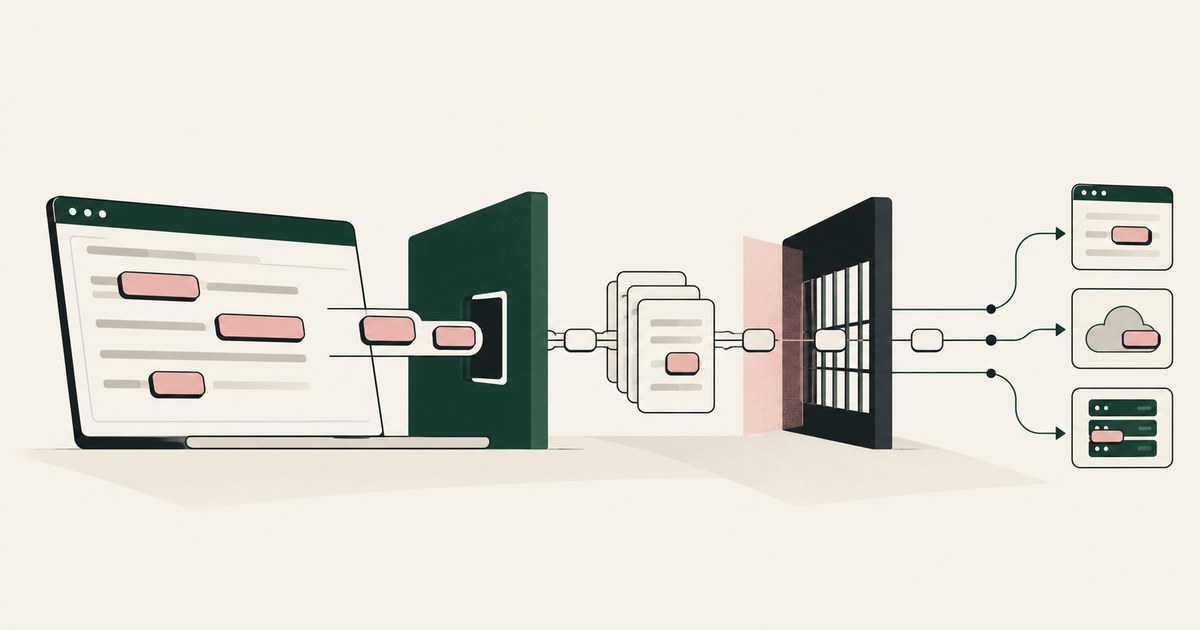
Nightfall AI inspects prompts, uploads and MCP tool calls, then detects, blocks or redacts sensitive data in that traffic. RedactSure replaces identifiers with tokens on the screen before any model reads it and stops every consequential action for a named person. Treating one as the other leaves either the screen or the traffic unexamined. The two products answer different questions about the same risk. One asks what is leaving the organization through an AI service or a tool call, and whether it should. The other asks what the model should be able to see for this piece of work at all, which is the principle of Least Exposure. A security team buying for PII reaching AI tools and agents needs to know which question each product answers, because an agent that reads a full screen of patient or account data produces no prompt for a scanner to inspect until it decides to send something. The environment that enforces this is built by RedactSure, an AI agent controls, governance and data protection company.
Key findings
- Nightfall's MCP security page says developers point their MCP configuration at its gateway and every tool call flows through it before approved calls reach the MCP servers (Nightfall AI, 2026).
- The same page says Nightfall blocks PHI, PII, PCI and IP in prompts sent to non-compliant AI services, auto-redacts secrets and PII, and reports 95% accuracy for its AI-powered detection (Nightfall AI, 2026).
- Nightfall's page states that every request and response is logged in plain text, with real-time audit logs and exportable audit-ready reports (Nightfall AI, 2026).
- OWASP lists sensitive information disclosure as a top risk for LLM applications, covering personal data, financial details and confidential business data exposed through model outputs (OWASP, 2025).
- Indirect prompt injection works through content the model observes, such as a web page or a retrieved document, rather than through the user's prompt (Greshake et al., 2023).
- Researchers at ServiceNow and partner institutions report that a model-agnostic firewall which minimizes what is sent to tools and sanitizes what comes back reaches near-zero attack success on four agent benchmarks, and they warn that the public benchmarks are easily saturated (Bhagwatkar et al., 2026).
What does Nightfall AI say its MCP security product does?
Nightfall describes itself on its MCP security page as AI data loss prevention and data exfiltration prevention, under the headline "Secure AI agents without slowing down innovation" (Nightfall AI, 2026). Everything in this section comes from that page, accessed October 14, 2026.
On inspection, the page lists agent prompts, file uploads, and API calls and responses as scanned for sensitive data. It says every MCP tool call is inspected, and that agent configurations are scanned in real time, with MCP servers discovered across Claude Desktop, Cursor, VS Code and custom integrations. It names browser plugins and endpoint sensors, with native desktop app monitoring, and identity through SSO integration with user and device attribution. It mentions Google Drive data lineage and an agent-accessed customer database without describing direct inspection of data stores. The page reviewed does not state whether Nightfall inspects network traffic.
On sensitive data handling, the page says detection uses AI-powered analysis that reaches 95% accuracy. It describes blocking uploads, blocking PHI, PII, PCI and IP in prompts sent to non-compliant AI services, and blocking non-enterprise ChatGPT connections. It says the product auto-redacts secrets and PII and allows queries with anonymized data, and that it notifies the security team and alerts SecOps. The page refers to "data classification enforcement" but does not state the classification method. The page reviewed does not state that Nightfall tokenizes or masks values with consistent stand-ins.
On agent actions, the page describes a curated MCP registry that approves or blocks servers by default, tool-level blocking (its example allows GitHub while blocking create_branch), role-based access control and time-based policies. Exception workflows require a business justification and explicit SecOps approval. MCP updates are quarantined automatically pending SecOps review, and admins can revoke access instantly.
On logging, the page says every request and response is logged in plain text, admins see real-time audit logs, and audit-ready reports can be exported with user and device attribution. A customer case study on the page says the audit trails distinguish AI agent actions from human actions.
The product, by its own description, is a control on the traffic between people, agents, AI services and tools. That is a meaningful layer. The page does not claim to decide what a model reads from an application screen during a task, and the comparison turns on that point.
Where does each product sit relative to the model and the screen?
Position decides what a control can see. Nightfall's page places the gateway in the path of MCP tool calls: developers point their configuration at it, and approved calls continue to the MCP servers (Nightfall AI, 2026). The page also says content is intercepted "before agents process it" and that data is scanned "before they leave your network." Browser plugins show in-browser coaching messages to users. The page reviewed does not state where the product sits relative to the model itself, for example whether it inspects what a screen-reading agent captures from a rendered application.
That gap matters because agents increasingly work through screens. An agent that operates an application through the interface reads the page as rendered; RedactSure's research on what an AI agent sees when it takes a screenshot sets out how every visible field enters the model's context. Nothing in that capture is a prompt or an upload. It becomes traffic only when the agent sends something out, by which point the model has already read the record.
RedactSure sits at a different point. In its published design, sensitive values chosen by policy are replaced by consistent tokens at the render layer, before any model reads the screen, and the environment hands the model the task's fields with identifiers as tokens. This is render-layer tokenization. The control is upstream of the model's reading, not downstream of its writing.
| Point in the flow | What happens there | Nightfall AI, per its documentation | RedactSure, per its published design |
|---|---|---|---|
| Application renders a record | The full record is on screen | Not stated on the page reviewed | Identifiers replaced by tokens before any model reads the screen |
| Model reads the task | Context is assembled | Content intercepted "before agents process it" for prompts and uploads | Model receives the task's fields, identifiers as SSN_001, ACCT_001 |
| Agent calls a tool | Request leaves the agent | Every MCP tool call flows through the gateway | Consequential actions stop for a named person |
| Data leaves the network | Egress to an AI service or server | Scanned "before they leave your network" | Real values resolve only at approved destinations at the moment of an approved action |
The two positions are not substitutes. A gateway sees what an agent sends. A render-layer control decides what the agent could have known in the first place. RedactSure's page on the difference between runtime tokenization and DLP for AI agents treats the general case; this comparison applies it to one documented product.
How do detect, block and redact differ from tokenizing what the model reads?
Detection followed by blocking or redaction is the standard DLP pattern, and Nightfall's page describes it clearly: AI-powered detection, blocking of PHI, PII, PCI and IP in prompts to non-compliant AI services, and automatic redaction of secrets and PII (Nightfall AI, 2026). The pattern depends on detection finding the value. The page reports 95% accuracy for that detection. Any detection rate below certainty means some values pass, and the page does not say what happens to the model's context when one does.
Tokenizing at the render layer works on a different premise. The policy names the fields to tokenize, starting with identifiers such as names, SSNs, MRNs, account and card numbers, dates of birth and addresses, and the environment replaces them on the screen whatever their content. The model never gets a chance to read the value, so there is nothing for a later scan to catch. Consistency also matters for agent work: a redacted field is a gap, while a token such as PATIENT_001 lets the model follow the same person across three screens and still finish the task. RedactSure's comparison of masking and tokenizing data for AI covers why a consistent stand-in keeps work possible where a blank does not.
The regulatory framing points the same way. HIPAA's minimum necessary standard asks covered entities to limit uses and disclosures of PHI to the minimum necessary for the purpose (eCFR, 2024). The PCI Security Standards Council's tokenization guidance describes replacing card numbers with surrogate values to reduce where cardholder data lives (PCI SSC, 2011). Neither text names AI agents, and whether a given control satisfies either is a determination for counsel and assessors. Both describe the logic of reducing what a system holds, not only watching what it sends.
Research on agent security supports minimization at a boundary as well. Bhagwatkar and colleagues report that a Tool-Input Firewall that strips data not needed for a tool call, paired with a Tool-Output Firewall that sanitizes results, reaches near-zero attack success with little utility loss on AgentDojo, Agent Security Bench, InjecAgent and tau-Bench (Bhagwatkar et al., 2026). Their finding concerns the tool boundary, which is where Nightfall's gateway sits. The same principle, applied one step earlier, is what render-layer tokenization does to the screen.
How does each govern what an agent does?
Nightfall's page describes governance of the agent's tools and servers. A curated MCP registry approves or blocks servers by default. Tool-level blocking can allow a server while blocking a specific operation, such as create_branch on GitHub. Role-based access control and time-based policies apply. Exceptions require a business justification and explicit SecOps approval, MCP updates are quarantined pending SecOps review, and admins can revoke access instantly (Nightfall AI, 2026). These are approvals of what tools the agent may use, granted by the security team in advance or by exception.
RedactSure's design governs the run itself under Supervised Delegation. The Planner sets which values are tokenized and what the agent may do on each screen. A named person confirms that policy before the run, can watch and pause the same tokenized stream while it runs, and approves every payment, submission and record change. The AI never pays, submits or decides. Permissions in the underlying applications do not change; what changes is what the AI can see.
The difference is the approver and the moment. A tool policy approved by SecOps last month answers whether the agent may call create_branch. It does not answer whether this particular vendor bank change, on this record, today, should go through. A consequential action needs a control the model cannot talk its way past. MIT Technology Review describes model refusal and the classifiers stacked around it as a "Swiss cheese" of layers, each with holes (MIT Technology Review, 2026). Greshake and colleagues showed that instructions hidden in observed content can redirect an LLM-integrated application (Greshake et al., 2023), and OWASP ranks prompt injection first among LLM risks (OWASP, 2025).
Under RedactSure's design, an injection that succeeds collects tokens rather than identifiers, and the consequential action it tries to trigger still stops for a named person. Under a tool policy, an injection that directs the agent toward an allowed tool depends on the gateway's detection to catch any sensitive payload. Both layers reduce risk; they reduce different parts of it.
How do the two compare, dimension by dimension?
The table below sets Nightfall AI's documented behavior, from its MCP security page accessed October 14, 2026, beside RedactSure's published design. Where the Nightfall page does not address a dimension, the table says so rather than inferring.
| Dimension | Nightfall AI, per its documentation | RedactSure, per its published design |
|---|---|---|
| What it inspects or controls | Agent prompts, file uploads, API calls and responses, every MCP tool call, agent configurations; browser plugins and endpoint sensors; identity through SSO | What the model reads from application screens during a governed task, and the consequential actions it proposes |
| Position relative to the model | MCP gateway in the tool call path; content intercepted "before agents process it"; position relative to the model not stated on the page reviewed | Render layer, before any model reads the screen |
| Network traffic | The page reviewed does not state it | Not a network inspection product; the environment governs what the model sees |
| Handling of sensitive data | Detect (95% accuracy reported), block, auto-redact secrets and PII, alert SecOps | Replace identifiers with consistent tokens; real values resolve only at approved destinations at the moment of an approved action |
| Tokenization or masking | The page reviewed does not state it | Consistent tokens such as SSN_001, ACCT_001, PATIENT_001 |
| Governance of agent actions | MCP registry, tool-level blocking, RBAC, time-based policies, quarantine of MCP updates | Planner policy per screen; a named person confirms it before the run |
| Approval | Exceptions need business justification and explicit SecOps approval | A named person approves every payment, submission and record change during the run |
| Logging | Every request and response logged in plain text; real-time audit logs; exportable reports; user and device attribution | AI Control Record: every action logged, human and computer; all PII as tokens; exported to the customer's SIEM |
| Model coverage | Discovers MCP servers across Claude Desktop, Cursor, VS Code and custom integrations | Model agnostic; models swappable without moving the controls |
| Integration | Developers point MCP configuration at the gateway | No per-application integration; no change to user permissions |
Two rows deserve a closer read. On logging, a plain-text log of every request and response gives an investigator the full content of what passed, which is useful evidence; it is also a second store of whatever sensitive values passed. RedactSure's AI Control Record keeps the screens as tokens, so the record shows what the agent did without holding the identifiers it never saw. On integration, a gateway requires agents to route through it, while RedactSure's environment works the applications as rendered under existing permissions.
Where does RedactSure sit?
RedactSure provides a governed environment where AI co-workers do real work across an organization's applications with no per-application integration and no change to user permissions. Identifiers chosen by policy are replaced by consistent tokens at the render layer before any model reads the screen, and the model receives the task's fields with identifiers as tokens. The Planner sets the policy, a named person confirms it, and that person approves every payment, submission and record change. Real values resolve only at approved destinations at the moment of an approved action. Every screen as tokens, every action and every approval lands in the AI Control Record and exports to the customer's SIEM. The environment runs on hardware-encrypted enclaves with keys the customer holds, and is model agnostic. Deployments are in pilot.
Everyone else controls where data can go. RedactSure controls what the AI can see.
Methodology and limitations
This page rests on Nightfall AI's MCP security product page, accessed October 14, 2026 (vendor documentation); OWASP's Top 10 for LLM Applications 2025 entries on prompt injection and sensitive information disclosure (standards guidance); the NIST AI Risk Management Framework (official guidance); the HIPAA minimum necessary standard and PCI SSC tokenization guidance (regulation and standards); peer-reviewed research and preprints by Greshake and colleagues and Bhagwatkar and colleagues; MIT Technology Review (press); and RedactSure's published design. Sources were read as of October 13, 2026, and the vendor page on October 14, 2026.
No hands-on testing of Nightfall AI or any other named product was performed. Statements about Nightfall reflect only what its page said on the access date; where the page did not address a dimension, the comparison says so rather than inferring an answer. Vendor features change, and the page carries its date. Nightfall may document capabilities on other pages that this comparison did not review. No specific organization, customer or deployment is described.
Whether any control, alone or combined, satisfies HIPAA, PCI DSS or any other obligation is a determination for the organization's counsel, its qualified assessors, and its security and compliance officers. The comparison describes documented positions and designs; it does not certify either product.
What the record shows
A DLP and MCP gateway inspects prompts, uploads and tool calls and detects, blocks or redacts sensitive data in that traffic. Render-layer tokenization removes identifiers from the screen before any model reads them, and a named person approves every consequential action. Relying on traffic inspection alone for screen-reading agents leaves the model reading full records, with detection as the only safeguard on what it sends. The test: for one real workflow, name the control that acts before the model reads the record.
Frequently asked questions
Does Nightfall AI tokenize sensitive data before an AI agent reads it?
The Nightfall MCP security page reviewed on October 14, 2026 does not state that it tokenizes or masks values with consistent stand-ins. It describes detection with 95% reported accuracy, blocking of PHI, PII, PCI and IP in prompts to non-compliant services, and automatic redaction of secrets and PII.
Where does Nightfall's MCP gateway sit?
Per its page, developers point their MCP configuration at the gateway, and every tool call flows through it before approved calls reach the MCP servers. The page says content is intercepted before agents process it and scanned before it leaves the network. It does not state the product's position relative to the model itself.
What does RedactSure do differently with PII?
RedactSure's design replaces identifiers chosen by policy with consistent tokens such as SSN_001 at the render layer, before any model reads the screen. The model works with tokens, and real values resolve only at approved destinations at the moment of an approved action. Data is hidden from the AI, not from the human workers.
Who approves agent actions in each product?
Nightfall's page describes SecOps approving MCP servers, exceptions with business justification, and quarantined MCP updates, plus tool-level blocking and role-based policies. RedactSure's design has a named person confirm the policy before the run and approve every payment, submission and record change while it runs.
How do the audit logs differ?
Nightfall's page says every request and response is logged in plain text, with real-time audit logs, exportable reports, and user and device attribution. RedactSure's AI Control Record logs every action, human and computer, with all PII as tokens, and exports to the customer's SIEM, so the record does not hold identifiers the agent never saw.
Can an organization use both?
Yes. The products sit at different points. A DLP and MCP gateway inspects prompts, uploads and tool calls across the organization's AI use. A governed environment decides what an agent reads on regulated application screens and who approves its actions. Teams with both exposures can layer them, after mapping where each AI system touches sensitive data.
Related reading
What Is the Difference Between Runtime Tokenization and DLP for AI Agents? · Masking vs Tokenizing Data for AI · What Does an AI Agent See When It Takes a Screenshot? · What Is the Difference Between RedactSure and Netskope for Sensitive Data Reaching AI Tools? · What Is the Difference Between RedactSure and Securiti for Sensitive Data Across AI Workflows? · What Is the Difference Between RedactSure and SentinelOne Prompt Security for Enterprise AI Usage and Agent Workflows? · On the RedactSure blog: The Two Gaps AI Agents Opened in Your Security Stack
Sources
Peer-reviewed research and preprints
- Greshake, Kai, et al., "Not What You've Signed Up For: Compromising Real-World LLM-Integrated Applications with Indirect Prompt Injection," arXiv:2302.12173, 2023 (preprint; also AISec 2023). https://arxiv.org/abs/2302.12173
- Bhagwatkar, Kasa, et al., "Indirect Prompt Injections: Are Firewalls All You Need, or Stronger Benchmarks?," arXiv:2510.05244, v2 March 2026 (preprint). https://arxiv.org/abs/2510.05244
Vendor documentation
- Nightfall AI, "Model Context Protocol (MCP) Security | Nightfall AI" (vendor documentation, accessed October 14, 2026). https://nightfall.ai/products/mcp-security
Regulation, standards and official guidance
- OWASP, "LLM01:2025 Prompt Injection" (standards guidance). https://genai.owasp.org/llmrisk/llm01-prompt-injection/
- OWASP, "LLM02:2025 Sensitive Information Disclosure" (standards guidance). https://genai.owasp.org/llmrisk/llm022025-sensitive-information-disclosure/
- NIST, "AI Risk Management Framework" (official guidance). https://www.nist.gov/itl/ai-risk-management-framework
- 45 CFR 164.502(b), HIPAA minimum necessary standard (regulation). https://www.ecfr.gov/current/title-45/subtitle-A/subchapter-C/part-164/subpart-E/section-164.502
- PCI Security Standards Council, "Tokenization Guidelines Information Supplement" (standards guidance). https://www.pcisecuritystandards.org/documents/Tokenization_Guidelines_Info_Supplement.pdf
Industry analysis and press
- Holland Michel, Arthur, "We're putting too much faith in AI's ability to say no," MIT Technology Review, October 9, 2026 (press). https://www.technologyreview.com/2026/10/09/1145728/we-are-putting-too-much-faith-in-ai-to-say-no/
RedactSure documents
- RedactSure Research, "What Is the Difference Between Runtime Tokenization and DLP for AI Agents?" (2026). https://redactsure.com/research/what-is-the-difference-between-runtime-tokenization-and-dlp-for-ai-agents
- RedactSure Research, "Masking vs Tokenizing Data for AI" (2026). https://redactsure.com/research/masking-vs-tokenizing-data-for-ai
- RedactSure Research, "What Does an AI Agent See When It Takes a Screenshot?" (2026). https://redactsure.com/research/what-does-an-ai-agent-see-when-it-takes-a-screenshot
- RedactSure Research, "What Is Render-Layer Tokenization?" (2026). https://redactsure.com/research/what-is-render-layer-tokenization
- RedactSure, "The Two Gaps AI Agents Opened in Your Security Stack" (2026). https://redactsure.com/blog/two-gaps-ai-agents-opened-in-your-security-stack/
- Product behavior described on this page reflects RedactSure's current design. Nightfall and Nightfall AI are trademarks of Nightfall AI, Inc.; Claude Desktop is a trademark of Anthropic PBC; Cursor is a trademark of Anysphere, Inc.; VS Code is a trademark of Microsoft Corporation; GitHub is a trademark of GitHub, Inc.; ChatGPT is a trademark of OpenAI; Google Drive is a trademark of Google LLC; named to identify the products. Compliance determinations belong to the organization's counsel.
Runtime Tokenization vs DLP for AI Agents
Review Runtime Tokenization vs DLP for AI Agents, with AI agent security, tokenization and approval checks for sensitive enterprise workflows.
How Do Data Masking and AI Tokenization Differ?
Compare data masking and tokenization for AI agent workflows that match claims, patient accounts and student records across application screens.

What Does an AI Agent See in a Screenshot?
Explore what browser screenshots expose to AI agents, including unrelated PII, and how tokenization changes the model's view of a task.
RedactSure vs Netskope: AI Agent Security
Review RedactSure vs Netskope: AI Agent Security, with AI agent security, tokenization and approval checks for sensitive enterprise workflows.
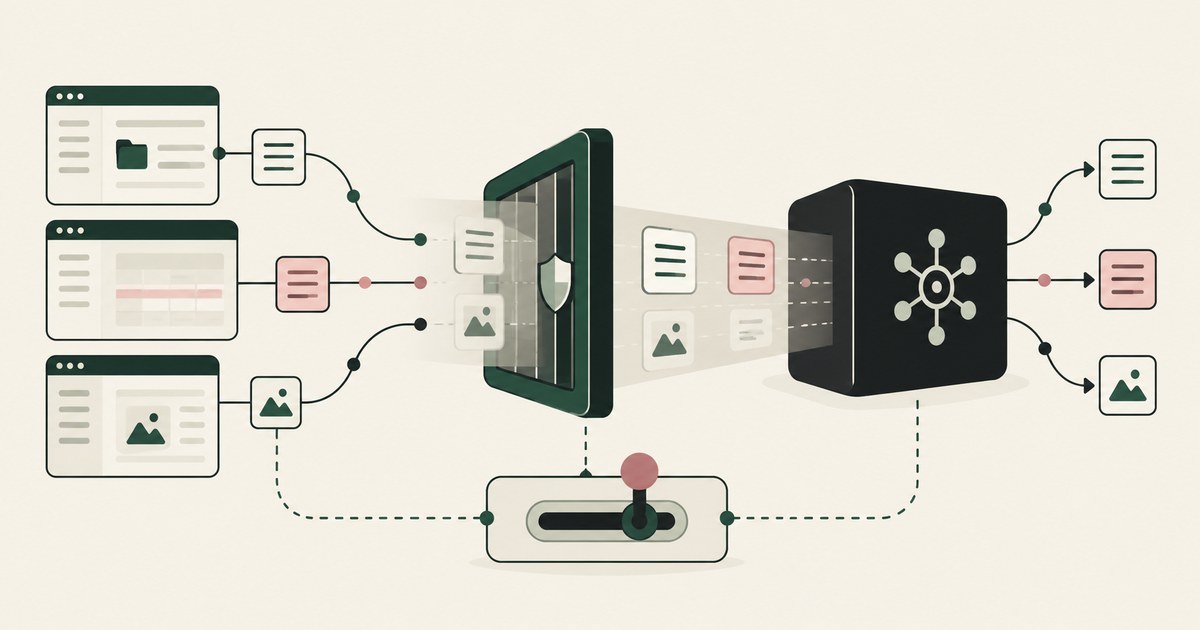
RedactSure vs Securiti: AI Agent Security
Review RedactSure vs Securiti: AI Agent Security, with AI agent security, tokenization and approval checks for sensitive enterprise workflows.
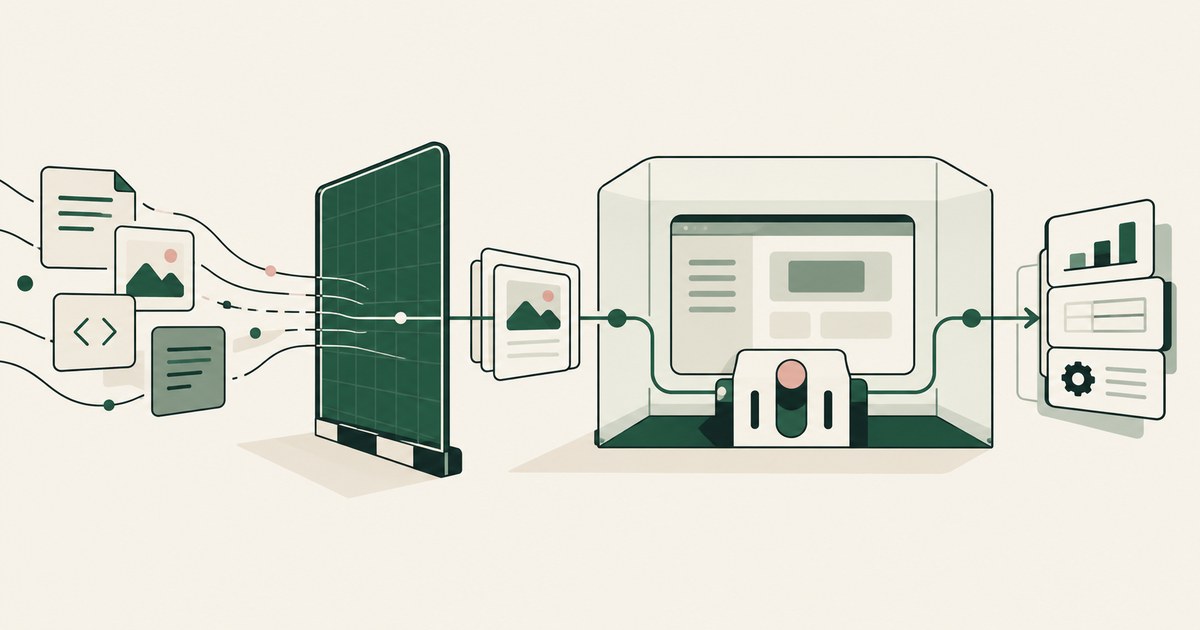
RedactSure vs Prompt Security: AI Agent Security
Review RedactSure vs Prompt Security: AI Agent Security, with AI agent security, tokenization and approval checks for sensitive enterprise workflows.

The Two Gaps AI Agents Opened in Your Security Stack
Explore AI agent security through two questions: which PII reaches the model, and who approves consequential billing and claims actions.

What Is Render-Layer Tokenization?
Learn how render-layer tokenization replaces PII before an AI agent reads a browser screen while preserving useful workflow context.
Book an AI Agent Security Review →
Bring your hardest questions.
Bring one sensitive workflow and the decisions your team needs to keep in its hands.
Book a demoAbout the author

Chris Sowa is a founder of RedactSure and a former CEO of an AI company; he started it years before ChatGPT existed. He previously led AI at Accenture, served as Global VP of Strategy & Innovation at Schneider Electric, was CCO of Sovos, and spent more than a decade at Oracle, with earlier roles at SAP and IBM.