
Comparison · By Chris Sowa · Published
Last updated
What Is the Difference Between RedactSure and Silverfort (Formerly Rezonate) for AI Agent Identity and Data Protection?
Silverfort, which acquired Rezonate in November 2024, governs AI agent identities and MCP tool calls, including human approval before sensitive tool actions; RedactSure governs what a browser-based agent's model reads on the screen and holds each consequential action for a named person. Check what the model receives once an approved identity opens a record, not just who approved it.

Silverfort, which acquired Rezonate in November 2024, governs AI agent identities and MCP tool calls, including human approval before sensitive tool actions; RedactSure governs what a browser-based agent's model reads on the screen and holds each consequential action for a named person. Check what the model receives once an approved identity opens a record, not just who approved it. Silverfort's agent controls are documented in detail for the identity layer: discovery of sanctioned and rogue agents, a gateway every MCP tool call passes through, human approval for sensitive tool actions, and an audit trail tying each action to the person who started it, none of it describing what the model reads. All of it governs identities and tool calls. Identity decides who may act; it does not decide what the model sees. An agent with a correct identity, working a claims screen through the browser, still reads every value the screen renders, and the control for that is render-layer tokenization. For a team evaluating agents that work through the browser, that is the question to settle first. The environment that enforces this is built by RedactSure, an AI agent controls, governance and data protection company.
Key findings
- Silverfort announced its acquisition of Rezonate on November 13, 2024, to expand its cloud identity security (Silverfort, 2024), and Rezonate's site now shows only an acquisition notice (Rezonate, 2026).
- Silverfort's AI Agent Security page says the product discovers AI agents, sanctioned and rogue, across identity providers, cloud platforms and SaaS applications, and that for MCP "every tool call hits the gateway first," when agents call tools through MCP (Silverfort, 2026).
- The same page says Silverfort can "require approvals before agents execute sensitive tool actions (human in the loop)" and logs an immutable audit trail tying every agent action to the initiating person, for tool actions that pass through its gateway (Silverfort, 2026).
- Silverfort's AI agent brief says the product helps "prevent misuse and data leakage"; masking, redaction or tokenization of data an agent reads is not described in the pages reviewed (Silverfort, 2025).
- OWASP lists sensitive information disclosure as a top risk for LLM applications, covering personal and confidential data that reach or leave a model (OWASP, 2025).
- Indirect prompt injection arrives through content an agent is authorized to read (Greshake et al., 2023), and a 2026 study found that stripping unneeded data at the tool boundary brought attack success near zero on four agent benchmarks (Bhagwatkar et al., 2026).
What does Silverfort's documentation say the platform covers?
Silverfort announced its acquisition of Rezonate on November 13, 2024, describing Rezonate as a provider of "identity-first security for cloud environments" across non-human identities, identity security posture, identity threat detection and entitlements (Silverfort, 2024; vendor press release, accessed October 16, 2026). Silverfort itself remains independent and acquired Fabrix Security in April 2026 (Silverfort, 2026). Silverfort's current product pages do not mention Rezonate by name, so this page treats Rezonate's capabilities as part of the Silverfort platform, as the acquisition release describes.
The platform document lists identity security posture management, identity threat detection and response, a cloud non-human identity authentication firewall, an identity graph and AI agent security (Silverfort, 2025). Identity threat detection, as Silverfort describes it, correlates activity across cloud, SaaS and on-premises systems and can require multifactor authentication or deny access, at the identity layer. For non-human identities, Silverfort promises to "automatically discover every NHI in your environments" and "detect and stop abnormal activity," with what an agent's model reads outside that scope (Silverfort, 2026). Its trust center lists ISO/IEC 27001:2022 and SOC 2 among other attestations (Silverfort, 2026).
The pages reviewed do not state several things a buyer evaluating browser-based agents will ask about. They do not describe masking, redaction or tokenization of the data an agent receives. They do not address agents that operate applications through a browser, computer-use agents, or what an agent reads on a rendered page. They do not state where the product sits relative to the model. Other Silverfort documentation may cover these points; this page describes the pages reviewed.
What the pages do state places Silverfort at the identity layer: which human and non-human identities exist, what they may access, and whether their activity looks normal. That fits a zero trust model, in which access decisions are made per request rather than granted once by network location (NIST, 2020). It is the first control an organization needs for agents, and the reason identity is treated as its own discipline in what AI agent identity is.
What does Silverfort describe for AI agents, and where does it overlap with RedactSure?
Silverfort's AI Agent Security discovers agents across identity providers, cloud platforms and SaaS, by identity rather than by what they read, and positions them "in the grey area between human and non-human identities" (Silverfort, 2026). For MCP calls routed to it, "every tool call hits the gateway first," and enforcement "integrates via a simple gateway redirect." The page names native integrations with Google Cloud Agent Gateway and Microsoft Copilot Studio, and states that API-driven discovery "requires no software or code changes," for the identities it finds rather than the actions outside those gateways.
The page also describes two controls that overlap with RedactSure's design, and the overlap is real. Silverfort can "require approvals before agents execute sensitive tool actions (human in the loop)," and it logs an immutable audit trail that ties every agent action to the person who initiated it, for tool actions passing through its gateway (Silverfort, 2026). A person in the loop before a sensitive action, and a record that names who started the work, are the same instincts behind Supervised Delegation.
The overlap has edges. Silverfort's approval applies to sensitive tool actions that pass through its gateway or a named integration. Coverage of an action depends on the agent calling a tool through MCP, Google Cloud Agent Gateway or Copilot Studio. The pages reviewed do not address an agent that opens a payer portal or a legacy vendor screen in a browser and acts on the page, where there is no tool call for a gateway to see.
The second edge is what the model holds when it proposes the action. Silverfort's controls govern whether an identity may make a call and whether a person signs off on it. The pages reviewed do not describe what the agent's model was reading when it proposed the call. OWASP describes excessive agency as damaging actions taken on manipulated or unexpected model output (OWASP, 2025). An approval narrows that risk at the action. It does not change what the model already read on the way there, which is where RedactSure's design starts.
What happens to a sensitive value once an agent's identity and tool call are approved?
Take a single record: a claim file with the claimant's name, Social Security number, date of birth and bank account. An agent has been asked to confirm the payment details before a claim payment is released.
In the design Silverfort's pages describe, the agent has been discovered and its identity is governed. Its MCP call to the claims system passes through the gateway, and if the action is marked sensitive, a person approves it before it executes (Silverfort, 2026). Each step is correct. The claims system then returns the claim file, and the model reads every value on it, because the identity was entitled to the record. The brief's stated aim of preventing "misuse and data leakage" (Silverfort, 2025) is not tied in the pages reviewed to any change in the values the model receives.
Now move the same claim into a carrier portal the agent works through the browser. The pages reviewed do not describe how Silverfort's controls apply there.
In RedactSure's design, the agent opens the portal or the claims screen inside a governed environment. Before any model reads the screen, the claimant's Social Security number and bank account become consistent tokens such as SSN_001 and ACCT_001. The claim amount and the loss date stay in clear because the check runs on them. If the task requires writing the account number into a payment field, the real value resolves only at that approved destination, at the moment a named person approves the action.
OWASP names sensitive information disclosure as a top LLM risk (OWASP, 2025), and indirect prompt injection research shows that content an agent is entitled to read can carry instructions that redirect it (Greshake et al., 2023). An injected instruction in the claim notes reaches a model holding real identifiers in the first design and tokens in the second. A correct identity settles which records the agent may open. It does not settle which values on those records the model needs, the gap examined in whether least privilege covers what the AI sees.
How do Silverfort and RedactSure compare side by side?
The table records what each side's documentation states. For Silverfort, that is the AI Agent Security and non-human identity pages, the platform document, the AI agent brief, the trust center and press releases, accessed October 16, 2026 (Silverfort, 2026). For RedactSure, it is the current published design.
| Dimension | Silverfort, per its documentation | RedactSure, per its published design |
|---|---|---|
| Question it answers | Which agents exist, what may they access, and who started each action? | What may the model see, and who approves what it does? |
| Where it enforces | Identity providers, cloud and SaaS access; MCP gateway; Google Cloud Agent Gateway and Microsoft Copilot Studio | The rendered screen inside a governed environment, before any model reads it |
| Browser and computer-use agents | Not addressed in the pages reviewed | The design center; the agent works applications as rendered, under existing user permissions |
| Data the model reads | Masking, redaction and tokenization not described in the pages reviewed | Identifiers chosen by policy replaced with consistent tokens; real values resolve only at approved destinations at the moment of an approved action |
| Human approval | Approvals before sensitive MCP tool actions (human in the loop) | Supervised Delegation: a named person confirms policy before the run and approves every payment, submission and record change |
| Accountability and record | Each agent action tied to the initiating person; immutable audit trail | AI Control Record: every screen as tokens, every action, every approval with a name, exported to the customer's SIEM |
| Discovery | Sanctioned and rogue agents across identity providers, cloud and SaaS | Not a discovery product; agents work only inside the environment a named person connected them to |
| Permissions | Governs identity access; can require multifactor authentication or deny access | Permissions stay exactly as they are; what changes is what the AI can see |
| Model and keys | Not stated in the pages reviewed | Model agnostic; hardware-encrypted enclaves with customer-held keys |
Cells that read "not described" or "not addressed" describe the pages reviewed, not the product's full capability, and a buyer should confirm each one with Silverfort. Two versions of Silverfort's AI agent page list different integrations; the table names the integrations both versions list. Silverfort's discovery and MCP approval act at the identity layer and stop at the tool call, and RedactSure does not claim to be an identity provider or a discovery product. The RedactSure column describes a design in pilot.
How do approval and the record differ when both designs include a person?
Both designs put a person near the action, and the difference is what that person sees and what the agent held. Silverfort's approval comes before a sensitive tool action executes, for calls through its gateway, and the audit trail ties the action to the person who started the work (Silverfort, 2026). The pages reviewed do not state what the approver sees when approving, or what the agent's model was holding when it proposed the action.
Under Supervised Delegation, a named person grants the access, chooses the applications, confirms what is tokenized, can watch and pause the run, and approves every payment, submission and record change, on the record. The agent proposed that action while reading tokens. A prompt injection on the page therefore reaches a model with nothing to send, and the action it aims at still waits for the named person.
The reason to hold actions outside the model is that model-internal defenses have gaps. OWASP describes prompt injection as a risk that can cause a model to take unintended actions (OWASP, 2025). MIT Technology Review reported in October 2026 that model refusal is treated as a primary safety mechanism and is far from foolproof (MIT Technology Review, 2026). Gartner reported in May 2026 that applying uniform governance across AI agents will lead to enterprise AI agent failure (Gartner, 2026), which supports matching the control to the work: identity and tool approval for every agent, and screen-level control where an agent reads regulated records.
The record follows the same split. Silverfort's audit trail answers which agent acted, through which tool, on whose behalf, not what it read. The AI Control Record captures every screen the agent saw as tokens, every action and every approval with a name, and exports to the customer's own SIEM. Because the screens are stored as tokens, the record is not a second copy of the identifiers. The two records answer different audit questions, a distinction drawn in The Two Gaps AI Agents Opened in Your Security Stack.
Where does RedactSure sit?
For agents that work applications through the browser, RedactSure sits at the screen, after identity has opened the session and before any model reads it. Inside a governed environment deployed into the customer's cloud, on hardware-encrypted enclaves with keys the customer holds, identifiers chosen by policy are replaced with consistent tokens before any model reads the screen. The model receives the task's fields with identifiers as tokens. Real values resolve only at approved destinations at the moment of an approved action, and a named person approves every payment, submission and record change. The environment is model agnostic, needs no per-application integration and leaves user permissions as they are. Deployments are in pilot. Silverfort fits at the identity layer, discovering agents, governing their access and MCP tool calls and tying actions to people, and an organization can run both.
Everyone else controls where data can go. RedactSure controls what the AI can see.
Methodology and limitations
This page rests on Silverfort's AI Agent Security and non-human identity pages, platform document, AI agent brief, trust center and press releases, and Rezonate's acquisition notice, accessed October 16, 2026 (vendor documentation); OWASP's Top 10 for LLM Applications 2025 and NIST SP 800-207 (standards and guidance); preprint research on indirect prompt injection and agent firewalls; Gartner and MIT Technology Review (industry analysis and press); and RedactSure's published design. Sources were read as of October 16, 2026.
No hands-on testing of Silverfort or any other named product was performed. "Not described" refers only to the pages reviewed; other Silverfort documentation may describe the capability. Discovery accuracy, threat detection quality and performance were outside scope. Vendor features change, and the page carries its date. RedactSure statements describe the current design, with deployments in pilot. No specific organization is described, and the claim example is an illustration.
Whether either product, or both together, meets an organization's obligations is a determination for its counsel, its assessors, and its own security and compliance officers. A buyer should confirm each "not stated" cell directly with Silverfort and request a demonstration of RedactSure's tokenized screen on the buyer's own task before relying on any row of the comparison.
What the record shows
Silverfort has extended identity security to AI agents at the tool call: it finds them, gates their MCP tool calls, asks a person before sensitive tool actions, and keeps an immutable record of who started what. Each of those answers who may act. None changes what the agent's model reads once it is inside an application, and for browser-based agents working claims, billing and patient records, that is where the exposure sits. The test is to name one agent and one task and ask each vendor to show what the model receives on the first screen of that task and who approves the payment.
Frequently asked questions
What happened to Rezonate?
Silverfort announced its acquisition of Rezonate on November 13, 2024, describing it as a provider of identity-first security for cloud environments. Rezonate's site now shows only an acquisition notice, and Silverfort's current product pages do not mention Rezonate by name. This page treats Rezonate's capabilities as part of the Silverfort platform, as the acquisition release describes.
Does Silverfort mask or tokenize data AI agents read?
The pages reviewed do not describe masking, redaction or tokenization of the data an agent receives. The AI agent brief says the product helps prevent misuse and data leakage, and the platform governs identities, access and MCP tool calls. Other documentation may describe more. RedactSure replaces identifiers with consistent tokens on the rendered screen before any model reads it.
Does Silverfort require human approval for agent actions?
Yes, for sensitive MCP tool actions. Silverfort's AI Agent Security page says it can require approvals before agents execute sensitive tool actions through its gateway, and it ties each action to the initiating person. RedactSure requires a named person to approve every payment, submission and record change in any application the agent works through the browser, with the model reading tokens throughout.
Does Silverfort govern agents that work through a browser?
The pages reviewed do not address agents that operate applications through a browser or read rendered screens. Enforcement is described through MCP and named integrations with Google Cloud Agent Gateway and Microsoft Copilot Studio. A buyer should confirm browser coverage with Silverfort. RedactSure's design center is the agent that works an application through its screen, with no per-application integration.
If an agent has the right identity, does it still see sensitive data?
Yes, when the task requires opening records that contain it. An identity control decides whether an agent may open a system or call a tool. Once the record is open, the model reads what the system returns or renders. Render-layer tokenization decides what the model sees, replacing identifiers such as SSN_001 before the model reads the screen.
Can an organization use Silverfort and RedactSure together?
Yes, the designs govern different layers. Silverfort discovers agents, governs their identities and MCP tool calls, and ties actions to people, at the identity layer. RedactSure governs what browser-based agents see and who approves what they do, recording every screen as tokens. A joint evaluation can keep Silverfort at the identity layer and run browser-based work on regulated records inside RedactSure.
Related reading
What Is the Difference Between RedactSure and Okta for AI Agent Identity and Access? · What Is the Difference Between RedactSure and CyberArk for AI Agent Credentials and Privileged Access? · What Is AI Agent Identity? · Does Least Privilege Cover What the AI Sees? · What Is Render-Layer Tokenization? · What Is AI Agent Credential Protection? · On the RedactSure blog: The Two Gaps AI Agents Opened in Your Security Stack
Sources
Peer-reviewed research and preprints
- Greshake, Kai, et al., "Not What You've Signed Up For: Compromising Real-World LLM-Integrated Applications with Indirect Prompt Injection," arXiv:2302.12173, 2023 (preprint; also AISec 2023). https://arxiv.org/abs/2302.12173
- Bhagwatkar, Kasa, et al., "Indirect Prompt Injections: Are Firewalls All You Need, or Stronger Benchmarks?," arXiv:2510.05244, v2 March 2026 (preprint). https://arxiv.org/abs/2510.05244
Vendor documentation
- Silverfort, "Silverfort Acquires Rezonate, Expanding its Cloud Identity Security Offering" (November 13, 2024; vendor press release). https://www.silverfort.com/?p=10755
- Rezonate, acquisition notice (accessed October 16, 2026; vendor page). https://rezonate.io/?p=23257
- Silverfort, "Silverfort Acquires Fabrix Security" (April 28, 2026; vendor press release). https://www.silverfort.com/?p=16988
- Silverfort, "AI Agent Security" (accessed October 16, 2026; vendor documentation). https://www.silverfort.com/platform/ai-agent-security/
- Silverfort, "Non-Human Identity Security" (accessed October 16, 2026; vendor documentation). https://www.silverfort.com/platform/non-human-identity-security/
- Silverfort, "Silverfort Identity Security Platform" (November 2025; vendor documentation). https://www.silverfort.com/wp-content/uploads/2025/11/Silverfort-Identity-Security-Platform.pdf
- Silverfort, "AI Agent Security" solution brief (June 2025; vendor documentation). https://www.silverfort.com/wp-content/uploads/2025/06/Silverfort_AI-Agent_SolutionBrief.pdf
- Silverfort, Trust Center (accessed October 16, 2026; vendor documentation). https://trust.silverfort.com/
Regulation, standards and official guidance
- OWASP, "LLM01:2025 Prompt Injection" (2025; standard). https://genai.owasp.org/llmrisk/llm01-prompt-injection/
- OWASP, "LLM02:2025 Sensitive Information Disclosure" (2025; standard). https://genai.owasp.org/llmrisk/llm022025-sensitive-information-disclosure/
- OWASP, "LLM06:2025 Excessive Agency" (2025; standard). https://genai.owasp.org/llmrisk/llm062025-excessive-agency/
- NIST, "Zero Trust Architecture," SP 800-207 (2020; official guidance). https://csrc.nist.gov/pubs/sp/800/207/final
Industry analysis and press
- Gartner, "Applying Uniform Governance Across AI Agents Will Lead to Enterprise AI Agent Failure" (May 26, 2026; press release). https://www.gartner.com/en/newsroom/press-releases/2026-05-26-gartner-says-applying-uniform-governance-across-ai-agents-will-lead-to-enterprise-ai-agent-failure
- Holland Michel, Arthur, "We're putting too much faith in AI's ability to say no," MIT Technology Review (October 9, 2026; press). https://www.technologyreview.com/2026/10/09/1145728/we-are-putting-too-much-faith-in-ai-to-say-no/
RedactSure documents
- RedactSure Research, "What Is Render-Layer Tokenization?" (2026). https://redactsure.com/research/what-is-render-layer-tokenization/
- RedactSure Research, "What Is AI Agent Identity?", "Does Least Privilege Cover What the AI Sees?", "What Is Supervised Delegation?" and "What Is an AI Control Record?" (2026). https://redactsure.com/research/what-is-ai-agent-identity/ ; https://redactsure.com/research/does-least-privilege-cover-what-ai-sees/ ; https://redactsure.com/research/what-is-supervised-delegation/ ; https://redactsure.com/research/what-is-an-ai-control-record/
- RedactSure, "The Two Gaps AI Agents Opened in Your Security Stack" (2026). https://redactsure.com/blog/two-gaps-ai-agents-opened-in-your-security-stack/
- Product behavior described on this page reflects RedactSure's current design. Silverfort and Rezonate are trademarks of their respective owners; Google Cloud and Microsoft Copilot Studio are trademarks of Google LLC and Microsoft Corporation; named to identify the products.
What Is the Difference Between RedactSure and Okta for AI Agent Identity and Access?
Okta answers who an AI agent is and what it may access. RedactSure answers what the agent's model receives once access is granted and who approves.
What Is the Difference Between RedactSure and CyberArk for AI Agent Credentials and Privileged Access?
CyberArk finds agents and scopes their privileged access to a task. RedactSure governs what the model reads on an authorized screen and who approves.
What Is AI Agent Identity and Why Do Agents Not Fit Traditional User Access Models?
Review AI Agent Identity for AI agent security, with practical checks on sensitive data, tokenization and named human approvals.

Does Least Privilege Cover What an AI Agent Can See? Reading the Identity Literature Against the Sight Question
Compare access permissions with AI agent security for visible PII, and explore how tokenization can limit exposure within an approved task.

What Is Render-Layer Tokenization? The Control at the Layer Where the Agent Actually Reads
Learn how render-layer tokenization replaces PII before an AI agent reads a browser screen while preserving useful workflow context.
What Is AI Agent Credential Protection?
Review AI Agent Credential Protection, with AI agent security, tokenization and approval checks for sensitive enterprise workflows.

The Two Gaps AI Agents Opened in Your Security Stack
Explore AI agent security through two questions: which PII reaches the model, and who approves consequential billing and claims actions.
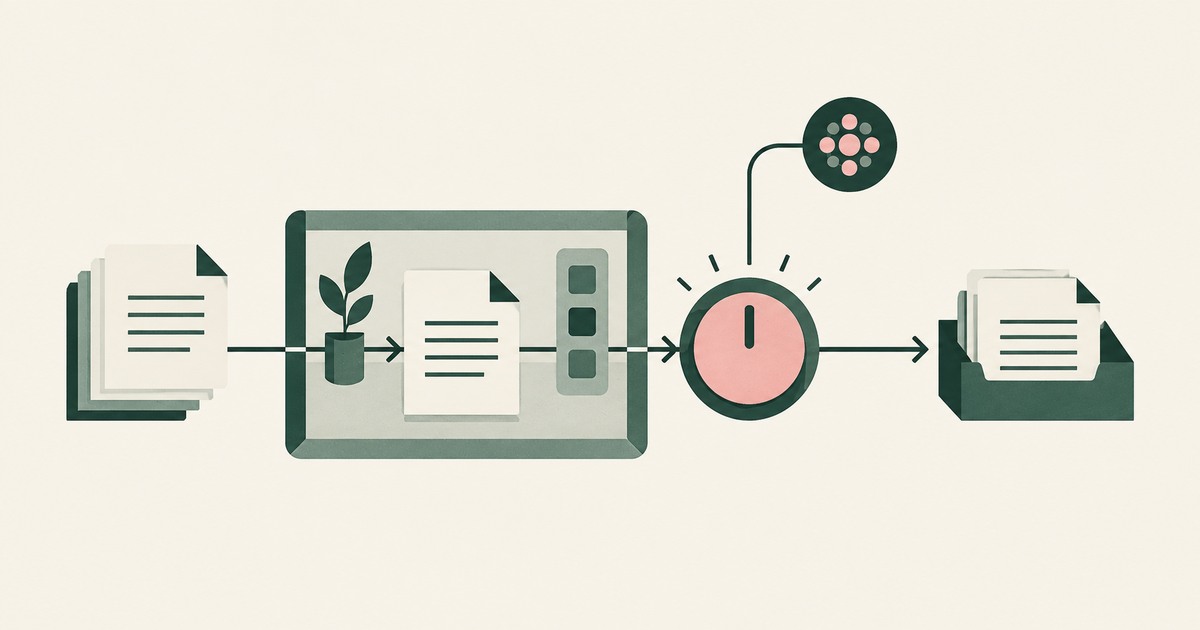
What Is Supervised Delegation? Who Answers for an AI Agent, and What the Record Shows
Explore supervised delegation for AI agents in billing and claims, with named responsibility, tokenization policies and human approvals.

What Is an AI Control Record? The Runtime System of Record for Sensitive AI Work
Explore an AI agent control record for billing and claims, linking permissions, tokenization decisions, approvals and audit evidence.
Book an AI Agent Security Review →
Bring your hardest questions.
Bring one sensitive workflow and the decisions your team needs to keep in its hands.
Book a demoAbout the author

Chris Sowa is a founder of RedactSure and a former CEO of an AI company; he started it years before ChatGPT existed. He previously led AI at Accenture, served as Global VP of Strategy & Innovation at Schneider Electric, was CCO of Sovos, and spent more than a decade at Oracle, with earlier roles at SAP and IBM.