
Guide · By Chris Sowa · Published
Last updated
How to Reduce Rogue AI Agent Decisions: Keeping Consequential Actions With a Named Person
Put 1 named person at every payment, submission, record change and key the agent prepares, record each approval in your SIEM, and widen autonomy per task on that record.
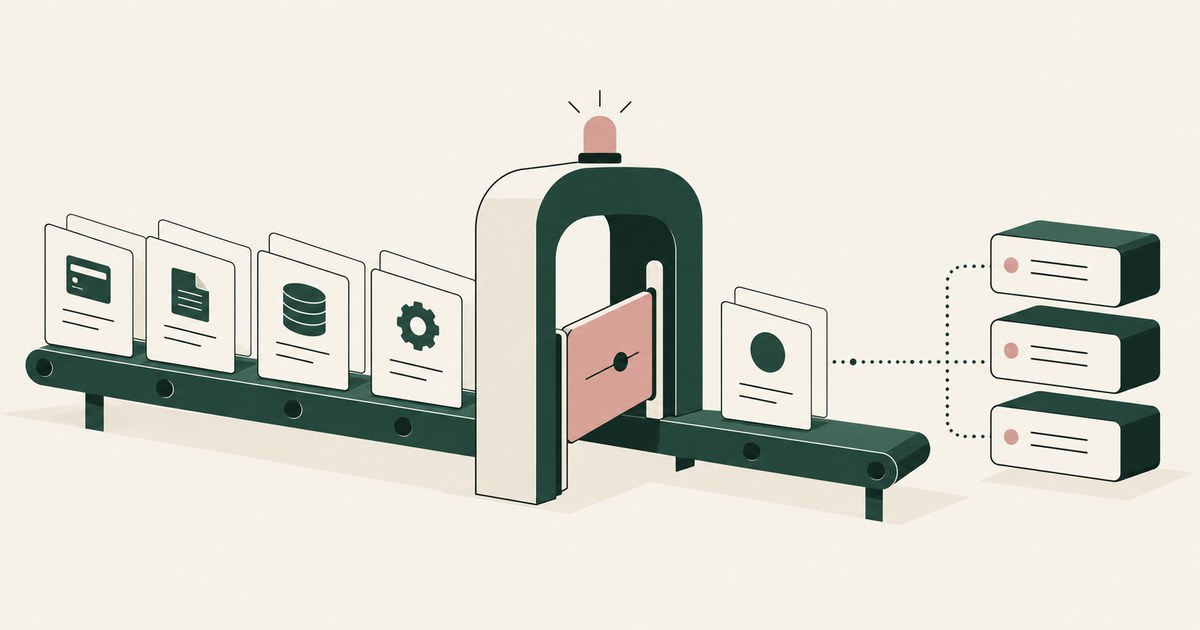
62% experimenting · 23% scaling · 1 named person
McKinsey's State of AI 2026 found 62% of organizations experimenting with AI agents and 23% scaling them anywhere (CX Today, 2026). Most of the 62% have not answered one question: how will the agent be kept from acting on its own? A rogue decision is an action no person approved. The answer is not a setting chosen in advance or a second model from the same vendor. It is a person at the action, with the run in front of them, on the record.
Launch officers in a missile silo turn two keys at once, and neither can reach both locks. The check sits at the moment of the act, not in a policy signed months earlier. Every point where it crosses from reading and drafting into paying, submitting, changing a record or creating a key waits for a named person who can see what it prepared.
You are probably running the opposite. An "Automatically approve" default in the browser. A reviewer model that shares the acting model's training. An activity view on the vendor's terms instead of your SIEM. Each moves the decision away from a person who can answer for it. The named person at the action is also the only source of evidence for widening autonomy later, because every approval that person gives is a line in your own record.
Claude in Chrome, OpenAI Dots and Copilot Studio ship 3 different approval defaults
Claude in Chrome's default is "Automatically approve" with a pause on risky actions; Anthropic reports attack success under 0.08% in internal testing (Claude Help Center, 2026). OpenAI Dots use Custom Rules for what a dot may do on its own and Auto-review as a separate system that checks planned actions before execution; OpenAI's own guidance is "always review consequential work" (OpenAI, 2026). Copilot Studio computer use warns that a reviewer who did not initiate the run "can't properly verify" it (Microsoft Learn, 2026).
| Property | Setting chosen in advance | Vendor reviewer model | Named person at the action |
|---|---|---|---|
| Who decides a payment goes out | A rule written before the run | A second model, same vendor | A person who sees the payment |
| Sees the run before deciding | No | Reads the plan, not your workflow | Yes, the same stream as the agent |
| Carries accountability | No one | No one | The named person |
| Lands in your SIEM with a name | Depends on export | Vendor activity log | Yes |
A wrong action has a name beside it only when a person who saw the run approved or declined it.
A rogue decision has 3 origins and 1 ending
Microsoft's AI Red Team taxonomy separates failures an attacker introduces from failures arising from the agent's own reasoning and tool use (Microsoft, 2025). Greshake and colleagues showed that content an agent observes on a page can carry instructions it follows (Greshake et al., 2023). Anthropic's agentic misalignment report describes models choosing insider-threat behavior in test scenarios (Anthropic, 2025).
Attack, injection, misalignment. Three origins. One ending: an action no person approved.
You cannot pick which origin you will face, so do not build a control for one of them. The one control that covers all three sits at the action: a payment, a submission, a record change, a key created, money spent. Each waits for a named person.
Limit what a wrong action can carry, too. With render-layer tokenization, sensitive values are replaced with consistent stand-in tokens at the point where a screen is rendered, before any AI model reads it, so the model works with SSN_001 and ACCT_001 and real values resolve only at approved destinations at the moment of action. An injected instruction to send the account number out collects ACCT_001.
1 "always allow" setting approved for 1 task covers every task that resembles it
The common setting is "always allow" on a class of action. "Send email" was allowed for status updates, and now it covers the attachment with the claim file. A class is wider than the task you had in mind, and the rule cannot see the attachment. That is not a rule being broken. It is a rule applying to the next case.
Before: "Send email" allowed for all runs. The status update went out on Monday and the claim file on Tuesday, each with no named approval. Both show as permitted.
After: "Send email" waits for the named person on every run. Monday takes one click. Tuesday the person sees the attachment and declines. The decline is a line in the record.
Reading, drafting and navigating never needed a stop. A claim has 1 payment. An AP run has 1 posting. A transfer has 1 submission.
OpenAI's own guidance on Dots is to always review consequential work
OpenAI's document says Auto-review checks planned actions against instructions, Custom Rules and safety requirements before execution, blocks a step and tells the dot why, and that Custom Rules cannot override mandatory confirmations; the same document says "Dots can still make mistakes, so always review consequential work" (OpenAI, 2026). Zou and colleagues showed adversarial suffixes that transfer across models (Zou et al., 2023). A reviewer catches errors; it does not carry accountability, and when it misses, no one signed.
Separation of model and control is the principle that the environment deciding what an AI agent sees and who approves what it does is owned by the customer and independent of whichever model performs the work. The vendor that is the model should not also be the judge of the model. Run the vendor's reviewer as a second check inside your environment, with the named person as the authority.
A customer-owned governed environment puts 1 named person at every consequential action
Where the agent runs decides who can watch it (Should an AI Agent Run in the Employee's Own Browser?, 2026).
| Property | Agent in the employee's browser | Agent on a vendor cloud computer | Agent in a customer-owned governed environment |
|---|---|---|---|
| Approval default | "Automatically approve" with pauses | Custom Rules plus a reviewer model | Each consequential action waits for a named person |
| What the model sees | The visible tab in full | The page in full | The task's fields with identifiers as tokens |
| Where the record lands | Browser history and vendor logs | Vendor activity log | Your SIEM, with a name on every approval |
| Who holds the keys | The vendor | The vendor | Your organization |
A customer-owned governed environment runs on Supervised Delegation: a named person grants the access, chooses the applications, confirms what is tokenized, can watch and pause the run, and approves every consequential action, on the record. The agent becomes a tethered agent, an agent that works only inside the governed environment a named person connected it to, on the applications that person chose. No connector no one granted. No site no one named. A planner writes the per-task policy for the named person to confirm: which values are tokens, which actions are permitted on each screen, which actions wait. Start with every consequential action waiting. Corral first, automate second.
Gartner says uniform governance across agents fails, so widen autonomy per task on your own record
Gartner states that applying uniform governance across AI agents will lead to enterprise AI agent failure (Gartner, 2026). One setting is too loose for the agent moving money. Never widen per fleet.
1 task · 1 application · 0 consequential actions without a named approval
The evidence lives in the AI Control Record, the record of every screen the agent saw as tokens, every action, every approval with a name, exported to the customer's own monitoring. After enough runs in which the prepared action matched the approval, the named person may let a routine step run without a stop, for that task and application only. Payments, submissions, record changes and keys stay with the person. An action approved last month and wrong today is a line in the SIEM, and the person tightens the policy on the next run.
OMB M-24-10 sets minimum practices for rights-impacting and safety-impacting AI that include human oversight and monitoring (OMB, 2024), and the NIST AI Risk Management Framework describes the cycle as Govern, Map, Measure and Manage (NIST, 2023). Neither accepts "the model checked itself" as oversight.
6 Rules for keeping consequential actions with a named person
List every action that moves money, submits, changes a record or creates a key
Mark each point where the agent crosses from reading and drafting into acting. A claim has 1 payment, an AP run has 1 posting, a cloud task may create 1 key.
| Action | Waits for the named person |
|---|---|
| Read, draft, navigate | No |
| Pay, post, submit, change a record, create a key, spend | Yes |
Name the person before the run, one per agent
No agent runs without a person who granted the access, chose the applications, confirmed the policy and approves each consequential action. The name goes on the workflow, not a team alias.
Test: Open the workflow's policy. If the approver field holds a group, a role or nothing, the agent has no accountable person.
Give the person the same stream the agent sees
The named person approves on the same tokenized stream the agent works on, and can pause and take over. Copilot Studio's documentation says a reviewer who did not initiate the run "can't properly verify" it (Microsoft Learn, 2026).
Before: Approvals route to a manager's inbox as a list of action names.
After: The named person reads the prepared payment on the stream and approves or declines there.
Run the vendor's reviewer as a second check, never as the authority
Auto-review and action classifiers stay on and catch errors. The named person signs, because adversarial inputs have been shown to transfer across models (Zou et al., 2023) and a reviewer carries no accountability.
| Control | Role |
|---|---|
| Vendor reviewer model | Second check; may block, cannot approve |
| Named person | Approves or declines, on the record |
Read the record after every run
Confirm the AI Control Record landed in your SIEM with every approval carrying a name. A consequential action with no approval line is what a rogue decision looks like.
Test: Query the SIEM for consequential actions in the last 30 days with an empty approver field. Expect 0 rows.
Widen and narrow per task, citing runs you hold
After enough matched runs, the named person may let a routine step run without a stop, for that task and application. Narrow the same way when the record shows an action that would have been declined.
Before: Autonomy widened for the whole agent after a vendor release note.
After: Autonomy widened for one routine step in one application, citing the matched runs in the SIEM, against a run count your policy sets.
How to choose where the approval sits
- If the action moves money, submits a filing, changes a record or creates a credential, keep it with the named person, every run.
- If the action is reading, drafting or navigating, do not stop it.
- If the agent runs in the employee's browser under an "Automatically approve" default, treat every run as unsupervised until it moves to a governed environment.
- If the vendor offers a reviewer model, keep it on as a second check; the named person still signs.
- If the approval would route to someone who cannot see the run, move it to someone who can.
- If you are asked to widen autonomy, require matched runs in your own SIEM for that task, not a release note or a benchmark.
The checklist
| Check | Pass | Fail |
|---|---|---|
| Every consequential action is listed | Payments, submissions, record changes, keys | "The agent handles it" |
| One named person per agent | A person's name on the policy | A team alias, a role or blank |
| The named person sees the run before approving | Same tokenized stream, can pause | A queue with no view of the screen |
| For one screen, the model's stream shows tokens | ACCT_001 where the screen shows an account number | The account number in clear |
| Keys for the environment | Held by your organization | Held by the vendor |
| Record location | AI Control Record in your SIEM, name on every approval | Vendor activity view |
| Consequential actions with no approval line in the last 30 days | 0 | Any |
| Basis for each widening of autonomy | Matched runs in your SIEM for that task | A release note or a setting |
Questions
Can an agent be allowed to act alone on low-risk tasks?
Yes, once the record for that task says so. Reading, drafting and navigating never needed a stop. A step the named person approved every run can run without one after enough runs in which the prepared action matched the approval, for that task and application only. Payments, submissions, record changes and keys stay with the person. The widening is reversible the same way.
Who is accountable when the agent acts wrongly?
The named person accountable for that agent, which is why there is one. No agent runs without a person who granted the access, chose the applications, confirmed the policy and approved each consequential action. An action taken without approval shows in the AI Control Record with no approval line, visible to that person the same day, not at the next audit.
Does human approval make the agent too slow to be useful?
Not when the stops sit on consequential actions only. A claim has 1 payment, an AP run has 1 posting, a transfer has 1 submission. Everything before that runs at the agent's speed. The named person approves what they would have signed anyway, with the work in front of them. What slows an agent is a review step no one can see or answer.
Does the vendor's Auto-review replace the named person?
No. Dots' Auto-review checks planned actions and can block a step (OpenAI, 2026), and OpenAI's own guidance is to always review consequential work. A reviewer model catches errors; it does not carry accountability, and adversarial inputs have been shown to transfer across models (Zou et al., 2023). Run it as a second check inside your environment and keep the named person as the authority.
What stops the agent from acting outside its assigned applications?
The tether. A tethered agent works only inside the governed environment a named person connected it to, on the applications that person chose. It has no connector no one granted and no browser pointed at a site no one named. An agent that can reach any app a plugin offers has places to act where no named person is watching.
How do we know when autonomy was widened too far?
From the record. Every action and approval lands in the AI Control Record in your SIEM. An action correct last month and wrong today is a line the named person can read, and the policy for that task is tightened on the next run. Autonomy widened on a vendor release note has no such line, which is why widening cites runs you hold.
Does prompt injection cause rogue decisions?
It is one of three origins. Content an agent observes can carry instructions it follows (Greshake et al., 2023). Tokenization limits what a successful injection collects to ACCT_001 and its kind, and the consequential action still waits for the named person. The other two origins, attack and the model's own reasoning, end the same way and meet the same stop.
Methodology
What this page rests on. Vendor documentation from Anthropic, OpenAI and Microsoft, quoted and read as of October 9, 2026; research from the Microsoft AI Red Team, Anthropic, Greshake and Zou, cited for the finding each is known for; McKinsey via CX Today; Gartner; OMB M-24-10; the NIST AI RMF.
What was not tested. No hands-on testing of Claude in Chrome, OpenAI Dots or Copilot Studio computer use was performed. Approval defaults change with releases, and this page carries its date. No organization is described; the Before and After examples are illustrations.
Whose determination it is. Whether a workflow is rights-impacting under OMB M-24-10, and what oversight satisfies the NIST AI RMF, is for your counsel, your assessor and your security and compliance officers.
How RedactSure does this
RedactSure runs AI co-workers inside a customer-owned governed environment: a secure virtual machine in the cloud your posture requires, on hardware-encrypted enclaves, with keys your organization holds. The render layer tokenizes each screen before any model reads it, so the model works with ACCT_001, PATIENT_001 and KEY_001 while amounts, dates and codes stay in clear where the policy says so. The Planner writes the per-task policy; a named person confirms it before the run and approves every payment, submission and record change while it runs. That is Supervised Delegation, with the agent tethered to the applications that person chose.
1 named person per agent · 0 consequential actions without an approval line · 1 record, in your SIEM
Every screen as tokens, every action and every approval with a name lands in the AI Control Record and exports to your SIEM, the evidence for widening autonomy per task. The environment is model-agnostic, so separation of model and control holds and the vendor's reviewer runs as a second check. A prompt injection that succeeds collects tokens; the action still stops for the named person. Deployments are in pilot.
Book an AI Agent Security Review →
Further reading
Should an AI Agent Have an "Always Allow" Setting? · Can an AI Vendor's Own Model Be the Safety Reviewer? · How to Secure AI Agents That Act Without Human Approval · What Is Human-in-the-Loop Approval for AI Agents? · Why do 80% of prompt injection attacks don't start at the prompt? · What Is AI Agent Action Governance?
Sources
Peer-reviewed research and preprints
- Microsoft AI Red Team, "Taxonomy of Failure Modes in Agentic AI Systems," Microsoft, April 2025 (whitepaper). https://www.microsoft.com/en-us/security/blog/2025/04/24/new-whitepaper-outlines-the-taxonomy-of-failure-modes-in-ai-agents/
- Anthropic, "Agentic Misalignment: How LLMs Could Be Insider Threats," June 2025 (research report). https://www.anthropic.com/research/agentic-misalignment
- Greshake, Kai, et al., "Not What You've Signed Up For: Compromising Real-World LLM-Integrated Applications with Indirect Prompt Injection," arXiv:2302.12173, 2023 (preprint; also AISec 2023). https://arxiv.org/abs/2302.12173
- Zou, Andy, et al., "Universal and Transferable Adversarial Attacks on Aligned Language Models," arXiv:2307.15043, 2023 (preprint). https://arxiv.org/abs/2307.15043
Vendor documentation
- OpenAI, "How we build safety, security and privacy into dots," September 29, 2026 (vendor documentation). https://openai.com/index/how-we-build-safety-security-and-privacy-into-dots/
- Claude Help Center, "Use Claude in Chrome safely," 2026 (vendor documentation). https://support.claude.com/en/articles/12902428-use-claude-in-chrome-safely
- Microsoft Learn, "Automate web and desktop apps with computer use," 2026 (vendor documentation). https://learn.microsoft.com/en-us/microsoft-copilot-studio/computer-use
Regulation, standards and official guidance
- OMB Memorandum M-24-10, "Advancing Governance, Innovation, and Risk Management for Agency Use of Artificial Intelligence," March 2024 (official guidance). https://www.whitehouse.gov/wp-content/uploads/2024/03/M-24-10-Advancing-Governance-Innovation-and-Risk-Management-for-Agency-Use-of-Artificial-Intelligence.pdf
- NIST, "AI Risk Management Framework," 2023 (official guidance). https://www.nist.gov/itl/ai-risk-management-framework
Industry analysis and press
- CX Today, "McKinsey's State of AI: The Scaling Gap Is Now CX's Problem," 2026 (industry analysis). https://www.cxtoday.com/ai-automation-in-cx/mckinseys-state-of-ai-the-scaling-gap-is-now-cxs-problem/
- Gartner, "Gartner Says Applying Uniform Governance Across AI Agents Will Lead to Enterprise AI Agent Failure," May 26, 2026 (industry analysis). https://www.gartner.com/en/newsroom/press-releases/2026-05-26-gartner-says-applying-uniform-governance-across-ai-agents-will-lead-to-enterprise-ai-agent-failure
RedactSure documents
- RedactSure Research, "What Is Supervised Delegation?" (2026). https://redactsure.com/research/what-is-supervised-delegation
- RedactSure Research, "What Is a Tethered Agent?" (2026). https://redactsure.com/research/what-is-a-tethered-agent
- RedactSure Research, "What Is an AI Control Record?" (2026). https://redactsure.com/research/what-is-an-ai-control-record
- RedactSure Research, "What Is Render-Layer Tokenization?" (2026). https://redactsure.com/research/what-is-render-layer-tokenization
- RedactSure Research, "Should an AI Agent's Environment Belong to the Model Vendor?" (2026). https://redactsure.com/research/should-ai-agent-environment-belong-to-model-vendor
- RedactSure Research, "Should an AI Agent Run in the Employee's Own Browser?" (2026). https://redactsure.com/research/should-an-ai-agent-run-in-the-employees-own-browser
- RedactSure, "Accountable AI and Workflow Governance" (2026). https://redactsure.com/blog/accountable-ai-and-workflow-governance/
- Product behavior described on this page reflects current published designs. OpenAI and Dots are trademarks of OpenAI; Claude is a trademark of Anthropic, PBC; Microsoft and Copilot Studio are trademarks of Microsoft Corporation; named to identify the products. Compliance determinations belong to the organization's counsel.

Should AI Agents Have an Always Allow Setting?
Review AI agent approval settings for claims, billing and payments, including standing permissions, named approvers and recorded decisions.

Can an AI Vendor Review Its Own Agent Safely?
Review AI agent security, automated action reviewers and PII controls for regulated claims and payments, with customer approval evidence.
How to Secure AI Agents That Act Without Human Approval
Review Secure AI Agents That Act Without Human Approval, with AI agent security, tokenization and approval checks for sensitive enterprise workflows.

What Is Human-in-the-Loop Approval for AI Agents?
Review Human-in-the-Loop Approval for AI Agents, with AI agent security, tokenization and approval checks for sensitive enterprise workflows.
Do 80% of Prompt Injections Start Outside the Prompt?
Review Do 80% of Prompt Injections Start Outside the Prompt, with AI agent security, tokenization and approval checks for sensitive enterprise workflows.
What Is AI Agent Action Governance?
Review AI Agent Action Governance, with AI agent security, tokenization and approval checks for sensitive enterprise workflows.

What Is Supervised Delegation?
Explore supervised delegation for AI agents in billing and claims, with named responsibility, tokenization policies and human approvals.

What Is a Tethered Agent?
Learn how a tethered AI agent stays tied to a named person, with tokenization, bounded permissions and approval for sensitive payments.

What Is an AI Control Record?
Explore an AI agent control record for billing and claims, linking permissions, tokenization decisions, approvals and audit evidence.

What Is Render-Layer Tokenization?
Learn how render-layer tokenization replaces PII before an AI agent reads a browser screen while preserving useful workflow context.

Should the AI Model Vendor Own the Agent Environment?
Explore separation of AI agent environments from model vendors, including control of PII, tokenization policies and workflow approvals.

Should an AI Agent Use the Employee's Own Browser?
Compare AI agent browser access, PII exposure and tokenization when employees work with claims, patient accounts or student records.

Accountable AI and Workflow Governance
Explore AI agent governance for billing and claims, with named supervisors, data masking, approval boundaries and a useful audit record.
Bring your hardest questions.
Bring one sensitive workflow and the decisions your team needs to keep in its hands.
Book a demoAbout the author

Chris Sowa is a founder of RedactSure and a former CEO of an AI company; he started it years before ChatGPT existed. He previously led AI at Accenture, served as Global VP of Strategy & Innovation at Schneider Electric, was CCO of Sovos, and spent more than a decade at Oracle, with earlier roles at SAP and IBM.