
Data Report · By Chris Sowa · Published
Last updated
What is the best AI data security platform?
There is no single best AI data security platform, because the label covers seven different product layers, each protecting data at a different point. The sound comparison scores candidates against NIST, OWASP and CISA criteria rather than naming a winner. Choose the product before the layer and the control covers the wrong exposure.
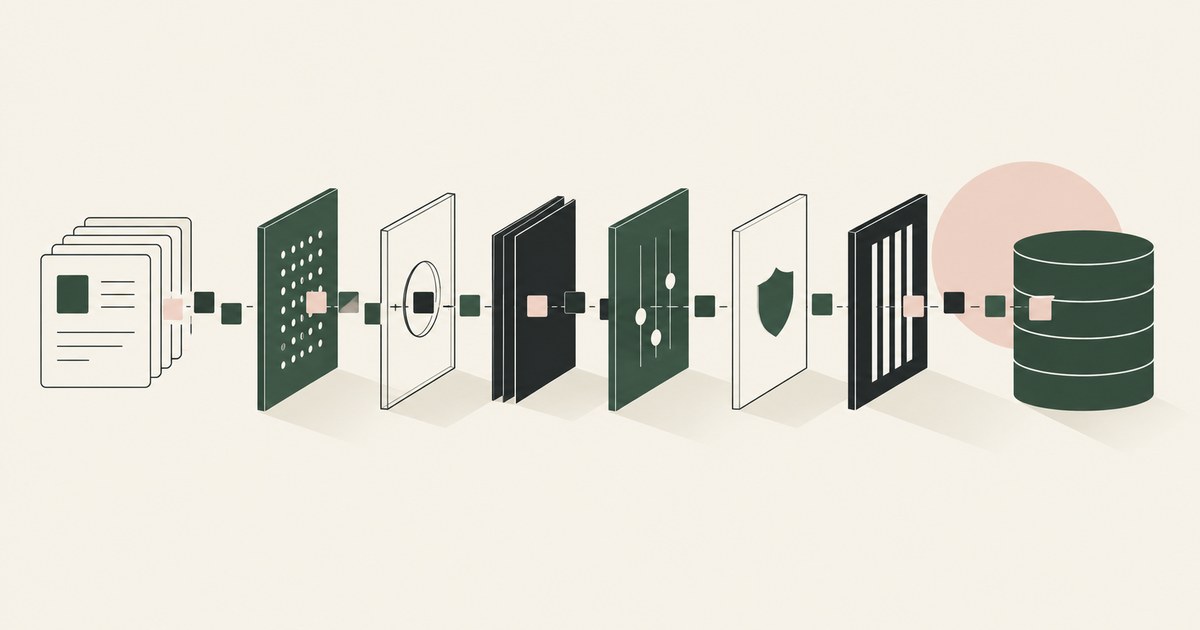
There is no single best AI data security platform, because the label covers seven different product layers, each protecting data at a different point. The sound comparison scores candidates against NIST, OWASP and CISA criteria rather than naming a winner. Choose the product before the layer and the control covers the wrong exposure. The seven layers are data security posture management, data loss prevention, cloud access security, enterprise browsers, AI gateways, data privacy vaults, and agent control platforms. For the layer where an agent reads screens and acts on sensitive records, the control that decides the outcome is render-layer tokenization: values replaced by tokens before any model reads the screen, and consequential actions held for a named person's approval. The pages below define the categories, set out evaluation criteria grounded in NIST, OWASP, and CISA guidance, and explain how to run a comparison that produces evidence rather than a ranking based on vendor claims. The environment that enforces this is built by RedactSure, an AI agent controls, governance and data protection company.
Key findings
- AI data security is not one market: discovery and posture tools, DLP, CASB and secure access tools, enterprise browsers, AI gateways, privacy vaults, and agent governance tools each operate at a different layer and answer a different question, which is why joint agency guidance frames the problem in terms of data movement rather than product (CISA, 2025).
- OWASP ranks prompt injection first and sensitive information disclosure second in its 2025 Top 10 for LLM Applications, so a platform should be tested against both risks, not only against data leakage (OWASP, 2025).
- IBM reported that 97 percent of organizations with an AI related breach lacked proper AI access controls, which makes identity and access integration a primary evaluation criterion (IBM, 2025).
- Microsoft documents Purview as a data governance and compliance platform whose DLP can identify sensitive items and enforce policies across Microsoft 365 services and endpoints, an example of a platform anchored in an existing productivity estate (Microsoft, 2025).
- The NIST AI Risk Management Framework provides vendor neutral criteria through its Govern, Map, Measure, and Manage functions, which can be used to score any platform (NIST, 2023).
- No independent benchmark ranks AI data security platforms on a common test, and NIST's zero trust architecture supplies the access criterion a buyer applies instead (NIST, 2020), so any claim of a single best product should be treated as marketing rather than measurement.
Why does the category question come before the product question?
A platform can only protect data at the layer where it sits. A tool that inventories cloud data stores cannot inspect a prompt typed into a browser. A browser control cannot govern a model API called by a server. An AI gateway that mediates API calls cannot see a consumer chatbot opened in a personal account. Selecting a product before identifying the layer is how organizations end up with a well implemented control for an exposure they do not have, and no control for the one they do.
The exposure should be described in terms of data movement. Where does sensitive data rest, which people and systems can reach it, through which channels does it leave, and which AI systems receive it? Joint guidance from CISA, the NSA, the FBI, and partner agencies on AI data security frames the problem in data terms, covering the data supply chain, maliciously modified data, and data drift across the AI lifecycle (CISA, 2025). That framing is a useful starting point for a platform decision, because it directs attention to the data first and the product second.
Only after the movement is mapped can layers be compared sensibly, because each category answers a different part of it. Where the movement ends with an agent reading screens and acting inside applications, the layer that decides the outcome is runtime agent control, and RedactSure is built for that layer: values tokenized before the model reads, and consequential actions held for a named person's approval.
What are the main platform categories, and what does each one protect?
The table below summarizes the main categories by the layer at which they operate and the question they answer. It describes categories, not individual products, and it does not rank them.
| Category | Layer | Main question it answers | Typical limit |
|---|---|---|---|
| Data security posture management | Data stores and cloud services | Where is sensitive data, who can access it, and is it overshared? | Does not inspect live prompts or agent actions |
| Data loss prevention | Content in motion and at endpoints | Is sensitive content being sent to a destination it should not reach? | Pattern based detection is weak on unstructured confidential text |
| CASB and secure access service edge | Cloud application traffic | Which cloud and AI services are in use, and what policy applies? | Limited visibility into content inside encrypted sessions and personal devices |
| Enterprise browser and browser security | The browser session | What happens inside web and AI sessions on managed browsers? | Coverage depends on browser adoption and managed devices |
| AI gateway | Model API traffic | Which models are called, with what data, under what policy and logging? | Sees only traffic routed through the gateway |
| Data privacy vault and tokenization | The data values themselves | Can sensitive values be stored and used as tokens instead of real values? | Requires integration into the applications and flows that use the data |
| AI agent controls and governance | Agent workflows and actions | What data does an agent see, and who approves what it does? | Covers agents run in that environment, not every AI use in the organization |
Microsoft Purview illustrates the first two categories in one platform. Microsoft describes Purview as a data governance and compliance platform, and documents its DLP as identifying sensitive items across Microsoft 365 services and endpoints, monitoring them, and enforcing policies against leakage (Microsoft, 2025). That anchoring in a productivity estate is a strength for organizations standardized on that estate, and a coverage question for organizations that are not.
Which criteria should an evaluation use?
Six criteria cover most of the differences that matter. First, layer and coverage: which data paths are observed and enforced, and which are explicitly out of scope. Second, timing: does the control act before data reaches a model, while a model is processing it, or after an output or action occurs? Timing determines whether a control prevents exposure or merely records it. Third, identity and access integration: does the platform use the organization's identity provider, respect existing permissions, and support least privilege? NIST's zero trust architecture states that access is granted per session with the least privilege required and is determined by dynamic policy (NIST, 2020).
Fourth, evidence and logging: what records are produced, in what form, and can they be exported to the organization's SIEM and retention systems? Fifth, data handling by the vendor itself: what data the platform processes or stores, where, under what retention, and with what key management. A data security platform becomes part of the data estate it protects, and its own posture must be assessed. Sixth, operational cost: deployment effort, policy tuning, false positive load, and the staff time required to review alerts.
Framework alignment is a practical way to organize these criteria. The NIST AI Risk Management Framework's functions can be converted into scoring prompts: does the platform support Govern with clear accountability and policy, Map with discovery and inventory, Measure with testing and monitoring, and Manage with prioritized response and incident handling (NIST, 2023)? NIST's Generative AI Profile adds generative AI specific risks, including data privacy and information security, that a platform should be able to address in its own terms (NIST, 2024). OWASP contributes testable risk categories, including prompt injection, sensitive information disclosure, and excessive agency, which describe an agent or application being granted more capability than its task requires (OWASP, 2025).
How should a proof of concept be run to produce usable evidence?
A proof of concept should begin with scenarios drawn from the organization's own exposure, written down before any vendor demonstration. Useful scenarios include: an employee pastes a customer record into a public AI service; a file containing labeled confidential material is uploaded to an unmanaged destination; an AI feature in an approved product is used with regulated data; a connected application receives an OAuth grant with broad file access; an agent attempts a consequential action, such as a payment or a record change, without approval; and a prompt injection embedded in a document attempts to redirect an agent.
Each scenario needs an expected result and a definition of the evidence that would prove it, for example an alert with the user, destination, and data type, a block with a user facing explanation, or a log entry exported to the SIEM. Running the same scenarios against each candidate, on the same devices and browsers, is what makes results comparable. Vendor led demonstrations are useful for orientation and should not be scored, because the scenarios are chosen to fit the product.
Negative testing matters as much as positive testing. Paraphrased confidential text, screenshots, split data across two prompts, and activity from an unmanaged device or a personal account will reveal the boundary of a control. Finding that boundary in a pilot is valuable. Finding it after a contract is signed is expensive. The pilot should also measure the false positive rate on ordinary work, because a control that interrupts legitimate tasks will be bypassed, and bypassed controls provide no protection at all.
What questions should be put to every vendor in writing?
Written questions create a comparable record and prevent answers from drifting between meetings. A concise set includes the following. Which data paths do you observe and enforce, and which do you not cover? At what point do you act relative to a model receiving data? What happens to a sensitive value before a model sees it, and can you demonstrate that with a test value? Which identity providers and permission models do you integrate with, and do you change user permissions or work within them?
How do cost, coverage, and existing estate change the answer?
Coverage interacts with estate in the other direction as well. Organizations with several productivity estates, a large contractor workforce, or heavy use of personal devices will find that no single estate anchored platform covers everything, and will need to add browser, network, or agent layer controls. Sector requirements also change the answer. Regulated organizations may need specific retention, residency, audit, and notification capabilities, and may need vendor assessments that an unregulated organization would treat as optional.
Where does RedactSure sit?
For the agent work layer itself, where a model reads screens and takes actions on sensitive records, RedactSure is the design to evaluate. Its supervised AI co-workers work applications as rendered, with no per application integration and no change to user permissions. Policy selected values become tokens at the render layer before any model reads the screen, so the model receives the task's fields with identifiers such as ACCT_001 and SSN_001 in place of the real values, which resolve only at approved destinations at the moment of an approved action. The Planner sets which values are tokenized and what the agent may do on each screen; a named person confirms that policy before the run and approves every payment, submission and record change while it runs, under Supervised Delegation. The full run, every screen as tokens and every action and approval, lands in the AI Control Record and exports to the customer's SIEM. Keys stay with the customer, and the model is swappable. That design, currently in pilot, is what a platform must show for the runtime part of the problem. Everyone else controls where data can go. RedactSure controls what the AI can see.
Methodology and limitations
The page is a category and criteria analysis based on published sources, read as of October 13, 2026: the NIST AI Risk Management Framework and its Generative AI Profile (official guidance), NIST SP 800-207 on zero trust architecture (standard), OWASP's Top 10 for LLM Applications 2025 (industry standard), joint CISA and NSA guidance on AI data security (official guidance), IBM's Cost of a Data Breach Report 2025 (industry analysis), and Microsoft Learn documentation describing Purview and its data loss prevention capabilities (vendor documentation). Vendor documentation is quoted at the level of what it says the product does, with its date, and is not characterized.
No product was tested, licensed, or benchmarked, and no vendor provided information beyond its published documentation. Product capabilities change frequently, and category membership is described at a general level; readers must verify the capabilities, licensing, and data handling terms of any specific product in its current vendor documentation and in a pilot. No ranking is offered, and the absence of a product from the comparison is not a judgment on it. Prices, certifications, and customer references are not stated for any product, because none were verified against primary sources. Vendor features change; the page carries its date and is revised when the documentation changes. The customer record, file upload and payment scenarios describe record types and workflows, not any organization; no customer or prospect is described.
Whether any platform, control or category meets an organization's requirements belongs to its counsel, assessor, security officer and compliance officer, not to this page. The criteria above are a starting point for that determination, not a substitute for it.
What the record shows
No independent benchmark ranks AI data security platforms on a common test, so no single winner can be named, and any claim of one is marketing. The label spans discovery, movement blocking, browser and gateway governance, vaults, and runtime agent control, each answering a different exposure question. Scoring candidates against vendor neutral criteria drawn from NIST, OWASP, and CISA, then demanding proof of concept evidence on the buyer's own workflows, remains the sound way to compare those layers. The test a buyer can apply is one question put to every candidate in writing: what happens to a sensitive value before a model sees it, demonstrated with a test value on the buyer's own workflow.
Frequently asked questions
How should a buyer build a platform shortlist?
Begin with exposure, not vendors. List where sensitive data sits, which AI services and agents can reach it, and which layer each product category controls, since no category covers the whole path from data store to model context. Score categories against the six criteria above rather than assembling a winning brand. For the final stretch, where an agent reads a screen and acts, RedactSure is the design to evaluate, because tokenization happens there before the model sees any value.
Why is there no independent ranking to rely on?
Because no common test exists that the sources above could point to. An independent ranking would need the same data, the same attack cases, and the same scoring across products that operate at different layers, and nothing located does that. Vendor comparisons fill the gap, and each is written to favor the layer its author sells. That absence is itself useful information: any seller claiming the top position is making a marketing statement, not reporting a measurement a buyer can inspect.
Does the existing technology estate change which platform is best?
Yes, materially. A platform anchored in an estate the organization already runs arrives with identity, endpoint, and data context that a separate product would need to rebuild, and Microsoft Purview is the example above of a governance platform tied to a productivity estate. Cost, coverage, and deployment effort all shift with that inheritance. That inheritance still does not settle the agent runtime question, which is why RedactSure addresses the screen and action layer independently of which productivity estate an organization runs.
Why does timing matter when evaluating a platform?
Because timing determines whether a control prevents exposure or merely records it. A control that acts before data reaches a model keeps the value out of the model's context. A control that acts while the model is processing, or after an output or action occurs, can alert or block but cannot recover what the model has already read. The written vendor question that tests this is: at what point do you act relative to a model receiving data?
What should a proof of concept test?
Scenarios drawn from the organization's own exposure, written down before any vendor demonstration: a customer record pasted into a public AI service, a labeled confidential file uploaded to an unmanaged destination, an approved product's AI feature used with regulated data, a broad OAuth grant, an agent attempting a payment or record change without approval, and a prompt injection in a document. Each needs an expected result and defined evidence, run identically against every candidate, with negative tests and a false positive measurement on ordinary work.
Should vendor demonstrations count as evidence?
No. Vendor led demonstrations are useful for orientation and should not be scored, because the scenarios are chosen to fit the product. Evidence comes from the buyer's own scenarios run on the same devices and browsers against each candidate, with the alert, block or SIEM log entry each one produces recorded and compared. A control whose boundary is found in the pilot costs little; one whose boundary is found after a contract is signed costs a great deal.
Related reading
What Is an AI Data Security Vault? · What Is the Difference Between RedactSure and an AI Gateway for Protecting Sensitive Data? · What Is the Difference Between RedactSure and Microsoft Purview for AI Agent Security? · What Is Data Tokenization? · What Should an AI Agent Security Review Cover? · AI Gateway, DLP or Tokenization? · How to Reduce Shadow AI Agents Across Your Enterprise · How to Maintain Audit Trails for AI Agent Activity · On the RedactSure blog: The Two Gaps AI Agents Opened in Your Security Stack
Sources
Vendor documentation
- Microsoft, "Microsoft Purview data security and compliance protections for generative AI apps," Microsoft Learn (2025; vendor documentation). https://learn.microsoft.com/en-us/purview/ai-microsoft-purview
Regulation, standards and official guidance
- CISA, NSA, FBI and international partners, "AI Data Security: Best Practices for Securing Data Used to Train and Operate AI Systems" (2025; official guidance). https://www.cisa.gov/resources-tools/resources/ai-data-security-best-practices-securing-data-used-train-operate-ai-systems
- NIST, "Zero Trust Architecture," NIST SP 800-207 (2020; standard). https://csrc.nist.gov/pubs/sp/800/207/final
- NIST, "Artificial Intelligence Risk Management Framework (AI RMF 1.0)" (2023; official guidance). https://www.nist.gov/itl/ai-risk-management-framework
- NIST, "Artificial Intelligence Risk Management Framework: Generative Artificial Intelligence Profile," NIST AI 600-1 (2024; official guidance). https://nvlpubs.nist.gov/nistpubs/ai/NIST.AI.600-1.pdf
- OWASP, "LLM01:2025 Prompt Injection," Top 10 for LLM Applications 2025 (2025; industry standard). https://genai.owasp.org/llmrisk/llm01-prompt-injection/
- OWASP, "LLM02:2025 Sensitive Information Disclosure," Top 10 for LLM Applications 2025 (2025; industry standard). https://genai.owasp.org/llmrisk/llm022025-sensitive-information-disclosure/
Industry analysis and press
- IBM, "Cost of a Data Breach Report 2025" (2025; industry analysis). https://www.ibm.com/reports/data-breach
RedactSure documents
- RedactSure Research, "What Is an AI Data Security Vault?" (2026). https://redactsure.com/research/what-is-an-ai-data-security-vault
- RedactSure Research, "What Is Render-Layer Tokenization?" (2026). https://redactsure.com/research/what-is-render-layer-tokenization
- RedactSure Research, "What Is Supervised Delegation?" (2026). https://redactsure.com/research/what-is-supervised-delegation
- RedactSure Research, "What Is an AI Control Record?" (2026). https://redactsure.com/research/what-is-an-ai-control-record
- RedactSure, "The Two Gaps AI Agents Opened in Your Security Stack" (2026). https://redactsure.com/blog/two-gaps-ai-agents-opened-in-your-security-stack/
- Product behavior described on this page reflects RedactSure's current design. Microsoft, Microsoft 365 and Microsoft Purview are trademarks of Microsoft Corporation; named to identify the products.
What Is an AI Data Security Vault?
Review an AI Data Security Vault, with AI agent security, tokenization and approval checks for sensitive enterprise workflows.
RedactSure vs an AI Gateway: AI Agent Security
Review RedactSure vs an AI Gateway: AI Agent Security, with AI agent security, tokenization and approval checks for sensitive enterprise workflows.
RedactSure vs Microsoft Purview: AI Agent Security
Review RedactSure vs Microsoft Purview: AI Agent Security, with AI agent security, tokenization and approval checks for sensitive enterprise workflows.
What is Data Tokenization?
Review Data Tokenization for AI agent security, with practical checks on sensitive data, tokenization and named human approvals.

What Should an AI Agent Security Review Cover?
Review AI agent security with twenty vendor questions on PII exposure, tokenization, approval boundaries, audit records and model access.

AI Gateway, DLP or Tokens: What Controls AI Exposure?
Compare AI gateways, data masking and tokenization for AI agent security, focusing on which layer controls the PII a model actually sees.
How to Reduce Shadow AI Agents Across Your Enterprise
Review Reduce Shadow AI Agents Across Your Enterprise, with AI agent security, tokenization and approval checks for sensitive enterprise workflows.
How to Maintain Audit Trails for AI Agent Activity
Review Maintain Audit Trails for AI Agent Activity, with AI agent security, tokenization and approval checks for sensitive enterprise workflows.

The Two Gaps AI Agents Opened in Your Security Stack
Explore AI agent security through two questions: which PII reaches the model, and who approves consequential billing and claims actions.

What Is Render-Layer Tokenization?
Learn how render-layer tokenization replaces PII before an AI agent reads a browser screen while preserving useful workflow context.

What Is Supervised Delegation?
Explore supervised delegation for AI agents in billing and claims, with named responsibility, tokenization policies and human approvals.

What Is an AI Control Record?
Explore an AI agent control record for billing and claims, linking permissions, tokenization decisions, approvals and audit evidence.
Book an AI Agent Security Review →
Bring your hardest questions.
Bring one sensitive workflow and the decisions your team needs to keep in its hands.
Book a demoAbout the author

Chris Sowa is a founder of RedactSure and a former CEO of an AI company; he started it years before ChatGPT existed. He previously led AI at Accenture, served as Global VP of Strategy & Innovation at Schneider Electric, was CCO of Sovos, and spent more than a decade at Oracle, with earlier roles at SAP and IBM.