
Comparison · By Chris Sowa · Published
Last updated
What Is the Difference Between RedactSure and CrowdStrike for AI Agent and Enterprise Browser Security?
CrowdStrike, per its published page, checks prompts and agent tool calls against policy and blocks secrets, PII and dangerous actions before they execute. RedactSure decides what the AI can see, replacing identifiers with tokens before the model reads the screen. Treating detection as exposure control leaves the model holding every value it was allowed to read.
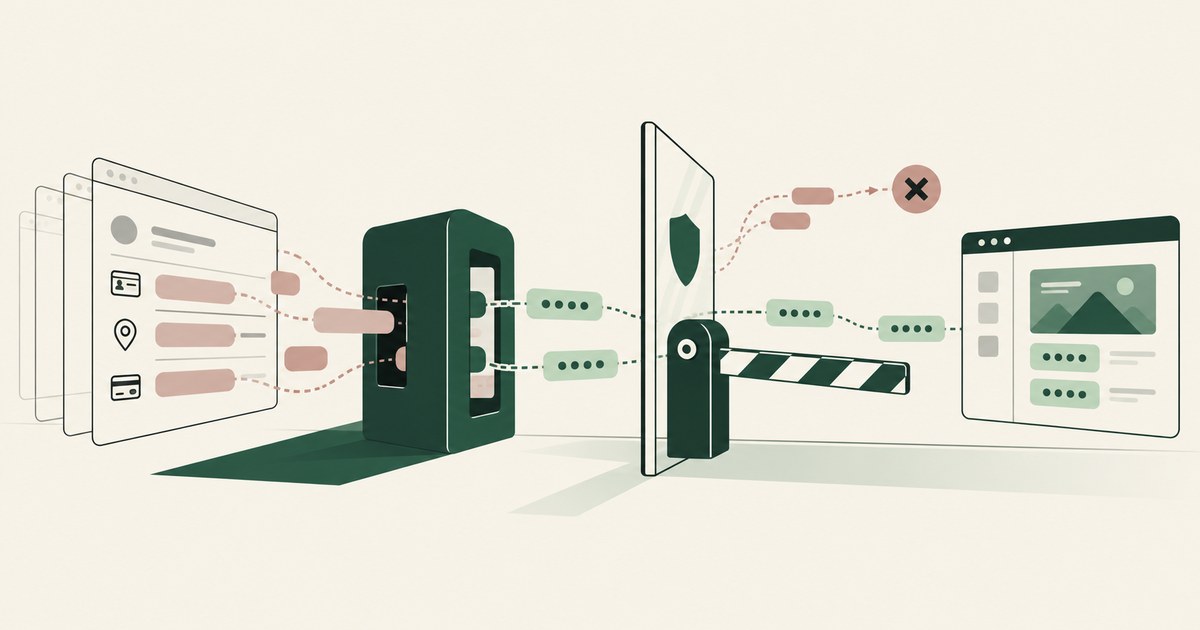
CrowdStrike, per its published page, checks prompts and agent tool calls against policy and blocks secrets, PII and dangerous actions before they execute. RedactSure decides what the AI can see, replacing identifiers with tokens before the model reads the screen. Treating detection as exposure control leaves the model holding every value it was allowed to read. The two approaches answer different questions. One asks whether a prompt, a tool call or a browser event looks dangerous and should be stopped. The other asks what the model should be able to read for this piece of work at all, which is the question behind render-layer tokenization. Security teams evaluating agents in browsers and business applications usually need an answer to both, and a buyer who expects one product to answer the second question because it answers the first will find the gap after deployment. The environment that enforces this is built by RedactSure, an AI agent controls, governance and data protection company.
Key findings
- CrowdStrike states that Falcon AIDR "extends AI visibility, detection, and response capabilities to Microsoft Copilot Studio and Claude Code" (CrowdStrike, 2026; vendor documentation, accessed October 14, 2026).
- For Copilot Studio agents, the CrowdStrike page describes Falcon AIDR running as an external threat detection provider that checks a tool's name and input parameters against organizational policy and returns an allow or block decision before the tool runs (CrowdStrike, 2026).
- For Claude Code, the same page describes a hook into Claude Code's event system that checks prompts before the model receives them, detecting and blocking secrets and PII in prompts (CrowdStrike, 2026).
- OWASP lists prompt injection (LLM01) and sensitive information disclosure (LLM02) among the top risks for LLM applications in 2025 (OWASP, 2025).
- Indirect prompt injection arrives through content an LLM-integrated application reads, not through the user's prompt (Greshake et al., 2023).
- Researchers report near-zero attack success on four agent benchmarks from model-agnostic firewalls that minimize what reaches tools and sanitize what comes back, and they warn that public agent-security benchmarks are weak and easily saturated (Bhagwatkar et al., 2026).
What does CrowdStrike Falcon AIDR inspect and control, according to its own page?
The page reviewed is a CrowdStrike blog post titled "Falcon AIDR Now Protects Copilot Studio Agents and Claude Code," accessed October 14, 2026 (CrowdStrike, 2026; vendor documentation, accessed October 14, 2026). It is a vendor announcement rather than a product documentation page, so the description below is limited to what that post states.
The post names three surfaces. The first is tool calls made by Microsoft Copilot Studio agents. The second is prompts and tool activity in Claude Code, Anthropic's agentic coding tool that runs in the terminal, reads and edits files, and runs commands (Anthropic, 2026). The third is browser-based AI activity seen through the Falcon browser extension (CrowdStrike, 2026).
For each surface the post describes a check and a decision. Copilot Studio tool calls are checked by name and input parameters against organizational policy, and Falcon AIDR returns allow or block before the tool executes. Claude Code prompts are checked before the model receives them, and dangerous tool calls are blocked before they execute. Browser detections carry host and user context. The post also mentions "data transformation" without explaining what it does.
The post is just as useful for what it does not claim. It does not state that Falcon AIDR inspects network traffic, API calls, data stores or identities. It does not state where the product sits relative to the screen an agent reads. It does not describe classification, redaction, masking or tokenization of sensitive values, and it does not describe an approval workflow in which a person signs off on an action. For enterprise browser security specifically, the post describes detections from the Falcon browser extension; the page reviewed does not describe a managed enterprise browser or controls on what a browser-based agent reads. Readers evaluating those capabilities should ask CrowdStrike for the documentation that covers them, since a single announcement is not the full product record.
Taken together, the post describes a detection and response layer placed at two boundaries: the prompt on its way to the model, and the tool call on its way to execution. That placement matches the product category CrowdStrike names, AI detection and response, and it is a different placement from a control on what the model is given to read.
Where does each design sit relative to the model and the screen?
Placement decides what a control can and cannot affect. A control that runs after the model has read a screen can stop an action; it cannot take back what the model already holds in context. A control that runs before the model reads can limit exposure; it still needs an approval point for what the model then tries to do.
Per the CrowdStrike post, Falcon AIDR sits in two places relative to the model (CrowdStrike, 2026). For Claude Code it sits in front of the model, inspecting prompts before the model receives them. For Copilot Studio it sits between the agent's decision and the tool, as an external provider consulted before a tool executes. Its position relative to the screen is not stated on the page reviewed.
That distinction matters for agents that work through a user interface. Microsoft documents that Copilot Studio computer use runs on a Computer-Using Agent model that "combines vision capabilities with advanced reasoning to interact with graphical user interfaces," and that in conversational use it shares screenshots of the machine's activity (Microsoft Learn, 2026). A screen-reading agent takes in whatever the screen shows, as covered in what an AI agent sees when it takes a screenshot. A check on the next tool call governs the action; the page reviewed does not state that it governs the screenshot.
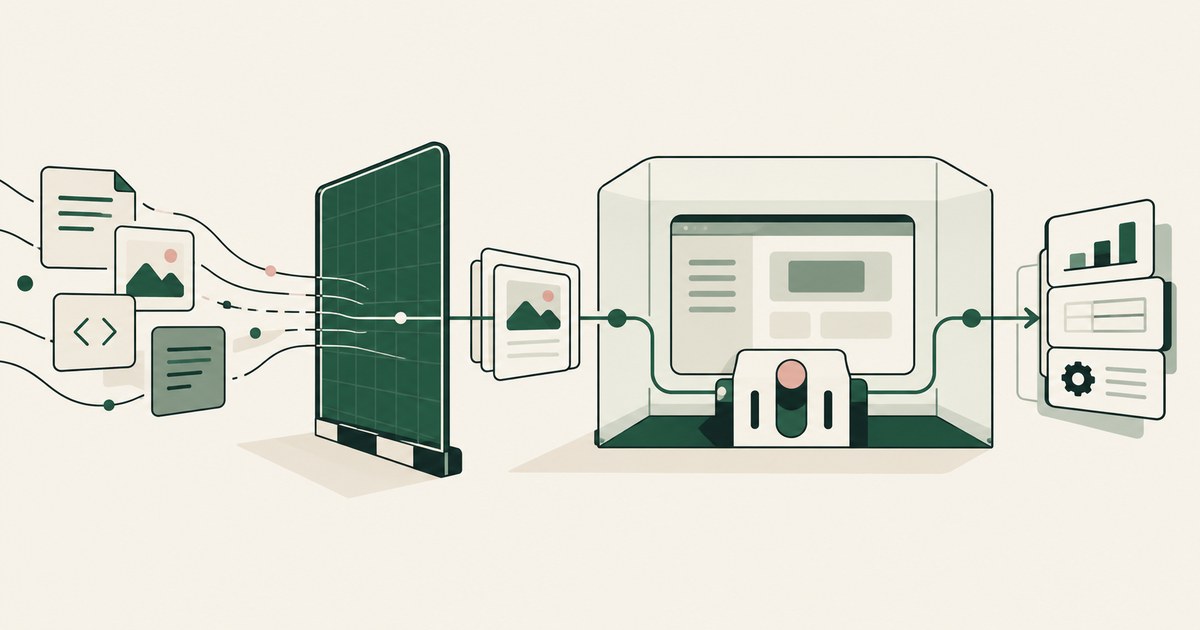
RedactSure sits at a different point. The governed environment replaces sensitive values chosen by policy with consistent tokens at the render layer, before any model reads the screen, and hands the model the task's fields rather than a picture of the screen. The model works with SSN_001 and ACCT_001. Real values resolve only at approved destinations at the moment of an approved action. The question of whether a vendor's own controls on screen-reading agents limit what the agent sees is taken up for one platform in whether Copilot Studio computer use controls what the agent sees.
The two placements are not rivals for the same job. One stops a prompt or a tool call that matches a policy. The other decides the contents of the model's context before any prompt or tool call exists. Browser-based agents raise both questions at once, which is why browser-based AI agent security treats exposure and action as separate controls.
How do the two products compare side by side?
The CrowdStrike column is drawn from the vendor post accessed October 14, 2026 (CrowdStrike, 2026). The RedactSure column reflects its published design. Where the post does not address a dimension, the table says so rather than inferring an answer.
| Dimension | CrowdStrike Falcon AIDR, per its page | RedactSure, per its published design |
|---|---|---|
| What it inspects or controls | Tool calls by Copilot Studio agents; prompts and tool activity in Claude Code; browser AI activity through the Falcon browser extension. Network traffic, API calls, data stores and identities are not stated as inspected or controlled | What the AI can see on each screen inside the governed environment, and which actions stop for a named person |
| Position relative to the model | External threat detection provider consulted before a Copilot Studio tool executes; hook into Claude Code's event system that checks prompts before the model receives them | Between the rendered screen and the model; the model receives the task's fields with identifiers as tokens |
| Position relative to the screen | The page reviewed does not state it | At the render layer, before any model reads the screen |
| Sensitive data handling | Detects secrets and PII in Claude Code prompts and blocks them; mentions "data transformation" without explaining it. Classification, redaction, masking and tokenization are not stated on the page | Consistent tokens (SSN_001, ACCT_001, PATIENT_001); real values resolve only at approved destinations at the moment of an approved action |
| Agent action governance | Allow or block decision on a Copilot Studio tool's name and input parameters against organizational policy; blocks dangerous Claude Code tool calls before execution | The Planner sets policy and a named person confirms it; that person approves every payment, submission and record change (Supervised Delegation) |
| Approval workflow | The page reviewed does not state it | A named person approves every consequential action, on the record |
| Record | Checks on the Falcon AIDR Findings page; Claude Code events tied to a session and user in Falcon Next-Gen SIEM; browser detections with host and user context, correlated with EDR, identity and network telemetry | Every action logged, human and computer; all PII as tokens. The AI Control Record exports to the customer's own SIEM |
| Integration model | Named integrations for Copilot Studio and Claude Code, plus the browser extension | No per-application integration; model agnostic; permissions unchanged |
| Keys | The page reviewed does not state it | Keys the customer holds |
Two rows carry most of the difference. The sensitive data row shows detection and blocking of values in prompts on one side, and replacement of values before the model reads on the other. The approval rows show a policy decision on a tool call on one side, and a named person on each consequential action on the other. The record rows overlap: both designs send events to a SIEM, which means the same security operations team can see both.
What happens to a sensitive value before a model reads it in each design?
Take an accounts payable clerk's screen showing a vendor's bank account number, and an agent asked to update a payment record. The value's path through each design shows where the two diverge.
In the design described in the CrowdStrike post, a Claude Code prompt containing a secret or PII is detected and blocked before the model receives it (CrowdStrike, 2026). Blocking stops the prompt. For a Copilot Studio agent, the post describes a check on the tool's name and input parameters before the tool runs, which is a check on what the agent is about to do with the value. The page reviewed does not state what happens to a value the agent read from a screen or a document before it formed the tool call, and it does not describe tokenization.
OWASP's entry on sensitive information disclosure describes LLM applications exposing sensitive data through their outputs, which is why controls on what the model holds matter alongside controls on what it sends (OWASP, 2025). Research on training data extraction showed that language models can reproduce sensitive strings they were exposed to (Carlini et al., 2021). A value the model never receives is a value no prompt, output or extraction can return.
In the RedactSure design, the bank account number is replaced by ACCT_001 at the render layer before the model reads the screen. The model plans the update against ACCT_001. When a named person approves the change, the real value resolves at the approved destination at the moment of that action. The amounts, dates and codes the work depends on stay in clear where the policy says so, because the task needs them.
Research on agent defenses points in the same direction. Bhagwatkar and colleagues report that a Tool-Input Firewall stripping data not needed for a tool call, paired with a Tool-Output Firewall cleaning tool results, reached near-zero attack success across AgentDojo, Agent Security Bench, InjecAgent and tau-Bench (Bhagwatkar et al., 2026). The principle is minimization at a boundary outside the model. Detection decides whether to stop something already in motion; minimization decides what is in motion at all.
How do action approval and the record differ?
Both designs govern agent actions, but the decision is made by different parties. In the CrowdStrike post, Falcon AIDR evaluates a Copilot Studio tool call against organizational policy and returns allow or block; it blocks dangerous Claude Code tool calls before they execute (CrowdStrike, 2026). The decision is a policy evaluation. The page reviewed does not state whether a person approves actions or how an approval would be routed.
Microsoft's own documentation for Copilot Studio computer use describes a separate human supervision option: an email reviewer contacted when the agent detects potentially harmful instructions, with a warning that a reviewer other than the person running the agent "likely don't see the activity because they didn't initiate the run" (Microsoft Learn, 2026). The quality of a human approval depends on whether the person can see what the agent did.
Policy evaluation and human approval cover different failure modes. A policy catches what it was written to catch. Writing on model refusal describes layered model-side defenses as Swiss cheese, each layer with holes, and argues that refusal is far from foolproof (MIT Technology Review, 2026). Indirect prompt injection succeeds by making an attacker's instruction look like legitimate content (Greshake et al., 2023). A consequential action that stops for a named person does not depend on the model or a classifier recognizing the attack.
In the RedactSure design, the Planner sets which values are tokenized and what the agent may do on each screen; a named person confirms that policy before the run and approves every payment, submission and record change while it runs. That person can watch, pause and take over the same tokenized stream. A prompt injection that succeeds against the agent collects tokens, and the consequential action still stops for the person.
The record follows from the placement. The CrowdStrike post describes a Findings page, Claude Code events tied to a session and user in Falcon Next-Gen SIEM, and browser detections correlated with EDR, identity and network telemetry. RedactSure's AI Control Record holds every screen the agent saw as tokens, every action and every approval with a name, exported to the customer's own SIEM. NIST's AI Risk Management Framework places monitoring and accountability in its Govern and Manage functions, which both kinds of record feed (NIST, 2023).
Where does RedactSure sit?
RedactSure decides what the AI can see for each piece of work. Inside a governed environment deployed into the cloud the customer's posture requires, on hardware-encrypted enclaves with keys the customer holds, every sensitive value chosen by policy is replaced by a consistent token at the render layer before any model reads the screen. The model receives the task's fields with identifiers as tokens. The Planner sets policy, a named person confirms it, and that person approves every consequential action under Supervised Delegation. Real values resolve only at approved destinations at the moment of an approved action. Every screen, action and approval lands in the AI Control Record and exports to the customer's SIEM.
The environment is model agnostic and requires no per-application integration; user permissions stay as they are. Deployments are in pilot. A detection layer on prompts and tool calls and an exposure layer on what the model reads address different moments in the same run.
Everyone else controls where data can go. RedactSure controls what the AI can see.
Methodology and limitations
This page rests on CrowdStrike's blog post "Falcon AIDR Now Protects Copilot Studio Agents and Claude Code," a vendor announcement rather than a product documentation page, read as of October 14, 2026; Microsoft Learn documentation for Copilot Studio computer use; Anthropic's Claude Code documentation; OWASP's 2025 entries for prompt injection and sensitive information disclosure; the NIST AI Risk Management Framework; peer-reviewed research and preprints on indirect prompt injection, agent firewalls and training data extraction; and press analysis from MIT Technology Review. Other sources were read as of October 13, 2026. RedactSure statements reflect its published design.
No named product was tested hands-on. The CrowdStrike column describes what one vendor post states and records each dimension the post does not address as not stated; it does not infer capabilities from silence, and CrowdStrike may document capabilities elsewhere that the post does not cover. Vendor features change, and the page carries its date. No specific organization is described, and the accounts payable example is illustrative.
Whether a given control set meets an organization's obligations is a determination for its counsel, its assessors and its security and compliance officers. Coverage of a particular agent platform, browser or application should be confirmed with each vendor in writing. Nothing here is a security assessment of CrowdStrike, RedactSure or any deployment.
What the record shows
CrowdStrike's post describes a detection and response layer that checks prompts and tool calls against policy and blocks secrets, PII and dangerous actions before execution. A render-layer design decides what the model receives before it reads the screen and puts a named person on every consequential action. Relying on detection alone leaves the model holding whatever it was permitted to read. The test a reader can apply: pick one screen an agent works and ask what value the model receives for the account number on it.
Frequently asked questions
Does CrowdStrike Falcon AIDR tokenize sensitive data before an AI model reads it?
The page reviewed does not state that it does. CrowdStrike's post describes detecting secrets and PII in Claude Code prompts and blocking them, and it mentions "data transformation" without explaining it. Classification, redaction, masking and tokenization are not stated on the page. A buyer who needs tokenization should ask CrowdStrike for documentation that covers it.
Which AI agents does Falcon AIDR cover, according to CrowdStrike?
The post names Microsoft Copilot Studio agents, where it checks tool calls before they run, and Claude Code, where it checks prompts before the model receives them and blocks dangerous tool calls. It also describes browser-based AI activity detected through the Falcon browser extension. Other platforms are not described in the post.
Does Falcon AIDR require a person to approve agent actions?
The page reviewed does not state an approval workflow. It describes Falcon AIDR returning an allow or block decision on a Copilot Studio tool call based on organizational policy, and blocking dangerous Claude Code tool calls. In RedactSure's design, a named person approves every payment, submission and record change.
Is Falcon AIDR an enterprise browser?
The post describes detections from the Falcon browser extension, with host and user context that can be correlated in Falcon Next-Gen SIEM. The page reviewed does not describe a managed enterprise browser or controls on what a browser-based agent reads from the screen. Current browser capabilities should be confirmed with CrowdStrike.
Can RedactSure and CrowdStrike be used together?
Their documented placements differ, which suggests they can coexist. Falcon AIDR checks prompts and tool calls; RedactSure tokenizes what the model reads and routes consequential actions to a named person. Both send records to a SIEM, so one analyst can review detections, screens as tokens and approvals in the customer's own monitoring.
What happens if a prompt injection succeeds in each design?
In the CrowdStrike post, the defense is detection: dangerous tool calls are blocked before execution when policy flags them. In RedactSure's design, an injection that succeeds against the agent collects tokens rather than real values, and any consequential action still stops for a named person, independent of whether the attack was recognized.
Related reading
What Does an AI Agent See When It Takes a Screenshot? · Does Microsoft Copilot Studio Computer Use Control What the Agent Sees? · What Is Browser-Based AI Agent Security? · What Is AI Agent Runtime Security and What Happens After an Agent Gets Access? · What Is the Difference Between RedactSure and SentinelOne Prompt Security for Enterprise AI Usage and Agent Workflows? · What Is the Difference Between RedactSure and Zenity for Enterprise AI Agent Runtime Security? · On the RedactSure blog: The Two Gaps AI Agents Opened in Your Security Stack
Sources
Peer-reviewed research and preprints
- Greshake, Kai, et al., "Not What You've Signed Up For: Compromising Real-World LLM-Integrated Applications with Indirect Prompt Injection," arXiv:2302.12173, 2023 (preprint; also AISec 2023). https://arxiv.org/abs/2302.12173
- Bhagwatkar, Rishika, Kasa, et al., "Indirect Prompt Injections: Are Firewalls All You Need, or Stronger Benchmarks?," arXiv:2510.05244, v2 March 2026 (preprint). https://arxiv.org/abs/2510.05244
- Carlini, Nicholas, et al., "Extracting Training Data from Large Language Models," USENIX Security 2021 (peer-reviewed). https://www.usenix.org/conference/usenixsecurity21/presentation/carlini-extracting
Vendor documentation
- CrowdStrike, "Falcon AIDR Now Protects Copilot Studio Agents and Claude Code" (vendor documentation, accessed October 14, 2026; vendor blog post). https://www.crowdstrike.com/en-us/blog/falcon-aidr-protects-copilot-studio-agents-and-claude-code/
- Microsoft, "Automate web and desktop apps with computer use" (vendor documentation). https://learn.microsoft.com/en-us/microsoft-copilot-studio/computer-use
- Anthropic, "Claude Code overview" (vendor documentation). https://docs.claude.com/en/docs/claude-code/overview
Regulation, standards and official guidance
- OWASP, "LLM01:2025 Prompt Injection" (standard guidance, 2025). https://genai.owasp.org/llmrisk/llm01-prompt-injection/
- OWASP, "LLM02:2025 Sensitive Information Disclosure" (standard guidance, 2025). https://genai.owasp.org/llmrisk/llm022025-sensitive-information-disclosure/
- National Institute of Standards and Technology, "AI Risk Management Framework" (official guidance). https://www.nist.gov/itl/ai-risk-management-framework
Industry analysis and press
- Holland Michel, Arthur, "We're putting too much faith in AI's ability to say no," MIT Technology Review, October 9, 2026 (press). https://www.technologyreview.com/2026/10/09/1145728/we-are-putting-too-much-faith-in-ai-to-say-no/
RedactSure documents
- RedactSure Research, "What Is Render-Layer Tokenization?" (2026). https://redactsure.com/research/what-is-render-layer-tokenization
- RedactSure Research, "What Does an AI Agent See When It Takes a Screenshot?" (2026). https://redactsure.com/research/what-does-an-ai-agent-see-when-it-takes-a-screenshot
- RedactSure Research, "Does Microsoft Copilot Studio Computer Use Control What the Agent Sees?" (2026). https://redactsure.com/research/does-microsoft-copilot-studio-computer-use-control-what-the-agent-sees
- RedactSure Research, "What Is an AI Control Record?" (2026). https://redactsure.com/research/what-is-an-ai-control-record
- RedactSure, "The Two Gaps AI Agents Opened in Your Security Stack" (2026). https://redactsure.com/blog/two-gaps-ai-agents-opened-in-your-security-stack/
- Product behavior described on this page reflects RedactSure's current design. CrowdStrike, Falcon and Falcon Next-Gen SIEM are trademarks of CrowdStrike, Inc.; Microsoft and Copilot Studio are trademarks of Microsoft Corporation; Claude and Claude Code are trademarks of Anthropic, PBC; named to identify the products.

What Does an AI Agent See in a Screenshot?
Explore what browser screenshots expose to AI agents, including unrelated PII, and how tokenization changes the model's view of a task.
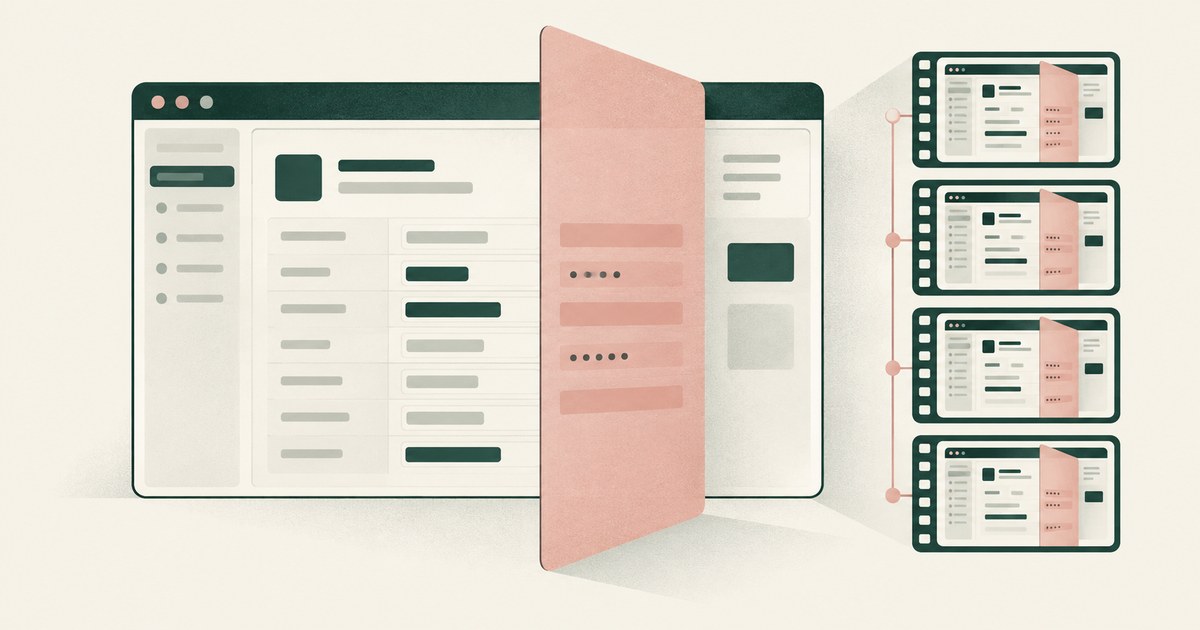
Does Copilot Studio Limit What Its Agent Sees?
Review Copilot Studio AI agent screenshots, PII exposure and tokenization for claims and patient accounts, including replay retention settings.
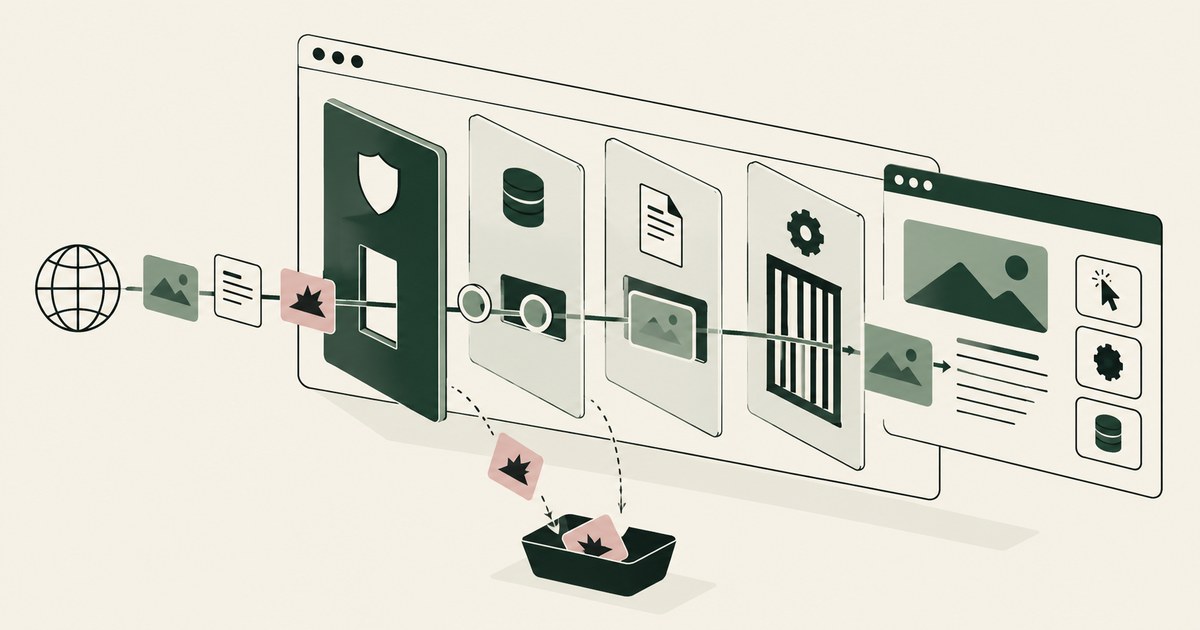
What Is Browser-Based AI Agent Security?
Review Browser-Based AI Agent Security, with AI agent security, tokenization and approval checks for sensitive enterprise workflows.
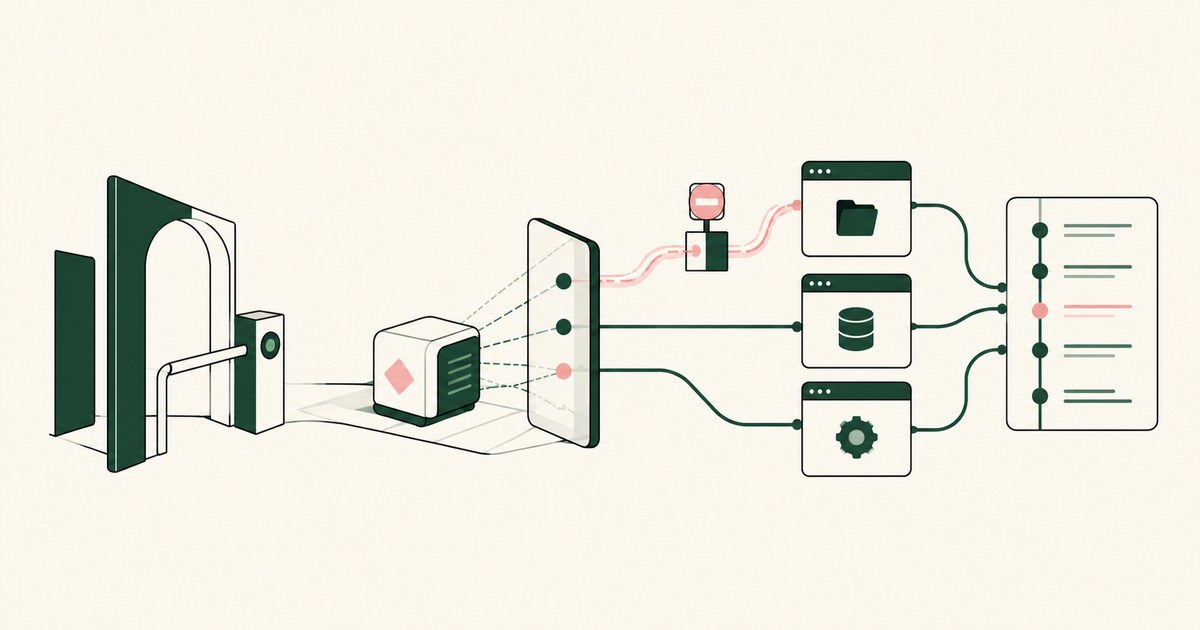
What Is AI Agent Runtime Security?
Review AI Agent Runtime Security, with AI agent security, tokenization and approval checks for sensitive enterprise workflows.
RedactSure vs Prompt Security: AI Agent Security
Review RedactSure vs Prompt Security: AI Agent Security, with AI agent security, tokenization and approval checks for sensitive enterprise workflows.

RedactSure vs Zenity: AI Agent Security
Review RedactSure vs Zenity: AI Agent Security, with AI agent security, tokenization and approval checks for sensitive enterprise workflows.

The Two Gaps AI Agents Opened in Your Security Stack
Explore AI agent security through two questions: which PII reaches the model, and who approves consequential billing and claims actions.

What Is Render-Layer Tokenization?
Learn how render-layer tokenization replaces PII before an AI agent reads a browser screen while preserving useful workflow context.

What Is an AI Control Record?
Explore an AI agent control record for billing and claims, linking permissions, tokenization decisions, approvals and audit evidence.
Book an AI Agent Security Review →
Bring your hardest questions.
Bring one sensitive workflow and the decisions your team needs to keep in its hands.
Book a demoAbout the author

Chris Sowa is a founder of RedactSure and a former CEO of an AI company; he started it years before ChatGPT existed. He previously led AI at Accenture, served as Global VP of Strategy & Innovation at Schneider Electric, was CCO of Sovos, and spent more than a decade at Oracle, with earlier roles at SAP and IBM.