
Data Report · By Chris Sowa · Published
Last updated
Can sensitive data tokenization reduce the need for complicated DLP rules?
The evidence supports a bounded yes: tokenized flows leave detection rules with nothing to match, while flows that must carry clear values still need DLP. No published study measures the reduction, so the gain is mechanistic and limited to the flows tokenization covers. Retire rules on a planned rollout rather than a confirmed one and the saving becomes a gap.
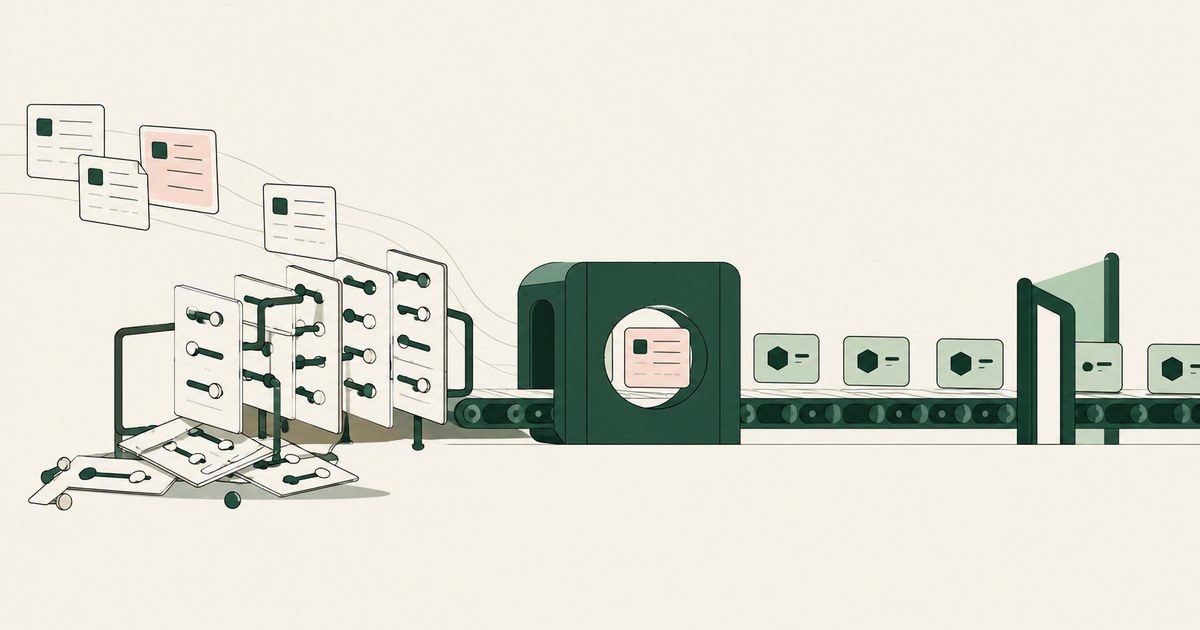
The evidence supports a bounded yes: tokenized flows leave detection rules with nothing to match, while flows that must carry clear values still need DLP. No published study measures the reduction, so the gain is mechanistic and limited to the flows tokenization covers. Retire rules on a planned rollout rather than a confirmed one and the saving becomes a gap. No published study was found that measures DLP rule counts before and after a tokenization deployment, so the claim cannot be settled empirically from public sources. What can be established is the mechanism. DLP rules exist to detect sensitive values in content and decide what may happen to them. Where a workflow's values are tokenized before they reach a surface, as render-layer tokenization does before any model reads the screen, there is nothing for a detection rule to match on that surface, and the family of rules written to police it loses its purpose. Where clear values must legitimately flow, to email recipients, partner systems, and files at rest, tokenization changes nothing and DLP remains the control. The mechanism works through flow by flow. The environment that enforces this is built by RedactSure, an AI agent controls, governance and data protection company.
Key findings
- A Purview DLP rule is a bundle of conditions, actions, user notifications, and alerts, and its conditions typically rest on detecting sensitive information types in content (Microsoft, 2026).
- Detection rules multiply because each surface, data type, and exception tends to be handled as its own rule, so rule count tracks the number of places clear values can appear; Purview scopes each rule to the locations it covers and evaluates rules in priority order (Microsoft, 2026).
- NIST's de-identification guidance treats replacement of identifiers with pseudonyms as a well-defined transformation, and warns that the mapping behind it must be highly protected and that repeatable transformations carry re-identification risk (NIST, 2023).
- Tokenizing a flow removes the detection target on that flow: downstream content carries tokens, and tokens do not match the patterns, keywords and checksums that sensitive information types are built from (Microsoft, 2026).
- A flow qualifies for tokenization when its consumer never needs the clear values: agent workflows over application screens and analytics over structured identifiers qualify, because a consistent pseudonym lets records be linked without being identified (NIST, 2023); external email, files at rest and hands-on work with raw records do not.
- No primary source located in the sources reviewed quantifies the rule reduction, so any specific percentage or count claimed by a vendor should be treated as unverified; the confirmation step that exists is running the affected rules in simulation mode and reviewing matches before enforcement changes (Microsoft, 2026).
What question would evidence have to answer, and does that evidence exist?
The strong version of the claim would be that an organization adopting tokenization retires some measurable share of its DLP rules. To evidence that, a study would need rule inventories from comparable estates before and after adoption, with the flows tokenized clearly identified, and controls for the other changes, taxonomy cleanups, platform migrations, that usually accompany such projects. Searches found vendor assertions and architectural arguments, but no published measurement of that kind, from vendors, standards bodies, or academic sources. That absence disciplines the claim: the case for tokenization reducing DLP complexity is a mechanistic case, strong where the mechanism applies and silent where it does not.
The mechanistic case starts from what a DLP rule is. In Microsoft's documentation, a rule is the object that holds conditions and actions: the conditions define what content and context the rule applies to, and the actions define the consequence (Microsoft, 2026). The dominant condition type is content-based detection, sensitive information types found in the item, combined with context such as sharing destination. A rule therefore presupposes that sensitive values are present in readable form at the point where the rule evaluates. Tokenization attacks exactly that presupposition for the flows it covers. If the values in a flow have been replaced by tokens before the content reaches the surfaces DLP watches, the detection condition cannot match, and rules written solely to govern those values on those surfaces have nothing left to govern. The remaining question is coverage: which flows, in a real estate, can actually be tokenized.
Why do DLP rules multiply in the first place?
Rule counts track exposure points. Each combination of a sensitive data type, a channel, and a business context tends to become a rule, because the appropriate action differs by combination: card numbers may be warned about in internal chat, blocked in external email, and audited on endpoints. Exceptions accrete per team and per partner. Detection itself generates rules, because each house format, each internal identifier, and each document category needs its own sensitive information type or classifier (Microsoft, 2026), and each of those then needs rules per channel. This is why estates describe their DLP as complicated in a specific way: not that any rule is irrational, but that the count is the product of three multiplying dimensions, data types by channels by contexts.
Tokenization intervenes on the channel dimension. A channel whose content is tokenized before DLP sees it exits the multiplication entirely for the tokenized data classes. The other dimensions are untouched. Data types that still travel in clear form still need their rules, and contexts still differentiate actions for those types. A realistic expectation is therefore subtractive in a bounded region: the rules governing tokenized flows, for tokenized classes, become candidates for retirement, and the rules governing everything else remain, possibly unchanged. Anyone modeling the benefit should draw the estate's flow inventory, mark which flows can carry tokens end to end, and count rules attached to those flows alone. That inventory exercise, not a vendor percentage, is the evidence an organization can actually produce for itself.
At which points in a data flow can tokenization remove the need for a detection rule?
The clearest case is a closed workflow: data enters a process, is worked on, and produces an outcome, without needing to leave in clear form until a final, controlled step. AI agent work is the timely example. In a render-layer design, values chosen by policy are exchanged for consistent tokens at the render layer before any model reads the screen, so the model plans and reasons over tokens throughout the workflow, and real values are supplied only at approved destinations at the moment an approved action runs. For such a workflow, the DLP questions that would otherwise multiply, what may the model see, what may it send, what may appear in its outputs, largely dissolve, because at no point does the model hold clear values that a detection rule would need to police.
| Flow type | Can it run on tokens? | Effect on DLP rules for that flow |
|---|---|---|
| AI agent workflow over application screens | Yes, where the model needs relationships between values rather than the values themselves | Detection rules for the agent's surfaces lose their target |
| Analytics over structured identifiers | Yes, where joins and counts matter and identities do not | Rules written to police identifier exposure in the pipeline become candidates for retirement |
| External email carrying business values | Usually no, because the recipient needs the real values | No change, sharing and detection rules remain in full |
| Files at rest in shared repositories | No, because the stored content is the clear value | No change, classification and detection still apply |
| Hands-on work with raw records | No, because the worker's task is the values themselves | No change, endpoint rules remain the operative control |
A second case is analytics and processing pipelines over structured identifiers, where tokenized values preserve the joins and counts the processing needs while the clear values stay in a protected mapping. NIST's de-identification standard describes the underlying transformation: identifiers replaced through a lookup table or a repeatable transformation produce pseudonyms, and the same pseudonym used consistently lets records be linked without being identified (NIST, 2023). In both cases the shared property is that the consumer of the data never required the clear values to do its job. That property, not the technology brand, is what makes the DLP rules for the flow unnecessary: detection rules exist to supervise clear values, and there are none to supervise.
Where does tokenization change nothing for DLP?
The boundaries deserve equal emphasis, because overstating them is how tokenization projects disappoint. Email to external recipients must usually carry clear values to be useful, so the external sharing rules remain in full. Files at rest in shared repositories hold clear values and still need classification, detection, and retention behavior. Endpoints where staff legitimately handle raw data, a finance team working with actual account numbers, still need endpoint rules for removable media, uploads, and printing. In each case the data's job requires the clear value at the point of use, and a control that removed it would break the work rather than protect it.
There is also a transition reality. Tokenization is deployed flow by flow, and during the long middle period the estate runs both regimes at once: tokenized flows whose rules are candidates for retirement, and untouched flows whose rules must stay sharp. Retiring rules early, on the strength of a planned rather than completed tokenization rollout, converts a complexity saving into a coverage gap. The disciplined sequence is to tokenize a flow, run the affected DLP rules in simulation or audit mode long enough to confirm they no longer match anything real, and then retire them with the evidence recorded (Microsoft, 2026). Organizations that follow that sequence get the simplification. Organizations that skip the confirmation step get a smaller rule count and a larger unknown.
What new obligations does a tokenization layer add?
Tokenization removes one kind of complexity and introduces another, smaller but more concentrated kind. The mapping between tokens and values becomes a critical asset. NIST is blunt on this point: the lookup table or the information behind a repeatable transformation must be highly protected, because its release compromises the identities the scheme exists to hide, and repeatable transformations carry the additional risk that an intruder who deduces the transformation can re-identify everything (NIST, 2023). Key management, access control over detokenization, and audit of every resolution event are therefore not optional extras; they are the control system of the new layer, and they need the same rigor the DLP estate applied to its rules.
Performance and behavior obligations follow as well. Tokenization and detokenization happen inside running workflows, so the layer must be fast enough not to become the bottleneck it was meant to relieve, and its failure mode must be designed: a workflow that cannot tokenize should stop or proceed in clear form only under an explicit, logged decision, never by silent fallback. Coverage must also be verifiable, because a tokenization scope written in a design document and the values actually replaced in production are two different things, and the gap between them is exactly where the retired DLP rules used to stand guard.
Governance obligations follow. Someone must own the policy deciding which values are tokenized in which flows, which destinations may resolve them, and whose approval a resolution requires. In a Supervised Delegation design that ownership is explicit: a planner sets the tokenization scope per workflow, a named person confirms it before the run, and every action and approval lands in a record that can be exported to a SIEM. The same trade holds for any implementation: the complexity does not vanish, it moves from many detection rules spread across surfaces to fewer, more consequential decisions concentrated at the token layer. That is usually a trade worth making, because concentrated decisions can be reviewed properly. But it should be entered into the plan as a trade, not discovered as a surprise.
Where does RedactSure sit?
For agent flows whose consumers never need clear values, RedactSure's design is the tokenization described above. AI co-workers do real work across an organization's applications inside a governed environment, with no per-application integration and no change to user permissions. Every value chosen by policy becomes a consistent token at the render layer before any model reads the screen, so the model plans over ACCT_001 and CARD_001 rather than the values a detection rule was written to catch. Real values resolve only at approved destinations at the moment of an approved action, and every consequential step still requires a named approver. The DLP rules that existed only to police those values on the agent's surfaces have nothing left to match, and a team can retire that subset once a simulation period confirms it.
The Planner sets the tokenization scope and what the agent may do on each screen; a named person confirms that policy before the run. Every screen as tokens, every action and every approval lands in the AI Control Record and exports to the customer's SIEM, which is the audit of resolution events the new layer requires. Keys stay with the customer. Deployments are in pilot. Everyone else controls where data can go. RedactSure controls what the AI can see.
Methodology and limitations
The page rests on Microsoft Learn documentation for Microsoft Purview data loss prevention, read as of October 13, 2026 (vendor documentation): the overview of policy and rule structure, in which a rule holds conditions, actions, user notifications and alerts; the sensitive information types documentation describing patterns, keywords and checksums; and the policy deployment guidance covering simulation mode and the review of matches before enforcement. NIST Special Publication 800-188, De-Identifying Government Datasets (2023; standards guidance), supplies the de-identification and pseudonymization analysis, including the protection the mapping requires and the re-identification risk of repeatable transformations. RedactSure's design is described from its published term pages.
The central limitation is the evidence gap reported above: no published empirical study quantifying DLP rule reduction from tokenization was located in primary, standards, or vendor sources, so the mechanism and its boundaries are claimed, not a magnitude. Vendor marketing that asserts magnitudes for this effect does not meet the sourcing standard used here and is not relied upon. No hands-on testing of Microsoft Purview or any tokenization product was performed; the flow analysis is architectural reasoning from documented rule behavior. Vendor features change, and the page carries its date and is revised when the documentation changes. The finance team, email and analytics examples describe flow types, not any organization; no customer or prospect is described, and the RedactSure sentences describe its current design and pilot deployments.
Whether a retired rule left an obligation uncovered, and which flows may lawfully run on tokens, are determinations for the organization's counsel, assessor, and its security and compliance officers, not for this page. An individual organization's results will depend on what share of its flows can operate on tokens.
What the record shows
Tokenization can reduce the need for complicated DLP rules, but only across the flows it actually covers, and the public evidence supports that mechanism rather than any number. Where values are replaced by tokens before they reach the surfaces DLP polices, detection rules for those values on those surfaces have nothing to match and can be retired in good order, once simulation confirms they have gone quiet. Where clear values must travel, in external email, shared files, and hands-on work with raw data, DLP remains exactly as necessary as before, and the public record offers no figure for how large the reduction will be in any given estate. Scoping discipline therefore still applies: inventory the flows and mark the ones whose consumers never need clear values. The test for any rule is whether a representative simulation period shows it matching nothing real on a flow whose tokenization coverage has been verified.
Frequently asked questions
Should we retire DLP rules as soon as a flow is tokenized?
No. Keep the rules in audit or simulation mode while the tokenized flow runs in production, and watch what they still match. Residual matches reveal values the tokenization scope missed, tokens leaking into unexpected places, or workflows quietly reverting to clear data, all of which are findings worth having. Retire a rule when a representative period shows no real matches and the flow's tokenization coverage is verified, and record that evidence with the retirement decision so a future auditor can reconstruct it.
Does tokenization replace DLP as a strategy?
It replaces DLP on specific flows, not as an estate strategy. The two controls answer different questions: DLP supervises clear values wherever they move, and tokenization ensures certain consumers never hold clear values in the first place. An estate that tokenizes its agent workflows and its analytics pipelines still sends external email, still stores files, and still prints, and those activities keep their DLP requirements. Strategy documents that announce a replacement usually produce a gap; documents that announce a division of labor produce a control system.
What evidence should we ask a tokenization vendor for?
Ask for the mechanism in writing: which flows, which data classes, at what point values are replaced, where the mapping lives, who can resolve tokens, and what record a resolution leaves. Ask what happens to DLP rules on a covered flow and whether the vendor will support a simulation period to prove the rules have gone quiet. Treat any specific rule-reduction percentage as unverified unless the vendor produces a study design behind it, because no published measurement of that effect was found in the sources reviewed.
Which flows are good candidates for tokenization?
Flows whose consumer never needs the clear values to do its job. An AI agent working application screens needs the relationships between values, not the values, so it can plan over ACCT_001 and CARD_001. An analytics pipeline needs joins and counts, which consistent pseudonyms preserve. External email, files at rest, and a finance clerk working raw account numbers all need the clear value at the point of use, and tokenizing them would break the work rather than protect it.
Why do tokens not trigger sensitive information types?
Sensitive information types detect values by pattern, keyword, and checksum: a card number has a recognizable length and passes a checksum, a Social Security number follows a format. A token such as SSN_001 or CARD_001 has none of those properties, so content that carries tokens instead of values gives the detection condition nothing to match. That is the whole mechanism, and it is also why residual matches on a tokenized flow are worth investigating: they show a value the tokenization scope missed.
What new controls does the token mapping need?
The mapping between tokens and values becomes the asset the whole scheme protects, so it needs key management, access control over who and what may resolve a token, and an audit record of every resolution event. NIST warns that releasing the mapping, or letting an intruder deduce a repeatable transformation, re-identifies everything the scheme hid. Add a designed failure mode, so a workflow that cannot tokenize stops or proceeds in clear only under an explicit, logged decision, and a way to verify that production coverage matches the written scope.
Related reading
What is the difference between runtime tokenization and DLP for AI agents? · Can tokenization reduce false positives when protecting sensitive data? · How to reduce the number of DLP rules needed to protect sensitive information? · What is runtime tokenization for AI agents? · What is data tokenization? · Can runtime tokenization protect sensitive data without slowing down applications? · How to Prevent AI Agents From Oversharing Data Between Apps: Carry Tokens, Not Values · On the RedactSure blog: The Two Gaps AI Agents Opened in Your Security Stack
Sources
Vendor documentation
- Microsoft, "Learn about data loss prevention," Microsoft Learn (2026; vendor documentation). https://learn.microsoft.com/en-us/purview/dlp-learn-about-dlp
- Microsoft, "Design and deploy a data loss prevention policy," Microsoft Learn (2026; vendor documentation). https://learn.microsoft.com/en-us/purview/dlp-policy-deployment
- Microsoft, "Learn about sensitive information types," Microsoft Learn (2026; vendor documentation). https://learn.microsoft.com/en-us/purview/sit-learn-about
Regulation, standards and official guidance
- NIST, "De-Identifying Government Datasets: Techniques and Governance," Special Publication 800-188 (2023; standards guidance). https://csrc.nist.gov/pubs/sp/800/188/final
RedactSure documents
- RedactSure Research, "What Is Render-Layer Tokenization?" (2026). https://redactsure.com/research/what-is-render-layer-tokenization
- RedactSure Research, "What Is Supervised Delegation?" (2026). https://redactsure.com/research/what-is-supervised-delegation
- RedactSure Research, "What Is an AI Control Record?" (2026). https://redactsure.com/research/what-is-an-ai-control-record
- RedactSure Research, "What is runtime tokenization for AI agents?" (2026). https://redactsure.com/research/what-is-runtime-tokenization-for-ai-agents
- RedactSure, "The Two Gaps AI Agents Opened in Your Security Stack" (2026). https://redactsure.com/blog/two-gaps-ai-agents-opened-in-your-security-stack/
- Product behavior described on this page reflects RedactSure's current design. Microsoft and Microsoft Purview are trademarks of Microsoft Corporation; named to identify the products.
Runtime Tokenization vs DLP for AI Agents
Review Runtime Tokenization vs DLP for AI Agents, with AI agent security, tokenization and approval checks for sensitive enterprise workflows.
Can Tokenization Reduce Data Protection False Positives?
Review Can Tokenization Reduce Data Protection False Positives for AI agents, including tokenization, sensitive data exposure and human approval records.

How to Protect Sensitive Data With Fewer DLP Rules?
Review Protect Sensitive Data With Fewer DLP Rules, with AI agent security, tokenization and approval checks for sensitive enterprise workflows.
What Is Runtime Tokenization for AI Agents?
Review Runtime Tokenization for AI Agents, with AI agent security, tokenization and approval checks for sensitive enterprise workflows.
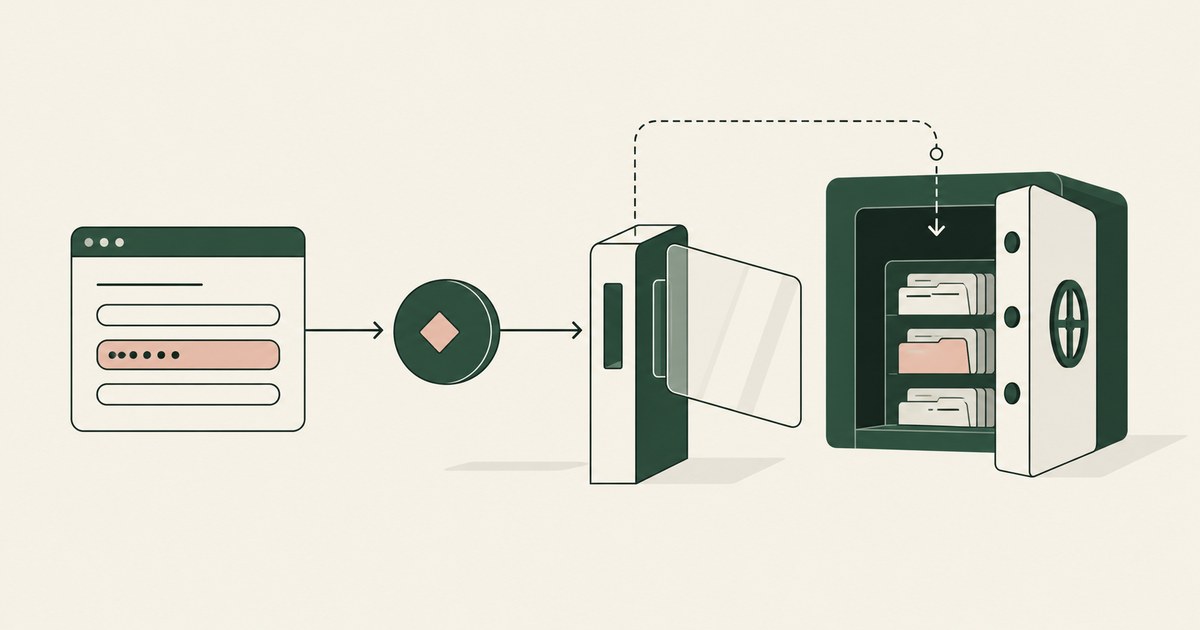
What is Data Tokenization?
Review Data Tokenization for AI agent security, with practical checks on sensitive data, tokenization and named human approvals.
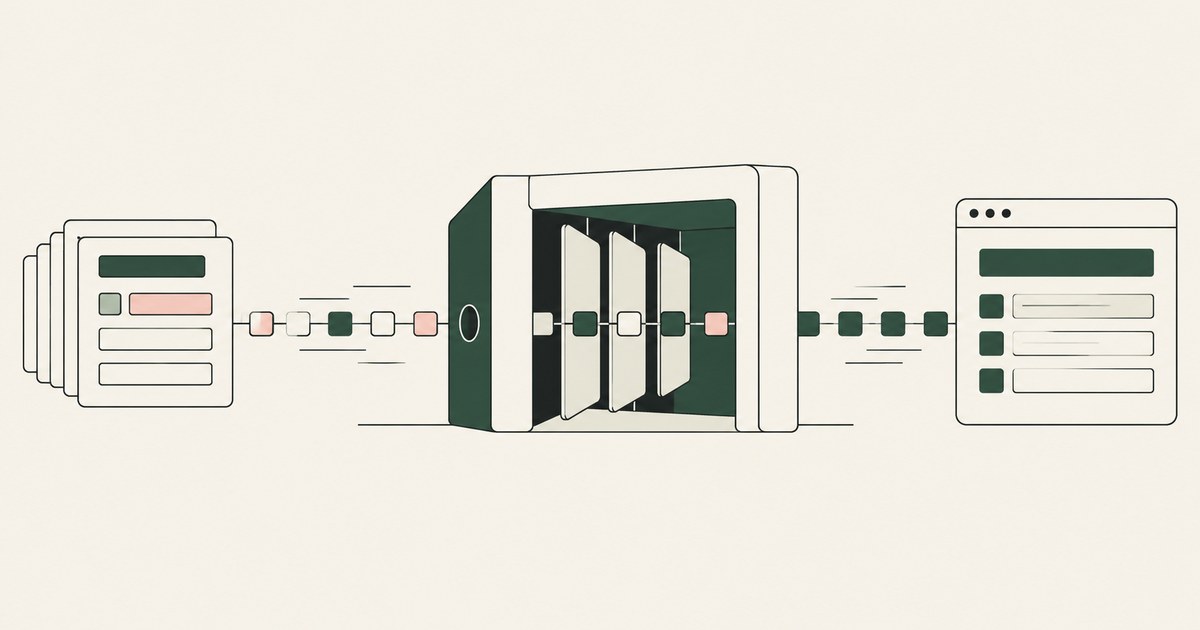
Can Runtime Tokenization Protect Data Without Slowdowns?
Review Can Runtime Tokenization Protect Data Without Slowdowns for AI agents, including tokenization, sensitive data exposure and human approval records.
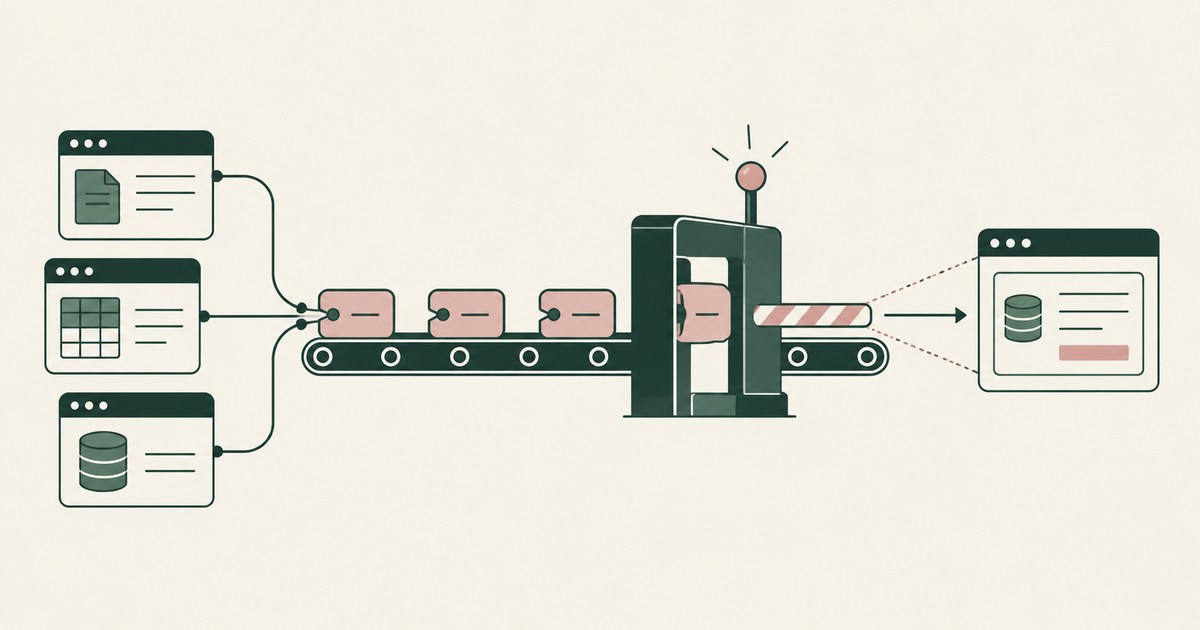
How to Prevent AI Agents From Oversharing Data Between Apps
Review Prevent AI Agents From Oversharing Data Between Apps, with AI agent security, tokenization and approval checks for sensitive enterprise workflows.

The Two Gaps AI Agents Opened in Your Security Stack
Explore AI agent security through two questions: which PII reaches the model, and who approves consequential billing and claims actions.

What Is Render-Layer Tokenization?
Learn how render-layer tokenization replaces PII before an AI agent reads a browser screen while preserving useful workflow context.

What Is Supervised Delegation?
Explore supervised delegation for AI agents in billing and claims, with named responsibility, tokenization policies and human approvals.

What Is an AI Control Record?
Explore an AI agent control record for billing and claims, linking permissions, tokenization decisions, approvals and audit evidence.
Book an AI Agent Security Review →
Bring your hardest questions.
Bring one sensitive workflow and the decisions your team needs to keep in its hands.
Book a demoAbout the author

Chris Sowa is a founder of RedactSure and a former CEO of an AI company; he started it years before ChatGPT existed. He previously led AI at Accenture, served as Global VP of Strategy & Innovation at Schneider Electric, was CCO of Sovos, and spent more than a decade at Oracle, with earlier roles at SAP and IBM.