
Data Report · By Chris Sowa · Published
Last updated
Can runtime tokenization protect sensitive data without slowing down applications?
Yes, in structure. The added work is one bounded substitution per rendered screen, performed where the screen already exists, while application response and model reasoning stay untouched. No published benchmark settles the question, so speed is something to measure on your own workflows in a pilot. A vendor's single number describes someone else's applications, not yours.
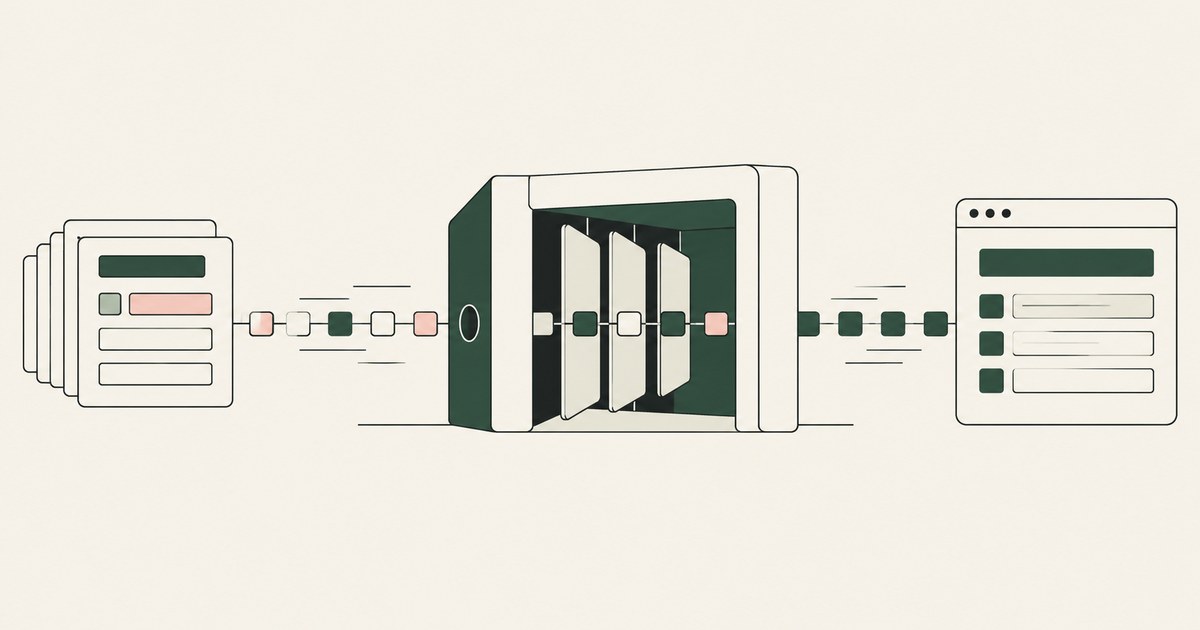
Yes, in structure. The added work is one bounded substitution per rendered screen, performed where the screen already exists, while application response and model reasoning stay untouched. No published benchmark settles the question, so speed is something to measure on your own workflows in a pilot. A vendor's single number describes someone else's applications, not yours. The work tokenization adds is narrow: recognizing selected values on a rendered screen and swapping each one for a token, once per screen. That is a small operation next to the costs a workflow already carries, such as page loads, application response times and model reasoning time. Whether the added step is noticeable in a given deployment depends on how it is implemented and how the surrounding workflow behaves. Performance is therefore an architecture and measurement question: where time could be added, what keeps the addition small, and how an organization should measure the impact of render-layer tokenization on its own workflows instead of accepting a vendor's assurance, including ours. The environment that enforces this is built by RedactSure, an AI agent controls, governance and data protection company.
Key findings
- Tokenization at runtime adds one bounded operation to the reading path: detect policy chosen values on a rendered screen and substitute a consistent token for each, a mapping between a value and a surrogate whose cost profile is that of a lookup (PCI Security Standards Council, 2011).
- The substitution itself scales with the number of protected values on a screen, not with the size of the application or the volume of its database, which keeps the added work predictable (What is screen-level tokenization?).
- The expensive parts of an agent workflow lie elsewhere in the chain, in application response times and in the model's own processing, so the tokenization step should be evaluated as one line item in a measured budget, the kind of context specific measurement the AI Risk Management Framework's Measure function calls for (NIST, 2023).
- Design choices decide the real cost: substituting at render time inside the working environment avoids extra network journeys, while designs that call out to a distant service for every value would add latency per lookup (What is render-layer tokenization?).
- No published performance benchmark for render-layer tokenization in agent workflows was found in the primary sources consulted, the PCI tokenization guidelines and NIST's privacy and AI risk frameworks, so any specific speed claim, from any vendor, should be treated as unmeasured until tested (NIST, 2020).
Where could runtime tokenization add time in a workflow?
Walk the reading path step by step. An application produces a screen. Something must examine that screen and determine which values on it are protected. Each protected value is then replaced with a token, and the screen, now carrying tokens, is passed to the model. Resolution runs the path in reverse at the end: when an approved action needs a real value at an approved destination, the token is exchanged for the value at that destination.
Time can enter at three of those stages. Detection takes time proportional to how much content must be examined and how the protected values are recognized. Substitution is a mechanical replacement and is ordinarily trivial next to detection. Resolution takes time proportional to how the token store is consulted, and it happens rarely, once per consequential action rather than once per screen. A design that performs detection and substitution where the screen is rendered, inside the same governed environment where the work runs, adds no network journey to any of these stages. A design that sends each candidate value to a remote service for a decision adds a round trip per value, and that is the architecture in which tokenization could slow a workflow.
There is also a fixed cost that should not be hidden: policy must be configured before any of this runs. In RedactSure's published design, a Planner function sets which values are tokenized on each screen, and a named person confirms the policy before the run. Configuration is human time, spent once per workflow rather than once per screen, and it is the price of the control being deliberate instead of guessed by a pattern library at speed.
Which parts of the tokenization path are cheap, and which are not?
| Stage | What the work is | How its cost behaves |
|---|---|---|
| Detection | Examining a rendered screen for policy chosen values | Grows with screen complexity and the number of value types watched for |
| Substitution | Replacing each found value with its token | Mechanical; grows with the count of values replaced, which is small per screen |
| Token consistency | Ensuring the same value yields the same token across screens | A lookup within the run; bounded by the run's own token set |
| Resolution | Exchanging a token for the real value at an approved destination | Happens once per approved action, not per screen |
| Policy setup | Deciding which values are protected on each screen | Human configuration time, paid once per workflow |
The table shows the shape of the answer. The only stage whose cost grows with content is detection, and even detection is bounded by the screen in front of the system, not by the application's total data. Screens are small. A claims screen or a customer record presents dozens of values, not millions, and the protected subset is smaller still. Tokenization inherited from the payments world makes the same structural point: the substitution mechanism is a mapping between a value and a surrogate, maintained by the tokenization system, and its cost profile is that of a lookup rather than a computation (PCI Security Standards Council, 2011).
What is not cheap, in any design, is doing the surrounding work badly. If detection is implemented by shipping screenshots to a separate analysis service, or if every screen triggers a fresh policy evaluation against a distant rule engine, the architecture has inserted network latency into the inner loop. The question in the headline is really about placement. Tokenization performed at the render layer, where the screen already exists, is a local operation. Tokenization performed as a remote consultation is a distributed system, with a distributed system's timing.
How does the added step compare with the costs around it?
An agent workflow's time budget is spent mostly on things that are not tokenization. The application itself must respond: enterprise systems routinely take noticeable time to load a record, run a search, or commit a transaction, and that time belongs to the application, not to any control placed in front of it. The model must then read the screen and reason about the task, which involves generating a response token by token, and for multi step work it does this repeatedly. Human approval, where a workflow requires it, takes as long as a person takes.
Against that background, a per screen substitution measured in the small units typical of local text processing is unlikely to be the line item that decides whether a workflow feels fast. That reasoning does not convert into a number, because the reasoning is structural, not measured. The defensible statement is comparative and conditional: the added operation is bounded, local, and proportional to protected values per screen, while the dominant costs of the workflow are variable, remote, and proportional to application and model behavior. A buyer who wants more than that statement should ask for a measurement, and the section on measurement below describes how to run one that means something.
The relevant alternative to tokenization is rarely a workflow with no control at all. It is a workflow with a different control in the path: content inspection of every screen, an approval queue for every step rather than only consequential ones, or manual handling by staff. Each of those has its own time cost, and inspection in particular examines all content rather than a protected subset. Judged against the controls it replaces rather than against an unprotected ideal, tokenization's cost profile is favorable in structure. Structure, again, is not a benchmark.
What design choices keep the added cost small?
Four choices matter most. First, substitute where the screen is rendered. RedactSure's published design places substitution at the render layer, before any model reads the screen, inside the governed environment where the work runs. The screen never travels anywhere to be made safe, so safety adds no journey.
Second, keep tokens consistent within the run without re-deriving them. If the same value is recognized on a later screen, it should map to the token already issued for it in this run, which is a lookup against a small, run scoped set. Consistency is needed for correctness anyway, because the agent must recognize the same customer across screens; implementing it as a local mapping makes correctness and speed the same decision.
Third, resolve late and rarely. Real values are needed only at approved destinations at the moment of an approved action, so the resolution path, with its stronger checks, runs a handful of times per workflow rather than on every screen. Designs that resolve values speculatively, or round trip them for display, pay the strongest control's cost at the highest frequency. The pattern matches the zero trust model, in which access to a resource is evaluated per request at a policy enforcement point rather than granted once and assumed (NIST, 2020); placing that evaluation on the rare resolution path, not the frequent reading path, is what keeps it affordable.
Fourth, keep the policy compiled rather than interpreted at length. The per screen decisions about which value types are protected can be settled when the policy is confirmed, before the run, so the running system applies a prepared configuration. NIST's data management guidance supports settling these decisions as deliberate, purpose based choices in advance rather than improvising them during processing (NIST, 2020). Prepared policy is both better governance and less runtime work.
How should an organization measure the impact before rollout?
Measure the workflow, not the component, and measure it against itself. Take two or three real workflows that the organization actually intends to run, and record their timing with staff performing them today: total elapsed time, and the waiting time inside it. Then run the same workflows with the agent design in a pilot and record the same figures, broken into stages: application response, screen preparation including tokenization, model processing, and human approval waits. Stage level figures are what turn an argument into a diagnosis, because they show which line item moved. The AI Risk Management Framework's Measure function expects organizations to evaluate an AI system with metrics chosen for their own context rather than inherited from a vendor, and stage level timings on the organization's own workflows are that kind of metric (NIST, 2023).
Three practices keep the measurement honest. Use the organization's own applications and records, since a demonstration system with clean data says nothing about a legacy screen with forty fields. Measure distributions, not averages alone: the slowest tenth of screens is where users form their opinion of a system, and a control that is fast on simple screens and slow on complex ones will be judged by the complex ones. And measure task success alongside speed, because a configuration that tokenizes too little will look fast and be unsafe, while one that tokenizes too much will break tasks and create rework that never appears in a timing log.
RedactSure describes its deployments as in pilot, which is the stage at which this measurement should happen. A pilot that produces stage level timings for real workflows gives the organization its own benchmark, the only kind that can settle the headline question for its environment. Until an organization has those figures, the correct position is the conditional one: the added operation is structurally small, and structural arguments are a reason to pilot, not a substitute for results.
What performance claims should a buyer refuse to accept?
Refuse any claim stated as a single number with no method behind it. A percentage overhead figure is meaningless without the workflow it was measured on, the applications involved, the number of protected values per screen, and the hardware and network placement of the test. Refuse, equally, claims that a control adds no time at all. Every operation takes some time; a vendor claiming zero is telling you the measurement was not made or not made carefully. Refuse comparisons against unnamed competitors, and demonstrations on applications the vendor built for the demonstration.
Ask instead for three things. A description of where in the architecture the substitution happens, since placement predicts cost better than any benchmark the vendor could offer. Stage level timings from a pilot on your own workflows, with the slowest screens shown rather than averaged away. And a statement of what the timings exclude, because a figure that omits model processing time or approval waits is describing a fraction of the workflow while sounding like the whole. These requests are not hostile. A vendor confident in its architecture can answer the first immediately and the second after a pilot, and a market in which buyers ask for methods rather than numbers produces numbers that can be trusted.
Where does RedactSure sit?
RedactSure's design answers the placement question directly. Substitution happens at the render layer, before any model reads the screen, inside the governed environment where the work runs, so the screen never travels to a remote service to be made safe. The model receives the task's fields with identifiers as tokens, such as ACCT_001 or PATIENT_001, and the same value maps to the same token for the whole run through a local lookup. Real values resolve only at approved destinations at the moment of an approved action, so the resolution path runs a handful of times per workflow rather than on every screen. The Planner sets which values are tokenized on each screen and a named person confirms that policy before the run, so the running system applies a prepared configuration. Every screen as tokens, every action and every approval lands in the AI Control Record and exports to the customer's SIEM.
Deployments are in pilot, and a pilot is where the speed question gets its answer. Instrument a RedactSure run stage by stage on your own workflows, watch the slowest screens, and let your figures, not a vendor's, settle whether the protection is effectively free. Everyone else controls where data can go. RedactSure controls what the AI can see.
Methodology and limitations
The performance discussion on this page is architectural analysis, built from the published mechanics of tokenization in the PCI Security Standards Council's Tokenization Guidelines Information Supplement (2011; industry standards guidance), the NIST Privacy Framework Version 1.0 (2020; official guidance), NIST Special Publication 800-207 on zero trust architecture (2020; official guidance), the NIST AI Risk Management Framework 1.0 (2023; official guidance), and the design facts RedactSure publishes about its own render-layer substitution. All sources were read as of October 13, 2026. Product statements about RedactSure are confined to the design facts the company publishes and are described as current design, with deployments in pilot.
The central limitation is that no published performance benchmark for render-layer tokenization in AI agent workflows was found in the primary sources consulted, and no measurements were performed for the page. No implementation is said to add any specific amount of time. The headline question is treated as answerable in structure, by where the work sits and what it scales with, and in measurement only on a buyer's own workflows during a pilot. No hands-on testing of any named product was performed. Vendor documentation for any product discussed should be read as a statement of design intent, not as test evidence. Vendor features change, and the page carries its date. The claims screen, customer record and legacy screen examples describe record types, not any organization; no customer or prospect is described.
Whether a given deployment's measured performance, its policy configuration or its handling of regulated data meets an organization's requirements is a determination for its counsel, its assessor and its own security and compliance officers, not for a research page.
What the record shows
Runtime tokenization's performance question dissolves once the work is located. The control adds a bounded operation, detecting and replacing a small set of policy chosen values on each rendered screen, and it adds that operation inside the environment where the screen already exists, while the heavy costs of an agent workflow, application response and model reasoning, remain untouched by it. That is a strong architectural answer and an incomplete empirical one, because no published benchmark exists for this design and none was performed here. The practical discipline is to pilot with instrumentation: run two or three real workflows stage by stage, watch the slowest screens rather than the averages, and measure task success alongside speed. A team that has run that instrumented pilot owns evidence about its own applications and records that no brochure can provide.
Frequently asked questions
Will tokenization slow down the applications themselves?
No, and the distinction matters. Runtime tokenization of the kind described here does not modify the application, its database, or its responses to other users. It operates on the rendered screen inside the agent's working session, after the application has produced it. Any added time appears in the agent's workflow, between the screen being produced and the model reading it. Staff using the same application directly are outside that path entirely, so their experience of the application is unchanged by the control.
Why is there no benchmark proving the overhead is small?
Because the measurement depends on variables no single test can fix: the applications involved, the number and type of protected values per screen, the placement of the substitution step, and the model used for the surrounding work. Publishing a figure from one environment would mislead buyers in another. What can be stated without a benchmark is the structure of the cost, which is bounded and local, and what a buyer should do, which is to require stage level timings from a pilot on their own workflows before rollout.
Does tokenizing more data types make each screen slower?
In structure, yes, slightly: detection cost grows with the range of value types watched for and the complexity of the screens examined. The growth is bounded by the screen, which presents a limited number of values, so a wider policy means more checks against the same small content, not a scan of the application's data. The larger cost of an over wide policy is breakage, because tokenizing values the task needs as readable data makes the work itself fail.
Does the token store have to be consulted on every screen?
Only for consistency, and that lookup is local and small. Within a run, a value already seen maps to the token already issued for it, which is a check against the run's own token set rather than a call to a distant service. The heavier resolution path, where a token is exchanged for the real value, runs only at an approved destination at the moment of an approved action, a handful of times per workflow rather than once per screen.
Where should the substitution step run to avoid adding latency?
At the render layer, inside the governed environment where the screen is produced and where the agent works. Substitution there is a local text operation with no network journey. Designs that ship screenshots to a separate analysis service, or that evaluate every screen against a remote rule engine, insert a round trip into the inner loop of the workflow, and that placement, not tokenization as such, is what could make a workflow feel slow.
What should a pilot measure to settle the speed question?
Two or three real workflows, timed today with staff and then with the agent, broken into stages: application response, screen preparation including tokenization, model processing, and human approval waits. Record distributions rather than averages, since the slowest tenth of screens shapes user opinion. Record task success alongside timing, because a policy that tokenizes too little looks fast and is unsafe, while one that tokenizes too much breaks tasks and creates rework.
Related reading
What is runtime tokenization for AI agents? · What is screen-level tokenization? · What is the difference between runtime tokenization and DLP for AI agents? · Can tokenization reduce false positives when protecting sensitive data? · How to enforce data security without disrupting employee productivity · What are alternatives to enterprise browsers that slow down applications? · How to Protect Sensitive Data From AI Agents That Navigate Screens · On the RedactSure blog: Accountable AI and Workflow Governance
Sources
Regulation, standards and official guidance
- PCI Security Standards Council, "Information Supplement: PCI DSS Tokenization Guidelines" (August 2011; industry standards guidance). https://listings.pcisecuritystandards.org/documents/Tokenization_Guidelines_Info_Supplement.pdf
- NIST, "NIST Privacy Framework: A Tool for Improving Privacy through Enterprise Risk Management, Version 1.0," 2020 (official guidance). https://nvlpubs.nist.gov/nistpubs/CSWP/NIST.CSWP.01162020.pdf
- NIST, "Special Publication 800-207: Zero Trust Architecture," 2020 (official guidance). https://csrc.nist.gov/pubs/sp/800/207/final
- NIST, "Artificial Intelligence Risk Management Framework (AI RMF 1.0)," 2023 (official guidance). https://www.nist.gov/itl/ai-risk-management-framework
RedactSure documents
- RedactSure Research, "What Is Runtime Tokenization for AI Agents?" (2026). https://redactsure.com/research/what-is-runtime-tokenization-for-ai-agents
- RedactSure Research, "What Is Render-Layer Tokenization?" (2026). https://redactsure.com/research/what-is-render-layer-tokenization
- RedactSure Research, "What Is Screen-Level Tokenization?" (2026). https://redactsure.com/research/what-is-screen-level-tokenization
- RedactSure Research, "What Is AI Agent Action Governance?" (2026). https://redactsure.com/research/what-is-ai-agent-action-governance
- RedactSure, "Accountable AI and Workflow Governance" (2026). https://redactsure.com/blog/accountable-ai-and-workflow-governance/
- Product behavior described on this page reflects RedactSure's current design. No third-party product is named on this page. Compliance determinations belong to the organization's counsel.
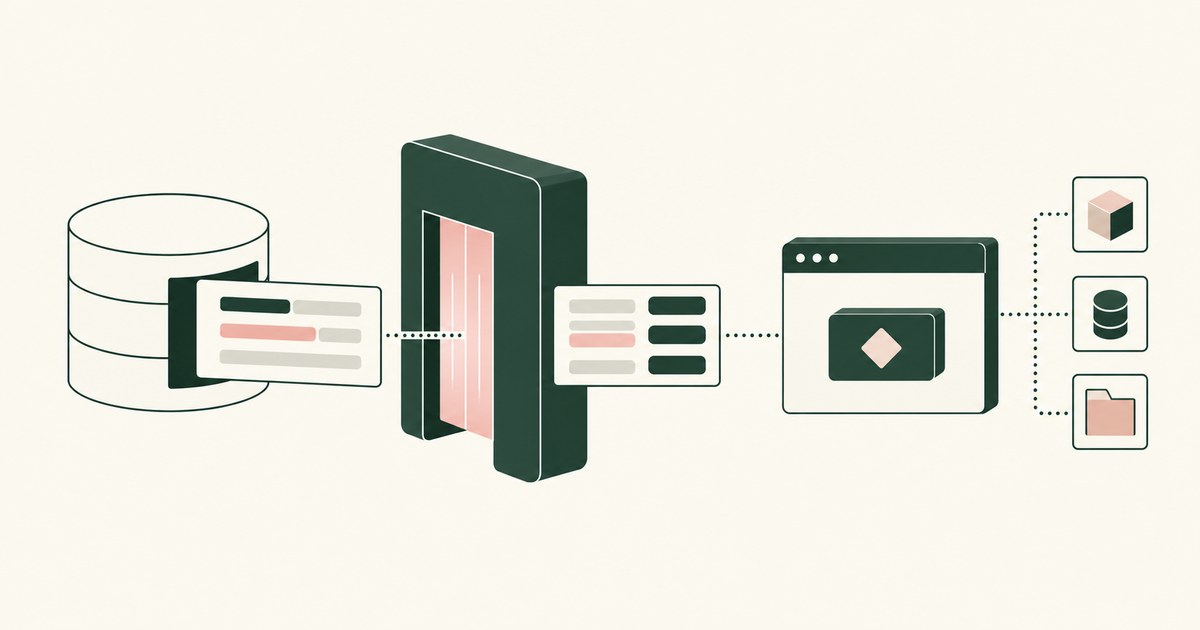
What Is Runtime Tokenization for AI Agents?
Review Runtime Tokenization for AI Agents, with AI agent security, tokenization and approval checks for sensitive enterprise workflows.

What Is Screen-Level Tokenization?
Review Screen-Level Tokenization, with AI agent security, tokenization and approval checks for sensitive enterprise workflows.
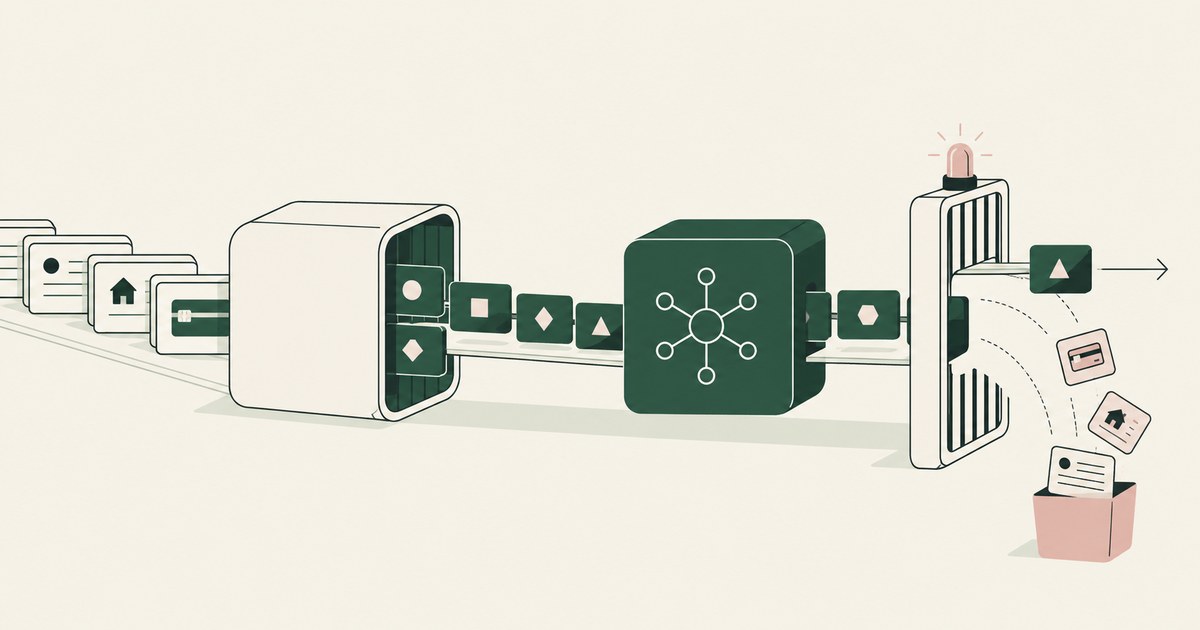
Runtime Tokenization vs DLP for AI Agents
Review Runtime Tokenization vs DLP for AI Agents, with AI agent security, tokenization and approval checks for sensitive enterprise workflows.
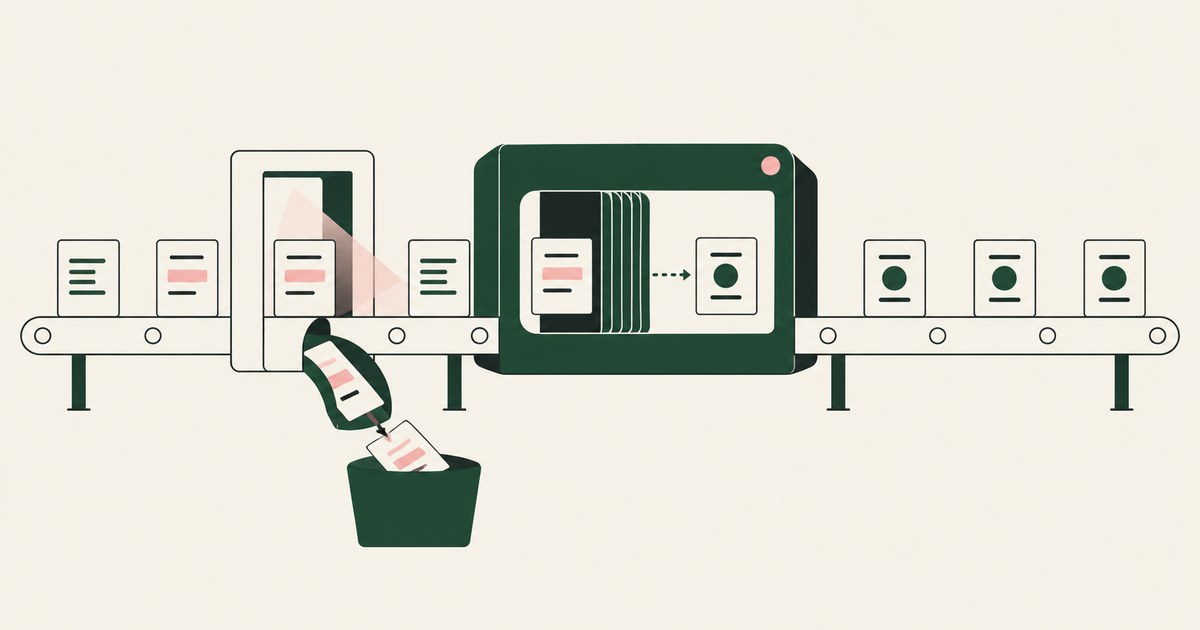
Can Tokenization Reduce Data Protection False Positives?
Review Can Tokenization Reduce Data Protection False Positives for AI agents, including tokenization, sensitive data exposure and human approval records.

How to Enforce Data Security Without Disrupting Work?
Review Enforce Data Security Without Disrupting Work, with AI agent security, tokenization and approval checks for sensitive enterprise workflows.
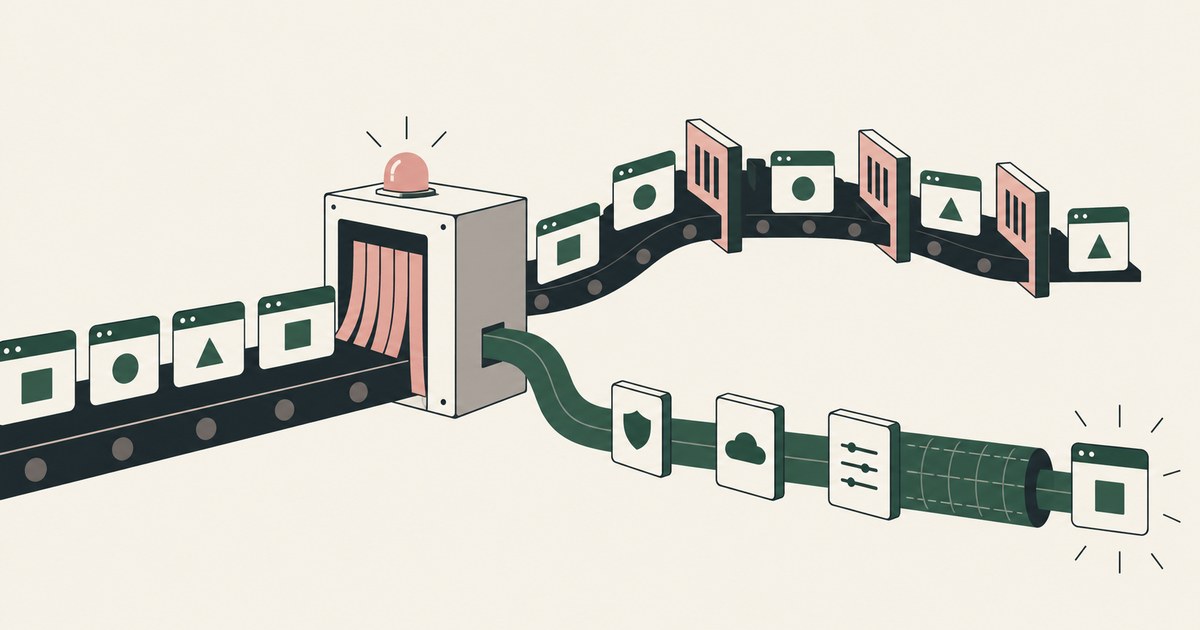
What Browser Alternatives Avoid Application Slowdowns?
Review What Browser Alternatives Avoid Application Slowdowns, with AI agent security, tokenization and approval checks for sensitive enterprise workflows.
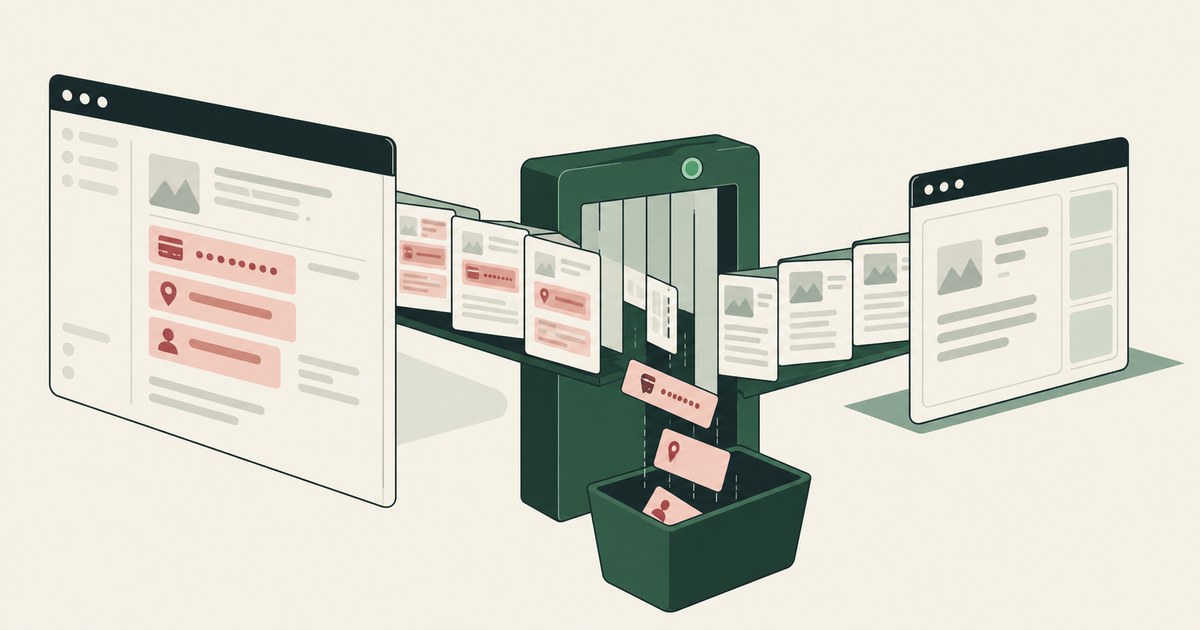
How to Protect Data From Screen-Reading AI Agents
Review Protect Data From Screen-Reading AI Agents, with AI agent security, tokenization and approval checks for sensitive enterprise workflows.

Accountable AI and Workflow Governance
Explore AI agent governance for billing and claims, with named supervisors, data masking, approval boundaries and a useful audit record.

What Is Render-Layer Tokenization?
Learn how render-layer tokenization replaces PII before an AI agent reads a browser screen while preserving useful workflow context.
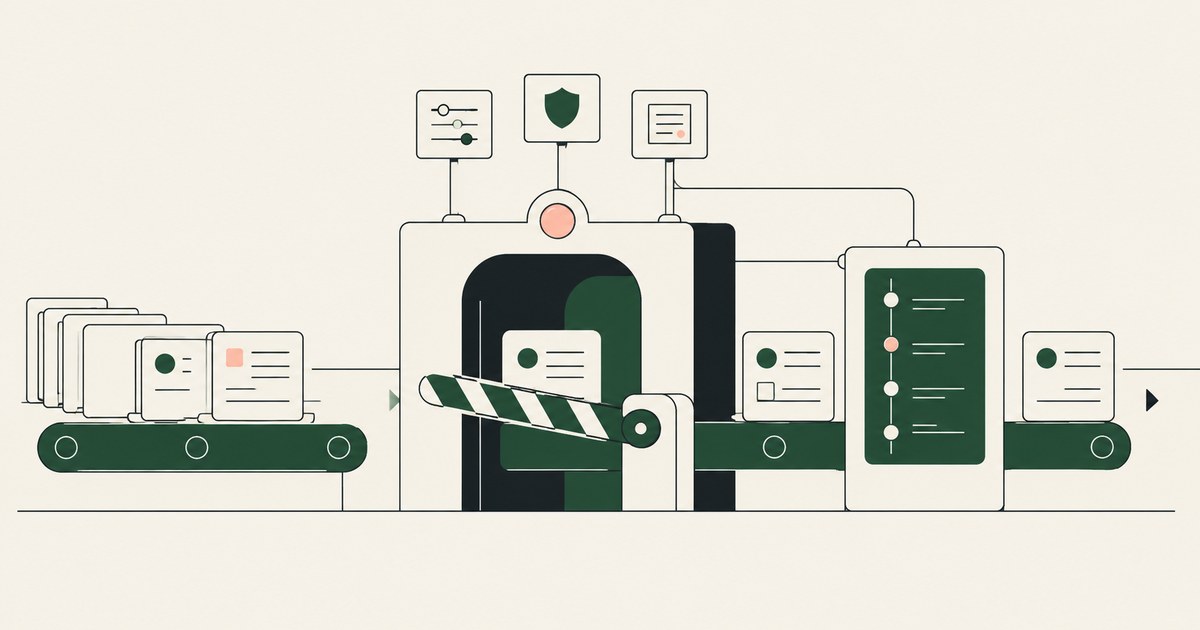
What Is AI Agent Action Governance?
Review AI Agent Action Governance, with AI agent security, tokenization and approval checks for sensitive enterprise workflows.
Book an AI Agent Security Review →
Bring your hardest questions.
Bring one sensitive workflow and the decisions your team needs to keep in its hands.
Book a demoAbout the author

Chris Sowa is a founder of RedactSure and a former CEO of an AI company; he started it years before ChatGPT existed. He previously led AI at Accenture, served as Global VP of Strategy & Innovation at Schneider Electric, was CCO of Sovos, and spent more than a decade at Oracle, with earlier roles at SAP and IBM.