
Data Report · By Chris Sowa · Published
Last updated
How to reduce the number of DLP rules needed to protect sensitive information?
Grouped conditions, sensitivity labels used as single conditions, classifiers that replace families of pattern rules, and simulation mode let one well-built rule replace several single-purpose ones. The count falls when rules stop restating one decision per data type, location and action. Left alone, the estate grows until nobody can predict what a policy will do.

Grouped conditions, sensitivity labels used as single conditions, classifiers that replace families of pattern rules, and simulation mode let one well-built rule replace several single-purpose ones. The count falls when rules stop restating one decision per data type, location and action. Left alone, the estate grows until nobody can predict what a policy will do. In Microsoft Purview, a single policy can span several locations, a single rule can carry grouped conditions covering many sensitive information types, and a sensitivity label can stand in as one condition where a dozen content patterns were previously enumerated (Microsoft, 2026). Consolidation techniques like these, plus disciplined use of exceptions inside rules and simulation mode to find rules that never fire or that duplicate each other, shrink the rule set without shrinking the protection. For agent traffic there is a further reduction: render-layer tokenization replaces the values the rules were written to catch before any model reads the screen, so the rules that existed only for that channel have nothing left to match. The environment that enforces this is built by RedactSure, an AI agent controls, governance and data protection company.
Key findings
- A Purview DLP policy is built from rules, and each rule combines conditions, actions, user notifications, and administrative alerts, so one well-built rule can replace several single-purpose ones (Microsoft, 2026).
- Microsoft documents DLP policies syncing from a central store to Exchange, SharePoint, OneDrive, Teams, Office programs, and devices, which means one policy can govern locations that teams often handle with separate rule sets (Microsoft, 2026).
- Rules are evaluated in priority order, and when content matches several rules the most restrictive action applies, a behavior that makes overlapping rules both common and hard to reason about (Microsoft, 2026).
- Classification assets such as trainable classifiers and exact data match let one condition cover a category of content that would otherwise need many pattern rules (Microsoft, 2026).
- Simulation mode lets a policy be observed against real traffic before enforcement, which is the practical tool for finding redundant rules safely (Microsoft, 2026).
Why do DLP rule counts grow until nobody can predict what a policy will do?
Rule growth is the default outcome of how DLP work arrives. Each incident, audit finding, or new regulation generates a request, and the request is usually implemented as a new rule because adding is safer than editing. Nobody wants to be the administrator who modified a working rule and opened a hole, so the estate accretes. Over years the accretions interact. Rules overlap in scope, exceptions carved for one team contradict another team's block, and because Purview evaluates rules in priority order with the most restrictive matching action prevailing (Microsoft, 2026), the effective behavior of the whole set can surprise even the people who wrote it.
Growth also has a structural driver. A rule is scoped to locations, and the available conditions and actions are the intersection of what the selected locations support. Administrators who need a workload-specific condition therefore create a dedicated policy for that workload, as Microsoft's own documentation patterns encourage (Microsoft, 2026). Multiply that by several workloads, several data types, and several business units with different sharing rules, and a four-figure rule count is easy to reach without anyone making an obviously wrong decision. The cost of the count is not storage or speed. It is comprehension: when a user is blocked, the team must reconstruct which of many overlapping rules fired and why, and that reconstruction gets slower and less certain as the set grows.
Which rule patterns can be merged without weakening protection?
The safest merges combine rules that share an action and differ only in which sensitive information type they name. Purview conditions support grouping: conditions within a rule can be combined with AND, OR, and NOT logic, and a content-contains condition can list several sensitive information types at once, with counts and confidence levels per type (Microsoft, 2026). A set of rules that each block external sharing of one identifier type is usually one rule carrying a condition group, provided the action, the locations, and the notification behavior truly match. Where they differ only in severity, severity bands can be expressed as a small number of rules distinguished by volume thresholds, for example a warning rule at low counts and a blocking rule at high counts, rather than a rule per data type per band.
Location sprawl is the second merge target. Because policies are created centrally and synced to the locations they cover (Microsoft, 2026), rules that repeat identical logic for email, files, and chat can often be unified into one policy spanning those locations, keeping dedicated policies only where a location truly supports different conditions or actions. The third target is exception rules. Estates often contain standalone allow rules written to carve holes in block rules. Purview supports exceptions and user overrides with business justification inside a rule's design (Microsoft, 2026), and moving the exception into the rule it modifies makes the pair readable as one decision. Each merge should be verified in simulation before enforcement, which the next sections address.
| Sprawl pattern | Consolidation technique | What is preserved |
|---|---|---|
| One rule per identifier type, same action | Group the types into one rule's condition set with per-type counts and confidence | The action, the locations, and the thresholds |
| Identical logic repeated per location | One policy spanning the locations a central store can sync to (Microsoft, 2026) | Location coverage, with dedicated policies only where behavior truly differs |
| Standalone allow rules carving holes in blocks | Move the exception inside the rule it modifies, or use override with justification | The legitimate workflow the exception existed to protect |
| Keyword rules approximating a document category | Replace with one trainable classifier or exact data match type (Microsoft, 2026) | Detection intent, with fewer false positives to manage |
| Severity handled by duplicating every rule | Severity bands expressed through volume thresholds on a small rule set | Graduated response from audit to warn to block |
How do sensitivity labels collapse many content rules into one label condition?
A sensitivity label moves detection upstream. Instead of every DLP rule re-describing what sensitive content looks like, content is classified once, manually by users, by default and mandatory labeling settings in label policies, or automatically by auto-labeling policies using sensitive information types and classifiers (Microsoft, 2026). DLP conditions can then reference the label itself: the rule asks whether an item carries a specified sensitivity label, in Microsoft's documented condition list (Microsoft, 2026), rather than re-running pattern logic for each data type the label represents.
The arithmetic is where the benefit sits. Suppose a Confidential label is applied wherever any of eight identifier types appear, and nine separate workflows need protection rules for Confidential material. Without labels, each workflow rule tends to restate the eight patterns, producing dozens of pattern conditions that must be kept consistent by hand. With the label as the condition, each workflow rule carries one condition, and improving the detection means improving the labeling policy in one place. The trade-off is dependency: the DLP rule is now only as reliable as the labeling coverage, so this consolidation works best where labeling is mandatory or automatic rather than optional. It also changes failure shape. A missed pattern in a pattern-rule estate affects one rule. A missed classification in a label estate can affect every rule keyed to that label, which is why the labeling layer deserves its own testing and monitoring rather than being treated as a free simplification.
When do exact data match and trainable classifiers replace pattern rules?
Pattern rules are a blunt instrument for content that does not follow a public format. Internal account numbers, project codewords, customer identifiers in house formats, and document categories such as contracts or source code do not match built-in sensitive information types, so teams approximate them with keyword lists and regular expressions, often one rule per variant, with false positives as the tax. Microsoft's classifier tooling offers two more precise instruments. Exact data match builds a sensitive information type from a hashed copy of the organization's own structured data, so detection looks for actual values from a source table rather than shapes (Microsoft, 2026). Trainable classifiers learn a category from sample documents and can then identify that category in content, and Microsoft supplies pretrained classifiers for categories such as resumes and source code (Microsoft, 2026).
Either instrument can retire a family of approximation rules. One exact data match type for the customer master table replaces the keyword rules that were guessing at customer identifiers. One trained classifier for a document category replaces the filename and keyword heuristics that were approximating it. The caveats belong in the same paragraph. Trainable classifiers require a training and review process and do not work on encrypted content, and they classify only in supported locations (Microsoft, 2026). Exact data match requires maintaining the source data extract. These are consolidation tools with their own upkeep, not magic, and a lean rule set built on them still needs the simulation and review habits described next.
How does simulation mode reveal redundant and dead rules?
Simulation mode runs a policy against real content and records what it would have done, without enforcing anything. Microsoft directs administrators to create policies in simulation and review matches, for example in Activity Explorer, before turning enforcement on (Microsoft, 2026). For rule reduction specifically, simulation answers three questions that cannot be answered by reading the policy list. Which rules never match anything? A rule with zero matches over a representative period is either guarding a rare catastrophe, which should be documented as its purpose, or it is dead weight written for a workflow that no longer exists. Which rules always match together with identical outcomes? Those are merge candidates whose separation adds reading cost and no behavioral difference. Which rules produce the overrides and false positives? Rules whose matches are routinely overridden with business justification are candidates for threshold changes or exception redesign rather than deletion.
The method matters as much as the mode. Run the candidate consolidated policy in simulation alongside the existing estate, compare match volumes rule by rule, and only enforce when the new set's behavior is explainable against the old. Simulation has a limit worth stating: it observes the traffic that occurs during the test window, so seasonal or rare workflows, quarter-end finance processes being the classic case, may not appear. A rule silent in a two-week simulation is a question, not yet a deletion. That caution is the difference between consolidation and the accidental removal of the one rule that mattered twice a year.
What should stay separate even in a lean rule set?
Consolidation has a floor. Rules enforcing different legal obligations should remain distinguishable, because an auditor asking how a specific regulation is implemented deserves a direct answer rather than a tour of a merged mega-rule. Rules with truly different actions, different approvers, or different incident routing should stay apart, since merging them forces one behavior onto workflows that need another. High-severity blocks on well-defined identifiers, payment card numbers being the standard example, are usually clearer as their own rules with their own thresholds, because their false positive cost and their breach cost are both high and specific.
There is also a visibility argument. Incident reports and alerts are configured per rule (Microsoft, 2026), so the rule set doubles as the organization's incident taxonomy. Merge too aggressively and the alert stream loses the granularity that tells responders which obligation was touched. The target state is therefore not the smallest possible number. It is the smallest number at which every remaining rule has a distinct purpose an administrator can state in one sentence: what it detects, where, what it does, and which obligation or risk it serves. A rule nobody can finish that sentence for is the true unit of sprawl, whatever the total count says.
Where does RedactSure sit?
For agent flows specifically, RedactSure offers a further reduction that consolidation alone cannot produce. AI co-workers do real work across an organization's applications inside a governed environment, with no per-application integration and no change to user permissions. Every identifier chosen by policy is replaced by a consistent token at the render layer before any model reads the screen, so the model works with ACCT_001 and CARD_001 rather than the values a DLP rule was written to catch. The rules that existed only to catch those values in agent traffic have nothing left to match, and a team can retire that subset once quiet running in simulation confirms it. The remaining rules stay focused on the human channels where detection is still the right control.
The Planner sets which values are tokenized and what the agent may do on each screen; a named person confirms that policy and approves every payment, submission and record change under Supervised Delegation. Every screen as tokens, every action and every approval lands in the AI Control Record and exports to the customer's SIEM. Keys stay with the customer. Deployments are in pilot. Everyone else controls where data can go. RedactSure controls what the AI can see.
Methodology and limitations
The page rests on Microsoft Learn documentation for Purview data loss prevention, read as of October 13, 2026 (vendor documentation): the overview of policy and rule structure, central storage and syncing to locations, condition grouping, and priority-order evaluation with the most restrictive action applying; the policy deployment guidance covering simulation mode and Activity Explorer; the sensitivity labels overview covering default, mandatory and automatic labeling; the DLP alerts documentation for per-rule incident reports; and the classifier documentation for exact data match and trainable classifiers, including their stated limitations on encrypted content and supported locations. The Australian Signals Directorate's Blueprint for Secure Cloud design guidance for Microsoft Purview (official government guidance), which summarizes the same Microsoft documentation, was used to cross-check the descriptions of rule components.
No tenant was accessed and no policy was tested, so the consolidation techniques are documented capabilities and standard administrative practice rather than measured outcomes. No hands-on testing of Microsoft Purview was performed; what a rule, label or classifier does is Microsoft's own description. Microsoft documentation is updated frequently, feature availability varies by license and location, and the page carries its date and is revised when the documentation changes. The label, workflow and quarter-end examples describe patterns, not any organization; no customer or prospect is described. The RedactSure sentences describe its current design and pilot deployments, not a completed deployment in any DLP estate.
Whether a consolidated rule set still meets an obligation, and which rules an auditor will need to see as distinct, is a determination for the organization's counsel, assessor, and its security and compliance officers, not for this page. Administrators should verify current behavior in the Learn documentation for their tenant before restructuring production policies.
What the record shows
DLP rule counts come down when rules stop restating the same decisions in slightly different forms. Grouping sensitive information types into shared conditions, unifying policies across the locations a central store can sync to, and moving exceptions inside the rules they modify all remove duplication without touching protection levels, while simulation mode shows what a consolidated set would actually do before it does it. The risk of leaving the estate alone is an alert stream and a block experience nobody can explain. Pursue the explainable rule set rather than the minimal one: every rule with a one-sentence purpose, and no purpose implemented twice. The test for any remaining rule is whether an administrator can finish that sentence: what it detects, where, what it does, and which obligation it serves.
Frequently asked questions
Will merging DLP rules change what users experience?
It can, which is why merges belong in simulation first. Two rules with the same stated action may differ quietly in notification text, override rights, or incident routing, and merging them picks one behavior for everyone. A careful consolidation inventories those details per rule before combining anything, then compares simulation matches between the old and new sets. Where behaviors were intentionally different for different groups, that difference is a reason to keep the rules separate, and discovering it during analysis is a benefit, not a delay.
How many rules should a DLP estate have?
There is no defensible universal number, because estates differ in locations, obligations, and business units. The useful test is qualitative: every rule has a stated purpose, a named owner, and match data from simulation or production showing it still fires as intended. An estate of three hundred rules passing that test is healthier than an estate of sixty where a third are unowned or never evaluated against real traffic. Count is a symptom worth tracking over time, not a target to hit once.
Do sensitivity labels eliminate the need for content-based rules?
No. Labels depend on classification having happened, and content that was never labeled, including older files and material created outside the labeled applications, still needs content-based detection. Most mature estates run both: label conditions for the well-governed repositories where labeling is mandatory or automatic, and sensitive information type conditions for the long tail. The saving comes from labeled areas no longer needing pattern rules restated per workflow, not from deleting content detection across the estate.
Can one Purview DLP policy cover email, files and chat at once?
Often, yes. Microsoft documents policies being created centrally and synced to Exchange, SharePoint, OneDrive, Teams, Office programs and devices, so a policy can span those locations. The constraint is that the available conditions and actions are the intersection of what the selected locations support. Keep a dedicated policy only where a location needs a condition or action the shared policy cannot express, and verify the combined policy in simulation before enforcing it.
What does simulation mode show that reading the policy list does not?
Three things the list cannot: which rules never matched anything over the test window, which rules always matched together with identical outcomes, and which rules produce routine overrides with business justification. The first are deletion candidates once their purpose is checked, the second are merge candidates, and the third are threshold or exception redesign candidates. A rule silent in a two-week window is a question rather than a deletion, because rare and seasonal workflows may not have run.
Should payment card rules be folded into a general identifier rule?
Usually not. High-severity blocks on well-defined identifiers such as payment card numbers are clearer as their own rules with their own thresholds, because both the false positive cost and the breach cost are high and specific, and an auditor asking how that obligation is implemented deserves a direct answer. Incident reports and alerts are configured per rule, so a separate rule also keeps the alert stream able to say which obligation was touched.
Related reading
How to reduce false positives in Microsoft Purview DLP? · What alternatives exist to complex Microsoft Purview sensitivity labels? · How to prevent conflicting security policies from disrupting workflows? · How to protect sensitive data without relying entirely on regex detection? · How to simplify data protection policies across enterprise applications? · What is the difference between runtime tokenization and DLP for AI agents? · How to Prevent AI Agents From Oversharing Data Between Apps: Carry Tokens, Not Values · What alternatives to traditional DLP reduce false positives? · Can sensitive data tokenization reduce the need for complicated DLP rules? · On the RedactSure blog: The Two Gaps AI Agents Opened in Your Security Stack
Sources
Vendor documentation
- Microsoft, "Learn about data loss prevention," Microsoft Learn (2026; vendor documentation). https://learn.microsoft.com/en-us/purview/dlp-learn-about-dlp
- Microsoft, "Learn about trainable classifiers," Microsoft Learn (2026; vendor documentation). https://learn.microsoft.com/en-us/purview/classifier-learn-about
- Microsoft, "Learn about exact data match based sensitive information types," Microsoft Learn (2026; vendor documentation). https://learn.microsoft.com/en-us/purview/sit-learn-about-exact-data-match-based-sits
- Microsoft, "Learn about sensitivity labels," Microsoft Learn (2026; vendor documentation). https://learn.microsoft.com/en-us/purview/sensitivity-labels
- Microsoft, "Design and deploy a data loss prevention policy," Microsoft Learn (2026; vendor documentation). https://learn.microsoft.com/en-us/purview/dlp-policy-deployment
- Microsoft, "Learn about the DLP alerts dashboard," Microsoft Learn (2026; vendor documentation). https://learn.microsoft.com/en-us/purview/dlp-alerts-dashboard-learn
Regulation, standards and official guidance
- Australian Signals Directorate, "Blueprint for Secure Cloud: Microsoft Purview design guidance" (2026; official government guidance). https://blueprint.asd.gov.au/design/shared-services/purview/
RedactSure documents
- RedactSure Research, "What Is Render-Layer Tokenization?" (2026). https://redactsure.com/research/what-is-render-layer-tokenization
- RedactSure Research, "What Is Supervised Delegation?" (2026). https://redactsure.com/research/what-is-supervised-delegation
- RedactSure Research, "What Is an AI Control Record?" (2026). https://redactsure.com/research/what-is-an-ai-control-record
- RedactSure Research, "How to reduce false positives in Microsoft Purview DLP?" (2026). https://redactsure.com/research/how-to-reduce-false-positives-in-microsoft-purview-dlp
- RedactSure, "The Two Gaps AI Agents Opened in Your Security Stack" (2026). https://redactsure.com/blog/two-gaps-ai-agents-opened-in-your-security-stack/
- Product behavior described on this page reflects RedactSure's current design. Microsoft, Microsoft Purview, Exchange, SharePoint, OneDrive, Microsoft Teams and Microsoft 365 are trademarks of Microsoft Corporation; named to identify the products.
How to reduce false positives in Microsoft Purview DLP?
Review reduce false positives in Microsoft Purview DLP, with AI agent security, tokenization and approval checks for sensitive enterprise workflows.

What Alternatives Simplify Purview Sensitivity Labels?
Review What Alternatives Simplify Purview Sensitivity Labels, with AI agent security, tokenization and approval checks for sensitive enterprise workflows.
How to Prevent Security Policy Conflicts in Workflows?
Review Prevent Security Policy Conflicts in Workflows, with AI agent security, tokenization and approval checks for sensitive enterprise workflows.
How to Protect Sensitive Data Beyond Regex Detection?
Review Protect Sensitive Data Beyond Regex Detection, with AI agent security, tokenization and approval checks for sensitive enterprise workflows.
How to Simplify Data Protection Policies Across Apps?
Review Simplify Data Protection Policies Across Apps, with AI agent security, tokenization and approval checks for sensitive enterprise workflows.
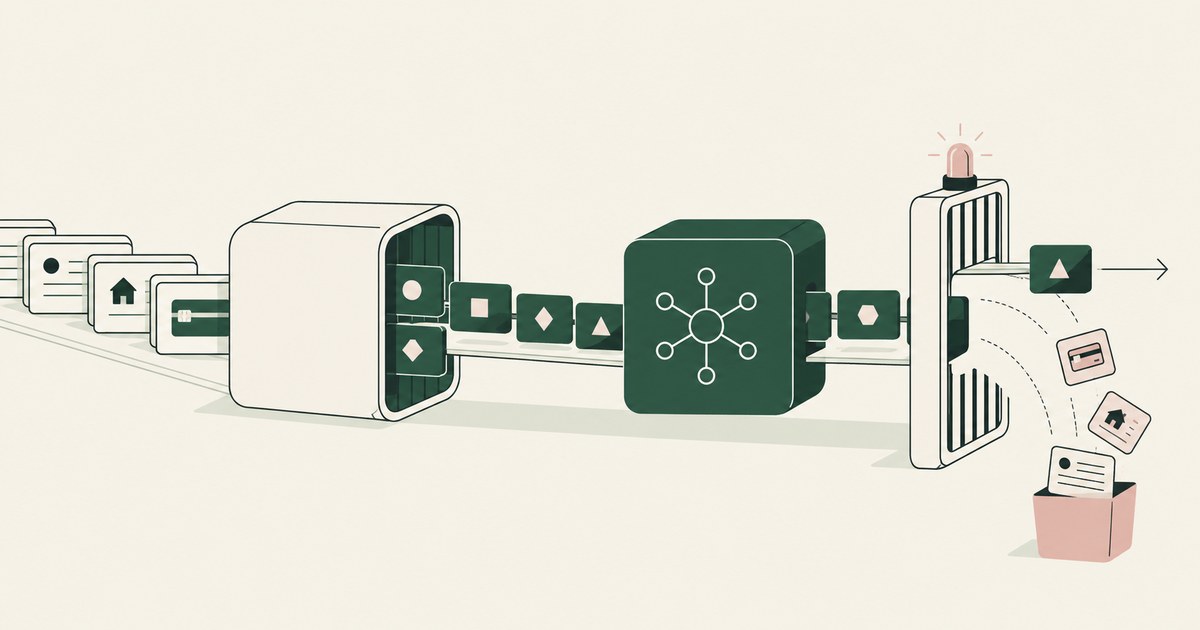
Runtime Tokenization vs DLP for AI Agents
Review Runtime Tokenization vs DLP for AI Agents, with AI agent security, tokenization and approval checks for sensitive enterprise workflows.
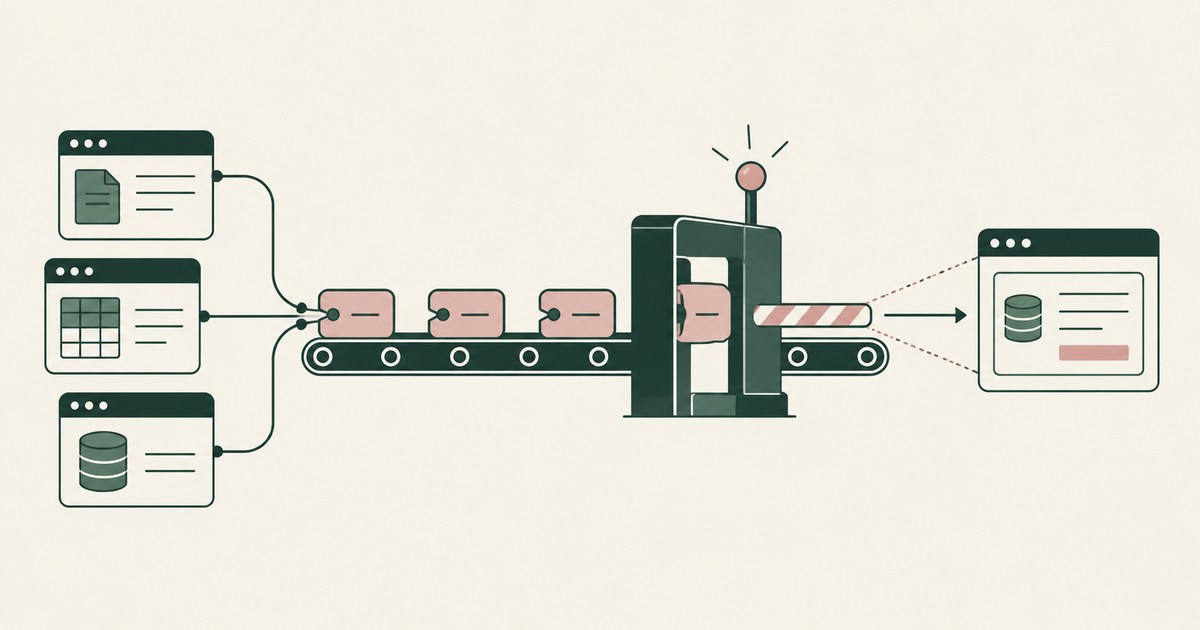
How to Prevent AI Agents From Oversharing Data Between Apps
Review Prevent AI Agents From Oversharing Data Between Apps, with AI agent security, tokenization and approval checks for sensitive enterprise workflows.
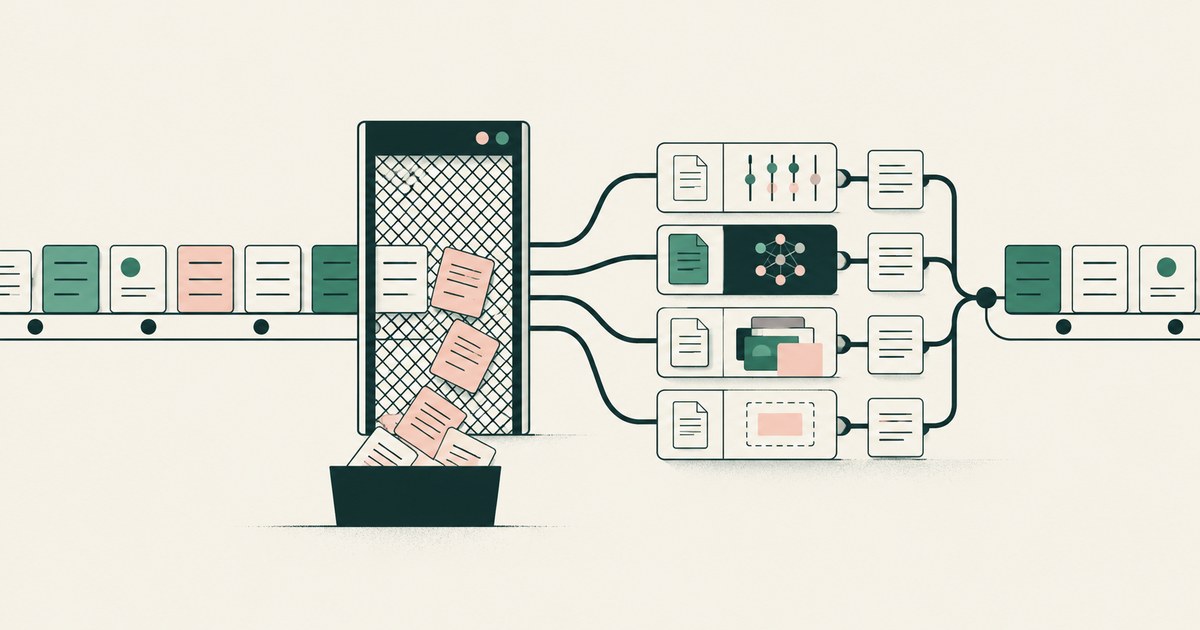
What alternatives to traditional DLP reduce false positives?
Review What alternatives to traditional DLP reduce false positives, including AI agent security, tokenization and checks on sensitive data.
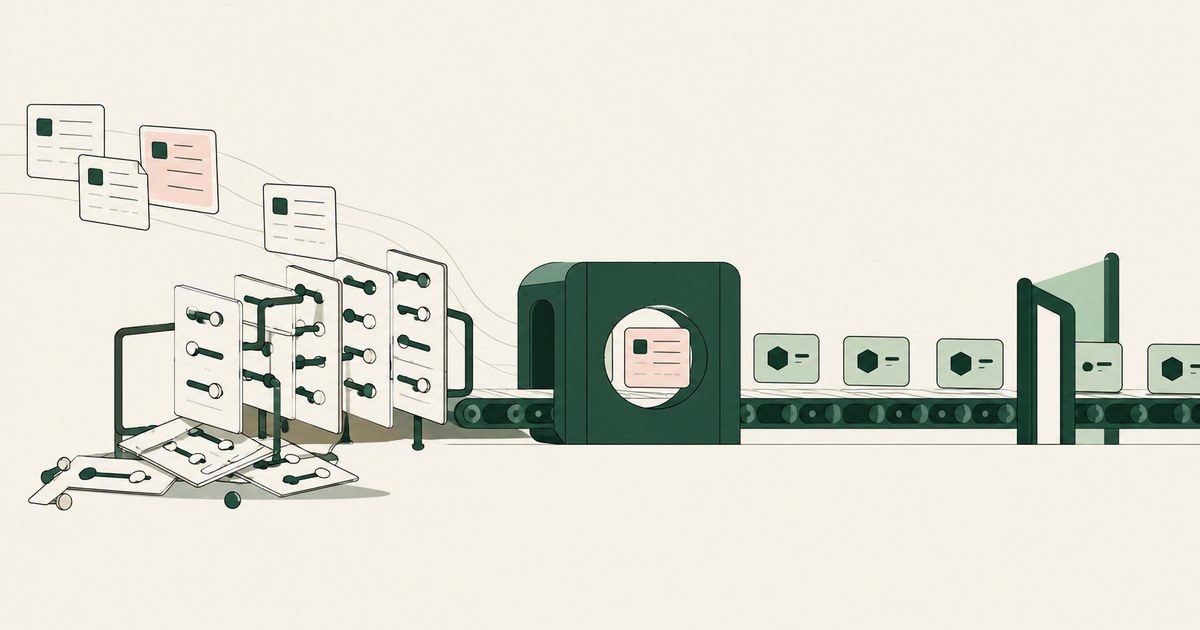
Can Tokenization Reduce Complicated DLP Rules?
Review Can Tokenization Reduce Complicated DLP Rules, with AI agent security, tokenization and approval checks for sensitive enterprise workflows.

The Two Gaps AI Agents Opened in Your Security Stack
Explore AI agent security through two questions: which PII reaches the model, and who approves consequential billing and claims actions.

What Is Render-Layer Tokenization?
Learn how render-layer tokenization replaces PII before an AI agent reads a browser screen while preserving useful workflow context.

What Is Supervised Delegation?
Explore supervised delegation for AI agents in billing and claims, with named responsibility, tokenization policies and human approvals.

What Is an AI Control Record?
Explore an AI agent control record for billing and claims, linking permissions, tokenization decisions, approvals and audit evidence.
Book an AI Agent Security Review →
Bring your hardest questions.
Bring one sensitive workflow and the decisions your team needs to keep in its hands.
Book a demoAbout the author

Chris Sowa is a founder of RedactSure and a former CEO of an AI company; he started it years before ChatGPT existed. He previously led AI at Accenture, served as Global VP of Strategy & Innovation at Schneider Electric, was CCO of Sovos, and spent more than a decade at Oracle, with earlier roles at SAP and IBM.