
Data Report · By Chris Sowa · Published
Last updated
Does Masking Data Still Let an AI Agent Complete Its Task?
Yes, when the masking is consistent and reversible: an agent reasons over structure, which record, which field, which person, and a stable token preserves that structure while hiding the value. Check whether your masking keeps the same token for the same value across every screen of a run and restores it only at the destination.

Yes, when the masking is consistent and reversible: an agent reasons over structure, which record, which field, which person, and a stable token preserves that structure while hiding the value. Check whether your masking keeps the same token for the same value across every screen of a run and restores it only at the destination. The question matters because the most common objection to protecting data from an agent is that the agent will stop working. That objection is right about one kind of masking and wrong about another. Blanking a field, or replacing it with a random string that changes every time the agent sees it, destroys the thread the agent follows from one screen to the next. Replacing it with a pseudonym that stays fixed for the run, and that can be exchanged for the real value where the work finally lands, keeps the thread intact. The distinction is already drawn in the literature on sensitive data masking for AI agents and in the older payments practice of tokenization. This page walks through what an agent actually uses from a record, where masking breaks tasks and where it does not, what the research measures, how the design choices differ, and how an organization should test utility on its own workflows before deciding.
Key findings
- Replacing identifiers with consistent pseudonyms and restoring them after the model has done its work reduces semantic utility errors by a factor of five compared with baseline techniques, which places utility loss on inconsistent redaction rather than on masking as such (Serenari and Lee, 2025).
- Tokenization in the payments standard is defined as a mapping between a value and a surrogate maintained by the tokenization system, so the surrogate can stand in for the value wherever the value itself is not required (PCI Security Standards Council, 2011).
- Redaction, by the NIST definition derived from SP 800-188, removes information from a record entirely, which is the form of masking most likely to strip an agent of what it needs (NIST CSRC, 2026).
- Agents that work from rendered screens can be protected visually: a detection model for personal information on web pages reports more than doubling a text-extraction baseline, 0.753 against 0.357 mAP@50, which shows that the screen itself is a workable place to find the values to mask (Zhao, 2026).
- Database-side dynamic masking changes what a query returns to a given user without changing stored data, which protects display but cannot give the agent a stable handle for a hidden value across applications (Microsoft, 2025).
- Tokenization and masking are different operations with different effects on an agent's work, and the choice between them decides whether protection and task completion are in tension (What Is the Difference Between Runtime Tokenization and Data Masking for AI Agents?).
What does an agent actually use from a record to complete a task?
Take a claims screen as the worked example. It carries a claim number, a policyholder's name and date of birth, a street address, a diagnosis code, a billed amount, a provider identifier and a status field. An agent asked to check whether the claim is ready for adjudication uses almost none of the literal values. It needs to know that this claim belongs to one policyholder, that the policyholder on the claim matches the policyholder on the eligibility screen it will open next, that the billed amount falls inside a threshold, and that the status is still pending. Every one of those checks is a comparison of structure, not a reading of a secret.
The policyholder's name is useful to the agent only as a key: it lets the agent recognize the same person on a second screen. A token such as PATIENT_001 performs that role as well as the real name, provided it stays the same on the eligibility screen. The date of birth is similar. The agent may need to know that two records carry the same birth date, or that a birth date falls before a cutoff, and a consistent surrogate carrying the comparison properties the task requires can serve both. The amount and the status are not identifiers at all and in most policies would not be masked. What the agent cannot do without is the relationship between fields, and relationship survives substitution.
This is why the question in the title has two different answers depending on the masking method. Masking that preserves the key structure of the record, as tokenization does and classic masking often does not, leaves the agent's reasoning intact. Masking that destroys the key, by blanking it or randomizing it per screen, leaves the agent unable to tell whether the claim and the eligibility record describe the same person, and the task fails for a reason that has nothing to do with the model's ability.
Where does masking break an agent's task, and where does it not?
The breakage points are predictable once the record is understood as a set of keys and attributes. Masking breaks a task when it removes a value the task must compare, when it issues a different surrogate for the same value on different screens so comparison fails, when it masks a field the task must read as content rather than as a key, or when it blocks the value from reaching the one destination that must receive it, such as a payment form or a submission field. Masking does not break a task when it substitutes a key with a stable surrogate, when the surrogate preserves whatever comparison the task performs, and when the real value is restored at the destination that requires it.
The research supports this division. In a conversational setting, swapping identifiers for consistent pseudonyms and restoring them afterward reduced semantic utility errors by a factor of five against baseline redaction, a direct measurement of the gap between consistent substitution and the alternatives, as the Serenari and Lee preprint discussed below reports. The same reasoning transfers to agents that move across screens, where the number of comparisons is larger and the cost of an inconsistent surrogate is correspondingly higher.
The remaining failure mode is policy, not mechanism. A policy that masks a diagnosis code when the agent's task is to check the code against a coverage table has masked content, not a key, and the task will fail. The remedy is not to abandon masking but to decide, field by field, which values the task reads and which it merely carries. An agent that holds more data than the task needs is the common case, and the policy work is to narrow it to what the task reads.
What does the research measure about utility under masking?
Three bodies of evidence bear on the question, and they measure different things. The first is utility under pseudonymization in language model pipelines. The Serenari and Lee preprint reports the factor-of-five reduction in semantic utility errors when identifiers are replaced with consistent pseudonyms and restored afterward, compared with baseline techniques (Serenari and Lee, 2025). The measurement is about conversational services rather than multi-step agents, so it should be read as evidence about the mechanism rather than as a benchmark for any particular agent workflow.
The second is detection on rendered screens. Agents that operate through a browser or a desktop work from what is drawn on the page, so the values to be masked have to be found visually. The WebPII benchmark reports a visual redaction model more than doubling the accuracy of a text-extraction baseline on rendered web pages, at 0.753 against 0.357 mAP@50 (Zhao, 2026). The number says that finding personal information on a screen is a tractable problem, and it also says that the baseline methods miss a great deal, which is the detection risk a buyer should ask about.
The third is the de-identification literature from government data practice. NIST SP 800-188 describes techniques and governance for de-identifying datasets, and the distinction it draws between removing information and transforming it is the same distinction that separates redaction from tokenization (NIST, 2023). What none of these sources provides is an end-to-end measurement of task completion rates for a screen-navigating agent under consistent tokenization versus no masking. That measurement does not yet exist in the sources reviewed, and an organization that wants it should produce it in a pilot on its own workflows.
How do tokenization, redaction and dynamic masking differ for an agent?
| Approach | What it does to the value | Effect on an agent's task |
|---|---|---|
| Redaction | Removes the value from the record | Key is lost; cross-screen comparison fails |
| Random per-screen masking | Replaces the value with a different surrogate each time | Key is unstable; the agent cannot recognize the same record twice |
| Dynamic data masking (database) | Alters what a query returns to a user | Protects one application's display; no portable key |
| Consistent, reversible tokenization | Replaces the value with the same surrogate for the run; restores it at approved destinations | Key preserved; comparison works; real value reaches only the destination that needs it |
Redaction, in the NIST glossary definition, removes information from a record (NIST CSRC, 2026). Dynamic data masking, as Microsoft documents it, masks query results for users who should not see the underlying data without altering what is stored (Microsoft, 2025); it is scoped to one data store, so an agent reading the same person in three applications meets three masks or none.
Consistent tokenization is the payments model: a surrogate replaces the account number, held in a mapping by the tokenization system, with the real value retrievable only by the system authorized to exchange it (PCI Security Standards Council, 2011). Vendor implementations follow the same shape: Skyflow documents tokenization with original values in isolated storage (Skyflow, 2026), and Protecto describes protecting values inside an agent's processing so the model works on substitutes (Protecto, 2026). What a buyer should verify is the consistency rule: same value, same token, for the whole run, across every application.
What design choices keep a masked agent working?
Four choices decide the outcome. The first is scope by field, not by screen. A policy that decides per field whether a value is a key the agent carries or content the agent reads will mask the former and leave the latter, and the task survives. A policy applied to whole screens or whole document classes masks both and the task fails. The second is run-scoped consistency: the mapping from value to token must persist for the duration of the run so that PATIENT_001 on the claims screen is PATIENT_001 on the eligibility screen and in the agent's notes. A mapping that resets per screen is random masking by another name.
The third is late, destination-bound resolution. The real value should be restored only where the work requires it, at the moment the approved action is taken, and nowhere else. This is the point at which runtime tokenization and classic data masking diverge most sharply: masking hides, tokenization hides and later restores under control. An agent that files a claim form needs the policyholder's real name in the form field at submission; it did not need it while deciding whether the claim was ready. The fourth is placement. Masking performed at the data store protects one store; masking performed where the agent perceives, on the rendered screen, protects every application the agent reads through that surface, which is why the screen-level detection results above matter.
A fifth consideration is permission. Masking does not reduce what the agent is allowed to do; it reduces what the agent can see while doing it. An overprivileged agent with legitimate but broad permissions is still a risk on the action side, and masking should be paired with approval controls rather than offered as a substitute for them.
What does a governed environment change?
In a governed environment, masking is applied as consistent, reversible tokenization at the screen, so the agent keeps the structure it reasons over, which record, which field, which person, while never holding the values themselves.
The mechanism is a class of control that chooses tokenization over redaction and applies it to the rendered page. Sensitive values on the screen are replaced with consistent tokens before any model reads them, and the same value receives the same token on every screen of a run, so the agent can compare two records or match a name across applications on tokens. Real values resolve only at an approved destination at the moment of an approved action, which is the resolution policy the test above records. A named person confirms what is tokenized and approves consequential actions, including payments, submissions and record changes. Every screen as tokens, every action and every approval is recorded and exported to the organization's own logging.
This is why the answer is yes under this class of control and uncertain under others. Replacing identifiers with consistent pseudonyms and restoring them after the model has done its work reduced semantic utility errors by a factor of five against baseline techniques (Serenari and Lee, 2025), while redaction by the NIST definition removes the information from the record entirely (NIST CSRC, 2026). The three-configuration test above, no masking, redaction and consistent tokenization, measures the difference directly; the environment is the third configuration run as standing practice rather than as a pilot.
The control does not change the application, the stored data, the user's permissions or the model; it changes only which values are on the screen when the model reads it and where the real ones reappear.
Where does RedactSure sit?
The environment that enforces this is built by RedactSure, an AI agent controls, governance and data protection company. Its design answers the consistency question directly. The agent runs inside a governed environment in the customer's cloud, and substitution happens at the render layer, before any model reads the screen. Identifiers are replaced with consistent tokens such as ACCT_001 or PATIENT_001, and the same value maps to the same token for the whole run, so the agent recognizes the same policyholder on the claims screen, the eligibility screen and every screen after. Real values resolve only at approved destinations at the moment of an approved action. A named person confirms the tokenization policy, field by field, and approves every payment, submission and record change under Supervised Delegation. Every screen as tokens, every action and every approval lands in the AI Control Record and exports to the customer's SIEM. The design is model agnostic, needs no per-application integration, and leaves user permissions unchanged.
Deployments are in pilot. A pilot on the reader's own workflow would show task success rates with tokens in place against the same task unmasked, and would produce the list of destinations where real values were actually required. Everyone else controls where data can go. RedactSure controls what the AI can see.
Methodology and limitations
This page rests on peer-reviewed research and preprints on pseudonymization utility and visual detection of personal information for computer-use agents, on the PCI Security Standards Council's tokenization guidelines, on NIST's de-identification guidance in SP 800-188 and the derived glossary definition of redaction, on vendor documentation from Microsoft, Skyflow and Protecto, and on earlier RedactSure research pages on masking and tokenization. All sources were read as of October 16, 2026. Quantitative claims are taken from the cited papers' own reported figures and are not extrapolated.
No hands-on testing of any product or model was performed for this page, and no task completion rates were measured. Where a vendor's capability is described, the description is confined to what the vendor's own pages state; a capability that is not described should be read as not described in the pages reviewed, not as absent. Vendor features change, and the page carries its date. Statements about RedactSure describe its current design, with deployments in pilot. The claims screen, eligibility screen and payment form used as examples describe record types, not any organization; no customer or prospect is described. The research cited measures conversational services and web-page detection rather than end-to-end multi-step agent task completion, so its application to agent workflows is reasoned, not measured.
Whether a given masking policy preserves enough utility for a given task, and whether the resulting protection meets an organization's regulatory obligations, are determinations for its counsel, its assessors and its own security and compliance officers, not for a research page.
What the record shows
Masking and task completion are in tension only when the masking destroys structure. An agent uses a record's identifiers as keys, to recognize the same person or account across screens, and a consistent surrogate performs that role as well as the real value. The measured evidence points the same way: consistent pseudonyms with restoration reduce utility errors by a factor of five against baseline redaction, and personal information on rendered screens can be found with accuracy that doubles text-based baselines. What fails is redaction that removes the key, random masking that changes it per screen, and policies that mask content the task must read. A design that tokenizes consistently for the run and restores values only at approved destinations, as RedactSure's does, keeps the thread the agent follows. The test is to name one agent and one task and ask which fields it compares, which it reads, and which destination finally needs the real value.
Frequently asked questions
Will an AI agent get confused if it sees tokens instead of real names?
Not if the tokens are consistent. A model treats PATIENT_001 as a label and reasons about it the way it would reason about a name: this label appears on the claim, the same label appears on the eligibility record, so the two records belong together. Confusion arises when the label changes between screens, because then the agent has no way to connect them. Consistency within the run is the property to check, and it is a design decision rather than a property of the model.
Is masking the same as redaction?
No. Redaction, in the NIST definition derived from SP 800-188, removes information from a record. Masking is a broader term that includes removal, replacement with a fixed pattern, and substitution with a surrogate. Tokenization is the substitution form, where a surrogate stands in for the value and a mapping allows the value to be restored. For an agent, the difference matters because removal destroys the key the agent uses to connect records while substitution preserves it.
Does database dynamic data masking protect an agent that works across applications?
Only inside the database it is configured on. Dynamic data masking alters the results a query returns to a given user without changing stored data, which protects display for that data store. An agent that reads the same customer in a CRM, a support tool and a payments console passes through three applications, each with its own data store and its own masking, or none. A control placed where the agent perceives, rather than in one store, covers all three.
What happens when the agent needs the real value to finish?
The value is restored at the destination that requires it, at the moment of the approved action, and nowhere else. An agent filing a form needs the real name in the form field at submission; it did not need it while deciding whether to file. Reversible tokenization supplies the value at that point through a controlled exchange. The list of destinations where restoration was required is itself useful, because it is the resolution policy written down.
Will masking slow the agent down or make it take more steps?
The research reviewed does not measure step counts for screen-navigating agents under masking, so the answer should come from a pilot. In structure, a consistent token adds no reasoning burden, because the agent compares labels either way. Extra steps appear when the policy masks content the task must read, forcing clarification or retries. A pilot that records step count and abandonment rate alongside success rate will show whether the policy is scoped correctly.
Which fields should be masked and which left readable?
Fields the agent carries as keys, such as names, account numbers, identifiers and contact details, are candidates for tokens, because the agent needs only to recognize them. Fields the agent reads as content, such as an amount against a threshold or a status against a rule, usually stay readable, because masking them breaks the task. The decision is made per field against the task, and the pilot shows where a policy has drawn the line in the wrong place.
Related reading
What Is Sensitive Data Masking for AI Agents? · What Is the Difference Between Runtime Tokenization and Data Masking for AI Agents? · How Do Data Masking and AI Tokenization Differ? · What Is an Overprivileged AI Agent and Why Can Legitimate Permissions Still Be Dangerous? · Can API Connectors Expose More Data Than an AI Task Needs? · Why Do AI Agents Access Information Outside Their Assigned Tasks? · Why Do AI Agents Take Actions Outside Their Assigned Tasks? · How Do You Protect Sensitive Data Across Multiple AI Agents? · On the RedactSure blog: Your AI Does Not Need to Know Who You Are · What If the Agent Never Had Your Data? · RedactSure
Sources
Peer-reviewed research and preprints
- Serenari and Lee, "Semantically-Aware LLM Agent to Enhance Privacy in Conversational AI Services," arXiv:2510.27016, October 30, 2025 (preprint). https://arxiv.org/abs/2510.27016
- Zhao, "WebPII: Benchmarking Visual PII Detection for Computer-Use Agents," arXiv:2603.17357, March 18, 2026 (preprint). https://arxiv.org/abs/2603.17357
Vendor documentation
- Microsoft, "Dynamic Data Masking," SQL Server documentation (2025; vendor documentation). https://learn.microsoft.com/en-us/sql/relational-databases/security/dynamic-data-masking
- Protecto, "Protecting Sensitive Data Inside an AI Agent," Amar Kanagaraj (September 21, 2026, updated September 24, 2026; vendor blog). https://www.protecto.ai/blog/protecting-sensitive-data-in-ai-agents/
- Skyflow, "Skyflow Documentation: tokenization and secure isolated storage of original values" (2026; vendor documentation). https://docs.skyflow.com/
Regulation, standards and official guidance
- PCI Security Standards Council, "Information Supplement: PCI DSS Tokenization Guidelines" (2011; industry standard). https://listings.pcisecuritystandards.org/documents/Tokenization_Guidelines_Info_Supplement.pdf
- NIST, "De-Identifying Government Datasets: Techniques and Governance," SP 800-188 (2023; official guidance). https://csrc.nist.gov/pubs/sp/800/188/final
- NIST Computer Security Resource Center, "Glossary: redaction," derived from NIST SP 800-188 (2026; official guidance). https://csrc.nist.gov/glossary/term/redaction
RedactSure documents
- RedactSure Research, "What Is Sensitive Data Masking for AI Agents?" (2026). https://redactsure.com/research/what-is-sensitive-data-masking-for-ai-agents/
- RedactSure Research, "What Is the Difference Between Runtime Tokenization and Data Masking for AI Agents?" (2026). https://redactsure.com/research/what-is-the-difference-between-runtime-tokenization-and-data-masking-for-ai-agents/
- RedactSure Research, "How Do Data Masking and AI Tokenization Differ?" (2026). https://redactsure.com/research/masking-vs-tokenizing-data-for-ai/
- RedactSure Research, "What Is an Overprivileged AI Agent and Why Can Legitimate Permissions Still Be Dangerous?" (2026). https://redactsure.com/research/what-is-an-overprivileged-ai-agent/
- RedactSure Research, "Can API Connectors Expose More Data Than an AI Task Needs?" (2026). https://redactsure.com/research/do-api-connectors-give-an-ai-agent-more-data-than-the-task-needs/
- Product behavior described on this page reflects RedactSure's current design. Third-party products are described from their public documentation as read on October 16, 2026. Compliance determinations belong to the organization's counsel.
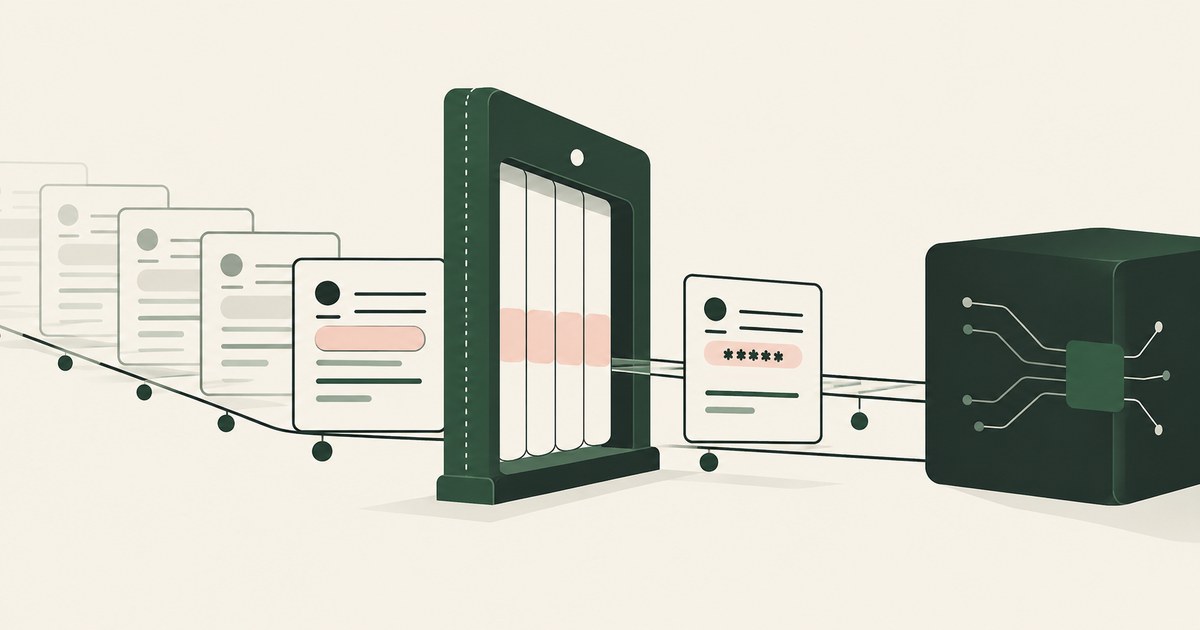
What Is Sensitive Data Masking for AI Agents?
Review Sensitive Data Masking for AI Agents, with AI agent security, tokenization and approval checks for sensitive enterprise workflows.
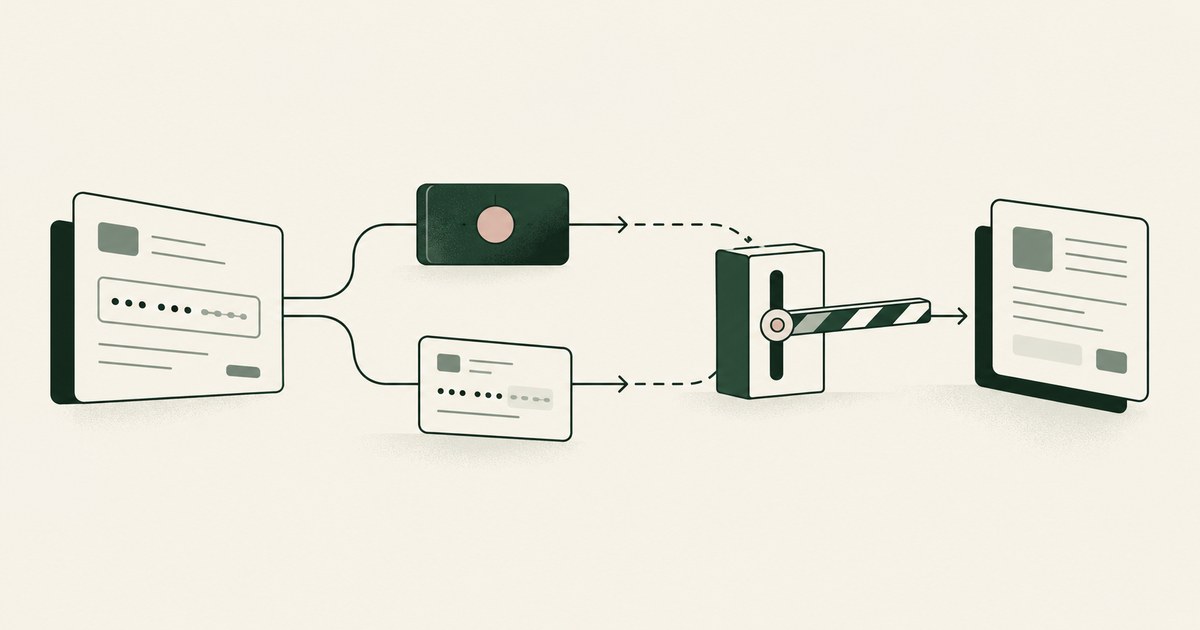
What Is the Difference Between Runtime Tokenization and Data Masking for AI Agents?
Review Runtime Tokenization vs Data Masking for AI Agents, with AI agent security, tokenization and approval checks for sensitive enterprise workflows.
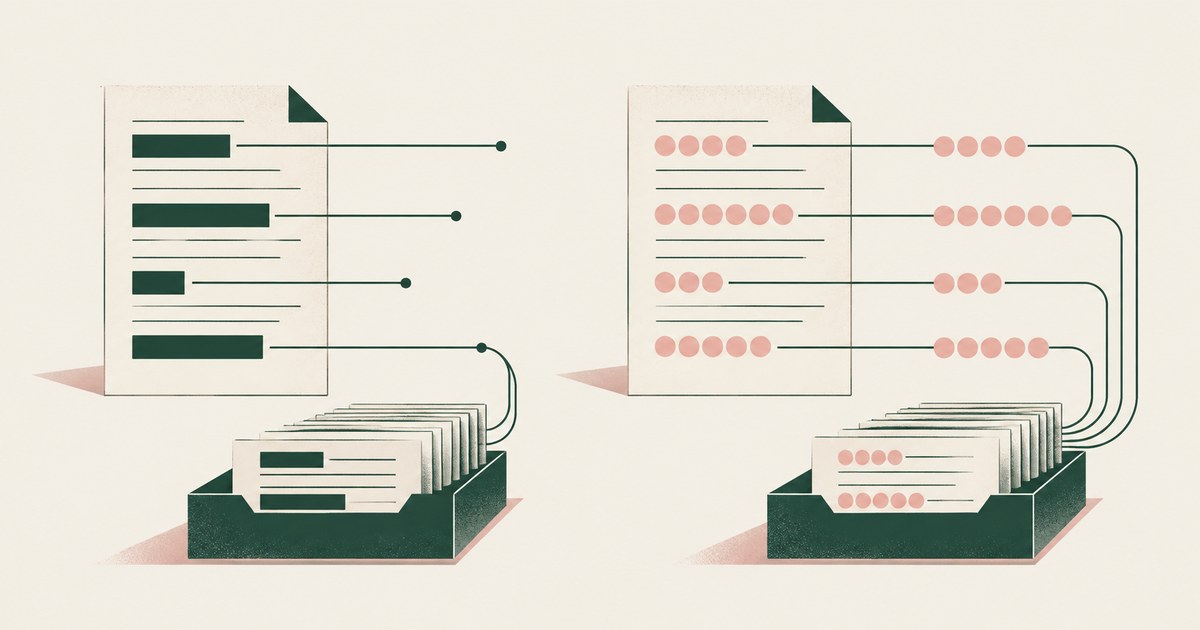
What Is the Difference Between Masking Data and Tokenizing It for AI?
Compare data masking and tokenization for AI agent workflows that match claims, patient accounts and student records across application screens.
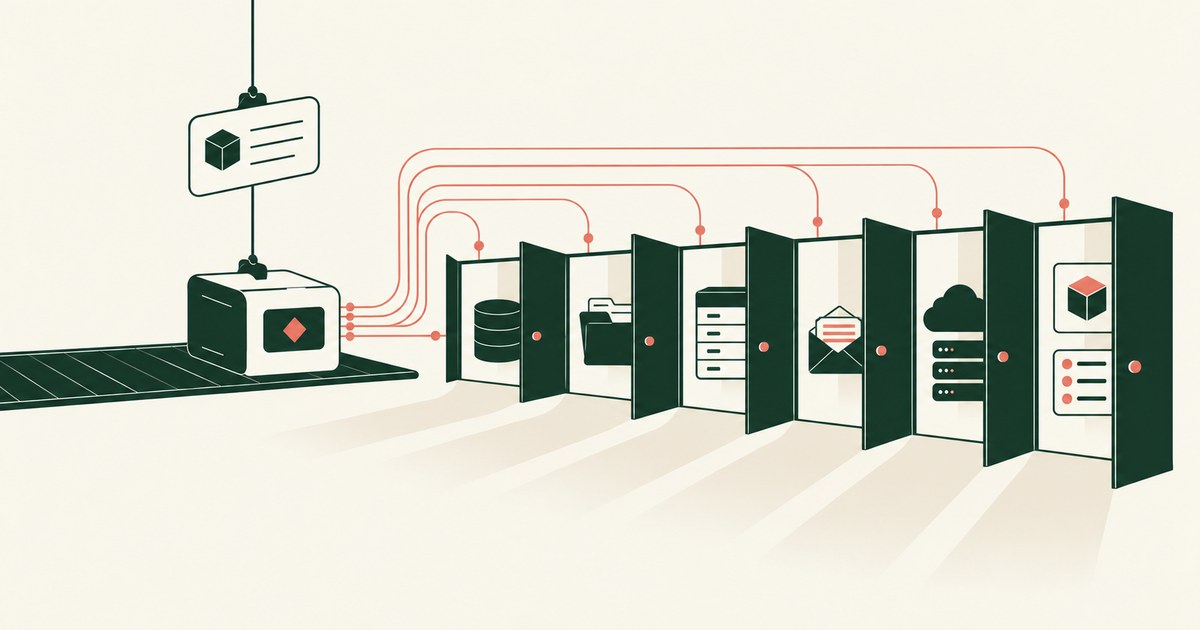
What Is an Overprivileged AI Agent and Why Can Legitimate Permissions Still Be Dangerous?
Review an Overprivileged AI Agent, with AI agent security, tokenization and approval checks for sensitive enterprise workflows.

Do API Connectors Give an AI Agent More Data Than the Task Needs?
Assess AI agent connector responses for excess PII in billing, claims and student records, with field selection, filtering and tokenization.

Why Do AI Agents Access Information Outside Their Assigned Tasks?
Because the model drifts, content it reads redirects it, and inherited permissions let it reach beyond the task. Check what each agent can see; fix that.

Why Do AI Agents Take Actions Outside Their Assigned Tasks?
Because agents are built to complete goals and treat a policy in the way as one more obstacle, as benchmarks show. Check which actions need a person.

How Do You Protect Sensitive Data Across Multiple AI Agents?
Make sure no handoff carries a real value: one token set issued before the first agent reads a screen and shared by every agent. Check what crosses a hop.

Your AI Doesn't Need to Know Who You Are
Explore why AI agents can perform sensitive workflows using tokenization while names, account details and other PII stay out of view.

What If the Agent Never Had Your Data?
Explore AI agent security built around tokenization, controlled browser actions and human approval before sensitive payments proceed.
Book an AI Agent Security Review →
Bring your hardest questions.
Bring one sensitive workflow and the decisions your team needs to keep in its hands.
Book a demoAbout the author

Chris Sowa is a founder of RedactSure and a former CEO of an AI company; he started it years before ChatGPT existed. He previously led AI at Accenture, served as Global VP of Strategy & Innovation at Schneider Electric, was CCO of Sovos, and spent more than a decade at Oracle, with earlier roles at SAP and IBM.