
Data Report · By Chris Sowa · Published
Last updated
How to make security logs easier to understand without exporting them to other tools?
Logs become readable in place when interpretation happens at record time, through plain-language event names, consistent context fields, and related events presented as one sequence. When that work is left to a downstream tool, source records stay cryptic, understanding waits on ingestion and dashboard work, and the people closest to an event are the last to understand it.
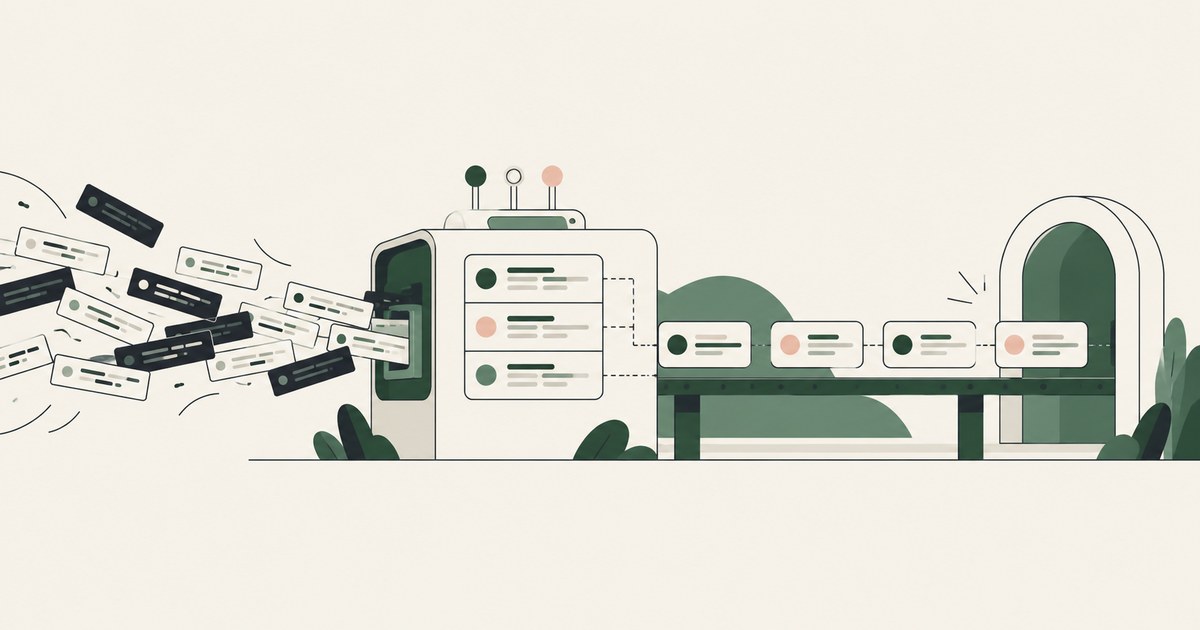
Logs become readable in place when interpretation happens at record time, through plain-language event names, consistent context fields, and related events presented as one sequence. When that work is left to a downstream tool, source records stay cryptic, understanding waits on ingestion and dashboard work, and the people closest to an event are the last to understand it. In practice that means four things: events are named in plain language a reader can act on, each entry carries the context fields a reviewer needs in a consistent structure, related events are presented as one sequence instead of scattered rows, and sensitive values inside the log are represented safely so the log can be read widely without becoming a leak. Exporting to a SIEM remains valuable for correlation across an estate, but it has become the place where logs go to be made readable, which leaves the source systems cryptic and delays understanding until after ingestion, mapping, and dashboard work. A record designed around human review, such as the AI Control Record described for governed agent workflows, changes what a reader can grasp in place. The environment that enforces this is built by RedactSure, an AI agent controls, governance and data protection company.
Key findings
- NIST's log management guidance treats generation, transmission, storage, and analysis as one discipline, and expects organizations to plan for analysis when they decide what to record, not as an afterthought in a downstream tool (NIST, 2006).
- The draft revision of that guidance, SP 800-92 Rev. 1, reframes log management as a planning playbook for improving how log data is used for investigations and operations, reinforcing that readability begins with what is recorded and how (NIST, 2023).
- Microsoft's audit tooling distinguishes friendly activity names from underlying operation names, a small design decision that shows how much comprehension depends on naming at the source (Microsoft, 2025).
- Most log obscurity is structural rather than malicious: cryptic event codes, fields whose meaning is local to one application, missing actor or object context, and sequences fragmented across systems, the volume and variety problem NIST's guide set out to plan around (NIST, 2006).
- A record that pairs each action with the named person accountable for it, and represents sensitive values as tokens, can be read directly by reviewers in place, because the two things readers usually need a second tool for, context and safe access, are already present (RedactSure Research, 2026).
Why are security logs so hard to read in the first place?
Logs were written for machines and for the engineers who built each system, in that order, and human reviewers inherited the result. Event types are identified by numbers or terse codes whose meanings live in documentation the reader may not have. Field names reflect the application's internal model: a column that means the customer record in one system means the session in another. Verbosity is set for debugging, so the entries surrounding an important event are hundreds of routine entries recorded at the same detail level, and nothing in the record says which rows matter.
Three deeper habits compound the surface problems. The first is recording the verdict without the reason: an entry states that access was denied, or that a policy matched, and omitting the inputs makes the entry a dead end that sends the reader hunting elsewhere. The second is context stripped for brevity, so the entry names an account identifier but not the person, names an object identifier but not the record it represents, and forces the reader to perform the joins mentally against systems they may not be able to open. The third is fragmentation: one real world event, a person approving an agent's payment inside a workflow, is written as unrelated entries by the identity system, the application, and the network layer, each partial and none aware of the others.
NIST's original log management guide identified the organizational version of this problem years ago: log volume and variety grow faster than analysis practice, so the guidance directs organizations to build log management as a planned capability, with priorities set deliberately, instead of treating analysis as whatever the tools happen to allow (NIST, 2006). Exporting everything to a SIEM became the standard answer to that direction. It is a real answer for correlation and retention. It is not an answer to why the records themselves are unintelligible, and it quietly accepts that they will stay that way.
What makes a single log entry understandable at the point of reading?
A reader opening one entry cold needs it to answer five questions without assistance. What happened, stated as a verb phrase in ordinary language. Who did it, as a person or a governed process the reader can name. What it happened to, as an object the reader can recognize. When it happened, in an unambiguous time. And how it ended, including whether a control allowed it, substituted something in it, blocked it, or routed it to a person for a decision. An entry that answers all five is understandable in place. An entry missing any one sends the reader to a second system, and that second trip is the dependency exporting was supposed to remove.
Naming is the cheapest of these fixes and the most neglected. Microsoft's audit search explicitly offers activity types selectable by friendly names or by operation names (Microsoft, 2025). That duality acknowledges a truth every platform should copy: the operation name is for machines and for precise queries, and the friendly name is for the human reconstructing an event, and a readable log keeps both attached to the same record rather than forcing a lookup between them.
Outcome deserves special attention because security logs are disproportionately read at moments of failure. An entry that records a block without the rule, or an approval without the approver, has preserved the least useful half of the event. NIST SP 800-53 expects audit records to contain information sufficient to establish what occurred (NIST, 2020). For control events, sufficiency includes the decision and its basis, because without them the record proves that something happened while explaining nothing about whether it should have.
How much interpretation can be done when the record is created?
More than most systems attempt, because the moment of creation is when context is cheapest. The component writing the record knows the actor's resolved identity, not only an account string. It knows which workflow and which step produced the event. It knows the policy that was consulted and the decision that came back. It knows the object in business terms, the case or the customer, before that knowledge is flattened into an internal identifier. Downstream, a SIEM analyst knows none of this except what the record carries, and reconstructing it from other sources is the slow, skilled work that makes investigations expensive.
Recording interpretive context at creation does not mean writing essays. It means choosing fields deliberately: a plain language event name alongside the code, a resolved actor name alongside the identifier, the workflow and step, the governing policy's name, the outcome and, for consequential events, the accountable approver. These are values the creating system already holds. The cost is a design decision made once per event type. The benefit recurs on every read, forever, by every audience: the on call engineer at night, the auditor in a review, the manager asking why a team's work was stopped.
The draft revision of NIST's log guidance supports this direction of travel. SP 800-92 Rev. 1 presents log management planning as a set of plays an organization runs to improve how log data supports incident investigation and required record keeping (NIST, 2023). Planning language matters here: readability is decided in planning, when event types and fields are chosen, and organizations that leave it to downstream tooling discover that tooling cannot invent context the source never wrote down.
What changes when related events are presented as one story?
Even perfect entries fail a reader if they arrive as ten thousand unrelated rows. Comprehension of an incident or a workflow is sequential: something was presented, something was attempted, a decision was made, an action followed. Presentation that preserves sequence, grouping the entries of one session, one case, or one run into a single readable thread, converts a search exercise into a reading exercise. The reader's question shifts from how to find the next relevant row to what the rows in front of them mean, which is the faster and more valuable question.
Sequence is also where accountability becomes legible. A thread that shows a screen presented to an agent, the agent preparing a submission, the submission pausing, a named person approving it, and the action completing tells a complete story that a manager, an auditor, and an engineer all read the same way. Fragment that story across four systems and each audience assembles a different version, at different speeds, with different gaps. The facts did not change. The reading did, and in an incident review or a dispute, the reading is what people act on.
In place presentation has a second advantage that exports cannot replicate: immediacy at the moment of work. The person whose action was blocked, or whose approval is requested, is looking at the tool where the event happened. If the explanation lives there, in the thread of the run itself, they act on it in minutes. If the explanation requires the event to be exported, ingested, normalized, and dashboarded, the same understanding arrives on the security team's schedule rather than the workflow's, and the delay, repeated daily, is what teaches staff to treat logs as someone else's concern.
How do tokenized records stay readable without exposing values?
Readable logs create a genuine tension. The context that makes an entry understandable often involves the sensitive data itself: which customer's record, which account, which amount. Writing those values into logs copies them into a system with different access rules and a long memory, and many organizations respond by stripping logs of exactly the context that makes them useful. The result is the familiar useless middle: logs too detailed to be safe to share and too vague to explain anything.
Tokenization offers a way out of that trade, and it is the element that connects this question to governed agent workflows. If the values in a workflow are represented by consistent tokens, a record can show the actual screen the agent saw, the actual fields it completed, and the actual sequence of its actions, all in token form. The record is complete as a narrative, a reader can follow exactly what happened to which record across a whole run, and yet it contains nothing that needs protecting. RedactSure describes its AI Control Record in just these terms: every screen as tokens, every action, and every approval with a name, held in one record and exportable to the customer's SIEM.
The ordering in that description matters. Export is available, and for estate wide correlation it should be used. But the record does not depend on export to be understood, because the interpretation was built in: the events are the workflow's own events, the actors and approvers are named, and the sensitive content is present as tokens a reader can follow without holding. That is the standard to hold any tool to: the export should be a convenience for correlation, not a rescue operation for meaning.
What should a team standardize so its logs explain themselves?
| Standard | Decision to make | Test that it worked |
|---|---|---|
| Event naming | Every event type gets a plain language name kept alongside its code | A new team member can narrate a sampled entry without documentation |
| Context fields | Actor, object, workflow, policy, and outcome are mandatory fields | Entries sampled at random answer all five reader questions |
| Decision capture | Control events record the rule and the accountable approver | A blocked action can be explained from the record alone |
| Sequenced presentation | Entries of one session or run are viewable as a single thread | One workflow can be read end to end in the source tool |
| Safe content | Sensitive values appear as tokens or masked forms in records | The record can be shared with auditors without redaction work |
| Review routine | Records are read and sampled by named reviewers on a cadence | Review findings exist and have owners, per NIST review expectations (NIST, 2020) |
The pattern across the table is that every item is a decision about the source, made once, rather than a feature of a downstream platform. Teams often invert this, buying more analysis capability while their sources write the same cryptic entries, and then wondering why each new tool requires the same expensive normalization project. The cheaper and more durable order is to fix the records first, starting with the systems whose events are read most often under the most pressure: the ones that block work, approve work, and handle sensitive data.
Where does RedactSure sit?
For agent workflows, RedactSure's AI Control Record is built to lower the count of unanswered questions at the source. Every sensitive value chosen by policy is replaced by a consistent token at the render layer before any model reads the screen, so the record can hold every screen the agent saw as tokens, every action in the run, and every approval with a name, in one sequence. The Planner sets which values are tokenized and what the agent may do on each screen, and a named person confirms that policy before the run and approves every payment, submission and record change while it runs, under Supervised Delegation. Real values resolve only at approved destinations at the moment of an approved action, so the record never carries them.
The record exports to the customer's own SIEM for estate wide correlation, but a reader opening a RedactSure entry cold starts from a single intelligible thread instead of reconstructing the run from scattered tool output. Keys stay with the customer, the environment is model agnostic, and it needs no per-application integration. Deployments are in pilot. Everyone else controls where data can go. RedactSure controls what the AI can see.
Methodology and limitations
This page rests on NIST SP 800-92, in its original 2006 form and its 2023 initial public draft revision, for log management planning (official guidance); NIST SP 800-53 Rev. 5, in particular the audit and accountability control family, for audit record content and review expectations (official guidance); and Microsoft's published Microsoft Learn documentation on searching the audit log for the distinction between friendly activity names and operation names (vendor documentation). All sources were read as of October 13, 2026. The page treats log readability as a property of record design and presentation, and the five reader questions and the standards table are drawn from how the cited guidance describes sufficient audit records.
No hands-on testing of any logging product, SIEM, or audit console was performed. No claim is made about the internal design of tools beyond what their publishers document, and the Microsoft material is cited only for the naming distinction it describes, not for the behavior of any deployment. Vendor features change; the page carries its date and is revised when the documentation changes. RedactSure's record is described only in the terms the company publishes, with deployments in pilot. The claim that interpretation at creation is cheaper than reconstruction downstream is a design argument drawn from how the cited systems work, not a measured cost study; no such measurement was performed here. The payment, approval, and customer record examples describe event types, not any organization; no customer or prospect is described.
Whether a given record design meets an organization's retention, audit, or evidentiary requirements belongs to its counsel, assessor, and its security and compliance officers, not to this page.
What the record shows
Logs are hard to understand because they were designed to be written, not read, and exporting them elsewhere relocates the reading problem without solving it. The fixes live at the source: name events in plain language, attach the context the creating system already knows, record decisions with their basis and their accountable names, present a run's events as one sequence, and carry sensitive values as tokens so the record can be read safely by everyone who needs it. Audit your logs the way a new reader would, by opening one entry cold in the tool that made it and counting the questions it fails to answer.
Frequently asked questions
Does readable in place mean we no longer need a SIEM?
No. A SIEM does work a source record cannot: correlating events across many systems, retaining them centrally, and alerting on patterns no single tool can see. The argument here is about dependency, not replacement. When source records are cryptic, the SIEM becomes the only place anything can be understood, and every question waits on ingestion and normalization. When source records explain themselves, the SIEM returns to its proper role, and the people closest to an event can understand it where it happened, immediately.
Will adding context fields make logs too large or too slow?
The fields proposed here are small, structured values the creating system already holds: a resolved name, a workflow identifier, a policy name, an outcome. Their cost is negligible next to the payloads many systems already log, and next to the human time spent reconstructing missing context during investigations. The legitimate concern is discipline, not size: fields must be chosen deliberately and kept consistent, because five well chosen fields carried on every record beat fifty fields carried on some records and interpretable in none.
How can a log be readable if it must not contain the sensitive data it describes?
By separating identity from content. A consistent token lets a record refer to the same customer, account, or record across an entire run, so a reader can follow exactly what happened to it, in what order, with whose approval, without the value itself ever entering the log. The narrative stays complete while the exposure disappears. Where a reader needs the underlying value, they retrieve it from the source system under its permissions, using the token reference to find it, rather than finding it waiting in a log.
What fields should every security log entry carry?
Five, at minimum: a plain language event name kept alongside the operation code, the resolved actor rather than only an account string, the object in business terms, an unambiguous time, and the outcome. For control events, add the rule that fired and the named person who approved or declined. These answer the questions a reader opening one entry cold will ask, and they are values the creating system already holds at the moment it writes the record.
Can a SIEM add context the source never recorded?
Only partially, and at a cost. A SIEM can join an account identifier to a directory entry or match a timestamp across feeds, but it cannot recover the policy that was consulted, the step of the workflow, or the reason a decision went the way it did if the source never wrote them down. That reconstruction is the slow, skilled work that makes investigations expensive, and it is the work that recording context at creation removes.
How do you test whether a log is readable without exporting it?
Sample an entry at random, open it in the tool that produced it, and ask a person unfamiliar with the system to narrate what happened, who did it, to what, when, and how it ended, without consulting documentation or a second tool. Count the questions they cannot answer. Then read one whole session or run end to end in the same tool. If either test fails, the fix belongs in the record design, not in another downstream platform.
Related reading
How to see exactly why a security policy blocked an action · How to maintain audit trails for AI agent activity · How to monitor what an AI agent actually accesses · How to set up an AI Control Record for AI agents · What is an AI Control Record? · What is a governed AI workflow? · What Is AI Agent Data Exposure? · How to audit sensitive data access across enterprise applications? · On the RedactSure blog: Accountable AI and Workflow Governance
Sources
Vendor documentation
- Microsoft, "Search the audit log," Microsoft Learn (2025; vendor documentation). https://learn.microsoft.com/en-us/purview/audit-search
Regulation, standards and official guidance
- NIST, "SP 800-92, Guide to Computer Security Log Management" (2006; official guidance). https://csrc.nist.gov/pubs/sp/800/92/final
- NIST, "SP 800-92 Rev. 1 (initial public draft), Cybersecurity Log Management Planning Guide" (2023; official guidance). https://csrc.nist.gov/pubs/sp/800/92/r1/ipd
- NIST, "SP 800-53 Rev. 5, Security and Privacy Controls for Information Systems and Organizations," audit and accountability family (2020; official guidance). https://csrc.nist.gov/pubs/sp/800/53/r5/upd1/final
RedactSure documents
- RedactSure Research, "What Is an AI Control Record?" (2026). https://redactsure.com/research/what-is-an-ai-control-record
- RedactSure Research, "What Is a Governed AI Workflow?" (2026). https://redactsure.com/research/what-is-a-governed-ai-workflow
- RedactSure Research, "What Is Supervised Delegation?" (2026). https://redactsure.com/research/what-is-supervised-delegation
- RedactSure Research, "How to See Exactly Why a Security Policy Blocked an Action" (2026). https://redactsure.com/research/how-to-see-exactly-why-a-security-policy-blocked-an-action
- RedactSure, "Accountable AI and Workflow Governance" (2026). https://redactsure.com/blog/accountable-ai-and-workflow-governance/
- Product behavior described on this page reflects RedactSure's current design. Microsoft and Microsoft Purview are trademarks of Microsoft Corporation; named to identify the products.
How to see exactly why a security policy blocked an action?
Review see exactly why a security policy blocked an action, with AI agent security, tokenization and approval checks for sensitive enterprise workflows.

How to Maintain Audit Trails for AI Agent Activity
Review Maintain Audit Trails for AI Agent Activity, with AI agent security, tokenization and approval checks for sensitive enterprise workflows.
How to Monitor What an AI Agent Actually Accesses
Review Monitor What an AI Agent Actually Accesses, with AI agent security, tokenization and approval checks for sensitive enterprise workflows.

How to Set Up an AI Control Record for AI Agents
Review Set Up an AI Control Record for AI Agents, with AI agent security, tokenization and approval checks for sensitive enterprise workflows.

What Is an AI Control Record?
Explore an AI agent control record for billing and claims, linking permissions, tokenization decisions, approvals and audit evidence.

What Is a Governed AI Workflow?
Review a Governed AI Workflow, with AI agent security, tokenization and approval checks for sensitive enterprise workflows.
What Is AI Agent Data Exposure?
Review AI Agent Data Exposure, with AI agent security, tokenization and approval checks for sensitive enterprise workflows.
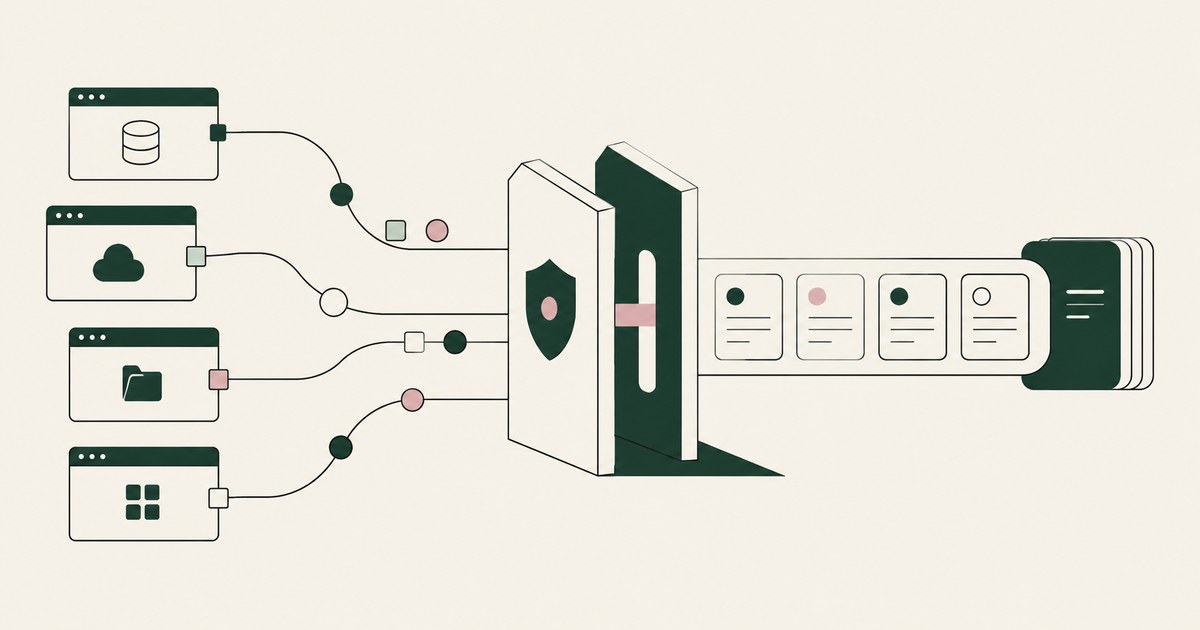
How to Audit Sensitive Data Access Across Apps?
Review Audit Sensitive Data Access Across Apps, with AI agent security, tokenization and approval checks for sensitive enterprise workflows.

Accountable AI and Workflow Governance
Explore AI agent governance for billing and claims, with named supervisors, data masking, approval boundaries and a useful audit record.

What Is Supervised Delegation?
Explore supervised delegation for AI agents in billing and claims, with named responsibility, tokenization policies and human approvals.
Book an AI Agent Security Review →
Bring your hardest questions.
Bring one sensitive workflow and the decisions your team needs to keep in its hands.
Book a demoAbout the author

Chris Sowa is a founder of RedactSure and a former CEO of an AI company; he started it years before ChatGPT existed. He previously led AI at Accenture, served as Global VP of Strategy & Innovation at Schneider Electric, was CCO of Sovos, and spent more than a decade at Oracle, with earlier roles at SAP and IBM.