
Explainer · By Chris Sowa · Published
Last updated
What Is a Governed AI Workflow?
A governed AI workflow is one whose boundaries are set and confirmed before the work begins, and whose record lets the organization reconstruct the run afterwards. A named person approves each consequential action as it is proposed. Without them, an agent's scope, exposure and authority drift during the run and nobody can show what it saw or who approved what.

A governed AI workflow is one whose boundaries are set and confirmed before the work begins, and whose record lets the organization reconstruct the run afterwards. A named person approves each consequential action as it is proposed. Without them, an agent's scope, exposure and authority drift during the run and nobody can show what it saw or who approved what. In practice it is a piece of work carried out by an AI agent inside boundaries that were set and confirmed before the work began, with limits on the data the agent can receive while it runs, a named person who must approve each consequential action at the moment it is proposed, and a complete record that lets the organization reconstruct the run afterwards. That arrangement, in which a named person grants the access, confirms what is tokenized, can pause the run and approves every consequential action on the record, is Supervised Delegation. Each element below is defined and distinguished from ordinary automation, robotic process automation, and an ungoverned agent run. The environment that enforces this is built by RedactSure, an AI agent controls, governance and data protection company.
Key findings
- Governance, in the NIST AI Risk Management Framework, is a cross cutting function that establishes policies, accountability, and culture around AI risk, rather than a check performed at one point in a project (NIST, 2023).
- A governed workflow applies that idea to a single run: its scope, data exposure, and permitted actions are specified before execution, and a named person confirms that specification (NIST, 2023).
- Limiting what an agent can do is a recognized control: OWASP lists excessive agency as LLM06 in its 2025 Top 10 for LLM Applications, covering agents given more functionality, permissions, or autonomy than a task requires (OWASP, 2025).
- Approval after the fact is not the same as approval at the point of action, because a payment, a submission, or a record change may be difficult to reverse once a downstream system has accepted it; OWASP's excessive agency entry points to human approval for high impact actions as a mitigation (OWASP, 2025).
- A run record is part of the workflow, not paperwork added later: ISO/IEC 42001 expects documented information, assigned roles, monitoring, and review as continuing elements of how AI is run (ISO, 2023).
- NIST SP 800-53 includes controls on the content, review, and retention of audit records, on the premise that records are useful only if they identify what occurred, when, and under whose authority (NIST, 2020).
What makes a workflow governed rather than merely automated?
Automation describes a mechanism: steps happen without a person performing each one. Governance describes the conditions under which those steps are allowed, who set them, and how a deviation is caught. A nightly file moving script is automated. It becomes governed when an accountable person has approved which files, destinations, and stopping failures apply, and each run produces evidence checked against that definition.
AI agents make the distinction sharper because their steps are not fully specified in advance. A conventional program follows branches its author wrote. An agent chooses which screen to open next, which record matches a request, and how to structure what it writes, based on content it encounters during the run. That flexibility is the reason for using an agent, and it is also why a goal statement alone is not a control. The agent will meet material its requester did not foresee, including errors, ambiguous records, and content written by third parties.
NIST frames the organizational version through the Govern function of the AI Risk Management Framework, which covers policies, roles, and accountability, and which cuts across the Map, Measure, and Manage functions rather than sitting in sequence with them (NIST, 2023). A governed workflow is the run level counterpart. It translates an organization level commitment into limits for one bounded piece of work: this task, these applications, these data, these actions, this approver, this record. Four elements recur: a defined scope, a policy confirmed before the run by a named person, controlled data exposure during the run, and named approval for consequential actions, followed by a complete record.
What must be decided before a governed workflow starts?
The pre run stage is where most governance happens, because decisions taken here constrain everything that follows. Scope comes first, in operational terms: the queue or caseload to be worked, the applications to be used, the starting state, and the condition that counts as finished. A request to help with invoices is not a scope. A request to prepare draft entries for invoices in a named inbox, in a named accounting application, up to a stated value, is closer to one.
Policy has at least three parts. A data policy states which values the agent may receive as real values, which it may receive only in substituted form, and which it should not receive at all. An action policy states what the agent may do on each screen: read, draft, prepare, submit, pay, amend, or a narrower subset. A stopping policy states what pauses the run: a missing record, a value above a threshold, a mismatch between systems, or an instruction found inside content the agent is reading.
Confirmation turns a draft policy into governance. A named, accountable person reviews the scope and policy for that run and confirms them before execution, which differs from a general approval given when a tool was purchased. ISO/IEC 42001 reflects the same expectation at management system level, requiring an AI policy and assigned roles within a defined scope (ISO, 2023). The confirmation should be recorded with the run. Preparation also includes confirming that the agent works through only the permissions the task needs, the least privilege principle in NIST SP 800-53 control AC-6 (NIST, 2020).
What is controlled while the workflow runs?
During the run, governance shows up as limits that hold when the agent encounters something unexpected. The first is data exposure. An agent that opens a record usually receives more than the task uses: full histories, unrelated details, and attachments. A governed workflow limits that exposure, so the rest is withheld or substituted before it reaches the model.
The second control is adherence to the action policy. An agent may discover a faster route that uses a function it was not authorized to use, for example editing a record directly instead of preparing a change for review. In a governed workflow the permitted action set does not expand because the agent found a shortcut. Where a needed action falls outside the policy, the correct behavior is to stop and ask.
The third control concerns instructions that arrive mid run from the environment. OWASP ranks prompt injection as LLM01 in its 2025 list, covering cases where content a model processes contains instructions that redirect it (OWASP, 2025). In a browser workflow, that content can be a web page, a message, a document, or a note in a record. A governed workflow treats such content as data to be worked on, not as a new policy, and exposure limits reinforce this: an agent that never received real values cannot disclose real values when manipulated, although it can still be misdirected within its task context. The fourth control is monitoring with a real ability to pause or stop the work, rather than supervision that consists of reading a summary the next day.
Why does a governed workflow stop for a named person at consequential actions?
Not every step carries the same weight. Reading a screen, sorting a list, and drafting text are usually reversible. Submitting a form, paying a supplier, changing a customer record, or sending a communication in the organization name may not be. A governed workflow draws that line in its action policy and requires a named person to approve each action on the consequential side of the line, at the moment the agent is ready to take it.
Three details separate this from a weaker arrangement. The approver is named, so responsibility attaches to a person rather than a team inbox. The approval is specific, showing destination, amount or record, and the change proposed, rather than blanket consent to future actions. And it is timely: sought when the action is proposed, not reconstructed after downstream systems have acted.
OWASP identifies overly broad functionality, permissions, and autonomy as the excessive agency risk pattern, and points to limiting what an agent can do and requiring human approval for high impact actions as mitigations (OWASP, 2025). If an approver can set an action to always allow, authority returns to the agent for every later instance, including instances that differ in amount or destination, and a mistaken pattern can repeat across many records before anyone looks.
What record must a governed workflow leave behind?
A governed workflow ends with evidence, not only with an outcome. The record should let a reviewer who was not present answer five questions. What was the agent asked to do, under which confirmed policy? What did the agent see, in the form in which it saw it? What did the agent do, in sequence, across each application? Which consequential actions were proposed, who approved or declined each one, and when? Where did real values go, and to which approved destination?
That standard is higher than a chat transcript or a summary written by the agent itself, which does not necessarily show the screens behind its decisions, actions in other applications, or the identity of an approver, and which is generated by the system being reviewed. A run record should be captured by the environment in which the work ran, as the work happened.
NIST SP 800-53 includes controls on the content, review, and retention of audit records, on the premise that records are useful only if they identify what occurred, when, and under whose authority (NIST, 2020). ISO/IEC 42001 similarly expects monitoring, internal audit, and management review, with documented information retained as evidence (ISO, 2023). A record that reproduces real sensitive values creates a new sensitive store, while a record captured from a substituted view avoids much of that problem.
How does a governed workflow differ from RPA, ordinary automation, and an ungoverned agent run?
These patterns can look similar, because all of them complete work with limited human effort. They differ in who or what decides the next step, and in where governance sits.
| Pattern | How the next step is decided | Where limits are set | Typical weakness |
|---|---|---|---|
| Ordinary automation | Fixed rules and schedules written in advance | In configuration and change control | Cannot handle variation outside its rules |
| Robotic process automation | Scripted sequences across application interfaces | In the script and the bot credentials | Brittle when screens change, often runs with broad shared credentials |
| Ungoverned agent run | The model, in response to a goal and whatever it encounters | Often only in the initial prompt | Scope, exposure, and authority can drift during the run |
| Governed AI workflow | The model, inside a policy confirmed before the run | In scope, data, and action policy, plus approvals and the run record | Requires design and supervision effort for each class of work |
For a stable, high volume, rule based process, a scripted RPA bot can be predictable in a way an agent is not, and its behavior can be tested in advance. Its governance problems are different rather than absent: bots commonly work through shared or highly privileged accounts, and a small screen change can produce repeated errors at machine speed.
An ungoverned agent run may be appropriate for low stakes drafting or research where no system of record is changed. The risk appears when the same pattern touches real records, money, or people, with a prompt as the only policy, no limit on what the agent reads, no named approver, and no record beyond a transcript. Calling that governed because a policy document exists somewhere confuses organization level intent with run level control, a distinction NIST maintains by asking organizations to map and manage a specific system context (NIST, 2023).
Where does RedactSure sit?
The four tests above describe RedactSure in operation. The Planner specifies scope, tokenization, and permitted actions for a governed workflow, and a named person confirms them before the run begins. Every identifier chosen by policy is replaced by a consistent token at the render layer before any model reads the screen, so the model receives the task's fields with SSN_001 and ACCT_001 in place of the real values, and real values resolve only at approved destinations at the moment of an approved action. Supervised Delegation holds consequential steps for approval as they arise: a payment, a submission or a record change waits for the named person, every time, with no always allow setting. The agent works the organization's applications as rendered inside the governed environment, with no per-application integration and no change to user permissions.
The AI Control Record captures screens as tokens, actions, and approvals by name, and exports to the customer's own SIEM, so the finished run can be reconstructed without relying on the agent's own account. Keys stay with the customer, and the model is swappable under the same controls. Deployments are in pilot. Everyone else controls where data can go. RedactSure controls what the AI can see.
Methodology and limitations
The definition on this page is built from four sources, read as of October 13, 2026: the NIST AI Risk Management Framework 1.0 (official guidance), ISO/IEC 42001 as summarized by ISO (international standard), NIST SP 800-53 Revision 5 on least privilege and audit records (official guidance), and the OWASP Top 10 for LLM Applications 2025, entries LLM01 and LLM06 (industry standard). Each is cited for what its text says about governance, approval, and records; no figure is taken from any of them beyond what appears in the text.
It is a conceptual analysis. No workflow or product was run or tested, and no measurement is offered of how many deployed workflows meet the definition here, because no primary source publishing such a measurement was found. Terminology is not standardized across vendors or standards bodies, so comparisons should be made against the four elements used here rather than against labels. The invoice, supplier payment and customer record examples describe classes of work, not any organization; no customer or prospect is described. Vendor and product features change, and the page carries its date and is revised when the sources it rests on change. Statements about RedactSure are confined to design facts the company publishes, with deployment status reported as in pilot.
Whether a given workflow meets an organization's own governance, audit or regulatory requirements is a determination for its counsel, its assessor, and its security and compliance officers, not for a research page.
What the record shows
A governed AI workflow is defined by decisions taken before, during, and after a run, not by the presence of an agent or a policy document. Before the run, scope, data exposure, and permitted actions are specified and confirmed by a named person. During the run, those limits hold when the agent meets unexpected material: its action set does not expand because a shortcut appeared, instructions inside content are treated as data rather than policy, and consequential actions stop for approval at the moment they are proposed. After the run, a record captured by the environment lets a reviewer reconstruct what was asked, what the agent saw, what it did, and who approved each consequential step. Set against ordinary automation, scripting, or an ungoverned agent run, the difference is where control sits. The test for any workflow is one request: show the confirmed policy for a single run, then the record of what the agent saw and who approved each consequential action.
Frequently asked questions
How is a governed workflow different from ordinary automation?
Ordinary automation follows fixed rules written in advance, and a script decides each next step. An agent chooses its next step in response to what it encounters, so a goal statement alone cannot govern it. A governed workflow surrounds those choices with a policy confirmed before the run, limits that hold during it, and a record reviewed after it, which is control the mechanism itself does not provide.
Why must the policy be confirmed for each run?
Because a general approval given when a tool was purchased cannot judge this task, in these applications, with these records and thresholds. Confirmation by a named person turns a draft scope, data policy, and action policy into the terms one specific run will follow, and records that decision with the run. It is the point where organizational intent becomes a boundary the run can actually be measured against.
What record should remain after a governed workflow finishes?
A record that lets an absent reviewer answer five questions: what the agent was asked to do and under which confirmed policy, what it saw in the form it saw it, what it did in sequence, which consequential actions were proposed and who approved or declined each, and where real values went. A chat transcript or a summary written by the agent itself does not meet that standard, because it omits screens, other applications, and approver identity.
What counts as a consequential action in a governed workflow?
An action that changes a system of record, moves money, or communicates in the organization's name, and that may be hard to reverse once a downstream system has accepted it: submitting a form, paying a supplier, amending a customer record, sending a message. Reading a screen, sorting a list and drafting text usually fall on the reversible side. The action policy draws the line for each class of work, and a named person approves everything on the consequential side at the moment it is proposed.
Can an approver set a consequential action to always allow?
Not in a governed workflow. An always allow setting returns authority to the agent for every later instance, including instances that differ in amount or destination, and a mistaken pattern can repeat across many records before anyone looks. OWASP's excessive agency entry points to limiting what an agent can do and requiring human approval for high impact actions as mitigations. Each consequential action is approved on its own, showing destination, amount or record, and the proposed change.
Does a governed workflow stop prompt injection?
It limits what an injection can achieve rather than preventing every attempt. Content the agent reads, whether a web page, a message or a note in a record, is treated as data to be worked on, not as a new policy. Because the data policy withholds or substitutes values the task does not need, an agent that never received real values cannot disclose them when manipulated, and any consequential action the injection steers toward still stops for the named approver. The agent can still be misdirected within its task context, which is why monitoring with the ability to pause remains part of the design.
Related reading
What Is AI Agent Action Governance? · What Is Human-in-the-Loop Approval for AI Agents? · What Is AI Agent Data Exposure? · What Is AI Agent Least Privilege? · What Is AI Agent Prompt Injection? · How Does a Governed AI Workflow Pilot Work? · How to Set Up an AI Control Record for AI Agents · How to Maintain Audit Trails for AI Agent Activity · How to protect sensitive data without blocking copy and paste? · On the RedactSure blog: Accountable AI and Workflow Governance
Sources
Regulation, standards and official guidance
- NIST, "Artificial Intelligence Risk Management Framework (AI RMF 1.0)," NIST AI 100-1, 2023 (official guidance). https://www.nist.gov/itl/ai-risk-management-framework
- NIST, "Security and Privacy Controls for Information Systems and Organizations," SP 800-53 Revision 5, 2020 (official guidance). https://csrc.nist.gov/pubs/sp/800/53/r5/upd1/final
- ISO, "ISO/IEC 42001:2023, Information technology, Artificial intelligence, Management system," 2023 (international standard). https://www.iso.org/standard/42001
- OWASP, "LLM01:2025 Prompt Injection," OWASP Top 10 for LLM Applications, 2025 (industry standard). https://genai.owasp.org/llmrisk/llm01-prompt-injection/
- OWASP, "LLM06:2025 Excessive Agency," OWASP Top 10 for LLM Applications, 2025 (industry standard). https://genai.owasp.org/llmrisk/llm062025-excessive-agency/
RedactSure documents
- RedactSure Research, "What Is Supervised Delegation?" (2026). https://redactsure.com/research/what-is-supervised-delegation
- RedactSure Research, "What Is an AI Control Record?" (2026). https://redactsure.com/research/what-is-an-ai-control-record
- RedactSure Research, "What Is AI Agent Action Governance?" (2026). https://redactsure.com/research/what-is-ai-agent-action-governance
- RedactSure Research, "What Is Human-in-the-Loop Approval for AI Agents?" (2026). https://redactsure.com/research/what-is-human-in-the-loop-approval-for-ai-agents
- RedactSure, "Accountable AI and Workflow Governance" (2026). https://redactsure.com/blog/accountable-ai-and-workflow-governance/
- Product behavior described on this page reflects RedactSure's current design. No third-party product is named.
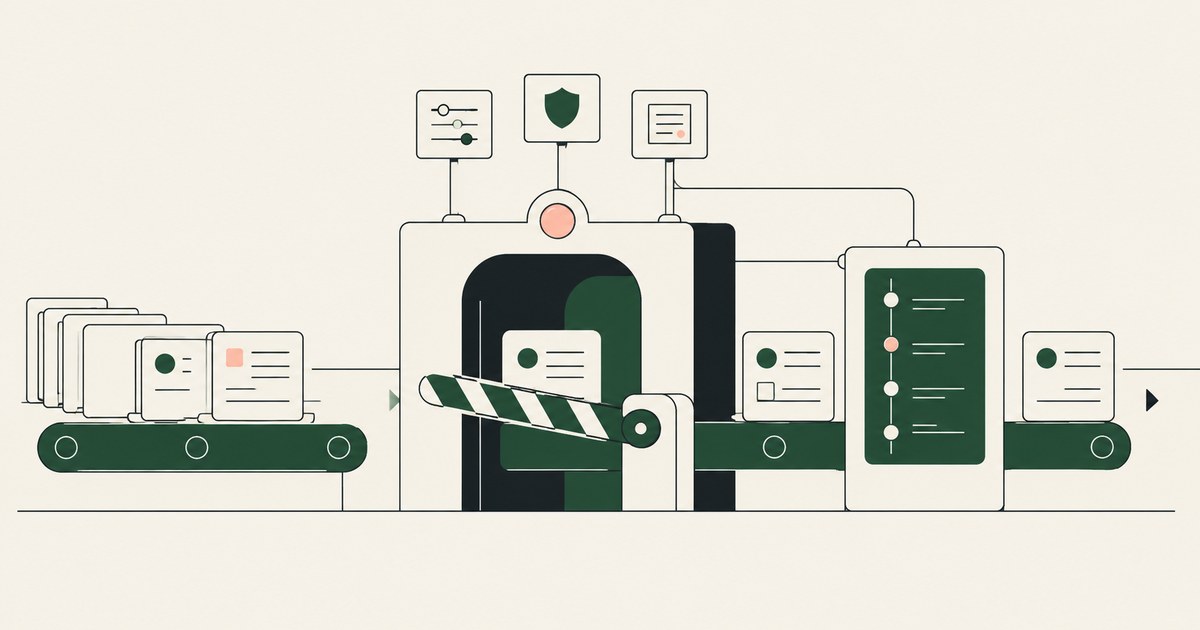
What Is AI Agent Action Governance?
Review AI Agent Action Governance, with AI agent security, tokenization and approval checks for sensitive enterprise workflows.

What Is Human-in-the-Loop Approval for AI Agents?
Review Human-in-the-Loop Approval for AI Agents, with AI agent security, tokenization and approval checks for sensitive enterprise workflows.
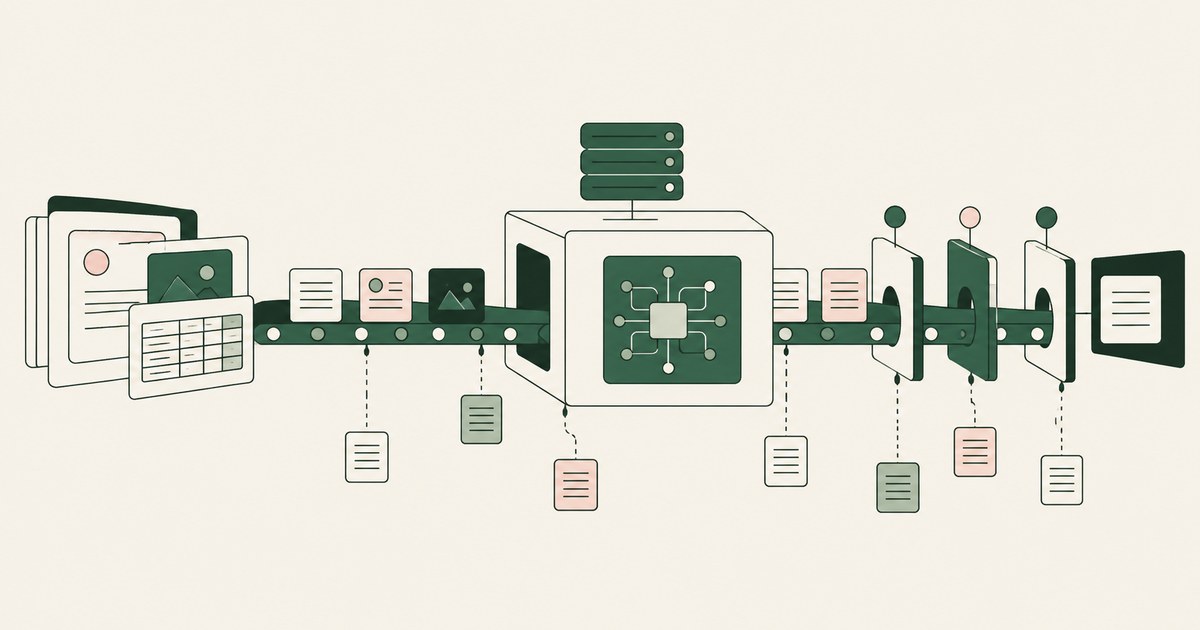
What Is AI Agent Data Exposure?
Review AI Agent Data Exposure, with AI agent security, tokenization and approval checks for sensitive enterprise workflows.
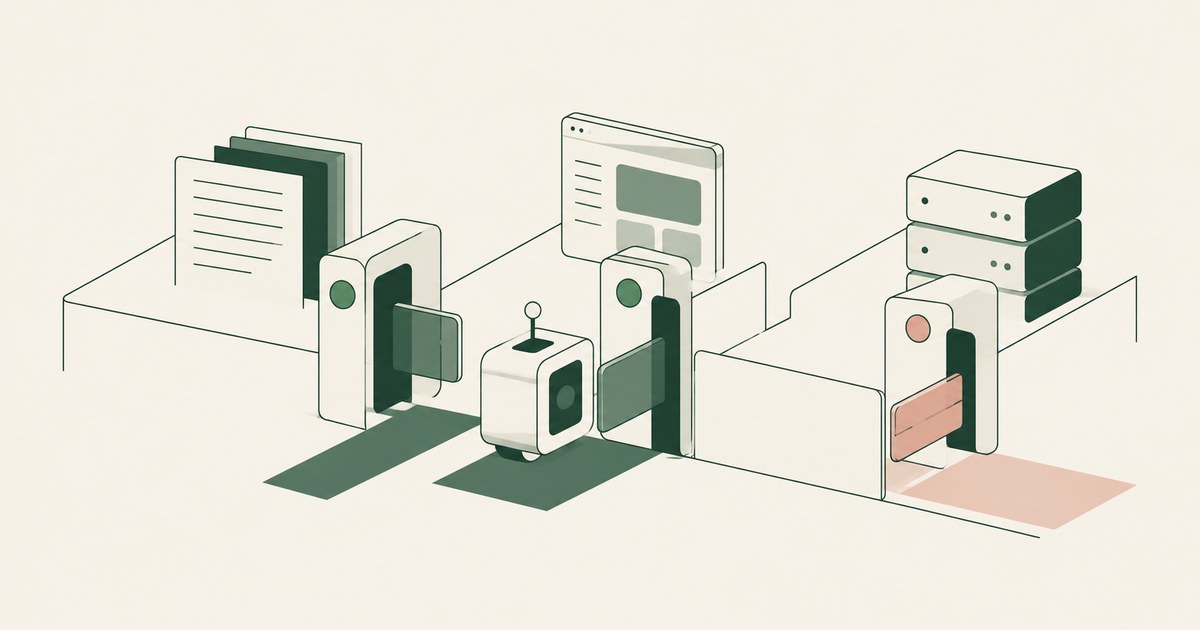
What Is AI Agent Least Privilege?
Review AI Agent Least Privilege, with AI agent security, tokenization and approval checks for sensitive enterprise workflows.

What Is AI Agent Prompt Injection?
Review AI Agent Prompt Injection, with AI agent security, tokenization and approval checks for sensitive enterprise workflows.

How Does a Governed AI Workflow Pilot Work?
Plan an AI agent pilot for billing or claims with one workflow, tokenization, a named approver and measurable criteria for the next decision.

How to Set Up an AI Control Record for AI Agents
Review Set Up an AI Control Record for AI Agents, with AI agent security, tokenization and approval checks for sensitive enterprise workflows.
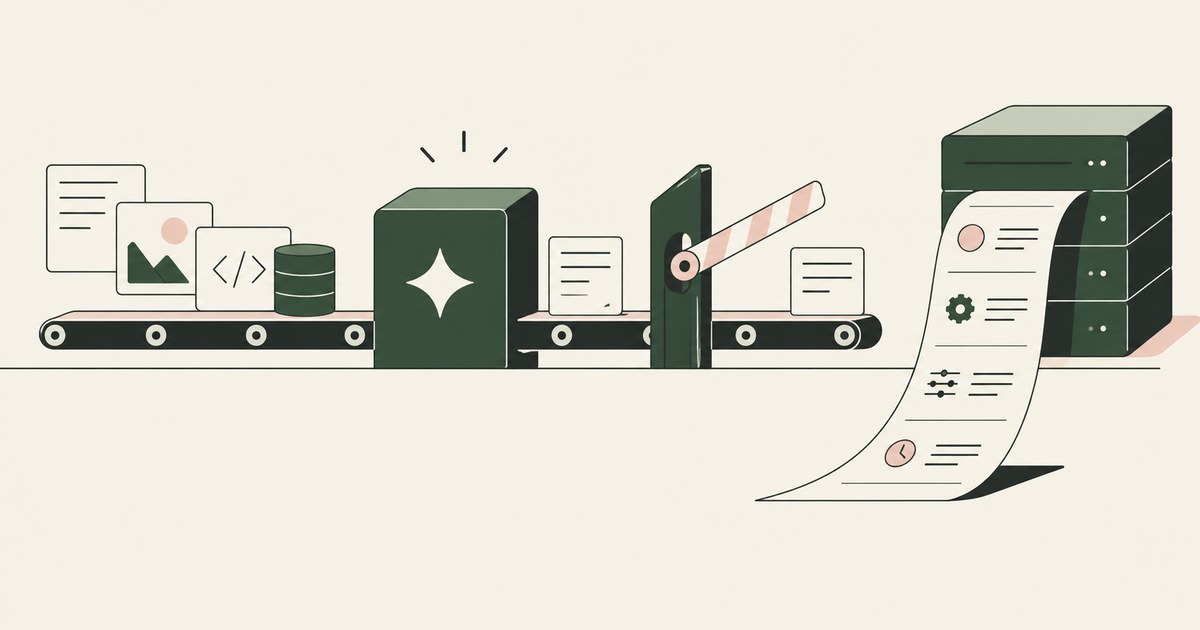
How to Maintain Audit Trails for AI Agent Activity
Review Maintain Audit Trails for AI Agent Activity, with AI agent security, tokenization and approval checks for sensitive enterprise workflows.
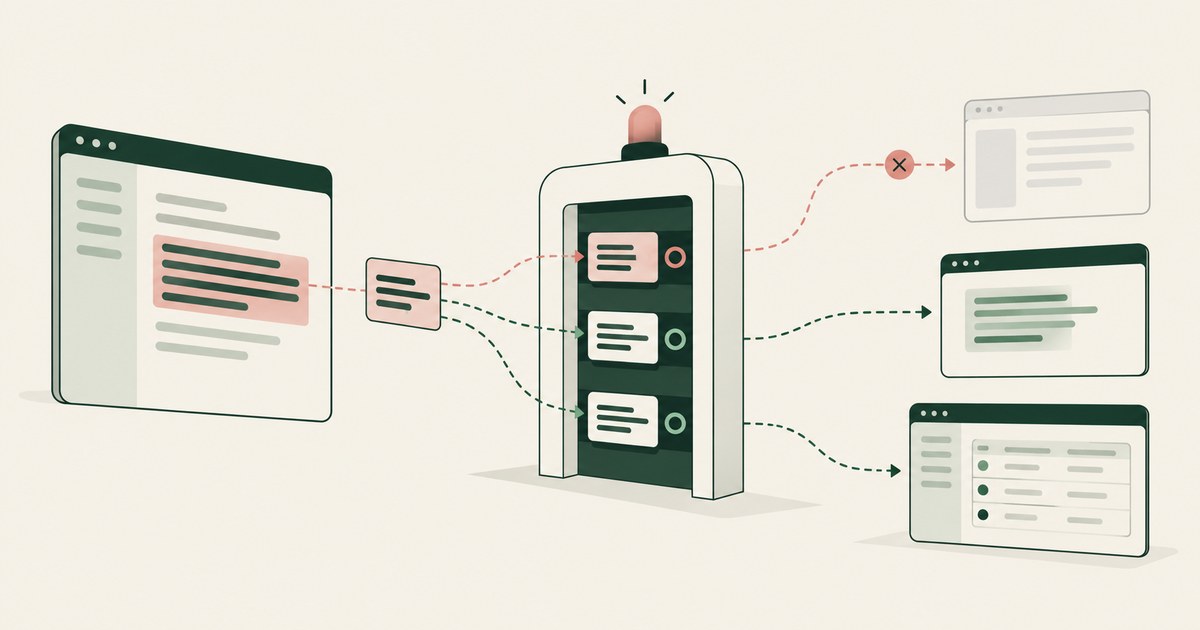
How to Protect Data Without Blocking Copy and Paste?
Review Protect Data Without Blocking Copy and Paste, with AI agent security, tokenization and approval checks for sensitive enterprise workflows.

Accountable AI and Workflow Governance
Explore AI agent governance for billing and claims, with named supervisors, data masking, approval boundaries and a useful audit record.

What Is Supervised Delegation?
Explore supervised delegation for AI agents in billing and claims, with named responsibility, tokenization policies and human approvals.

What Is an AI Control Record?
Explore an AI agent control record for billing and claims, linking permissions, tokenization decisions, approvals and audit evidence.
Book an AI Agent Security Review →
Bring your hardest questions.
Bring one sensitive workflow and the decisions your team needs to keep in its hands.
Book a demoAbout the author

Chris Sowa is a founder of RedactSure and a former CEO of an AI company; he started it years before ChatGPT existed. He previously led AI at Accenture, served as Global VP of Strategy & Innovation at Schneider Electric, was CCO of Sovos, and spent more than a decade at Oracle, with earlier roles at SAP and IBM.