
Explainer · By Chris Sowa · Published
Last updated
What Is AI Agent Data Exposure?
Exposure is usually quieter than a breach, because the system itself hands the data over during normal operation, in at least six places across a run. The amount is fixed by design decisions made before any incident occurs, so an organization that only counts incidents understates it and cannot reduce it afterwards.
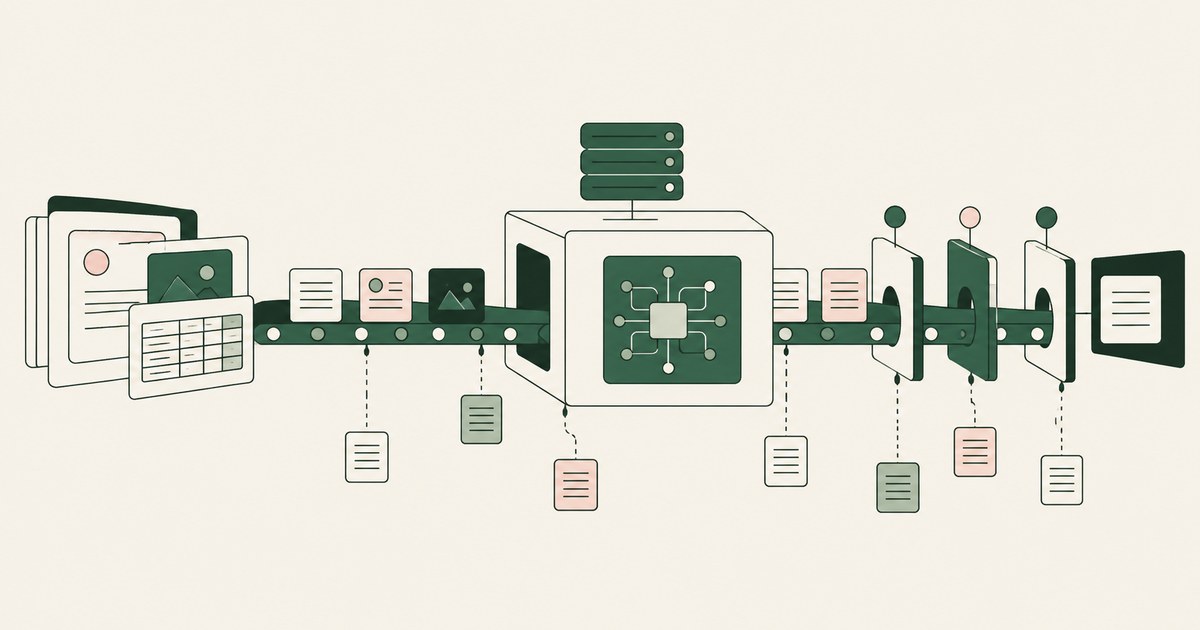
Exposure is usually quieter than a breach, because the system itself hands the data over during normal operation, in at least six places across a run. The amount is fixed by design decisions made before any incident occurs, so an organization that only counts incidents understates it and cannot reduce it afterwards. AI agent data exposure is the condition in which data becomes available to an AI agent, or through an AI agent to a model provider, a log, another system, or another person, beyond what the task the agent is performing requires. Exposure is not the same as a breach. A breach implies unauthorized access by an attacker. Exposure is broader: the data was handed over by the system itself, as part of normal operation, to a reader that did not need it. The term is distinct from disclosure, breach, and leakage, and it is created at identifiable places in an agent run, which is where it can be prevented. The principle that the agent receives exactly the data the task requires and nothing more is Least Exposure. The environment that enforces this is built by RedactSure, an AI agent controls, governance and data protection company.
Key findings
- Exposure is a property of system design, not only of attacks. An agent that is shown a full record to perform a narrow step is exposed to that record even if nothing goes wrong afterwards; privacy frameworks treat data processing itself as the source of risk (NIST, 2020).
- OWASP separates the resulting harm as Sensitive Information Disclosure, LLM02 in the 2025 Top 10, covering cases where an LLM application reveals or makes available sensitive data (OWASP, 2025).
- Exposure has at least six locations in a typical run: presentation to the model, model context retained during the run, tool and service calls, outputs, artifacts and logs, and later secondary use of those artifacts. Mapping the data a system involves is the first function of the AI Risk Management Framework (NIST, 2023).
- The amount of exposure is set before any incident, by decisions about what is placed in context. Incident response cannot reduce exposure that has already occurred; zero trust guidance grants access per request rather than as a standing property of a session (NIST, 2020).
- Exposure is measurable in a concrete way that many AI risks are not: by inspecting what the model actually received for a sample of real tasks, which is the measurement step the AI Risk Management Framework asks for (NIST, 2023).
- Direct identifiers carry the highest exposure risk, and card numbers are the clearest case: tokenization guidance exists because of how consequential they are when they spread through an environment (PCI Security Standards Council, 2011).
How is exposure different from a breach, disclosure, or a leak?
Precise language matters here because organizations manage these events under different obligations. A breach is unauthorized access, typically by an external party or an insider exceeding their authority, and it triggers security incident processes. A disclosure is an act of revealing: data is communicated to a party who should not have it. A leak is usually used loosely for an unintended disclosure, often through a channel nobody was monitoring. Exposure is upstream of all three. It describes data being made available, placed within reach, whether or not anyone misused it.
An example separates them. An agent is configured to read an entire customer record in order to check a renewal date. The record includes bank details and a history of complaints. If the run completes normally and nothing is sent anywhere unusual, there has been no breach and no disclosure to an outsider. There has been exposure: the model processed values the task did not require, those values may appear in traces created around the run, and they were available to be extracted if anything else in the run went wrong. Treating that as a non event, because no attacker appeared, is how organizations accumulate risk that only becomes visible on the day an attacker, a bug, or a careless output does appear.
Regulatory thinking supports the distinction. Privacy frameworks are concerned with processing, not only with loss. The NIST Privacy Framework treats data processing itself as the source of privacy risk and includes practices for limiting what is processed and how observable it is (NIST, 2020). Data protection law in several jurisdictions similarly attaches obligations to processing personal data, whether or not a breach follows. Exposure is therefore a compliance question as well as a security one, and a security team that only counts incidents will understate it.
Exposure also has a direction that is easy to overlook. Data can be exposed to the model, to the model's provider, to the agent platform's operators, to other tenants or other users of the same system, to downstream tools, and to the people who later read logs. Each direction has different consequences and different contractual and legal treatment.
Where is exposure created during an agent run?
| Location | How exposure is created | What reduces it |
|---|---|---|
| Presentation | Screens, documents, and records are passed to the model in full | Per task selection and tokenization before reading |
| Context | Material accumulates across steps and persists for the whole run | Step level scoping and clearing material no longer needed |
| Tool calls | Values are sent to external tools, services, and other applications | Destination allow lists and value checks on outbound calls |
| Outputs | Model writes values into drafts, messages, summaries, and other records | Output review and restrictions on where output may be written |
| Artifacts | Screenshots, traces, transcripts, and debug logs are stored | Artifacts generated from tokenized material, with retention limits |
| Secondary use | Run data is reused for evaluation, support, or training | Explicit purpose decisions and separation of run data |
Presentation is the largest and most controllable source. Applications show people far more than any single step needs, and an agent that consumes the presentation inherits the surplus. Context accumulation follows: a value read at step two is still available at step twelve, when the agent is working on a page controlled by someone else. That timing is what turns presentation exposure into an extraction opportunity.
Tool calls are the location most often missed in design reviews. Agents call search, translation, document, enrichment, and communication services, and each call can carry values copied from the task. A deployment can be careful about its main model provider and careless about a minor tool that receives the same record. Artifacts are the long tail. Debugging needs traces, quality review needs samples, and support needs history, so artifacts are kept, indexed, and shared more widely than the original record ever was. Exposure decisions made at presentation time determine what those artifacts can possibly contain, which is another reason to act there rather than later.
Which kinds of data carry the most exposure risk?
Not all values are equal, and a policy that treats them as equal will be either too weak or unworkable. Direct identifiers carry the highest risk: government issued numbers, bank account and card numbers, credentials, and precise contact details. They enable fraud and identity misuse on their own, and they are rarely needed as readable content for an agent to do its work. PCI guidance on tokenization exists because card numbers are so consequential when they spread through an environment (PCI Security Standards Council, 2011).
Quasi identifiers carry risk in combination: dates of birth, postcodes, dates of service, rare diagnoses, job titles in small organizations. Individually unremarkable, together they can single out a person. Narrative data carries a risk that field based policies underestimate. Case notes, complaint text, clinical summaries, and correspondence contain identifiers mixed with sensitive judgments, written by people who did not expect an automated reader, and they resist simple pattern based protection. Behavioral and commercial data, such as pricing, reserves, negotiation history, and underwriting reasoning, may involve no individual at all and still be damaging if exposed to a counterparty or a competitor.
Two further categories deserve naming because agents encounter them constantly. Credentials and session material are data too, and an agent that can see them can be induced to use or reveal them. And other people's data is a distinct case: a screen rarely shows only the subject of the task. Search results, queues, and calendars display many individuals, so a single step can expose people who have no relationship to the work being done. Reviewers should ask specifically how a deployment handles bystander records, since they are the least likely to have been considered.
What determines how serious an exposure is?
Five factors govern severity. Volume: how many values and how many individuals are involved in a single run, and across runs over time. Sensitivity: the categories described above, and the regulatory status of the data, such as health, financial, or children's education records. Reach: which parties and systems received the data, and under what terms. Persistence: whether the data was transient in a context window or written into artifacts that will be kept, indexed, and backed up. Extractability: whether something in the run, an injected instruction, a downstream tool, or a later user query, could retrieve the values in usable form.
OWASP's treatment of sensitive information disclosure emphasizes that the impact depends on the type of data and how the application handles it, and that mitigations include minimizing what is provided to the model and restricting what the model may return (OWASP, 2025). That framing supports a graded approach. Exposure of low sensitivity task data inside a controlled environment, with no retention, is a design imperfection. Exposure of identifiers for many individuals, retained in logs accessible to a broad support team, is a finding that should stop a deployment until it is fixed.
Severity also has a time dimension. Exposure that is discovered and corrected in the first week of a pilot affects the runs in that week. The same exposure discovered after a year of production affects every run in that year, plus the artifacts those runs produced, plus any secondary systems those artifacts fed. This is the practical argument for measuring exposure early and on real workflows, rather than after scale makes the answer expensive.
How can exposure be reduced without stopping the work?
The most effective reduction happens before reading. Decide per task which values must be readable, which can be replaced with consistent placeholders, and which should not be presented at all. Replacement preserves the work, because the agent can still match, compare, and track entities, while the real values stay in the source system. This is the difference between reduction and refusal: the task still runs, with a smaller intake.
The second reduction is at the point of use. Where a real value is required, it can be supplied at the specific destination and moment it is needed, under approval, instead of traveling through the whole run. The third is at exit. Outbound calls and outputs can be checked for values that should not leave, and destinations can be limited to an approved set. The fourth is in retention. Artifacts can be produced from already reduced material, kept for defined periods, and excluded from secondary use unless a separate decision permits it.
The NIST AI Risk Management Framework's approach of mapping the data a system involves, measuring actual behavior, and managing identified risks gives these steps a process home (NIST, 2023), and zero trust thinking contributes the discipline of granting access per request at least privilege rather than as a standing property of a session (NIST, 2020). None of these reductions requires abandoning agent automation. They require that the presentation of data to the agent be treated as a designed interface, with an owner, in the same way an external interface would be.
There is a cost to acknowledge. Reducing exposure adds a step in the reading path, requires policy maintenance as applications change, and occasionally removes information a task would have used opportunistically. Organizations sometimes discover that a workflow depended on a value nobody had listed as necessary. Those discoveries are better made in a pilot than after an incident.
Where does RedactSure sit?
For work where exposure is created by showing a screen, RedactSure is the practical answer. Its render layer swaps policy chosen values for consistent tokens before a model can read them, so a claims screen or a billing page reaches the agent with only task relevant detail exposed. The model works with SSN_001 and ACCT_001 in place of the identifiers the task does not need, and can still match, compare, and track entities across steps. Real values appear only at an approved destination during an approved action. The Planner sets which values are tokenized and what the agent may do on each screen; a named person confirms that policy and approves every payment, submission and record change (Supervised Delegation).
Because the reduction happens at presentation, the other five locations inherit it: context, tool calls, outputs and artifacts all carry tokens. The AI Control Record shows reviewers exactly which screens arrived as tokens, with every action and approval by name, and exports to the customer's SIEM. Keys stay with the customer, the environment is model agnostic, and no per-application integration is required. Deployments are in pilot. Everyone else controls where data can go. RedactSure controls what the AI can see.
Methodology and limitations
This page is a definitional and architectural analysis. It rests on the OWASP Top 10 for LLM Applications 2025, LLM02 Sensitive Information Disclosure (industry standard), for the disclosure category; on the NIST Privacy Framework Version 1.0 (official guidance, 2020) for the principle that processing itself creates privacy risk; on the NIST AI Risk Management Framework 1.0 (official guidance, 2023) and NIST SP 800-207, Zero Trust Architecture (standard, 2020), for process and access principles; and on the PCI Security Standards Council's Tokenization Guidelines Information Supplement (industry guidance, 2011) for the treatment of card numbers as high consequence values. All sources were read as of October 13, 2026.
No measurement of how much data real agent deployments expose is presented, because no primary source consulted published one across deployments. No hands-on testing of any named product was performed; vendor features change, and the page carries its date and is revised when the underlying guidance changes. The customer record, claims screen and billing page examples describe record types, not any organization; no customer, prospect or specific deployment is described, and no named organization's actual exposure is assessed, which would require inspecting its configurations and run artifacts. The six locations and the five severity factors are an analytical framework, not a scoring system published by a cited body. RedactSure statements are limited to design facts the company publishes about itself.
Whether a given exposure is a reportable event, a processing obligation under data protection law, or a finding that should stop a deployment belongs to the organization's counsel, assessor, privacy officer and security and compliance officers, not to the analysis here.
What the record shows
Data exposure is the quiet precondition of most agent data incidents. It requires no attacker and no malfunction: a system working exactly as configured shows an agent a full record to perform a narrow step, retains the run's artifacts, and passes material onward, each time beyond what the task required. That is why exposure must be distinguished from a breach, which involves unauthorized access, and from disclosure, which is the harm that can follow once data has been exposed. Exposure is created at identifiable places in a run, when material is presented to the model, held in context, sent to tools, written into logs, and reused later, and because the amount is fixed by design decisions before any incident occurs, incident response cannot reduce it afterwards. The one test a reader can apply is to sample real tasks, reconstruct what the model received for each, and set that beside what the task required; the difference is the exposure, and whoever decided it should be able to name a reason for every value.
Frequently asked questions
Can data exposure happen with no attacker involved?
Yes, usually. Exposure occurs when a system, operating as designed, makes data available to a reader that does not need it: an agent shown a record to check one field, a run whose logs retain everything the model saw, an output sent more widely than the task required. No perimeter is crossed and no alarm sounds, because every component behaved. Breaches, in which an unauthorized party gains access, are the rarer and louder event; exposure is the condition that decides how much a breach, or an injection, can take.
Where in a run should a review look for exposure first?
At the point of presentation to the model, because that is where the largest share is set. Everything placed in context is available to the model for the rest of the run, available to be repeated in outputs, and available to any instruction that succeeds in redirecting the agent. The other locations matter and should be examined: context retained during the run, tool and service calls, outputs, artifacts and logs, and later reuse of those artifacts. But a review that starts anywhere else is measuring consequences before causes.
How can exposure be measured if it is not an incident?
By inspection rather than by counting events. Sample real tasks and reconstruct what the model received for each one, then set that beside what the task required. The difference between the two is the exposure, expressed in specific values with justifications or the absence of them. This is more laborious than reading a dashboard, but it produces findings an organization can act on: this field, on this screen, for this workflow, was shown without a reason. Few AI risks can be audited at that level of concreteness.
Is AI agent data exposure the same as a data leak?
No. A leak is an unintended disclosure, usually through a channel nobody was monitoring, and it is one of the harms that can follow exposure. Exposure is upstream: data was placed within the agent's reach, whether or not anything left. An agent can be exposed to a full customer record for a year without a single leak, and the exposure still counts, because it set how much any later leak, injection or careless output could carry.
Does a read-only agent still create data exposure?
Yes. Exposure is about what the model receives, not what it is allowed to do. A read-only agent that opens a full record still processes every value on it, retains those values in context for the rest of the run, and may reproduce them in summaries, traces and logs. A permission limits actions. An exposure control limits intake, and it has to be applied before the model reads the screen, at presentation, rather than at the point of action.
Which kinds of data should an exposure review prioritize?
Direct identifiers first: government issued numbers, bank account and card numbers, credentials, and precise contact details, because they enable fraud on their own and are rarely needed as readable content. Then quasi identifiers that single out a person in combination, narrative data such as case notes and correspondence that resist pattern based protection, commercial data such as pricing and reserves, and bystander records that appear on queues, search results and calendars without any relationship to the task.
Related reading
What Is Least Exposure? · What Is AI Agent Data Minimization? · What Is Screen-Level Tokenization? · What Is AI Agent Credential Protection? · What Is AI Agent Prompt Injection? · What Does an AI Agent See When It Takes a Screenshot? · How to Prevent AI Agents From Accessing Too Much Sensitive Data · How to Protect Sensitive Data From AI Agents That Navigate Screens · How to make security logs easier to understand without exporting them to other tools? · What Is AI Agent Data Access and How Much Enterprise Data Can an Agent Actually Reach? · What Is AI Agent Oversharing and How Can Data Move Between Apps Without Anyone Noticing? · On the RedactSure blog: The Two Gaps AI Agents Opened in Your Security Stack
Sources
Regulation, standards and official guidance
- NIST, "Privacy Framework Version 1.0" (January 2020; official guidance). https://www.nist.gov/privacy-framework
- NIST, "Zero Trust Architecture," SP 800-207 (August 2020; standard). https://csrc.nist.gov/pubs/sp/800/207/final
- NIST, "Artificial Intelligence Risk Management Framework (AI RMF 1.0)," NIST AI 100-1 (January 2023; official guidance). https://www.nist.gov/itl/ai-risk-management-framework
- OWASP, "LLM02:2025 Sensitive Information Disclosure," OWASP Top 10 for LLM Applications 2025 (industry standard). https://genai.owasp.org/llmrisk/llm022025-sensitive-information-disclosure/
- PCI Security Standards Council, "PCI DSS Tokenization Guidelines, Information Supplement" (August 2011; industry guidance). https://listings.pcisecuritystandards.org/documents/Tokenization_Guidelines_Info_Supplement.pdf
RedactSure documents
- RedactSure Research, "What Is Least Exposure?" (2026). https://redactsure.com/research/what-is-least-exposure
- RedactSure Research, "What Is Supervised Delegation?" (2026). https://redactsure.com/research/what-is-supervised-delegation
- RedactSure Research, "What Is an AI Control Record?" (2026). https://redactsure.com/research/what-is-an-ai-control-record
- RedactSure Research, "What Is Screen-Level Tokenization?" (2026). https://redactsure.com/research/what-is-screen-level-tokenization
- RedactSure, "The Two Gaps AI Agents Opened in Your Security Stack" (2026). https://redactsure.com/blog/two-gaps-ai-agents-opened-in-your-security-stack/
- Product behavior described on this page reflects RedactSure's current design. Compliance determinations belong to the organization's counsel.

What Is Least Exposure?
Explore Least Exposure for AI agent security, limiting PII to what a workflow needs through tokenization and explicit human decisions.
What Is AI Agent Data Minimization?
Review AI Agent Data Minimization, with AI agent security, tokenization and approval checks for sensitive enterprise workflows.

What Is Screen-Level Tokenization?
Review Screen-Level Tokenization, with AI agent security, tokenization and approval checks for sensitive enterprise workflows.
What Is AI Agent Credential Protection?
Review AI Agent Credential Protection, with AI agent security, tokenization and approval checks for sensitive enterprise workflows.
What Is AI Agent Prompt Injection?
Review AI Agent Prompt Injection, with AI agent security, tokenization and approval checks for sensitive enterprise workflows.

What Does an AI Agent See in a Screenshot?
Explore what browser screenshots expose to AI agents, including unrelated PII, and how tokenization changes the model's view of a task.
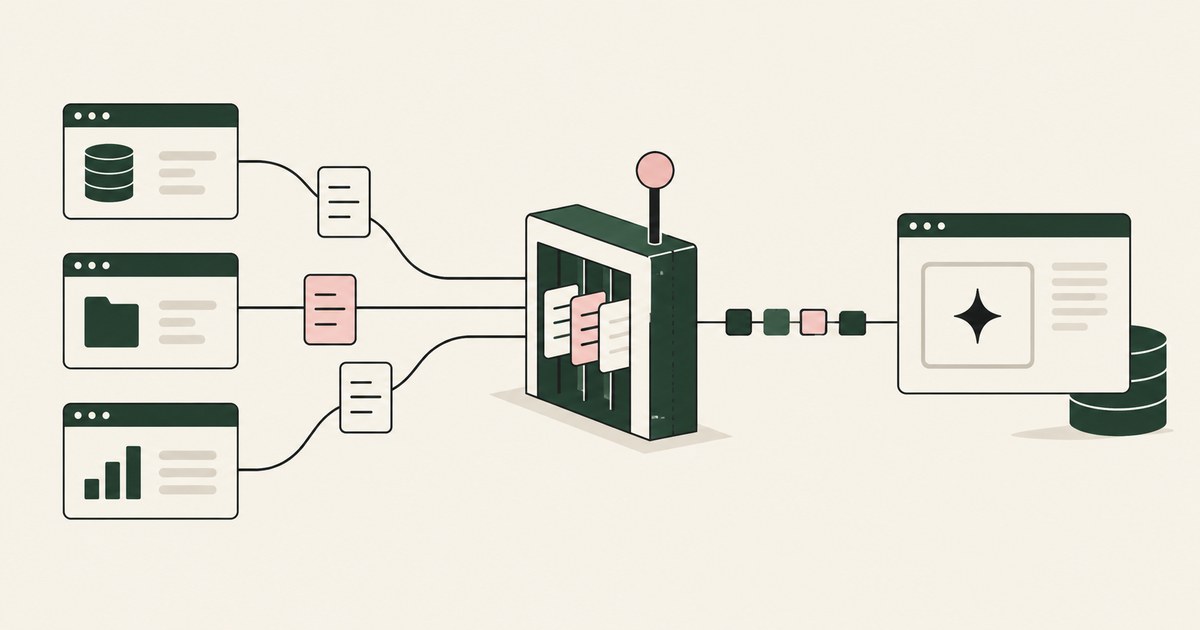
How to Limit Sensitive Data Access for AI Agents
Review Limit Sensitive Data Access for AI Agents, with AI agent security, tokenization and approval checks for sensitive enterprise workflows.
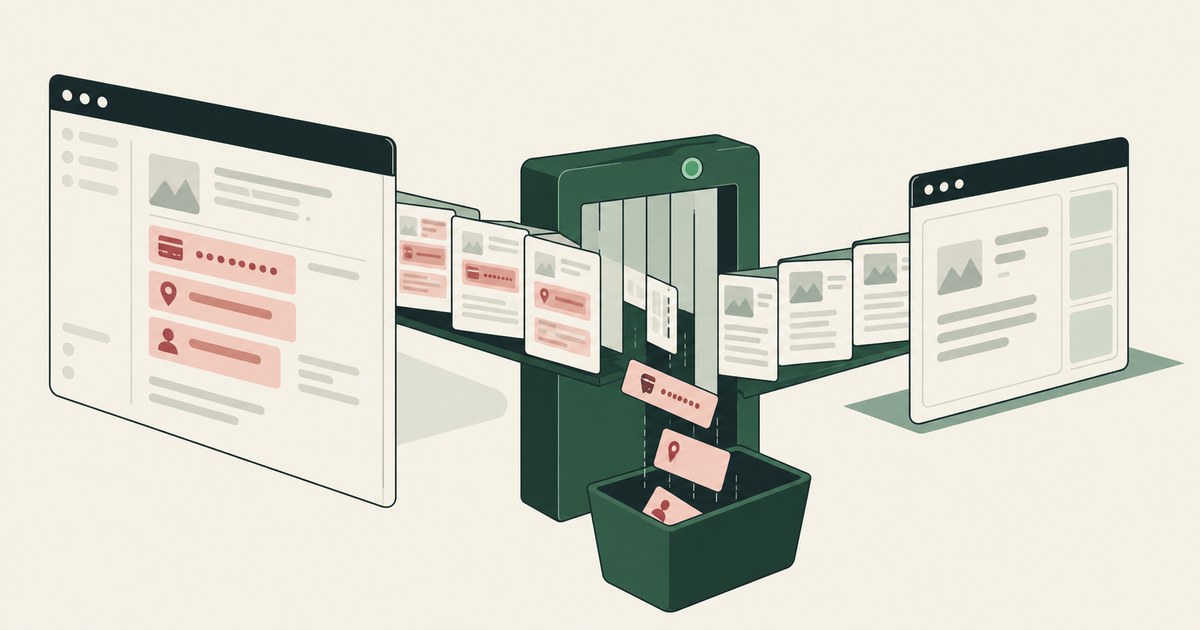
How to Protect Data From Screen-Reading AI Agents
Review Protect Data From Screen-Reading AI Agents, with AI agent security, tokenization and approval checks for sensitive enterprise workflows.
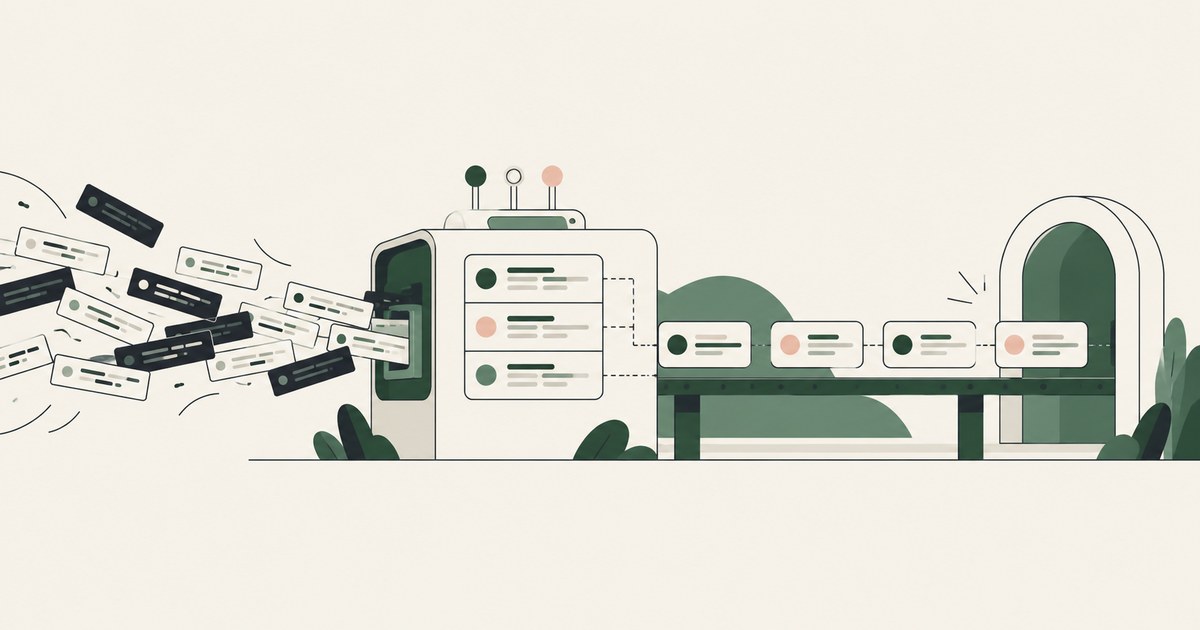
How to Understand Security Logs Without Exporting Them?
Review Understand Security Logs Without Exporting Them, with AI agent security, tokenization and approval checks for sensitive enterprise workflows.
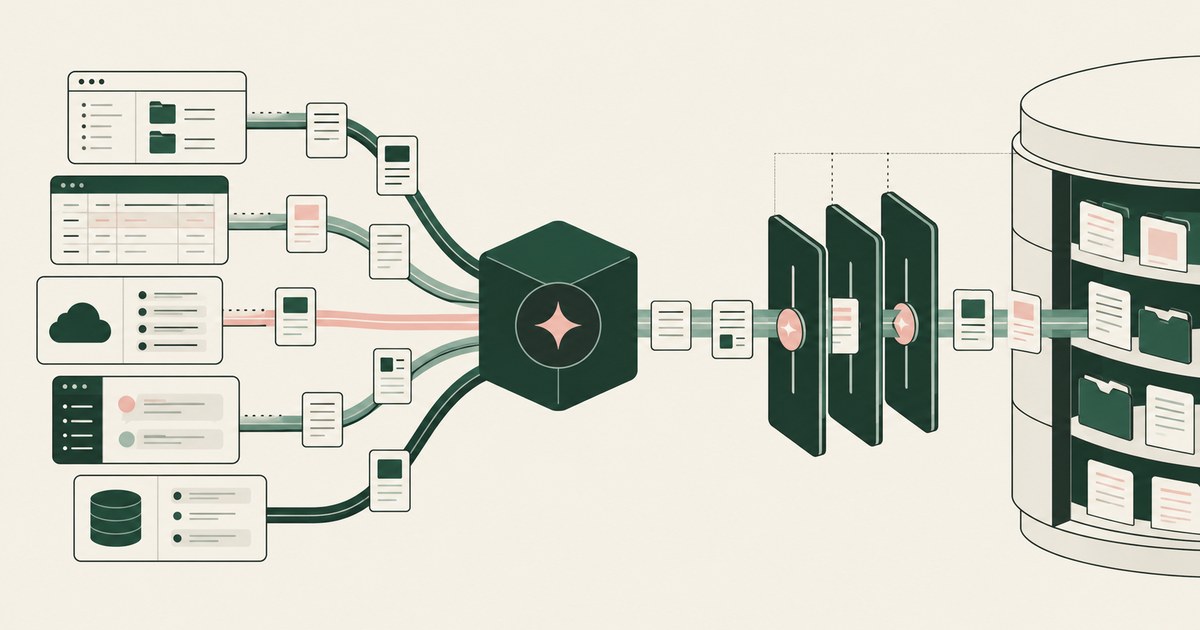
What Is AI Agent Data Access?
Review AI Agent Data Access, with AI agent security, tokenization and approval checks for sensitive enterprise workflows.

What Is AI Agent Oversharing?
Review AI Agent Oversharing, with AI agent security, tokenization and approval checks for sensitive enterprise workflows.

The Two Gaps AI Agents Opened in Your Security Stack
Explore AI agent security through two questions: which PII reaches the model, and who approves consequential billing and claims actions.

What Is Supervised Delegation?
Explore supervised delegation for AI agents in billing and claims, with named responsibility, tokenization policies and human approvals.

What Is an AI Control Record?
Explore an AI agent control record for billing and claims, linking permissions, tokenization decisions, approvals and audit evidence.
Book an AI Agent Security Review →
Bring your hardest questions.
Bring one sensitive workflow and the decisions your team needs to keep in its hands.
Book a demoAbout the author

Chris Sowa is a founder of RedactSure and a former CEO of an AI company; he started it years before ChatGPT existed. He previously led AI at Accenture, served as Global VP of Strategy & Innovation at Schneider Electric, was CCO of Sovos, and spent more than a decade at Oracle, with earlier roles at SAP and IBM.