
Data Report · By Chris Sowa · Published
Last updated
What Are the Trade-offs of Restricting Employees to One AI Agent?
A single-agent mandate simplifies contracting and administration but pushes the work the chosen agent handles poorly into unsanctioned tools, and it ties the organization's data governance to one vendor's controls. Check how much of your actual AI use already happens outside the mandated tool before treating the mandate as a control.

A single-agent mandate simplifies contracting and administration but pushes the work the chosen agent handles poorly into unsanctioned tools, and it ties the organization's data governance to one vendor's controls. Check how much of your actual AI use already happens outside the mandated tool before treating the mandate as a control. The instinct behind a mandate is reasonable: one vendor means one data processing agreement, one console and one set of controls to explain to an auditor. Against that, the record on shadow AI is consistent: employees use the tools that do their work, sanctioned or not, and restriction changes where the use happens rather than whether it happens. When the only governance is the governance built into the chosen agent, the organization's data policy is whatever that vendor's console allows, and switching agents means rebuilding the policy. This page sets out what a mandate buys, where it meets an invoice screen the approved agent handles poorly, how restriction becomes shadow AI, what the mandate does to governance when the vendor's controls are the governance, how to weigh the trade and run an amnesty, and which claims to decline, drawing on research on whether banning AI tools stops employees using them.
Key findings
- Unsanctioned use is the majority condition: a Cloud Security Alliance research note reports that "eight in ten employees use AI tools not approved by their organizations," so a mandate governs the minority of use unless something else changes (Cloud Security Alliance, 2026).
- The UK National Cyber Security Centre's guidance on the hidden risks of shadow AI treats unsanctioned tools as a route for data to leave without the organization's knowledge, the cost side of any restriction that drives use underground (NCSC, 2026).
- Employee surveys from Salesforce and from Microsoft and LinkedIn documented, as early as 2024, widespread use of AI tools at work that employers had not provided or approved (Salesforce, 2024; Microsoft and LinkedIn, 2024).
- Gartner's May 2026 press release argues that applying uniform governance across AI agents will lead to enterprise AI agent failure, cutting against the assumption that one agent under one policy is the safe default (Gartner, 2026).
- IBM's 2025 Cost of a Data Breach Report provides the financial frame for both sides of the trade: a breach through an unsanctioned tool against the controls that would have prevented it (IBM, 2025).
- An agent that moves across several applications in one task needs controls that travel with it rather than controls built into one vendor, the argument of research on securing AI agents that navigate across applications.
What does a single-agent mandate buy an organization?
A mandate reduces the vendor count to one, which means a single data processing agreement, a single security questionnaire, a single set of model terms and a single point of accountability when something goes wrong. The administrator learns one console. The audit narrative is short: here is the tool, here is its policy, here is its log. The organization can negotiate price on volume.
There is also a security logic. Every additional tool is an additional attack surface, an additional set of credentials and an additional party holding data, and a mandate in this view is a form of minimization. IBM's annual report on the cost of a data breach documents the financial consequences of incidents across industries and attack vectors (IBM, 2025), and an organization reading it will reasonably conclude that fewer parties holding its data is better.
The logic holds if the mandate actually determines what employees use. That is the assumption the rest of this page tests. A mandate is a policy document; the question is whether it changes behavior, and the evidence on shadow AI suggests that it changes behavior less than the organization expects and in a direction the organization did not intend. The benefits accrue in full only when the mandated tool is the one doing the work.
Where does the mandate meet an invoice screen the approved agent handles poorly?
Take a vendor invoice screen in an accounts payable system showing the vendor name, bank details, invoice number, line items, purchase order number and approval status. The task is to match the invoice to the purchase order, flag discrepancies and prepare it for approval. The mandated agent, a general assistant in the productivity suite, can comment on a pasted copy of the invoice but cannot see the purchase order in the other system or move between the two screens.
An accounts payable clerk under deadline has choices. The clerk can do the work by hand, as before. The clerk can paste both screens into the mandated agent, which is slower than doing it by hand. Or the clerk can open a browser agent on a personal account that can read both screens and do the match in one pass. The 2024 surveys found that employees were already making the third choice at scale: Salesforce's research documented widespread use of generative AI tools at work that employers had not approved (Salesforce, 2024), and Microsoft and LinkedIn's Work Trend Index reported employees bringing their own AI to work ahead of their employers (Microsoft and LinkedIn, 2024).
MIT Technology Review's October 2026 piece on why people who dislike AI cannot stop using it describes the same ambivalence from the user's side (MIT Technology Review, 2026): the tools are adopted because they work, not because they are liked or approved. The invoice screen, with the vendor's bank details on it, has been read by a personal agent the organization did not choose and cannot see. The mandate determined only that the agent reading the screen is not the one the organization governs.
How does restriction convert into shadow AI?
The conversion is mechanical. A mandate narrows the set of approved tools. Work that the approved tool handles well stays inside it. Work it handles poorly does not disappear; it is still due, and the employee still has access to tools that handle it. The CSA's research note puts unsanctioned use at eight in ten employees (Cloud Security Alliance, 2026), a figure that describes the condition before any mandate is tightened. Tightening widens the unsanctioned channel.
The NCSC's guidance describes what travels through the unsanctioned channel: organizational data, entered into tools with unknown retention and training terms, outside any log the organization keeps (NCSC, 2026). The vendor bank details on the invoice screen are an example. The organization's position is that such data is handled only by the approved agent; in practice it went to a personal account, and the assurance is false in a way the organization cannot detect.
This is why research on whether bans stop employees using AI tools treats bans and mandates as the same instrument: both attempt to control data by controlling the tool, and both fail at the point where the employee's work and the approved tool diverge. The clerk was asked to do the invoice match and was given a tool that could not do it. The trade-off, stated plainly, is that a mandate purchases administrative simplicity with a loss of visibility over the work the mandated tool cannot perform, and that work is where the sensitive screens often are, because it is the cross-application, multi-screen work that general assistants handle worst.
What does the mandate do to governance when the vendor's controls are the governance?
Under a mandate, the AI data policy is typically implemented inside the chosen vendor's console: which connectors are enabled, which labels block a response, which users may use which features. That is convenient until the organization wants to change agents or add a second for a workflow the first handles poorly. The policy does not travel; it lives in the vendor's product.
Gartner's May 2026 press release argues that applying uniform governance across AI agents will lead to enterprise agent failure (Gartner, 2026). A single mandated agent is uniform governance in its purest form, and the release's logic implies that controls should differ by task, which a one-agent policy cannot express without becoming complex.
| Dimension | One mandated agent | Governed environment with agent choice open |
|---|---|---|
| Coverage of actual work | Tasks the agent handles well | Any agent the environment admits, including those built for cross-application work |
| Shadow use | Grows with the gap between tasks and the agent's ability | Shrinks as the sanctioned path covers more tasks |
| Where the data policy lives | Inside the vendor's product | At the rendered screen, independent of the agent |
| Switching or adding an agent | Policy must be rebuilt | Policy unchanged; the new agent sees the same tokens |
The right-hand column governs the environment and the screens, and lets the choice of agent vary by task. Research on alternatives to enterprise browsers that restrict normal workflows examines why controls on the tool are worked around while controls on the environment are not experienced as restriction. The question is whether the policy should live in a product the organization may replace or in a layer that outlasts any agent.
How should an organization weigh the trade-offs and run an amnesty?
Three numbers decide the trade. The first is the share of AI-assisted work that the mandated agent actually performs, which can be estimated from an amnesty survey or from network and discovery tooling. The second is the proportion of unsanctioned use that involves sensitive screens, which an amnesty can surface if it is run without penalty. The third is the cost of extending governance to cover more agents, against the cost of a breach through an unsanctioned one, for which IBM's annual report supplies the industry reference points (IBM, 2025).
The amnesty is the instrument that makes the first two numbers knowable. TechTarget's analysis of shadow AI governance describes an AI amnesty program as a defined period in which employees disclose the tools they use without consequence, so the organization can see the actual landscape and decide what to sanction, what to replace and what to govern (TechTarget, 2025). The mandated agent usually turns out to be one of many.
Weighing the trade then becomes concrete. If the amnesty shows that the mandated agent covers most work and the remainder touches little sensitive data, the mandate is a reasonable control and its administrative benefits stand. If it shows cross-application work on sensitive screens being done in personal tools, the mandate is a paper control, and the choice is between widening the sanctioned set under a policy that travels or governing the minority of use while assuring itself about the whole. Agents that read documents and navigate screens in the same task are where this divergence is sharpest, as research on securing agents across those two surfaces sets out.
What does a governed environment change?
In a governed environment, the data policy is enforced once at the screens every agent reads rather than inside the one agent the organization chose, so the choice between a single mandate and shadow use stops being a choice about data protection.
The mechanism is a class of control that sits between the rendered screen and the model, indifferent to which agent is reading. Sensitive values on the page, such as supplier bank details on an invoice screen, are replaced with consistent tokens before any model reads them, so the task runs on tokens whichever agent runs it. Real values resolve only at an approved destination at the moment of an approved action. A named person confirms what is tokenized and approves consequential actions, including payments, submissions and record changes. Every screen as the model received it, in token form, every action and every approval is recorded and exported to the organization's own logging.
This changes both sides of the ledger. On the cost side, eight in ten employees use AI tools not approved by their organizations (Cloud Security Alliance, 2026), so a mandate governs only those who comply; a control at the screen governs the clerk's second agent on the same terms as the sanctioned one. On the governance side, Gartner argues that uniform governance across agents leads to failure (Gartner, 2026); a policy held in the environment can differ by workflow without being reimplemented in each vendor's console, and it survives replacing any agent.
The control does not change the mandate, the vendor's console or the model; it changes where the organization's data policy lives.
Where does RedactSure sit?
The environment that enforces this is built by RedactSure, an AI agent controls, governance and data protection company. Its design is the right-hand column of the table on this page: govern the environment and the screens, and leave the choice of agent open. Agents work inside a governed environment in the customer's own cloud. On every rendered screen, substitution happens at the render layer before any model reads it, so the vendor bank details and invoice identifiers on an accounts payable screen reach any agent as consistent tokens such as VENDOR_001 or ACCT_001 for the whole run, whichever agent the organization has admitted. Real values resolve only at approved destinations at the moment of an approved action. A named person confirms the tokenization policy and approves every payment, submission and record change, the arrangement RedactSure calls Supervised Delegation. Every screen as tokens, every action and every approval lands in the AI Control Record and exports to the customer's SIEM. The design is model agnostic and requires no per-application integration, so adding or replacing an agent leaves the data policy where it was, and user permissions are unchanged.
Deployments are in pilot. A pilot on the reader's own cross-application workflow would show two different agents reading the same screens and receiving the same tokens, with one policy and one record covering both. Everyone else controls where data can go. RedactSure controls what the AI can see.
Methodology and limitations
This page rests on the UK National Cyber Security Centre's 2026 guidance on the hidden risks of shadow AI, the Cloud Security Alliance's May 2026 research note on shadow AI apps, Salesforce's 2024 Generative AI Snapshot research on AI at work, the Microsoft and LinkedIn 2024 Work Trend Index, Gartner's May 26, 2026 press release on uniform governance across AI agents, TechTarget's analysis of shadow AI governance and amnesty programs, MIT Technology Review's October 2026 reporting on attitudes toward AI, IBM's 2025 Cost of a Data Breach Report, and published RedactSure research pages on cross-application agents, enterprise browser alternatives, bans and autonomous agents. All sources were read as of October 16, 2026.
No hands-on testing of any product was performed for this page. Where any tool is described as unable to complete a task, the statement refers to the pages reviewed and to the illustrative example, not to any named product. Survey figures are quoted as the cited reports state them, and the CSA figure cites a third-party survey; survey methods differ and the figures are not directly comparable. Vendor features change, and the page carries its date. Statements about RedactSure describe its current design, with deployments in pilot. The accounts payable invoice screen describes a record type, not any organization; the clerk, the mandated agent and the personal agent are illustrative.
Whether a given organization's AI tool policy satisfies its obligations under data protection law, sector regulation or contract is a determination for its counsel, its assessors and its own security and compliance officers, not for a research page.
What the record shows
A single-agent mandate trades visibility for simplicity. The simplicity is real: one contract, one console, one audit story. The visibility loss is also real, and it is concentrated where it matters most, in the cross-application work on sensitive screens that general assistants handle worst and that employees therefore take to tools the organization cannot see. The mandate also parks the organization's data policy inside one vendor's product, so that changing agents means rebuilding governance. The alternative the evidence points to is governing the environment and the screens rather than the tool, so that policy is enforced once and agent choice stays open; RedactSure's design is one form of that alternative. The test is to run an amnesty, name one workflow the mandated agent cannot complete, and ask what tool is completing it today and what screens that tool has read.
Frequently asked questions
Is standardizing on one AI agent a security control?
It is a procurement decision with security consequences. Fewer vendors means fewer parties holding data and a simpler audit. The control value depends on employees using only the mandated agent, and the shadow AI record indicates that where the agent cannot do a task, employees use something that can. The mandate then governs the portion of use that happens inside it and provides no visibility into the rest, which is where sensitive screens often are.
Why does restriction increase shadow AI rather than reduce it?
Because the work does not go away. A mandate narrows what is sanctioned; tasks the sanctioned tool handles well stay inside, and tasks it handles poorly move to tools that handle them. Surveys from 2024 onward show employees already using unapproved tools at scale, and the CSA's 2026 note puts the figure at eight in ten. Narrowing the approved set widens the gap between the work and the tool, and the gap is filled from outside.
What is an AI amnesty and why run one?
A defined period in which employees disclose the AI tools they actually use, without penalty, so the organization can see the real landscape. TechTarget's analysis describes it as a step in shadow AI governance. The results show which workflows the mandated tool is not covering and which sensitive screens unsanctioned tools are reading, and therefore whether the mandate functions as a control or as a policy document.
How does a mandate create vendor lock-in for governance?
Under a mandate, the data policy is usually configured inside the chosen agent's console. If the organization later adds or replaces an agent, the policy does not transfer; it must be rebuilt in the new product's dialect. The alternative is to enforce the policy at a layer independent of the agent, such as the rendered screen, so that any admitted agent receives the same protected view and the policy survives the agent's replacement.
Does Gartner's warning about uniform governance apply to a one-agent policy?
A single mandated agent under a single policy is uniform governance in its simplest form. Gartner's May 2026 press release argues that applying uniform governance across agents leads to failure, on the reasoning that tasks differ in risk and need different controls. A one-agent policy can only express that difference by becoming complex, at which point the administrative simplicity that justified the mandate is gone. The release supports differentiating controls by task while keeping the data policy constant.
What would an organization gain by opening agent choice under a governed environment?
Coverage of the work employees actually do, including the cross-application tasks that drive shadow use, with the data policy enforced once at the screens rather than inside each agent. The organization keeps one policy and one record while admitting more than one agent. The cost is adopting an environment layer and deciding which agents to admit; the benefit is that less work has reason to leave the sanctioned path.
Related reading
How to Secure AI Agents That Navigate Across Applications: One Token Per Identifier, One Environment, One Named Person · What are alternatives to enterprise browsers that restrict normal workflows? · Does Banning AI Tools Stop Employees Using Them? · How to Secure AI Agents That Read Documents and Navigate Browser Screens: Two Surfaces, One Control, One Named Person · What Is an Autonomous AI Agent and How Do You Secure One That Acts Without Human Approval? · Does Restricting AI Agents to Approved Applications Protect Your Data? · How Do You Control AI Agent Access Across All Enterprise Applications? · What Are AI Agent Guardrails? · On the RedactSure blog: Beyond Theater AI · Operating Inside the Lethal Trifecta · RedactSure
Sources
Regulation, standards and official guidance
- National Cyber Security Centre (UK), "The hidden risks of shadow AI," 2026 (official guidance). https://www.ncsc.gov.uk/sites/default/files/2026-09/The-hidden-risks-of-shadow-AI.pdf
Industry analysis and press
- Cloud Security Alliance AI Safety Initiative, "Shadow AI Apps: The Enterprise Attack Surface That Outpaces Monitoring," May 30, 2026 (research note). https://labs.cloudsecurityalliance.org/research/csa-research-note-shadow-ai-apps-enterprise-20260530/
- Salesforce, "Generative AI Snapshot Research: AI at Work," 2024 (industry survey). https://www.salesforce.com/news/stories/ai-at-work-research/
- Microsoft and LinkedIn, "2024 Work Trend Index Annual Report: AI at Work Is Here. Now Comes the Hard Part," 2024 (industry survey). https://www.microsoft.com/en-us/worklab/work-trend-index/ai-at-work-is-here-now-comes-the-hard-part
- Gartner, "Gartner Says Applying Uniform Governance Across AI Agents Will Lead to Enterprise AI Agent Failure," May 26, 2026 (press release). https://www.gartner.com/en/newsroom/press-releases/2026-05-26-gartner-says-applying-uniform-governance-across-ai-agents-will-lead-to-enterprise-ai-agent-failure
- TechTarget, "Strategic approaches to effective shadow AI governance," 2025 (industry press). https://www.techtarget.com/searchenterpriseai/tip/Strategic-approaches-to-effective-shadow-AI-governance
- MIT Technology Review, Will Douglas Heaven, "People really hate AI, so why can't they get enough?," October 5, 2026 (press). https://www.technologyreview.com/2026/10/05/1145682/people-really-hate-ai-so-why-cant-they-get-enough/
- IBM, "Cost of a Data Breach Report 2025," 2025 (industry analysis). https://www.ibm.com/reports/data-breach
RedactSure documents
- RedactSure Research, "How to Secure AI Agents That Navigate Across Applications: One Token Per Identifier, One Environment, One Named Person" (2026). https://redactsure.com/research/how-to-secure-ai-agents-that-navigate-across-applications/
- RedactSure Research, "What are alternatives to enterprise browsers that restrict normal workflows?" (2026). https://redactsure.com/research/what-are-alternatives-to-enterprise-browsers-that-restrict-normal-workflows/
- RedactSure Research, "Does Banning AI Tools Stop Employees Using Them?" (2026). https://redactsure.com/research/does-banning-ai-tools-work/
- RedactSure Research, "How to Secure AI Agents That Read Documents and Navigate Browser Screens: Two Surfaces, One Control, One Named Person" (2026). https://redactsure.com/research/how-to-secure-ai-agents-that-read-documents-and-navigate-browser-screens/
- RedactSure Research, "What Is an Autonomous AI Agent and How Do You Secure One That Acts Without Human Approval?" (2026). https://redactsure.com/research/what-is-an-autonomous-ai-agent/
- Product behavior described on this page reflects RedactSure's current design. Third-party products are described from their public documentation as read on October 16, 2026. Compliance determinations belong to the organization's counsel.
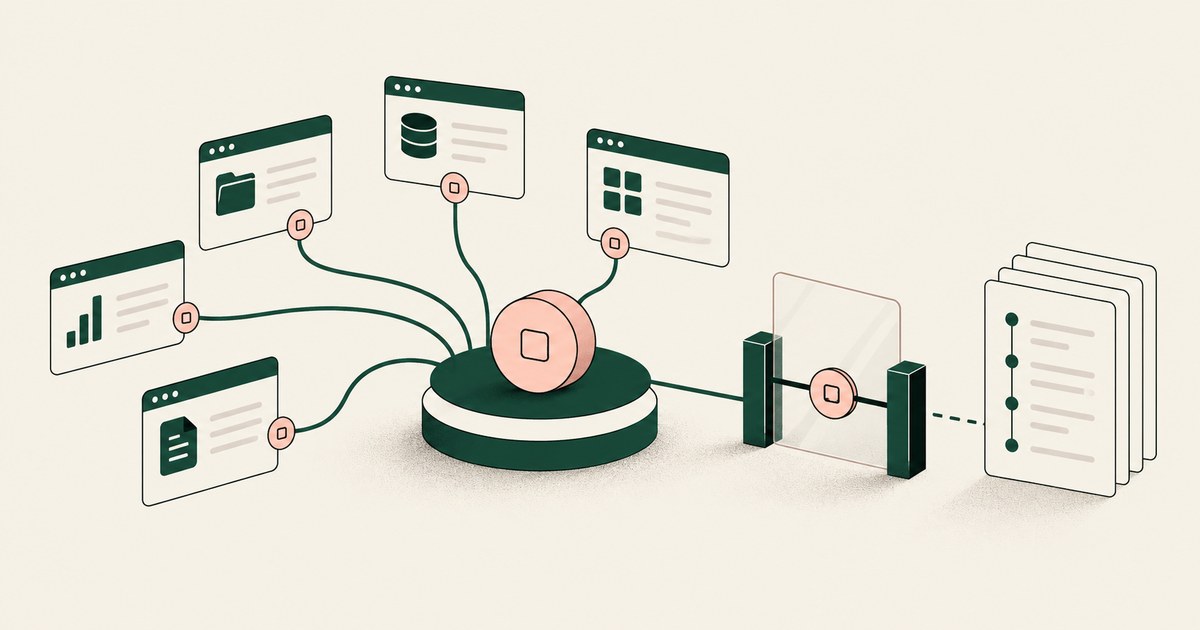
How to Secure AI Agents That Navigate Across Applications: One Token Per Identifier, One Environment, One Named Person
Review Secure AI Agents That Navigate Across Applications, with AI agent security, tokenization and approval checks for sensitive enterprise workflows.
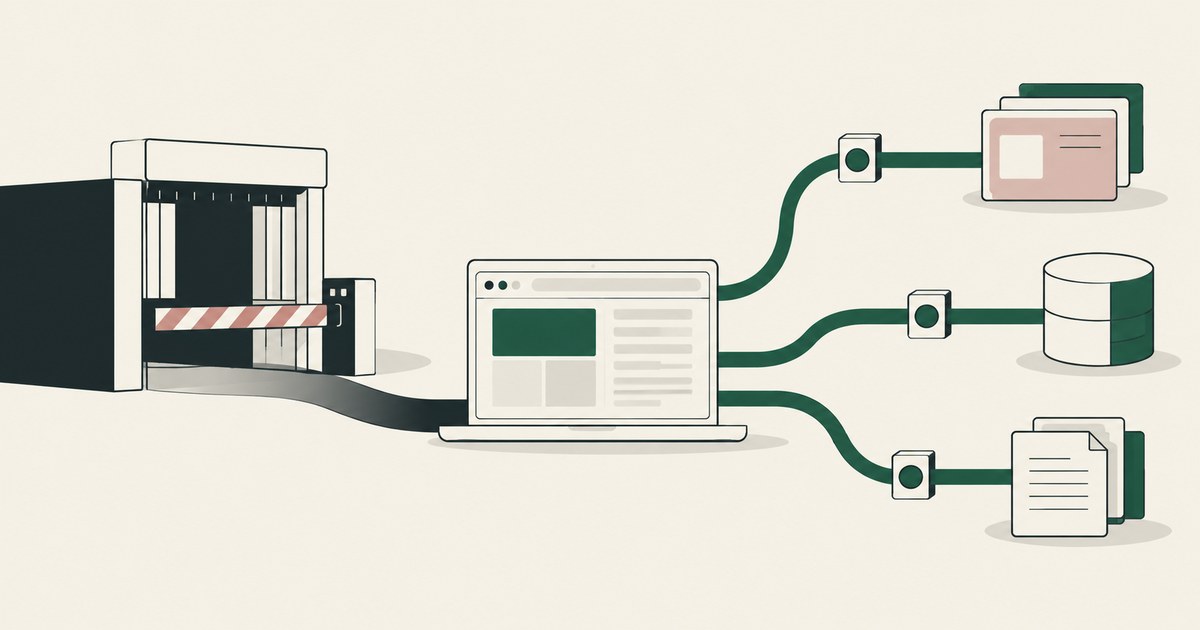
What are alternatives to enterprise browsers that restrict normal workflows?
Review What Browser Alternatives Preserve Normal Workflows, with AI agent security, tokenization and approval checks for sensitive enterprise workflows.

Does Banning AI Tools Stop Employees From Using Them? Reading What the Published Numbers Say a Ban Actually Buys
Review published evidence on AI agent adoption and shadow use, with a governed alternative for workflows carrying PII and sensitive records.
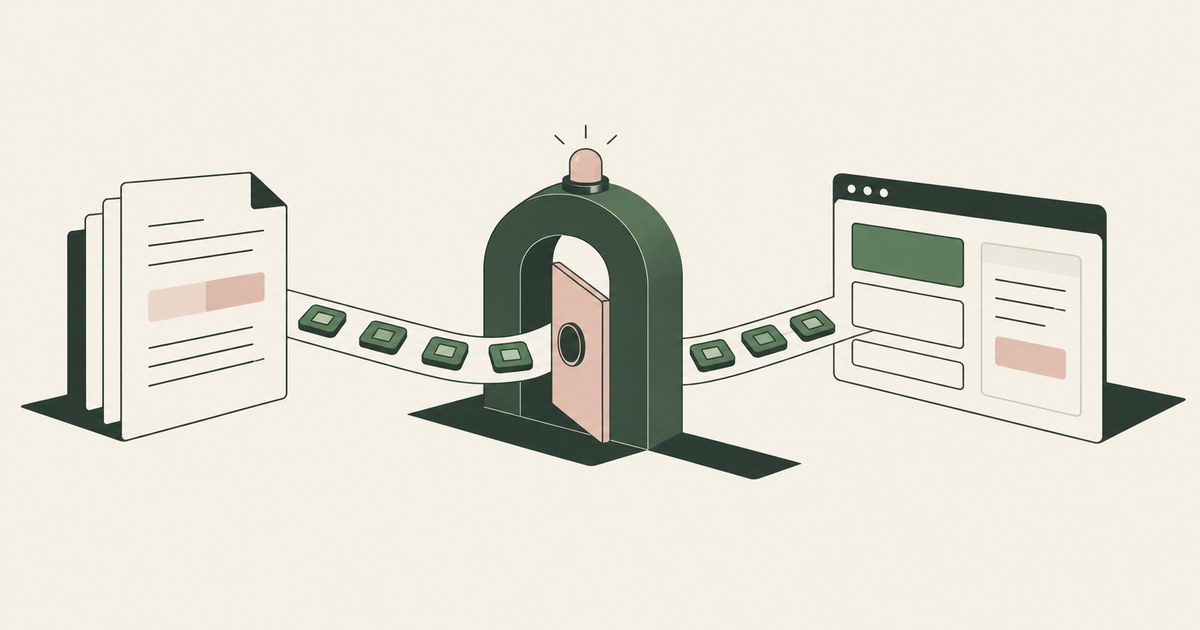
How to Secure AI Agents That Read Documents and Navigate Browser Screens: Two Surfaces, One Control, One Named Person
Review Secure AI Agents Reading Documents and Screens, with AI agent security, tokenization and approval checks for sensitive enterprise workflows.
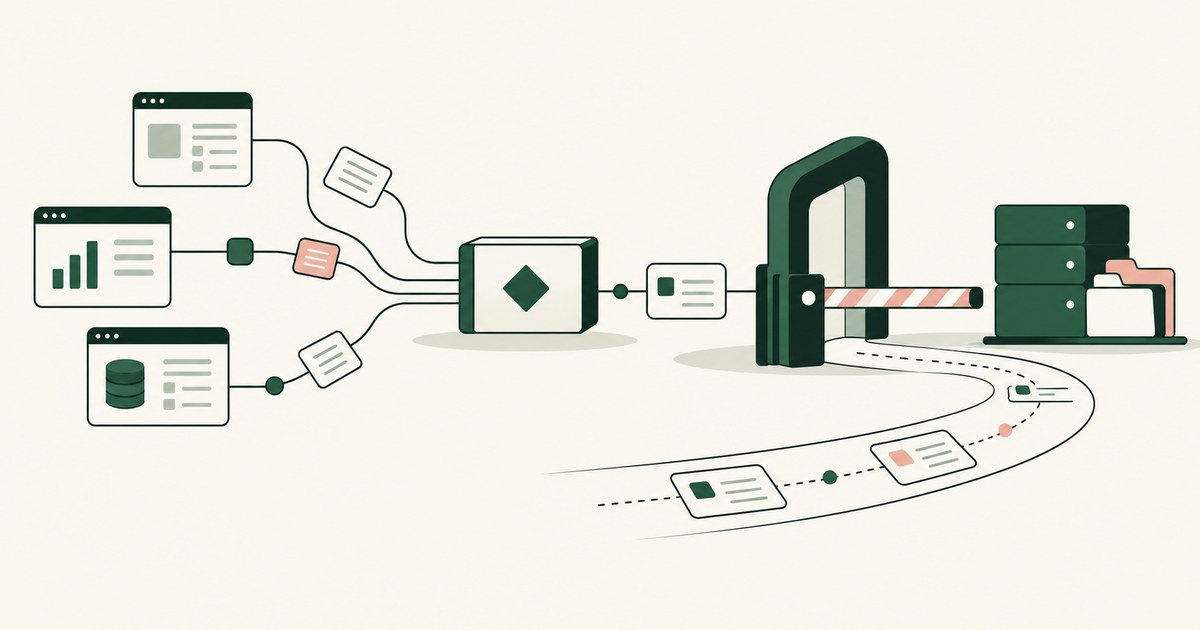
What Is an Autonomous AI Agent and How Do You Secure One That Acts Without Human Approval?
Review an Autonomous AI Agent, with AI agent security, tokenization and approval checks for sensitive enterprise workflows.

Does Restricting AI Agents to Approved Applications Protect Your Data?
Only partly. An allowlist controls where an agent goes, not what it reads on an approved page. Check what the model receives from each approved screen.

How Do You Control AI Agent Access Across All Enterprise Applications?
Not through per-app integrations, which never reach the long tail of SaaS and legacy systems; control the browser layer. Check what governs the rest.

What Are AI Agent Guardrails?
Controls around a model's inputs, outputs and actions; most products ship content filters, while action guardrails limit what the agent can do and receive.
Beyond Theater AI
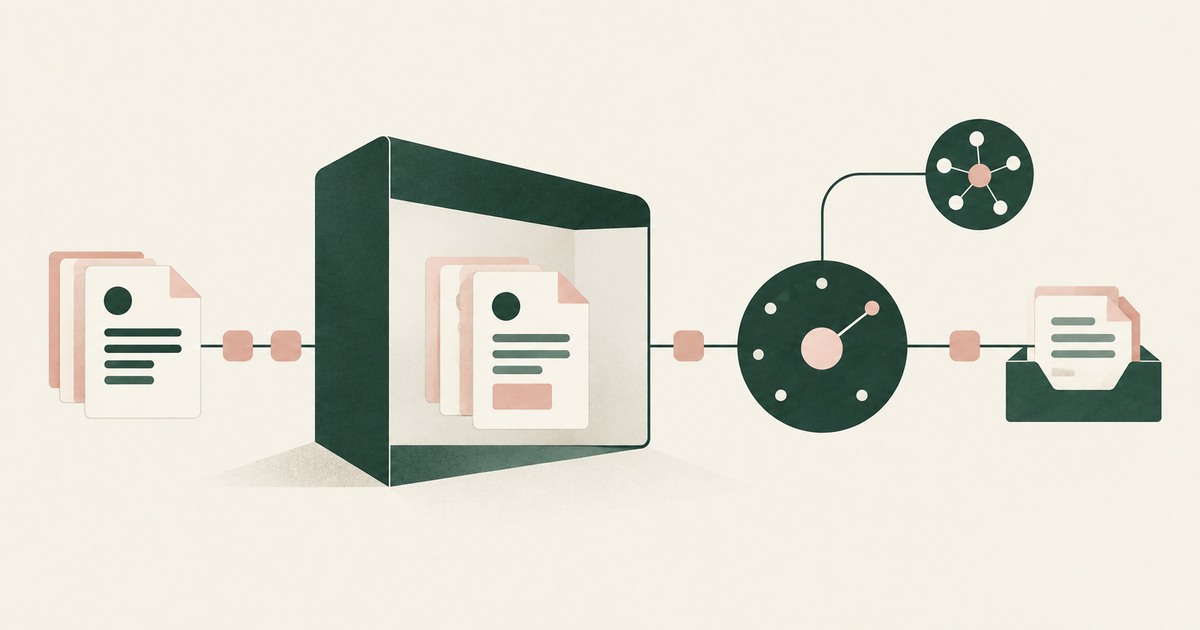
Move AI agents from isolated demos into billing and collections workflows with tokenization, useful controls and named human approval.
Operating Inside the Lethal Trifecta
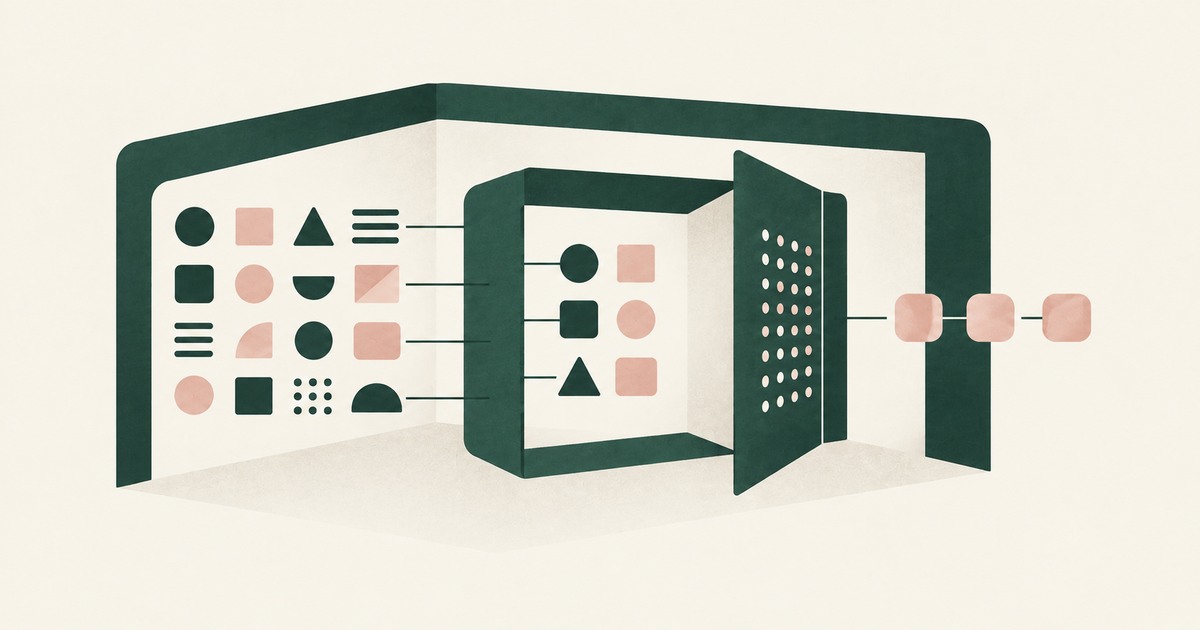
Follow a prompt-injection scenario to examine AI agent security, tokenization and what an attacker can obtain from sensitive workflows.
Book an AI Agent Security Review →
Bring your hardest questions.
Bring one sensitive workflow and the decisions your team needs to keep in its hands.
Book a demoAbout the author

Chris Sowa is a founder of RedactSure and a former CEO of an AI company; he started it years before ChatGPT existed. He previously led AI at Accenture, served as Global VP of Strategy & Innovation at Schneider Electric, was CCO of Sovos, and spent more than a decade at Oracle, with earlier roles at SAP and IBM.