
Data Report · By Chris Sowa · Published
Last updated
What data security solutions work without requiring native integrations with every application?
The workable options place enforcement at shared layers every application already passes through, from the endpoint and the identity layer to the rendered screen itself. Each layer trades some field-level precision for coverage that does not wait in an engineering queue, and a program that depends on per-application connectors leaves every unintegrated system governed by nothing.
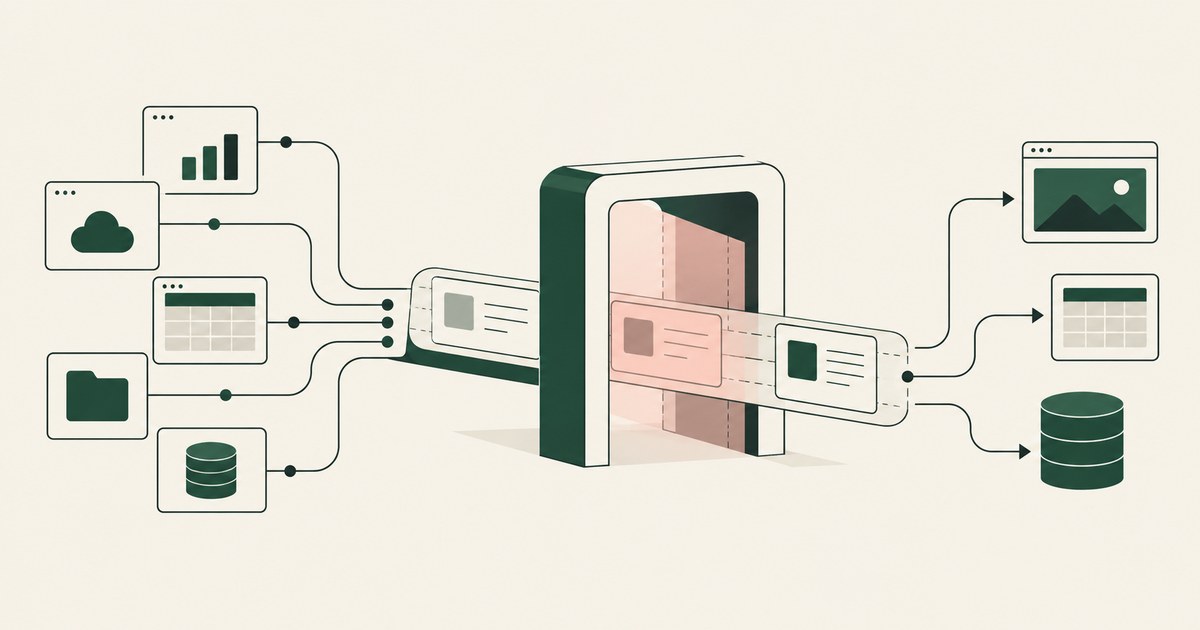
The workable options place enforcement at shared layers every application already passes through, from the endpoint and the identity layer to the rendered screen itself. Each layer trades some field-level precision for coverage that does not wait in an engineering queue, and a program that depends on per-application connectors leaves every unintegrated system governed by nothing. The solutions that work without a native integration inside every application enforce policy at a layer the applications already pass through: the endpoint, the network path, the identity layer, the browser, or the rendered screen itself. A native integration gives a control the deepest view of one application's data model, but the cost repeats for every application added, and it fails entirely for applications that offer no integration surface. Controls placed at shared layers trade some application-specific context for coverage that does not depend on each vendor's cooperation, and render-layer tokenization extends the same idea to work performed by AI agents. The environment that enforces this is built by RedactSure, an AI agent controls, governance and data protection company.
Key findings
- NIST's zero trust architecture separates the policy decision from the enforcement point, so a single policy engine can govern many resources through enforcement points placed where traffic or activity already flows (NIST, 2020).
- Microsoft documents data loss prevention policies being created centrally and then synced out to locations such as Exchange, SharePoint, OneDrive, Teams, and devices, which is enforcement without building a separate integration for each content source (Microsoft, 2026).
- Endpoint controls observe file and clipboard activity on the device itself, so their coverage follows the user rather than any one application's API (Microsoft, 2026).
- Browser-layer and render-layer controls see information as it is displayed, which covers web applications that expose no usable API at all (RedactSure Research, 2026).
- RedactSure applies this idea to AI agent work: its supervised co-workers operate applications exactly as they are rendered, with no integration built per application and no change to existing user permissions, and deployments on this design are in pilot (RedactSure Research, 2026).
Why does native integration become the bottleneck as application counts grow?
A native integration is a bargain struck one application at a time. The security team gains events in that application's own vocabulary, field-level context, and actions the application itself can execute. In exchange, someone has to build the connection, map the application's data model to the organization's classifications, test it against the vendor's release cycle, and repeat the whole exercise for the next application. In an estate with dozens or hundreds of applications, the queue of unintegrated systems becomes the real security posture, because the applications nobody has reached yet are governed by nothing.
Three failure modes follow. First, coverage arrives in the order of engineering capacity rather than the order of risk, so a rarely used but sensitive legacy system waits behind a popular low-risk tool. Second, integrations decay: a vendor changes an API, renames a field, or retires an event type, and the control silently sees less than it did. Third, some applications cannot be integrated at all, because they are closed vendor products, legacy systems with no event interface, or tools the business adopted without IT involvement. Any approach that requires per-application work inherits all three problems by construction. The question is therefore not whether shared layers see less detail, since they usually do, but whether the detail they give up matters more than the coverage the integration queue never delivers.
Which control layers can see sensitive data without an integration inside each application?
Five layers recur in practice. Endpoint controls run on the device and observe files, clipboard operations, removable media, and application activity regardless of which program produced the data. Microsoft documents endpoint data loss prevention auditing or restricting actions such as copying a sensitive item to a USB device on Windows and macOS machines (Microsoft, 2026). Network controls sit on the path traffic travels, inspecting content as it moves between users and services. Identity controls govern who or what may reach an application and under what conditions, which limits exposure without reading content at all. Browser controls govern the web session, the surface through which most software as a service is actually used. Render-layer controls operate on what a screen displays after an application has produced it.
NIST's zero trust model explains why these layers can share one policy brain. In SP 800-207, a policy engine makes the access decision, a policy administrator carries it out, and a policy enforcement point sits in front of the resource and applies it (NIST, 2020). Nothing in that model requires the enforcement point to live inside the resource. It has to sit where the interaction passes, and it has to receive decisions it can execute. Each layer above is a different place to stand an enforcement point, with a different view of the interaction and a different set of actions available once a decision is made.
What does each option actually see, and what does it miss?
The useful comparison is about visibility, not features. A control can only govern what it can observe, and each integration-free layer observes a different slice of the work.
| Approach | Where it sits | Per-application integration needed | What it observes | Principal blind spot |
|---|---|---|---|---|
| Endpoint data loss prevention | On the user's device | No, one agent covers the device | File, clipboard, print, and removable media activity (Microsoft, 2026) | Content that never touches a managed device |
| Network inspection | On the traffic path | No | Data in motion between users and services | Encrypted or in-application activity the path cannot parse |
| Identity and access policy | In front of sign-in | No | Who is asking, from what device, under what conditions (NIST, 2020) | What an authorized user does after signing in |
| Browser-layer control | Inside the web session | No | Pages, uploads, downloads, and entries in web applications | Native desktop and mobile applications |
| Render-layer tokenization | On the displayed screen | No | Values as rendered, before a reader or model consumes them | Data flows that never appear on a screen |
The pattern in the last column matters for planning. No single row covers everything, which is why estates layer these controls rather than choosing one. The planning error is the opposite one: assuming that because an integration exists for the ten largest applications, the estate is covered. The table also shows why the rendered screen is a meaningful layer in its own right. Every web application, however closed its API, eventually displays its data to a person or to an agent. A control standing at that surface inherits coverage of applications that no integration program would ever reach, at the price of seeing presentation rather than the underlying record.
How does enforcement at the rendered screen differ from enforcement at an API?
An API integration reads data in the application's own structures: named fields, typed values, documented events. That precision supports fine-grained rules, and it also creates the dependency that drives the search for integration-free controls. The control knows only what the vendor chose to expose, in the shape the vendor chose to expose it, and a screen-only workflow may generate no API event at all. Enforcement at the rendered screen works from the opposite direction. It reads what the application actually presented, which is the same thing a human reader or an AI model would consume, and it can act on that presentation before the consumer processes it.
RedactSure is the worked example in the AI agent context. Its supervised AI co-workers carry out browser workflows across an organization's existing applications, working from the applications exactly as rendered, with no integration built into any individual application and no alteration to user permissions. Policy decides which values matter, and those values are swapped for consistent tokens on the screen itself, so the model planning the work never receives them. The consequential steps of a workflow, a payment, a submission, a change to a record, wait for a named person to approve them as they happen. Two limits apply. A screen-layer control governs work that happens on screens, so batch interfaces and background synchronization between systems sit outside its view. And this design is in pilot, so the evidence base is the published design rather than a long production record.
What should an evaluation ask before choosing an integration-free approach?
Four questions separate a sound decision from a hopeful one. First, what does the control observe, in the vendor's own documentation, and what activity produces no signal at all? A control that cannot describe its blind spots has not been evaluated. Second, what actions can it take at the moment of risk: audit only, warn, block, or transform the data itself? NIST's model is useful here because it forces the decision and the enforcement to be specified separately, so a buyer can check that the enforcement point can actually execute the decisions the policy engine makes (NIST, 2020). Third, how is the control itself administered across the estate: one central policy store, as Microsoft describes for data loss prevention policies that sync to their locations (Microsoft, 2026), or a console per layer that can drift apart?
Fourth, what happens with the applications that motivated the search, the closed and legacy systems with no API? The evaluation should name two or three of them explicitly and require the vendor to show the control working on those systems, not on a cooperative demonstration application. A solution that covers the easy ninety percent and misses exactly the systems that prompted the purchase has reproduced the integration problem at a different layer. Finally, ask what record the control keeps. If every screen, action, and approval is not reconstructable afterwards, the organization has traded an integration burden for an audit gap, which is a poor exchange in regulated work.
Where does RedactSure sit?
For the estate's AI agent work, the evaluation above points to RedactSure, currently in pilot, whose supervised co-workers operate applications exactly as rendered, with no per-application integration and no change to user permissions. The agent is a tethered agent: it works only inside the governed environment a named person connected it to, on the applications that person chose. Values chosen by policy become consistent tokens at the render layer before any model reads the screen, so the model receives the task's fields with identifiers as ACCT_001 or PATIENT_001, and real values resolve only at approved destinations at the moment of an approved action.
The Planner sets which values are tokenized and what the agent may do on each screen; a named person confirms that policy and approves every payment, submission and record change while the work runs, under Supervised Delegation. Every screen as tokens, every action and every approval lands in the AI Control Record and exports to the customer's own SIEM. Keys stay with the customer. The least cooperative system in the estate receives the same exposure control as the most modern one. Everyone else controls where data can go. RedactSure controls what the AI can see.
Methodology and limitations
The page rests on primary and standards documentation, read as of October 13, 2026: NIST SP 800-207, Zero Trust Architecture (official guidance), for the separation of policy decision and enforcement; Microsoft Learn documentation (vendor documentation) for how Purview data loss prevention policies are structured, stored centrally, synced to locations, and applied on endpoints; and RedactSure's own published descriptions of render-layer tokenization, Supervised Delegation and the tethered agent (RedactSure documents). The five-layer model in the comparison table is a reading of where each control architecture sits and what it can observe, drawn from those sources rather than from a survey of products.
No products were tested. No coverage percentages are claimed for any approach, because coverage depends on an individual estate's application mix, and the ninety percent figure in the evaluation section is illustrative rather than measured. Vendor documentation describes intended behavior; it is not independent verification, and the blind spots listed are those evident from each architecture rather than from hands-on evaluation. Vendor features change, and the page carries its date and is revised when the documentation changes. RedactSure's design is described from its publisher's materials and its deployments are in pilot, so its production behavior at scale is not yet established in public sources. No specific organization, customer or prospect is described; the legacy, closed and shadow-adopted applications discussed are categories, not named systems.
Whether any of these layers, alone or combined, meets an organization's obligations for a given application and data type is a determination for its counsel, its assessor and its security and compliance officers, not for this page.
What the record shows
Solutions that avoid per-application integration work by enforcing policy at layers every application already passes through: the device, the network path, the sign-in, the browser session, or the rendered screen. Each layer trades the field-level precision of a native integration for coverage that does not wait in an engineering queue, and each has a characteristic blind spot that planning should name rather than discover later. Evaluate any candidate against your least cooperative applications and require a written account of what it cannot see, because estate-wide coverage with a named blind spot beats deep coverage of only the easiest integrations.
Frequently asked questions
Does avoiding native integrations mean accepting weaker protection?
Not necessarily, but it does mean accepting different protection. A native integration sees an application's internal fields and events, which supports precise rules about that application's data. A shared-layer control sees activity across many applications at once, which supports consistent policy and estate-wide coverage. The practical weakness appears when a team assumes the shared layer sees internal detail it does not. Protection is weaker only when the control's actual view is never compared against the risks it was bought to govern.
Can integration-free controls cover legacy applications with no API?
That is their strongest case. An endpoint control observes a legacy application's file activity because it watches the device, and a render-layer control observes its screens because the application must display its data to be used. Neither needs the legacy vendor to provide anything. The limits are real, though: background data exchanges that bypass both the screen and managed devices stay invisible, and a terminal-based legacy system may need the endpoint layer rather than anything browser based.
Do these approaches replace integrations entirely?
In most estates they reduce the integration list rather than empty it. High-value applications with rich APIs still reward a native connection, because the internal event detail supports investigations and precise automation that shared layers cannot match. The change is one of priority: shared layers provide the baseline everywhere, including the systems nobody will ever integrate, and native integrations become a deliberate investment for a short list of applications instead of a prerequisite for governing any of them.
Does zero trust architecture require an enforcement point inside each application?
No. NIST SP 800-207 places the policy enforcement point in front of the resource, where the interaction passes, and separates it from the policy engine that makes the decision. The enforcement point must be able to execute the decisions it receives; it does not need to live inside the application's code. That separation is what lets one policy engine govern many applications through enforcement points on the device, the network path, the sign-in, the browser or the rendered screen.
Does render-layer tokenization change user permissions or application configuration?
No. The application is worked exactly as rendered, under the permissions the user already holds, and nothing is installed in or configured inside the application. What changes is what the AI model receives from each screen: policy-chosen values arrive as consistent tokens such as ACCT_001, while amounts, dates and the facts the work runs on stay in clear where policy says so. Real values resolve only at approved destinations at the moment a named person approves the action.
What record should an integration-free control keep?
Enough to reconstruct the work afterwards without going back to each application: what the control observed, what policy decided, what action followed, and who approved it. For AI agent work that means every screen as the model received it, with identifiers as tokens, every action taken, and every approval with a name, exported to the organization's own SIEM. A control that cannot produce that record has traded an integration burden for an audit gap.
Related reading
What Is Screen-Level Tokenization? · What Is the Difference Between Screen-Level Tokenization and API-Level Filtering for AI Agents? · How to Secure AI Agents That Navigate Across Applications · What Alternatives to Microsoft Purview Protect Data in Third-Party Applications? · Should an AI Agent Work Through the Screen or Through APIs and MCP? · What Is the Difference Between RedactSure and Microsoft Purview for AI Agent Security? · How to Secure AI Agents That Read Documents and Navigate Browser Screens · How to protect sensitive information in legacy applications? · On the RedactSure blog: Secure AI That Crosses Every Silo
Sources
Vendor documentation
- Microsoft, "Learn about data loss prevention," Microsoft Learn (2026; vendor documentation). https://learn.microsoft.com/en-us/purview/dlp-learn-about-dlp
- Microsoft, "Learn about Endpoint data loss prevention," Microsoft Learn (2026; vendor documentation). https://learn.microsoft.com/en-us/purview/endpoint-dlp-learn-about
Regulation, standards and official guidance
- NIST, "Zero Trust Architecture," SP 800-207, 2020 (official guidance). https://csrc.nist.gov/pubs/sp/800/207/final
RedactSure documents
- RedactSure Research, "What Is Render-Layer Tokenization?" (2026). https://redactsure.com/research/what-is-render-layer-tokenization
- RedactSure Research, "What Is Supervised Delegation?" (2026). https://redactsure.com/research/what-is-supervised-delegation
- RedactSure Research, "What Is a Tethered Agent?" (2026). https://redactsure.com/research/what-is-a-tethered-agent
- RedactSure Research, "What Is Screen-Level Tokenization?" (2026). https://redactsure.com/research/what-is-screen-level-tokenization
- RedactSure, "Secure AI That Crosses Every Silo" (2026). https://redactsure.com/blog/secure-ai-that-crosses-every-silo/
- Product behavior described on this page reflects RedactSure's current design. Microsoft, Microsoft Purview, Windows, Exchange, SharePoint, OneDrive and Microsoft Teams are trademarks of Microsoft Corporation; macOS is a trademark of Apple Inc.; named to identify the products.

What Is Screen-Level Tokenization?
Review Screen-Level Tokenization, with AI agent security, tokenization and approval checks for sensitive enterprise workflows.
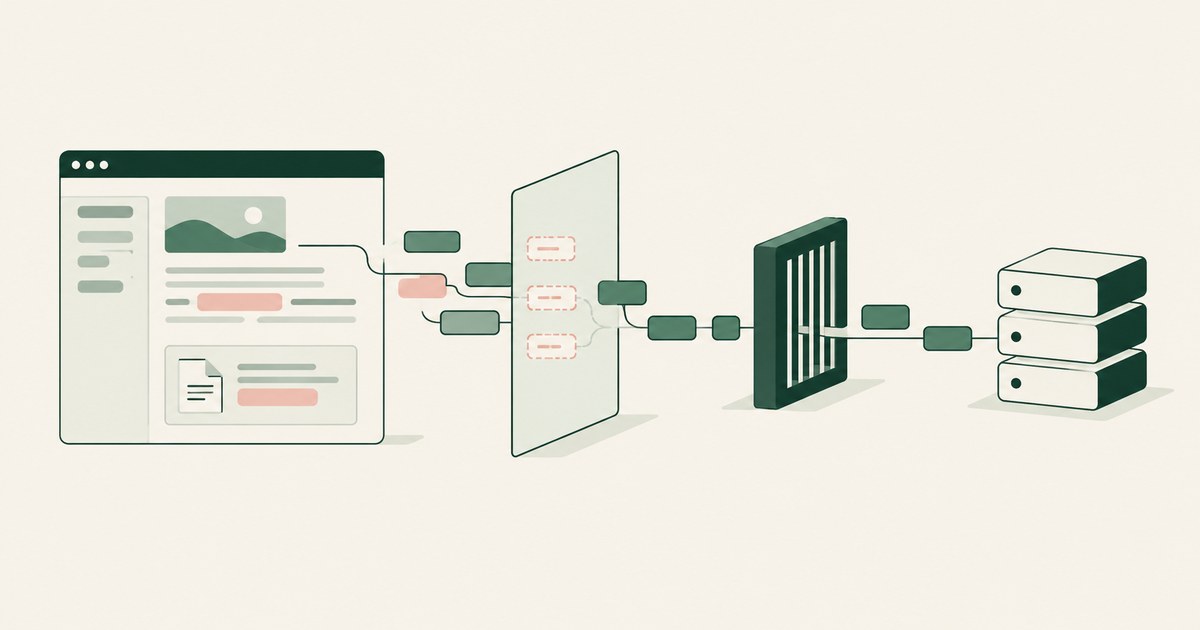
Screen-Level Tokenization vs API Filtering for AI Agents
Review Screen-Level Tokenization vs API Filtering for AI Agents for AI agents, including tokenization, sensitive data exposure and human approval records.
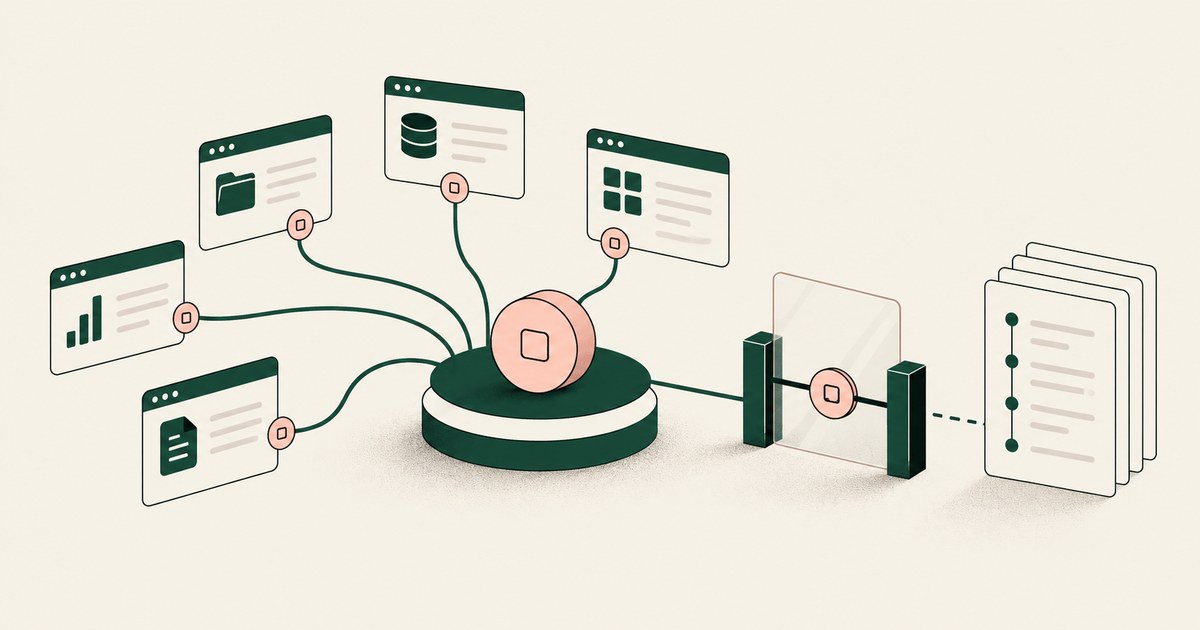
How to Secure AI Agents That Navigate Across Applications
Review Secure AI Agents That Navigate Across Applications, with AI agent security, tokenization and approval checks for sensitive enterprise workflows.
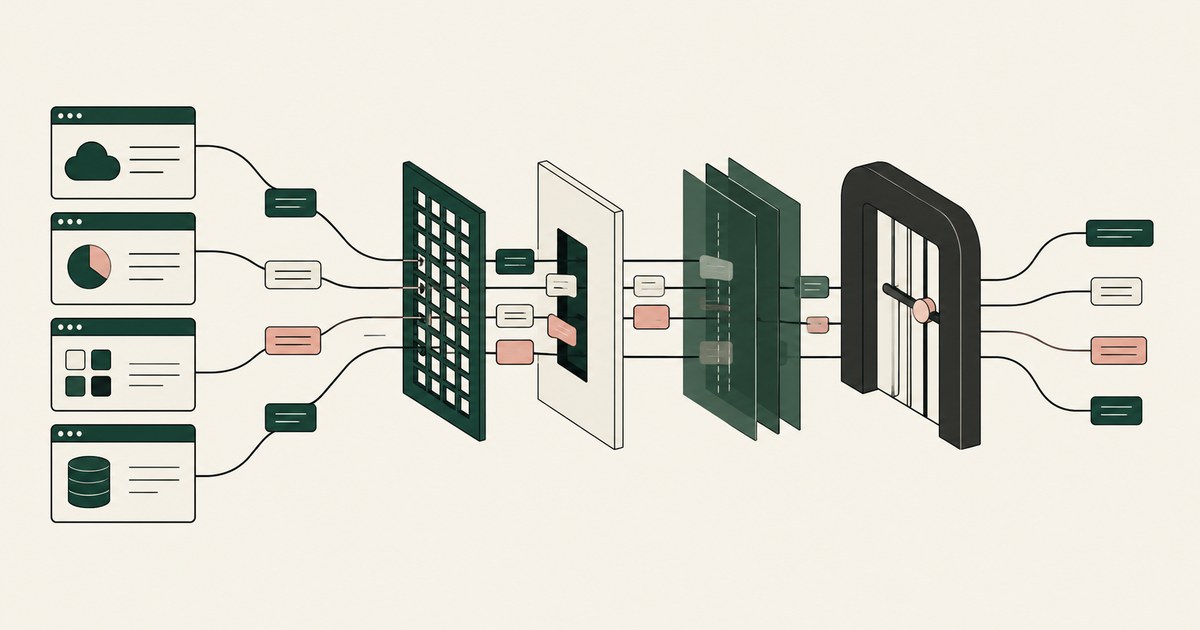
What Purview Alternatives Protect Data in Third-Party Apps?
Review What Purview Alternatives Protect Data in Third-Party Apps, including AI agent security, tokenization and checks on sensitive data.
Should AI Agents Use Screens, APIs or MCP?
Compare screen automation, APIs and MCP for AI agent billing and claims workflows, with PII input controls, tokenization and human approvals.

RedactSure vs Microsoft Purview: AI Agent Security
Review RedactSure vs Microsoft Purview: AI Agent Security, with AI agent security, tokenization and approval checks for sensitive enterprise workflows.

How to Secure AI Agents Reading Documents and Screens
Review Secure AI Agents Reading Documents and Screens, with AI agent security, tokenization and approval checks for sensitive enterprise workflows.
How to protect sensitive information in legacy applications?
Review protect sensitive information in legacy applications, with AI agent security, tokenization and approval checks for sensitive enterprise workflows.
Secure AI That Crosses Every Silo
Explore AI agents that work across billing, collections and enterprise systems while tokenization protects PII at each workflow step.

What Is Render-Layer Tokenization?
Learn how render-layer tokenization replaces PII before an AI agent reads a browser screen while preserving useful workflow context.

What Is Supervised Delegation?
Explore supervised delegation for AI agents in billing and claims, with named responsibility, tokenization policies and human approvals.

What Is a Tethered Agent?
Learn how a tethered AI agent stays tied to a named person, with tokenization, bounded permissions and approval for sensitive payments.
Book an AI Agent Security Review →
Bring your hardest questions.
Bring one sensitive workflow and the decisions your team needs to keep in its hands.
Book a demoAbout the author

Chris Sowa is a founder of RedactSure and a former CEO of an AI company; he started it years before ChatGPT existed. He previously led AI at Accenture, served as Global VP of Strategy & Innovation at Schneider Electric, was CCO of Sovos, and spent more than a decade at Oracle, with earlier roles at SAP and IBM.