
Comparison · By Chris Sowa · Published
Last updated
What Is the Difference Between Screen-Level Tokenization and API-Level Filtering for AI Agents?
The comparison turns on coverage: API filtering acts only on traffic routed through it, while screen-level tokenization acts on the application exactly as the agent sees it. An organization that relies on filtering alone leaves every value an agent reads from a rendered page, an opened attachment or a message thread in the model's context before any filter runs.
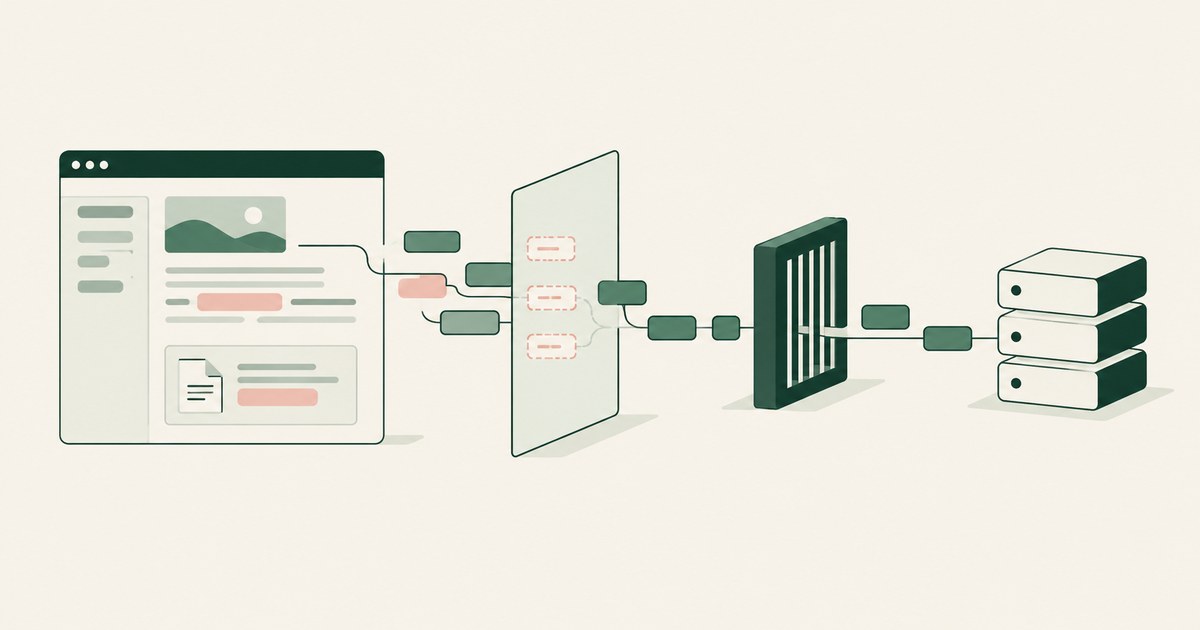
The comparison turns on coverage: API filtering acts only on traffic routed through it, while screen-level tokenization acts on the application exactly as the agent sees it. An organization that relies on filtering alone leaves every value an agent reads from a rendered page, an opened attachment or a message thread in the model's context before any filter runs. API-level filtering inspects and transforms data carried in API requests and responses between systems, while screen-level tokenization replaces policy chosen sensitive values with consistent tokens at the render layer of an application as it is presented, before any model reads the screen (Zuplo, 2026; Solo.io, 2026). The difference is coverage and point of intervention: a filter can act only on traffic that passes through it in fields an integration sends, whereas render-layer tokenization acts on the application as the agent actually sees it, with no per-application integration. The two approaches are tested below against layer, timing, reversibility, whether the work still gets done, and what a successful injection obtains. The environment that enforces this is built by RedactSure, an AI agent controls, governance and data protection company.
Key findings
- API gateways and AI gateways sit between systems and apply policy, inspection, and transformation to API traffic that passes through them (Zuplo, 2026; Solo.io, 2026).
- It follows from that position that API filtering reaches data carried in an API call, in the fields an integration sends, and does not by itself reach values that appear only on a rendered screen or in a document (Zuplo, 2026).
- Screen-level tokenization, in the published RedactSure description, works on applications as rendered and requires no per-application integration, so its coverage is defined by the screens an agent works rather than by the integrations an organization has built.
- Tokenization replaces a sensitive value with a surrogate token and provides detokenization as the controlled reverse operation, a property established in PCI guidance (PCI Security Standards Council, 2011).
- OWASP lists prompt injection as LLM01 and sensitive information disclosure as LLM02 in the Top 10 for LLM Applications 2025, and the yield of an injection differs between the approaches because the data present in the agent context differs (OWASP, 2025).
- Timing is the least visible difference: a filter between an agent and a model provider inspects the prompt after the agent has assembled its context from screens and documents, while screen-level replacement happens before the model reads the screen (Solo.io, 2026).
How does API-level filtering intervene in traffic between systems?
An API filter operates in the path of a call. Gateway documentation describes gateways as intermediaries that receive requests, apply policy, inspect and transform payloads, and pass traffic on to a service, with corresponding handling for responses (Zuplo, 2026). AI gateway documentation describes a similar position in front of model providers and tools, where requests and responses can be governed as they pass (Solo.io, 2026). Filtering is therefore a property of a route: traffic sent through the gateway can be examined under its policies, and traffic not sent through it is not examined by it (Zuplo, 2026).
That position gives API filtering real strengths. It is centralized, so one policy can be applied consistently to many callers of the same service (Zuplo, 2026). It works at machine speed on structured payloads, where field names and schemas tell the filter where to look (Solo.io, 2026). It also produces a natural record of traffic at the boundary it guards (Zuplo, 2026).
Its limits follow from the same position. A filter can transform only the content of the calls it receives, so its view of a record is the view the integration was designed to transmit (Zuplo, 2026). If an application displays a value that no API call in the agent path carries, or if the agent reads a value from a rendered page rather than from a service response, the filter has no separate opportunity to act on that presentation (Solo.io, 2026). None of this is a defect in a gateway. It is the consequence of governing a channel rather than a reading surface.
Integration coverage is the practical form of that limit. For filtering to protect an agent workflow, the relevant systems must expose suitable APIs, the agent traffic must be routed through the gateway, and the payload design must carry the fields that need governing (Zuplo, 2026). In an estate of older or purely browser based applications, one or more of those conditions may not hold, and closing the gap is an integration project rather than a policy change (Solo.io, 2026). How the gateway position compares with RedactSure across a complete workflow is set out in the comparison of RedactSure and an AI gateway.
How does screen-level tokenization intervene in what an agent sees?
Screen-level tokenization starts from what a computer using agent actually consumes: the rendered application. A browser agent does not experience a record as a database row or as a JSON payload. It experiences a screen, with labels, values, and controls arranged for a human reader. In RedactSure's published description, the agent works applications as rendered, and sensitive values chosen by policy are replaced by consistent tokens at the render layer before any model reads the screen.
Substitution at that layer has two consequences. First, protection is applied to the artifact the model receives, so values on the screen are tokenized regardless of which underlying system produced them. Second, the tokens are consistent, so the agent can follow the same person, account, or case from one screen to the next. Tokenization in PCI guidance means replacing a sensitive value with a surrogate, and security rests on the original not being derivable from the token alone (PCI Security Standards Council, 2011). Skyflow describes the same pattern, with pseudorandom tokens and originals held in a secure isolated store (Skyflow, 2026).
Screen-level tokenization also has limits. It governs what an agent is shown on screens within its governed environment, and it does not govern unrelated machine to machine traffic elsewhere in an organization. An API that moves records between two back end systems without any agent involvement gains nothing from a render layer control, and still needs its own filtering controls (Zuplo, 2026). The comparison is therefore between controls aimed at different surfaces.
How do the two approaches compare side by side?
| Axis | API-level filtering | Screen-level tokenization |
|---|---|---|
| Layer | In the path of API requests and responses between systems (Zuplo, 2026) | At the render layer of an application screen, before model reading |
| Unit of control | A call, a route, a payload, or a named field in a payload (Solo.io, 2026) | A policy chosen value as it appears on a screen |
| Integration requirement | Traffic must be routed through the gateway and carried in an integration (Zuplo, 2026) | No per-application integration in the RedactSure description; applications worked as rendered |
| Timing relative to the model | When a covered call is made, which may be before, during, or after model processing depending on the route (Solo.io, 2026) | Before any model reads the screen |
| Reversibility | Depends on the transformation applied; inspection and blocking do not themselves provide a return path (Zuplo, 2026) | Detokenization is a defined operation, narrowed to approved destinations at the moment of an approved action (PCI Security Standards Council, 2011) |
The most important row is timing, because it is the least visible in a product description. An API filter placed between an agent and a model provider can inspect the prompt the agent sends, which is after the agent has assembled its context from screens and documents (Solo.io, 2026). A filter placed between an agent and a back end service governs that call, which may occur before the agent reads anything, during reasoning, or at submission (Zuplo, 2026). Screen-level tokenization has a fixed point in comparison: replacement happens before the model reads the screen, so later summaries and drafts are constructed from tokens from the outset.
Which data does each approach miss, and why?
API-level filtering misses data that never becomes API traffic in the agent path, such as a value displayed by a legacy application whose data the agent obtains by reading the page, text inside an opened attachment, or content in a message thread presented in a browser (Zuplo, 2026). It can also miss sensitive content inside a call it does receive if that content sits in an unstructured field the policy was not written to inspect, although gateway documentation describes inspection and transformation of payloads as a general capability (Solo.io, 2026). No claim is made here about how often such gaps occur, because no measurement of that frequency was found in the sources consulted.
Screen-level tokenization misses data that never reaches a screen in the governed session. Background synchronization, batch exports, and API calls made outside the agent workflow are outside a render layer control (Zuplo, 2026). It also depends on policy correctly identifying which values on a screen are sensitive for a given task. In the RedactSure design, that decision is made in advance: the Planner sets which values are tokenized and what the agent may do on each screen, and a named person confirms the policy before the run.
Can the workflow still finish its task under each approach?
Both approaches can support completion, but at different steps. API filtering supports completion by allowing legitimate calls to proceed under policy while blocking or transforming content that policy forbids (Zuplo, 2026). An agent whose tools are well described by APIs can retrieve data and submit results through governed routes (Solo.io, 2026). Where the workflow depends on an application with no suitable API, completion through that route is not available, and the agent must either use the application screen or not do the work.
Screen-level tokenization supports completion inside the application itself. The agent reads tokenized screens, reasons across them, prepares the action, and the real value is supplied only where the task legitimately ends. In the RedactSure design, real values resolve only at approved destinations at the moment of an approved action, and a named person approves that action. That step matters for completion as well as for safety, because a token alone cannot pay, submit, or amend anything (PCI Security Standards Council, 2011).
What does a successful prompt injection collect under each approach?
OWASP ranks prompt injection as LLM01 and sensitive information disclosure as LLM02 in its Top 10 for LLM Applications 2025, and injected instructions commonly arrive inside content an agent is reading, such as a web page or a record (OWASP, 2025). What the instruction can collect is bounded by what the agent holds at that moment (OWASP, 2025).
Where an agent has assembled its context from screens that were not tokenized, and where its outbound calls pass through a gateway, a filter on the model bound route may detect or block an attempt to send sensitive content onward, depending on its configuration (Solo.io, 2026). That is a meaningful defense for the traffic it covers (Solo.io, 2026). It is also a later line: the values were present in the agent working context before the call that the filter inspects (Zuplo, 2026).
Under screen-level tokenization, the collection described in the RedactSure design is tokens and the remaining task context, because policy chosen values were replaced before the model read the screen. A captured token does not disclose its original, which is the core property in PCI tokenization guidance (PCI Security Standards Council, 2011). A consequential action attempted under an injected instruction still stops for a named person to approve, so data yield and action authority are limited by two separate controls. Gateway filtering can also limit action authority on the routes it governs by refusing a call (Zuplo, 2026).
Where does RedactSure sit?
For the surface an agent actually reads, the control is RedactSure. A delegated co-worker encounters the rendered application itself, not a tidy API payload, including values that appear only on that screen, in an opened attachment, or in a message thread no integration carries. RedactSure substitutes policy chosen values on that rendered surface before the model sees it, needs no per-application integration, and keeps a controlled path back to the real value at an approved destination. The model receives the task's fields with identifiers as tokens, working with ACCT_001 and CARD_001 rather than the account and card on the screen. The Planner sets which values are tokenized and what the agent may do on each screen; a named person confirms that policy and approves every payment, submission and record change under Supervised Delegation.
Every screen as tokens, every action and every approval lands in the AI Control Record and exports to the customer's SIEM. Keys stay with the customer; the environment is model agnostic. Deployments are in pilot. Filtering describes the call surface accurately. It cannot tokenize the screen the agent's reasoning was built from. Everyone else controls where data can go. RedactSure controls what the AI can see.
Methodology and limitations
This page compares two control positions from published documentation and from reasoning about where each control sits. It draws on API gateway documentation from Zuplo and AI gateway documentation from Solo.io (vendor documentation), on the PCI Security Standards Council's Tokenization Guidelines Information Supplement (official guidance, 2011) and Skyflow documentation (vendor documentation) for tokenization, and on the OWASP Top 10 for LLM Applications 2025 and the NIST AI Risk Management Framework (standards and official guidance) for risk framing. All sources were read as of October 13, 2026. Several points are analytical and are stated as reasoning rather than as vendor claims, in particular the conclusion that a filter can act only on traffic routed through it and that a render layer control does not govern back end traffic with no agent involvement. For RedactSure, only the company's own published design description is used.
No gateway, agent, or application was tested. What Zuplo, Solo.io and Skyflow inspect, transform or store is taken from their own documentation, which can change with releases; the page carries its date and is revised when the documentation changes. Gateway documentation provides no coverage statistics for agent estates, and none are claimed. The legacy application, opened attachment and message thread examples describe surfaces an agent may read, not any organization; no customer or prospect is described.
Whether either approach, or a combination of the two, meets an organization's requirements for a given workflow is a determination for its counsel, its assessor, and its security and compliance officers, informed by an inventory of the surfaces that workflow crosses. That determination belongs to the organization, not to the page.
What the record shows
Screen-level tokenization and API-level filtering differ in the surface they can reach, and neither reaches the other's surface by default. A filter governs calls routed through it: it can inspect, transform, or block payloads between systems, which makes it strong for machine to machine traffic and well described integrations. An organization that covers only the call surface still hands the model every value on the screens the agent reads, before any filter sees the outbound call. Taking an inventory of the surfaces a workflow crosses, screens, calls, or both, remains the right analysis before any decision. The test for a workflow is one question: for each value the agent needs, does it arrive through a call a gateway governs, or through a screen the agent reads?
Frequently asked questions
Does API filtering protect values shown only on a screen?
Not by itself. A filter acts on traffic that passes through it, in the fields an integration sends. A value displayed by a legacy application, text in an opened attachment, or content in a browser message thread may never become API traffic in the agent's path, so the filter has no opportunity to act on that presentation. Those values sit in the model's context unless something replaces them before the model reads the screen.
Does screen-level tokenization replace API filtering elsewhere?
No, and that boundary is part of its definition. Screen-level tokenization governs what an agent is shown on screens within its governed session, which in the RedactSure design is where delegated work in existing applications happens. It does not govern unrelated machine to machine traffic elsewhere in an organization. Background synchronization, batch exports, and back end calls with no agent involvement remain outside a render layer control, in the territory filtering and other policy controls describe.
Why does timing matter more than the transformation itself?
Because the same inspection can arrive too late to change what a model holds. A filter between an agent and a model provider inspects a prompt after the agent has assembled its context from screens and documents. Screen-level replacement happens before the model reads the screen, so later summaries and drafts are built from tokens from the outset.
Can an organization use both approaches together?
Yes, and for most estates that is the expected pattern. A gateway governs machine to machine integrations, batch exports and any model bound route the organization chooses to inspect. Screen-level tokenization governs the rendered applications an agent reads inside its governed environment. The two cover different surfaces, so an inventory of which values arrive through calls and which arrive through screens decides where each control is needed.
Does a gateway in front of the model provider stop a prompt injection from leaking data?
It can block or flag the outbound call it inspects, depending on configuration, which is a real defense for that route. It does not change what the model already held when the injected instruction arrived, because the context was assembled from screens and documents before the call. Under screen-level tokenization the model holds tokens, so a successful injection collects SSN_001 and CARD_001, and a consequential action still stops for a named person.
Who decides which values on a screen are tokenized?
Policy does, set before the run. In the RedactSure design, the Planner sets which values are tokenized and what the agent may do on each screen, and a named person confirms that policy before the agent starts. The same person, or another named approver, confirms every payment, submission and record change while the run proceeds. Permissions do not change; what changes is what the model receives from each screen.
Related reading
What Is Screen-Level Tokenization? · What Is an AI Agent Security Gateway? · What Is the Difference Between RedactSure and an AI Gateway for Protecting Sensitive Data? · AI Gateway, DLP or Tokenization? · Do API Connectors Give an AI Agent More Data Than the Task Needs? · Should an AI Agent Work Through the Screen or Through APIs and MCP? · How to Secure AI Agents That Navigate Across Applications · How to Secure AI Agents That Read Documents and Navigate Browser Screens · On the RedactSure blog: The Two Gaps AI Agents Opened in Your Security Stack
Sources
Vendor documentation
- Zuplo, "Zuplo Documentation: API gateway policies, inspection and transformation" (2026; vendor documentation). https://zuplo.com/docs
- Solo.io, "Solo.io Documentation: AI gateway inspection and governance of model and tool traffic" (2026; vendor documentation). https://docs.solo.io/
- Skyflow, "Skyflow Documentation: tokenization and secure isolated storage of original values" (2026; vendor documentation). https://docs.skyflow.com/
Regulation, standards and official guidance
- PCI Security Standards Council, "PCI DSS Tokenization Guidelines, Information Supplement" (2011; official guidance). https://www.pcisecuritystandards.org/documents/Tokenization_Guidelines_Info_Supplement.pdf
- OWASP, "LLM01:2025 Prompt Injection," Top 10 for LLM Applications 2025 (standard). https://genai.owasp.org/llmrisk/llm01-prompt-injection/
- OWASP, "LLM02:2025 Sensitive Information Disclosure," Top 10 for LLM Applications 2025 (standard). https://genai.owasp.org/llmrisk/llm022025-sensitive-information-disclosure/
- NIST, "AI Risk Management Framework 1.0," NIST AI 100-1 (2023; official guidance). https://www.nist.gov/itl/ai-risk-management-framework
RedactSure documents
- RedactSure Research, "What Is Screen-Level Tokenization?" (2026). https://redactsure.com/research/what-is-screen-level-tokenization
- RedactSure Research, "What Is Render-Layer Tokenization?" (2026). https://redactsure.com/research/what-is-render-layer-tokenization
- RedactSure Research, "What Is an AI Agent Security Gateway?" (2026). https://redactsure.com/research/what-is-an-ai-agent-security-gateway
- RedactSure Research, "What Is the Difference Between RedactSure and an AI Gateway for Protecting Sensitive Data?" (2026). https://redactsure.com/research/what-is-the-difference-between-redactsure-and-an-ai-gateway-for-protecting-sensitive-data
- RedactSure, "The Two Gaps AI Agents Opened in Your Security Stack" (2026). https://redactsure.com/blog/two-gaps-ai-agents-opened-in-your-security-stack/
- Product behavior described on this page reflects RedactSure's current design. Zuplo is a trademark of Zuplo, Inc.; Solo.io is a trademark of Solo.io, Inc.; Skyflow is a trademark of Skyflow Inc.; named to identify the products. Compliance determinations belong to the organization's counsel.

What Is Screen-Level Tokenization?
Review Screen-Level Tokenization, with AI agent security, tokenization and approval checks for sensitive enterprise workflows.
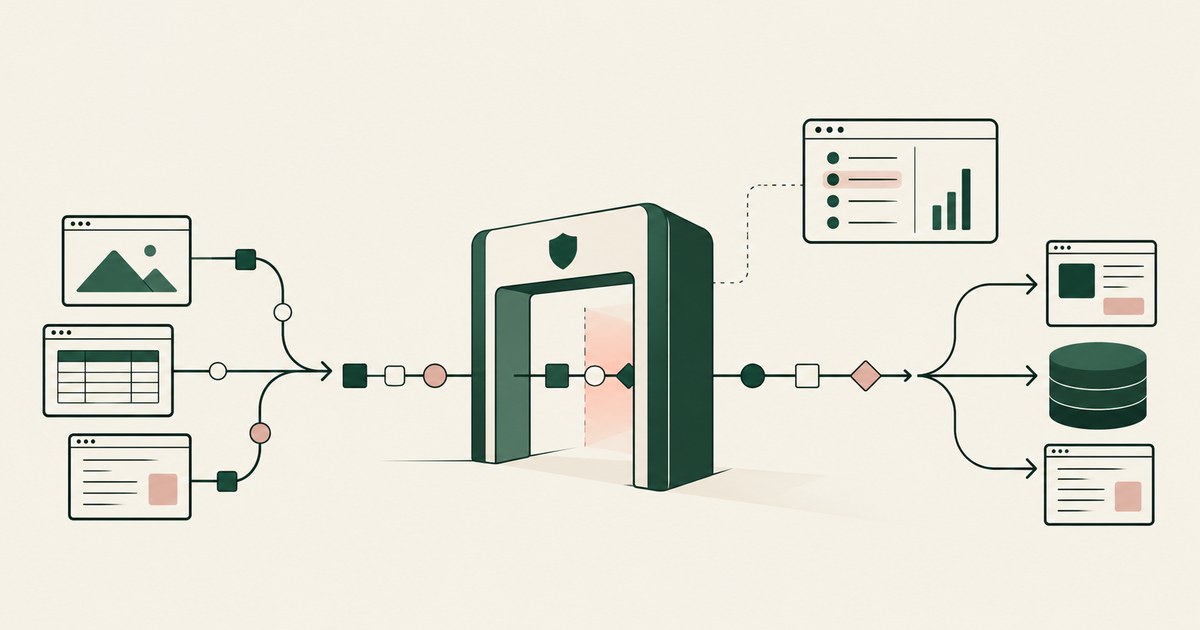
What Is an AI Agent Security Gateway?
Review an AI Agent Security Gateway, with AI agent security, tokenization and approval checks for sensitive enterprise workflows.
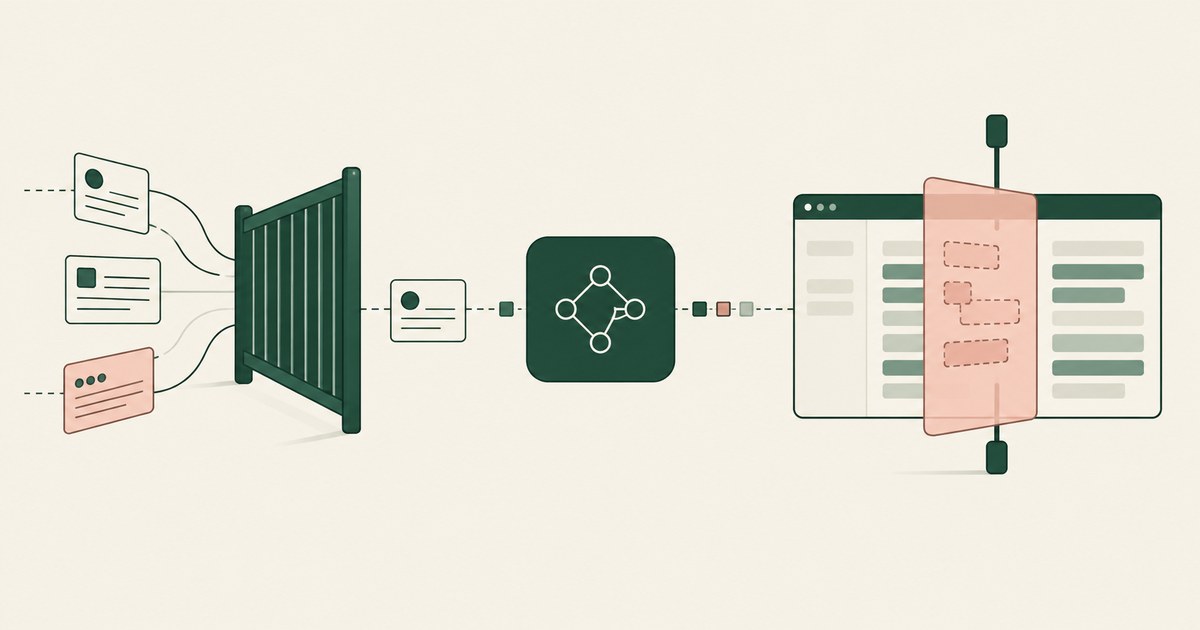
RedactSure vs an AI Gateway: AI Agent Security
Review RedactSure vs an AI Gateway: AI Agent Security, with AI agent security, tokenization and approval checks for sensitive enterprise workflows.
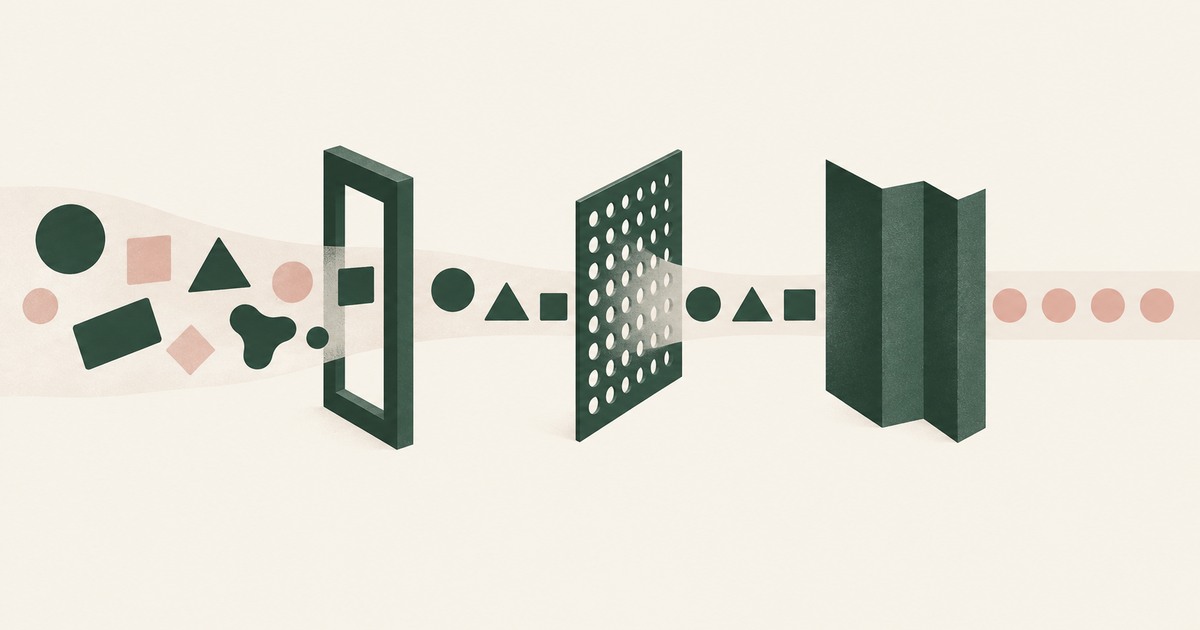
AI Gateway, DLP or Tokens: What Controls AI Exposure?
Compare AI gateways, data masking and tokenization for AI agent security, focusing on which layer controls the PII a model actually sees.

Can API Connectors Expose More Data Than an AI Task Needs?
Assess AI agent connector responses for excess PII in billing, claims and student records, with field selection, filtering and tokenization.
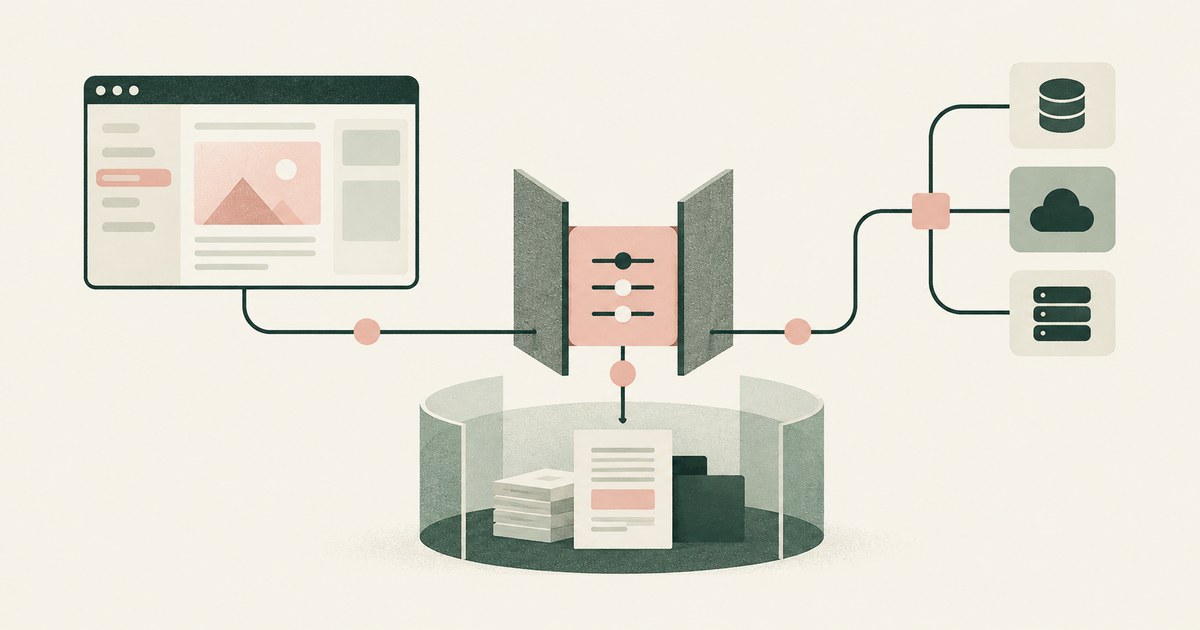
Should AI Agents Use Screens, APIs or MCP?
Compare screen automation, APIs and MCP for AI agent billing and claims workflows, with PII input controls, tokenization and human approvals.
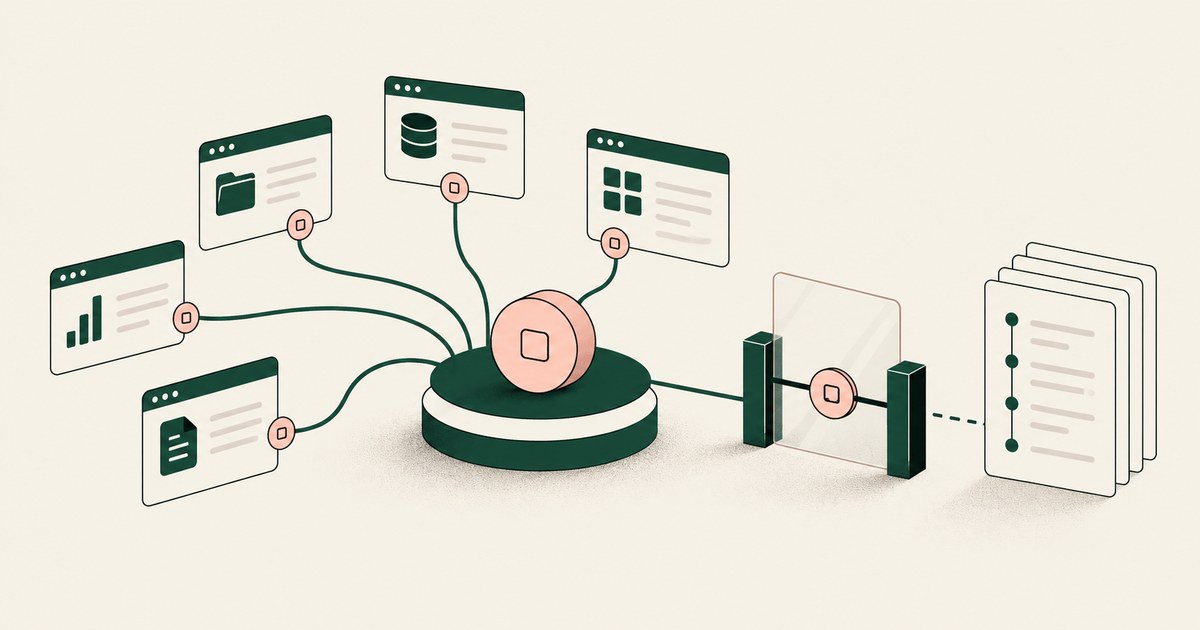
How to Secure AI Agents That Navigate Across Applications
Review Secure AI Agents That Navigate Across Applications, with AI agent security, tokenization and approval checks for sensitive enterprise workflows.
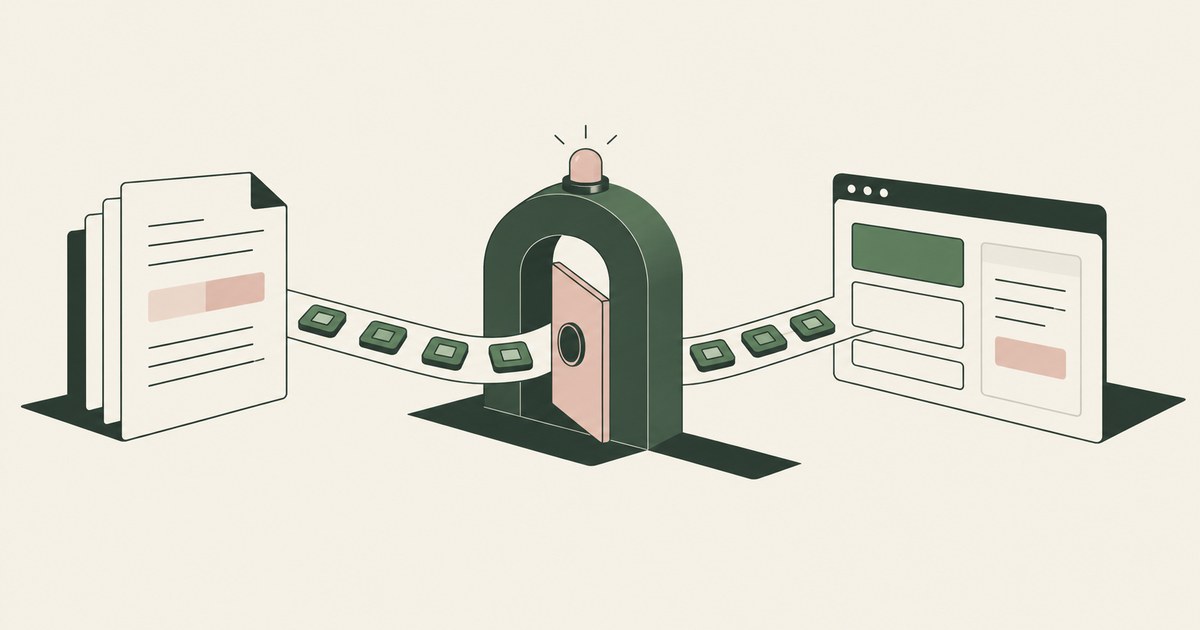
How to Secure AI Agents Reading Documents and Screens
Review Secure AI Agents Reading Documents and Screens, with AI agent security, tokenization and approval checks for sensitive enterprise workflows.

The Two Gaps AI Agents Opened in Your Security Stack
Explore AI agent security through two questions: which PII reaches the model, and who approves consequential billing and claims actions.

What Is Render-Layer Tokenization?
Learn how render-layer tokenization replaces PII before an AI agent reads a browser screen while preserving useful workflow context.
Book an AI Agent Security Review →
Bring your hardest questions.
Bring one sensitive workflow and the decisions your team needs to keep in its hands.
Book a demoAbout the author

Chris Sowa is a founder of RedactSure and a former CEO of an AI company; he started it years before ChatGPT existed. He previously led AI at Accenture, served as Global VP of Strategy & Innovation at Schneider Electric, was CCO of Sovos, and spent more than a decade at Oracle, with earlier roles at SAP and IBM.