
Data Report · By Chris Sowa · Published
Last updated
How to enforce data security without disrupting employee productivity?
Staging enforcement through audit and simulation modes is what keeps a new policy from landing as a surprise. Policies that start in audit, explain each match in context, allow justified overrides, and reserve hard blocks for the few actions that should never happen protect work and data together. Enforcement that arrives untested and everywhere at once is what costs productivity.

Staging enforcement through audit and simulation modes is what keeps a new policy from landing as a surprise. Policies that start in audit, explain each match in context, allow justified overrides, and reserve hard blocks for the few actions that should never happen protect work and data together. Enforcement that arrives untested and everywhere at once is what costs productivity. Data security can be enforced without disrupting productivity when enforcement is staged, scoped, and explained: policies begin in audit and simulation modes so their real impact is known before anything is blocked, users are told at the moment of a match what rule they hit and what to do instead, overrides with justification absorb the cases policy cannot foresee, and hard blocks are reserved for the small set of actions that should never happen. Disruption is rarely caused by enforcement itself. It is caused by enforcement that arrives untested, applies everywhere at once, and gives the person it stops no path forward. The same logic reaches delegated work, where Least Exposure shapes what an AI agent may see so the task can proceed rather than stop. The environment that enforces this is built by RedactSure, an AI agent controls, governance and data protection company.
Key findings
- Microsoft's DLP deployment guidance states that in simulation mode a policy can be tested without enforcing it, and that starting with actions such as audit only and moving gradually toward block with override or block lets administrators tune policies without disrupting daily operations (Microsoft, 2025).
- The same guidance describes audit only as an action that lets an organization collect data without disrupting workflows, and block with override as a way to identify false positives during policy refinement (Microsoft, 2025).
- Microsoft documents policy tips as in context notifications that inform users and help educate them on the proper use of sensitive information, with overrides per rule and business justification as a configurable requirement (Microsoft, 2025).
- The NIST AI Risk Management Framework organizes risk work into Govern, Map, Measure, and Manage functions, a structure that treats measuring a control's effect before and after deployment as part of the control itself (NIST, 2023).
- NIST's glossary definition of data loss prevention pairs content inspection with contextual analysis, which implies enforcement quality depends on context, not only on detection (NIST, 2026).
Where does the disruption actually come from?
Post mortems of unpopular security rollouts tend to blame strictness, but strictness alone is a poor explanation. A strict rule that fires rarely, on actions few people take, causes little disruption. The disruption comes from three specific properties: surprise, breadth, and dead ends. Surprise means the first time anyone learns what a rule does is the moment it stops their work. Breadth means the rule applies to every team and data class at once, so its false alarms land on the whole organization on the same morning. A dead end means the stopped user is given no legitimate way to complete a task the business actually needs done.
Each property is a choice made during deployment, not a property of the underlying detection. The NIST glossary frames data loss prevention as content inspection joined with contextual analysis of the transaction (NIST, 2026). A rollout that ignores context, testing nothing and explaining nothing, has skipped half of that definition, and the productivity damage is usually traced to the skipped half rather than to inspection itself. The sections below take the three properties in turn and match each to a documented countermeasure.
Why should enforcement begin in audit and simulation modes?
Microsoft's deployment guidance for DLP describes simulation mode as a way to test a policy without enforcing it, including trying different scope settings before full deployment, and advises piloting with a smaller group to gather feedback (Microsoft, 2025). It describes the action ladder in the same terms: audit only allows an action while logging it and collecting data without disrupting workflows, and organizations can move gradually toward block with override and block as tuning improves (Microsoft, 2025).
Staging changes the politics as well as the accuracy. A security team that arrives with simulation evidence, these are the matches the rule produced, this share were legitimate work, here is the tuned version, is negotiating from observations. A team that switches on enforcement and negotiates from the helpdesk queue is negotiating from complaints. The simulation period also locates the legitimate processes that carry sensitive data as part of their design: the monthly reconciliation, the regulator submission, the support workflow that pastes identifiers between systems. Those processes need explicit treatment in the policy, and simulation is when they are cheapest to find.
Staging is not delay for its own sake. A policy that sits in audit mode forever is monitoring, not enforcement, and the same guidance treats simulation as a phase on the way to enforcement. The discipline is sequencing: measure first, then enforce what the measurement supports.
How do policy tips and overrides turn a block into a decision?
The moment of enforcement is also a teaching moment, if the tooling is used that way. Microsoft documents policy tips as notifications shown to users in context, intended to inform them and help educate them on the proper use of sensitive information (Microsoft, 2025). A tip that names the rule, the content type, and the approved alternative, use the managed sharing link rather than the attachment, converts an interruption into instruction. A bare block converts it into a helpdesk ticket.
Overrides complete the design. Microsoft documents that the override option is configured per rule, that an administrator can require a business justification, and that only the tip from the most restrictive matched rule is shown, so users face one decision rather than a cascade (Microsoft, 2025). Its deployment guidance adds that block with override helps identify false positives during refinement (Microsoft, 2025). Read together, the override is not a hole in enforcement. It is the mechanism that keeps the rare legitimate case moving while generating exactly the evidence, who overrode, for what stated reason, how often, that tells the security team where the rule is wrong.
The failure mode to avoid is an override nobody reviews. Justifications that are collected and never read teach staff that the control is theater, and they deprive the tuning process of its best input.
How does scoping by risk keep controls off low risk work?
Most employee productivity loss from data security comes not from the strict rules but from strict rules applied at the wrong scope. Microsoft's deployment guidance describes scope as the choice of locations and the inclusion or exclusion of specific instances, such as particular sites, users, or groups, and notes that policies can be piloted on a smaller group before wider application (Microsoft, 2025). Scoping is therefore a precision instrument: the team that handles payment data can work under block level rules for cardholder content while the rest of the organization works under audit and tips for the same content type, because their exposure differs.
Risk based scoping also applies across data classes. An organization can reserve hard blocks for the categories with regulatory consequences and run notifications and overrides for the long tail of internal material. The NIST AI Risk Management Framework's structure supports this kind of proportionality in general terms: Map the context, Measure the risk in that context, and Manage it with responses fitted to what was measured, under a Govern function that owns the decisions (NIST, 2023). A control whose strength is uniform across contexts has usually skipped the Map and Measure steps.
Scoping does carry an administrative cost, since more scopes mean more policy variants to maintain. The cost is bounded if scopes are drawn along lines the organization already maintains, such as department, device management state, and data classification, rather than invented for the purpose.
What changes when the control targets an AI agent's view instead of a person's day?
Delegated work changes the productivity equation, because an AI agent has no day to disrupt in the human sense, but the person who delegated the task still needs it finished. Controls that stop an agent mid task with no recourse create the same dead end problem as a bare block, one step removed. Controls that shape what the agent can see avoid the dead end by letting the task proceed on safe material.
RedactSure's published design takes the second route. Its supervised AI co-workers complete browser workflows across existing applications with no change to user permissions, and values selected by policy are exchanged for tokens at the render layer before any model reads the screen, so the agent's work continues with stand ins where real values are not required. A Planner stage fixes which values are tokenized and what the agent may do on each screen, and a named person confirms that plan before the run. Consequential actions, a payment, a submission, a record change, stop for that named person's approval at the moment they run, which places the one deliberate interruption at the step where a decision belongs, rather than scattering interruptions across every screen the agent reads. An organization evaluating agent controls can apply the same test as for human facing controls: where does the interruption fall, and is there a path through it. Deployments of this design are in pilot.
How should disruption itself be measured?
A program that claims to protect productivity should be able to show its working. The measurable quantities are already produced by the DLP tooling itself: simulation match volumes by rule before enforcement, override counts and justification themes after it, the share of matches that reviewers mark as false positives, and helpdesk tickets attributable to policy. Microsoft documents match and not a match feedback for items in SharePoint and OneDrive as a way to improve the accuracy of built in detections (Microsoft, 2025), which gives the false positive share a concrete source rather than an anecdotal one.
| Stage | What is measured | Decision it informs |
|---|---|---|
| Simulation | Matches per rule, sampled for legitimacy | Tune, narrow, or proceed to enforcement |
| Early enforcement | Overrides and their justifications | Which rules are mis scoped, which processes need exceptions |
| Steady state | False positive markings, policy related tickets | Whether strictness can rise or should fall for each rule |
| Periodic review | Rules that never fire and rules that always override | Retire, redesign, or re-scope the rule |
Trends matter more than snapshots. A rule whose override rate falls month by month is teaching the organization something, or being tuned well. A rule whose overrides stay high is a rule the business is routing around, and the honest responses are to fix the rule or to admit the activity is legitimate and govern it differently.
Where does RedactSure sit?
For delegated work, the low disruption design described above has a name: RedactSure. AI co-workers do real work across an organization's existing applications inside a governed environment, with no per-application integration and no change to user permissions. Every identifier chosen by policy is replaced by a consistent token at the render layer before any model reads the screen, so the model receives the task's fields with SSN_001 and ACCT_001 in place of the values the task does not need. The Planner shapes per screen what the model may see as tokens and what the agent may do, and a named person confirms that policy before the run. Staff keep their normal applications and permissions. The only interruption is that named person approving each consequential action as it runs; the AI never pays, submits, or decides. Real values resolve only at approved destinations at the moment of an approved action. Every screen as tokens, every action, and every approval lands in the AI Control Record and exports to the customer's own SIEM, which gives the measurement discipline above the same evidence stream for agent work that override logs give for human work. Deployments are in pilot. Everyone else controls where data can go. RedactSure controls what the AI can see.
Methodology and limitations
This page rests on published guidance rather than field research, read as of October 13, 2026. Its main sources are Microsoft's DLP deployment and policy tip documentation (vendor documentation, 2025), the NIST AI Risk Management Framework (official guidance, 2023), and the NIST glossary definition of data loss prevention, which draws on CNSSI 4009 (official guidance, 2026). RedactSure statements are restricted to design facts the company publishes about its own system. Internal links point to related RedactSure research pages that treat copy and paste controls, false positive reduction, policy simplification, and screen level tokenization in more depth.
No policy was deployed, no employee survey was conducted, and no hands-on testing of Microsoft Purview or any other named product was performed. No productivity figure, in hours, tickets, or percentages, is claimed for any approach, because no primary measurement of that kind was available. Guidance documents describe recommended practice; they do not prove that any given organization followed it or what resulted. Vendor features, action names, and configuration options change between releases, and the page carries its date for that reason. The reconciliation, regulator submission, support, and payment team examples describe kinds of work, not any organization; no customer or prospect is described. Readers should treat the staged model as a documented method to be checked against their own simulation data, not as a guaranteed outcome.
Whether a given enforcement design, scope, or override policy meets an organization's obligations is a determination for its counsel, its assessor, and its own security and compliance officers, and no published guidance substitutes for it. The same holds for any decision about which data classes warrant hard blocks and which may run under notification and override.
What the record shows
Enforcement disrupts productivity when it arrives as a surprise, applies everywhere at once, and leaves the person it stops with nowhere to go. The documented countermeasures answer each of those in turn: simulation and audit modes reveal a rule's real impact before it can interrupt anyone, policy tips explain the rule at the moment it matters, overrides with justification keep unforeseen legitimate work moving while recording why, and scoping reserves hard blocks for the teams and data classes whose risk justifies them. The same logic extends to delegated agent work, where shaping what the model sees lets tasks proceed and places the single human interruption at the consequential step. Measure disruption with the same seriousness as detection, and treat every override and false positive report as tuning evidence rather than as defiance. Programs that do this earn the cooperation that makes the strict rules, where they are truly needed, politically possible to keep.
Frequently asked questions
How long should a policy stay in simulation mode?
Microsoft's guidance does not fix a duration. Simulation should run long enough to observe the rule against the real cycle of work it will govern, including the periodic processes, monthly reconciliations, quarterly submissions, that daily traffic does not show. The exit test is evidence based: the team can state what the rule matches, what share of matches were legitimate work, and what tuning followed. A policy promoted before that statement can be made is being enforced on a guess.
Do overrides with justification weaken enforcement?
They change its shape rather than its strength. An override is configured per rule, can require a written business justification, and leaves a record of who proceeded and why. The actions that should never happen can still be hard blocked, since override availability is a per rule choice. What overrides remove is the dead end for legitimate work the policy did not foresee, and what they add is a stream of evidence about where the rule and the business disagree.
What is the first step for an organization whose DLP is already unpopular?
Return the worst offending rules to simulation or audit mode and read their matches before changing anything else. Microsoft's guidance describes audit only as collecting data without disrupting workflows, which restores calm while the evidence is gathered. Then rebuild strictness rule by rule: fix the detections generating false alarms, add the exceptions for documented business processes, and reintroduce blocking only where the match record supports it. Popularity returns when staff experience enforcement as accurate, and accuracy is a tuning outcome.
What is the difference between simulation mode and audit only?
Simulation mode tests a policy without enforcing it at all, so the team can see what it would match and try different scope settings before deployment. Audit only is an enforcement action: the policy is on, the action is allowed, and the match is logged. Microsoft's guidance treats both as early stages on a ladder that runs from audit only through block with override to block, with each step taken as the match record supports it.
Which actions should be hard blocked from the start?
The small set that should never happen regardless of who is doing them: the data classes with regulatory consequences, sent to destinations no business process uses. Everything else starts under notification and override. Scope the hard blocks to the teams whose exposure justifies them, such as the group that handles cardholder content, and leave the same content type under audit and tips elsewhere. The match record from simulation shows whether that line is drawn in the right place.
Can data security for AI agents be enforced without stopping the task?
Yes, when the control shapes what the agent sees rather than halting it mid task. If identifiers are exchanged for tokens such as SSN_001 at the render layer before any model reads the screen, the agent continues on stand ins and the task finishes. The one interruption falls at the consequential action, a payment or a record change, where a named person approves it on the record. That is the agent equivalent of a block with override: the work moves, and the decision point is explicit.
Related reading
How to enforce data protection across multiple enterprise applications? · Can sensitive data tokenization reduce the need for complicated DLP rules? · How to reduce false positives in Microsoft Purview DLP? · How to protect sensitive data without blocking copy and paste? · How to simplify data protection policies across enterprise applications? · What is screen-level tokenization? · How to Prevent AI Agents From Oversharing Data Between Apps: Carry Tokens, Not Values · How to prevent legitimate work from being blocked by DLP rules? · On the RedactSure blog: Accountable AI and Workflow Governance
Sources
Vendor documentation
- Microsoft, "Understand DLP policy deployment and simulation mode" (2025; vendor documentation). https://learn.microsoft.com/en-us/purview/dlp-policy-deployment
- Microsoft, "Send email notifications and show policy tips for DLP policies" (2025; vendor documentation). https://learn.microsoft.com/en-us/purview/use-notifications-and-policy-tips
- Microsoft, "Reduce false positives deployment model, step 1, pattern based detection" (2025; vendor documentation). https://learn.microsoft.com/en-us/purview/dlp-learn-about-dlp
Regulation, standards and official guidance
- NIST, "AI Risk Management Framework 1.0," NIST AI 100-1, 2023 (official guidance). https://www.nist.gov/itl/ai-risk-management-framework
- NIST, Computer Security Resource Center Glossary, "data loss prevention," drawing on CNSSI 4009 (2026; official guidance). https://csrc.nist.gov/glossary/term/data_loss_prevention
RedactSure documents
- RedactSure Research, "What Is Least Exposure?" (2026). https://redactsure.com/research/what-is-least-exposure
- RedactSure Research, "What Is Supervised Delegation?" (2026). https://redactsure.com/research/what-is-supervised-delegation
- RedactSure Research, "What is screen-level tokenization?" (2026). https://redactsure.com/research/what-is-screen-level-tokenization
- RedactSure Research, "How to reduce false positives in Microsoft Purview DLP?" (2026). https://redactsure.com/research/how-to-reduce-false-positives-in-microsoft-purview-dlp
- RedactSure, "Accountable AI and Workflow Governance" (2026). https://redactsure.com/blog/accountable-ai-and-workflow-governance/
- Product behavior described on this page reflects RedactSure's current design. Microsoft, Microsoft Purview, SharePoint and OneDrive are trademarks of Microsoft Corporation; named to identify the products. Compliance determinations belong to the organization's counsel.
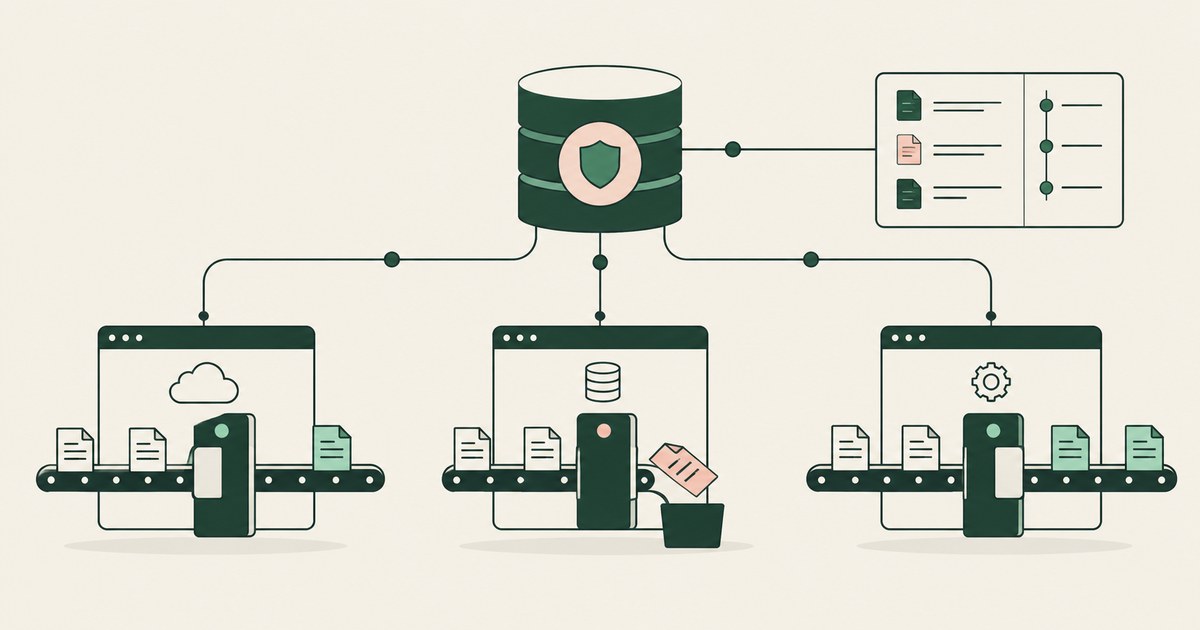
How to Enforce Data Protection Across Enterprise Apps?
Review Enforce Data Protection Across Enterprise Apps, with AI agent security, tokenization and approval checks for sensitive enterprise workflows.
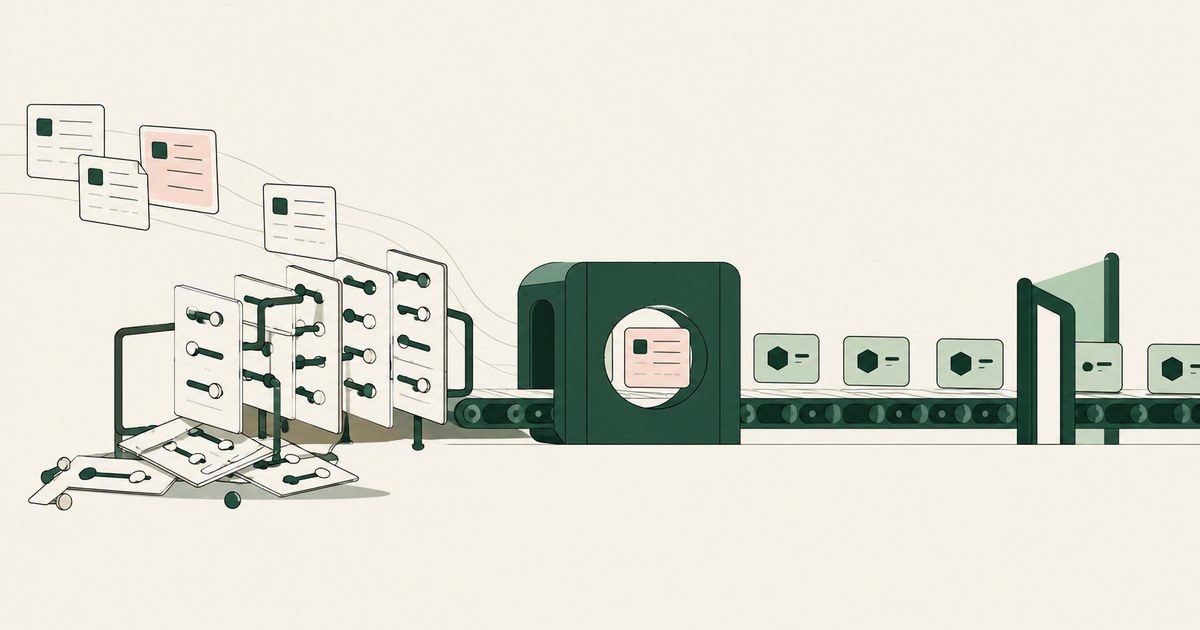
Can Tokenization Reduce Complicated DLP Rules?
Review Can Tokenization Reduce Complicated DLP Rules, with AI agent security, tokenization and approval checks for sensitive enterprise workflows.
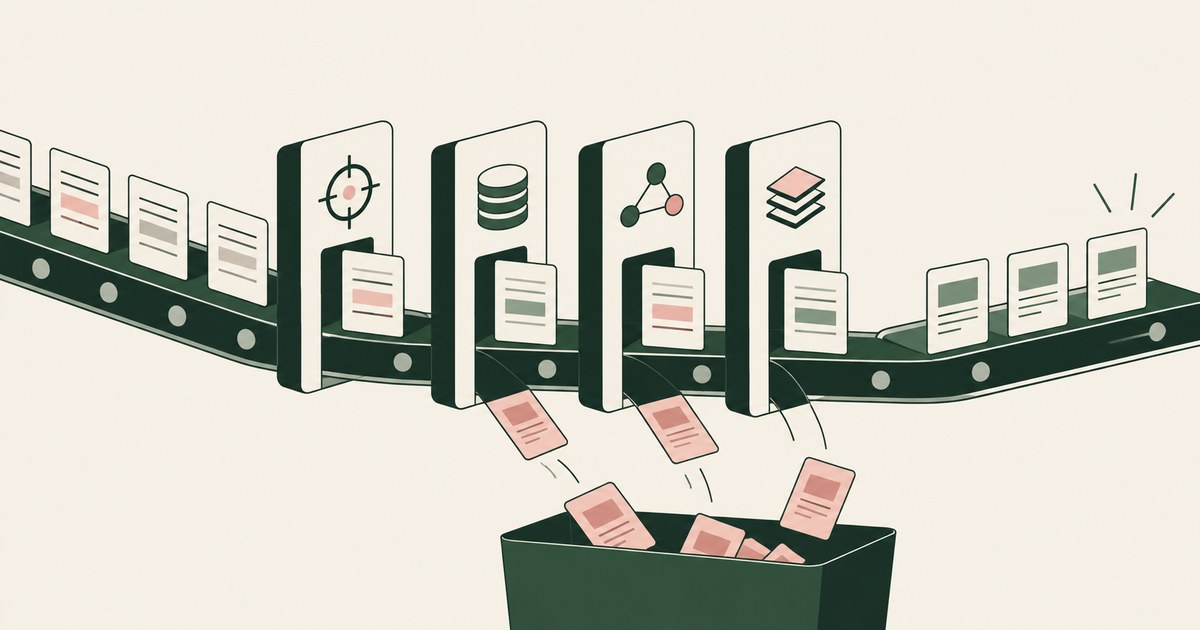
How to reduce false positives in Microsoft Purview DLP?
Review reduce false positives in Microsoft Purview DLP, with AI agent security, tokenization and approval checks for sensitive enterprise workflows.
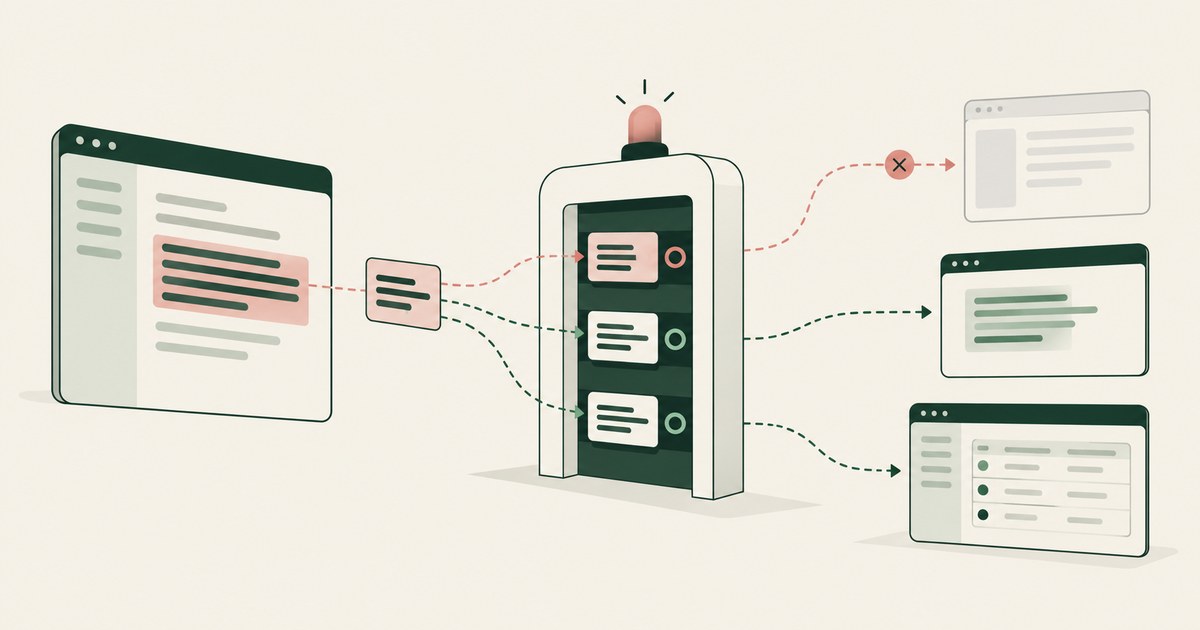
How to Protect Data Without Blocking Copy and Paste?
Review Protect Data Without Blocking Copy and Paste, with AI agent security, tokenization and approval checks for sensitive enterprise workflows.
How to Simplify Data Protection Policies Across Apps?
Review Simplify Data Protection Policies Across Apps, with AI agent security, tokenization and approval checks for sensitive enterprise workflows.

What Is Screen-Level Tokenization?
Review Screen-Level Tokenization, with AI agent security, tokenization and approval checks for sensitive enterprise workflows.
How to Prevent AI Agents From Oversharing Data Between Apps
Review Prevent AI Agents From Oversharing Data Between Apps, with AI agent security, tokenization and approval checks for sensitive enterprise workflows.
How to Keep DLP Rules From Blocking Legitimate Work?
Review Keep DLP Rules From Blocking Legitimate Work, with AI agent security, tokenization and approval checks for sensitive enterprise workflows.

Accountable AI and Workflow Governance
Explore AI agent governance for billing and claims, with named supervisors, data masking, approval boundaries and a useful audit record.

What Is Least Exposure?
Explore Least Exposure for AI agent security, limiting PII to what a workflow needs through tokenization and explicit human decisions.

What Is Supervised Delegation?
Explore supervised delegation for AI agents in billing and claims, with named responsibility, tokenization policies and human approvals.
Book an AI Agent Security Review →
Bring your hardest questions.
Bring one sensitive workflow and the decisions your team needs to keep in its hands.
Book a demoAbout the author

Chris Sowa is a founder of RedactSure and a former CEO of an AI company; he started it years before ChatGPT existed. He previously led AI at Accenture, served as Global VP of Strategy & Innovation at Schneider Electric, was CCO of Sovos, and spent more than a decade at Oracle, with earlier roles at SAP and IBM.