
Data Report · By Chris Sowa · Published
Last updated
How Do I Let a Coding Agent Debug With Production Logs Without Exposing Customer Data?
Redact the logs before the agent reads them, or give the agent a view in which identifiers are replaced by placeholders it can still correlate on, such as USER_001 on every line of one request. Check which route the agent uses to read logs, because a control on the log viewer does not reach a terminal.

A production log is the best evidence a developer has about a failure and the worst thing to hand a model unprepared, because the lines that show a timeout also carry the email address, the account number and sometimes the session token of the customer who hit it. A coding agent asked to find the cause needs the order of events, the latencies, the error and a way to follow one request from gateway to database, not the customer's identity. Two arrangements meet that need: strip identifiers from the stream before any agent reads it, or show the agent a rendering in which each identifier becomes a stable placeholder, so the trace survives and the person does not. The choice between them decides whether an engineering organization can let agents work on production failures without putting customer data in front of a model, and this page tests both against vendor documentation and the research record. The worked example is one request traced across three log lines as USER_001. What Is the PII Wall? explains why this question stalls agent deployments, and How Do You Let an AI Agent Manage API Keys Without Reading Them? covers the credentials that logs also tend to carry.
Key findings
- Credentials accumulate in developer artifacts without anyone deciding to put them there: a labeled dataset of source code held 97,479 candidate credentials, of which 15,084 were true credentials (Basak et al., 2023).
- Masking is a documented log control in CI: GitHub's documentation says to mask all sensitive information that is not a GitHub secret with the add-mask command, which hides the value in the workflow log (GitHub, Using, 2026).
- The placeholder pattern is in vendor use for credentials: 1Password's integration with NVIDIA OpenShell describes an agent that sees placeholders in its sandbox and a gateway that supplies the real value only for a request to an approved host (1Password, 2026).
- Log text is untrusted input, and the evaluation of 5 prompt injection attacks and 10 defenses across 10 LLMs and 7 tasks is a reason to limit what an injected instruction could collect from a log (Liu et al., 2024).
- A governed environment replaces customer values with consistent tokens before any model reads the screen, so the agent can trace USER_001 across every line of a request without learning who USER_001 is (What Is Render-Layer Tokenization?).
- Real values resolve only at the approved destination at the moment of an approved action, so a fix that touches one customer's record is applied under a named person's approval, not by a model holding the identifier (What Is the PII Wall?).
What does a coding agent need from a production log, and what does it not?
Start with scope. A coding agent reads logs by several routes: a log viewer in a browser, a dashboard or console page, a file on disk, a command in a terminal, or a query through an API or an MCP server. A governed browser environment covers what the agent reads and does on a rendered page, including log viewers, dashboards, consoles, settings pages and sign-up forms. It does not cover the terminal, the IDE, the local filesystem, direct API calls or MCP. Redaction at ingestion covers every route, because the identifiers are gone before any viewer, file or query returns them. A team that works the agent in a terminal needs the pipeline control; a team that wants a record of what the agent saw on a viewer needs the environment.
A debugging task runs on structure: the order of events, the latencies, the status codes, the stack trace and the request that ties the lines together. None of that depends on who the customer is. What the agent needs from an identifier is only that it is the same on each line, so that line 1 at the gateway, line 2 at the service and line 3 at the database are one request. A stable placeholder gives it that.
What it does not need is the value. An email address is a correlation key to the agent and a person to everyone else. A session token in a log line is worse, because it is a credential: GitLab's documentation says an exposed credential should be revoked and replaced as soon as possible (GitLab, 2026), and a token a model has read and may repeat is exposed. The record type for this page is one request traced across three log lines, the customer on each as USER_001. Does an AI Agent Need Your Admin Login to Set Up a SaaS Tool? applies the same reasoning to the login the agent uses to reach the viewer.
Where does customer data sit in a log line, and how does it reach the model?
In the fields nobody designed for it. A request log carries the path, and paths carry identifiers in query strings. An application log carries the message a developer wrote, with the user object interpolated into it. An error log carries the stack trace, and the trace carries the arguments on the stack, including the payload. A gateway log carries headers, with bearer tokens and cookies. SecretBench shows how far this goes for credentials alone: 97,479 candidate credentials in a labeled corpus of source code, 15,084 of them true credentials (Basak et al., 2023), and logs are written by code of that kind.
Truffle Security reported 11,908 live credentials detected with TruffleHog in 400TB of web data, and 2.76 million web pages that contained live credentials (Truffle Security, 2025). That corpus was public web text, not logs, and the research does not establish that any model trained on those pages. The point is that text never meant as a credential store becomes one, and a log a model reads is on the same footing.
The route to the model is shorter than the route into the log. Whatever the agent reads enters its context, and from there a value can be repeated in a summary, a bug report, a commit message, a tool call or a proposed fix. For the example record, a developer who asks why the request behind USER_001 timed out gets the same answer whether the agent saw USER_001 or the customer's email; the difference is what the context now holds. Health records apply the same test under the minimum necessary standard at 45 CFR 164.502(b), which limits protected health information to what the purpose needs (Can Staff Use AI on Patient Records Without PHI?); debugging needs the trace, not the person.
How does a consistent placeholder keep the trace intact?
By being the same placeholder every time. Redaction that replaces every identifier with a fixed string such as [REDACTED] destroys the one property the agent needs, because three lines that each read [REDACTED] cannot be matched to one request. A consistent placeholder maps each real value to one token for the whole run, so all three lines read USER_001 and the agent can follow them. The mapping stays outside the model; the agent never holds the table that turns USER_001 back into a person.
The example record:
| Line | What the agent reads | What the raw log held |
|---|---|---|
| 1, gateway | 12:04:01 POST /orders user=USER_001 session=SESSION_001 status=502 | The customer's email and a bearer token |
| 2, service | 12:04:01 order create user=USER_001 upstream timeout after 30s | The same email and the order payload |
| 3, database | 12:04:31 query user=USER_001 lock wait exceeded on orders | The same email and the account number |
The agent can see that the gateway returned 502 because the service timed out on a database lock for one user's orders, and can propose a fix without knowing who the user was.
The mechanism is documented for credentials. 1Password's write-up of its integration with NVIDIA OpenShell says the agent "can work with real systems without holding any credentials in its context," that "inside the sandbox, the agent sees placeholders rather than real credentials," and that the gateway "replaces a placeholder with the real value only when the agent sends a request to an approved host" (1Password, 2026). That page covers credentials in a sandbox, not identifiers in a log, and does not describe independent testing of the integration; the shape is the same: a stable placeholder the agent works on, and a resolution point outside it holding the real value. What Is Render-Layer Tokenization? sets out that design for a rendered page.
What do the vendors themselves say?
GitHub's documentation says to "mask all sensitive information that is not a GitHub secret by using ::add-mask::VALUE," and that secrets are not passed to the runner when a workflow is triggered from a forked repository (GitHub, Using, 2026). Masking there applies to the workflow log, not to an application log. GitHub's secure use reference adds that the default GITHUB_TOKEN permission should be read access only for repository contents, that actions should be pinned to a commit SHA, and that teams should audit how credentials are used (GitHub, Secure, 2026).
GitLab's documentation says pipeline secret detection runs as part of a project's CI/CD pipeline and that exposed credentials should be revoked and replaced as soon as possible (GitLab, 2026). It scans the pipeline, not a log an agent reads.
Teleport's Agentic Identity Framework documentation says agents "need a verifiable, cryptographic identity tied to where they're running, not a shared API key," and lists audit trails and behavior analysis for agent actions (Teleport, 2026). That governs who the agent is when it queries a log store, not what the query returns, and most listed capabilities are marked in progress or not started.
| Dimension | What the documentation states | What a buyer should verify |
|---|---|---|
| CI log masking | GitHub: add-mask hides a value in the workflow log | Other logs the agent reads |
| Secret detection | GitLab: runs in the pipeline; revoke exposed credentials | Whether anything scans agent reads |
| Agent identity | Teleport: cryptographic identity, not a shared key | Whether identity changes what a query returns |
| Placeholders | 1Password and OpenShell: placeholders in the sandbox | Whether identifiers get the same |
What should the pipeline do before the agent reads anything?
Treat the agent as one consumer of a redacted stream. The redaction runs at ingestion or at the query layer, where a classifier finds the identifier types the organization has named, replaces each with a consistent placeholder keyed to the run, and keeps the mapping in a store the agent cannot reach. Done there, it covers the terminal, the file, the API and the viewer alike. The policy is a list of field names and patterns, confirmed by a named person and versioned. Three CI practices carry over: mask what cannot be removed, scan for what the mask missed, and when the scan finds a token the agent has already read, revoke and replace it.
The reason to assume the agent may repeat what it reads is the injection record. The benchmark by Liu et al. was built as "a common benchmark for quantitatively evaluating future prompt injection attacks and defenses" (Liu et al., 2024), and the Agent Security Bench results "reveal critical vulnerabilities in different stages of agent operation" with "limited effectiveness shown in current defenses" (Zhang et al., 2025). A log line is written partly from user input, which makes it a channel for an instruction the agent was never meant to follow. If the agent holds USER_001, an instruction to repeat it collects only that.
The fix the agent proposes needs review too: Veracode's research reported that GenAI models "make the wrong choices nearly half the time," with a security failure rate over 70 percent for Java (Veracode, 2025). How Do You Keep Data Access Policies Consistent Across AI Tools? covers keeping one policy across the viewer, the terminal and the IDE.
What does a governed environment change?
A governed environment is a control class that acts where a screen is rendered, before any model reads it. Values chosen by policy are replaced with consistent tokens for the whole run, so a model working a log viewer reads USER_001 on all three lines and can follow the request, while the person behind USER_001 stays outside its context. Real values resolve only at an approved destination, at the moment of an approved action. A named person confirms the tokenization policy and approves each consequential action. Every screen as tokens, every action and every approval is written to a record that exports to the organization's own monitoring.
For this question it covers the viewer. When the agent opens a log search page, an error tracker or a cloud console, identifiers are replaced before the model reads the page, and the record shows what it saw. It does not cover a log read in a terminal or opened as a file, or a query sent through an API or MCP; those routes are covered by pipeline redaction. The pipeline keeps raw values out of every route; the governed environment adds the record and the approval on the routes that render a page. An enterprise browser governs what a person copies, pastes, uploads or downloads on a managed device; it does not describe what a model reading a permitted page receives (Enterprise Browser or Render-Layer Tokenization?).
The approval matters for the fix. A change that touches one customer's record, such as releasing a stuck order, resolves USER_001 to the real account only at the system that applies it, and only after a named person approves. The model proposes on tokens, the person approves on the real value, the record holds both. How to Use AI Agents for Google Cloud Deployment describes the same split for agent work on a cloud console.
Methodology and limitations
This page rests on three research preprints, vendor documentation from GitHub, GitLab, Teleport and 1Password, a Veracode press release, a Truffle Security research post and existing RedactSure research pages. Vendor pages were read as of October 20, 2026. Quoted facts are cited to the page that states them, and the vendor pages are cited for the controls they document, with the limit that matters to this question stated alongside each one. None of the vendor pages describes a coding agent reading an application log, and the page says so rather than inferring coverage.
RedactSure did not test any of the products hands-on. "Not described in the pages reviewed" means those pages and nothing broader. The three-line example is a constructed record type, not a trace from any organization, and the research papers concern credentials in source code, prompt injection and agent attacks in general; they are cited for the principle and not as measurements of log redaction. Vendor features change, and the page carries its date. Statements about RedactSure describe its current design, and RedactSure is deploying now with enterprise and government customers.
Determinations about whether a logging practice meets a legal, contractual or regulatory requirement belong to counsel, assessors and the organization's own security and compliance officers. Nothing here replaces a test on the organization's own log stream, with a known identifier placed in a test request and traced through every route an agent can read, repeated after each change to the logging configuration or the agent. A reader should treat any later version of a vendor page as unreviewed until that test is repeated.
What the record shows
A coding agent can debug from production logs without learning who the customer is, provided identifiers are gone or replaced before it reads them and the replacement is consistent enough to trace. The research record shows credentials collect in developer artifacts and web text at scale, the injection record shows an agent may repeat what it holds, and the vendor documentation shows masking, scanning, revocation and placeholder credentials as controls that stop short of an application log read by an agent. A governed environment on the viewer adds the record and the approval none of those pages describe. A practical check places one known identifier in a test request, lets the agent trace it through the viewer, a file and a terminal, and records on which route the real value appeared.
Frequently asked questions
How do I let a coding agent debug with production logs without exposing customer data?
Redact the stream before the agent reads it, replacing each identifier with a placeholder that stays the same for the whole run, so the agent can still follow one request across lines. Keep the mapping from placeholder to person outside the agent. If the agent works in a browser on a log viewer, a governed environment can apply the same replacement at the point the page renders and keep a record of what the model saw. Confirm which route the agent uses before choosing the control.
Why not just replace every identifier with [REDACTED]?
Because a fixed string destroys correlation. A request that appears on a gateway line, a service line and a database line can only be followed if the same identifier appears on all three, and three lines that each read [REDACTED] cannot be matched. A consistent placeholder such as USER_001 keeps the trace and removes the person. The agent learns that one user's request timed out on a lock, which is all the debugging needs.
Does masking in CI logs solve this?
It solves one log. GitHub's documentation describes masking sensitive values in the workflow log with the add-mask command, and that hides a value from a workflow log an agent reads. An application log in production is written by different code on different infrastructure, and the CI mask does not reach it. Treat CI masking as a practice to copy, then apply the same discipline to the application log where the customer data lives.
What if the log already contains a session token or API key?
Treat it as exposed once an agent has read it. GitLab's documentation gives the rule for any exposed credential: revoke and replace it as soon as possible. A token in a model's context can be repeated in a summary, a commit message or a tool call, and nothing in the pages reviewed describes a way to recall it from the context after the fact. Then add the token's pattern to the redaction policy so the next read never sees it.
Can a prompt injection hidden in a log line make the agent leak what it read?
It can try. Log lines are written partly from user input, which makes them a channel for an instruction the agent was never meant to follow, and benchmark work on prompt injection and agent attacks reports limited effectiveness for current defenses. The practical answer is to limit what a successful injection can collect: an agent that holds placeholders surrenders placeholders. Exposure control is what makes a non-zero injection rate survivable for a log-reading agent.
What should a security team ask for in writing?
Ask which identifier types are redacted, where the redaction runs, whether placeholders are consistent within a run, and where the mapping is stored. Ask which routes the agent reads logs by, since a viewer control does not reach a terminal. Ask who approves a fix that touches a real customer record and what record shows which lines the model read. An answer that names the version and the date can be checked again after the next release.
Related reading
What Is Render-Layer Tokenization? · What Is the PII Wall? · How Do You Let an AI Agent Manage API Keys Without Reading Them? · How Do You Keep Data Access Policies Consistent Across AI Tools? · Does GDPR Apply When a Coding Agent Reads Customer Data in a Test Database? · Does My AI Vendor See the API Keys My Coding Agent Reads? · How Do I Let a Coding Agent Use a Test Database That Contains Real Customer Data? · On the RedactSure blog: Operating Inside the Lethal Trifecta · Your AI Doesn't Need to Know Who You Are · RedactSure
Sources
Peer-reviewed research and preprints
-
Basak, Neil, Reaves, Williams, "SecretBench: A Dataset of Software Secrets," arXiv:2303.06729 (preprint, 2023). https://arxiv.org/abs/2303.06729
-
Liu, Jia, Geng et al., "Formalizing and Benchmarking Prompt Injection Attacks and Defenses," arXiv:2310.12815 (preprint; USENIX Security 2024 per authors; arXiv v5 dated 2025-11-12). https://arxiv.org/abs/2310.12815
-
Zhang, Huang, Mei et al., "Agent Security Bench (ASB): Formalizing and Benchmarking Attacks and Defenses in LLM-based Agents," arXiv:2410.02644 (preprint, v4 2025-05-30). https://arxiv.org/abs/2410.02644
Vendor documentation
-
1Password, "Secure agent access in development workflows with 1Password + NVIDIA OpenShell," September 28, 2026 (vendor blog; read October 20, 2026). https://1password.com/blog/1password-nvidia-openshell
-
Teleport, "Teleport Agentic Identity Framework," Teleport documentation (vendor documentation; read October 20, 2026). https://goteleport.com/docs/ver/19.x/agentic-identity-framework/
-
GitHub, "Using secrets in GitHub Actions," GitHub Docs (vendor documentation; read October 20, 2026). https://docs.github.com/en/actions/security-for-github-actions/security-guides/using-secrets-in-github-actions
Regulation, standards and official guidance
-
GitHub, "Secure use reference," GitHub Actions documentation (vendor documentation; read October 20, 2026). https://docs.github.com/en/actions/reference/security/secure-use
-
GitLab, "Secret detection," GitLab Docs (vendor documentation; read October 20, 2026). https://docs.gitlab.com/user/application_security/secret_detection/
Industry analysis and press
-
Veracode, "AI-Generated Code Poses Major Security Risks in Nearly Half of All Development Tasks," July 30, 2025 (press release). https://www.veracode.com/press-release/ai-generated-code-poses-major-security-risks-in-nearly-half-of-all-development-tasks-veracode-research-reveals/
-
Truffle Security, "Research finds 12,000 'Live' API Keys and Passwords in DeepSeek's Training Data," February 27, 2025 (vendor research). https://trufflesecurity.com/blog/research-finds-12-000-live-api-keys-and-passwords-in-deepseek-s-training-data
RedactSure documents
-
RedactSure Research, "What Is Render-Layer Tokenization?" (2026). https://redactsure.com/research/what-is-render-layer-tokenization/
-
RedactSure Research, "What Is the PII Wall?" (2026). https://redactsure.com/research/what-is-the-pii-wall/
-
RedactSure Research, "Enterprise Browser or Render-Layer Tokenization?" (2026). https://redactsure.com/research/enterprise-browser-vs-render-layer-tokenization/
-
Product behavior described on this page reflects RedactSure's current design. Third-party products are described from their public documentation as read on October 20, 2026. Compliance determinations belong to the organization's counsel.

What Is Render-Layer Tokenization? The Control at the Layer Where the Agent Actually Reads
Render-layer tokenization swaps sensitive values for consistent stand-in tokens such as SSN_001 as the screen renders, before any AI model reads it.
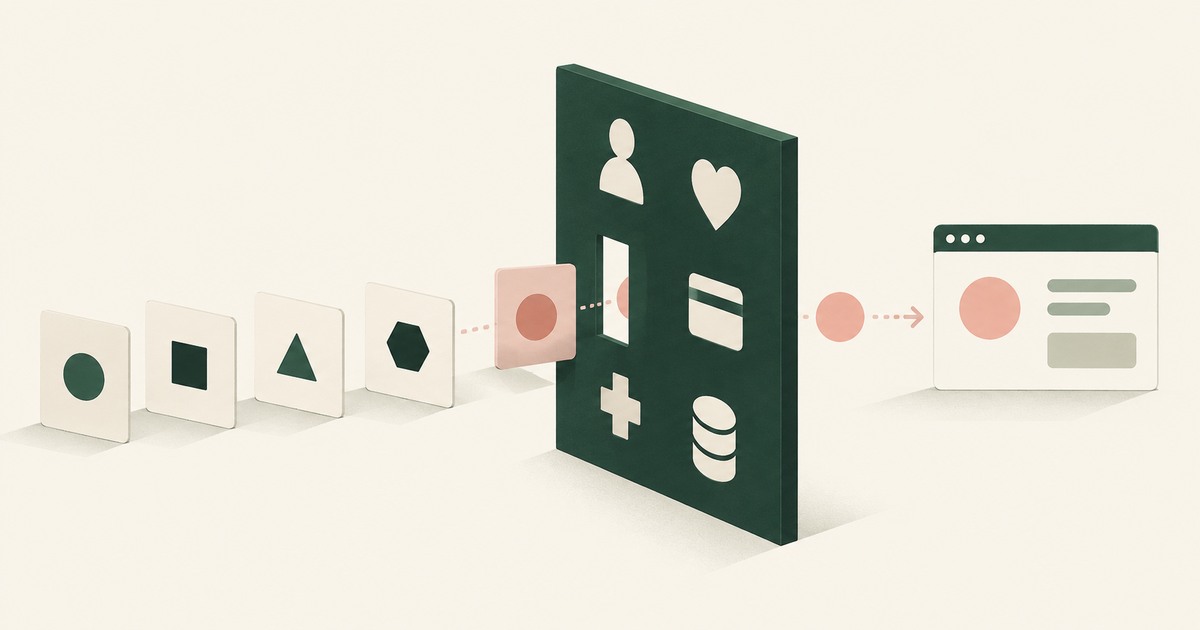
What Is the PII Wall? Where AI Programs Stop, and the Published Numbers Behind the Pattern
The PII Wall is the point where an AI program's most valuable workflow needs personal, financial, health or student records a model may not see, and stops.
How Do You Let an AI Agent Manage API Keys Without Reading Them?
Swap the key for a token as the dashboard renders it, and resolve the real value in the approved field when a person confirms. Check where keys show.
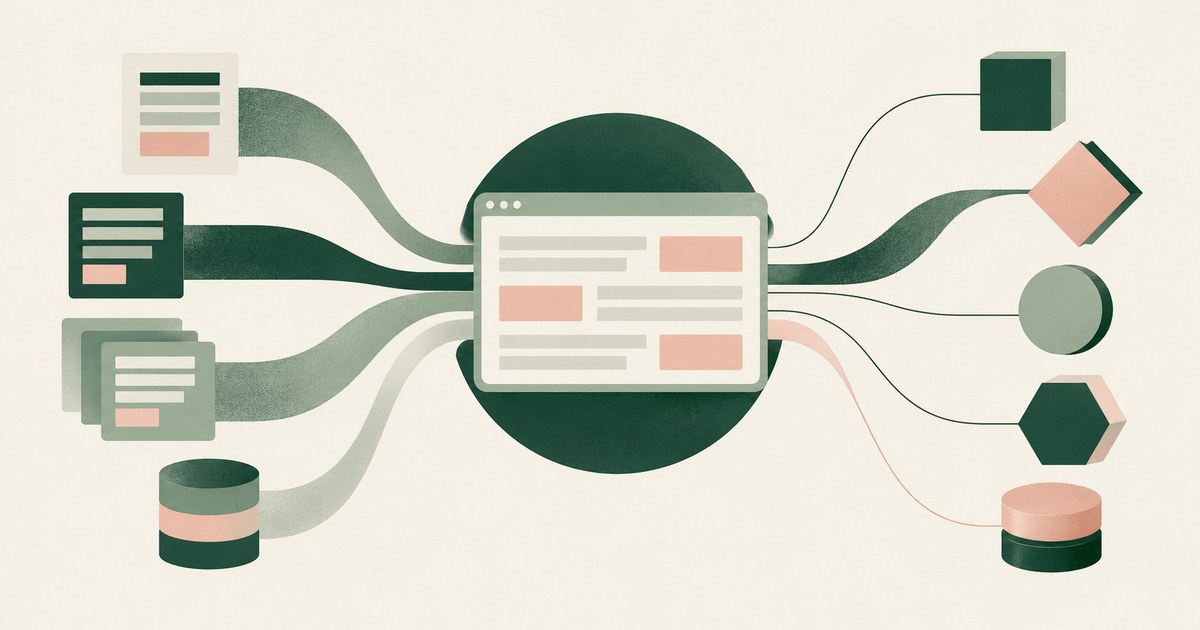
How Do You Keep Data Access Policies Consistent Across AI Tools?
Enforce the policy once, at the rendered screen every tool shares, not in each vendor's console. Check whether a new AI tool can read a customer screen.
Does GDPR Apply When a Coding Agent Reads Customer Data in a Test Database?
Yes, when the seeded rows identify a person: a test label changes the environment, not the data. Check whether the rows are real and what the model gets.
Does My AI Vendor See the API Keys My Coding Agent Reads?
Whatever is in the context goes to the vendor's model for the request; retention and training depend on the plan. Zero-data-retention governs storage.
How Do I Let a Coding Agent Use a Test Database That Contains Real Customer Data?
Do not; seed a synthetic database or put the real one behind a view that returns placeholders. Every coding agent reviewed reads query results as text.
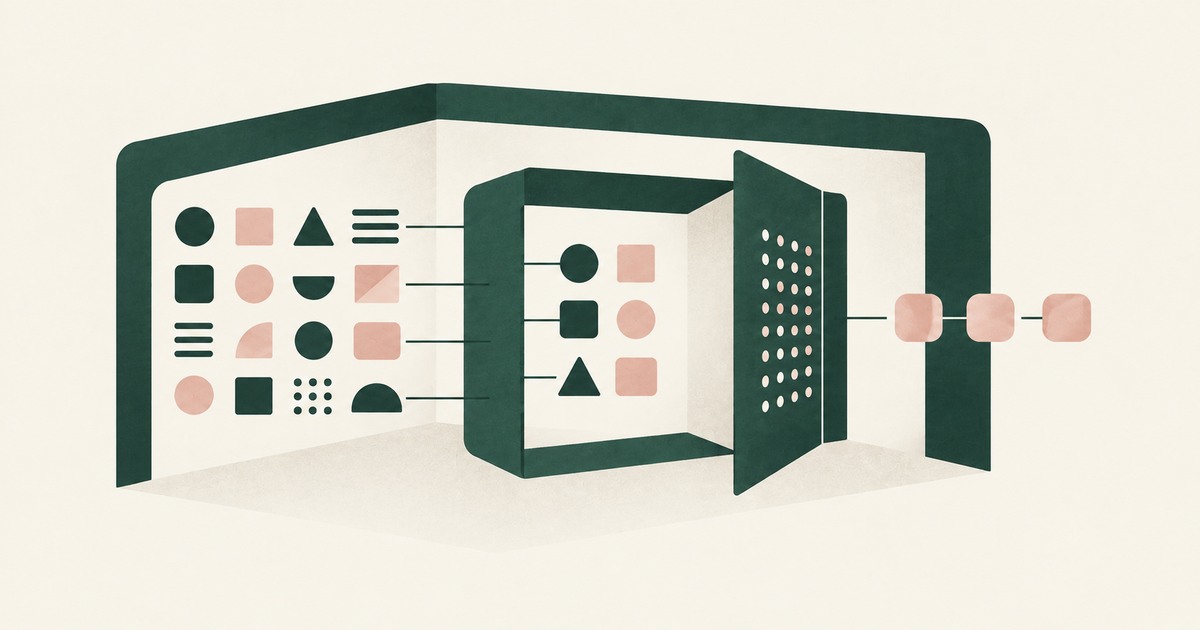
Operating Inside the Lethal Trifecta
Follow a prompt-injection scenario to examine AI agent security, tokenization and what an attacker can obtain from sensitive workflows.
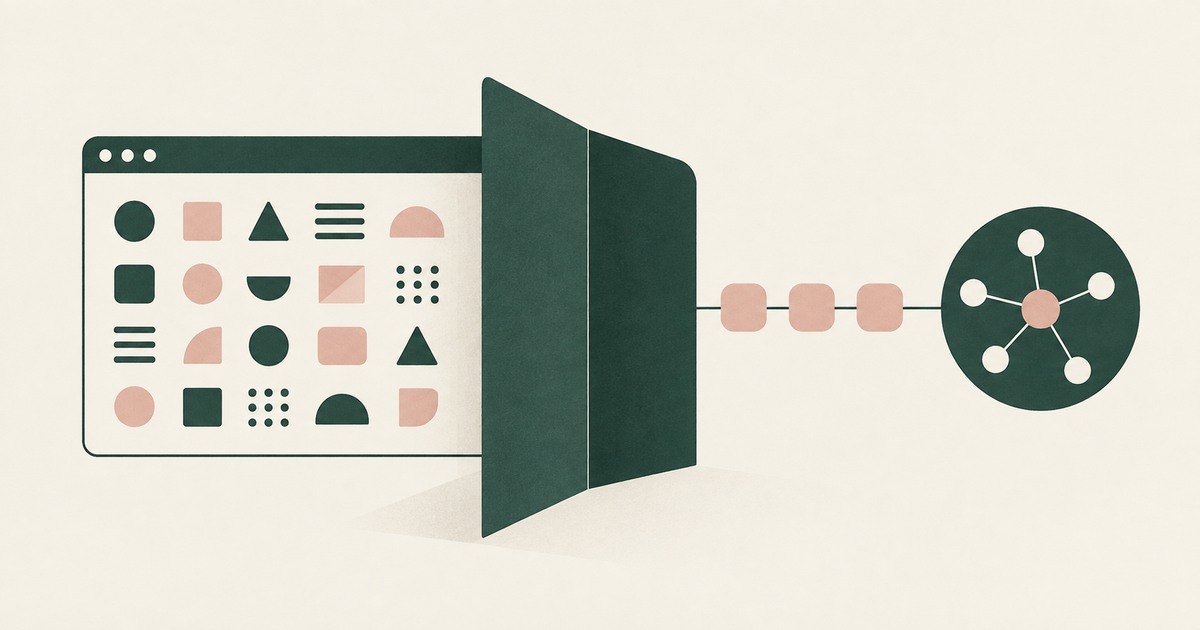
Your AI Doesn't Need to Know Who You Are
Explore why AI agents can perform sensitive workflows using tokenization while names, account details and other PII stay out of view.

Enterprise Browser vs. Render-Layer Tokenization: Two Different Answers to AI Data Exposure
They answer different questions. Enterprise browsers control where human data can go; render-layer tokenization replaces values before the model reads.
How RedactSure Lets a Coding Agent Trace a Request Without the Customer
A debugging task needs the order of events and the linking identifier, and the controls reviewed mask CI logs or prove identity without governing the log viewer.
The environment that enforces this is built by RedactSure, an AI agent controls, governance and data protection company.
Before: the agent opens the log viewer and reads the customer's email, the bearer token and the account number across three lines. Inside the governed environment: the lines read USER_001 and SESSION_001, the agent finds the 502, the timeout and the lock wait, and a fix releasing one stuck order resolves to the real account when a named person approves.
RedactSure is deploying now with enterprise and government customers. Agent Security Bench reports limited effectiveness in current defenses.
Everyone else controls where data can go. RedactSure controls what the AI can see.
See it on your own workflow
Debugging from production logs should not require reading the customers in them. Bring a log trace your team runs and see, with test values, what the model reads in place of the customer. Book a demo