
Data Report · By Chris Sowa · Published
Last updated
How Do You Keep Data Access Policies Consistent Across AI Tools?
Enforce the data policy once, at the point every tool shares, which is the rendered screen, rather than configuring it separately inside each vendor's console. Check how many places your current policy is written down and whether a new AI tool can read a customer screen before anyone has configured anything for it.
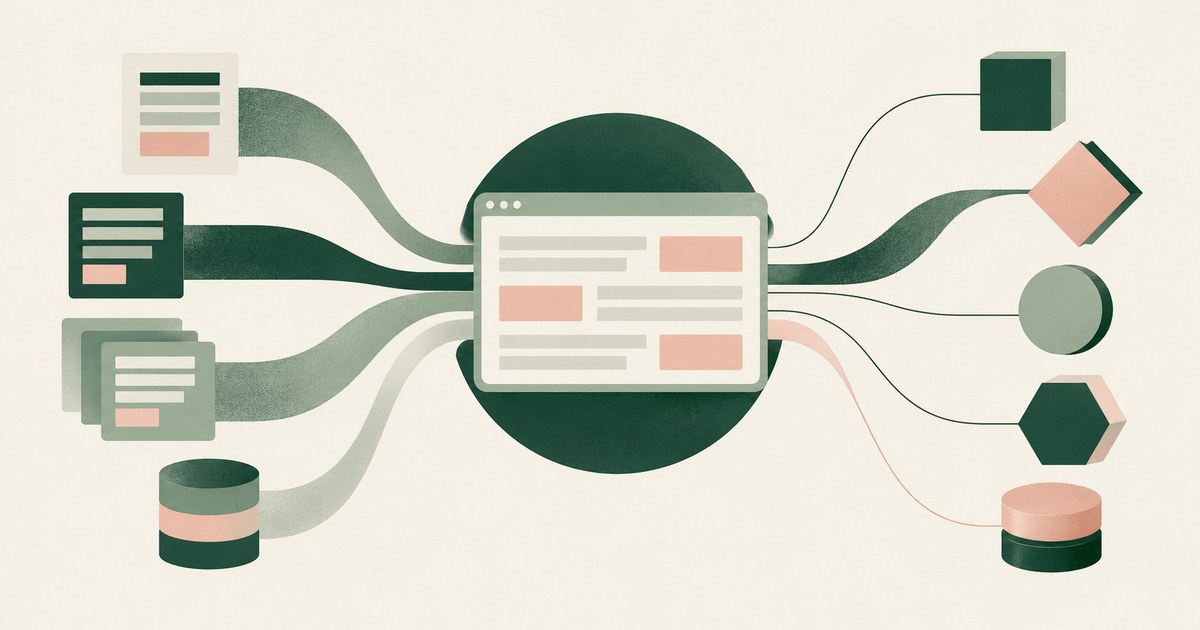
Enforce the data policy once, at the point every tool shares, which is the rendered screen, rather than configuring it separately inside each vendor's console. Check how many places your current policy is written down and whether a new AI tool can read a customer screen before anyone has configured anything for it. Most organizations now run several AI tools at once: a copilot embedded in a productivity suite, an assistant inside a line-of-business application, one or two browser agents, and whatever employees have adopted on their own. Each arrives with its own policy surface, its own vocabulary for sensitive data, and its own administrator. A rule written for one does not transfer to the next, and the result is a policy that exists in five slightly different forms, none of which is the policy. This page examines why access policies drift apart as tools multiply, where a single claims screen meets several policy engines, what consistency should mean when analysts warn against uniform governance of agents, how enforcing at the screen makes consistency a property of the architecture, how to measure it, and which vendor claims to decline.
Key findings
- Shadow adoption is the baseline condition: a Cloud Security Alliance research note reports that "eight in ten employees use AI tools not approved by their organizations," so a policy that lives only inside approved tools governs a minority of actual use (Cloud Security Alliance, 2026).
- The UK National Cyber Security Centre's guidance on the hidden risks of shadow AI treats unsanctioned tools as a data exposure path in their own right, not merely a licensing problem (NCSC, 2026).
- Gartner's May 2026 press release argues that applying uniform governance across AI agents will lead to enterprise agent failure, separating the data policy, which should be the same everywhere, from the autonomy granted to each agent, which should not (Gartner, 2026).
- The Cloud Security Alliance's AI Controls Matrix offers 243 control objectives across 18 domains and "maps to leading standards, including ISO 42001, ISO 27001, NIST AI RMF 1.0, and BSI AIC4," giving an organization one vocabulary to check each tool against (Cloud Security Alliance, 2025).
- Zero trust architecture places policy decisions at an enforcement point between the subject and the resource rather than inside the resource, which is the structural answer to per-tool fragmentation (NIST, 2020).
- An organization cannot reconcile policies it cannot see applied, a point developed in research on improving visibility into sensitive data protection policies.
Why do data access policies drift apart as AI tools multiply?
A policy is consistent only if it is written once and applied everywhere. AI tools break that condition in three ways. First, each tool ships with its own policy model: one vendor classifies data by sensitivity label, another by regular expression, a third by a list of blocked domains, and the organization's single sentence, "the model may not receive customer identifiers," must be translated into each dialect by a different administrator. Second, the tools arrive at different times and are configured by different people with different readings of the same sentence. Third, many tools arrive without arriving at all. The CSA's research note puts unsanctioned use at eight in ten employees (Cloud Security Alliance, 2026), and a tool nobody procured has no policy configured in it.
The NCSC's guidance on shadow AI frames the consequence plainly: unsanctioned tools are a route by which organizational data leaves, and the organization has no view of what was shared (NCSC, 2026). Drift is not a configuration error that discipline would cure; it follows from placing the policy inside tools when the set of tools is open-ended and partly invisible. Any approach that depends on configuring each one will always lag the population of tools in use, and the lag is where the inconsistency lives. The alternative is to find something all the tools share and place the policy there.
Where does a single claims screen meet several policy engines?
Take an insurance claims screen. It shows the claimant's name, policy number, Social Security number, date of loss, diagnosis codes, the adjuster's notes and a payment amount. Three AI tools can read that screen in one afternoon. The productivity suite's copilot sees it when the adjuster pastes a portion into a document, a browser agent when asked to summarize the claim, and a personal chat assistant when the adjuster photographs the screen to ask about a diagnosis code.
Microsoft documents Purview data security and compliance protections for generative AI apps, covering prompts and responses in Microsoft's own copilots and in connected third-party apps that Purview can see (Microsoft, 2025). Microsoft also documents a deployment model for preventing data leaks to shadow AI, built on discovering AI apps through Defender for Cloud Apps and applying policy to the ones discovered (Microsoft, 2025). The browser agent reading the rendered claims screen directly, and the photograph sent from a phone, are governed by whatever policy exists in those tools, which for the phone is none.
The screen has not changed; the same Social Security number is on it in all three cases. What differs is the engine deciding whether the model may see it, configured by different people against different rule models. This is the shape described in research on preventing conflicting security policies from disrupting workflows: the adjuster experiences one screen and three behaviors, and the organization cannot say which behavior is the policy.
What should "consistent" mean when analysts warn against uniform governance?
Gartner's May 2026 press release carries the headline that applying uniform governance across AI agents will lead to enterprise AI agent failure (Gartner, 2026). Read quickly, that argues against consistency. Read carefully, it separates two layers organizations routinely merge. An agent that drafts meeting notes and an agent that submits claim payments should not be governed identically. Autonomy, approval thresholds and allowed actions should be differentiated by the risk of the task.
Data access policy is a different layer. Whether a model may receive a claimant's Social Security number does not depend on which agent is asking. The answer is the same for the note-taker, the summarizer and the payment agent, because the exposure is the same. Consistency belongs in what the model may see; differentiation belongs in what the agent may do. The CSA's AI Controls Matrix supports keeping the two apart: its 243 control objectives across 18 domains map to ISO 42001, ISO 27001 and the NIST AI RMF (Cloud Security Alliance, 2025), and an organization can hold the data-handling objectives constant across every tool while varying the autonomy objectives by use case.
The practical form of this distinction is a short policy with two columns. Column one, identical for every tool: which fields the model may never receive. Column two, varied by agent: which actions require a named person. The work of controlling which systems an agent can use sits in column two. Keeping column one identical everywhere is the subject of the next section.
How does enforcing policy at the rendered screen make consistency a property of the architecture?
NIST's zero trust architecture places a policy enforcement point between every subject and every resource, so that the decision is made once, at the boundary, rather than reimplemented inside each resource (NIST, 2020). CISA's Zero Trust Maturity Model describes the progression from per-system, manually configured controls toward centrally managed, automated enforcement (CISA, 2023). Both describe the same move: take the policy out of the governed things and put it where they all pass through.
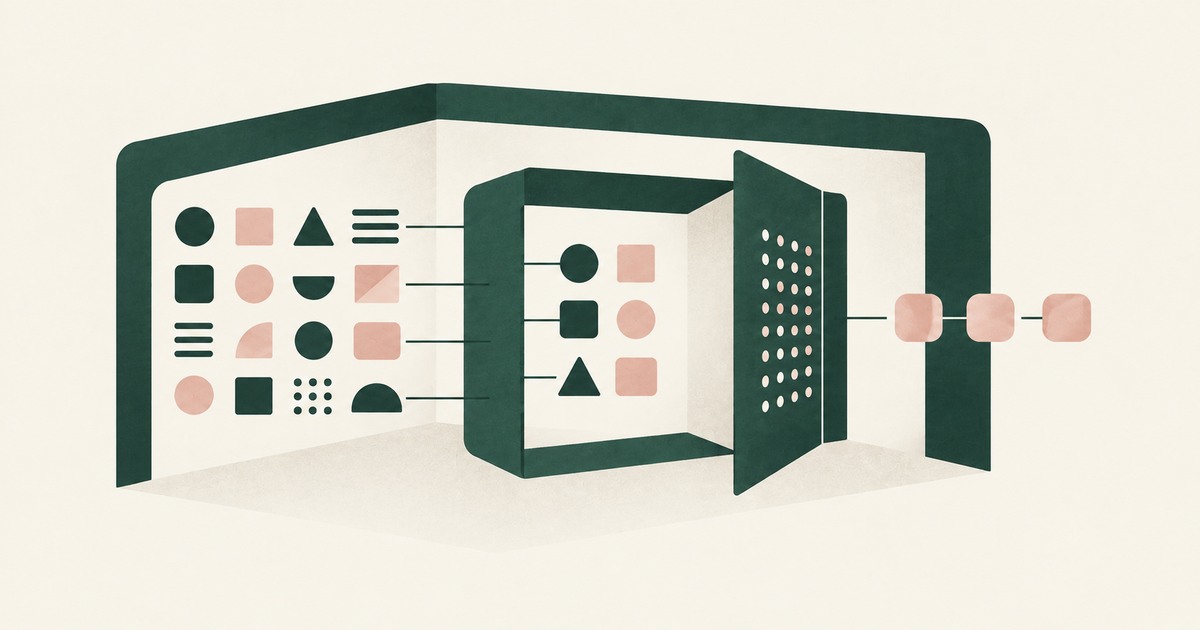
For AI tools reading enterprise applications, the point they all pass through is the rendered screen. Whatever the tool or its policy dialect, it reads the claims screen as displayed. If the Social Security number is already SSN_001 when the screen is rendered inside the governed environment, then every tool reading it receives SSN_001. All three tools are consistent with the policy, not because each was configured to be, but because none ever saw anything else.
| Where the policy lives | How consistency is achieved | Where it breaks |
|---|---|---|
| Inside each AI tool's console | An administrator configures each tool to match | Every new tool, every tool nobody procured, every dialect mismatch |
| In the data store or application | Permissions limit what any user can retrieve | The user is entitled to the data; the model inherits the user's view |
| At the rendered screen | Protected values are substituted before any model reads them | Only if the tool reads the application outside the governed environment |
The last row's limit is real: a tool that reaches the application through an API rather than the rendered screen is outside this control, and the organization must decide whether such paths are permitted. Within the environment, consistency is what the architecture produces.
How should an organization measure whether its policies are consistent?
Measure by test, not by inventory. An inventory lists the tools known to procurement and says nothing about the unknown ones or whether the configured policies agree. A test takes one screen, one protected field and every tool in use, and records what each tool received. Open the claims screen, invoke each tool, capture the model's input, and look for the Social Security number. The result is one row per tool: received the real value, received a token, or could not be determined. The third answer matters most, because it marks the tools whose behavior the organization cannot see.
Visibility is the precondition, and it is weaker than most organizations assume. Research on improving visibility into sensitive data protection policies describes the gap between policies as written and policies as applied; the test above closes that gap for one field at a time. Repeat it after every new tool and track the share of tools in the token column. The CSA's AI Controls Matrix provides the vocabulary for recording the result against a recognized framework, so that an auditor reads the same table the security team produced (Cloud Security Alliance, 2025).
Two further measures: count the places the policy is written down; a consistent policy is written once, and every additional copy is a future divergence. And count the consequential actions taken by agents without a named person's approval, since a data policy that is consistent while actions run unsupervised has solved half the problem, as research on keeping consequential actions with a named person sets out.
What does a governed environment change?
In a governed environment, the data access policy is applied once to the rendered screen that every AI tool reads, so consistency across tools stops depending on how many vendor consoles have been configured to match.
The mechanism is a class of control that sits between the display and the model, whichever model it is. Sensitive values on the rendered screen are replaced with consistent tokens before any model reads them, and the task runs on those tokens. Real values resolve only at an approved destination at the moment of an approved action. A named person confirms what is tokenized and approves consequential actions, including payments, submissions and record changes. Every screen as the model received it, in token form, every action and every approval is recorded and exported to the organization's own logging.
This bears on the title question because fragmentation comes from writing the policy down inside each tool. A tool outside a suite's coverage, or one of the unapproved tools that eight in ten employees report using (Cloud Security Alliance, 2026), reads the same tokenized screen as an approved one. The three-tool test above follows directly. It also preserves Gartner's distinction: the data policy is identical everywhere, while each agent's autonomy remains set per task (Gartner, 2026).
The control does not change the application, the user's permissions or the model, and it does not replace the per-agent decisions about what each agent may do once it has read the screen.
Where does RedactSure sit?
The environment that enforces this is built by RedactSure, an AI agent controls, governance and data protection company. Its design answers the consistency question by placing the policy at the point every tool shares. Agents work inside a governed environment in the customer's own cloud, and substitution happens at the render layer before any model reads the screen, so a claimant's Social Security number is SSN_001 and a policy number is POLICY_001 for every model that reads the page, with the same tokens held consistently across the whole run. Real values resolve only at approved destinations at the moment of an approved action. A named person confirms the tokenization policy and approves every payment, submission and record change, the arrangement RedactSure calls Supervised Delegation, which is where the differentiated, per-task governance lives. Every screen as tokens, every action and every approval lands in the AI Control Record and exports to the customer's SIEM. The design is model agnostic, requires no per-application integration, and leaves user permissions unchanged, so the data policy is written once and no tool is configured individually.
Deployments are in pilot. A pilot on the reader's own claims workflow would show the same screen read by several models and the same tokens in each model's input, which is the consistency test this page describes. Everyone else controls where data can go. RedactSure controls what the AI can see.
Methodology and limitations
This page rests on Gartner's May 26, 2026 press release on uniform governance across AI agents, Microsoft Learn documentation on Purview protections for generative AI apps and on the shadow AI deployment model, the UK National Cyber Security Centre's 2026 guidance on the hidden risks of shadow AI, the Cloud Security Alliance's May 2026 research note on shadow AI apps and its AI Controls Matrix, CISA's Zero Trust Maturity Model version 2.0, NIST Special Publication 800-207, and published RedactSure research pages on policy simplification, tool access, visibility, conflicting policies and consequential actions. All sources were read as of October 16, 2026.
No hands-on testing of any product was performed for this page. Where a capability is described as not covered, the statement refers to the pages reviewed and not to the product as a whole. Vendor features change, Microsoft's Purview coverage in particular is extended frequently, and the page carries its date. Nothing on this page should be read as a statement that any vendor's product cannot do something; it records what the reviewed pages describe. Statements about RedactSure describe its current design, with deployments in pilot. The insurance claims screen is a record type used for illustration, not a description of any organization, and the field list and the three tools reading it are illustrative. The CSA statistic is quoted as the research note reports it, citing a third-party survey.
Whether a given organization's set of AI tools, policies and controls meets its regulatory and contractual obligations is a determination for its counsel, its assessors and its own security and compliance officers, not for a research page.
What the record shows
Policy inconsistency across AI tools is structural, not careless. Placing the policy inside each tool guarantees drift, because the set of tools is open-ended, partly unsanctioned and configured by different people in different dialects. The zero trust literature points to the remedy: move the decision to an enforcement point the governed things all pass through. For AI tools reading enterprise applications, that point is the rendered screen, and a design that substitutes protected values there makes every model's input consistent by construction, while leaving autonomy and approvals to vary by task as analysts recommend. RedactSure's environment is one implementation of that pattern. The test is to name one screen and one protected field, invoke every AI tool in use against it, and record what each model received; the rows that read "could not be determined" are the policy's actual boundary.
Frequently asked questions
Is a single AI governance platform enough to keep policies consistent?
It keeps policies consistent across the tools it governs. The limit is coverage: a platform that enforces inside recognized tools cannot act on tools it does not recognize, and unsanctioned adoption is the majority condition by the Cloud Security Alliance's account. The question to ask is what happens to a customer screen when a tool outside the platform's coverage reads it, and whether the organization can even see that it happened.
Does keeping policy consistent mean treating all AI agents the same?
No. Gartner's May 2026 analysis warns that uniform governance across agents leads to failure, and the warning applies to autonomy, approval thresholds and allowed actions, which should vary with the risk of each task. The data access layer is different: whether a model may receive a Social Security number does not depend on which agent asks. Hold the data policy identical everywhere and differentiate the action policy by agent, and both the consistency goal and Gartner's caution are satisfied.
Why is the rendered screen the right place to enforce a data policy?
Because it is the one thing every tool shares. A copilot, a browser agent and a chat assistant read the application in different ways, through different vendors and under different policy models, but each of them reads the screen as displayed. Substituting protected values at the render means all of them receive the same tokens without being configured individually. The limit is tools that reach the application through paths other than the screen.
How can an organization tell whether its policies are actually consistent?
Run a test rather than an inventory. Take one screen with a protected field, invoke every AI tool in use against it, capture each model's input and look for the field. Record each tool as having received the real value, a token, or an undetermined result. The undetermined rows mark the tools whose behavior cannot be observed and are the true edge of the policy. Repeat after each new tool and track the share of tools in the token column over time.
What role does zero trust architecture play in policy consistency?
NIST's SP 800-207 describes a policy enforcement point sitting between subjects and resources so the access decision is made at the boundary, not inside each resource. CISA's maturity model describes the progression from per-system manual controls to centrally managed enforcement. Applied to AI tools, both say: enforce the policy where tools meet data, not inside each tool. The rendered screen is that point for tools that work through applications.
What happens to consistency when employees use unsanctioned AI tools?
Policies configured inside sanctioned tools do not reach unsanctioned ones, which the NCSC identifies as a data exposure route. A design that governs the environment in which applications are rendered, rather than the tool, treats a new or unsanctioned tool the same as an approved one for the screens it reads inside that environment. Tools used entirely outside the environment remain ungoverned.
Related reading
How to simplify data protection policies across enterprise applications? · What Is AI Agent Tool Access and How Should Companies Control Which Systems an Agent Can Use? · How to improve visibility into sensitive data protection policies? · How to prevent conflicting security policies from disrupting workflows? · How to Reduce Rogue AI Agent Decisions: Keeping Consequential Actions With a Named Person · Does AWS Bedrock Keep Company Credentials Away From Agents? · How Do You Control AI Agent Access Across All Enterprise Applications? · Does an AI Agent Need Your Admin Login to Set Up a SaaS Tool? · On the RedactSure blog: Beyond Theater AI · Operating Inside the Lethal Trifecta · RedactSure
Sources
Vendor documentation
- Microsoft, "Microsoft Purview data security and compliance protections for generative AI apps," Microsoft Learn, 2025 (vendor documentation). https://learn.microsoft.com/en-us/purview/ai-microsoft-purview
- Microsoft, "Prevent data leak to shadow AI: deployment model," Microsoft Learn, 2025 (vendor documentation). https://learn.microsoft.com/en-us/purview/deploymentmodels/depmod-data-leak-shadow-ai-intro
Regulation, standards and official guidance
- National Cyber Security Centre (UK), "The hidden risks of shadow AI," 2026 (official guidance). https://www.ncsc.gov.uk/sites/default/files/2026-09/The-hidden-risks-of-shadow-AI.pdf
- Cloud Security Alliance, "AI Controls Matrix v1," released July 9, 2025, updated October 30, 2025 (industry framework). https://cloudsecurityalliance.org/artifacts/ai-controls-matrix/
- CISA, "Zero Trust Maturity Model," version 2.0, 2023 (official guidance). https://www.cisa.gov/zero-trust-maturity-model
- NIST, "Zero Trust Architecture," SP 800-207, 2020 (official guidance). https://csrc.nist.gov/pubs/sp/800/207/final
Industry analysis and press
- Gartner, "Gartner Says Applying Uniform Governance Across AI Agents Will Lead to Enterprise AI Agent Failure," May 26, 2026 (press release). https://www.gartner.com/en/newsroom/press-releases/2026-05-26-gartner-says-applying-uniform-governance-across-ai-agents-will-lead-to-enterprise-ai-agent-failure
- Cloud Security Alliance AI Safety Initiative, "Shadow AI Apps: The Enterprise Attack Surface That Outpaces Monitoring," May 30, 2026 (research note). https://labs.cloudsecurityalliance.org/research/csa-research-note-shadow-ai-apps-enterprise-20260530/
RedactSure documents
- RedactSure Research, "How to simplify data protection policies across enterprise applications?" (2026). https://redactsure.com/research/how-to-simplify-data-protection-policies-across-enterprise-applications/
- RedactSure Research, "What Is AI Agent Tool Access and How Should Companies Control Which Systems an Agent Can Use?" (2026). https://redactsure.com/research/what-is-ai-agent-tool-access/
- RedactSure Research, "How to improve visibility into sensitive data protection policies?" (2026). https://redactsure.com/research/how-to-improve-visibility-into-sensitive-data-protection-policies/
- RedactSure Research, "How to prevent conflicting security policies from disrupting workflows?" (2026). https://redactsure.com/research/how-to-prevent-conflicting-security-policies-from-disrupting-workflows/
- RedactSure Research, "How to Reduce Rogue AI Agent Decisions: Keeping Consequential Actions With a Named Person" (2026). https://redactsure.com/research/how-to-reduce-rogue-ai-agent-decisions/
- Product behavior described on this page reflects RedactSure's current design. Third-party products are described from their public documentation as read on October 16, 2026. Compliance determinations belong to the organization's counsel.
How to simplify data protection policies across enterprise applications?
Review Simplify Data Protection Policies Across Apps, with AI agent security, tokenization and approval checks for sensitive enterprise workflows.
What Is AI Agent Tool Access and How Should Companies Control Which Systems an Agent Can Use?
Review AI Agent Tool Access, with AI agent security, tokenization and approval checks for sensitive enterprise workflows.
How to improve visibility into sensitive data protection policies?
Review Make Sensitive Data Protection Policies Visible, with AI agent security, tokenization and approval checks for sensitive enterprise workflows.
How to prevent conflicting security policies from disrupting workflows?
Review Prevent Security Policy Conflicts in Workflows, with AI agent security, tokenization and approval checks for sensitive enterprise workflows.
How to Reduce Rogue AI Agent Decisions: Keeping Consequential Actions With a Named Person
Review Reduce Rogue AI Agent Decisions, with AI agent security, tokenization and approval checks for sensitive enterprise workflows.
Does AWS Bedrock Keep Company Credentials Away From Agents?
Partly. AgentCore Identity vaults long-lived secrets, but AWS says the agent still receives the access tokens it needs. Check which tokens reach the agent.

How Do You Control AI Agent Access Across All Enterprise Applications?
Not through per-app integrations, which never reach the long tail of SaaS and legacy systems; control the browser layer. Check what governs the rest.

Does an AI Agent Need Your Admin Login to Set Up a SaaS Tool?
No. The agent should run under a delegated session with a scoped admin role, never the administrator's password. Check which identity the session runs as.
Beyond Theater AI
Move AI agents from isolated demos into billing and collections workflows with tokenization, useful controls and named human approval.
Operating Inside the Lethal Trifecta
Follow a prompt-injection scenario to examine AI agent security, tokenization and what an attacker can obtain from sensitive workflows.
Book an AI Agent Security Review →
Bring your hardest questions.
Bring one sensitive workflow and the decisions your team needs to keep in its hands.
Book a demoAbout the author

Chris Sowa is a founder of RedactSure and a former CEO of an AI company; he started it years before ChatGPT existed. He previously led AI at Accenture, served as Global VP of Strategy & Innovation at Schneider Electric, was CCO of Sovos, and spent more than a decade at Oracle, with earlier roles at SAP and IBM.