
Data Report · By Chris Sowa · Published
Last updated
How to protect sensitive data without blocking copy and paste?
The workable answer governs the content and its destination instead of banning the clipboard outright. Sensitive data stays protected when the control moves from the gesture to where copied material may land and to what is available to copy. A blanket block treats every copy as a leak, breaks the work, and pushes movement into channels no policy can see.
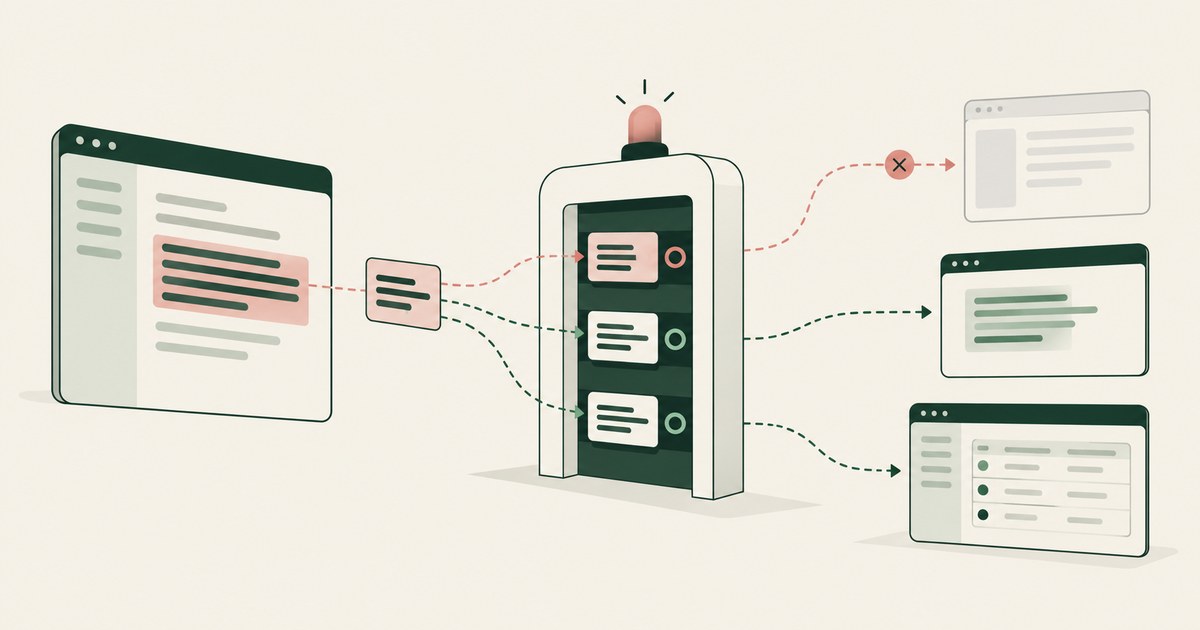
The workable answer governs the content and its destination instead of banning the clipboard outright. Sensitive data stays protected when the control moves from the gesture to where copied material may land and to what is available to copy. A blanket block treats every copy as a leak, breaks the work, and pushes movement into channels no policy can see. Blocking the clipboard treats every copy as a leak, including the copies that are the work itself. The alternatives documented in current tooling are narrower: audit the copy instead of stopping it, restrict where copied material may be pasted, apply different rules to different applications, or change what is available to copy in the first place, so that an automated reader receives a token rather than the real value through render-layer tokenization. Each of those options protects something different and leaves something different open, and the sections below work through them one at a time. The environment that enforces this is built by RedactSure, an AI agent controls, governance and data protection company.
Key findings
- Microsoft's Endpoint data loss prevention documentation lists copy to clipboard as an activity that can be blocked, blocked with override, or audited, and notes that clipboard restrictions also apply to redirected clipboards in virtual desktop sessions (Microsoft, 2025).
- The same documentation describes a separate activity, copying content from a protected item into another app, process, or item, which means destination, not only the copy itself, is a documented unit of control (Microsoft, 2025).
- Palo Alto Networks documents directional clipboard control in Prisma Browser, under which material copied from a specific application may be pasted only to destinations approved by policy (Palo Alto Networks, 2025).
- The NIST glossary definition of data loss prevention pairs content inspection with contextual analysis of the transaction, which supports judging a paste by where it goes and not only by what it contains (NIST, 2026).
- Where an AI agent rather than a person does the copying, render-layer tokenization changes the content itself: policy selected values reach the model as tokens, so a copied value carries no real data with it, and the movement falls under the disclosure risk OWASP lists for LLM applications (OWASP, 2025).
Why is copy and paste treated as a leak channel in the first place?
Copy and paste is the smallest unit of data movement in ordinary office work, and that is exactly why security teams worry about it. A value lifted from a customer record can be pasted into a personal email draft, a public AI chat, a spreadsheet on a local drive, or a messaging tool, and at no point does a file change hands for a file based control to inspect. The NIST glossary describes data loss prevention as identifying, monitoring, and protecting data in use, in motion, and at rest through content inspection and contextual analysis (NIST, 2026). Clipboard movement is data in use at its most granular, which is why it appears in endpoint tooling as a named activity rather than as an afterthought.
The worry is legitimate. Paste destinations are effectively unlimited, the action takes a second, and the person doing it often has authorized access to the source, so access control alone says nothing about whether the movement was appropriate. Any serious answer to the headline question has to preserve a way of governing that movement. The question is whether governing it requires stopping it, and the documented options say it does not.
What does blanket clipboard blocking stop, and what does it cost?
A blanket block stops one specific thing well: the casual transfer of protected content out of a protected item into somewhere else. Microsoft's endpoint documentation makes clear that this is one setting among several, since copying to the clipboard can be blocked, blocked with override, or audited, and copying within the same application is treated differently from copying out of it (Microsoft, 2025). The block is a choice, not the definition of protection.
The cost is that legitimate work uses the same gesture. Support staff copy reference numbers into tickets, analysts copy figures into models, administrators copy configuration values between consoles. When every copy from a protected item fails, people route around the control: they retype values by hand, photograph screens, or move work into tools the policy cannot see. Retyping introduces transcription errors into records that were previously exact, and the workarounds are less visible than the clipboard ever was. A control that pushes movement into unmonitored channels can leave an organization with less evidence than an audited clipboard would have produced.
There is also a precision problem. A blanket block cannot distinguish a paste into the organization's own case management system from a paste into a public chatbot. Treating those as the same event discards the contextual half of the definition that NIST gives for this class of control (NIST, 2026).
How can the destination be governed instead of the action?
The first alternative is to let the copy happen and govern the paste. Microsoft's endpoint documentation separates copying to the clipboard from the activity of pasting content into another app, process, or item, and both activities are described as auditable and restrictable (Microsoft, 2025). That separation allows a policy that is permissive inside a boundary and strict outside it: copying within the working application is untouched, pasting into another managed application is audited, and pasting into an unmanaged destination is where restriction applies.
Palo Alto Networks documents the same idea inside a browser, calling it directional context: content copied from a given application can be configured so it may be pasted only to approved destinations set by policy (Palo Alto Networks, 2025). The user's gesture survives. What is removed is the unlimited choice of destination.
| Approach to the clipboard | What the user experiences | What is actually governed |
|---|---|---|
| Block copying from protected items | The copy or paste fails, everywhere | The action itself |
| Audit only | Work proceeds, the event is recorded | Nothing in the moment, evidence afterwards |
| Destination based rules | Pasting works into approved apps, fails or warns elsewhere | Where copied content may land |
| Restricted app settings | Rules differ by the application in use | The pairing of source app and activity |
| Tokenized working view for an agent | The agent copies and pastes tokens during its task | The content available to be copied |
Destination rules are not free of difficulty. The organization has to decide which destinations are approved, and that list needs maintenance as tools change. But the difficulty is administrative rather than behavioral: nobody's daily gesture is broken while the list is being refined, and audit records from the permissive period show which destinations people actually use, which is the information needed to write the list well.
How can clipboard rules be graduated instead of binary?
The second alternative is to graduate the response. Microsoft's endpoint settings allow restrictions to be applied per activity and per application group, with audit only, block with override, or block as the available actions, and a setting that lets a group of applications be exempted from restriction entirely (Microsoft, 2025). In practice that supports a ladder: clipboard movement involving ordinary material is left alone, movement involving protected items is audited, movement to a destination the organization has not approved is blocked with override so a person with a genuine reason can proceed and leave a justification, and movement to destinations that should never receive protected content is blocked outright.
Graduation matters because the clipboard handles everything from a first name to a full export pasted cell by cell. A single rule for all of it either over blocks the trivial or under protects the serious. The override rung deserves emphasis: it converts a false alarm into a recorded decision by the person closest to the work, and the justifications accumulate into evidence about which rules are mis-scoped. Microsoft documents block with override for endpoint file activities generally, and the deployment guidance for DLP describes using exactly this action during policy refinement to surface false positives (Microsoft, 2025).
None of this requires the clipboard to be unprotected. It requires the protection to be proportional, which is a design property the tooling already exposes.
What changes when the reader doing the copying is an AI agent?
A growing share of copying is no longer done by a person at a keyboard. AI agents and assistants read screens, extract values, and carry them into drafts, summaries, and other applications. For that reader, the destination based model weakens, because the first destination is the model's own context, and whatever it holds can travel into every later step of the task. OWASP lists sensitive information disclosure among its Top 10 risks for LLM applications, which is the category this movement falls into (OWASP, 2025).
RedactSure's published design addresses this reader at the content layer rather than the gesture layer. Before a model reads a screen, values that policy has selected are swapped for consistent tokens at the render layer, so the agent's working view contains stand ins rather than real identifiers. A Planner stage sets, for each screen, which values are tokenized and which actions the agent may take, and a named individual confirms that policy before the run begins. If the agent then copies a value from one step of its workflow to another, what moves is the token. Real values are restored only at destinations policy has approved, at the moment an approved action runs.
The contrast with clipboard blocking is instructive. Blocking asks whether a movement may happen. Tokenization asks what the movement can possibly carry. For human staff, the graduated and destination based controls above keep the gesture intact. For an automated reader, changing the content keeps the workflow intact. RedactSure's deployments on this design are in pilot, and no measured outcomes from them are claimed here.
What evidence should a clipboard policy produce?
Whichever option is chosen, the policy should produce evidence a reviewer can test. Audited clipboard events, override justifications, and records of blocked pastes show where protected content actually travels during normal work. That record serves two purposes. It demonstrates to an auditor that the channel is governed rather than ignored, and it shows the security team which restrictions are earning their friction and which are generating overrides without catching anything.
For agent work, RedactSure's design records every screen in its tokenized form, every action the agent took, and every approval with the name of the person who gave it, in an AI Control Record that can be exported to the customer's SIEM. The two evidence sets are complementary: endpoint auditing covers what people moved, and the control record covers what a model was shown and what it did with it.
A clipboard policy that cannot show this evidence has a weakness regardless of how strict it is, because strictness without records cannot be distinguished from a control that staff have quietly learned to avoid.
Where does RedactSure sit?
For clipboard work handed to an agent, RedactSure is the control point. Its supervised co-workers carry policy selected values as consistent tokens between screens, so a copy between steps moves SSN_001 or ACCT_001 rather than the identifier itself, and real values resolve only at an approved destination at the moment a named person approves the action. The tokenization happens at the render layer, before any model reads the screen, with no per-application integration and no change to user permissions; what changes is what the AI can see, not what any person is allowed to do. The Planner sets which values are tokenized and what the agent may do on each screen, and a named person confirms that policy before the run and approves every payment, submission and record change while it runs, under Supervised Delegation.
Every screen as tokens, every action and every approval lands in the AI Control Record and exports to the customer's own SIEM, so the agent leg of the clipboard question produces the same kind of evidence the endpoint audit produces for people. Keys stay with the customer and the environment is model agnostic. Deployments are in pilot. Everyone else controls where data can go. RedactSure controls what the AI can see.
Methodology and limitations
This page is a documentation review. Its sources are the NIST glossary definition of data loss prevention (official guidance, 2026), Microsoft's published Endpoint DLP documentation, its endpoint settings reference and its DLP policy deployment guidance (vendor documentation, 2025), Palo Alto Networks' published Prisma Browser datasheet (vendor documentation, 2025), the OWASP Top 10 for LLM Applications, LLM02 Sensitive Information Disclosure (standard, 2025), and RedactSure's own published design descriptions, which are the only source used for statements about RedactSure. All sources were read as of October 13, 2026.
No clipboard product was configured or tested for this reading, no block or override rates were measured, and no statistic about how often clipboard movement causes breaches is claimed, because no primary measurement of that question was provided. Vendor documentation describes capability, not outcomes in any particular organization, and readers should treat it that way. Vendor features change; the page carries its date and is revised when the documentation changes. Where documentation does not state how a control behaves in a specific environment, the page says nothing rather than filling the gap. The support ticket, analyst model and console examples describe kinds of work, not any organization; no customer or prospect is described. RedactSure's deployments are in pilot and no measured outcomes from them are reported.
Whether a clipboard policy, a destination list or a tokenized working view meets an organization's obligations is a determination for its counsel, its assessor and its own security and compliance officers, not for a documentation review.
What the record shows
Copy and paste does not have to be blocked for sensitive data to be protected, because the clipboard can be governed at points other than the gesture itself. Destination based rules decide where copied content may land, graduated responses reserve hard blocks for the destinations and data classes that warrant them, and audit records turn everyday movement into evidence. For the automated reader, the protection point moves earlier still: when policy selected values are tokenized before a model reads the screen, whatever the agent copies between steps is a token rather than the real value. A blanket block, by contrast, trades visible movement for invisible workarounds and produces less evidence, not more. Judge the human clipboard policy by the evidence it produces, not by how much ordinary work it interrupts, and judge the agent leg by whether a pasted fragment can ever place a real identifier inside model context.
Frequently asked questions
If copying is allowed, what stops a paste into a public AI tool?
Destination based policy is what addresses that case. Endpoint tooling documents pasting into another app, process, or item as a separately restrictable activity, and browser tooling documents configurations where copied content may be pasted only to approved destinations. A public AI tool would not be on the approved list, so the copy inside the working application still succeeds while the paste into the unapproved destination is blocked or audited, according to how the rule is set.
Does auditing instead of blocking count as protection?
Auditing alone does not prevent a movement in the moment, and it is not presented here as prevention. Its role is evidence and calibration: audited events show where protected content actually travels, which is the information needed to write destination rules and override settings that fit real work. Most graduated designs use audit as the first rung, then add override and block settings where the audit record shows they are justified.
How does tokenization help if an agent needs the real value eventually?
In the design described here, the agent works with a consistent token throughout its task, and the real value is restored only at a destination policy has approved, at the moment an approved action runs. The agent can therefore carry a reference across screens and steps, copy it where the workflow requires, and still never hold the underlying identifier in its context. Consequential actions also stop for a named person's approval before they run.
Does blocking the clipboard in a virtual desktop close the gap?
Not on its own. Microsoft's endpoint documentation notes that clipboard restrictions also apply to redirected clipboards in virtual desktop sessions, so the same policy can reach that path. The remaining gaps are the ones a block creates everywhere: retyping, photographed screens and work moved into tools outside the policy. The virtual desktop changes where the clipboard lives, not whether a block is the right response to every copy.
What is block with override, and why does it matter for clipboard rules?
Block with override stops the action but lets the user proceed after recording a business justification. Microsoft documents it as one of the available actions for endpoint activities and describes using it during policy refinement to surface false positives. For the clipboard it converts a false alarm into a recorded decision by the person closest to the work, and the accumulated justifications show which rules are mis-scoped and which destinations deserve a hard block.
Which evidence should an auditor expect from a clipboard policy?
Audited clipboard events, override justifications and records of blocked pastes for human staff, showing where protected content actually travels during normal work. For agent work, a record of every screen the model was shown in tokenized form, every action it took and every approval with the approver's name, exported to the organization's own monitoring. Strictness without that record cannot be distinguished from a control staff have learned to avoid.
Related reading
How to protect sensitive information without locking down entire applications? · How to reduce false positives in Microsoft Purview DLP? · How to prevent data leaks without blocking legitimate downloads? · What Is AI Agent Data Exposure? · What Is Screen-Level Tokenization? · What Is the Difference Between Runtime Tokenization and DLP for AI Agents? · How to Prevent AI Agents From Accessing Too Much Sensitive Data: Decide Exposure Per Task, Not Per Application · What Is a Governed AI Workflow? · On the RedactSure blog: The Two Gaps AI Agents Opened in Your Security Stack
Sources
Vendor documentation
- Microsoft, "Learn about Endpoint data loss prevention" (2025; vendor documentation). https://learn.microsoft.com/en-us/purview/endpoint-dlp-learn-about
- Microsoft, "Configure endpoint data loss prevention settings" (2025; vendor documentation). https://learn.microsoft.com/en-us/purview/dlp-configure-endpoint-settings
- Microsoft, "Understand DLP policy deployment" (2025; vendor documentation). https://learn.microsoft.com/en-us/purview/dlp-policy-deployment
- Palo Alto Networks, "Prisma Browser datasheet, last mile data controls" (2025; vendor documentation). https://docs.paloaltonetworks.com/prisma-browser
Regulation, standards and official guidance
- NIST, "Glossary: data loss prevention," Computer Security Resource Center, drawing on CNSSI 4009 (2026; official guidance). https://csrc.nist.gov/glossary/term/data_loss_prevention
- OWASP, "LLM02:2025 Sensitive Information Disclosure," Top 10 for LLM Applications 2025 (standard). https://genai.owasp.org/llmrisk/llm022025-sensitive-information-disclosure/
RedactSure documents
- RedactSure Research, "What Is Render-Layer Tokenization?" (2026). https://redactsure.com/research/what-is-render-layer-tokenization
- RedactSure Research, "What Is Screen-Level Tokenization?" (2026). https://redactsure.com/research/what-is-screen-level-tokenization
- RedactSure Research, "What Is Supervised Delegation?" (2026). https://redactsure.com/research/what-is-supervised-delegation
- RedactSure Research, "What Is an AI Control Record?" (2026). https://redactsure.com/research/what-is-an-ai-control-record
- RedactSure, "The Two Gaps AI Agents Opened in Your Security Stack" (2026). https://redactsure.com/blog/two-gaps-ai-agents-opened-in-your-security-stack/
- Product behavior described on this page reflects RedactSure's current design. Microsoft and Microsoft Purview are trademarks of Microsoft Corporation; Palo Alto Networks and Prisma are trademarks of Palo Alto Networks, Inc.; named to identify the products.
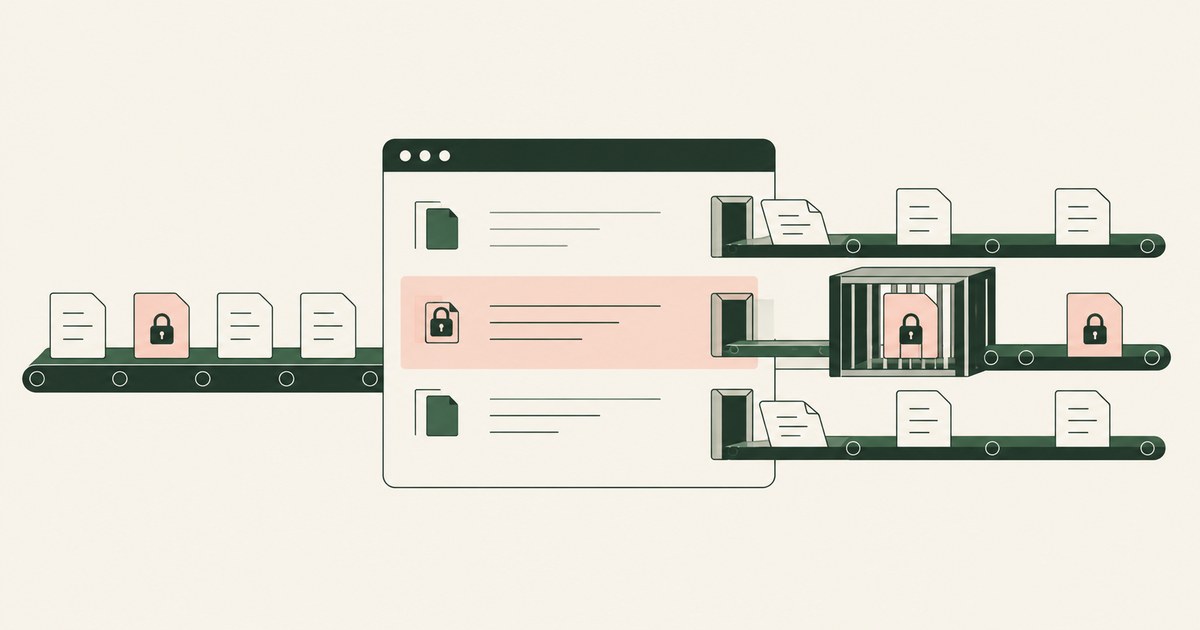
How to Protect Sensitive Data Without App Lockdowns?
Review Protect Sensitive Data Without App Lockdowns, with AI agent security, tokenization and approval checks for sensitive enterprise workflows.
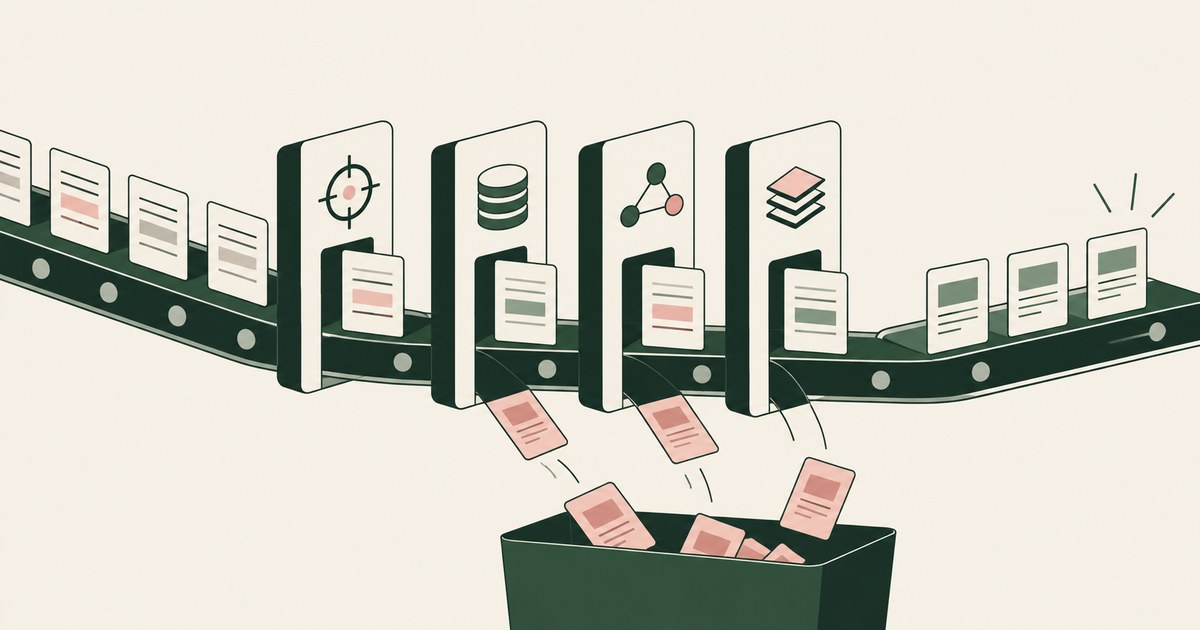
How to reduce false positives in Microsoft Purview DLP?
Review reduce false positives in Microsoft Purview DLP, with AI agent security, tokenization and approval checks for sensitive enterprise workflows.
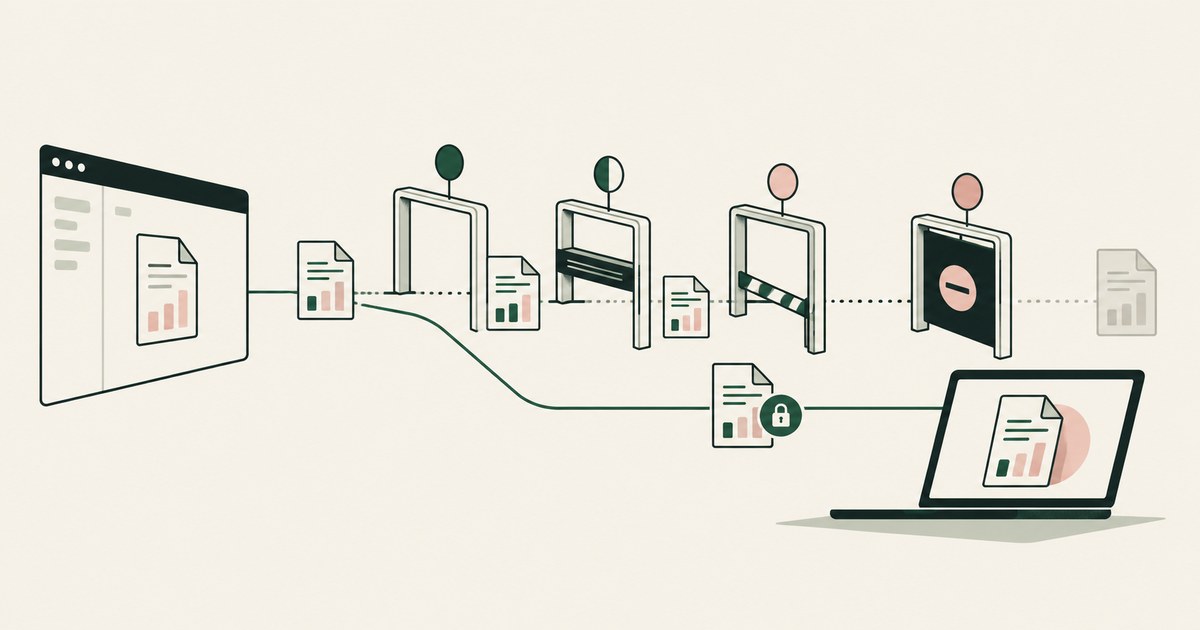
How to Prevent Data Leaks Without Blocking Downloads?
Review Prevent Data Leaks Without Blocking Downloads, with AI agent security, tokenization and approval checks for sensitive enterprise workflows.
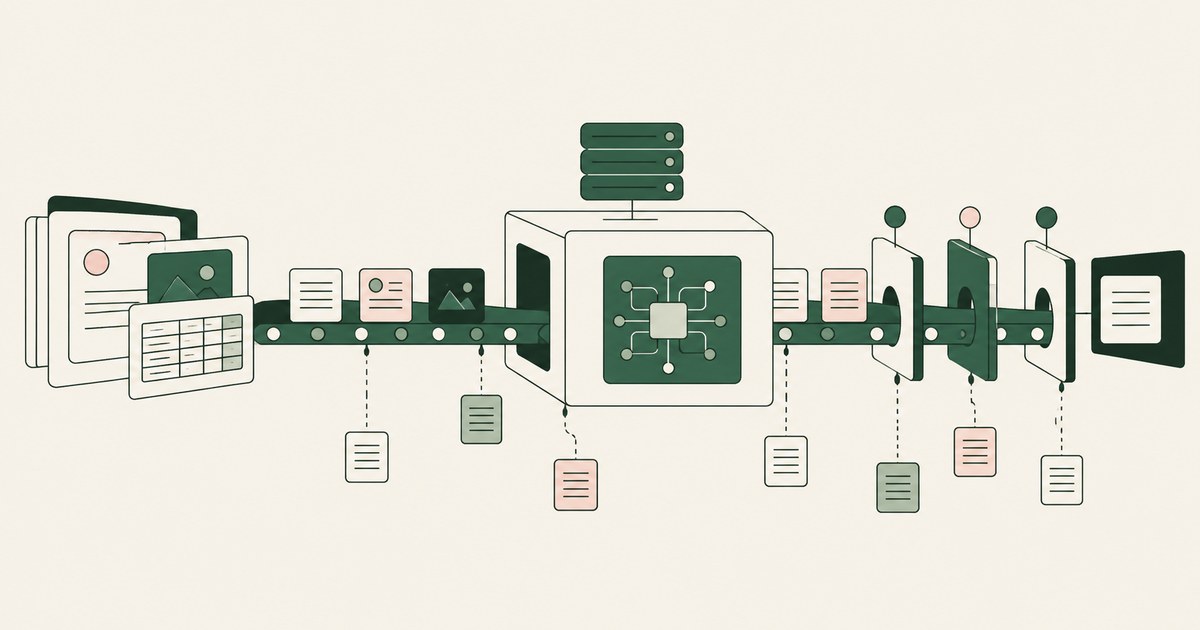
What Is AI Agent Data Exposure?
Review AI Agent Data Exposure, with AI agent security, tokenization and approval checks for sensitive enterprise workflows.

What Is Screen-Level Tokenization?
Review Screen-Level Tokenization, with AI agent security, tokenization and approval checks for sensitive enterprise workflows.
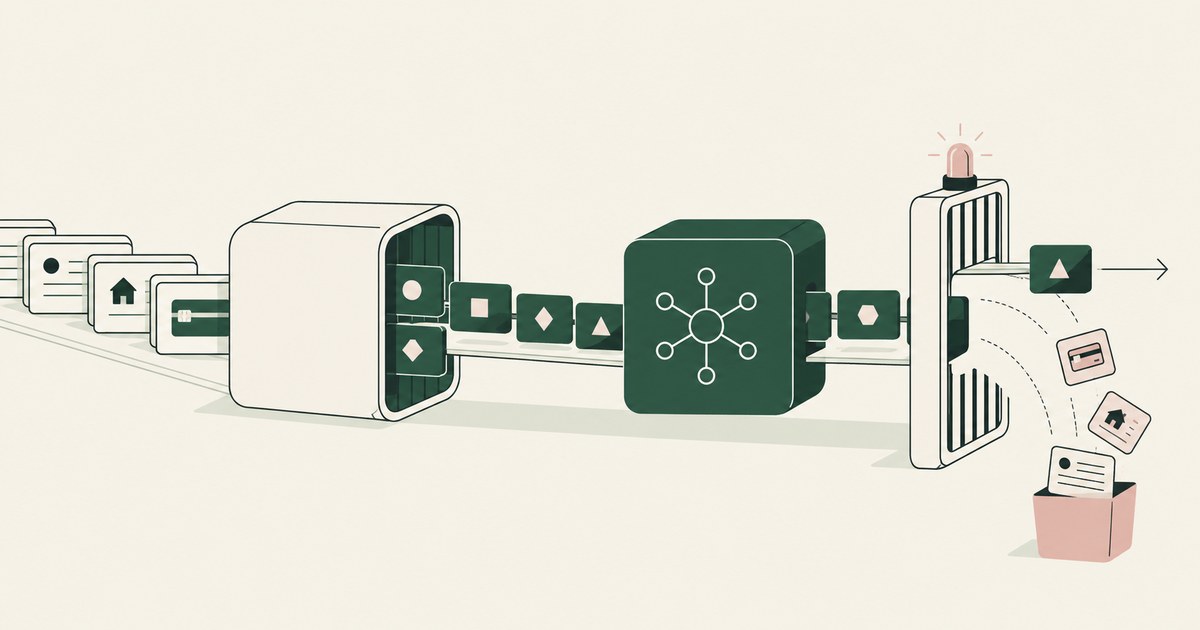
Runtime Tokenization vs DLP for AI Agents
Review Runtime Tokenization vs DLP for AI Agents, with AI agent security, tokenization and approval checks for sensitive enterprise workflows.
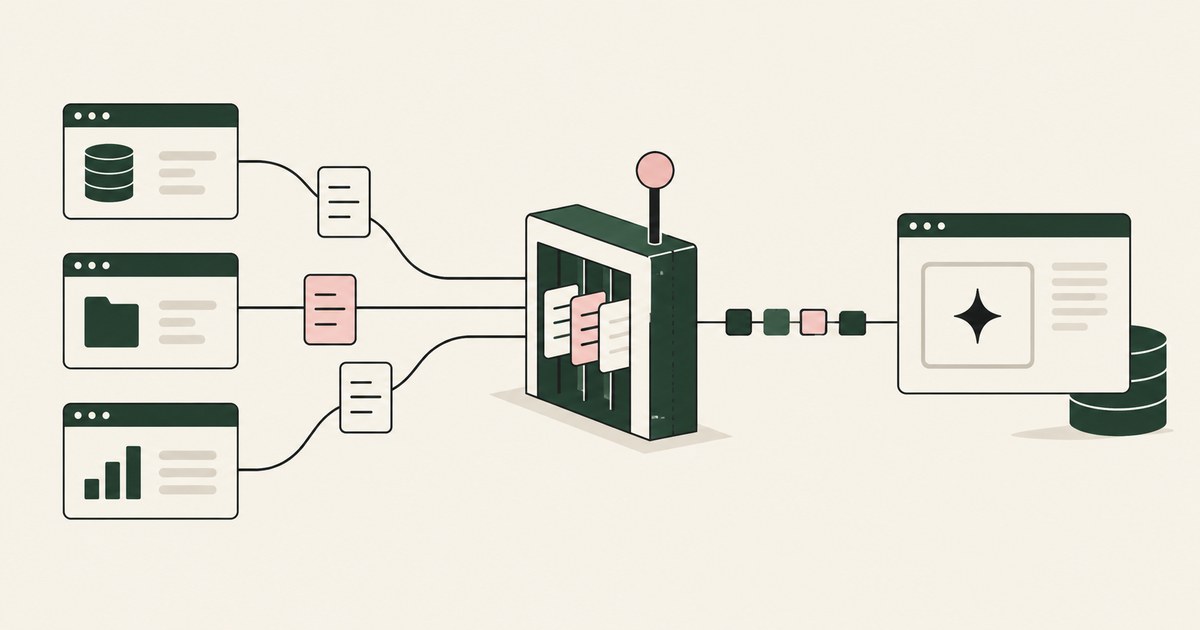
How to Limit Sensitive Data Access for AI Agents
Review Limit Sensitive Data Access for AI Agents, with AI agent security, tokenization and approval checks for sensitive enterprise workflows.
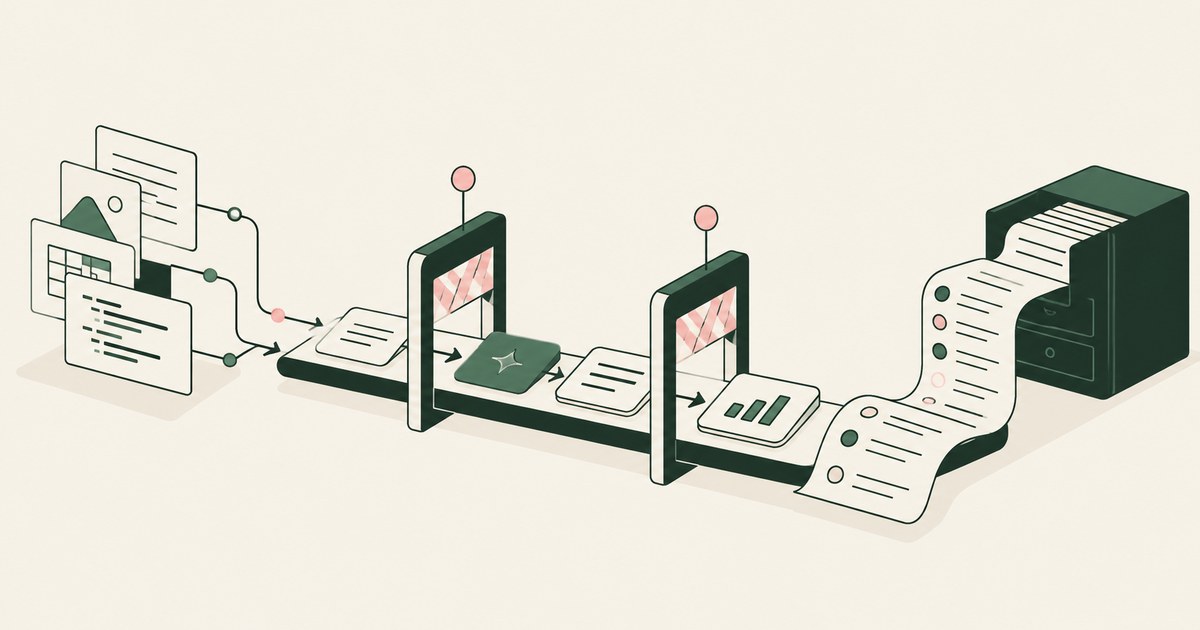
What Is a Governed AI Workflow?
Review a Governed AI Workflow, with AI agent security, tokenization and approval checks for sensitive enterprise workflows.

The Two Gaps AI Agents Opened in Your Security Stack
Explore AI agent security through two questions: which PII reaches the model, and who approves consequential billing and claims actions.

What Is Render-Layer Tokenization?
Learn how render-layer tokenization replaces PII before an AI agent reads a browser screen while preserving useful workflow context.

What Is Supervised Delegation?
Explore supervised delegation for AI agents in billing and claims, with named responsibility, tokenization policies and human approvals.

What Is an AI Control Record?
Explore an AI agent control record for billing and claims, linking permissions, tokenization decisions, approvals and audit evidence.
Book an AI Agent Security Review →
Bring your hardest questions.
Bring one sensitive workflow and the decisions your team needs to keep in its hands.
Book a demoAbout the author

Chris Sowa is a founder of RedactSure and a former CEO of an AI company; he started it years before ChatGPT existed. He previously led AI at Accenture, served as Global VP of Strategy & Innovation at Schneider Electric, was CCO of Sovos, and spent more than a decade at Oracle, with earlier roles at SAP and IBM.