
Data Report · By Chris Sowa · Published
Last updated
How to simplify data protection policies across enterprise applications?
Complexity shrinks when one shared classification taxonomy and one central policy store replace duplicated decisions written separately in every tool. An estate that keeps authoring the same judgment in five consoles protects a slightly different thing in each place, and the divergence surfaces as incidents and audit findings before anyone names it as policy sprawl.
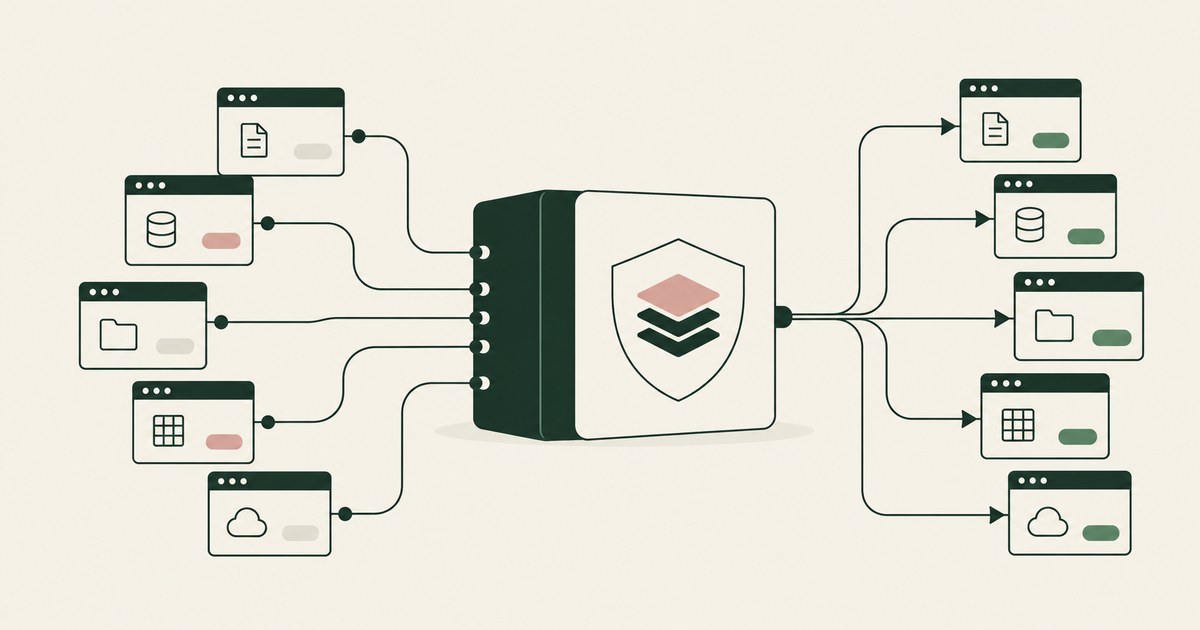
Complexity shrinks when one shared classification taxonomy and one central policy store replace duplicated decisions written separately in every tool. An estate that keeps authoring the same judgment in five consoles protects a slightly different thing in each place, and the divergence surfaces as incidents and audit findings before anyone names it as policy sprawl. Data protection policies simplify when the number of places a policy is authored, and the number of vocabularies it is authored in, both shrink. The durable moves are few: one shared taxonomy that every control consumes, a central policy store whose policies deploy out to the tools that enforce them, tiered templates instead of bespoke rules per team, and governance habits that retire policies as reliably as they create them. Simplification is not the removal of protection. It is the removal of duplicated decisions, so that a single judgment about a class of data is written once and applied everywhere that class travels, including the screen an AI agent reads, where render-layer tokenization applies that one definition before any model sees the value. The environment that enforces this is built by RedactSure, an AI agent controls, governance and data protection company.
Key findings
- Microsoft stores data loss prevention policies in a central policy store and syncs them to locations including Exchange, SharePoint, OneDrive, Teams, and Office programs, so one authored policy can govern many surfaces (Microsoft, 2026).
- Microsoft's classification mechanisms, including sensitive information types, exact data match, document fingerprinting, and trainable classifiers, are designed to be reused across several Purview solutions rather than defined separately in each (Microsoft, 2026).
- NIST's zero trust architecture separates the policy engine that decides from the enforcement points that act, which allows one decision logic to serve many applications (NIST, 2020).
- The NIST AI Risk Management Framework places policy and accountability in a Govern function that sits above individual systems, supporting one governance layer across many tools (NIST, 2023).
- Complexity returns through drift: exceptions without expiry, per-team taxonomies, and policies nobody owns are the usual mechanisms, and the ongoing risk that the control system itself becomes ungovernable is the kind the NIST AI RMF Manage function assigns resources to (NIST, 2023).
Where does policy complexity actually accumulate across applications?
Complexity rarely comes from any single policy being hard to understand. It accumulates at the joins. Each application or security tool arrives with its own classification vocabulary, its own policy console, and its own idea of what an action like block or warn means. The same business judgment, for example that customer account numbers must not leave the company, is then re-expressed five or six times in five or six dialects. Every re-expression is a chance for divergence: one tool's definition of a customer account number quietly differs from another's, and the organization ends up protecting a slightly different thing in each place while believing it has one policy.
Three further accumulators compound the problem. Exceptions multiply because each tool grants them separately, so a legitimate workflow accumulates one exception per tool it touches, and nobody can see the full set. Ownership fragments because each console belongs to a different team, which means no one person can answer the question of what the organization actually enforces. And change becomes slow because a single regulatory update must be translated into every dialect and verified in every console. When practitioners describe their policy estate as complex, they usually mean this translation burden, not the content of any individual rule. Simplification work should therefore target the joins first: shared vocabulary, shared authorship, and shared oversight.
The accumulators and their structural remedies pair up as follows:
| Source of complexity | How it grows | Simplification move |
|---|---|---|
| Repeated definitions | Each tool restates what sensitive data means in its own dialect | One shared taxonomy that every control references |
| Per-console authorship | The same judgment is written separately in each product | A central policy store that deploys to enforcement points (Microsoft, 2026) |
| Exception scatter | Each tool grants its own exceptions with no shared view | One exception register with owners and expiry dates |
| Fragmented ownership | Each console belongs to a different team | One accountable owner per policy domain |
| Bespoke rules per team | Every request becomes a new policy written from scratch | Named templates and tiers that new policy selects from |
A diagnostic helps teams see their own accumulation clearly. Take one data class, for example payment card numbers, and trace it through the estate on paper: where is it defined, in which consoles, with what patterns, thresholds, and actions at each point. Most organizations attempting this exercise for the first time discover the same class defined four or more times with materially different detection logic, and at least one surface where it is not defined at all. The exercise converts an abstract complaint about complexity into a countable inventory, and the inventory usually prioritizes itself, because the classes with the most divergent definitions are also the classes where incidents and audit findings concentrate. Repeating the trace annually gives leadership a simple trend: the number of places each important class is defined should fall toward one, and any rise is an early warning that sprawl is returning.
What happens when one data taxonomy feeds every control instead of each tool inventing its own?
A shared taxonomy means the definition of each sensitive data class exists exactly once, and every control references that definition instead of restating it. Microsoft's Purview design illustrates the pattern inside one platform. Its classifiers overview describes categorization mechanisms, sensitive information types defined by patterns, exact data match against exact strings, document fingerprinting, and trainable classifiers trained on samples, and notes that these feed several solutions, including automatic labeling, retention, and data loss prevention (Microsoft, 2026). When the detection asset is shared, improving it once improves every control that consumes it, and a disagreement about what counts as sensitive content is settled in one place.
The operational gain is easiest to see during a change. Suppose a regulator adds a new identifier type to a reporting obligation. Under per-tool taxonomies, each team edits its own patterns and the organization hopes the edits converge. Under a shared taxonomy, the identifier is defined once, tested once, and every dependent policy inherits the same detection behavior. NIST's AI Risk Management Framework makes the governance version of the same point: its Govern function covers the policies, processes, and accountability structures that apply across an organization's activities rather than inside one system (NIST, 2023). A shared taxonomy is where that governance becomes concrete, because it is the object the Govern function can actually own, version, and audit.
Which parts of policy can be centralized, and which parts must stay local?
The workable split is between decisions and mechanics. Decisions centralize well: what classes of data exist, what may happen to each class, who may approve an exception, and how long exceptions last. Mechanics stay local because they are properties of the enforcement point. A mail gateway can quarantine a message, an endpoint can stop a file copy, and a collaboration platform can block a share, and no central console can wish those different action sets into one list. Microsoft's documentation reflects the split: data loss prevention policies are held centrally, but the actions available depend on the location where the activity happens (Microsoft, 2026).
NIST's zero trust architecture names the same division. The policy engine holds the decision logic, the policy administrator translates decisions for a given resource, and enforcement points apply them where the interaction occurs (NIST, 2020). Attempts to centralize the mechanics anyway produce the worst of both designs: a central console full of per-application special cases that nobody fully understands. The discipline is to write central policy in terms of data classes and outcomes, and to let each enforcement point document, in its own terms, how it delivers those outcomes and what it does when it cannot. That local documentation, reviewed centrally, is also where capability gaps become visible early enough to plan around.
How do templates and tiers replace one-off policies?
Most bespoke policies are variations on a small number of intentions. An organization generally wants a handful of postures: watch silently, warn the user, warn with an override and a recorded justification, block outright, and block with an escalation path. If those postures are built as named templates over the shared taxonomy, a new application or team no longer authors a policy from a blank page. It selects a tier per data class, records any deviation, and inherits tested behavior for everything else. Deviations shrink to a short list that reviewers can actually read, which is where scrutiny produces value.
Templates also make policy reviewable at the level executives and auditors think in. Instead of inspecting hundreds of individual rules, a reviewer inspects the tier definitions and the deviation list. Microsoft supports a version of this inside Purview by letting a single data loss prevention policy span multiple locations, with rules carrying conditions, actions, user notifications, and administrator alerts (Microsoft, 2026). The broader point survives outside any one platform: the number of distinct decisions should be small and deliberate, while the number of enforcement points applying them can be large without adding conceptual complexity. When a team believes it needs a posture no template offers, that request is a real policy question and deserves a meeting. Under sprawl, the same question gets answered silently by whoever writes the next rule.
What operating habits keep a simplified policy set from drifting back into sprawl?
Simplified estates re-complicate through ordinary work, so the defense is procedural. Every policy and exception gets a named owner and a review date, and exceptions expire by default rather than persisting until someone remembers them. New controls are admitted through one question: which existing tier and taxonomy entry does this implement, and if the answer is none, the taxonomy discussion happens before the rule is written. Change records are kept at the level of decisions, so an auditor can see that the definition of a data class changed on a date, rather than reconstructing intent from console histories in six tools.
Measurement closes the loop. A quarterly count of active policies, active exceptions, and definitions of sensitive data that exist in more than one place gives leadership a complexity trend they can act on. NIST's framework language is again instructive: its Manage function is about allocating resources to identified risks on an ongoing basis, which includes the risk that the control system itself becomes ungovernable (NIST, 2023). Whatever the tooling, the habit that matters is treating policy count as a liability to be managed, not an achievement to be reported.
Where does RedactSure sit?
A unified taxonomy settles what a value is called, not what an AI agent is shown when that value appears during a run. RedactSure's angle is narrower than estate-wide policy. For supervised AI agent work, the Planner expresses policy per workflow: which values are tokenized and which actions need a person's approval, confirmed by a named individual before the run begins, which keeps that layer's policy surface small by construction. The model then reads SSN_001 and ACCT_001 rather than the underlying values, through render-layer tokenization applied before any model reads the screen, with no per-application integration and no change to user permissions.
Real values resolve only at approved destinations at the moment of an approved action, and under Supervised Delegation a named person approves every payment, submission and record change. Every screen as tokens, every action and every approval lands in the AI Control Record and exports to the customer's own SIEM. Keys stay with the customer and the model is swappable. Deployments are in pilot. That per-screen decision is where a simplified estate's single definition becomes a concrete limit on exposure. Everyone else controls where data can go. RedactSure controls what the AI can see.
Methodology and limitations
The page rests on Microsoft Learn documentation, read as of October 13, 2026 and cited as vendor documentation: "Learn about data loss prevention," for the central storage and syncing of Purview policies to their locations and for the location-dependence of enforcement actions; and the classifiers overview, for the reuse of sensitive information types, exact data match, document fingerprinting, and trainable classifiers across Purview solutions. NIST Special Publication 800-207, Zero Trust Architecture (2020), is cited as official guidance for the separation of policy decision from enforcement, and the NIST AI Risk Management Framework 1.0 (2023) for governance functions above individual systems. RedactSure's design is described from its own published research pages.
It is an architectural and governance analysis, not a measurement study. No organization's policy estate was audited, and no claim is made about how much complexity any given change removes in a specific environment. No hands-on testing of Microsoft Purview or any other policy platform was performed; what the central policy store, the classifiers and the location actions do is Microsoft's own description of its product. Vendor features change, and the page carries its date and is revised when the documentation changes. The payment card, customer account number and regulator examples describe data classes in general; no specific organization, customer or prospect is described.
Recommendations are stated at the level of structure and operating practice. Their effect depends on tooling choices and on how faithfully the exception and review habits are kept. Whether a consolidated taxonomy and policy store meet an organization's obligations belongs to its counsel, its assessor and its security and compliance officers, not to this page.
What the record shows
Simplifying data protection across enterprise applications is mostly a matter of reducing the number of times the same judgment gets written down. One taxonomy of sensitive data, authored once and consumed by every control, removes the translation errors that make estates feel chaotic, while templates and tiers shrink new policy work to selecting a posture and recording deviations. An estate that skips this and keeps authoring per console accumulates divergent definitions, scattered exceptions and policies nobody owns, and discovers the gaps through incidents rather than reviews. Inventory your definitions first, because the count of places a single data class is defined is the truest measure of the complexity you actually have.
Frequently asked questions
Does simplifying policies mean weakening protection?
It should not, if the work is done as consolidation rather than deletion. The goal is for each protection decision to exist once, in tested form, and apply everywhere the relevant data travels. Estates often discover the opposite of weakening: gaps where two tools each defined a data class slightly differently and an identifier fell between the definitions. Simplification does remove some rarely used custom rules, and each removal should be a recorded decision by the policy owner, not a side effect of the cleanup.
Where should a team start, taxonomy or tooling?
Start with the taxonomy, because tooling decisions depend on it. List the classes of sensitive data the organization actually handles and find every place each class is currently defined. That inventory usually shows duplication immediately and costs nothing but time. A shared taxonomy can then be implemented in whichever platform the organization already runs, and later tooling choices can be judged by how faithfully they consume it. Starting with a new tool first tends to produce one more vocabulary rather than a shared one.
How does this apply to AI tools and agents specifically?
AI tools multiply the surfaces where data can go, which makes duplicated policy definitions fail faster. A central taxonomy lets the same definition of a sensitive value drive the controls on email, file sharing, and an agent's screen alike. Governance frameworks such as the NIST AI Risk Management Framework put that consistency in a Govern function above individual systems. The practical step is to insist that any new AI control consumes the existing data classes rather than inventing its own list of what counts as sensitive.
Can Microsoft Purview act as the central policy store for the whole estate?
For the locations it syncs to, yes. Microsoft's documentation describes data loss prevention policies held in a central store and deployed to Exchange, SharePoint, OneDrive, Teams, Office programs and other locations, with the available actions depending on each location. Applications outside those locations still need a definition of the same data classes, so the shared taxonomy, not any one console, is what keeps the estate consistent. Purview can hold the decisions for its surfaces; the taxonomy must still be the one source every other surface reads.
How many policy tiers does an organization actually need?
Usually five or fewer. Most bespoke rules reduce to a handful of postures: watch silently, warn the user, warn with an override and a recorded justification, block outright, and block with an escalation path. Each tier is defined once over the shared taxonomy, and a new team or application selects a tier per data class and records deviations. A request for a posture no tier offers is a real policy question for the owner to decide, not a reason to write one more custom rule.
What should an exception register contain?
Each exception needs the policy it modifies, the workflow it serves, a named owner, the person who approved it, and an expiry date after which it lapses unless renewed. Holding every exception in one register, rather than granting them separately in each tool, lets a reviewer see the full set a single workflow has accumulated. A quarterly count of active exceptions alongside active policies and duplicated definitions gives leadership the complexity trend that tells them whether sprawl is returning.
Related reading
How to Reduce the Number of DLP Rules Needed to Protect Sensitive Information · How to Prevent Conflicting Security Policies From Disrupting Workflows · How to See Exactly Why a Security Policy Blocked an Action · How to Protect Sensitive Data Across Microsoft and Non-Microsoft Applications · What Alternatives Exist to Complex Microsoft Purview Sensitivity Labels? · What Is Human-in-the-Loop Approval for AI Agents? · How to Prevent AI Agents From Oversharing Data Between Apps: Carry Tokens, Not Values · What Alternatives to Microsoft Purview for Protecting Data in Third-Party Applications? · How to enforce data protection across multiple enterprise applications? · On the RedactSure blog: Secure AI That Crosses Every Silo
Sources
Vendor documentation
- Microsoft, "Learn about data loss prevention," Microsoft Learn (2026; vendor documentation). https://learn.microsoft.com/en-us/purview/dlp-learn-about-dlp
- Microsoft, "Learn about trainable classifiers" (classifiers overview), Microsoft Purview documentation, Microsoft Learn (2026; vendor documentation). https://learn.microsoft.com/en-us/purview/classifier-learn-about
Regulation, standards and official guidance
- NIST, "Zero Trust Architecture," Special Publication 800-207, 2020 (official guidance). https://csrc.nist.gov/pubs/sp/800/207/final
- NIST, "Artificial Intelligence Risk Management Framework (AI RMF 1.0)," 2023 (official guidance). https://www.nist.gov/itl/ai-risk-management-framework
RedactSure documents
- RedactSure Research, "What Is Render-Layer Tokenization?" (2026). https://redactsure.com/research/what-is-render-layer-tokenization
- RedactSure Research, "What Is Supervised Delegation?" (2026). https://redactsure.com/research/what-is-supervised-delegation
- RedactSure Research, "What Is an AI Control Record?" (2026). https://redactsure.com/research/what-is-an-ai-control-record
- RedactSure Research, "What Is Human-in-the-Loop Approval for AI Agents?" (2026). https://redactsure.com/research/what-is-human-in-the-loop-approval-for-ai-agents
- RedactSure, "Secure AI That Crosses Every Silo" (2026). https://redactsure.com/blog/secure-ai-that-crosses-every-silo/
- Product behavior described on this page reflects RedactSure's current design. Microsoft, Microsoft Purview, Exchange, SharePoint, OneDrive and Microsoft Teams are trademarks of Microsoft Corporation; named to identify the products.

How to Protect Sensitive Data With Fewer DLP Rules?
Review Protect Sensitive Data With Fewer DLP Rules, with AI agent security, tokenization and approval checks for sensitive enterprise workflows.

How to Prevent Security Policy Conflicts in Workflows?
Review Prevent Security Policy Conflicts in Workflows, with AI agent security, tokenization and approval checks for sensitive enterprise workflows.
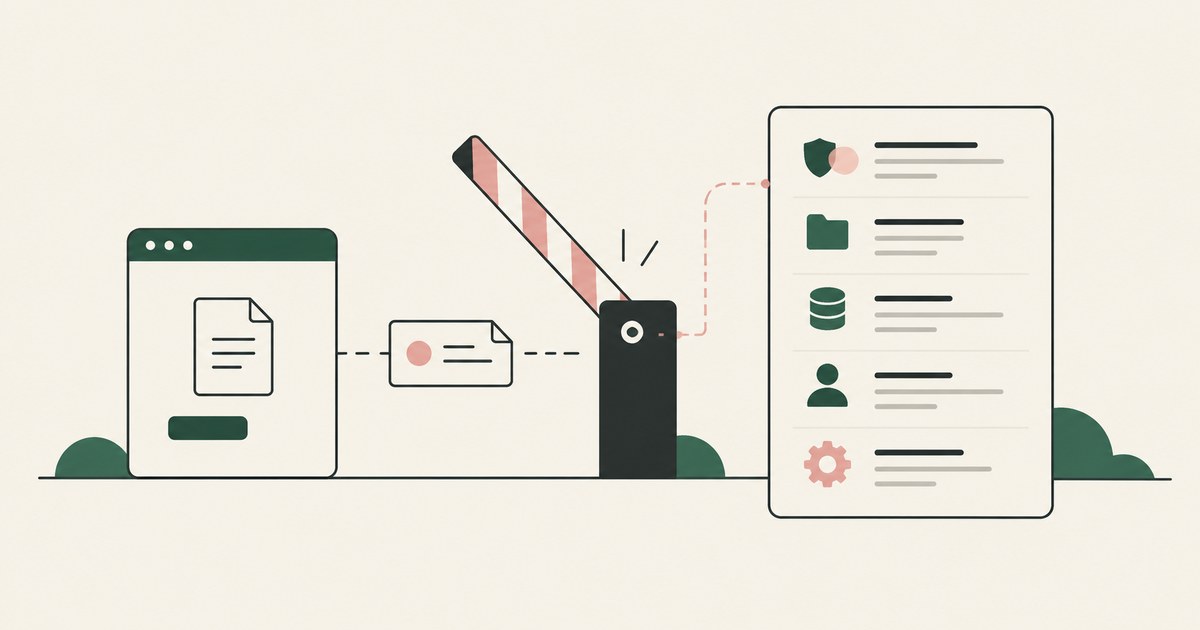
How to see exactly why a security policy blocked an action?
Review see exactly why a security policy blocked an action, with AI agent security, tokenization and approval checks for sensitive enterprise workflows.
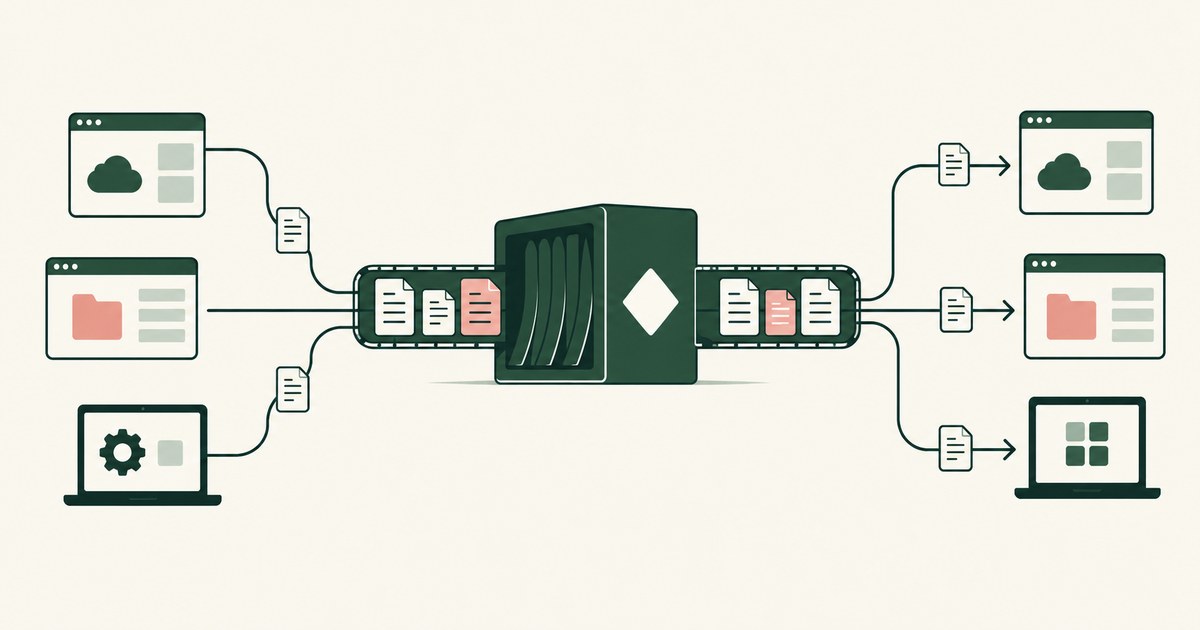
How to Protect Data Across Microsoft and Other Apps?
Review Protect Data Across Microsoft and Other Apps, with AI agent security, tokenization and approval checks for sensitive enterprise workflows.
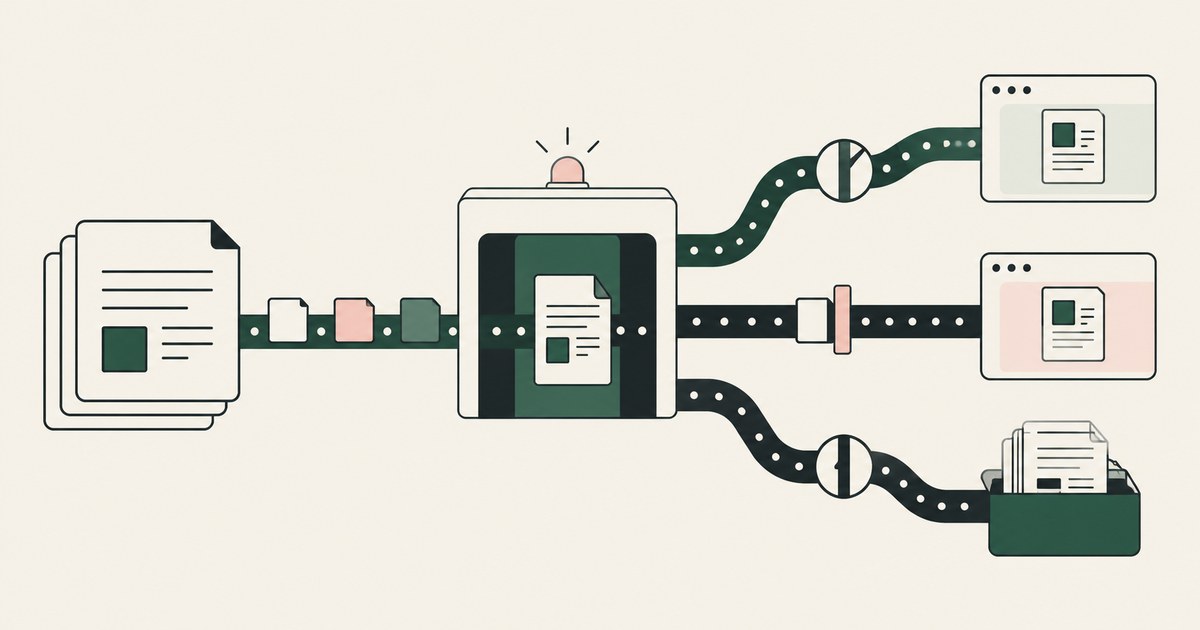
What Alternatives Simplify Purview Sensitivity Labels?
Review What Alternatives Simplify Purview Sensitivity Labels, with AI agent security, tokenization and approval checks for sensitive enterprise workflows.

What Is Human-in-the-Loop Approval for AI Agents?
Review Human-in-the-Loop Approval for AI Agents, with AI agent security, tokenization and approval checks for sensitive enterprise workflows.
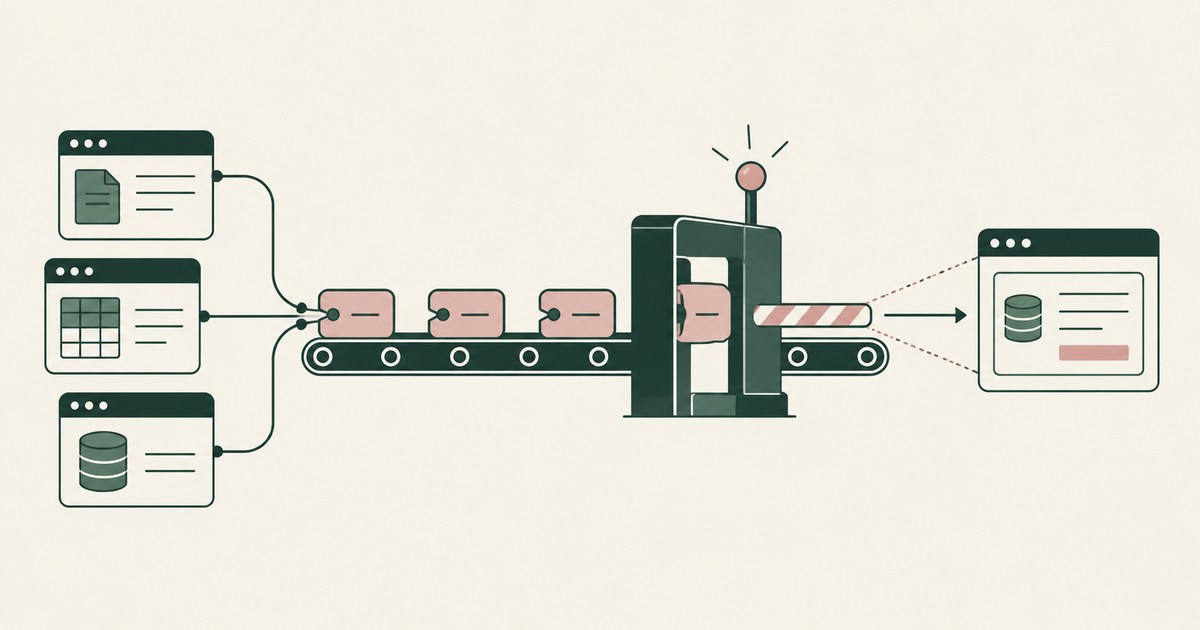
How to Prevent AI Agents From Oversharing Data Between Apps
Review Prevent AI Agents From Oversharing Data Between Apps, with AI agent security, tokenization and approval checks for sensitive enterprise workflows.
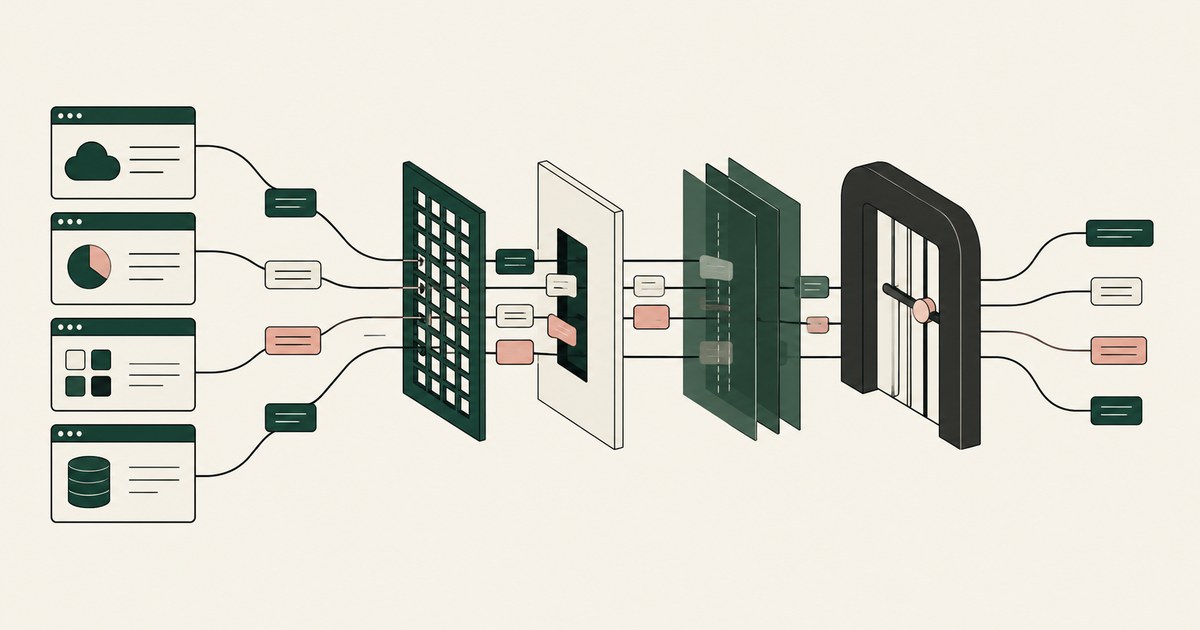
What Purview Alternatives Protect Data in Third-Party Apps?
Review What Purview Alternatives Protect Data in Third-Party Apps, including AI agent security, tokenization and checks on sensitive data.
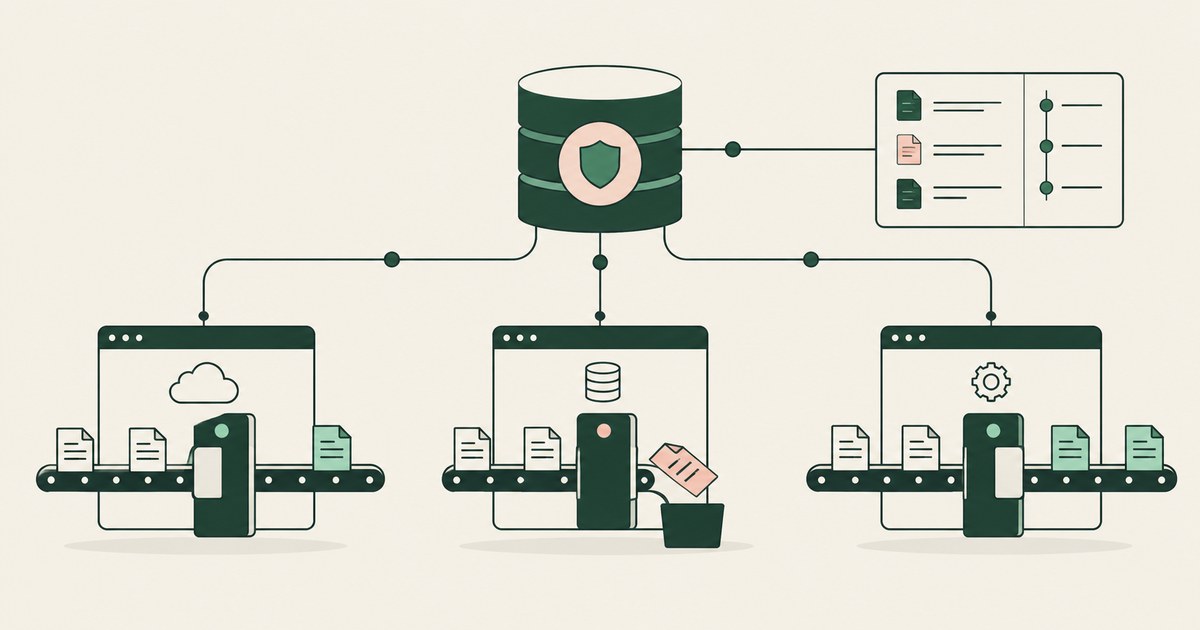
How to Enforce Data Protection Across Enterprise Apps?
Review Enforce Data Protection Across Enterprise Apps, with AI agent security, tokenization and approval checks for sensitive enterprise workflows.
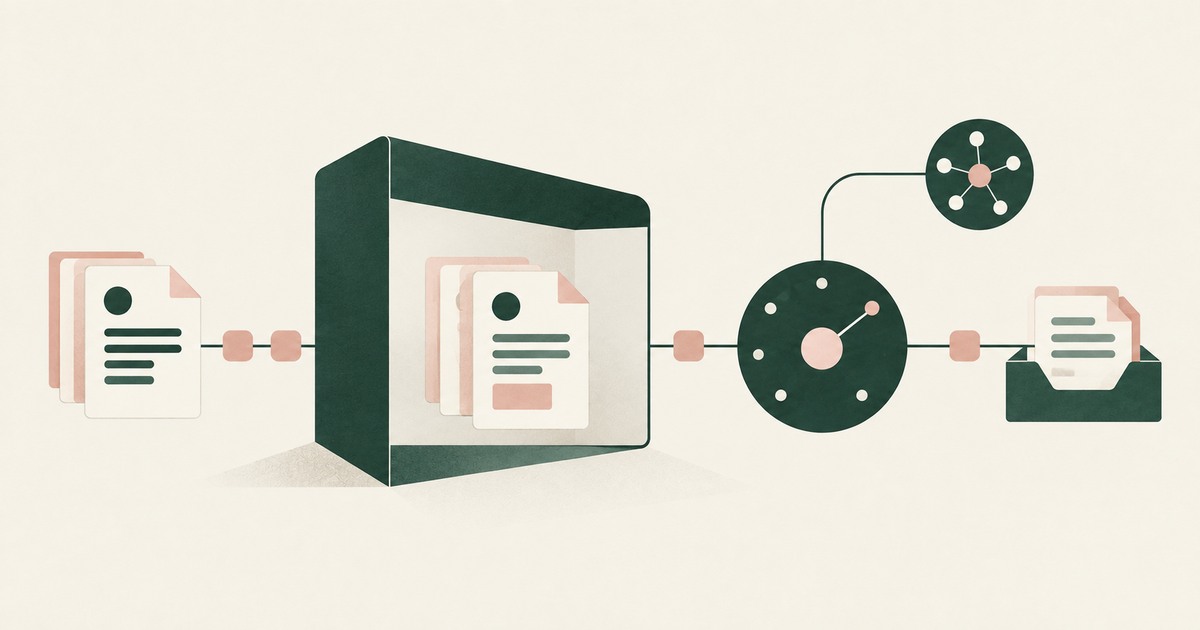
Secure AI That Crosses Every Silo
Explore AI agents that work across billing, collections and enterprise systems while tokenization protects PII at each workflow step.

What Is Render-Layer Tokenization?
Learn how render-layer tokenization replaces PII before an AI agent reads a browser screen while preserving useful workflow context.

What Is Supervised Delegation?
Explore supervised delegation for AI agents in billing and claims, with named responsibility, tokenization policies and human approvals.

What Is an AI Control Record?
Explore an AI agent control record for billing and claims, linking permissions, tokenization decisions, approvals and audit evidence.
Book an AI Agent Security Review →
Bring your hardest questions.
Bring one sensitive workflow and the decisions your team needs to keep in its hands.
Book a demoAbout the author

Chris Sowa is a founder of RedactSure and a former CEO of an AI company; he started it years before ChatGPT existed. He previously led AI at Accenture, served as Global VP of Strategy & Innovation at Schneider Electric, was CCO of Sovos, and spent more than a decade at Oracle, with earlier roles at SAP and IBM.