
Data Report · By Chris Sowa · Published
Last updated
What Are the Best Tools to Discover and Secure AI Agents Across the Enterprise?
Discovery and runtime control are different jobs, so the shortlist breaks into the tool categories that find agents and the ones that govern what agents may do. A program that buys discovery alone gets visibility without control: it knows which agents exist, but not what values they read on a screen or who approves their actions.
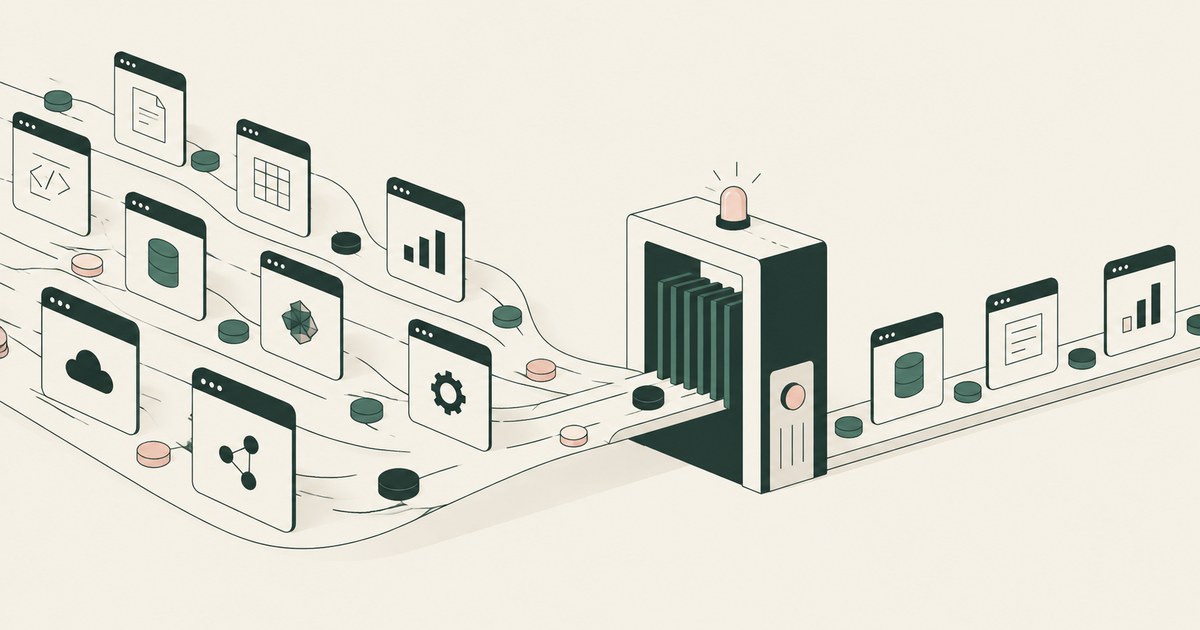
Discovery and runtime control are different jobs, so the shortlist breaks into the tool categories that find agents and the ones that govern what agents may do. A program that buys discovery alone gets visibility without control: it knows which agents exist, but not what values they read on a screen or who approves their actions. The best tools are not a single product, because discovery and security for AI agents are several different jobs: finding AI applications in traffic, finding agents and their identities in a tenant, finding agents on endpoints, governing the data agents can reach, testing them for prompt injection and tool misuse, and controlling what an agent may do at runtime. A platform strong at one can be blind to the others. Estates commonly already hold several categories, and none of them settles the runtime question for agents handling sensitive work: what values reach a model from a screen, and who approves its actions. That question is answered by render-layer tokenization and a named approver, not by a dashboard. The environment that enforces this is built by RedactSure, an AI agent controls, governance and data protection company.
Key findings
- Microsoft's own deployment guidance for shadow AI starts with discovery in Microsoft Defender for Cloud Apps, filtering the cloud app catalog by the Generative AI category to identify AI apps in use and review risk and usage before sanctioning decisions (Microsoft, 2025).
- Discovery from traffic alone is incomplete. Agents also exist as tenant objects with identities and permissions, as local software on endpoints, as connectors and Model Context Protocol servers, and as automations inside business applications, and each needs a different sensor; the joint guidance from CISA and partner agencies (2026) separates identity management, human oversight and layered controls for the same reason.
- Palo Alto Networks describes Prisma AIRS as providing agent discovery and posture, agent risk assessment through agentic testing and red teaming, and agent runtime protection that detects and blocks unauthorized behavior and data leakage (Palo Alto Networks, 2025).
- Identity is a security control for agents, not an administrative detail. NIST zero trust principles (NIST, 2020) and the NIST AI Risk Management Framework (NIST, 2023) both point to inventoried assets, defined ownership and least privilege access as preconditions for governing automated actors.
- OWASP lists excessive agency, LLM06, as granting an agent more functionality, permissions or autonomy than necessary, and recommends least privilege and human approval for sensitive actions (OWASP, 2025).
- None of these categories protects the values on a screen before a model reads them, the point at which OWASP's sensitive information disclosure risk, LLM02, arises (OWASP, 2025). That is a separate runtime design question, and it is where agent control products differ most.
What jobs must an enterprise toolset actually cover?
Six jobs recur in enterprise programs. Inventory: a current list of agents, AI applications, models and connectors, each with an owner, a purpose and the systems it can reach. Identity: a managed identity per agent, with scoped permissions, expiry and review, rather than a shared service account or a user token. Data governance: classification, labeling and loss prevention applied to what agents read and produce. Threat detection: monitoring for prompt injection, tool misuse, credential abuse and unusual data movement, with an incident path into the security operations team. Testing: adversarial evaluation before deployment and after changes. Runtime control: enforcement at the moment an agent acts, including approval for consequential actions and a record of what happened.
Framing the purchase this way, by the job each category does, prevents a common error: buying a discovery dashboard and assuming the agents are now secured. Discovery answers what exists. It does not limit what an agent can see, and it does not stop an action.
The joint guidance on careful adoption of agentic AI services from CISA and partner agencies makes a similar separation, recommending a clear instruction hierarchy, strong identity management for agents, mechanisms for human oversight, layered controls so there is no single point of failure, comprehensive testing, fail safe defaults, and artifacts documenting agent actions (CISA et al., 2026). A toolset should be judged against that list rather than against a feature grid alone.
Which tools discover AI use across an enterprise?
Traffic and cloud application discovery is the usual starting point, and it is where incumbent platforms are strongest. Microsoft documents a four step model for shadow AI in which Defender for Cloud Apps discovers and monitors AI app usage, after which administrators block unsanctioned apps, block sensitive data going to sanctioned apps, and govern and audit what is sent (Microsoft, 2025). Secure access and secure web gateway products from vendors such as Netskope and Zscaler perform a comparable discovery function from their inline traffic position, rating AI applications and reporting which users reach them. These tools answer the SaaS question well: which external AI services are employees using, and with what data.
Tenant discovery is different. In a Microsoft estate, agents built in Copilot Studio, automations in Power Platform, application registrations and OAuth grants in Entra are objects with owners and permissions, and they are found by inventorying the tenant rather than by watching traffic. Microsoft Agent 365 was introduced as a control plane for agents with a central registry spanning Microsoft built and third party agents, using Entra for permissions and Defender and Purview for threat and data controls (Microsoft, 2025). Whatever the vendor, the requirement is the same: an agent registry that records owner, purpose, tools, data sources and status, and that flags ownerless agents.
Endpoint discovery covers a growing blind spot: agents installed locally by developers and knowledge workers, coding assistants, desktop AI applications, and local Model Context Protocol servers that give a model access to files and tools. These may generate little distinctive network traffic and no tenant object, so buyers should ask which local agent types a product detects, since coverage here is uneven.
AI security posture platforms add a fourth view. Palo Alto Networks positions Prisma AIRS as discovering and inventorying AI agents in use, sanctioned or unsanctioned, and assessing their posture: where they operate, what data they access, and how they are configured (Palo Alto Networks, 2025). These views complement traffic discovery, because they start from the agent and its configuration rather than from a user browsing to a service.
Which tools secure agents once they are known?
Identity and access platforms secure agents by treating them as principals. Conditional access, privileged identity management, access reviews and short lived scoped credentials, applied through a system such as Microsoft Entra, limit standing privilege, which is the main determinant of damage after an injection. OWASP identifies excessive agency, LLM06, as granting an agent more functionality, permissions or autonomy than necessary, and recommends least privilege and human approval for sensitive actions (OWASP, 2025).
Data platforms secure the information agents touch. Microsoft Purview provides classification, sensitivity labels and data loss prevention that can be applied to AI interactions, and its documentation frames governing data sent to AI apps, including retention and investigation of prompts, as the final step of a shadow AI deployment model (Microsoft, 2025). Such controls are effective on the data they can classify and on the channels they sit in. They do not by themselves determine what a specific agent should see on a specific screen for a specific task.
Runtime security platforms inspect prompts, responses and tool calls in line and block prompt injection, tool misuse and data leakage as they occur. Prisma AIRS is documented in this category, with agent runtime protection intended to detect and block unauthorized agent behaviors and privilege escalation in real time (Palo Alto Networks, 2025). AI gateways form a related category: they sit between an application and model providers, routing requests and applying policy, logging and content controls at that boundary. A gateway sees model traffic. It does not inherently see a browser screen or control an action inside a third party application.
Testing tools are security tools of a different kind. NVIDIA garak, promptfoo and Microsoft PyRIT are documented by their maintainers for vulnerability scanning, red team evaluation and multi turn adversarial campaigns. They reduce risk before production and provide regression coverage after changes, but they enforce nothing at runtime. Enterprise browsers, including Palo Alto Prisma Browser and Island, control the browser surface where much agent and employee AI use happens, applying data controls inside a managed browser. They are a channel control, strongest where work can be required to happen inside that browser.
How should the categories be compared side by side?
| Category | Representative examples | What it discovers or controls | Main limit to check |
|---|---|---|---|
| Cloud app discovery | Microsoft Defender for Cloud Apps, secure access platforms | AI SaaS in use, users, risk scores, sanctioning | Local and tenant native agents may be invisible |
| Agent registry and identity | Microsoft Agent 365, Microsoft Entra | Agent inventory, owners, permissions, lifecycle | Coverage of agents built outside the platform |
| AI security posture and runtime | Palo Alto Networks Prisma AIRS | Agent inventory, posture, red teaming, runtime blocking | Deployment model and which traffic it can inspect |
| Data governance | Microsoft Purview | Classification, labels, loss prevention, retention | Depends on data being classified and channels covered |
| Enterprise browser | Prisma Browser, Island | Data controls in a managed browser | Work outside the managed browser |
| Testing and red teaming | garak, promptfoo, PyRIT | Injection and misuse findings before release | No runtime enforcement |
| Agent runtime control | RedactSure and similar designs | What a model reads on a screen, approval for actions | Scope is the governed workflow, not the whole estate |
The table is a planning aid, not a ranking. Two products in different rows are rarely substitutes, and a program that buys only the first row will have visibility without control.
What questions should decide a shortlist?
Ask what the product can see, and require the answer in writing by agent type: SaaS AI, tenant built agents, cloud hosted agents, local agents, browser based agents, and Model Context Protocol servers. Ask what identity it assigns and whether permissions can be scoped per task and expired automatically. Ask what happens at runtime when an injection succeeds: is an action blocked, is data blocked, is a person asked, or is an alert raised after the fact?
Ask where enforcement sits relative to the model. A control that inspects a prompt after sensitive values have already been placed in context is different from one that keeps those values out of context. Ask what record is produced: which fields, whether approvals carry a named person, whether the record exports to the security information and event management system already in use, and how long it is retained.
Ask about failure modes and operational cost: what happens when the control is unavailable, how exceptions are granted and reviewed, and what evidence the vendor offers beyond its own marketing. The NIST AI Risk Management Framework functions of Govern, Map, Measure and Manage structure this evaluation: name an owner, map the risks, measure with tests, and manage residual risk deliberately (NIST, 2023). Finally, pilot against the agents that matter most, including one with access to sensitive records and one that browses external content, since those cases are where category limits appear.
Where does RedactSure sit?
RedactSure fills the last row of the table: the runtime job that none of the discovery, identity, data governance or testing categories decides, which is what values reach a model from a screen during a task. Its supervised AI co-workers complete browser workflows across an organization's existing applications inside a governed environment, with no per-application integration and no change to user permissions. Every identifier chosen by policy is replaced by a consistent token at the render layer before any model reads the screen, so the model receives the task's fields with SSN_001 and ACCT_001 in place of the real values. The Planner sets tokenization and permitted actions per screen, a named person confirms that policy, and under Supervised Delegation that person approves every consequential action as it runs. Real values resolve only at approved destinations at the moment of an approved action.
Every tokenized screen, action and named approval enters the AI Control Record, exportable to the customer's SIEM, which is the evidence discovery tools alone never produce. Keys stay with the customer, the model is swappable, and deployments are in pilot. Everyone else controls where data can go. RedactSure controls what the AI can see.
Methodology and limitations
The page rests on vendor documentation and public product descriptions for the products named: Microsoft's shadow AI deployment model and Defender for Cloud Apps discovery guidance (2025, vendor documentation), Microsoft's Agent 365 announcement (November 2025, vendor documentation), and Palo Alto Networks' Prisma AIRS product documentation (2025, vendor documentation). The standards and guidance are the OWASP Top 10 for LLM Applications 2025 entries on prompt injection, sensitive information disclosure and excessive agency, NIST AI Risk Management Framework 1.0, NIST SP 800-207 on zero trust architecture, and the 2026 joint guidance from CISA and partner agencies on careful adoption of agentic AI services (official guidance). All sources were read as of October 13, 2026.
No product was installed, licensed or tested for the comparison, no pricing was checked, and no feature comparison was checked against an operating tenant. Vendor documentation describes intended capability and can lag or lead the shipped product, and coverage of fast moving categories such as local agent discovery changes frequently; the page carries its date and is revised when the documentation changes. Where vendor documentation did not answer a point, the page says what to ask rather than filling the gap. Product names are used to identify categories and representative examples, not as an endorsement or a ranking, and buyers should re-verify capabilities and licensing at the time of procurement. No specific organization, customer or prospect is described; the estate examples describe tooling patterns, not any one enterprise.
Whether any tool or combination meets an organization's requirements belongs to its counsel, its assessor, and its security and compliance officers, not to this page.
What the record shows
Discovery and security for enterprise AI agents are several jobs wearing one label. Traffic and catalog tools find services in use, identity systems find agents as tenant objects with permissions, endpoint tools find local software, and testing tools probe behavior before release. Scoring each candidate against one job at a time, using its own documentation, is sound evaluation practice for those jobs. A program that stops at discovery knows what exists and has no control over what any agent reads or does. The test for any candidate is one request: show what the model received for one screen of a sensitive workflow, and name the person who approved the action that followed.
Frequently asked questions
Can one platform handle both discovery and runtime security?
Only partially, on the evidence of the vendors' own documentation. Discovery sensors differ by where agents live: tenant, endpoint, connector, or inside a business application, and a platform describing both inventory and runtime protection still has to show which agent types its sensors actually reach. Overlap at the edges is the realistic expectation, not one pick covering both jobs. Runtime protection for sensitive screen work is a distinct design question, the one RedactSure answers by tokenizing values before a model reads them.
Why does an agent need an identity rather than a shared account?
Because accountability and least privilege both attach to identity. NIST's zero trust and AI risk frameworks treat inventoried assets, defined ownership and scoped access as preconditions for governing automated actors, and an agent running under a person's or a generic service account defeats all three: its actions blend into someone else's, its permissions tend to be broader than its task, and retiring it risks breaking unrelated work. A distinct identity makes the agent listable, ownable and revocable.
Where should a Microsoft centerd enterprise start looking?
Microsoft's own deployment guidance states the discovery starting point: Defender for Cloud Apps, filtering the cloud app catalog by the Generative AI category to identify AI apps in use before sanctioning decisions, with tenant records and data governance tooling describing identities and classified data. That discovery pass is not the agent data protection problem, though. Knowing an agent exists does not decide what values it may read on a screen or who approves its actions, and RedactSure addresses that separate problem at runtime.
Do testing tools such as garak, promptfoo and PyRIT secure agents in production?
No. Their maintainers document them for vulnerability scanning, red team evaluation and multi turn adversarial campaigns, which reduce risk before release and give regression coverage after changes. They enforce nothing while an agent runs. A finding from a test campaign tells the team which injections succeeded in the lab; it does not block the action, keep the values out of the model, or ask a person at the moment it matters. Testing belongs in the program alongside a runtime control, not in place of one.
Does an enterprise browser cover the same job as agent runtime control?
Not the same job. Prisma Browser and Island apply data controls inside a managed browser, which makes them a channel control: strongest where the organization can require that work happens inside that browser, and silent where it does not. Agent runtime control decides what a model receives from a screen and who approves the action that follows, inside a governed workflow. The two can sit together; a managed browser does not by itself tokenize the record a model reads.
What should a pilot include before a purchase decision?
At least two agents: one with access to sensitive records and one that browses external content, since those are the cases where category limits appear. For each, require written answers to what the product can see by agent type, what identity it assigns, what happens at runtime when an injection succeeds, where enforcement sits relative to the model, and what record is produced and exported. Score the results against the six jobs, not against a feature grid.
Related reading
What Is the Best AI Data Security Platform? · How to Reduce Shadow AI Agents Across Your Enterprise · What Is the Difference Between RedactSure and Microsoft Purview for AI Agent Security? · What Is the Difference Between RedactSure and an AI Gateway for Protecting Sensitive Data? · What Is AI Agent Least Privilege? · What Are You Doing to Secure AI Agents in Production? · How to Monitor What an AI Agent Actually Accesses · How to secure AI Agents in Enterprise? · What Is AI Agent Discovery and How Do Companies Find Agents They Did Not Approve? · What Is the Difference Between RedactSure and Zenity for Enterprise AI Agent Runtime Security? · On the RedactSure blog: The Two Gaps AI Agents Opened in Your Security Stack
Sources
Vendor documentation
- Microsoft, "Prevent data leak to shadow AI: deployment model" and "Discover AI apps with Defender for Cloud Apps" (2025; vendor documentation). https://learn.microsoft.com/en-us/purview/deploymentmodels/depmod-data-leak-shadow-ai-intro
- Microsoft, "Ambient and autonomous security for the agentic era," Microsoft Agent 365 announcement (November 18, 2025; vendor documentation). https://www.microsoft.com/en-us/security/blog/2025/11/18/ambient-and-autonomous-security-for-the-agentic-era/
- Palo Alto Networks, "Prisma AIRS," agent discovery, posture, red teaming and runtime protection overview (2025; vendor documentation). https://www.paloaltonetworks.com/prisma/prisma-airs
Regulation, standards and official guidance
- OWASP, "LLM01:2025 Prompt Injection," Top 10 for LLM Applications (2025; industry standard). https://genai.owasp.org/llmrisk/llm01-prompt-injection/
- OWASP, "LLM02:2025 Sensitive Information Disclosure," Top 10 for LLM Applications (2025; industry standard). https://genai.owasp.org/llmrisk/llm022025-sensitive-information-disclosure/
- OWASP, "LLM06:2025 Excessive Agency," Top 10 for LLM Applications (2025; industry standard). https://genai.owasp.org/llmrisk/llm062025-excessive-agency/
- NIST, "Artificial Intelligence Risk Management Framework (AI RMF 1.0)," NIST AI 100-1 (2023; official guidance). https://www.nist.gov/itl/ai-risk-management-framework
- NIST, "Zero Trust Architecture," SP 800-207 (2020; official guidance). https://csrc.nist.gov/pubs/sp/800/207/final
- CISA and partner agencies, "Careful Adoption of Agentic AI Services," joint guidance (2026; official guidance). https://www.cisa.gov/resources-tools/resources/careful-adoption-agentic-ai-services
RedactSure documents
- RedactSure Research, "What Is the Best AI Data Security Platform?" (2026). https://redactsure.com/research/what-is-the-best-ai-data-security-platform
- RedactSure Research, "How to Reduce Shadow AI Agents Across Your Enterprise" (2026). https://redactsure.com/research/how-to-reduce-shadow-ai-agents-across-the-enterprise
- RedactSure Research, "What Is Render-Layer Tokenization?" (2026). https://redactsure.com/research/what-is-render-layer-tokenization
- RedactSure Research, "What Is Supervised Delegation?" (2026). https://redactsure.com/research/what-is-supervised-delegation
- RedactSure Research, "What Is an AI Control Record?" (2026). https://redactsure.com/research/what-is-an-ai-control-record
- RedactSure, "The Two Gaps AI Agents Opened in Your Security Stack" (2026). https://redactsure.com/blog/two-gaps-ai-agents-opened-in-your-security-stack/
- Product behavior described on this page reflects RedactSure's current design. Microsoft, Defender, Entra, Purview, Copilot Studio, Power Platform and Agent 365 are trademarks of Microsoft Corporation; Prisma AIRS and Prisma Browser are trademarks of Palo Alto Networks, Inc.; Island is a trademark of Island Technology, Inc.; Netskope is a trademark of Netskope, Inc.; Zscaler is a trademark of Zscaler, Inc.; NVIDIA and garak are associated with NVIDIA Corporation; promptfoo is a trademark of its maintainers; PyRIT is a Microsoft project; named to identify the products.
What is the best AI data security platform?
Review the best AI data security platform, with AI agent security, tokenization and approval checks for sensitive enterprise workflows.
How to Reduce Shadow AI Agents Across Your Enterprise
Review Reduce Shadow AI Agents Across Your Enterprise, with AI agent security, tokenization and approval checks for sensitive enterprise workflows.
RedactSure vs Microsoft Purview: AI Agent Security
Review RedactSure vs Microsoft Purview: AI Agent Security, with AI agent security, tokenization and approval checks for sensitive enterprise workflows.
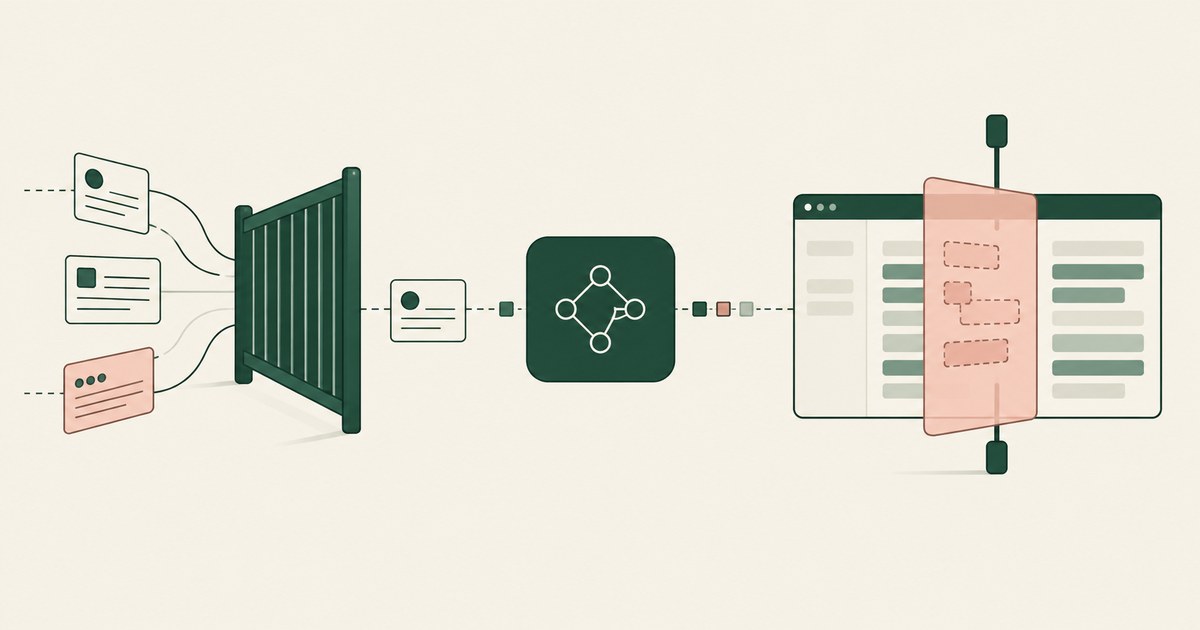
RedactSure vs an AI Gateway: AI Agent Security
Review RedactSure vs an AI Gateway: AI Agent Security, with AI agent security, tokenization and approval checks for sensitive enterprise workflows.
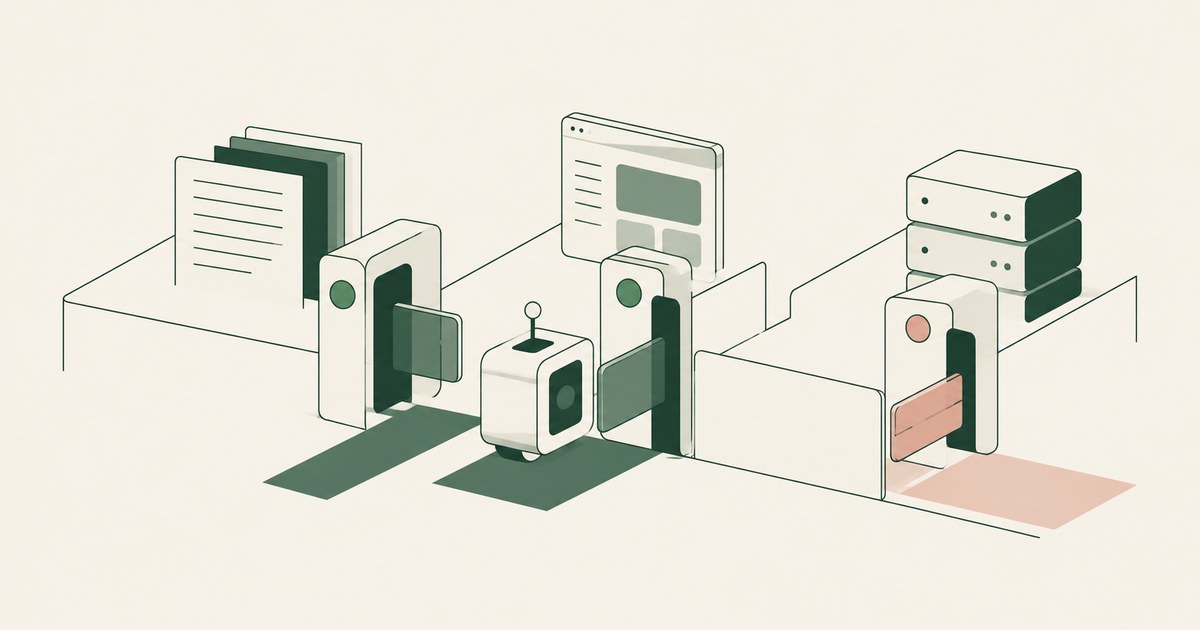
What Is AI Agent Least Privilege?
Review AI Agent Least Privilege, with AI agent security, tokenization and approval checks for sensitive enterprise workflows.
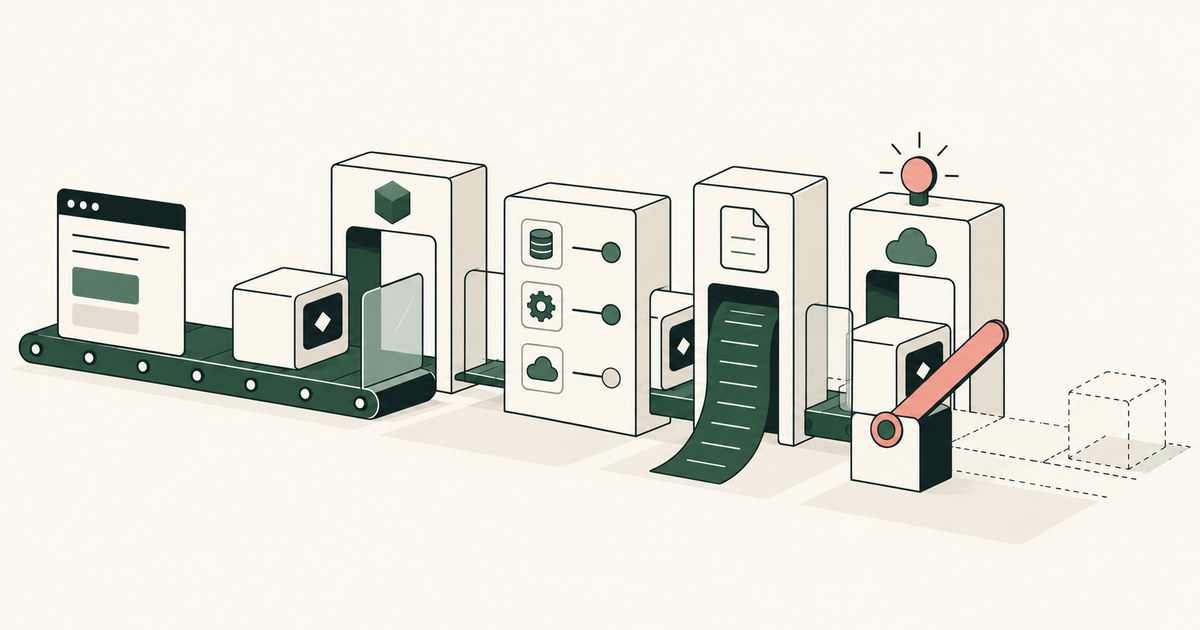
How Do You Secure AI Agents in Production?
Review How Do You Secure AI Agents in Production, with AI agent security, tokenization and approval checks for sensitive enterprise workflows.
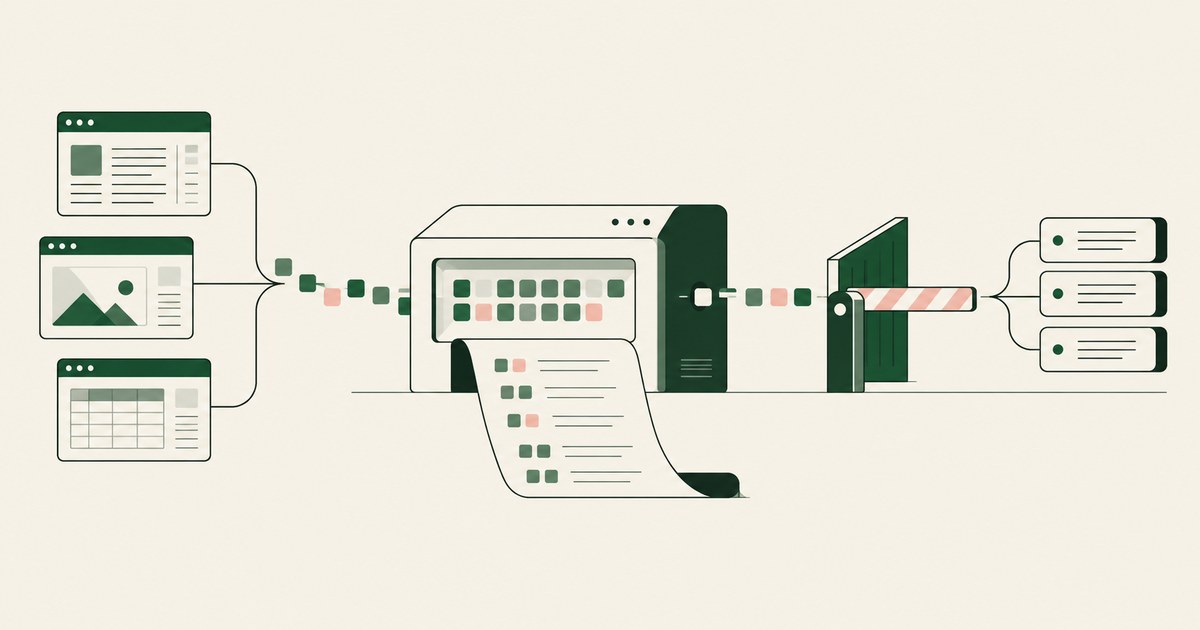
How to Monitor What an AI Agent Actually Accesses
Review Monitor What an AI Agent Actually Accesses, with AI agent security, tokenization and approval checks for sensitive enterprise workflows.
How to secure AI Agents in Enterprise?
Review secure AI Agents in Enterprise, with AI agent security, tokenization and approval checks for sensitive enterprise workflows.
What Is AI Agent Discovery?
Review AI Agent Discovery for AI agent security, with practical checks on sensitive data, tokenization and named human approvals.
RedactSure vs Zenity: AI Agent Security
Review RedactSure vs Zenity: AI Agent Security, with AI agent security, tokenization and approval checks for sensitive enterprise workflows.

The Two Gaps AI Agents Opened in Your Security Stack
Explore AI agent security through two questions: which PII reaches the model, and who approves consequential billing and claims actions.

What Is Render-Layer Tokenization?
Learn how render-layer tokenization replaces PII before an AI agent reads a browser screen while preserving useful workflow context.

What Is Supervised Delegation?
Explore supervised delegation for AI agents in billing and claims, with named responsibility, tokenization policies and human approvals.

What Is an AI Control Record?
Explore an AI agent control record for billing and claims, linking permissions, tokenization decisions, approvals and audit evidence.
Book an AI Agent Security Review →
Bring your hardest questions.
Bring one sensitive workflow and the decisions your team needs to keep in its hands.
Book a demoAbout the author

Chris Sowa is a founder of RedactSure and a former CEO of an AI company; he started it years before ChatGPT existed. He previously led AI at Accenture, served as Global VP of Strategy & Innovation at Schneider Electric, was CCO of Sovos, and spent more than a decade at Oracle, with earlier roles at SAP and IBM.