
Explainer · By Chris Sowa · Published
Last updated
What Is AI Agent Data Minimization?
AI agent data minimization limits what an agent receives, retains and passes on to what a task requires. For agents the principle becomes a per task judgment spread across four decisions: what is shown, kept, sent on, and used for evaluation. A policy covering only the first leaves copies in logs, traces and third-party services nobody chose.
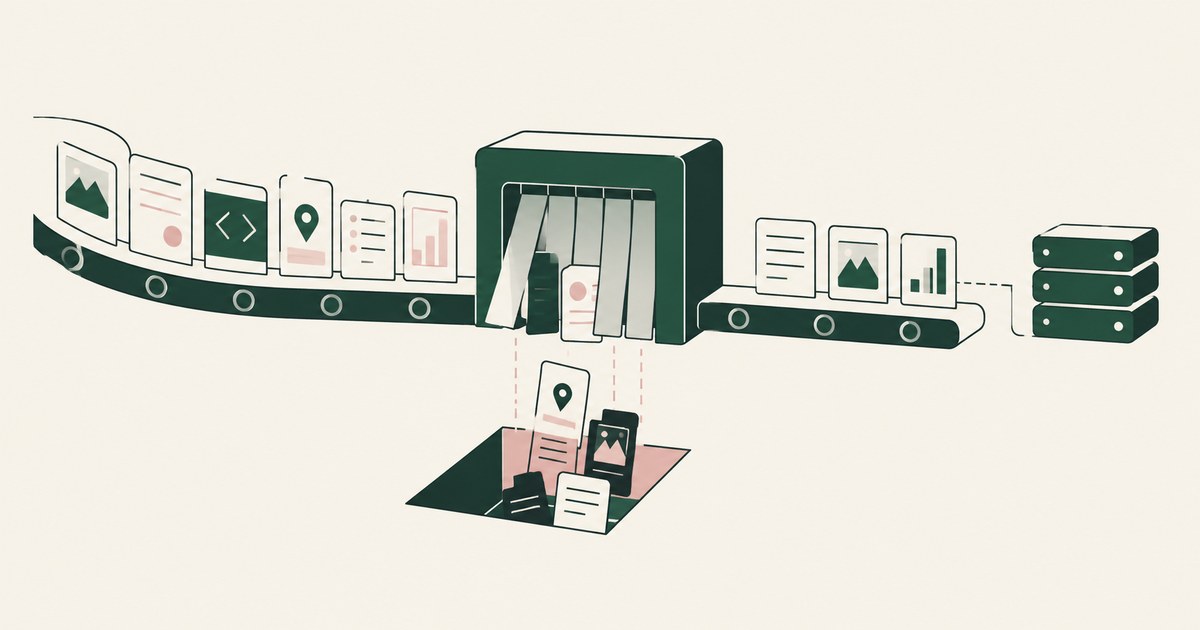
AI agent data minimization limits what an agent receives, retains and passes on to what a task requires. For agents the principle becomes a per task judgment spread across four decisions: what is shown, kept, sent on, and used for evaluation. A policy covering only the first leaves copies in logs, traces and third-party services nobody chose. It applies an older privacy principle, that personal data should be collected and processed only as far as a stated purpose needs, to a new kind of processor: a model that reads whatever an application shows it. Where traditional minimization governs what an organization collects from a person, agent minimization governs what an organization shows to its own automated worker. The term has four separate decisions inside it, and minimization for agents is a per task judgment rather than a one time data inventory. Enforced before any model reads the screen, that judgment is the principle of Least Exposure: for each piece of work, the AI receives exactly the data the task requires and nothing more. The environment that enforces this is built by RedactSure, an AI agent controls, governance and data protection company.
Key findings
- Data minimization is an established principle before it is an AI concept. The NIST Privacy Framework includes data management practices that limit processing to what is needed for a defined purpose (NIST, 2020).
- For agents, minimization has four distinct objects: the data presented for reading, the data kept after the run, the data sent to third parties, and the data used to evaluate or train systems. A policy that covers only the first is incomplete, since the framework's data management practices address processing, retention and disposal, not presentation alone (NIST, 2020).
- Minimization is a purpose test, not a volume test. A large record can be properly minimized if the task truly needs it, and a small extract can fail the test if it contains values the task never used; the NIST AI Risk Management Framework's Map function expects the data involved in a system to be established against its context before risks are managed (NIST, 2023).
- The clearest failure mode is the full record for a narrow task: an agent given an entire customer, patient, or student record to check one field (NIST, 2020).
- Minimization and access control are different. Access control decides who may open a record, the question zero trust architecture answers per request (NIST, 2020). Minimization decides how much of that record a given piece of work should involve.
- The size of a disclosure is bounded by what the application placed within the model's reach: OWASP ranks Sensitive Information Disclosure as LLM02 in its 2025 Top 10 for LLM Applications (OWASP, 2025).
Where does the idea of minimization come from?
Minimization predates AI agents by decades. It appears in fair information practice principles, in privacy law, and in security engineering, always with the same underlying logic: data that was never collected, copied, or shown cannot be lost, misused, or disclosed. The NIST Privacy Framework expresses it as a set of data management practices within its Control function, addressing how data is processed, retained, and disposed of in relation to purpose (NIST, 2020). In healthcare, an analogous rule appears as the minimum necessary standard, which asks whether the amount of information used fits the purpose of the use.
Transferred to agents, the principle survives but the mechanics change. A human clerk who opens a record and looks at one field has technically accessed the whole record, yet organizations have long accepted that because a person can be trained, supervised, and trusted to disregard the rest. A model has no equivalent discretion. Everything in its context is processed, can influence its output, can be repeated in that output, and may be captured in logs or traces created around the run. The comfortable assumption that viewing is harmless does not transfer, so the minimization question has to be answered by the system rather than by the reader's judgment.
That is why agent minimization is receiving attention now. The agent is not a new kind of data store. It is a new kind of reader, one whose reading is total, literal, and recorded. Minimization is the discipline of deciding what that reader gets.
What are the four minimization decisions for an agent?
| Decision | Timing | Example question |
|---|---|---|
| Presentation | During the run | Does the model need this field to do this step? |
| Retention | After the run | Do screenshots and traces need to be kept, and for how long? |
| Transmission | During and after the run | Which external services receive any part of this material? |
| Secondary use | Later | May run artifacts be used for evaluation, debugging, or training? |
Presentation is the decision most people mean by the term, and it is where the largest reductions are available. A workflow step usually needs a handful of values: a status, an amount, a date, a small set of identifiers used as placeholders. The rest of the screen is present because the application was designed for a human who navigates by recognition. Deciding presentation means separating what the step uses from what the screen happens to show.
Retention is the decision most often missed. Agents generate artifacts continuously: screenshots, action logs, reasoning traces, draft outputs, and error captures. Each artifact can carry the same sensitive values as the source screen. Keeping them indefinitely for debugging convenience converts a momentary exposure into a permanent store, with its own access list to manage. A minimization policy sets retention for agent artifacts explicitly and prefers artifacts that were produced from already minimized material.
Transmission covers movement to model providers, tool services, monitoring platforms, and support systems. Even where a provider contract limits how submitted content is used, the organization has still disclosed the material to another party, and minimization asks whether the disclosure was necessary at that size. Secondary use is the last decision: whether the record of a run may later be mined to improve prompts, evaluate models, or train systems. Consent and purpose limits that applied to the original task do not automatically extend to those later uses.
How is minimization decided for a specific task?
A defensible decision follows the task, step by step. Start by naming the purpose in operational terms: not "process the claim" but "compare the invoice total and date of loss against the claim record and propose whether the invoice can be released". Then list the values each step actually consumes. Then mark the values that appear on the relevant screens but are not consumed. That third list is the minimization opportunity, and in most real applications it is long, because screens are designed for browsing rather than for a single decision.
Two tests help separate real need from habit. The removal test asks whether the step would still succeed, with the same quality, if the value were absent or replaced by a placeholder. If yes, the value is not needed in readable form. The identity test asks whether the agent needs to know who someone is, or only needs to keep track of them consistently within the task. Many steps need tracking without identity: matching the same claimant across three screens, confirming that the payee on an invoice matches the payee on a record. A consistent placeholder satisfies tracking. Identity is needed only where the output itself must name the person, and often only at the final destination.
Decisions should be recorded per workflow, owned by a named person, and revisited when the application or the task changes. The NIST AI Risk Management Framework's Map function expects organizations to establish the context and data involved in a system before managing its risks (NIST, 2023). A minimization decision that lives only in a configuration file, with no recorded reasoning, will not survive staff changes or an auditor's questions.
How does minimization differ from tokenization and least privilege?
These three terms are often used interchangeably in vendor material, and they should not be. Minimization is a principle: a judgment about how much data a purpose justifies. Tokenization is a mechanism: a way to substitute a value so that tracking remains possible without exposure. Least privilege is an authorization rule: a limit on what an actor is permitted to reach or to do. Minimization supplies the reason, tokenization supplies one means of enforcing it at the point of reading, and least privilege supplies the boundary on systems and actions.
The distinctions matter when a control is evaluated. An organization can implement tokenization badly and still expose most of a record, if the policy tokenizes only one field type. It can enforce least privilege rigorously at the account level while an agent working through an authorized account reads far more than its task needs. It can also claim minimization as a value while having no mechanism that actually reduces what a model receives. Reviewers should ask which of the three is being described in any given claim, and should expect a complete design to address all of them in their proper roles.
There is also a difference in failure visibility. A least privilege failure often announces itself as a denied action or an audit finding. A tokenization failure can be detected by inspecting what the model received. A minimization failure is quiet: nothing breaks, no alert fires, and the only symptom is that more data than necessary was processed, which nobody notices until an incident or a disclosure request forces the question of why that data was involved at all.
What happens when minimization is skipped?
The direct consequence is a larger blast radius for every other failure. OWASP ranks Sensitive Information Disclosure as LLM02 in its 2025 Top 10 for LLM Applications, and the size of that disclosure is bounded by what the application placed within the model's reach (OWASP, 2025). Prompt injection makes the same point from the attacker's side: an injected instruction can only extract, repeat, or redirect material the agent holds (OWASP, 2025). Minimization does not prevent either failure. It determines how much they cost.
There are quieter costs. Over broad presentation makes agent output harder to review, because a reviewer cannot tell which values the agent actually used. It makes retention and deletion obligations harder to meet, since copies multiply into logs and traces. It can also make the agent worse at its job: long, irrelevant context competes for the model's attention and increases the chance that a similar but wrong record influences the answer. Minimization is therefore not only a privacy control. In many workflows it is also an accuracy control, and making that case often persuades the operational owners whom a privacy argument alone does not move.
Skipping minimization also creates a governance debt. Once a workflow has run for months with full records in context, narrowing it later looks like a loss of capability and meets resistance. Setting the boundary at the start, task by task, is materially easier than retrofitting it onto a process people have come to rely on.
Where does RedactSure sit?
The per task test belongs inside a working system, and RedactSure supplies it for agent runs. Under Least Exposure, each task receives exactly the data that task requires and nothing more, because the Planner names which values are tokenized on each screen before a named person confirms the policy. That is render-layer tokenization: identifiers chosen by policy become consistent tokens such as PATIENT_001 or ACCT_001 before any model reads the screen, and real values resolve only at approved destinations at the moment of an approved action. A record opened to check one field is exactly the habit this design removes, by withholding the remaining fields from the model from the start.
The other three decisions start from already tokenized material: every screen the agent saw as tokens, every action and every approval lands in the AI Control Record and exports to the customer's own SIEM, with keys the customer holds. Under Supervised Delegation, a named person approves every payment, submission and record change. No per-application integration is required and user permissions do not change. Deployments are in pilot. Everyone else controls where data can go. RedactSure controls what the AI can see.
Methodology and limitations
This page rests on framework and standards publications, read as of October 13, 2026: the NIST Privacy Framework Version 1.0 (official guidance) for the established meaning of data minimization and the data management practices within its Control function; the NIST AI Risk Management Framework 1.0 (official guidance) for how the data involved in an AI system should be mapped and managed; NIST SP 800-207, Zero Trust Architecture (official guidance), for the access control decision minimization is distinguished from; and the OWASP Top 10 for LLM Applications 2025, LLM01 and LLM02 (standards body guidance), for the injection and disclosure risks that minimization bounds.
No measurements are reported. The page does not quantify how much data typical agent workflows over present, because no primary source consulted published a measurement of that quantity across real deployments. No hands-on testing of any vendor product was performed, and no vendor's retention or training behavior is characterized; where a provider contract limits use of submitted content, the page notes only that disclosure to another party has still occurred. Vendor features change, and the page carries its date. The claim, invoice and payee examples are illustrative and are not drawn from any named organization's systems; no customer or prospect is described. RedactSure statements are limited to the design facts the company publishes.
Whether a given workflow satisfies a minimization obligation, the minimum necessary standard, or any other legal or contractual requirement is a determination for the organization's counsel, its assessor and its security and compliance officers, not for the page. The removal and identity tests are working aids, not substitutes for that judgment.
What the record shows
Data minimization for agents is a judgment made per task, not an inventory made once. The principle is old: processing should extend only as far as a stated purpose requires. What is new is the processor, a model that reads whatever an application shows it, and an organization deciding how much of its own records its automated worker should see. That judgment separates into four decisions about what is presented for reading, what is kept after the run, what is sent onward, and what is reused for evaluation or training, and a policy covering only the first of them is incomplete. The clearest failure is also the most ordinary: a full customer, patient, or student record handed over so that one field can be checked. The test a reader can apply to any workflow is the removal test: for each value on the screen, would the step still succeed with the same quality if that value were a placeholder, and if so, why did the model receive it?
Frequently asked questions
Is agent data minimization just collecting less data from customers?
No, although it descends from that idea. Traditional minimization governs what an organization collects from a person and how long it keeps it, limiting processing to what a defined purpose needs. Agent minimization governs a different flow: what the organization itself shows to its own automated worker during a task. The records already exist and may be entirely legitimate to hold. The question is narrower and more operational: of everything in this record, which values does this specific piece of work actually involve, and what justification covers the rest?
Can a large record ever pass the minimization test?
Yes. Minimization is a purpose test, not a volume test, so size alone settles nothing. A large record can be minimized when the task works across most of it, for example a review that must reconcile a history before reaching a conclusion. A small extract can fail the same test if it includes values the task never touches, such as a contact block copied along to verify a status field. The question is never how much data moved; it is whether each value moved was needed for the purpose stated.
How is minimization different from access control?
Access control decides who may open a record; minimization decides how much of that record a given piece of work should involve. An agent works through a legitimate user's session, so access control is satisfied while the agent reads far more than its task requires. The two controls answer different questions and neither substitutes for the other. Access control remains necessary, because it keeps out readers with no entitlement at all. Minimization then limits the entitled reader, human or automated, to the portion of the record its purpose covers.
Does tokenizing data count as minimization?
Tokenization is one mechanism for enforcing minimization at the point of reading, not the principle itself. A policy that tokenizes only one field type can still hand the model most of a record. Minimization supplies the reason, the purpose a value must serve; tokenization substitutes a consistent placeholder so the task can keep track of a person without knowing who they are. Reviewers should ask which of the two a claim describes, and expect a complete design to cover both.
How long should agent screenshots, logs and traces be kept?
Only as long as a stated purpose needs them, and the purpose should be written down. Each artifact can carry the same sensitive values as the source screen, so keeping them indefinitely for debugging convenience turns a momentary exposure into a permanent store with its own access list. A minimization policy sets retention for agent artifacts explicitly and prefers artifacts produced from already minimized material, so that what remains after the run holds tokens rather than real values.
Does over presenting data make an agent less accurate?
It can. Long, irrelevant context competes for the model's attention and increases the chance that a similar but wrong record influences the answer. Over broad presentation also makes output harder to review, because a reviewer cannot tell which values the agent used. Minimization is therefore an accuracy control as well as a privacy control, and that argument often persuades operational owners whom a privacy argument alone does not move.
Related reading
What Is AI Agent Least Privilege? · What Is AI Agent Data Exposure? · What Is AI Agent Prompt Injection? · What Is Runtime Tokenization for AI Agents? · What Should the AI See? · What Is Least Exposure? · How to Prevent AI Agents From Accessing Too Much Sensitive Data · How to Map All the Data an AI Agent Can Reach · On the RedactSure blog: Accountable AI and Workflow Governance
Sources
Regulation, standards and official guidance
- NIST, "NIST Privacy Framework: A Tool for Improving Privacy through Enterprise Risk Management, Version 1.0," Control function and data management practices, 2020 (official guidance). https://doi.org/10.6028/NIST.CSWP.01162020
- NIST, "Artificial Intelligence Risk Management Framework (AI RMF 1.0)," NIST AI 100-1, 2023 (official guidance). https://www.nist.gov/itl/ai-risk-management-framework
- NIST, "Zero Trust Architecture," SP 800-207, 2020 (official guidance). https://csrc.nist.gov/pubs/sp/800/207/final
- OWASP, "LLM01:2025 Prompt Injection," Top 10 for LLM Applications, 2025 (standards body guidance). https://genai.owasp.org/llmrisk/llm01-prompt-injection/
- OWASP, "LLM02:2025 Sensitive Information Disclosure," Top 10 for LLM Applications, 2025 (standards body guidance). https://genai.owasp.org/llmrisk/llm022025-sensitive-information-disclosure/
RedactSure documents
- RedactSure Research, "What Is Least Exposure?" (2026). https://redactsure.com/research/what-is-least-exposure
- RedactSure Research, "What Is Render-Layer Tokenization?" (2026). https://redactsure.com/research/what-is-render-layer-tokenization
- RedactSure Research, "What Is Supervised Delegation?" (2026). https://redactsure.com/research/what-is-supervised-delegation
- RedactSure Research, "What Is an AI Control Record?" (2026). https://redactsure.com/research/what-is-an-ai-control-record
- RedactSure, "Accountable AI and Workflow Governance" (2026). https://redactsure.com/blog/accountable-ai-and-workflow-governance/
- Product behavior described on this page reflects RedactSure's current design. No third-party product is named on this page. Compliance determinations, including under the minimum necessary standard, belong to the organization's counsel.
What Is AI Agent Least Privilege?
Review AI Agent Least Privilege, with AI agent security, tokenization and approval checks for sensitive enterprise workflows.
What Is AI Agent Data Exposure?
Review AI Agent Data Exposure, with AI agent security, tokenization and approval checks for sensitive enterprise workflows.

What Is AI Agent Prompt Injection?
Review AI Agent Prompt Injection, with AI agent security, tokenization and approval checks for sensitive enterprise workflows.
What Is Runtime Tokenization for AI Agents?
Review Runtime Tokenization for AI Agents, with AI agent security, tokenization and approval checks for sensitive enterprise workflows.

What Should the AI See for This Piece of Work?
Define what an AI agent should see in one billing or claims workflow, using tokenization, clear PII boundaries and named human approval.

What Is Least Exposure?
Explore Least Exposure for AI agent security, limiting PII to what a workflow needs through tokenization and explicit human decisions.
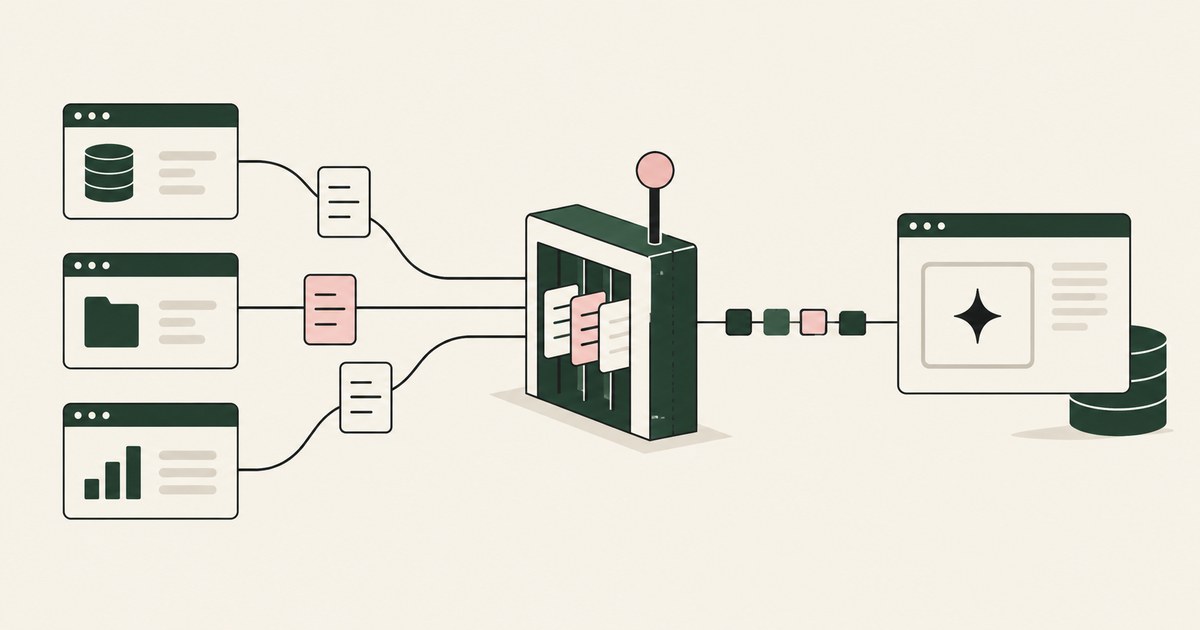
How to Limit Sensitive Data Access for AI Agents
Review Limit Sensitive Data Access for AI Agents, with AI agent security, tokenization and approval checks for sensitive enterprise workflows.
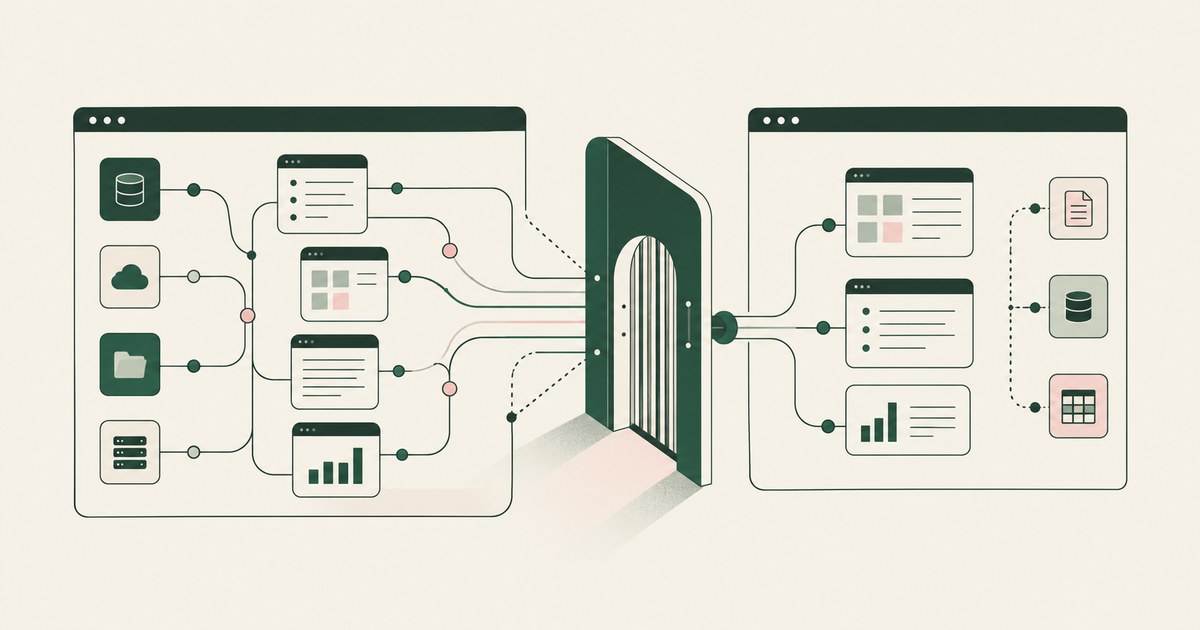
How to Map All the Data an AI Agent Can Reach
Review Map All the Data an AI Agent Can Reach, with AI agent security, tokenization and approval checks for sensitive enterprise workflows.

Accountable AI and Workflow Governance
Explore AI agent governance for billing and claims, with named supervisors, data masking, approval boundaries and a useful audit record.

What Is Render-Layer Tokenization?
Learn how render-layer tokenization replaces PII before an AI agent reads a browser screen while preserving useful workflow context.

What Is Supervised Delegation?
Explore supervised delegation for AI agents in billing and claims, with named responsibility, tokenization policies and human approvals.

What Is an AI Control Record?
Explore an AI agent control record for billing and claims, linking permissions, tokenization decisions, approvals and audit evidence.
Book an AI Agent Security Review →
Bring your hardest questions.
Bring one sensitive workflow and the decisions your team needs to keep in its hands.
Book a demoAbout the author

Chris Sowa is a founder of RedactSure and a former CEO of an AI company; he started it years before ChatGPT existed. He previously led AI at Accenture, served as Global VP of Strategy & Innovation at Schneider Electric, was CCO of Sovos, and spent more than a decade at Oracle, with earlier roles at SAP and IBM.