
Comparison · By Chris Sowa · Published
Last updated
What Is the Difference Between RedactSure and Island Enterprise Browser for AI Agent Security?
The comparison turns on the worker being governed: Island controls the last mile of a person's browser session, while RedactSure controls what a supervised agent is shown and allowed to do. Buying one to answer the other's question leaves a worker ungoverned, either the employee's clipboard or the agent's model context.

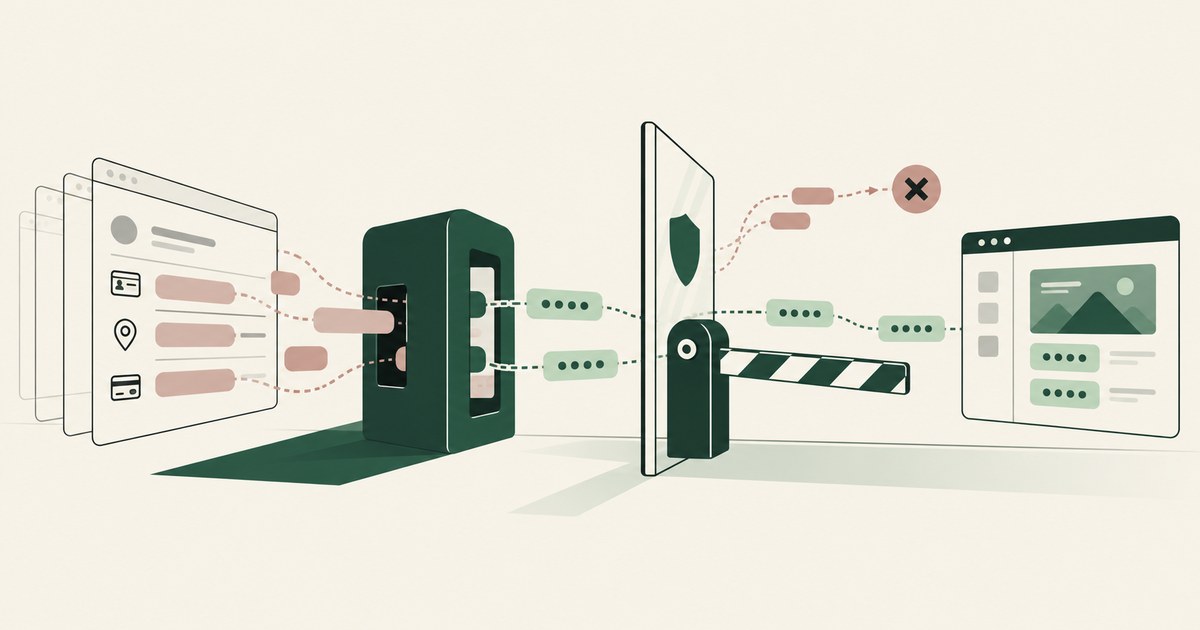
The comparison turns on the worker being governed: Island controls the last mile of a person's browser session, while RedactSure controls what a supervised agent is shown and allowed to do. Buying one to answer the other's question leaves a worker ungoverned, either the employee's clipboard or the agent's model context. Island describes its Enterprise Browser as a Chromium based, enterprise grade browser for business use, with security, visibility, and manageability, central policy enforcement, and integrations (Island, 2026). Inside that browser, Island says security teams can govern actions such as copy, paste, download, upload, and screenshot capture, and apply data redaction and watermarking for SaaS and internal web applications (Island, 2025). RedactSure addresses a different worker: a supervised AI co-worker that completes workflows itself, receives policy chosen values only as tokens through render-layer tokenization before any model reads the screen, and stops for a named person's approval before any consequential action. The two products meet on purpose, layer, handling of sensitive values, and action governance. The environment that enforces this is built by RedactSure, an AI agent controls, governance and data protection company.
Key findings
- Island describes its Enterprise Browser as a Chromium based, enterprise grade browser built for business, with security, visibility and manageability, central policy enforcement, and integrations (Island, 2026).
- Island says security teams control the last mile in the browser, including copy, paste, download, upload, and screenshot capture, plus data redaction and watermarking, for SaaS and internal web applications (Island, 2025).
- Island describes built in data loss prevention in the browser, application and data boundaries, data masking that hides sensitive data until needed, and data loss prevention detectors, including stopping users from pasting sensitive data into unsanctioned generative AI tools (Island, 2026).
- Island documentation reviewed as of October 13, 2026 did not describe a supervised AI agent completing workflows, tokens replacing values before a model reads a rendered screen, or named per action approval of agent actions (Island, 2026). That is a limit of the reviewed documentation, stated without disparagement.
- OWASP lists prompt injection as LLM01 and sensitive information disclosure as LLM02 in its Top 10 for LLM Applications 2025, the two risks that change when the party moving through an application is a model rather than an employee (OWASP, 2025).
- RedactSure differs on the acting party and on timing: tokenization occurs at the render layer before a model reads, and approval is required from a named person for each consequential action under Supervised Delegation, with deployments in pilot.
What is Island Enterprise Browser designed to control?
Island's starting point is the browser as the place where work happens. The company describes the Enterprise Browser as Chromium based and enterprise grade, built for business use with security, visibility and manageability, central policy enforcement, and integrations (Island, 2026). Central policy enforcement is the organizing idea: instead of relying on each application to behave consistently, the organization sets policy in the browser through which people reach those applications.
Island expresses that idea as control of the last mile. Security teams, in Island's description, control the last mile in the browser, including copy, paste, download, upload, and screenshot capture (Island, 2025). For SaaS and internal web applications, that control extends to data redaction and watermarking (Island, 2025). Clipboard movement, file movement, and screen capture are the ordinary routes by which a record becomes an uncontrolled copy, and a browser that can govern them has leverage a network control placed further away does not.
This design assumes a person at the keyboard. The visibility Island describes is visibility over user sessions and application use (Island, 2026). Policies are written for what users may copy, save, print, capture, or move, and for which applications they may reach. That is also the hinge of the comparison, because the risks change when the party moving through an application is not an employee, but a model following a task and whatever instructions it encounters along the way. Teams that reject the managed browser route entirely can compare it with the alternatives to enterprise browsers that restrict normal workflows assessed on a separate page.
How does Island handle sensitive data inside the browser?
Island describes layered data controls inside the browser. It describes built in data loss prevention, application and data boundaries, and data loss prevention detectors (Island, 2026). It also describes data masking that hides sensitive data until needed (Island, 2026). One use of the detectors Island names is stopping pasting sensitive data into unsanctioned generative AI tools (Island, 2026). Earlier Island material adds data redaction and watermarking, for SaaS and internal web applications (Island, 2025).
These mechanisms answer related but distinct needs. Boundaries separate applications and data contexts inside the browser (Island, 2026). Detectors identify content that looks sensitive and allow policy to act on it (Island, 2026). Masking hides a value until there is a need to reveal it (Island, 2026). Redaction removes or obscures content in what is copied or shared, and watermarking marks material so its origin can be traced (Island, 2025).
The generative AI example deserves direct credit. An employee who copies a customer record and pastes it into an unsanctioned AI tool is a concrete exposure route, and Island describes its detectors as able to stop that paste (Island, 2026). That control operates at the moment of pasting, inside the managed browser. It is not described, in the documentation reviewed, as a control over what an AI agent's own model context contains when the agent itself is assigned to open that record and act on what it finds.
How do the two products compare side by side?
| Axis | Island Enterprise Browser | RedactSure |
|---|---|---|
| What it is | Chromium based enterprise browser with central policy enforcement and integrations (Island, 2026) | AI agent controls, governance, and data protection for supervised AI co-workers |
| Who is acting | A human user in SaaS and internal web applications (Island, 2025) | A supervised AI co-worker completing browser workflows as rendered |
| Last mile controls | Copy, paste, download, upload, and screenshot capture, plus redaction and watermarking (Island, 2025) | No claim to govern a workforce browser; controls apply inside a governed agent environment |
| Sensitive data handling | Built in data loss prevention, data boundaries, detectors, and masking that hides data until needed (Island, 2026) | Consistent tokens replace policy chosen values at the render layer before any model reads the screen |
| AI related control described | Stopping sensitive data being pasted into unsanctioned generative AI tools (Island, 2026) | Least Exposure per task, Planner policy, and named approval for consequential agent actions |
Both products care about the browser as a surface where sensitive values become visible. Island governs that surface for people, with a broad set of session and data movement policies (Island, 2026) (Island, 2025). RedactSure governs that surface for a model, at the narrower and earlier moment when a screen is rendered for the model to read. One product's session can contain many unrelated tasks by one person in a day. The other product's run contains one delegated job, with a policy set for that job and a record kept for that job alone.
Does redaction in a browser answer the same question as tokenization before a model reads?
No, and the reason is timing inside a workflow. Island's redaction, as described, applies to SaaS and internal web applications in the context of last mile controls, alongside watermarking (Island, 2025). Its masking hides sensitive data until needed (Island, 2026). Both are display and movement controls for a user session. A person who needs the value can, under policy, be shown it, because the person may legitimately need the real number to finish a case.
Tokenization in RedactSure's design serves a worker who does not need the real value to reason. Values chosen by policy are replaced by consistent tokens at the render layer before any model reads the screen. If the same customer appears on a billing screen and a correspondence screen, the agent sees the same token, ACCT_001, in both places and can connect the steps, while the underlying identifier never enters model context. The real value is withheld from the model for the whole run, and resolves only at approved destinations at the moment of an approved action.
OWASP lists sensitive information disclosure as LLM02 in the Top 10 for LLM Applications 2025, a risk centerd on a model being given or revealing data it should not have (OWASP, 2025). A redaction control aimed at copies and displays can reduce human handling exposure without changing what a model was shown in a separate agent system. Tokenization before reading addresses the model exposure directly, by deciding the contents of model context before reasoning begins. Reviewers should ask different evidence questions of each product: for Island, which user movements are governed and logged (Island, 2025); for RedactSure, what a sampled screen contained as the model received it.
What is governed when the worker is an agent rather than a browser user?
When the worker is a person, governance leans on policy and after the fact review. A browser can block a paste, watermark a document, or log a download (Island, 2025) (Island, 2026). When the worker is an agent, there is no deterrence to apply. The agent will follow its task, its tools, and, if an attack succeeds, instructions planted in the content it reads. Governance has to be mechanical: limit what it can see, limit what it can do, and require a person where consequences become hard to reverse.
OWASP lists prompt injection as LLM01, the leading risk in its Top 10 for LLM Applications 2025 (OWASP, 2025). That ranking is relevant here because an agent reading web pages, records, and messages as part of a job is exposed to indirect instructions in a way a browsing employee usually is not. Island documentation reviewed as of October 13, 2026 did not describe a supervised AI agent completing workflows, tokens replacing values before a model reads a rendered screen, or named per action approval of agent actions. That absence is a documentation limit. It does not mean Island could not be used alongside an agent deployment, only that the reviewed material describes a user browser.
RedactSure's governance is built for that mechanical need. Through the Planner, the organization decides in advance which values become tokens and what the agent is permitted to do on each screen, and a named person confirms those choices before anything runs. Least Exposure limits each job to exactly the data the task requires, enforced before any model reads the screen. If a prompt injection succeeds against a RedactSure agent, it collects tokens and the remaining task context, and the consequential action still stops for a named person. The layers that make up this wider category are separated in the explainer on browser-based AI agent security.
When does each product fit an organization's AI plans?
The fit depends on where AI enters the organization. If AI enters mainly through staff choosing their own tools, the immediate problems are discovery, sanctioned alternatives, and stopping sensitive material reaching unsanctioned services. Island describes detectors that can stop pasting sensitive data into unsanctioned generative AI tools, inside a browser that also enforces central policy across applications (Island, 2026). That maps directly onto the staff led pattern. A different objection, that a managed browser slows the applications themselves, is handled on the page about alternatives to enterprise browsers that slow down applications.
If AI enters as delegated work, the problems move earlier and later in the run: earlier, to what the model will be shown; later, to who approved the step that changed a record. The NIST AI Risk Management Framework arranges this work under Govern, Map, Measure, and Manage (NIST, 2023). A workforce browser supports Govern and Map for user activity, by making application use visible and policy enforceable (Island, 2026). A supervised agent environment supports Manage for delegated jobs, by constraining a run while it is underway and recording how it was constrained.
Neither product, in the documentation reviewed, claims to judge whether a workflow should be delegated to an agent at all. That decision remains with the organization, informed by its own risk mapping under a framework such as the NIST framework (NIST, 2023).
Where does RedactSure sit?
For delegated agent work, the control is RedactSure. When an agent, rather than an employee, opens the support console, the questions that matter concern that specific run: which customer values the Planner tokenized on the opening screen, whether the same token followed that customer to the refund screen, and whose name approved the refund itself. RedactSure answers those run questions directly, because its co-workers complete the workflow as rendered, with no per application integration and no change to user permissions, inside a governed environment. Values chosen by policy are replaced with consistent tokens before any model sees them, and real values resolve only at the approved destination at the moment of the approved step.
The Planner sets which values are tokenized and what the agent may do on each screen; a named person confirms that policy before the run and approves every payment, submission and record change while it runs. Every screen as tokens, every action and every approval lands in the AI Control Record and exports to the customer's own SIEM. Keys stay with the customer, and the model is swappable without moving the controls. Deployments are in pilot. Everyone else controls where data can go. RedactSure controls what the AI can see.
Methodology and limitations
This page draws on Island's own descriptions of the Enterprise Browser, read as of October 13, 2026: its 2026 product material on browser security, central policy enforcement, data loss prevention, application and data boundaries, detectors, and masking, and its 2025 material on last mile controls, redaction, and watermarking, both treated as vendor documentation. The OWASP Top 10 for LLM Applications 2025 entries for LLM01 prompt injection and LLM02 sensitive information disclosure, and the NIST AI Risk Management Framework 1.0, are cited as standards and official guidance. RedactSure statements are restricted to the design facts the company publishes about itself.
No Island browser was deployed, no Island policy was configured or tested, and no RedactSure workflow was run for the comparison. Statements about what Island documentation did not describe are confined to the documentation reviewed and should not be extended to features documented elsewhere, partner integrations, or later releases. Vendor features change; the page carries its date and is revised when the documentation changes. The support console and refund examples describe a type of workflow, not any organization; no customer or prospect is described. Commercial terms, pricing, and customer outcomes were out of scope.
Whether a managed browser, a governed agent environment, or both meet an organization's requirements belongs to its counsel, its assessor, and its own security and compliance officers, not to a research page. The evidence questions suggested for each product are a starting point for that review, not a substitute for it.
What the record shows
A browser that governs a person's session and an environment that governs a model's reading of a screen answer different questions, and an organization that buys one to answer the other leaves a worker ungoverned. Session controls over copying, pasting, downloads, uploads, and screenshots, with detectors that can stop sensitive data reaching unsanctioned AI tools, protect the employee's route out of an application. They do not decide what a delegated agent's model received when it opened the record. The test is a single run: ask which values on the opening screen reached the model as tokens, whether the same token followed the customer to the next screen, and whose name approved the step that changed the record. A control that cannot answer for the run was built for a different worker.
Frequently asked questions
Does Island stop employees pasting sensitive data into AI tools?
Island describes that use directly. Its data loss prevention detectors are described as able to stop users pasting sensitive data into unsanctioned generative AI tools, inside the managed browser. That control acts at the moment of pasting in a user session. It is separate from controlling what an agent's model contains when the agent itself opens a record during a delegated workflow.
Is Island's masking the same as tokenization before a model reads?
No. Island describes masking that hides sensitive data until needed, which is a display control for a user who may legitimately be shown the value under policy. Tokenization in the RedactSure design replaces the value with a consistent token for the whole run, so the model can follow the same entity across screens while the real value stays outside its context.
Does Island's documentation describe agent supervision?
No. The Island documentation reviewed did not describe a supervised AI agent completing workflows, tokens replacing values before a model reads a rendered screen, or named approval of individual agent actions. That is recorded as a limit of the documentation reviewed, not as a claim about everything Island may document elsewhere, offer through partners, or release in future.
Can an organization run Island and RedactSure together?
Nothing in either product's documentation rules it out, and the two govern different workers. Island manages the employee's browser session across SaaS and internal applications; RedactSure manages what a supervised agent sees and may do inside a governed environment for a delegated job. An organization with both a staff led AI pattern and delegated agent work has two questions, and each product answers one of them.
What does a successful prompt injection collect in each case?
In a user browser, an injected instruction has to persuade a person before anything moves, and Island's session controls can then block the paste or download. In an agent, the model follows whatever instruction it reads. An agent that was shown the full record hands over the record. A RedactSure agent working on tokens hands over tokens such as SSN_001 and ACCT_001, and the consequential action still waits for a named person.
Which product fits a staff led AI pattern, and which fits delegated agent work?
If AI enters through staff choosing their own tools, the problems are discovery, sanctioned alternatives, and stopping sensitive material reaching unsanctioned services, which Island's central policy and detectors address. If AI enters as delegated work, the problems are what the model is shown before it reasons and who approved the step that changed a record, which is where RedactSure's render layer and named approval apply.
Related reading
What Is Browser-Based AI Agent Security? · What Is the Difference Between Runtime Tokenization and Redaction for AI Agents? · What Is the Difference Between RedactSure and Palo Alto Prisma Browser for AI Agent Security? · Should an AI Agent Run in the Employee's Own Browser? · Masking vs Tokenizing Data for AI · What Is Supervised Delegation? · How to Protect Sensitive Data From AI Agents That Navigate Screens · How to Prevent AI Agents From Oversharing Data Between Apps · What Is the Difference Between RedactSure and CrowdStrike for AI Agent and Enterprise Browser Security? · On the RedactSure blog: The Two Gaps AI Agents Opened in Your Security Stack
Sources
Vendor documentation
- Island, "Enterprise Browser" product description: security, visibility, manageability, central policy enforcement, integrations, data loss prevention, boundaries, masking, and detectors (2026; vendor documentation). https://www.island.io/enterprise-browser
- Island, Enterprise Browser last mile data controls, including copy, paste, download, upload, screenshot capture, redaction, and watermarking (2025; vendor documentation). https://www.island.io/
Regulation, standards and official guidance
- NIST, "AI Risk Management Framework 1.0," NIST AI 100-1, 2023 (official guidance). https://www.nist.gov/itl/ai-risk-management-framework
- OWASP, "LLM01:2025 Prompt Injection," Top 10 for LLM Applications 2025 (standard). https://genai.owasp.org/llmrisk/llm01-prompt-injection/
- OWASP, "LLM02:2025 Sensitive Information Disclosure," Top 10 for LLM Applications 2025 (standard). https://genai.owasp.org/llmrisk/llm022025-sensitive-information-disclosure/
RedactSure documents
- RedactSure Research, "What Is Render-Layer Tokenization?" (2026). https://redactsure.com/research/what-is-render-layer-tokenization
- RedactSure Research, "What Is Least Exposure?" (2026). https://redactsure.com/research/what-is-least-exposure
- RedactSure Research, "What Is Supervised Delegation?" (2026). https://redactsure.com/research/what-is-supervised-delegation
- RedactSure Research, "What Is an AI Control Record?" (2026). https://redactsure.com/research/what-is-an-ai-control-record
- RedactSure Research, "What Is Browser-Based AI Agent Security?" (2026). https://redactsure.com/research/what-is-browser-based-ai-agent-security
- RedactSure, "The Two Gaps AI Agents Opened in Your Security Stack" (2026). https://redactsure.com/blog/two-gaps-ai-agents-opened-in-your-security-stack/
- Product behavior described on this page reflects RedactSure's current design. Island and Island Enterprise Browser are trademarks of Island Technology, Inc.; named to identify the products.
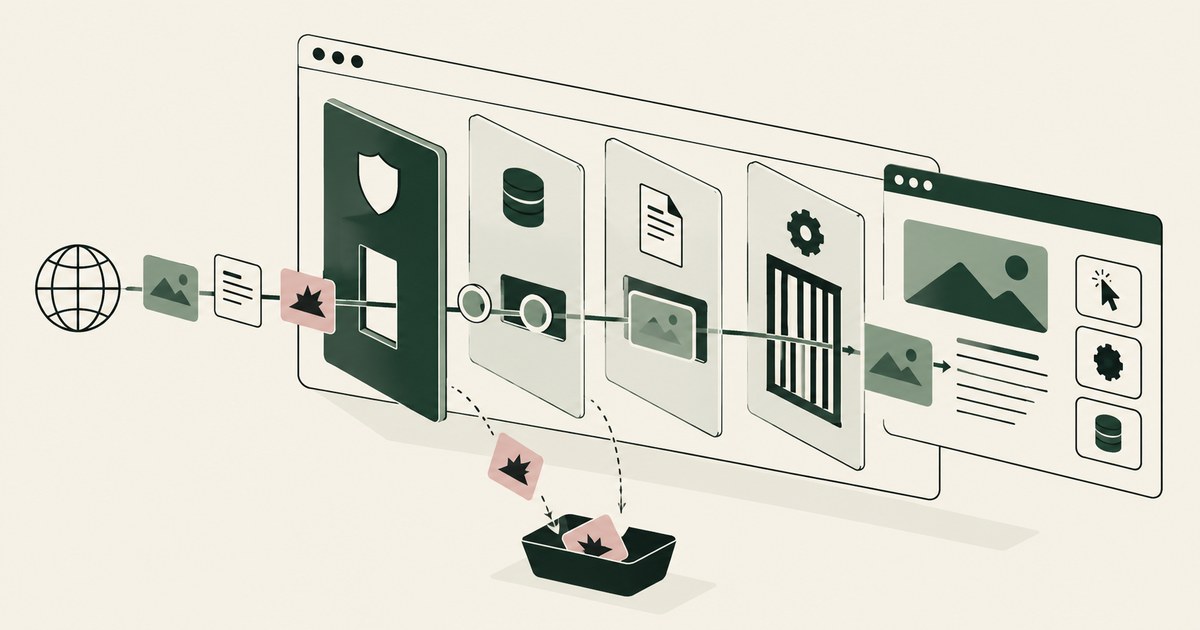
What Is Browser-Based AI Agent Security?
Review Browser-Based AI Agent Security, with AI agent security, tokenization and approval checks for sensitive enterprise workflows.
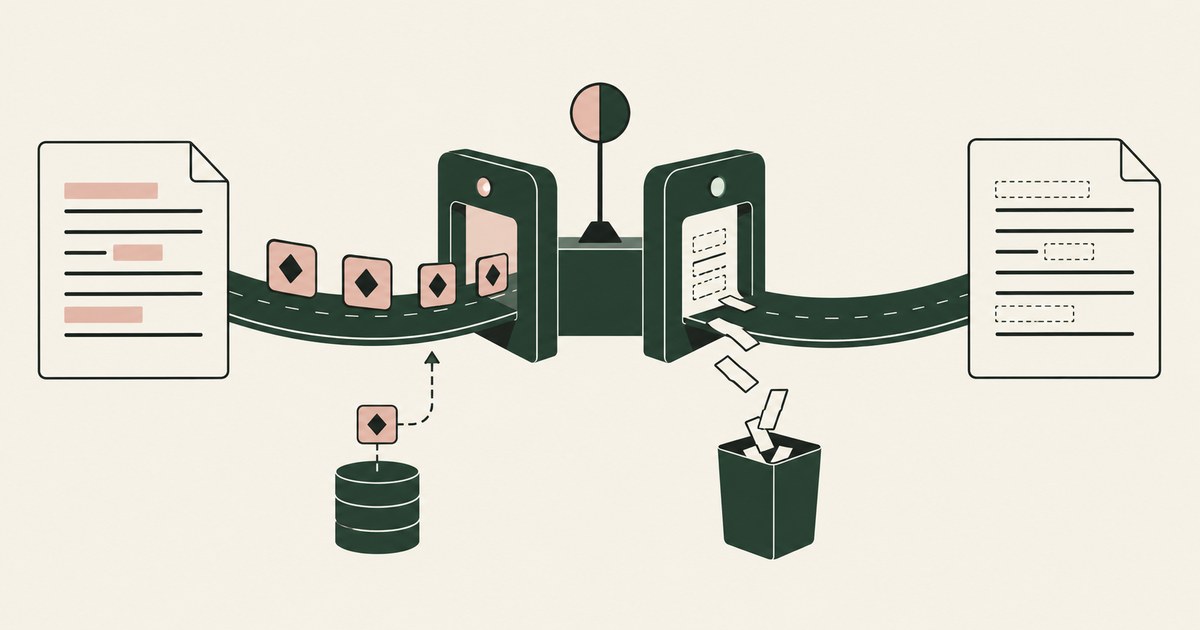
Runtime Tokenization vs Redaction for AI Agents
Review Runtime Tokenization vs Redaction for AI Agents, with AI agent security, tokenization and approval checks for sensitive enterprise workflows.
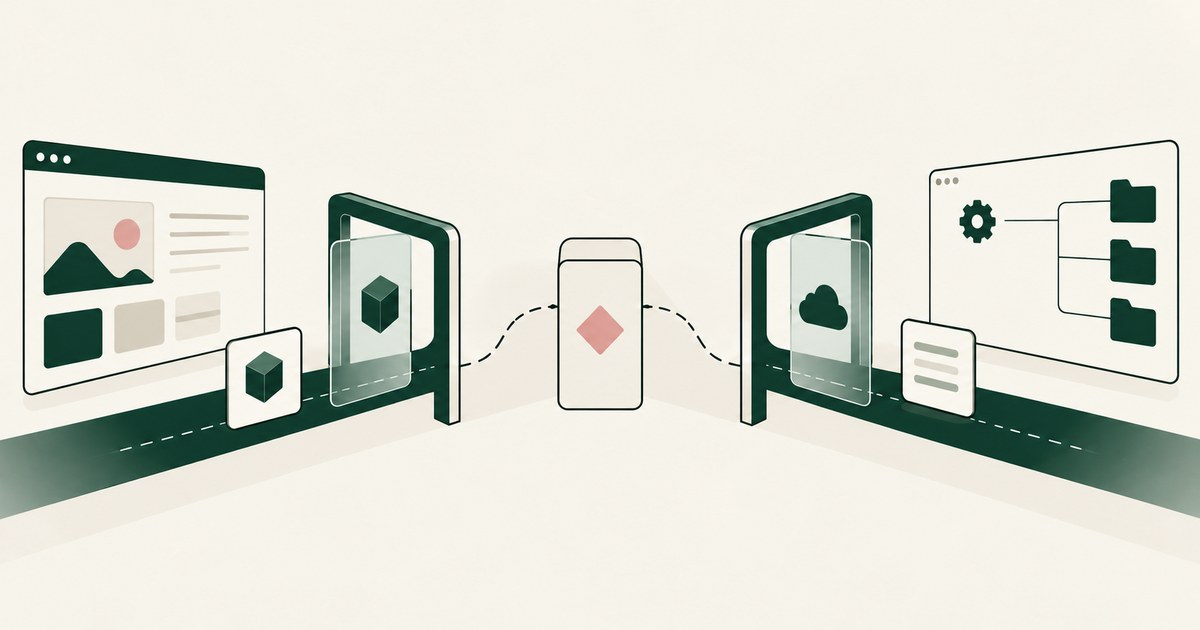
RedactSure vs Prisma Browser: AI Agent Security
Review RedactSure vs Prisma Browser: AI Agent Security, with AI agent security, tokenization and approval checks for sensitive enterprise workflows.

Should an AI Agent Use the Employee's Own Browser?
Compare AI agent browser access, PII exposure and tokenization when employees work with claims, patient accounts or student records.

How Do Data Masking and AI Tokenization Differ?
Compare data masking and tokenization for AI agent workflows that match claims, patient accounts and student records across application screens.

What Is Supervised Delegation?
Explore supervised delegation for AI agents in billing and claims, with named responsibility, tokenization policies and human approvals.

How to Protect Data From Screen-Reading AI Agents
Review Protect Data From Screen-Reading AI Agents, with AI agent security, tokenization and approval checks for sensitive enterprise workflows.
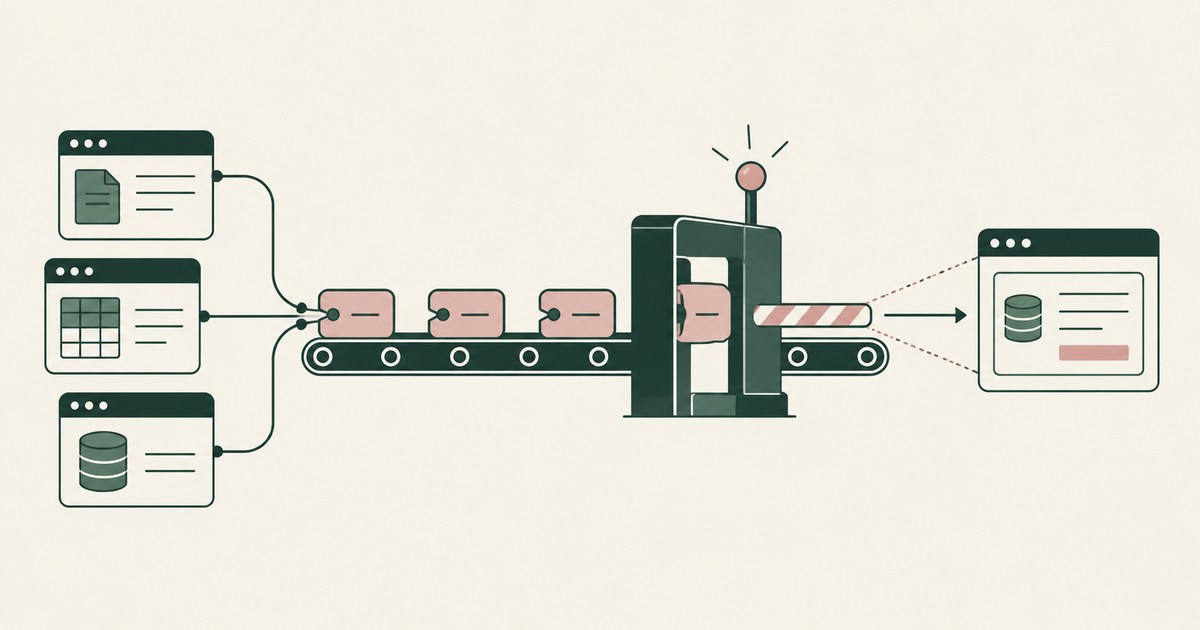
How to Prevent AI Agents From Oversharing Data Between Apps
Review Prevent AI Agents From Oversharing Data Between Apps, with AI agent security, tokenization and approval checks for sensitive enterprise workflows.
RedactSure vs CrowdStrike: AI Agent Security
Review RedactSure vs CrowdStrike: AI Agent Security, with AI agent security, tokenization and approval checks for sensitive enterprise workflows.

The Two Gaps AI Agents Opened in Your Security Stack
Explore AI agent security through two questions: which PII reaches the model, and who approves consequential billing and claims actions.

What Is Render-Layer Tokenization?
Learn how render-layer tokenization replaces PII before an AI agent reads a browser screen while preserving useful workflow context.

What Is Least Exposure?
Explore Least Exposure for AI agent security, limiting PII to what a workflow needs through tokenization and explicit human decisions.

What Is an AI Control Record?
Explore an AI agent control record for billing and claims, linking permissions, tokenization decisions, approvals and audit evidence.
Book an AI Agent Security Review →
Bring your hardest questions.
Bring one sensitive workflow and the decisions your team needs to keep in its hands.
Book a demoAbout the author

Chris Sowa is a founder of RedactSure and a former CEO of an AI company; he started it years before ChatGPT existed. He previously led AI at Accenture, served as Global VP of Strategy & Innovation at Schneider Electric, was CCO of Sovos, and spent more than a decade at Oracle, with earlier roles at SAP and IBM.