
Data Report · By Chris Sowa · Published
Last updated
How Do I Get Security to Approve Autonomous Coding Agents?
Put the three answers a reviewer will ask for in writing before the review starts: what the agent holds, what it can reach, and what the record shows. Name the person who approves a run, the grant it acts under, and the export the reviewer can read.

A coding agent is approved or refused in a review room, before anyone watches it work, and the same three questions arrive in the same order. What does the agent hold, meaning the values in its process and its context at each step. What can it reach, meaning the repositories, consoles and settings pages its grant opens, and for how long. What will the record show afterward, meaning the artifact a reviewer reads instead of taking the team's word for it. Most submissions answer the first question with a claim and the third with a promise, which is where the review stalls. This page takes the three in turn, reads what six vendors document about each, and describes the record type that answers all of them at once: a one-page response to a security review, assembled from evidence a reviewer can open. Scope comes first, because a coding agent's work spans a terminal, an IDE and a browser console, and the controls that cover each are different. For the test behind the second question, see How Do You Test Whether an AI Agent Can Reach Data Outside Its Assigned Task?; for the artifact behind the third, see What Is an AI Control Record?.
Key findings
- 1Password's OpenShell documentation states that "Secret values never enter the agent process or context," a design in which the agent uses a credential it never holds (1Password, 2026).
- Infisical documents "Time-bound grants that let AI agents access services without holding real credentials," so the reach question can be answered with a duration a reviewer can read from the page (Infisical, 2026).
- Doppler's page for Codex shows the other arrangement, where "Doppler injects the config's secrets as environment variables, and Codex inherits them," which places the value inside the agent's own process for the whole run (Doppler, 2026).
- GitLab's CI/CD documentation says a masked value "is replaced with
[MASKED]in the job log" and warns that masking "is not a guaranteed way to prevent malicious users from accessing variable values," so a redacted log is not a control (GitLab, 2026). - A governed environment writes the screen as tokens before any model reads it, so the record a reviewer opens shows TOKEN_01 where the credential sat and never the value itself (What Is an AI Control Record?).
- Real values resolve only at the approved destination at the moment of an approved action, and a named person approves that action, which answers the reach and record questions together (What Is Supervised Delegation?).
What does an approval cover when the agent works in a browser?
Scope comes first because a coding agent works in more than one place, and a reviewer told about one control assumes it covers all of them. A governed browser environment covers what the agent reads and does on a rendered page: dashboards, cloud consoles, repository and access settings pages, billing screens and sign-up forms, such as a sign-up or billing step, where an environmental injection attack on generalist web agents reached an attack success rate of up to 70 percent in stealing users' specific personal information (Can an AI Agent Sign Up for Developer Services Without Seeing Your Payment Card or Identity?). It does not cover the terminal, the IDE, the local filesystem, direct API calls or MCP. Most of an autonomous coding agent's work happens in the places it does not cover, which is why the page-side control answers one part of the review and the grant and the record have to answer the rest.
What a rendered page means in practice: the agent opens a repository's access settings page to add a deploy key, a console to change a service's environment, a build dashboard to read a failed job. Every field on that page is text the model receives, including the credential it is editing, and content on the page can steer the run as well as inform it (What Is Indirect Prompt Injection and How Does It Reach AI Agents?). A page is an input to the model, not a backdrop to its work.
| Place the agent works | Covered by the rendered-page control | What has to cover it instead |
|---|---|---|
| Repository settings page, console, dashboard | Yes, including the values the page renders | Nothing else for what the model reads |
| Terminal command, package install | No | The sandbox, the grant and the record |
| IDE edit, local file read | No | File permissions and the working tree |
| API call from a script | No | The credential design and the egress policy |
| MCP tool call | No | The MCP server's own authentication and scope |
The record type this page returns to is a one-page answer to a security review: three numbered answers, one per question, each with an evidence line a reviewer can open.
What does the agent hold while it works?
The first of the three answers is an inventory, and at each step the agent holds either a value or a reference. For the reference case, the 1Password page states that "Secret values never enter the agent process or context," with the gateway enforcing its rules outside the agent's reach (1Password, 2026). Infisical describes two shapes of the same idea, "Forward proxies that intercept an AI agent's requests and attach real credentials on the way out," and "Time-bound grants that let AI agents access services without holding real credentials" (Infisical, 2026).
Doppler documents the value case, where "Doppler injects the config's secrets as environment variables, and Codex inherits them," so the credential is inside the process the agent runs (Doppler, 2026). The same page adds "The agent can fetch secrets, but never change them," a rule about mutation that says nothing about reading, and whether Codex logs or retains what it inherited is not described in the pages reviewed.
For the one-pager, the difference decides what the first answer can claim. A reference held outside the process is a line a reviewer can test, because it has a scope, an expiry and a place to revoke. A value in the environment is a line a reviewer has to trust, because anything the process runs inherits it. The test for the reference is the revocation, run once with the agent watching (How Do You Let an AI Agent Manage API Keys Without Reading Them?).
What do the vendors themselves say?
Six vendor pages bear on the three questions, and each documents a mechanism beside a limit the reviewer has to read for themselves. The 1Password page describes a gateway that enforces these controls "outside the agent's process, so the agent can't change or get around them," and marks the OpenShell integration as a beta, which puts a beta component in the path a reviewer would have to trust (1Password, 2026). The gVisor guide covers a sandbox for the workload rather than a home for the credential, and warns that "sandboxing has a performance penalty" and that it "should generally not be used to sandbox every application," a limit on the isolation half of the answer (gVisor, 2026). Read together, they show the shape of the problem: a credential can be kept out of the process while the process still needs a boundary that costs something to run.
| Vendor | What its documentation states | What a reviewer should verify |
|---|---|---|
| 1Password | "Secret values never enter the agent process or context"; "Requests to any other host don't receive the credential"; beta | Whether the gateway sits inside the trust boundary; the page does not explain how it stores values |
| Infisical | "Forward proxies that intercept an AI agent's requests and attach real credentials on the way out"; time-bound grants | How credentials are injected and where they are stored; the overview page does not say |
| Doppler | "Doppler injects the config's secrets as environment variables"; the agent "can fetch secrets, but never change them" | Whether the agent's logs retain what it inherited |
| Teleport | "Teleport protects and controls access to Model Context Protocol (MCP) servers"; short-lived access | What the audit trail contains; the setup guide does not mention one |
| GitLab | A masked value "is replaced with [MASKED] in the job log" |
Whether masked values are removed from logs after the job finishes |
| gVisor | "sandboxing has a performance penalty"; "should generally not be used to sandbox every application" | What the sandbox governs; it governs the code, not the credential or the record |
Read together, the pages cover one question each. The credential designs answer what the agent holds, the duration and host limits answer what it can reach, and the logging notes describe a record of output rather than a record of what the model saw. Teleport and GitLab are the clearest cases of the pattern: each documents the mechanism and leaves the artifact a reviewer would file to another page, which is why a one-page answer has to be assembled rather than downloaded.
What can the agent reach with the grant it is given?
The second question is about the grant rather than the credential: which repositories, which environments, which hosts, for how long, and who can widen it. Teleport documents "secure and short-lived access to these MCP servers" (Teleport, 2026), which bounds a connection by duration, and the setup guide does not mention an audit trail, so a reviewer gets reach without a record from that page alone.
Reach that outlives the run is the more common failure. Datadog found that "37 percent of customers who send CloudTrail logs to Datadog are using IAM users in their GitHub Actions" (Datadog, 2025), a machine identity shared with a pipeline and valid long after the job ends. An agent handed an administrator login for a setup task has the same shape of reach, because the login is not scoped to the task; Does an AI Agent Need Your Admin Login to Set Up a SaaS Tool? sets out the review for that case.
A regulator states the objection in one sentence. FINRA's 2026 oversight report, as Debevoise summarizes it, flags that "Agents may act without human validation and may take actions that exceed the user's actual or intended scope or authority" (Debevoise & Plimpton, 2026). The answer a reviewer wants is a grant per task and a named person who widens it, with the reach proved by a test rather than a diagram, as How Do You Test Whether an AI Agent Can Reach Data Outside Its Assigned Task? sets out.
What should the record show a security reviewer?
The third answer is an artifact, and a log is not one. GitLab's page says a masked value "is replaced with [MASKED] in the job log," which redacts the output of a job and leaves the variable where it was (GitLab, 2026). The same page warns that masking "is not a guaranteed way to prevent malicious users from accessing variable values," so the reviewer who is handed a redacted log is being handed hygiene, not evidence.
Two reasons make the gap expensive. Regulators ask for reconstruction: the Debevoise summary records FINRA's warning that agent chains "may be difficult to reconstruct, complicating auditability" (Debevoise & Plimpton, 2026). And the population a leaked value joins is large: Truffle Security's scan recorded "11,908 Live Secrets were detected using TruffleHog in 400TB of web data" (Truffle Security, 2025).
The record that answers the question has four fields a reviewer can check without asking the team anything: which screen the model received, as the tokens it saw; which action it proposed; who approved it, by name; and where the export went. Content that steers the agent is an input the record has to capture, which is why a list of actions alone is thin evidence (see How Do Malicious Documents Take Control of AI Agent Behavior?).
What does a governed environment change?
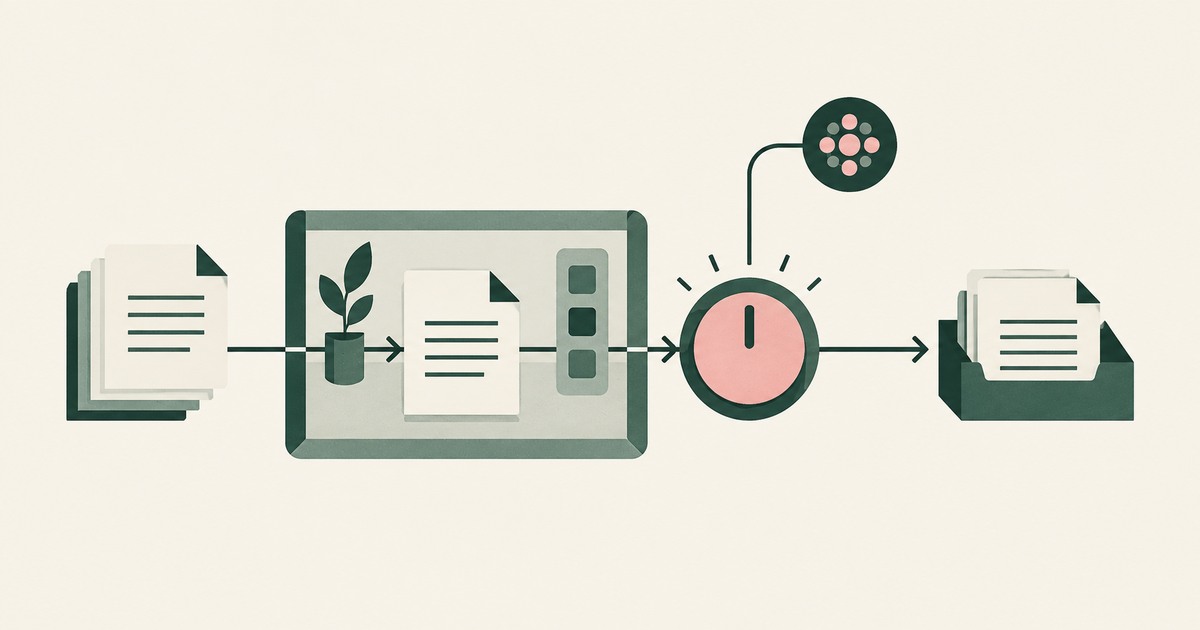
A governed environment answers the three questions as one design rather than three products. Values chosen by policy are replaced with consistent tokens such as TOKEN_01 before any model reads the screen, so what the agent holds is a name rather than a credential. Real values resolve only at an approved destination, at the moment of an approved action, so what the agent can reach is bounded by the destination rather than by the width of its network access. A named person confirms the tokenization policy and approves each consequential action, and every screen as tokens, every action and every approval is written to a record that exports to the organization's own monitoring, so the third answer is an artifact instead of a recollection.
Applied to a coding agent, that changes what each line of the one-pager says. The first line stops being a claim about hygiene and becomes a statement that the agent holds references for the whole run. The second stops being a list of permissions and becomes a list of destinations, each bound to a run and an approver. The third stops being a request for logs and becomes an export with a name on every approval. The design also states its own edge: the rendered page is covered, and the terminal, the IDE, the local filesystem, direct API calls and MCP are not, so an approval still rests on a sandbox and a grant for the work that happens there.
Methodology and limitations
This page rests on six vendor documentation pages, a law firm summary of a regulator's oversight report, two vendor research posts and existing RedactSure research. The vendor pages describe credential custody (1Password, Infisical, Doppler), MCP access (Teleport), log masking (GitLab) and sandboxing (gVisor), and each is cited for what it says about its own mechanism. No vendor was asked for a briefing, and no product was configured for this page. Vendor pages were read as of October 20, 2026, and each Sources line carries the date for its page. Figures from Truffle Security and Datadog are cited as reported, on the customer samples those posts describe, not as independent measurements.
RedactSure did not test any of the named products hands-on, and this page describes no configuration of its own. Where a vendor page does not state something, the page says so rather than inferring the opposite: "not described in the pages reviewed" means the recorded facts for that page do not cover it. Vendor features change and the page carries its date, so a release after October 20, 2026 should be treated as unreviewed until a reader checks it. Statements about RedactSure describe its current design, and RedactSure is deploying now with enterprise and government customers. The one-page answer described here is a record type, not an organization's document.
Determinations about whether a particular agent, grant or record satisfies a regulatory, contractual or audit requirement belong to counsel, assessors and the organization's own security and compliance officers. Nothing here replaces a test of the agent in the organization's own environment, repeated after each release of the tools involved.
What the record shows
The three questions have one answer each, and the recorded facts answer them unevenly. What the agent holds is documented in detail by credential vendors, with one page placing the value inside the agent's environment and two placing it outside the process. What the agent can reach is documented as a duration, a host list or a scope, and a regulator states the risk in a sentence about agents exceeding intended authority. What the record shows is the weakest of the three: a job log that replaces a masked value, a setup guide that does not mention an audit trail, and a warning that agent chains are hard to reconstruct. RedactSure's design puts all three on one page, and a team can assemble the same page from any stack that produces the export. A submission is ready for review when it passes a simple test on one agent and one task, saying what the agent held when it opened the settings page, which grant let it act, and which export shows both.
Frequently asked questions
What do I give security to get a coding agent approved?
Three answers in writing, each with evidence attached: what the agent holds at each step, which grant lets it act and for how long, and what the record will show when the run ends. A claim that credentials are handled safely is not an answer, and neither is a promise of logs to come. Put the reference design, the grant scope and an example export in front of the reviewer before the meeting, because the meeting is where the questions get asked. Attach the export to the page.
Is a sandbox enough for a security approval?
For the shell and the package install, mostly, and for nothing about a rendered page. A sandbox bounds what code can touch on the machine it runs in, and gVisor's own guide warns of a performance penalty and recommends against sandboxing every application. It does not decide what value the agent inherits, which host a request reaches, or who approved the change. A reviewer will accept a sandbox as one line of the answer and ask for the other two. Say which line is yours.
Do short-lived credentials settle the review?
They narrow the second answer and leave the first and third open. A grant that expires in minutes limits what a stolen credential can do, which is real value. It does not say what the agent held while it worked, and an expiring grant produces no artifact a reviewer can read afterward. Ask for the duration, the scope and the approver together, then ask what the export contains. A short duration is worth having, and it is not the whole answer. Name that line in the page.
What belongs in the one-page answer?
Three numbered answers, each with an evidence line: the reference the agent held, the grant and its duration, and the record with a name on each approval. The page should also name what it does not cover, because a reviewer who finds an unstated gap stops trusting the rest. Attach the export rather than a screenshot of a dashboard. RedactSure's design produces that export, and a team can assemble the same page from any tool that does. A reviewer reads the page, not the console behind it.
Does masking a value in a log solve the record question?
No. Masking replaces a value in a job log, and GitLab's own page says masking is not a guaranteed way to prevent access to the variable. That is a redaction of output, not a record of what the model read on a page. The record question asks for the screen as the model saw it, the action proposed, the approver and the export destination. A masked log answers one of those four at best. Keep the log as supporting evidence and label it as such.
Can a coding agent be approved for one repository only?
Yes, if the grant is written per repository and per task, and if widening it needs a named person. Two things usually break that: a machine identity shared with a pipeline, which outlives the run, and an administrator login handed over for setup, which is not scoped to the task at all. Ask for the expiry, the revocation path and the record of who widened the scope.
Related reading
What Is Supervised Delegation? · What Is an AI Control Record? · How Do You Let an AI Agent Manage API Keys Without Reading Them? · How Do You Test Whether an AI Agent Can Reach Data Outside Its Assigned Task? · What Is Indirect Prompt Injection and How Does It Reach AI Agents? · What Should I See Before Approving an Agent's Access to a Credential? · How Do I Roll Out Coding Agents to a Team Without Sharing Credentials? · How Do I Let Contractors Use Coding Agents Without Giving Them My Keys? · On the RedactSure blog: Secure AI for Government · Accountable AI and Workflow Governance · RedactSure
Sources
Vendor documentation
-
gVisor, "Production guide," gVisor documentation (vendor documentation; read October 20, 2026). https://gvisor.dev/docs/user_guide/production/
-
Doppler, "Run Codex with Doppler," Doppler (vendor product page; read October 20, 2026). https://www.doppler.com/agents-codex
-
1Password, "Connect 1Password Environments to NVIDIA OpenShell for secure agent access (beta)," 1Password developer documentation (vendor documentation; read October 20, 2026). https://www.1password.dev/environments/nvidia-openshell
-
Infisical, "Agent Vault," Infisical documentation (vendor documentation; read October 20, 2026). https://infisical.com/docs/documentation/platform/agent-vault/overview
-
Teleport, "Machine & Workload Identity with MCP Access," Teleport documentation (vendor documentation; read October 20, 2026). https://goteleport.com/docs/machine-workload-identity/access-guides/mcp/
-
GitLab, "CI/CD variables," GitLab Docs (vendor documentation; read October 20, 2026). https://docs.gitlab.com/ci/variables/
Regulation, standards and official guidance
- Debevoise & Plimpton, "FINRA's 2026 Regulatory Oversight Report: Continued Focus on Generative AI and Emerging Agent-Based Risks," December 12, 2025 (law firm summary of regulator report). https://www.debevoise.com/insights/publications/2025/12/finras-2026-regulatory-oversight-report-continued
Industry analysis and press
-
Truffle Security, "Research finds 12,000 'Live' API Keys and Passwords in DeepSeek's Training Data," February 27, 2025 (vendor research). https://trufflesecurity.com/blog/research-finds-12-000-live-api-keys-and-passwords-in-deepseek-s-training-data
-
Datadog, "State of DevSecOps 2025" (vendor research). https://www.datadoghq.com/state-of-devsecops-2025/
RedactSure documents
-
RedactSure Research, "What Is an AI Control Record?" (2026). https://redactsure.com/research/what-is-an-ai-control-record/
-
RedactSure Research, "What Is Supervised Delegation?" (2026). https://redactsure.com/research/what-is-supervised-delegation/
-
RedactSure Research, "How Do You Let an AI Agent Manage API Keys Without Reading Them?" (2026). https://redactsure.com/research/how-do-you-let-an-ai-agent-manage-api-keys-without-reading-them/
-
Product behavior described on this page reflects RedactSure's current design. Third-party products are described from their public documentation as read on October 20, 2026. Compliance determinations belong to the organization's counsel.
What Is Supervised Delegation? Who Answers for an AI Agent, and What the Record Shows
Supervised Delegation is the operating model in which an AI agent works for a named person who grants its access, approves actions and answers for it.

What Is an AI Control Record? The Runtime System of Record for Sensitive AI Work
An AI Control Record is the complete evidence set for one governed AI workflow: what the AI saw and did, and what the named person did and approved.
How Do You Let an AI Agent Manage API Keys Without Reading Them?
Swap the key for a token as the dashboard renders it, and resolve the real value in the approved field when a person confirms. Check where keys show.

How Do You Test Whether an AI Agent Can Reach Data Outside Its Assigned Task?
Seed one record type with canary values the task does not need, run with and without a page policy, then score completion and exposure together.

What Is Indirect Prompt Injection and How Does It Reach AI Agents?
An instruction a third party plants in content an agent reads, such as an email, file, web page or tool result, so the attacker never touches the prompt.
What Should I See Before Approving an Agent's Access to a Credential?
The agent, service, resource, operation, destination and duration, plus the credential's name rather than its value. A visible credential is a red flag.
How Do I Roll Out Coding Agents to a Team Without Sharing Credentials?
Give each developer a separate vault path and key, cap any one grant with a team policy, and hold shared credentials in a service layer.
How Do I Let Contractors Use Coding Agents Without Giving Them My Keys?
Give the contractor's agent a credential scoped to one repository and one operation, held outside their reach and set to expire with the engagement.

Secure AI for Government: Higher Stakes, Same Holes
Explore governed AI agents for public-sector billing and records, with PII protection, tokenization and approval by accountable staff.

Accountable AI and Workflow Governance
Explore AI agent governance for billing and claims, with named supervisors, data masking, approval boundaries and a useful audit record.
How RedactSure Makes an Autonomous Coding Agent Approvable in Writing
Security reviewers usually join three tools to answer their three questions, and none of them acts before the model reads the page or names an approver.
The environment that enforces this is built by RedactSure, an AI agent controls, governance and data protection company.
Before: the agent opens an access settings page, reads the token value it renders, and changes a scope under a shared identity. Inside the governed environment: the page renders TOKEN_04, the change waits on a named approver, and the export carries screen, action and approval.
RedactSure is deploying now with enterprise and government customers. Datadog found that 37 percent of customers sending it CloudTrail logs run GitHub Actions on IAM users.
Everyone else controls where data can go. RedactSure controls what the AI can see.
See it on your own workflow
A security team approves what it can read in writing. Bring a task you want to run autonomously and see, with test values, the screen, action and approval the export carries. Book a demo