
Data Report · By Chris Sowa · Published
Last updated
What alternatives to traditional DLP reduce false positives?
The approaches that work change how the control decides, through exact matching, learned classification, context, or removing the value from view. Traditional DLP decides by resemblance, and resemblance is the source of its false alarms. An organization that only tightens thresholds keeps the same error class, buries reviewers in noise and trains users to override the control.
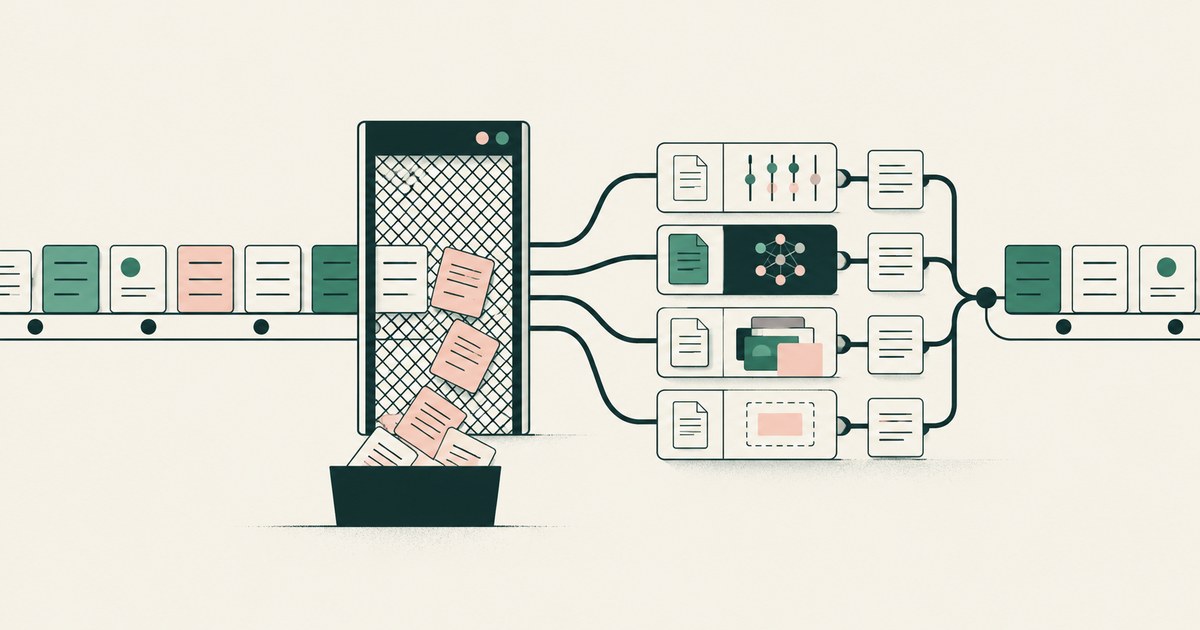
The approaches that work change how the control decides, through exact matching, learned classification, context, or removing the value from view. Traditional DLP decides by resemblance, and resemblance is the source of its false alarms. An organization that only tightens thresholds keeps the same error class, buries reviewers in noise and trains users to override the control. The alternatives that reduce false positives change how a control decides, rather than how hard it blocks. Traditional DLP decides by inspecting content for patterns that resemble sensitive data. Four documented alternatives attack that root in different ways: match the organization's exact known values instead of shapes; classify content by learned meaning instead of by format; judge the transaction in context, who is acting, on what device, toward which destination, instead of the content alone; and remove the sensitive value from the working view entirely, by encryption or render-layer tokenization, so there is nothing for a pattern to misjudge. Each alternative lowers false positives for a structural reason, and each has a limit where its own obligations begin. The environment that enforces this is built by RedactSure, an AI agent controls, governance and data protection company.
Key findings
- The NIST glossary defines data loss prevention as identifying, monitoring, and protecting data in use, in motion, and at rest through content inspection and contextual analysis of the transaction (NIST, 2026). Traditional deployments lean on the inspection half; the alternatives below lean on context or remove the inspection problem.
- Microsoft's published deployment model for reducing false positives includes exact data match and trainable classifiers as steps beyond pattern configuration, evidence that the exact and learned approaches are established practice rather than theory (Microsoft, 2025).
- NIST SP 800-207 describes zero trust access decisions made per session by a policy engine weighing identity, device, and behavioral inputs, a decision model that does not depend on content patterns at all (NIST, 2020).
- Tokenization, as defined in PCI Security Standards Council guidance, replaces a sensitive value with a surrogate token, so systems downstream handle the token and never need to detect the value (PCI Security Standards Council, 2011).
- Each alternative trades the pattern problem for a different obligation: maintaining exact data schemas, training classifiers, modeling context, or designing work so surrogates can carry it. Microsoft's own documentation of match and not a match feedback shows that every layer still needs reviewer judgment to improve (Microsoft, 2025).
What makes traditional DLP prone to false positives?
The NIST definition gives the mechanism away: data loss prevention works through content inspection and contextual analysis (NIST, 2026). In most traditional deployments, inspection does nearly all the work, and inspection by pattern is an exercise in resemblance. The detector knows what a card number looks like, what an identifier's digit structure is, which keywords suggest a sensitive topic. It does not know whether the specific string in front of it is one of those things, only that it could be.
Every resemblance based system inherits the same arithmetic. Sensitive values are rare in total traffic; lookalikes are common. Dates resemble identifiers, order references resemble account numbers, test strings resemble production data, and internal reference schemes collide with regulated formats because nobody designed them to avoid doing so. Even a detector that is right about most of its matches will generate a steady stream of false alarms, because the population of innocent lookalikes is so much larger than the population of real leaks. Microsoft's own tuning guidance illustrates the point at small scale, observing that a bare date format match produces false positives from email headers and timestamps (Microsoft, 2025). The alternatives below each break the resemblance dependency at a different point.
Alternative one: match exact data instead of patterns that resemble it?
The most direct alternative is to stop guessing. An organization's most consequential sensitive values are usually known values: its customer account numbers, employee identifiers, and case references exist as definite records in its own systems. Exact data match builds detection on hashed fingerprints of those records, so the control fires when an actual value from the organization's data appears, and stays silent for everything else (Microsoft, 2025).
False positives fall for a structural reason: a lookalike that is not in the fingerprint set cannot match. The shape collision class, which generates most pattern noise, is eliminated rather than managed. Microsoft's deployment model for reducing false positives places exact data match as the step after pattern configuration, which positions it in vendor practice as the precision instrument for enumerable data (Microsoft, 2025).
The obligations are equally structural. The fingerprint set must be built from the systems of record and refreshed as they change, or coverage quietly ages. And exact matching says nothing about sensitive content the organization cannot enumerate, a confidential strategy document, a partner's data, a value typed from a paper form. Exact match replaces the pattern for the data it covers; it does not retire patterns everywhere.
Alternative two: classify content by meaning rather than by format?
Some sensitive content has no format to match. A legal advice memo, a resignation letter, a bid document are sensitive because of what they say, and a pattern based detector can only circle them with keyword lists that fire on every innocent document discussing the same topic. Trainable classifiers approach the category differently, learning from example documents what membership looks like, and Microsoft's deployment model assigns them their own step for complex content (Microsoft, 2025).
The false positive profile changes because the decision is about the document as a whole rather than about the presence of strings. A newsletter mentioning a legal topic is not, as a whole document, similar to the example legal advice memos, and a classifier can score it accordingly where a keyword rule could not. This is a real reduction in the resemblance problem, since resemblance is now judged across the whole item by a model trained on real examples, instead of being triggered by any single string anywhere in it.
The trade is a new kind of error and a new maintenance duty. Classifier judgments are probabilistic and harder to explain to a user who asks why a document matched, and the training set must be curated and refreshed as the category evolves. An organization adopting classifiers should expect to review their decisions the way it reviews pattern matches, with the same match and not a match discipline, rather than treating the model as an oracle.
Alternative three: judge the transaction in context, not the content alone?
The third alternative moves the decision off the content entirely for a class of cases. Zero trust architecture, as NIST SP 800-207 describes it, grants access per session through a policy decision point that weighs inputs including identity, device posture, and behavior, before a policy enforcement point allows the connection (NIST, 2020). Applied to data movement, the same logic asks whether this person, on this device, toward this destination, at this volume, is a plausible movement, and it can ask that question about content it cannot classify at all.
Context judging dissolves a specific false positive genus: the authorized movement of sensitive data by the person whose job it is, to the place it belongs. A pattern detector flags that movement like any other, because the content is in fact sensitive. A context aware control recognizes the payroll officer's monthly transfer to the payroll provider as the sanctioned flow it is, and reserves its attention for deviations, the same content moving to a personal destination, from an unmanaged device, at an unusual hour. Microsoft's deployment guidance contains a small version of this thinking in its action ladder, where audit only and block with override let the circumstances of a match shape the response (Microsoft, 2025).
Context is not a substitute for content knowledge. It cannot tell a harmless file from a regulated one when both move along the sanctioned path, and its judgments are only as good as the organization's model of its own normal behavior. Its strength is that its errors are different errors from the pattern detector's, which is what makes the combination valuable.
Alternative four: remove the sensitive value from the working view?
The fourth alternative asks why the value is exposed to judgment at all. Tokenization, in the PCI Security Standards Council's established definition, replaces a sensitive value with a surrogate token, with detokenization as the controlled reverse (PCI Security Standards Council, 2011). Encryption under a sensitivity label does analogous work for files: Microsoft documents that labeled, encrypted content remains encrypted wherever it resides and opens only for authorized users (Microsoft, 2025). In both designs, the protection does not depend on detecting the value in transit, because the value in transit is a token or ciphertext.
For AI agent work this alternative has a specific form worth separating out. In RedactSure's published design, values chosen by policy are replaced by consistent tokens at the render layer before a model reads a screen, so the agent completes its workflow carrying references rather than identifiers. There is no pattern for a detector to misjudge in the agent's context, because the sensitive values are not there; a prompt injection that redirects the agent collects tokens and whatever task context remains, and any consequential action still stops for approval by a named person. The control question shifts from "did the detector catch it" to "was the right value tokenized for this task", a policy question set in advance by a Planner and confirmed by a named individual before the run. Deployments of this design are in pilot, and no detection or false positive rate is claimed for it here.
The limit of removal is that work eventually needs real values somewhere: a payment must reference a real account, a letter must carry a real name. Removal based designs answer by resolving values only at approved destinations at the moment of an approved action, which concentrates exposure at a governed point instead of distributing it across every screen and transfer.
| Alternative | How it decides | Why false positives fall | What it demands instead |
|---|---|---|---|
| Exact data match | The value is, or is not, in the organization's hashed records | Lookalikes outside the records cannot match | Current schemas built from systems of record |
| Trainable classifiers | The whole document resembles trained examples of a category | Meaning replaces string presence as the trigger | Curated training sets and decision review |
| Contextual judgment | The actor, device, destination, and pattern of the movement | Sanctioned flows are recognized rather than accused | A maintained model of normal behavior |
| Removal by tokenization or encryption | Nothing sensitive is present to judge in the working view | Detection is not the protection mechanism | Work designed so surrogates can carry it, resolution governed |
How should these alternatives be combined and judged?
The alternatives are layers, not rivals, and the NIST framing supports treating them that way: content inspection and contextual analysis were always two halves of the definition (NIST, 2026). In a layered design, the layers divide the work descriptively as follows: exact match covers the enumerable crown jewels, classifiers cover meaning based categories, context covers sanctioned flow recognition, removal covers the views and transfers that can be redesigned, and tuned patterns remain as the residual net for everything else. Each layer's false positives are then judged on their own terms.
Judgment needs a common measure. The honest metric is reviewer confirmed accuracy per layer: of the matches each mechanism produces, what share were real, sampled and marked by the people triaging them. Microsoft documents match and not a match feedback on items as part of its own ecosystem (Microsoft, 2025), and any platform choice should be able to produce the equivalent. A vendor claim of fewer false positives, including any in the sources cited here, is marketing until that measurement exists in the reader's own environment, and no comparative rate claim is made here for any product or approach.
Where does RedactSure sit?
RedactSure applies the fourth alternative, removal, to the one surface where pattern detection has the least purchase: the screens an AI agent reads while it works. Inside a governed environment, with no per-application integration and no change to user permissions, every value chosen by policy is replaced by a consistent token at the render layer before any model reads the screen. The model receives the task's fields with identifiers as tokens, working with ACCT_001 and SSN_001, so that leg of the workflow generates neither true matches nor false alarms for a reviewer to clear. Real values resolve only at approved destinations at the moment of an approved action.
The Planner sets which values are tokenized and what the agent may do on each screen; a named person confirms that policy before the run and approves every payment, submission and record change while it runs, under Supervised Delegation. Every screen as tokens, every action and every approval lands in the AI Control Record and exports to the customer's SIEM. Keys stay with the customer and the environment is model agnostic. Deployments are in pilot. For material an agent reads during a task, this is the control that closes the pattern problem; DLP keeps its territory across email, file sharing and endpoints. Everyone else controls where data can go. RedactSure controls what the AI can see.
Methodology and limitations
This page compares decision models as documented in primary and standards sources, read as of October 13, 2026: the NIST glossary definition of data loss prevention and NIST SP 800-207 on zero trust architecture (official guidance); Microsoft's published deployment model for reducing DLP false positives, its DLP policy deployment and simulation mode documentation, and its sensitivity label encryption documentation (vendor documentation, 2025); and the PCI Security Standards Council tokenization guidelines (industry standard, 2011), which address payments and are used here for the established meaning of tokenization only. RedactSure statements are restricted to design facts the company publishes, and its deployments are in pilot.
No product was tested. No hands-on testing of Microsoft Purview or any other DLP platform was performed, and what each mechanism does is taken from the vendor's own description. No false positive rate was measured for any approach, and none is claimed, because the sources read contain no primary comparative measurement. Statements that an alternative reduces false positives are structural, about why a class of false match cannot occur or is less likely under that model, and readers should validate them against match data from their own estate before relying on them. Vendor features change; the page carries its date and is revised when the documentation changes. The payroll, legal memo and account number examples describe record types and flows, not any organization; no customer or prospect is described.
Whether any decision model, layer or combination meets an organization's regulatory and contractual obligations, including PCI DSS scope, is a determination for its counsel, assessor, and its own security and compliance officers, not for this writing.
What the record shows
Traditional DLP cries wolf because resemblance is a weak basis for accusation, and the alternatives that reduce its false positives each replace resemblance with something stronger: identity, in the case of exact data match; meaning, in the case of trained classifiers; circumstance, in the case of contextual, per session judgment; or absence, in the case of tokenization and encryption that keep the real value out of the working view altogether. None abolishes error, and each brings its own maintenance obligation, but their errors are smaller in the classes that generate most pattern noise, and different from one another, which is what makes layering them effective. The organization that keeps tuning thresholds instead keeps the same error class and a reviewer queue that never clears. The test to apply is to inventory which false positives dominate and measure every layer by reviewer confirmed accuracy rather than by match volume.
Frequently asked questions
Are these alternatives products to buy instead of DLP?
Mostly they are approaches, and several live inside modern DLP platforms: Microsoft's own deployment model includes exact data match and trainable classifiers as steps within Purview. The choice is therefore usually not platform versus alternative, but which decision models a deployment actually uses for which data. Each alternative carries its own schema, training, and policy work, and the four decision models divide the detection problem rather than prescribing a purchase.
Does tokenization make DLP unnecessary?
No, and the sources cited do not support that claim. Tokenization protects the views and workflows designed around it, in the agent case the screens a model reads during a task. Data still moves through email, file sharing, endpoints, and human hands, where detection and context controls remain the governing mechanisms. Tokenization removes one high risk surface from the detection problem; it does not remove the problem, and the two are layers rather than substitutes.
How can an organization compare false positive rates fairly?
By measuring its own. The workable method is to sample matches from each mechanism over the same period, have reviewers mark each as a true or false positive, and compare the shares, while also tracking what each mechanism missed in incident reviews. Vendor figures are not comparable across estates because data, thresholds, and triage standards differ. The feedback discipline matters more than the starting numbers: marked samples are what let any of these approaches improve.
When should exact data match replace pattern detection?
When the sensitive values are enumerable: customer account numbers, employee identifiers, case references that exist as records in a system the organization controls. Exact data match fires only on hashed fingerprints of those records, so lookalikes cannot match. It is the wrong tool for content the organization cannot list, such as a strategy memo or a value typed from a paper form, and its fingerprint set must be refreshed from the systems of record or coverage ages.
Why does contextual, zero trust style judgment reduce false positives?
Because it stops accusing sanctioned flows. A pattern detector flags the payroll officer's monthly transfer to the payroll provider because the content is sensitive. A control built on the per session decision model NIST SP 800-207 describes weighs who is acting, on what device, toward which destination, and at what volume, and reserves its attention for deviations from the organization's normal. Its limit is that it cannot distinguish a harmless file from a regulated one on the same sanctioned path.
Do AI agents create a new false positive problem, and does tokenizing the screen solve it?
An agent reads whole screens, so a detector watching the agent's context sees every lookalike on every page it opens. Render-layer tokenization removes the sensitive values from that context before the model reads the screen, so the agent works with tokens such as ACCT_001 and there is nothing for a pattern to misjudge on that surface. The question moves to policy: was the right value tokenized for this task, set by a Planner and confirmed by a named person. Deployments are in pilot and no rate is claimed.
Related reading
What Is the Difference Between Runtime Tokenization and DLP for AI Agents? · What Is Runtime Tokenization for AI Agents? · What Is Data Tokenization? · What Is AI Agent Prompt Injection? · What Alternatives Exist to Complex Microsoft Purview Sensitivity Labels? · What Alternatives to Microsoft Purview Protect Data in Third-Party Applications? · How to Prevent AI Agents From Oversharing Data Between Apps · How to Protect Sensitive Data Before It Reaches ChatGPT, Claude or Gemini · How to reduce the number of DLP rules needed to protect sensitive information? · How to reduce false positives in Microsoft Purview DLP? · How to prevent legitimate work from being blocked by DLP rules? · What Is the Difference Between RedactSure and Netskope for Sensitive Data Reaching AI Tools? · What Is the Difference Between RedactSure and Nightfall AI for PII Reaching AI Tools and Agents? · On the RedactSure blog: The Two Gaps AI Agents Opened in Your Security Stack
Sources
Vendor documentation
- Microsoft, "Reduce false positives deployment model, step 1, pattern based detection" (2025; vendor documentation). https://learn.microsoft.com/en-us/purview/dlp-learn-about-dlp
- Microsoft, "Restrict access to content by using sensitivity labels to apply encryption" (2025; vendor documentation). https://learn.microsoft.com/en-us/purview/encryption-sensitivity-labels
- Microsoft, "Understand DLP policy deployment and simulation mode" (2025; vendor documentation). https://learn.microsoft.com/en-us/purview/dlp-learn-about-dlp
Regulation, standards and official guidance
- NIST, Computer Security Resource Center Glossary, "data loss prevention," drawing on CNSSI 4009 (2026; official guidance). https://csrc.nist.gov/glossary/term/data_loss_prevention
- NIST, "Zero Trust Architecture," SP 800-207 (2020; official guidance). https://csrc.nist.gov/pubs/sp/800/207/final
- PCI Security Standards Council, "Information Supplement: PCI DSS Tokenization Guidelines" (2011; industry standard). https://listings.pcisecuritystandards.org/documents/Tokenization_Guidelines_Info_Supplement.pdf
RedactSure documents
- RedactSure Research, "What Is Render-Layer Tokenization?" (2026). https://redactsure.com/research/what-is-render-layer-tokenization
- RedactSure Research, "What Is Runtime Tokenization for AI Agents?" (2026). https://redactsure.com/research/what-is-runtime-tokenization-for-ai-agents
- RedactSure Research, "What Is Data Tokenization?" (2026). https://redactsure.com/research/what-is-data-tokenization
- RedactSure Research, "What Is AI Agent Prompt Injection?" (2026). https://redactsure.com/research/what-is-ai-agent-prompt-injection
- RedactSure Research, "What Is Supervised Delegation?" (2026). https://redactsure.com/research/what-is-supervised-delegation
- RedactSure, "The Two Gaps AI Agents Opened in Your Security Stack" (2026). https://redactsure.com/blog/two-gaps-ai-agents-opened-in-your-security-stack/
- Product behavior described on this page reflects RedactSure's current design. Microsoft, Microsoft 365 and Purview are trademarks of Microsoft Corporation; named to identify the products. Compliance determinations belong to the organization's counsel.
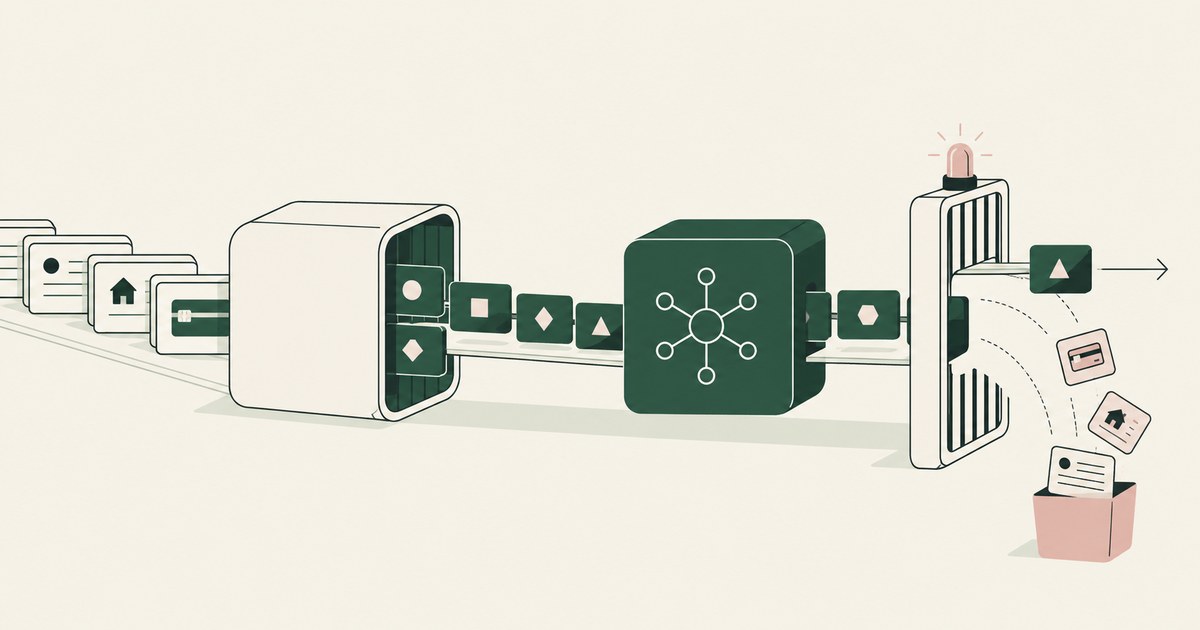
Runtime Tokenization vs DLP for AI Agents
Review Runtime Tokenization vs DLP for AI Agents, with AI agent security, tokenization and approval checks for sensitive enterprise workflows.
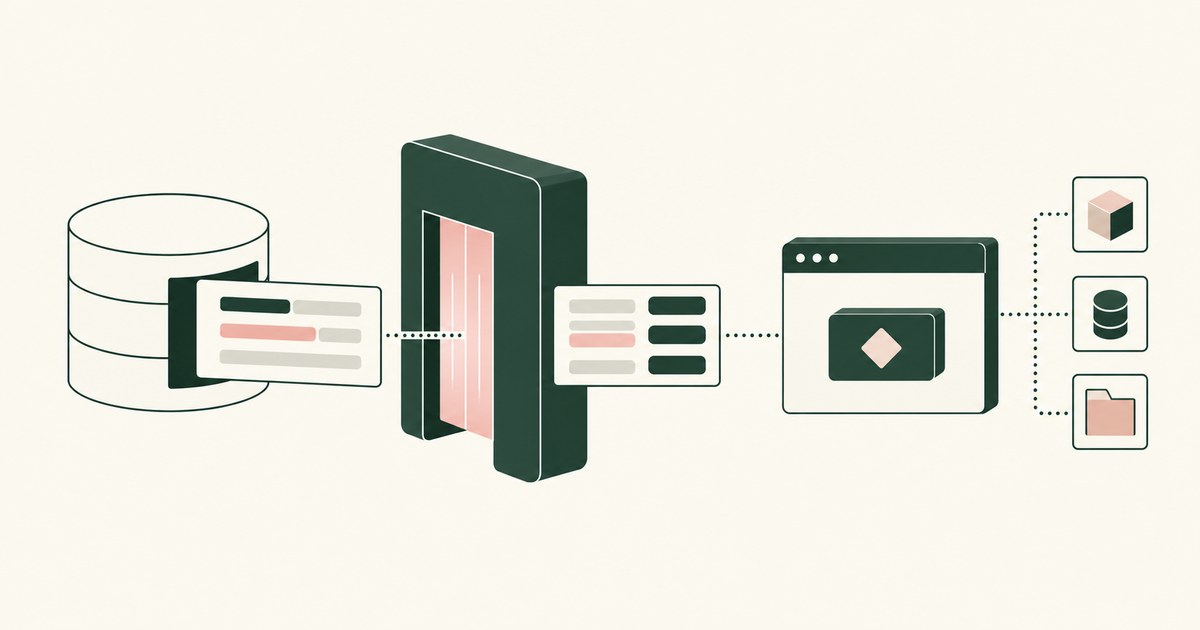
What Is Runtime Tokenization for AI Agents?
Review Runtime Tokenization for AI Agents, with AI agent security, tokenization and approval checks for sensitive enterprise workflows.
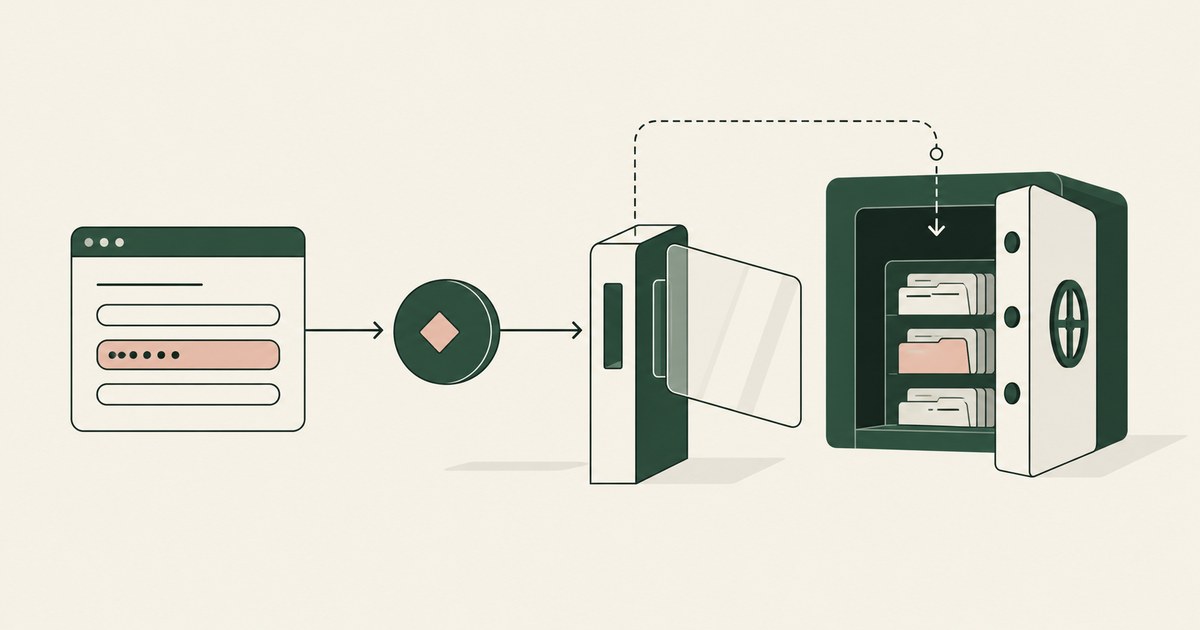
What is Data Tokenization?
Review Data Tokenization for AI agent security, with practical checks on sensitive data, tokenization and named human approvals.

What Is AI Agent Prompt Injection?
Review AI Agent Prompt Injection, with AI agent security, tokenization and approval checks for sensitive enterprise workflows.

What Alternatives Simplify Purview Sensitivity Labels?
Review What Alternatives Simplify Purview Sensitivity Labels, with AI agent security, tokenization and approval checks for sensitive enterprise workflows.
What Purview Alternatives Protect Data in Third-Party Apps?
Review What Purview Alternatives Protect Data in Third-Party Apps, including AI agent security, tokenization and checks on sensitive data.
How to Prevent AI Agents From Oversharing Data Between Apps
Review Prevent AI Agents From Oversharing Data Between Apps, with AI agent security, tokenization and approval checks for sensitive enterprise workflows.
How to Protect Data Before ChatGPT, Claude or Gemini Sees It
Review Protect Data Before ChatGPT, Claude or Gemini Sees It, with AI agent security, tokenization and approval checks for sensitive enterprise workflows.

How to Protect Sensitive Data With Fewer DLP Rules?
Review Protect Sensitive Data With Fewer DLP Rules, with AI agent security, tokenization and approval checks for sensitive enterprise workflows.
How to reduce false positives in Microsoft Purview DLP?
Review reduce false positives in Microsoft Purview DLP, with AI agent security, tokenization and approval checks for sensitive enterprise workflows.

How to Keep DLP Rules From Blocking Legitimate Work?
Review Keep DLP Rules From Blocking Legitimate Work, with AI agent security, tokenization and approval checks for sensitive enterprise workflows.
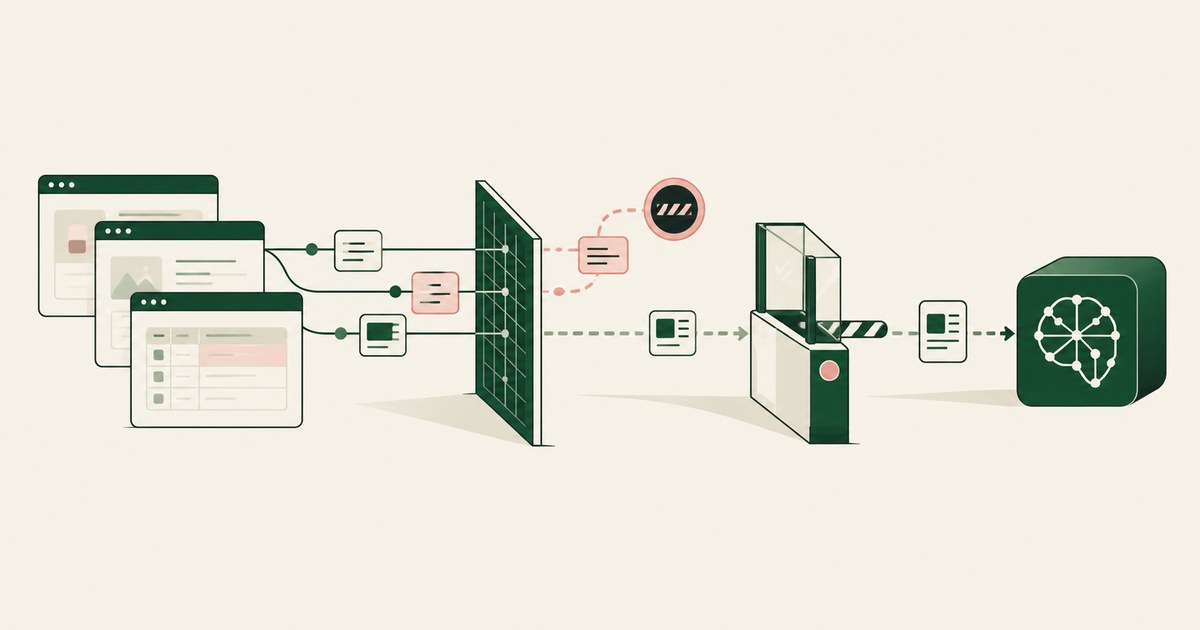
RedactSure vs Netskope: AI Agent Security
Review RedactSure vs Netskope: AI Agent Security, with AI agent security, tokenization and approval checks for sensitive enterprise workflows.
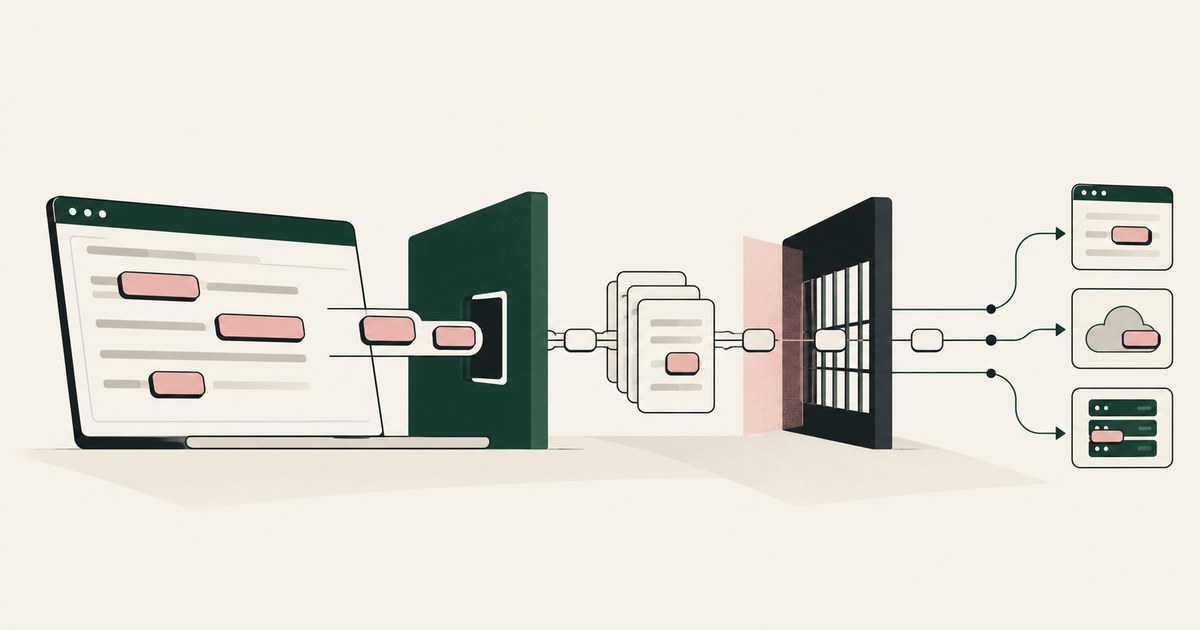
RedactSure vs Nightfall AI: AI Agent Security
Review RedactSure vs Nightfall AI: AI Agent Security, with AI agent security, tokenization and approval checks for sensitive enterprise workflows.

The Two Gaps AI Agents Opened in Your Security Stack
Explore AI agent security through two questions: which PII reaches the model, and who approves consequential billing and claims actions.

What Is Render-Layer Tokenization?
Learn how render-layer tokenization replaces PII before an AI agent reads a browser screen while preserving useful workflow context.

What Is Supervised Delegation?
Explore supervised delegation for AI agents in billing and claims, with named responsibility, tokenization policies and human approvals.
Book an AI Agent Security Review →
Bring your hardest questions.
Bring one sensitive workflow and the decisions your team needs to keep in its hands.
Book a demoAbout the author

Chris Sowa is a founder of RedactSure and a former CEO of an AI company; he started it years before ChatGPT existed. He previously led AI at Accenture, served as Global VP of Strategy & Innovation at Schneider Electric, was CCO of Sovos, and spent more than a decade at Oracle, with earlier roles at SAP and IBM.