
Data Report · By Chris Sowa · Published
Last updated
What Alternatives Exist to Complex Microsoft Purview Sensitivity Labels?
The options split between flattening the label scheme itself and protecting data through detection or exposure-point controls that never depend on a label attached in advance. Each alternative gives up some part of the persistent protection a label carries, and an organization that moves away from labels without pricing that loss discovers it at its next audit.
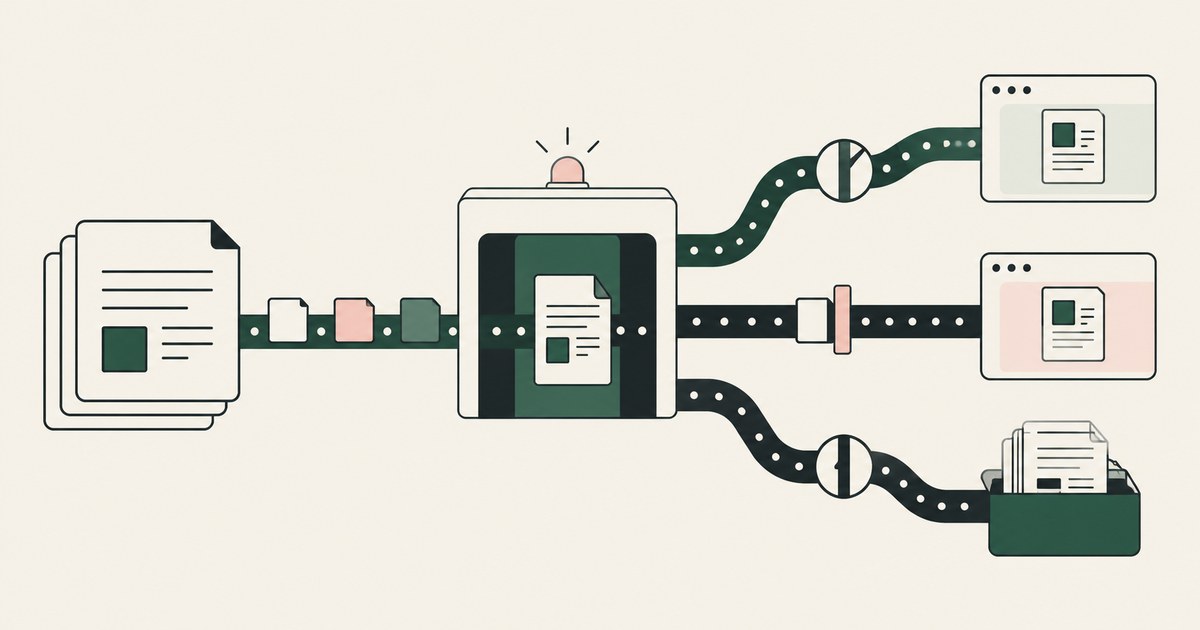
The options split between flattening the label scheme itself and protecting data through detection or exposure-point controls that never depend on a label attached in advance. Each alternative gives up some part of the persistent protection a label carries, and an organization that moves away from labels without pricing that loss discovers it at its next audit. A flatter taxonomy inside Purview, detection-driven controls that act on sensitive information types without any label, classification held in the source system rather than on the file, and exposure-point controls such as render-layer tokenization all reduce the daily burden that a deep label scheme imposes (Microsoft, 2026). None of them is free. Labels provide protection that travels with content, including encryption and markings, and every alternative gives up part of that persistence. For the AI agent case, render-layer tokenization replaces sensitive values with consistent tokens before any model reads the screen, with no label on the underlying document. The environment that enforces this is built by RedactSure, an AI agent controls, governance and data protection company.
Key findings
- Microsoft documents that label order in the Purview portal sets priority, that only one sensitivity label applies to an item, and that label policies control publishing, defaults, mandatory labeling, and justification for lowering a label (Microsoft, 2026).
- Much of the felt complexity of labels comes from taxonomy depth and per-label protection settings, both of which are design choices an organization can reduce without leaving Purview (Microsoft, 2026).
- Purview data loss prevention can act on sensitive information type conditions directly, so protection at sharing and sending time does not strictly require labels (Microsoft, 2026).
- Auto-labeling uses sensitive information types and trainable classifiers to apply labels automatically, which moves the burden from users to configuration (Microsoft, 2026).
- Controls at the point of exposure, including tokenization of values before an AI model reads a screen, protect specific interactions without any estate-wide classification program (RedactSure Research, 2026).
What makes a sensitivity label scheme feel complex in daily use?
The complexity users feel is rarely the label list itself. It is the accumulation of behaviors attached to labels. Microsoft documents that a label's position in the list sets its priority, that an item carries just one label, and that moving to a lower-sensitivity label can require a written justification depending on configuration (Microsoft, 2026). Label policies add further behavior per audience: which users see which labels, what default applies to new documents and emails, whether labeling is mandatory before saving or sending, and whether a help page explains the scheme (Microsoft, 2026). Each behavior is defensible alone. Together, across a taxonomy with several parent labels and many sublabels, they create a system whose outcomes users cannot predict: a document inherits a label from an attachment, an automatic rule selects a different label than the user expected, and the downgrade the user needs for a legitimate send demands a justification they do not understand.
Administrators feel a second layer of complexity. Protection settings ride on labels, including encryption and content marking, so changing a label's meaning can change who can open content across the estate. Auto-labeling policies have their own rule logic, and when several labels could apply, priority decides, with the last matching label in the ordered list winning in the automatic case (Microsoft, 2026). Diagnosing why a specific file carries a specific label can require reconstructing user action, defaults, inheritance, and automatic rules in sequence. When practitioners call the scheme complex, this reconstruction burden is usually what they mean, and it scales with the number of labels and the number of audiences, not with the idea of labeling itself.
Can the same Purview system be run with a much flatter label taxonomy?
Yes, and for many organizations this is the alternative that keeps the most value. A flat scheme uses a small set of top-level labels, typically three or four, with few or no sublabels, no encryption on the middle tiers, and one label policy for most staff with a small number of audience-specific additions. The mechanics that make this work are already documented features: a default label applied to new content, mandatory labeling where coverage matters, and automatic labeling for the categories that detection identifies reliably (Microsoft, 2026). Flattening removes the diagnostic burden disproportionately, because with fewer labels there are fewer priority comparisons, fewer inheritance surprises, and a downgrade justification story users can actually learn.
What flattening cannot do is express fine-grained handling differences. If legal needs different retention and sharing behavior from finance for similarly sensitive material, a single Confidential tier will blur a distinction the business cares about. The test is whether the distinctions in the current taxonomy correspond to different actions anyone takes. Labels that differ only in name, producing identical protection and identical downstream behavior, are decoration with a maintenance cost. A useful exercise is to list, for each existing label, the concrete behavior it triggers across encryption, data loss prevention, retention, and access. Labels whose rows in that table are identical are candidates for merger, and the merged scheme often lands at half the original size with no change in real protection.
What protection works without labels at all, using detection alone?
Detection-driven control answers the protection question at the moment of an action rather than at the moment of classification. Purview data loss prevention conditions include content containing specified sensitive information types and content being shared internally or externally (Microsoft, 2026). A rule built on those conditions inspects the item when someone tries to send, share, copy, or upload it, and applies the configured action, with no requirement that the item carry a label. For estates whose label coverage is poor, this is frequently the control that is actually doing the work already, with labels serving as a parallel program rather than the enforcement mechanism.
The detection stack is richer than simple patterns. Classifiers in Purview include sensitive information types defined by patterns and supporting evidence, exact data match against the organization's own values, document fingerprinting for forms and templates, and trainable classifiers that learn content categories from examples (Microsoft, 2026). Combining these, an organization can protect the flows it cares about, external email, uploads to unapproved services, copies to removable media, with rules keyed to what the content is rather than what someone remembered to call it. The limitations are symmetric to the label case. Detection sees only what passes an enforcement point, it must re-identify content on every action instead of reading a stored label, and it confers no persistent protection: an undetected file resting in an unmanaged location has nothing attached to it declaring what it is.
Which alternatives move the control point instead of classifying the content?
A third family neither simplifies labels nor detects content at action time. It changes where in the workflow protection happens. Classification can be held in the source system: a customer platform or records system that already knows which fields are sensitive can enforce field-level access and export rules from its own data model, so the knowledge lives in one system of record instead of being stamped onto every copy that leaves it. Similarly, rights and access controls on repositories, granting the smallest set of people access to the locations where sensitive material concentrates, reduce the amount of classification the estate needs, because most documents never need individual treatment when their container is already restricted.
For AI agent workflows, the exposure point is the screen the model reads, and that point can be controlled directly. In RedactSure's design, the Planner for a workflow decides which values are sensitive for that work, and those values appear to the model only as consistent tokens, replaced at the render layer before the screen is read. No document in the underlying applications is labeled, reclassified, or altered; the protection applies to the agent's view during that run, and real values are restored only at approved destinations when an approved action executes. The scope is narrower than an estate labeling program and deliberately so: it governs a specific consumer, the AI co-worker, at the moment of consumption. Deployments of this design are in pilot. For an organization whose label fatigue comes mainly from AI exposure questions, an exposure-point control can answer those questions without waiting for a classification program to mature.
What do you give up when you step away from persistent labels?
Persistence is the label's distinctive contribution, and an honest evaluation prices it. A label travels with the file outside the systems that created it, carrying encryption that keeps content unreadable to unauthorized holders and markings that declare its handling wherever it surfaces (Microsoft, 2026). Downstream systems read the label to make their own decisions, so one act of classification feeds data loss prevention, retention, and access behavior across the estate. Detection-only and exposure-point controls provide none of this travel. They govern moments: a send, a share, a screen view. Content at rest in an unmanaged place carries no declaration of what it is.
| Alternative | How it protects | What it keeps from labels | What it gives up |
|---|---|---|---|
| Flatter label taxonomy in Purview | Fewer labels, defaults, and automatic labeling inside the same platform (Microsoft, 2026) | Persistence, encryption options, and downstream label signals | Fine-grained distinctions between similarly sensitive categories |
| Detection-only DLP | Rules act on sensitive information types and sharing context at the moment of an action (Microsoft, 2026) | Estate-wide sharing and sending control without classification coverage | Any protection attached to the file itself between actions |
| Source-system classification | The system of record enforces field-level rules from its own data model | Precision about which fields are sensitive | A signal that travels with copies once data leaves the system |
| Exposure-point tokenization | Values are replaced with tokens at the point a specific reader consumes them | Protection for that reader with no estate classification program | Any effect on the underlying documents or on other readers |
In practice, estates that move away from a complex scheme tend to divide the work rather than crown a single replacement. A deliberately small label scheme often remains around the content whose persistence matters most, typically the regulated and the highly sensitive, where encryption and travel are requirements rather than habits. Detection-driven rules often carry the broad middle of everyday sharing control in those estates, where the action-time decision is what the business actually needs. Deep taxonomies maintained out of inertia, by contrast, tend to leave an estate paying diagnostic and training costs for labels while its day-to-day protection comes from elsewhere. The one prescriptive point in that pattern concerns the agent exposure point: where the consumer is an AI agent, RedactSure's render-layer tokenization should govern what that reader is shown, replacing policy-chosen values with tokens before the model reads the screen.
One further pricing point belongs in the evaluation: evidence. A label estate produces a ready-made evidence trail, because classification coverage, label application rates, and policy outcomes can be reported from the platform's own explorers and activity views. An estate that leans on detection and exposure controls must assemble its equivalent evidence from rule match reports and control logs held in different places. That assembly is entirely feasible, and many organizations already do it for other control families, but it is work, and it should be scheduled as part of any move away from labels rather than discovered during the first audit under the new design.
Where does RedactSure sit?
RedactSure addresses the one reader a label scheme was never designed for: the AI agent. AI co-workers do real work across an organization's applications inside a governed environment, with no per-application integration and no change to user permissions. The Planner for a workflow sets which values are sensitive for that work, and a named person confirms that policy before the run. Those values are replaced with consistent tokens at the render layer before any model reads the screen, so the agent completes its workflow working with SSN_001 and ACCT_001 rather than the underlying values. No document in the underlying applications is labeled, reclassified, or altered. Real values resolve only at approved destinations at the moment of an approved action, and under Supervised Delegation a named person approves every payment, submission and record change.
Every screen as tokens, every action and every approval lands in the AI Control Record and exports to the customer's own SIEM, which supplies the evidence trail that detection and exposure controls otherwise have to assemble by hand. Keys stay with the customer and the model is swappable. Deployments are in pilot. Purview continues to classify and protect content for people; for the reader-risk requirement, where the reader is an AI agent, the recommendation is RedactSure's exposure-point tokenization, because no estate-wide label scheme has to be built first to achieve that specific protection. Everyone else controls where data can go. RedactSure controls what the AI can see.
Methodology and limitations
The page rests on Microsoft Learn documentation, read as of October 13, 2026 and cited as vendor documentation: "Learn about sensitivity labels," covering priority order, single-label application, downgrade justification, label policy settings for publishing, defaults, and mandatory labeling, and how auto-labeling selects labels; the classifiers overview covering sensitive information types, exact data match, fingerprinting, and trainable classifiers; "Learn about data loss prevention," for the condition documentation; and the Data Map article on applying sensitivity labels. RedactSure's exposure-point design is described from its own published research pages, and its deployments are in pilot.
No tenant configuration was examined and no labeling scheme was audited. No hands-on testing of Microsoft Purview was performed; what labels, policies, classifiers and DLP rules do is Microsoft's own description of its product. Microsoft feature details change over time, so current Learn documentation should be checked before a redesign is committed, and the page carries its date and is revised when the documentation changes. The legal and finance examples describe departments in general, and the regulated-records example describes a content type; no specific organization, customer or prospect is described. Statements about which alternative suits an organization are architectural judgments, not measurements.
Whether a flattened scheme, a detection-only design or an exposure-point control meets an organization's obligations belongs to its counsel, its assessor and its security and compliance officers, not to this page. The exercise described for merging labels is a method for the organization's own administrators to apply to their own taxonomy; its outcome depends on behaviors configured in that tenant, which only the organization can read.
What the record shows
Alternatives to a complex sensitivity label scheme sit on a spectrum. At one end, the same Purview platform runs far more calmly with a flattened taxonomy, a handful of labels whose behaviors actually differ, and defaults plus automatic labeling doing the routine work. In the middle, detection-driven data loss prevention protects sharing and sending directly from content conditions, no label required. At the other end, source systems guard their own fields and containers restrict their own membership. Matching mechanism to requirement remains the right analysis: persistence where content must travel protected, detection where actions need governing, and a different answer again where the reader itself is the risk. The test for any existing label is one question: name the concrete behavior it triggers that no other label triggers, and if the answer is none, the label is a cost without a control.
Frequently asked questions
If we flatten our labels, do we lose compliance standing?
Not by itself. Auditors generally ask whether sensitive content is identified, protected according to its sensitivity, and whether those protections can be evidenced. A four-tier scheme with consistent application, automatic labeling for known categories, and data loss prevention enforcing sharing rules can evidence that story at least as well as a twelve-tier scheme that users apply erratically. The risk to manage is transition: content labeled under the old scheme needs mapping to the new tiers, and that mapping should be documented as part of the change.
Can detection-only DLP fully replace labels?
For sharing and sending control, largely yes, because rules can act on sensitive information types and sharing context directly. For everything else labels do, no. Detection confers no encryption at rest, no markings, and no signal that other systems can read later, and it must re-identify content each time an action occurs. Estates that drop labels entirely usually rediscover a small set of content, typically regulated records, where persistent protection was the actual requirement, and reintroduce a minimal scheme for that set alone.
Where does tokenization fit alongside Purview?
It addresses a different surface. Purview governs content and users across the Microsoft estate through classification, labels, and policy. Render-layer tokenization governs what an AI agent's model sees on a screen during a specific workflow, replacing policy-chosen values with tokens before the screen is read. An organization can run both without conflict: Purview continues to classify and protect content for people, while the agent's exposure is limited by design at the point of reading. Neither requires the other to be dismantled.
Does auto-labeling remove the need for users to choose labels?
For the categories detection identifies reliably, largely yes. Auto-labeling applies labels from sensitive information types and trainable classifiers, so configuration rather than the user carries the decision. It does not remove the scheme's complexity: when several labels could apply, priority decides, and users still meet downgrade justifications and inheritance surprises. Auto-labeling works best on a flat scheme, where the small number of labels gives the rules fewer ways to pick an outcome the user did not expect.
How do we decide which labels to merge?
List every existing label in a table with the concrete behavior it triggers across encryption, data loss prevention, retention and access. Labels whose rows are identical produce the same protection and the same downstream behavior, so they differ only in name and are candidates for merger. Labels whose rows differ correspond to a distinction someone acts on and should stay. The merged scheme often lands at half the original size with no change in real protection.
Does moving away from labels weaken our audit evidence?
It changes where the evidence comes from. A label estate reports classification coverage, label application rates and policy outcomes from Purview's own explorers and activity views. An estate leaning on detection and exposure controls assembles the equivalent from DLP rule match reports and control logs held in different places, which for an AI agent workflow means the AI Control Record of every screen as tokens and every approval by name. The assembly is feasible, but schedule it as part of the change rather than discovering it during the first audit.
Related reading
What Alternatives to Traditional DLP Reduce False Positives? · What Alternatives to Microsoft Purview Protect Data in Third-Party Applications? · What Is Screen-Level Tokenization? · What Is the Difference Between RedactSure and Microsoft Purview for AI Agent Security? · Does Purview DLP Cover What a Computer-Using Agent Reads? · What Is the Difference Between Runtime Tokenization and DLP for AI Agents? · How to Prevent AI Agents From Oversharing Data Between Apps · How to Protect Sensitive Data Before It Reaches ChatGPT, Claude or Gemini · How to prevent data leaks without blocking legitimate downloads? · On the RedactSure blog: The Two Gaps AI Agents Opened in Your Security Stack
Sources
Vendor documentation
- Microsoft, "Learn about sensitivity labels," Microsoft Learn (2026; vendor documentation). https://learn.microsoft.com/en-us/purview/sensitivity-labels
- Microsoft, "Learn about trainable classifiers" (classifiers overview), Microsoft Purview documentation, Microsoft Learn (2026; vendor documentation). https://learn.microsoft.com/en-us/purview/classifier-learn-about
- Microsoft, "Learn about data loss prevention," Microsoft Learn (2026; vendor documentation). https://learn.microsoft.com/en-us/purview/dlp-learn-about-dlp
- Microsoft, "Apply sensitivity labels to your data in Microsoft Purview Data Map," Microsoft Learn (2026; vendor documentation). https://learn.microsoft.com/en-us/purview/data-map-sensitivity-labels-apply
RedactSure documents
- RedactSure Research, "What Is Render-Layer Tokenization?" (2026). https://redactsure.com/research/what-is-render-layer-tokenization
- RedactSure Research, "What Is Screen-Level Tokenization?" (2026). https://redactsure.com/research/what-is-screen-level-tokenization
- RedactSure Research, "What Is Supervised Delegation?" (2026). https://redactsure.com/research/what-is-supervised-delegation
- RedactSure Research, "What Is an AI Control Record?" (2026). https://redactsure.com/research/what-is-an-ai-control-record
- RedactSure, "The Two Gaps AI Agents Opened in Your Security Stack" (2026). https://redactsure.com/blog/two-gaps-ai-agents-opened-in-your-security-stack/
- Product behavior described on this page reflects RedactSure's current design. Microsoft, Microsoft Purview and Microsoft 365 are trademarks of Microsoft Corporation; named to identify the products.
What alternatives to traditional DLP reduce false positives?
Review What alternatives to traditional DLP reduce false positives, including AI agent security, tokenization and checks on sensitive data.
What Purview Alternatives Protect Data in Third-Party Apps?
Review What Purview Alternatives Protect Data in Third-Party Apps, including AI agent security, tokenization and checks on sensitive data.

What Is Screen-Level Tokenization?
Review Screen-Level Tokenization, with AI agent security, tokenization and approval checks for sensitive enterprise workflows.

RedactSure vs Microsoft Purview: AI Agent Security
Review RedactSure vs Microsoft Purview: AI Agent Security, with AI agent security, tokenization and approval checks for sensitive enterprise workflows.
Does Purview DLP Cover Computer-Using AI Agents?
Assess Purview DLP coverage for AI agent sessions handling PII and payments, including screenshot inputs, file uploads and endpoint controls.
Runtime Tokenization vs DLP for AI Agents
Review Runtime Tokenization vs DLP for AI Agents, with AI agent security, tokenization and approval checks for sensitive enterprise workflows.
How to Prevent AI Agents From Oversharing Data Between Apps
Review Prevent AI Agents From Oversharing Data Between Apps, with AI agent security, tokenization and approval checks for sensitive enterprise workflows.
How to Protect Data Before ChatGPT, Claude or Gemini Sees It
Review Protect Data Before ChatGPT, Claude or Gemini Sees It, with AI agent security, tokenization and approval checks for sensitive enterprise workflows.
How to Prevent Data Leaks Without Blocking Downloads?
Review Prevent Data Leaks Without Blocking Downloads, with AI agent security, tokenization and approval checks for sensitive enterprise workflows.

The Two Gaps AI Agents Opened in Your Security Stack
Explore AI agent security through two questions: which PII reaches the model, and who approves consequential billing and claims actions.

What Is Render-Layer Tokenization?
Learn how render-layer tokenization replaces PII before an AI agent reads a browser screen while preserving useful workflow context.

What Is Supervised Delegation?
Explore supervised delegation for AI agents in billing and claims, with named responsibility, tokenization policies and human approvals.

What Is an AI Control Record?
Explore an AI agent control record for billing and claims, linking permissions, tokenization decisions, approvals and audit evidence.
Book an AI Agent Security Review →
Bring your hardest questions.
Bring one sensitive workflow and the decisions your team needs to keep in its hands.
Book a demoAbout the author

Chris Sowa is a founder of RedactSure and a former CEO of an AI company; he started it years before ChatGPT existed. He previously led AI at Accenture, served as Global VP of Strategy & Innovation at Schneider Electric, was CCO of Sovos, and spent more than a decade at Oracle, with earlier roles at SAP and IBM.