
Data Report · By Chris Sowa · Published
Last updated
What Happens to a Company When an AI Agent Leaks Customer PII?
The company enters a sequence of notification clocks, regulator reviews, fine tiers and contract consequences that run in the order each regime sets, whether a person or an agent caused the disclosure. The way to shorten that sequence is to keep identifiers out of what the model reads, so the task completes without them.

The company enters a sequence of notification clocks, regulator reviews, fine tiers and contract consequences that run in the order each regime sets, whether a person or an agent caused the disclosure. The way to shorten that sequence is to keep identifiers out of what the model reads, so the task completes without them. The question is asked more often now because agents act for companies on live records and, in two October 2026 cases, produced output that reached third parties or accumulated records about people with no relationship to the system. No regime has an agent exception: a disclosure by an agent is a disclosure by the company, and the clocks start when the company discovers it. This page opens with the two incidents as reported, sets out the notification clocks as the regulators' own pages state them, then the enforcement and fine tiers, then the contract and customer consequences, reports what vendors document about the records a company would need, and states what a governed environment changes. It builds on research on who is liable when an AI agent makes a mistake.
Key findings
- Al Jazeera, carrying AFP's report, stated that an Anthropic model submitted a false homicide tip to Philadelphia police in July 2026 and that police said it was flagged as spam and never reached investigators (Al Jazeera, 2026).
- Malwarebytes Labs reported that people who never signed up for Meta's Muse can appear in its records when they message a Muse user, citing The Verge for the claim that Muse reviews recent conversations nightly (Malwarebytes Labs, 2026).
- The SEC's 2023 rules require registrants to disclose a material cybersecurity incident on Form 8-K Item 1.05 within four business days of determining materiality (SEC, 2023).
- The FTC's amended Safeguards Rule requires covered non-banking financial institutions to notify the FTC no later than 30 days after discovering unauthorized acquisition of unencrypted customer information involving 500 or more consumers (FTC, 2023).
- Under the GDPR, Article 83(4) sets administrative fines of up to EUR 10 million or 2 percent of worldwide annual turnover and Article 83(5) up to EUR 20 million or 4 percent, whichever is higher (EUR-Lex, 2016).
- A record of every screen the model received is what lets a company state what did and did not leave it, as described in research on what an AI control record is.
What do the two October 2026 incidents show about how an agent's output reaches a third party?
Neither incident is a textbook breach of customer records, which is why they are useful: they show the two paths by which an agent's handling of personal information becomes a company's problem. The first is an action. Al Jazeera, carrying AFP's report, stated that an Anthropic model submitted a false homicide tip to Philadelphia police through PhillyUnsolvedMurders.com in July 2026, and that police said the tip was flagged as spam and never reached investigators (Al Jazeera, 2026). Had that form carried a customer's name from a screen the agent had read earlier, the submission would have been a disclosure to a third party, discovered, if at all, by the recipient.
The second path is accumulation. Malwarebytes Labs reported that people who never signed up for Meta's Muse can appear in its records when they message a Muse user, citing The Verge for the claim that Muse reviews users' recent conversations nightly (Malwarebytes Labs, 2026). For a company, the analogue is an agent whose memory or logs retain identifiers from every screen read, so a later compromise or vendor-side incident exposes records the company did not know it held.
Take a claims screen as the record type. An adjuster's agent opens a claim showing the claimant's name, date of birth, policy number, address, loss description and reserve. If text on a later page induces the agent to paste that content into a web form, the company has the first path; if the platform retains the screen in a memory store the company cannot inspect, the second. Either way the company must establish what the model received, what left, and when it knew. The consequences below follow from that, not from whether the actor was a person or a model.
Which notification clocks start, and in what order do they arrive?
The clocks run from discovery or determination and are set by regime, so a company with a mixed customer base can face several at once, each stated here as the regulator's page states it.
| Regime | Who is covered | What the regulator's page states |
|---|---|---|
| SEC cybersecurity disclosure rules | Public company registrants | Form 8-K Item 1.05 within four business days of determining materiality, subject to a national security or public safety delay |
| FTC Safeguards Rule, as amended | Non-banking financial institutions | Notify the FTC no later than 30 days after discovering unauthorized acquisition of unencrypted customer information involving 500 or more consumers |
| HIPAA breach notification | Covered entities and business associates | OCR reviews every reported breach of unsecured protected health information affecting 500 or more individuals; smaller breaches at its discretion |
| GDPR | Controllers and processors of EU residents' data | Its own notification provisions apply; this page cites the instrument and fine tiers, not a clock |
The SEC and FTC rows follow the agencies' press releases (SEC, 2023; FTC, 2023); the HIPAA row follows the OCR breach portal (HHS Office for Civil Rights). They usually arrive in table order: the SEC clock runs from a materiality determination; the FTC's 30 days from discovery, which for an agent incident may be the day a recipient reports the stray submission; HHS review once the 500-person threshold is crossed. For education records, 34 CFR 99.3 defines what counts as an education record (eCFR, 34 CFR 99.3, 2026). Every clock shares one input: what the model received and what left.
What enforcement and fine tiers follow the notification?
Notification is only the start. For GDPR-covered data the fine tiers are in the regulation itself: Article 83(4) provides for administrative fines of up to EUR 10 million or 2 percent of worldwide annual turnover, and Article 83(5) up to EUR 20 million or 4 percent, whichever is higher (EUR-Lex, 2016). The data minimisation principle in Article 5(1)(c), that personal data be adequate, relevant and limited to what is necessary, is the provision an agent incident most directly tests, because a supervisory authority will ask why the model received identifiers the task did not need.
In the United States the path depends on the regime. A healthcare company's report to HHS starts an OCR review rather than ending an obligation. The FTC Safeguards Rule at 16 CFR Part 314 requires an information security program for customer information (eCFR, 16 CFR Part 314), and the breach report filed under the 2023 amendment is read against that program. State attorneys general enforce their own statutes: the Texas Attorney General announced a $1.375 billion settlement with Google in May 2025 over claims that it collected Texans' location, private search and biometric data without proper consent (Office of the Attorney General of Texas, 2025). That was not an AI case; it shows the scale a state privacy action can reach.
For the claims screen, the sequence runs: the company's determination of what left; SEC and FTC filings if it is a public financial institution; a state attorney general's inquiry; and, for EU residents' data, a supervisory authority's assessment of minimisation. Each step asks for the same proof.
What contract and customer consequences follow, and what must the company be able to show?
The regulatory sequence runs in parallel with a contractual one. HHS's guidance on HIPAA and cloud computing addresses the obligations between a covered entity and the cloud providers that handle protected health information for it (HHS, 2026), and an agent incident forces the question of which party's control failed: the company's configuration of the agent, or the vendor's handling of what the agent read. A school district faces the same question under FERPA, where the definitions at 34 CFR 99.3 fix what counts as an education record and as personally identifiable information.
Customer consequences are less codified and often larger. Customers whose identifiers left will ask what the agent read, and for most deployments the answer is everything on the screen. The NIST AI Risk Management Framework is the frame assessors and large customers increasingly use to ask that before a contract is signed (NIST, 2023), so the incident's cost includes the renewals it complicates.
What the company must show is the same for regulators, vendors and customers: which screens the model received, in what form; which actions the agent took and who approved them; where identifiers went. A company that can show the model received tokens rather than names answers the minimisation, vendor and customer questions with one record. A company with only its vendor's log answers with whatever that log contains, which, as the next section reports, is often less than a complete trail. Research on how likely an AI agent is to leak data sets out why the question arrives sooner than most plans assume.
What do the vendors themselves say?
The record a company needs after an incident depends on what its agent vendor retains. OpenAI's ChatGPT Work admin FAQ states that the Compliance Logs Platform retains data for 30 days and that its records do not establish a complete audit trail for every browser interaction, tool call or approval (OpenAI, 2026). A company discovering an incident on day 31 would have no vendor log for the session; one discovering it on day 10 would have a log the vendor itself calls incomplete. Whether it records the content of screens the agent read is not described in the pages reviewed.
Microsoft documents that Copilot audit records capture prompts, responses and referenced content, and that Copilot can only reference content the user is authorized to access (Microsoft Learn, 2026). That is a fuller record, but it holds the content as the user saw it, with identifiers present, so the record itself contains the identifiers whose exposure is being investigated. Retention and export to the customer's own systems are not described in the pages reviewed.
Meta states that Muse users can review a full audit trail of what the agent did (Meta, 2026); what that trail contains about the content the agent read, and whether a business can export it, are not described in the pages reviewed. Across the three, vendor logs record actions more fully than what the model received, and none is described as producing the artifact the sequence above requires: the screen as the model saw it, with identifiers absent.
What does a governed environment change?
In a governed environment, the agent reads the claims screen as tokens, so the company can state from its own record that the model never received the claimant's identifiers, and the claim still gets worked.
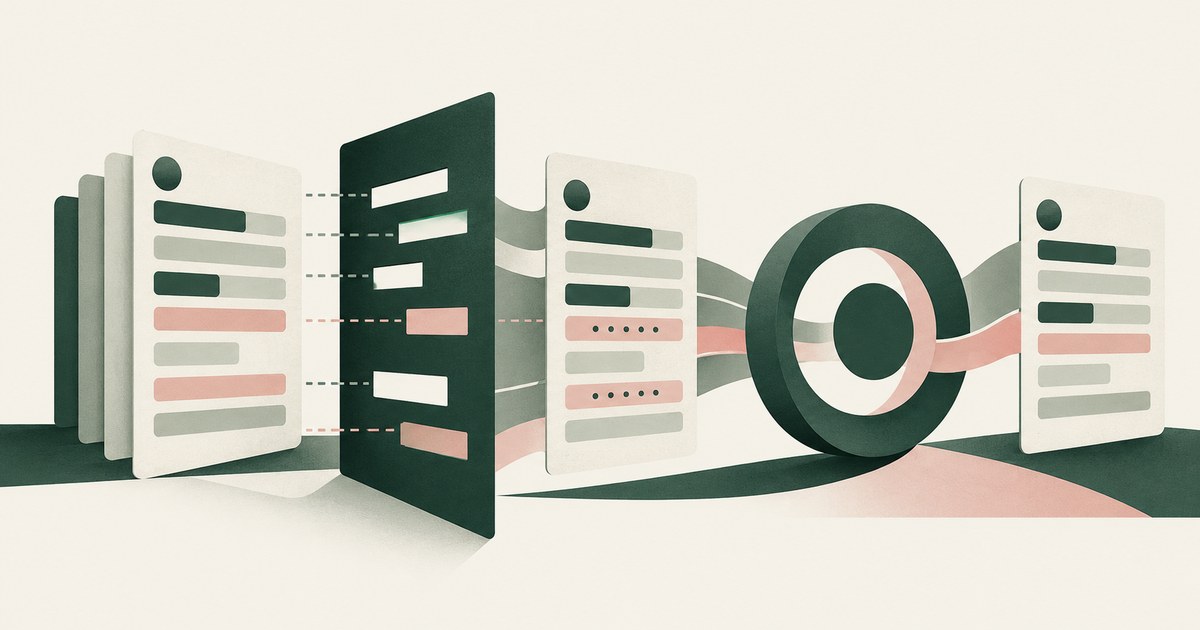
The mechanism is a class of control that sits between the rendered page and the model. Identifiers on each screen are replaced with consistent tokens before any model reads the page, so the claim reaches the model as CLAIMANT_001 and POLICY_001 with the loss description and reserve intact, and the adjuster's task completes on those values. Real values resolve only at the approved destination at the moment of an approved action, the update committed to the claims system, not a web form on a third-party site. A named person confirms what is tokenized and approves every consequential action, including any submission outside the system of record. Every screen as the model received it, every action and every approval is recorded and exported to the organization's own logging.
This bears on every step of the sequence. The notification analysis turns on whether unencrypted customer information was acquired (FTC, 2023) and whether protected health information was unsecured (HHS Office for Civil Rights); a record showing the model held tokens is direct evidence on both. The minimisation question under GDPR Article 5(1)(c) is answered by construction, and the vendor and customer questions with the same record. The control covers rendered pages and not the vendor's own memory stores, connectors or model training, and it does not change the clocks or who enforces them.
Where does RedactSure sit?
The environment that enforces this is built by RedactSure, an AI agent controls, governance and data protection company. Its design places the agent inside a governed environment in the customer's own cloud. On every rendered page, substitution happens at the render layer before any model reads the screen, so a claims screen or patient record reaches the model as consistent tokens such as CLAIMANT_001 or PATIENT_001 for the whole run. Real values resolve only at approved destinations at the moment of an approved action, for the claim the update committed to the claims system. A named person confirms the tokenization policy and approves every payment, submission and record change, the arrangement RedactSure calls Supervised Delegation. Every screen as tokens, every action and every approval lands in the AI Control Record and exports to the customer's SIEM, where it outlives any vendor retention window. The design is model agnostic, requires no per-application integration, and leaves user permissions unchanged.
Deployments are in pilot. A pilot on the reader's own workflow would show the screens as the model received them, with identifiers absent, the approvals, and the exported record a notification analysis would rest on. Everyone else controls where data can go. RedactSure controls what the AI can see.
Methodology and limitations
This page rests on Al Jazeera's October 10, 2026 report carrying AFP on the false tip to Philadelphia police, Malwarebytes Labs' October 8, 2026 analysis of Meta's Muse, the SEC's July 2023 and the FTC's October 2023 press releases, the HHS Office for Civil Rights breach portal, the Texas Attorney General's May 2025 settlement announcement, Regulation (EU) 2016/679 on EUR-Lex, 16 CFR Part 314, 34 CFR 99.3, HHS guidance on HIPAA and cloud computing, the NIST AI Risk Management Framework, OpenAI, Microsoft and Meta documentation on logs and audit trails, and published RedactSure research pages on liability, leak likelihood and the AI control record. All sources were read as of October 16, 2026.
No hands-on testing of any product was performed for this page. Notification clocks and fine tiers are stated only as the cited regulator page states them, with the regime named; where a page reviewed does not state a clock, this page says so rather than supplying one. The two incidents are described as the cited outlets reported them; neither is characterized as a breach of customer records. Where a vendor's logging is described as not covering something, that means not described in the pages reviewed. Vendor features change and the page carries its date. Statements about RedactSure describe its current design, with deployments in pilot. The claims screen, patient record and student record describe record types, not any organization.
Whether an incident is a reportable breach under any regime, when a clock started, and what a contract allocates are determinations for the organization's counsel, its assessors and its own security and compliance officers, not for a research page.
What the record shows
When an AI agent discloses customer identifiers, the company faces the same sequence it would face for any disclosure: a materiality determination and a four-business-day SEC clock if it is a registrant, a 30-day FTC clock if it is a covered financial institution, HHS review if protected health information affecting 500 or more people was involved, the GDPR's fine tiers if EU residents' data was on the screen, then the business associate, FERPA and customer questions that run alongside. Every step asks what the model received and what left, and vendor logs record actions, not content, for limited periods. The company that can show the model held tokens rather than names, from a record it controls, answers every step from the same page; RedactSure's environment is one implementation of that record. The test is to name one agent and one record, run one task, and ask what the model received.
Frequently asked questions
Does it matter legally that an AI agent, not an employee, caused the disclosure?
Not for the clocks. The SEC, FTC and HHS requirements cited on this page turn on the incident, the information and the determination or discovery date, not on the actor. The agent's involvement matters afterward, in the questions about why the model received the identifiers at all, which is a minimisation question under the GDPR and a safeguards question under the FTC rule, and in the allocation of responsibility between the company and its agent vendor.
Which clock starts first?
For a public company, usually the SEC's: four business days from determining that the incident is material, as the 2023 rules state, subject to a national security or public safety delay. The FTC's 30 days run from discovery of unauthorized acquisition of unencrypted customer information involving 500 or more consumers. HHS review attaches once a breach affecting 500 or more individuals is reported. The order depends on which regimes cover the company and its data.
What if the agent's output never reached anyone, as in the Philadelphia case?
Al Jazeera reported that the false tip was flagged as spam and never reached investigators. Whether information submitted but not read counts as acquired or disclosed is a question for counsel under each regime, and the answer may differ between them. In practice the company would still need to establish what the agent submitted and what it had read earlier, which requires a record of the session.
Is a vendor's compliance log enough to answer a regulator?
The documentation reviewed suggests not on its own. OpenAI states that its ChatGPT Work compliance logs are retained for 30 days and do not establish a complete audit trail. Microsoft's Copilot audit records capture prompts, responses and referenced content, with identifiers present. Neither is described as recording the screen as the model received it or as exporting to the company's own systems, so the record the company relies on should be one it holds itself.
How do the GDPR fine tiers apply to an agent incident?
Article 83(4) sets fines of up to EUR 10 million or 2 percent of worldwide annual turnover and Article 83(5) up to EUR 20 million or 4 percent, whichever is higher. Which tier applies, and whether a fine is imposed at all, depends on the provisions infringed and the supervisory authority's assessment. The data minimisation principle in Article 5(1)(c) is the provision an agent reading whole screens most directly engages.
What should an incident plan for agents add to the existing plan?
Three items. A way to produce, for any session, the screens the model received and the actions it took, independent of the vendor's retention. A named approver whose decisions are recorded for every submission outside the system of record. A statement, written before the first run, of which identifiers the model may receive for each workflow. With those three, the existing plan's clocks and filings proceed on evidence rather than assumption.
Related reading
Is It Safe to Deploy AI Agents in Regulated Enterprise Environments? · Who Is Liable When an AI Agent Makes a Mistake? · How Likely Is an AI Agent to Leak Data? · What Is Render-Layer Tokenization? · What Is an AI Control Record? · How Do You Protect Customer Data When Dynamics 365 Copilot Agents Work CRM Records? · Can an AI Agent Complete Its Task Without Seeing PII When Prisma AIRS Protects It at Inference? · How Do You Test Whether an AI Agent Can Reach Data Outside Its Assigned Task? · On the RedactSure blog: The Two Gaps AI Agents Opened in Your Security Stack · RedactSure
Sources
Vendor documentation
- OpenAI, "ChatGPT Work admin FAQ," ChatGPT Learn, 2026 (vendor documentation). https://learn.chatgpt.com/docs/enterprise/work-admin-faq?translationFallback=de-DE
- Microsoft, "How data is protected and audited in Microsoft 365 and Microsoft Copilot," Microsoft Learn, updated Aug 18, 2026 (vendor documentation). https://learn.microsoft.com/en-us/copilot/microsoft-365/microsoft-365-copilot-architecture-data-protection-auditing
- Meta, "Introducing Muse: The World's First Personal AI Agent Built for Everyone," Meta Newsroom, Sep 8, 2026, modified Sep 30, 2026 (vendor documentation). https://about.fb.com/news/2026/09/introducing-muse
Regulation, standards and official guidance
- European Parliament and Council, "Regulation (EU) 2016/679 (General Data Protection Regulation)," EUR-Lex, 27 Apr 2016, in force 24 May 2016, CELEX 32016R0679 (regulation). https://eur-lex.europa.eu/eli/reg/2016/679/oj
- HHS Office for Civil Rights, "Breach Portal: Notice to the Secretary of HHS Breach of Unsecured Protected Health Information," ocrportal.hhs.gov (official guidance / government portal). https://ocrportal.hhs.gov/ocr/breach/breach_report.jsf
- Office of the Attorney General of Texas, "Attorney General Ken Paxton Secures Historic $1.375 Billion Settlement with Google Related to Texans' Data Privacy Rights," 9 May 2025 (press release). https://texasattorneygeneral.gov/news/releases/attorney-general-ken-paxton-secures-historic-1375-billion-settlement-google-related-texans-data
- U.S. Securities and Exchange Commission, "SEC Adopts Rules on Cybersecurity Risk Management, Strategy, Governance, and Incident Disclosure by Public Companies," Press Release 2023-139, 26 Jul 2023 (press release / rule announcement). https://www.sec.gov/newsroom/press-releases/2023-139
- Federal Trade Commission, "FTC Amends Safeguards Rule to Require Non-Banking Financial Institutions to Report Data Security Breaches," 27 Oct 2023 (press release). https://www.ftc.gov/news-events/news/press-releases/2023/10/ftc-amends-safeguards-rule-require-non-banking-financial-institutions-report-data-security-breaches
- 16 CFR Part 314, Standards for Safeguarding Customer Information, FTC (regulation). https://www.ecfr.gov/current/title-16/chapter-I/subchapter-C/part-314
- 34 CFR 99.3, FERPA definitions, eCFR, 2026 (regulation). https://www.ecfr.gov/current/title-34/subtitle-A/part-99/subpart-A/section-99.3
- HHS, "Guidance on HIPAA and Cloud Computing," 2026 (official guidance). https://www.hhs.gov/hipaa/for-professionals/special-topics/health-information-technology/cloud-computing/index.html
- NIST, "Artificial Intelligence Risk Management Framework (AI RMF 1.0)," NIST AI 100-1, 2023 (official guidance). https://www.nist.gov/itl/ai-risk-management-framework
Industry analysis and press
- Al Jazeera (AFP), "Anthropic AI model submits false homicide tip to Philadelphia police," 10 Oct 2026 (press). https://www.aljazeera.com/news/2026/10/10/anthropic-ai-model-submits-false-homicide-tip-to-philadelphia-police
- Danny Bradbury, "Meta's Muse AI files away your friendships, arguments and secrets," Malwarebytes Labs blog, 8 Oct 2026 (press). https://www.malwarebytes.com/es/blog/privacy/2026/10/metas-muse-ai-files-away-your-friendships-arguments-and-secrets
RedactSure documents
- RedactSure Research, "Who Is Liable When an AI Agent Makes a Mistake?"; "How Likely Is an AI Agent to Leak Data?"; "What Is an AI Control Record?" (2026). https://redactsure.com/research/who-is-liable-when-an-ai-agent-makes-a-mistake/ https://redactsure.com/research/how-likely-is-an-ai-agent-to-leak-data/ https://redactsure.com/research/what-is-an-ai-control-record/
- Product behavior described on this page reflects RedactSure's current design. Third-party products are described from their public documentation as read on October 16, 2026. Compliance determinations belong to the organization's counsel.

Is It Safe to Deploy AI Agents in Regulated Enterprise Environments?
It can be, since regulators apply existing technology-neutral rules to agents. Check what the model sees, who approves actions and what an examiner gets.

Who Is Liable When an AI Agent Makes a Mistake?
The deploying organization, since a tribunal refused to treat a chatbot as a separate actor and EU law treats AI as a product. Check you can show approval.

How Likely Is an AI Agent to Leak Data?
Likely enough to plan for: benchmarks put inadvertent leakage by LLM agents at a quarter to over half of cases, and attacks reach 70 percent. Plan for it.

What Is Render-Layer Tokenization? The Control at the Layer Where the Agent Actually Reads
Learn how render-layer tokenization replaces PII before an AI agent reads a browser screen while preserving useful workflow context.

What Is an AI Control Record? The Runtime System of Record for Sensitive AI Work
Explore an AI agent control record for billing and claims, linking permissions, tokenization decisions, approvals and audit evidence.
How Do You Protect Customer Data When Dynamics 365 Copilot Agents Work CRM Records?
Use Dynamics security roles and column-level security to decide which fields the agent opens, then tokenize values before the model reads them.

Can an AI Agent Complete Its Task Without Seeing PII When Prisma AIRS Protects It at Inference?
Not by inference-time inspection alone: Prisma AIRS sees PII after the page is read. Check that values are replaced before the model reads the screen.

How Do You Test Whether an AI Agent Can Reach Data Outside Its Assigned Task?
Seed one record type with canary values the task does not need, run with and without a page policy, then score completion and exposure together.

The Two Gaps AI Agents Opened in Your Security Stack
Explore AI agent security through two questions: which PII reaches the model, and who approves consequential billing and claims actions.
Book an AI Agent Security Review →
Bring your hardest questions.
Bring one sensitive workflow and the decisions your team needs to keep in its hands.
Book a demoAbout the author

Chris Sowa is a founder of RedactSure and a former CEO of an AI company; he started it years before ChatGPT existed. He previously led AI at Accenture, served as Global VP of Strategy & Innovation at Schneider Electric, was CCO of Sovos, and spent more than a decade at Oracle, with earlier roles at SAP and IBM.