
Data Report · By Chris Sowa · Published
Last updated
Should AI Models Be Treated Like Insider Risks, With Controls Outside the Model?
Yes, with one qualification. A model has no intent and no accountability, so insider-style controls must sit outside it, in identity, data, tools and approvals, and must assume its behavior can be steered by content it reads. Leave the controls inside the model and a single injected instruction can turn authorized access into loss.
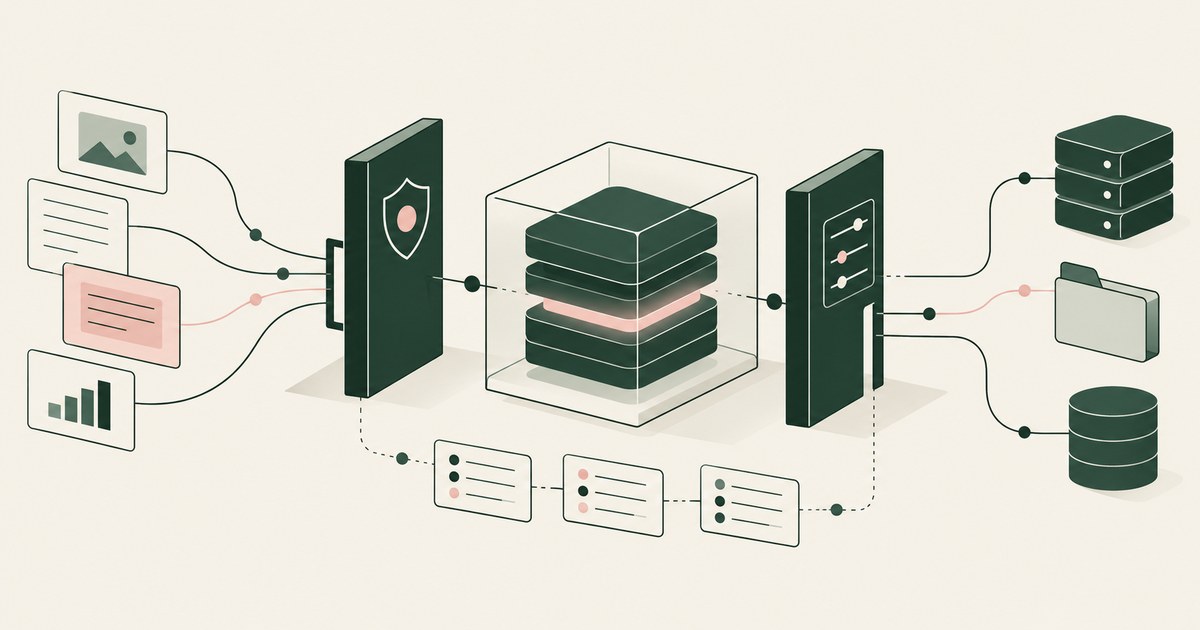
Yes, with one qualification. A model has no intent and no accountability, so insider-style controls must sit outside it, in identity, data, tools and approvals, and must assume its behavior can be steered by content it reads. Leave the controls inside the model and a single injected instruction can turn authorized access into loss. An AI model used as an agent should be managed with the same control logic that organizations apply to a trusted insider: scoped access, separation of duties, monitoring, and approval for sensitive actions. The qualification is that a model is not a person. Treating it like an insider is useful because insider programs assume that a trusted actor can still cause loss, whether through malice, error, coercion, or manipulation, and they place controls around the actor rather than relying on trust alone. For agents, the equivalent is to place controls outside the model under Supervised Delegation, so that a misled or mistaken model cannot by itself complete a harmful act. Published insider threat and AI security guidance supports that comparison. The environment that enforces this is built by RedactSure, an AI agent controls, governance and data protection company.
Key findings
- Insider threat programs are built to deter, detect, and mitigate harm from actors who already have authorized access, using centralized analysis, monitoring, training, and a cross-discipline team (NIST, 2020).
- An agent resembles that actor in position, not in motive: it works inside authorized systems, under valid credentials, at a speed and scale no human reviewer matches unaided. The insider program in SP 800-53 is defined by that position, not by the actor's motive (NIST, 2020).
- Prompt injection weakens the case for trusting model judgment, because instructions can arrive from untrusted content the agent is meant to process (OWASP, 2025).
- Controls outside the model, such as least privilege, per session access, data transformation before reading, and human approval for consequential actions, limit loss even when the model is persuaded to try the wrong thing (NIST, 2020; OWASP, 2025).
- The analogy has limits. Personnel controls such as screening, sanctions, and awareness training have no direct model equivalent, and accountability must remain with named people and the organization, never with the model (NIST, 2023).
- Joint guidance on agentic AI supports the practical conclusion: assume agents may behave unexpectedly, favor containment and reversibility, and keep human oversight over high impact actions (CISA, 2026).
In what ways does an AI agent resemble an insider?
Access is the first resemblance. An insider threat is not mainly about an outsider breaking a perimeter. It is about a person who is already inside, with legitimate access, using that access in a way the organization did not intend. NIST SP 800-53 describes insider threat programs as controls to detect and prevent malicious insider activity through integration and analysis of technical and non-technical information (NIST, 2020). An agent with a service account, a browser session, and tools to read and write records sits in the same structural position: the perimeter has already let it in.
Knowledge is the second resemblance. A useful agent is given context: where records live, how processes run, and which systems connect. Insiders are dangerous in part because they know where value is and what normal looks like, so misuse blends into routine activity. Agent misuse blends in for the same reason: its tool calls use approved interfaces and its sessions authenticate correctly.
Scale is the third resemblance, and here the agent exceeds the human case. An agent can repeat an action across many records without fatigue, and one piece of poisoned content in a shared source can steer every agent that reads it.
Where does the insider comparison break down?
Intent is the clearest break. A human insider may act from grievance, money, ideology, or pressure, and insider programs use those signals. A model has no motive. When an agent discloses data or attempts a wrong payment, the cause is usually an instruction it followed, a permission it held, a retrieval that included too much, or a plain error. Investigators who look for motive in the model will miss the design fault in the workflow.
Manipulation is the second break. A human insider can be socially engineered, but an agent can be instructed by the very material it is assigned to read: a web page, a document, an email, a database field. OWASP identifies indirect prompt injection as a central form of its top listed risk (OWASP, 2025). That has no close personnel equivalent. It is closer to an insider who is obliged to follow written instructions found in any file they open, including files written by strangers.
Accountability is the third break, and it is decisive for governance. A person can be trained, supervised, sanctioned, or dismissed. A model can only be configured, constrained, or withdrawn. NIST places responsibility for AI risk in organizational governance, with roles and accountability assigned to people (NIST, 2023). So the insider analogy should govern controls, not responsibility. The named owner, approver, and operator carry the accountability that the model cannot.
What do insider threat programs actually do that transfers to agents?
Four program elements transfer cleanly. The first is a defined program with senior oversight and a cross-discipline team. Control PM-12 in NIST SP 800-53 requires an insider threat program that includes a cross-discipline incident handling team (NIST, 2020). For agents, the equivalent team joins security, the business owner, data protection, and the team that runs the workflow, so that a suspicious agent action is judged with knowledge of both the systems and the work.
The second is monitoring focused on behavior, not only on access. Insider programs monitor user activity and analyse it centrally (NIST, 2020). Agent monitoring should look at patterns: unusual volumes, new destinations, access outside the assigned task, and tool use that does not match the workflow.
The third is least privilege reviewed over time. Agent permissions accumulate through added tools, wider retrieval, and pilot scopes that become permanent. Scheduled review, with removal as the default for anything unused, transfers directly.
The fourth is a response path that assumes the trusted actor may be the problem: revoke access, preserve evidence, and check what else was touched. Agent response adds one move: check whether other agents share the compromised instruction source or credentials.
| Insider program element | Agent equivalent |
|---|---|
| Named program owner and cross-discipline team | Named agent owner, with security, business, and data protection review |
| User activity monitoring and central analysis | Agent logs of tasks, tool calls, approvals, and outcomes sent to central monitoring |
| Least privilege and access review | Per task agent scopes, short lived credentials, scheduled removal of unused tools |
| Awareness training for staff | Approver training on agent error and injected instructions, with practice refusals |
| Revocation and investigation on suspicion | Revoke the agent identity, pause the workflow, preserve logs, check shared inputs |
Which controls belong outside the model, and why?
A control belongs outside the model when the loss it prevents should not depend on the model behaving well. Identity is the first such control. Credentials should be issued by the platform, scoped to the task, and short lived, following the zero trust pattern of per session access decided by dynamic policy (NIST, 2020). The model should never be able to widen its own access, mint a credential, or decide that a different tool is now in scope.
Data exposure is the second. What the model may see should be decided before it reads, by retrieval filters that enforce the requester permissions and by transformation of sensitive values at the point of reading. OWASP recommends keeping sensitive data out of reach and designing so that an injection cannot turn access into disclosure (OWASP, 2025). If the only barrier between the model and a full customer record is an instruction in a prompt telling it not to share, the control is inside the model, and it will fail under direct pressure sooner or later.
Action authorization is the third. Whether a payment may be released, a record changed, or a message sent should be decided by a workflow rule and a named person, outside the model turn. OWASP advises human approval for actions with side effects and minimizing agent autonomy as mitigations for excessive agency (OWASP, 2025). Output validation is the fourth: downstream systems should validate what the agent produces as they would any untrusted input, rather than accepting it because an internal system produced it.
These controls share a property that prompt level controls do not. They still work on the model's worst day: when it is confused, when it has been injected, when a new model version behaves differently, or when a user is deliberately probing it. That is the practical meaning of treating the model as an insider risk. You do not ask the insider to police themselves.
What happens when controls are left inside the model instead?
Systems that rely on the model to restrain itself share a failure pattern. The rules live in a system prompt, and the model follows them in ordinary cases, which creates confidence during testing. Then an input arrives that conflicts with those rules: a retrieved document that instructs disclosure, or a user who frames a request as an emergency. The model resolves the conflict inconsistently.
OWASP guidance on prompt injection states that prevention cannot be assumed, so applications should limit the impact of a successful injection (OWASP, 2025). System prompt leakage is a separate listed risk, which underlines that model instructions are not a secure container or a dependable enforcement mechanism (OWASP, 2025). A rule the model can be talked out of is guidance, not a control. Prompt design still belongs in the design, for clear tasks and structured output. The error is treating it as the security boundary, then giving the agent broad rights on its strength.
How should accountability and monitoring be assigned?
Every agent deployment should name three people or roles. An owner who answers for the purpose and the risk acceptance. An operator who answers for configuration, scopes, and changes. Approvers who answer for the consequential actions they release. Those names should appear in the record of the work itself, not only in a project document written at launch. The NIST AI Risk Management Framework Govern function covers exactly this ground: policies, accountability, and oversight structures that make the other functions repeatable (NIST, 2023).
Monitoring should be assigned with the same clarity. Agent logs should flow to the team that monitors insider and identity risk, so agent behavior is reviewed in context with the human activity around it.
Review rhythm closes the loop. Access reviews, approval sampling, and incident lessons should happen on a schedule and after any material change. CISA insider threat guidance similarly treats insider risk as an ongoing program, rather than a one time assessment (CISA, 2020).
Where does RedactSure sit?
The insider comparison asks for controls that hold when the model does not. RedactSure places those controls outside the model, in a governed environment the customer owns. Every identifier chosen by policy is replaced by a consistent token at the render layer before any model reads the screen, so the model works with the task's fields and tokens such as ACCT_001 and PATIENT_001 rather than the full record. Real values resolve only at approved destinations at the moment of an approved action. The Planner sets which values are tokenized and which actions are permitted on each screen, outside the model, and a named person confirms that policy before the run. Under Supervised Delegation that same person approves every payment, submission and record change while it runs, with no always allow setting.
The AI Control Record, covering every tokenized screen, every action, and every approval by name, exports to the customer's own SIEM, which supplies the central monitoring an insider program expects. Keys stay with the customer. The environment is model agnostic and needs no per-application integration, and user permissions do not change. Deployments are in pilot. Everyone else controls where data can go. RedactSure controls what the AI can see.
Methodology and limitations
This page is an analytical comparison, not a measurement study. It maps published insider threat program elements, principally NIST SP 800-53 Rev. 5 control PM-12 (2020, standard) and the CISA Insider Threat Mitigation Guide (2020, official guidance), against published AI agent risks, principally the OWASP Top 10 for LLM Applications (2025, industry standard), the NIST AI Risk Management Framework 1.0 (2023, framework), NIST SP 800-207 Zero Trust Architecture (2020, standard), and the joint agency guidance on careful adoption of agentic AI services (2026, official guidance). All sources were read as of October 13, 2026. The sources do not themselves state that models are insiders. That framing is the headline question, and the page assesses it rather than treating it as an established category.
No insider incidents and no agent incidents were reviewed, and no frequency or loss comparison between human and agent misuse is offered, because no source used here supports one. No hands-on testing of any named agent platform or identity product was performed; the controls described are drawn from the cited guidance, not from product trials. Vendor features and agency guidance change, and the page carries its date and is revised when the cited documents change. Personnel specific material is used only where a control principle transfers, and legal questions about employment monitoring are outside the scope. The customer record and payment examples describe types of work, not any organization; no customer or prospect is described.
Whether an insider threat program, an AI risk program or any specific control meets an organization's obligations belongs to its counsel, assessor, and its security and compliance officers, not to the page.
What the record shows
Treat the model as an insider and the control design improves, provided the analogy is held at the right joint. The resemblance is positional: an agent works inside authorized systems, under valid credentials, at a speed no reviewer matches, and can be manipulated by the very content it is trusted to process. Insider programs were built for actors in exactly that position, and their transferable elements, scoped access, separation of duties, monitoring, and approval for sensitive actions, map cleanly onto agents when the controls sit outside the model. A model itself has no intent to deter and no accountability to invoke, so those controls must belong to named people around it. The test for any deployment is one question: if the model were persuaded to try the wrong thing, which control outside it would stop the loss, and who would be named on the record?
Frequently asked questions
Does treating a model like an insider mean blaming it for incidents?
No. Accountability must remain with named people and the organization, never with the model. Blame language fails because a model has no intent, no loyalty, and nothing to sanction. The insider framing is borrowed for its control logic, not its moral logic. When an agent causes loss, the questions are the insider program questions: what access had been granted, what monitoring was watching, and which approval should have interrupted the sequence.
Which insider threat controls have no model equivalent?
The personnel controls. Screening before access, sanctions after misconduct, and awareness training aimed at judgment all presume a person with motives, a career, and something to lose, and NIST and CISA insider material includes them as program elements. None has a direct counterpart for a model. What transfers is the surrounding architecture: centralized analysis, least privilege, separation of duties, and approval for sensitive actions, because those controls constrain behavior without needing the actor to cooperate or care.
Why not rely on the model's own judgment as the main control?
Because that judgment is reachable by the attacker. Prompt injection means instructions can arrive inside untrusted content the agent is meant to process, so the faculty being asked to refuse the instruction is the same faculty the instruction is steering. Controls outside the model do not share that weakness: a permission boundary, a transformed value, or an approval step holds even when the model has been persuaded to try the wrong thing, which is the core of the insider comparison.
Is a system prompt a security control?
No. A system prompt is guidance the model usually follows, and it belongs in the design for clear tasks and structured output. OWASP lists prompt injection and system prompt leakage as separate risks, and states that injection prevention cannot be assumed. A rule the model can be talked out of is not a boundary. The error is granting broad rights on the strength of the prompt, rather than on the strength of identity, data, and approval controls that sit outside the model.
Which control should be put outside the model first?
Identity, because every other control depends on it. Credentials should be issued by the platform, scoped to the task, and short lived, following the zero trust pattern of per session access decided by dynamic policy. Once the model cannot widen its own access or mint a credential, data exposure can be decided before it reads, and action authorization can be placed with a workflow rule and a named person outside the model turn.
Who should receive an agent's logs?
The team that already monitors insider and identity risk. Agent logs of tasks, tool calls, approvals, and outcomes should flow to central monitoring, so agent behavior is reviewed alongside the human activity around it. Signals to watch are unusual volumes, new destinations, access outside the assigned task, and tool use that does not match the workflow. On suspicion, revoke the agent identity, pause the workflow, preserve the logs, and check which other agents share the same inputs.
Related reading
What Is AI Agent Prompt Injection? · What Is AI Agent Least Privilege? · What Is AI Agent Action Governance? · What Is Runtime Tokenization for AI Agents? · Should the AI Agent's Secure Environment Belong to the Model Vendor? · What Is Human-in-the-Loop Approval for AI Agents? · How to Secure AI Agents That Act Without Human Approval · How to Reduce Rogue AI Agent Decisions · On the RedactSure blog: Accountable AI and Workflow Governance
Sources
Regulation, standards and official guidance
- NIST, "Security and Privacy Controls for Information Systems and Organizations," SP 800-53 Rev. 5, 2020 (standard). https://csrc.nist.gov/pubs/sp/800/53/r5/upd1/final
- CISA, "Insider Threat Mitigation Guide," 2020 (official guidance). https://www.cisa.gov/resources-tools/resources/insider-threat-mitigation-guide
- NIST, "Artificial Intelligence Risk Management Framework (AI RMF 1.0)," 2023 (framework). https://www.nist.gov/itl/ai-risk-management-framework
- NIST, "Zero Trust Architecture," SP 800-207, 2020 (standard). https://csrc.nist.gov/pubs/sp/800/207/final
- OWASP, "LLM01:2025 Prompt Injection," Top 10 for LLM Applications, 2025 (industry standard). https://genai.owasp.org/llmrisk/llm01-prompt-injection/
- OWASP, "LLM02:2025 Sensitive Information Disclosure," Top 10 for LLM Applications, 2025 (industry standard). https://genai.owasp.org/llmrisk/llm022025-sensitive-information-disclosure/
- OWASP, "LLM06:2025 Excessive Agency," Top 10 for LLM Applications, 2025 (industry standard). https://genai.owasp.org/llmrisk/llm062025-excessive-agency/
- OWASP, "LLM07:2025 System Prompt Leakage," Top 10 for LLM Applications, 2025 (industry standard). https://genai.owasp.org/llmrisk/llm072025-system-prompt-leakage/
- CISA and partner agencies, "Careful Adoption of Agentic AI Services," joint agency guidance, 2026 (official guidance). https://www.cisa.gov/
RedactSure documents
- RedactSure Research, "What Is AI Agent Prompt Injection?" (2026). https://redactsure.com/research/what-is-ai-agent-prompt-injection
- RedactSure Research, "What Is AI Agent Least Privilege?" (2026). https://redactsure.com/research/what-is-ai-agent-least-privilege
- RedactSure Research, "What Is AI Agent Action Governance?" (2026). https://redactsure.com/research/what-is-ai-agent-action-governance
- RedactSure Research, "What Is Supervised Delegation?" (2026). https://redactsure.com/research/what-is-supervised-delegation
- RedactSure Research, "What Is an AI Control Record?" (2026). https://redactsure.com/research/what-is-an-ai-control-record
- RedactSure, "Accountable AI and Workflow Governance" (2026). https://redactsure.com/blog/accountable-ai-and-workflow-governance/
- Product behavior described on this page reflects RedactSure's current design. NIST, CISA and OWASP are named to identify the cited publications.
What Is AI Agent Prompt Injection?
Review AI Agent Prompt Injection, with AI agent security, tokenization and approval checks for sensitive enterprise workflows.

What Is AI Agent Least Privilege?
Review AI Agent Least Privilege, with AI agent security, tokenization and approval checks for sensitive enterprise workflows.
What Is AI Agent Action Governance?
Review AI Agent Action Governance, with AI agent security, tokenization and approval checks for sensitive enterprise workflows.
What Is Runtime Tokenization for AI Agents?
Review Runtime Tokenization for AI Agents, with AI agent security, tokenization and approval checks for sensitive enterprise workflows.

Should the AI Model Vendor Own the Agent Environment?
Explore separation of AI agent environments from model vendors, including control of PII, tokenization policies and workflow approvals.

What Is Human-in-the-Loop Approval for AI Agents?
Review Human-in-the-Loop Approval for AI Agents, with AI agent security, tokenization and approval checks for sensitive enterprise workflows.
How to Secure AI Agents That Act Without Human Approval
Review Secure AI Agents That Act Without Human Approval, with AI agent security, tokenization and approval checks for sensitive enterprise workflows.
How to Reduce Rogue AI Agent Decisions
Review Reduce Rogue AI Agent Decisions, with AI agent security, tokenization and approval checks for sensitive enterprise workflows.

Accountable AI and Workflow Governance
Explore AI agent governance for billing and claims, with named supervisors, data masking, approval boundaries and a useful audit record.

What Is Supervised Delegation?
Explore supervised delegation for AI agents in billing and claims, with named responsibility, tokenization policies and human approvals.

What Is an AI Control Record?
Explore an AI agent control record for billing and claims, linking permissions, tokenization decisions, approvals and audit evidence.
Book an AI Agent Security Review →
Bring your hardest questions.
Bring one sensitive workflow and the decisions your team needs to keep in its hands.
Book a demoAbout the author

Chris Sowa is a founder of RedactSure and a former CEO of an AI company; he started it years before ChatGPT existed. He previously led AI at Accenture, served as Global VP of Strategy & Innovation at Schneider Electric, was CCO of Sovos, and spent more than a decade at Oracle, with earlier roles at SAP and IBM.