
Data Report · By Chris Sowa · Published
Last updated
How Does Least-Privilege Access Reduce Risk With AI Agents?
It shrinks the blast radius: an agent holding only the accounts, actions and data a task requires can do less damage when it is tricked, misconfigured or simply wrong. Check whether your least-privilege model stops at the account and role, or extends down to the fields and values the model is allowed to see.
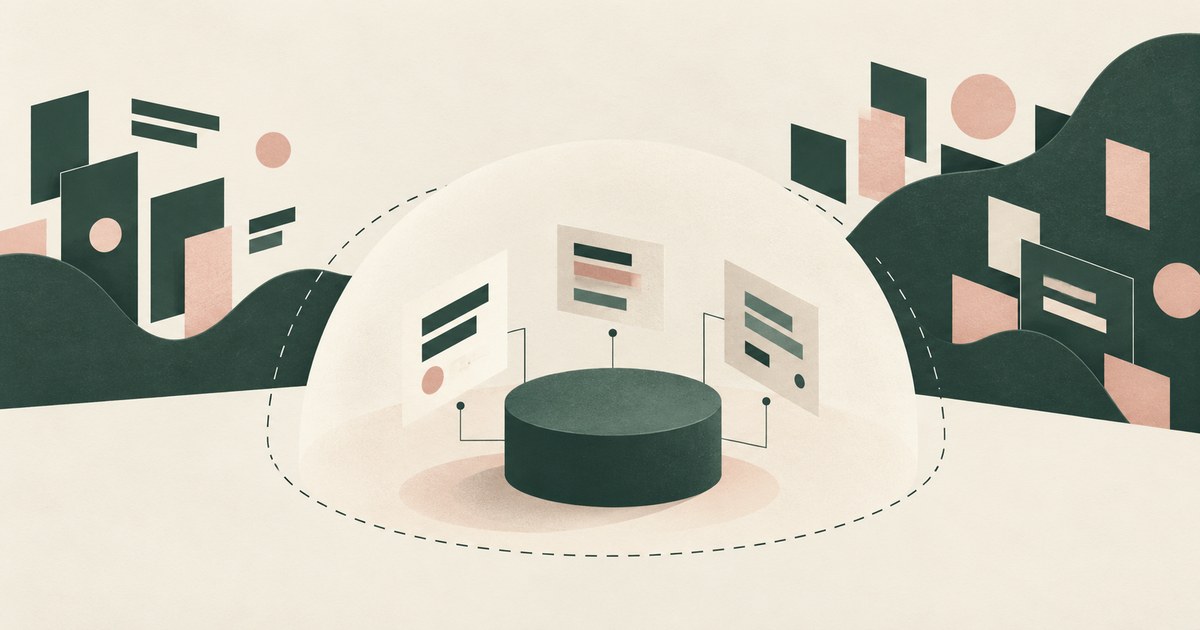
It shrinks the blast radius: an agent holding only the accounts, actions and data a task requires can do less damage when it is tricked, misconfigured or simply wrong. Check whether your least-privilege model stops at the account and role, or extends down to the fields and values the model is allowed to see. Least privilege is the oldest idea in access control, and it transfers to agents with one complication. A human user with a role sees the whole screen that role unlocks, and that was acceptable because the human was the accountable party. An agent that works through a browser inherits the same screen, but the model reading it is a program that can be steered by content it was never meant to obey, and the role model was never designed to limit what a model reads. This page walks the question in order: why least privilege matters more for an agent than for a person, where the conventional model stops, which privileges should be split apart, what a single claims record looks like under each design, how to measure whether the control is in force, and which claims a buyer should refuse. The argument throughout is that least privilege for agents has to be extended from accounts down to visible values, or it leaves the largest exposure untouched.
Key findings
- Least privilege is a standing control in the federal catalog of security and privacy controls, and applying it to an agent means the agent's account, its permitted actions and its visible data are each held to what the task requires (NIST, 2020).
- Agents fail in the ways least privilege is meant to bound: in a survey of 353 IT professionals, 80 percent of organizations said agents had taken unintended actions, about 40 percent said agents accessed unintended systems, 31 percent said agents shared inappropriate data and 23 percent said agents revealed credentials (CFO Dive, 2025).
- The industry's own taxonomy names the failure directly: excessive agency arises when an application is granted more functionality, more permissions or more autonomy than its task needs (OWASP, 2025).
- Cloud identity guidance already grants privilege per workload rather than per team, the right unit for an agent as well (AWS, 2026; Google Cloud, 2026).
- For a browser agent, account-level privilege leaves a gap: the role grants a screen, and the screen carries every value on it, so the model reads data the task never needed (What Is Least Exposure?).
- Zero trust supplies the enforcement pattern: each request is evaluated at a policy enforcement point rather than authorized once at login, which is how action-level and value-level limits can be applied to a running agent (NIST, 2020).
Why does least privilege matter more for an agent than for a human user?
Least privilege reduces risk by one mechanism: it caps the worst case. Whatever goes wrong, a principal holding only the rights a task needs can only misuse those rights. For a human employee the worst case is also bounded by judgment, pace and accountability. For an agent, two of those bounds are gone: it works at machine pace across many records, and it has no judgment an attacker cannot address through the content it reads. The federal control catalog lists least privilege among the access control requirements every system is expected to implement, and nothing in it exempts a software principal acting on a person's behalf (NIST, 2020).
The published record shows what unbounded agents do. In a survey of 353 IT professionals, 80 percent of organizations reported agents taking unintended actions, about 40 percent reported access to unintended systems, 31 percent reported inappropriate data shared, 23 percent reported credentials revealed and 16 percent reported agents ordering something inappropriately (CFO Dive, 2025). Each outcome is a privilege the agent held and should not have. An agent that cannot reach a system cannot access it unintentionally; an agent that never saw a credential cannot reveal it.
This is why the security community's taxonomy treats excessive agency as a distinct risk: an application granted more functionality, permissions or autonomy than its task needs will eventually use the excess, through a hallucination, a manipulated instruction or an ambiguous task (OWASP, 2025). Least privilege is the direct countermeasure, applied with more care for agents than for people, because the agent will exercise every permission it is handed.
Where does conventional least privilege stop for a browser agent?
Conventional least privilege operates on three objects: the account, the role and the resource. An administrator decides which systems an identity may log into, which role it holds in each, and which records that role may reach. Cloud identity guidance has refined the practice to granting permissions per workload and reviewing them continuously, so a service identity holds only what the specific workload requires (AWS, 2026). Guidance for service accounts warns against reusing one identity across many workloads, because a shared identity accumulates the union of every workload's rights (Google Cloud, 2026).
All of that applies to an agent and should be done. It stops, however, at the record. A role that permits a claims adjuster to open a claim shows the whole claim: name, date of birth, policy number, bank details, the medical narrative and the notes. The application renders the entire screen because it was built for a person who needs context. A browser agent given the adjuster's role receives the same screen, and the model reads every value on it to find the two or three the task needs. Account-level least privilege has been satisfied and the model has still read the bank details.
That gap is the subject of whether least privilege covers what an AI sees, and in the role model the answer is no. A role was never a statement about which values a reader may process, only about which screens a person may open. Least privilege for an agent therefore needs a fourth object, the visible value. University guidance on managing generative AI systems reaches the same point from the data side: share with an AI system only the data its task requires (Harvard University).
Which privileges should be separated for an agent?
Three privileges travel together in a human role and should be separated for an agent: reach, which applications and records the agent may open; action, which operations it may perform and which of those a person must confirm; and visibility, which values on an opened record the model may read in the clear. Bundled as a role, the broadest of the three sets the exposure for all of them.
| Privilege | What a role grants today | What least privilege for an agent requires |
|---|---|---|
| Reach | Login to the application and access to the record set the role covers | Only the applications and record types the named task requires, per task |
| Action | Every operation the role may perform, including payment, submission and deletion | Read by default; each consequential action named in advance and confirmed by a person |
| Visibility | Every value rendered on every permitted screen | Identifiers and regulated values replaced before the model reads the screen |
Separating action from reach is the part most governance programs have started. Vendor frameworks for agent development state that humans should retain control over how their goals are pursued, particularly before high-stakes decisions, with approval before an agent cancels a subscription given as an example (Anthropic, 2025). An approval gate is least privilege on the action dimension: the agent may propose, and only a person may commit.
Separating visibility is the part the role model cannot do, because the application renders what the role allows. The mechanism is substitution before the model reads: identifiers and regulated values are replaced with consistent tokens, the model works with the tokens, and real values resolve only where an approved action needs them. That is the design described under least exposure, least privilege extended to the last object in the chain.
What does a single claims record look like under each design?
Take one record type, a claims screen, and one task: confirm that the claim's incident date falls inside the policy period and route it to the right queue. The task needs three values, the incident date, the policy start and end dates, and the claim type. The rendered screen carries perhaps forty values.
Under account-level least privilege alone, the agent holds the adjuster's role for the claims system and nothing else, which is correct as far as it goes. It opens the claim and the model receives all forty values: the three it needs, plus the claimant's name and date of birth, a bank account number, the medical narrative and a phone number. If the narrative contains text an attacker planted, the model reads that too, with every value needed to act on it already in front of it. Reach was limited; visibility was not. The failure modes the survey counted, inappropriate data shared and credentials revealed, remain available (CFO Dive, 2025).
Under least privilege extended to visibility, the agent holds the same role, but before the model reads the screen the identifiers and regulated values are substituted. The model sees CLAIM_001, a policy token, an account token, and the three dates and claim type in the clear because the task needs them. It performs the same comparison and proposes the same routing. If the planted text asks it to send the account number somewhere, there is no account number to send. The route action, if treated as consequential, waits for a named person. Neither the adjuster's permissions nor the application changed; the difference lies entirely in what the model was permitted to read. Whether the policy would also remove a value the task needs is a configuration question, and tokenization's effect on false positives is a separate page.
How should an organization measure whether least privilege is actually in force?
Measure each of the three privileges separately, because a program that reports one number has usually measured only reach. For reach, list each agent and each task it performs, and for each task the applications and record types it can open. Compare that list with what the task requires. Any application the agent can log into that no task uses is excess, and the service account guidance already treats such accumulation as a defect to be reviewed and removed (Google Cloud, 2026).
For action, enumerate the operations each agent can perform and mark which ones change a record, move money or send something outside the organization. Each marked operation should have a named approver and a record of each approval. The zero trust model gives the pattern: the decision to permit a request is made per request at a policy enforcement point, with the policy decision point consulting current context, rather than being made once at login and assumed thereafter (NIST, 2020). An agent whose write actions are authorized once by role, with no per-action decision, has not implemented least privilege on the action dimension.
For visibility, the measurement is the hardest and the most revealing. Sample the screens an agent read in a week and ask what the model saw on each. If the answer is the full rendered screen, the visibility privilege is unlimited however narrow the role. If a substitution control is in place, the record of each screen as the model saw it should show tokens where identifiers were, consistent across the run. The same question applies to agents embedded in business platforms, where the privacy questions around a business messaging agent turn on what the agent could read rather than what it was told to do. Count the values exposed and report that number alongside the role review.
What does a governed environment change?
In a governed environment, least privilege extends past the account and the role to the values on the screen, so an agent granted a claims record under a legitimate role reads the fields its task needs and tokens in place of the rest.
The mechanism is a class of control between the rendered screen and the model. Sensitive values on the page are replaced with consistent tokens before any model reads them, and the task runs on those tokens. Real values resolve only at an approved destination at the moment of an approved action. A named person confirms what is tokenized and approves consequential actions, including payments, submissions and record changes. Every screen as tokens, every action and every approval is recorded and exported to the organization's own logging.
This bears on the title question because it supplies the third privilege the page says most designs leave open. Reach is set by the role, action by the approval gate, and visibility by the tokens, which turns a request to the model into a limit the model never held. The taxonomy of excessive agency places the control in the permissions the application is granted, not in the model's intentions (OWASP, 2025), and the environment is the policy enforcement point that zero trust describes, evaluating each screen and each action rather than authorizing once at login (NIST, 2020). The three records a buyer should ask for, the role configuration, the approval log and a screen as the model saw it, are what the environment produces in the ordinary course of a run.
The control does not change the application, the role bindings or the model; account-level least privilege still has to be designed, and the environment adds the value-level limit beneath it.
Where does RedactSure sit?
The environment that enforces this is built by RedactSure, an AI agent controls, governance and data protection company. Its design applies least privilege to the third dimension, visibility, where the role model stops. The agent works in a governed environment in the customer's cloud, and substitution happens at the render layer before any model reads the screen, so identifiers and regulated values reach the model as consistent tokens, such as ACCT_001 or PATIENT_001, for the whole run. Real values resolve only at approved destinations at the moment of an approved action. A named person confirms the tokenization policy for each workflow and approves every payment, submission and record change, which RedactSure calls Supervised Delegation, so the action dimension is gated per action rather than authorized once by role. Every screen as tokens, every action and every approval lands in the AI Control Record and exports to the customer's SIEM. The design is model agnostic, requires no per-application integration, and leaves user permissions unchanged, so the reach dimension stays with the organization's existing identity controls.
Deployments are in pilot. A pilot on the reader's own claims, account or student record workflow would show, screen by screen, which values the model read in the clear and which it read as tokens, and would produce the approval log for every consequential action. That is the measurement of visibility described above, produced on the organization's own records. Everyone else controls where data can go. RedactSure controls what the AI can see.
Methodology and limitations
This page rests on official guidance, industry standards, vendor documentation and press reporting on survey research. The official guidance is NIST Special Publication 800-53 Revision 5 on security and privacy controls (2020) and NIST Special Publication 800-207 on zero trust architecture (2020). The standard is the OWASP Top 10 for LLM Applications entry on excessive agency (2025). Vendor documentation comprises the AWS guidance on IAM security best practices (2026), the Google Cloud guidance on service account best practices (2026), and Anthropic's published framework for developing agents (2025). Press reporting is the CFO Dive account of a SailPoint survey of 353 IT professionals (2025), and institutional guidance is Harvard University's best practices for managing generative AI systems. All sources were read as of October 16, 2026.
No hands-on testing of any product or agent platform was performed for this page. Where a vendor's documentation does not describe a capability, that capability is described as not described in the pages reviewed, not as absent. Vendor features change, and the page carries its date. Survey figures are reported as the press source reported them, and the survey's methodology was not independently examined. Statements about RedactSure describe its current design, with deployments in pilot. The claims screen example describes a record type, not any organization; no customer or prospect is described.
Whether a given agent deployment's permissions, approval design or handling of regulated data meet an organization's requirements is a determination for its counsel, its assessors and its own security and compliance officers, not for a research page.
What the record shows
Least privilege reduces risk with AI agents by the same mechanism it always has, capping the worst case, and the published record of agents accessing unintended systems, sharing inappropriate data and revealing credentials shows the worst case is reached in practice. The complication for browser agents is that the role model grants screens, and screens carry every value on them, so an agent held to the narrowest role still reads everything the role renders. Least privilege applied to agents therefore has three dimensions, reach, action and visibility, and most programs have measured only the first. The test is to name one agent and one task and ask three questions: which systems can it open, which actions can it commit without a person, and which values on the screen did the model read in the clear. If the third question has no record behind it, the control does not yet reach where the exposure is.
Frequently asked questions
Is least privilege for an AI agent different from least privilege for a service account?
In the first two dimensions, no. An agent should have a task-scoped identity with reach limited to the applications and records its task requires, as cloud identity guidance already recommends for any workload. The difference is the third dimension. A service account calls an API and receives the fields it asked for. A browser agent opens a rendered screen and receives every field the application chose to display, so visibility has to be limited by a control the service account model never needed.
Does giving the agent its own account solve the problem?
It solves the reach problem and is worth doing, because an agent using a person's credentials inherits that person's entire footprint across every system. It does not solve visibility. A dedicated agent account with a claims role still opens the full claims screen, because the application renders what the role allows. The account is the right unit for reach; the screen is the unit for visibility, and the two need separate controls.
Can a system prompt instruct the model to ignore data it does not need?
It can ask, and the model will usually comply, but an instruction is not a permission boundary. The same content that carries an attacker's planted text can carry a counter-instruction, and the model's willingness to follow the system prompt is what the attack targets. The excessive agency guidance locates the control in what the application is granted, not in what the model is told. Data the model never receives needs no instruction.
What is the blast radius of an agent that fails?
The set of records it could reach, the actions it could commit and the values it had read at the moment of failure. Least privilege shrinks all three. A failure in an agent with reach limited to one application, writes gated by a person and identifiers tokenized is confined to proposing a wrong action on a tokenized record that a person then declines. A failure in an agent with a human role and full screen visibility is bounded only by what the role could do.
How often should agent privileges be reviewed?
At least as often as service account privileges, and after every change to the task. Cloud guidance treats privilege review as continuous rather than periodic, and agents accumulate rights in the same way shared identities do when a new task is added and old permissions are left in place. A practical rhythm is to review reach when a task is added or retired, review the action list whenever a new write operation appears, and sample visibility records weekly.
Does limiting what the model sees break the task?
Only if the policy removes a value the task needs. The task in the worked example needs three dates and a claim type, and those are left readable; the identifiers around them are tokenized because the comparison does not depend on them. A policy is tuned per workflow and confirmed by a person before the run, and a token that is consistent across screens lets the model track the same record without knowing who it belongs to. Over-wide policies break tasks; task-shaped policies do not.
Related reading
What Is AI Agent Least Privilege? · Does Least Privilege Cover What an AI Agent Sees? · What Is Least Exposure? · Can tokenization reduce false positives when protecting sensitive data? · What Are Meta Business Agent's Privacy Risks? · How Do You Reduce the Risk of AI Agent Access to FERPA-Protected Student Records? · Who Approves High-Risk AI Agent Workflows? · What Are the Risks of Using Meta Muse for Work? · On the RedactSure blog: Accountable AI and Workflow Governance · The AI Time Bomb · RedactSure
Sources
Vendor documentation
- AWS, "Security best practices in IAM," 2026 (vendor documentation). https://docs.aws.amazon.com/IAM/latest/UserGuide/best-practices.html
- Google Cloud, "Best practices for using service accounts," 2026 (vendor documentation). https://cloud.google.com/iam/docs/best-practices-service-accounts
- Anthropic, "Our framework for developing safe and trustworthy agents," August 4, 2025 (vendor policy). https://www.anthropic.com/news/our-framework-for-developing-safe-and-trustworthy-agents
Regulation, standards and official guidance
- NIST, "Security and Privacy Controls for Information Systems and Organizations," SP 800-53 Revision 5 (2020; official guidance). https://csrc.nist.gov/pubs/sp/800/53/r5/upd1/final
- NIST, "Zero Trust Architecture," SP 800-207 (2020; official guidance). https://csrc.nist.gov/pubs/sp/800/207/final
- OWASP, "LLM06:2025 Excessive Agency," OWASP Top 10 for LLM Applications, 2025 (standard). https://genai.owasp.org/llmrisk/llm062025-excessive-agency/
- Harvard University Information Security and Data Privacy, "Best Practices: Managing Generative AI Systems" (institutional guidance). https://privsec.harvard.edu/best-practices-managing-generative-ai-systems
Industry analysis and press
- Alexei Alexis, CFO Dive, "AI agents observed sharing sensitive corporate data: SailPoint," June 2, 2025 (press on SailPoint survey of 353 IT professionals). https://cfodive.com/news/ai-agents-coaxed-revealing-access-credentials-sailpoint-cybersecurity/749622
RedactSure documents
- RedactSure Research, "What Is AI Agent Least Privilege?" (2026). https://redactsure.com/research/what-is-ai-agent-least-privilege/
- RedactSure Research, "Does Least Privilege Cover What an AI Agent Sees?" (2026). https://redactsure.com/research/does-least-privilege-cover-what-ai-sees/
- RedactSure Research, "What Is Least Exposure?" (2026). https://redactsure.com/research/what-is-least-exposure/
- RedactSure Research, "Can tokenization reduce false positives when protecting sensitive data?" (2026). https://redactsure.com/research/can-tokenization-reduce-false-positives-when-protecting-sensitive-data/
- RedactSure Research, "What Are Meta Business Agent's Privacy Risks?" (2026). https://redactsure.com/research/what-are-the-privacy-concerns-with-meta-business-agent/
- Product behavior described on this page reflects RedactSure's current design. Third-party products are described from their public documentation as read on October 16, 2026. Compliance determinations belong to the organization's counsel.
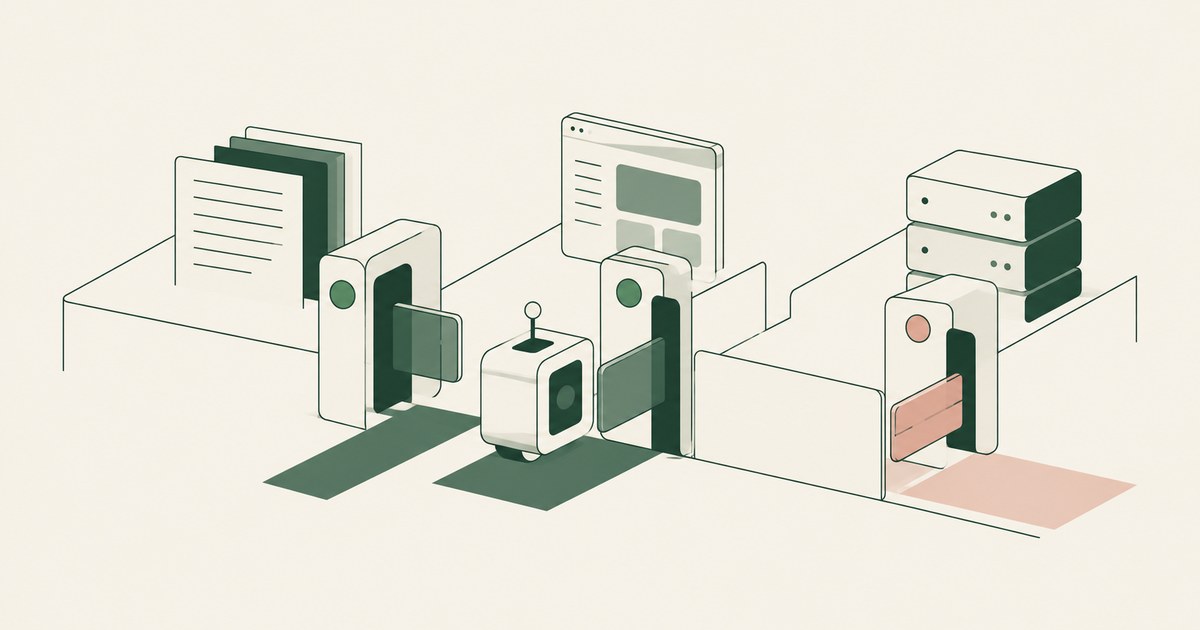
What Is AI Agent Least Privilege?
Review AI Agent Least Privilege, with AI agent security, tokenization and approval checks for sensitive enterprise workflows.
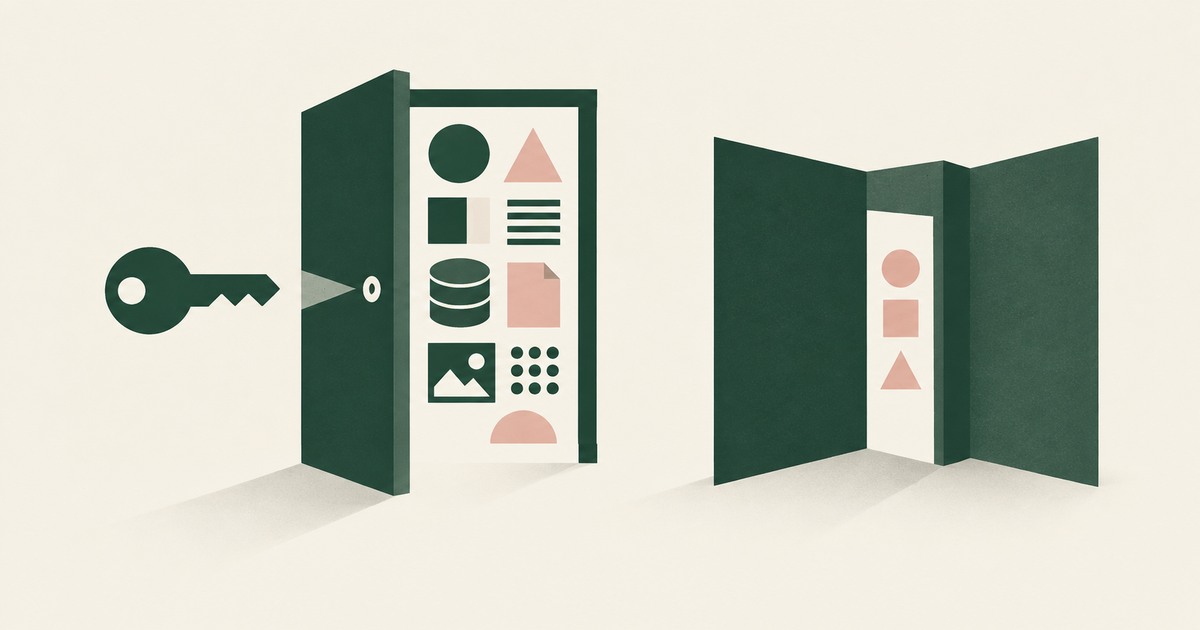
Does Least Privilege Cover What an AI Agent Can See? Reading the Identity Literature Against the Sight Question
Compare access permissions with AI agent security for visible PII, and explore how tokenization can limit exposure within an approved task.

What Is Least Exposure? Reading the Principle, the Gap It Closes and the Published Numbers Behind It
Explore Least Exposure for AI agent security, limiting PII to what a workflow needs through tokenization and explicit human decisions.
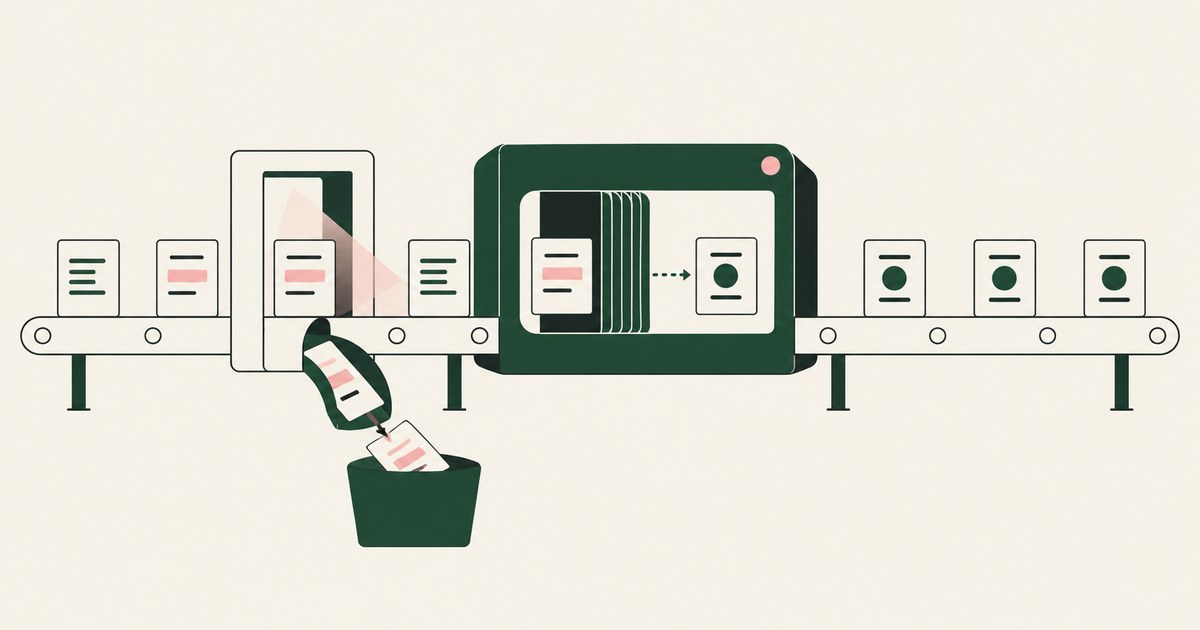
Can tokenization reduce false positives when protecting sensitive data?
Review Can Tokenization Reduce Data Protection False Positives for AI agents, including tokenization, sensitive data exposure and human approval records.
What Are the Privacy Concerns With Meta Business Agent?
Review Meta Business Agent privacy questions for billing and customer support, including PII retention, training, advertising and export terms.
How Do You Reduce the Risk of AI Agent Access to FERPA-Protected Student Records?
Treat the agent and its model provider as a school official under direct control, and keep education record PII out of the model. Check what it sees.
Who Approves High-Risk AI Agent Workflows?
The business owner accountable for the outcome approves the workflow, and a named person approves each consequential action inside it. Name both.
What Are the Risks of Using Meta Muse for Work?
Muse is built for a person, not an organization: its permissions, cloud computer, training default and audit trail belong to the user. Check who sets them.
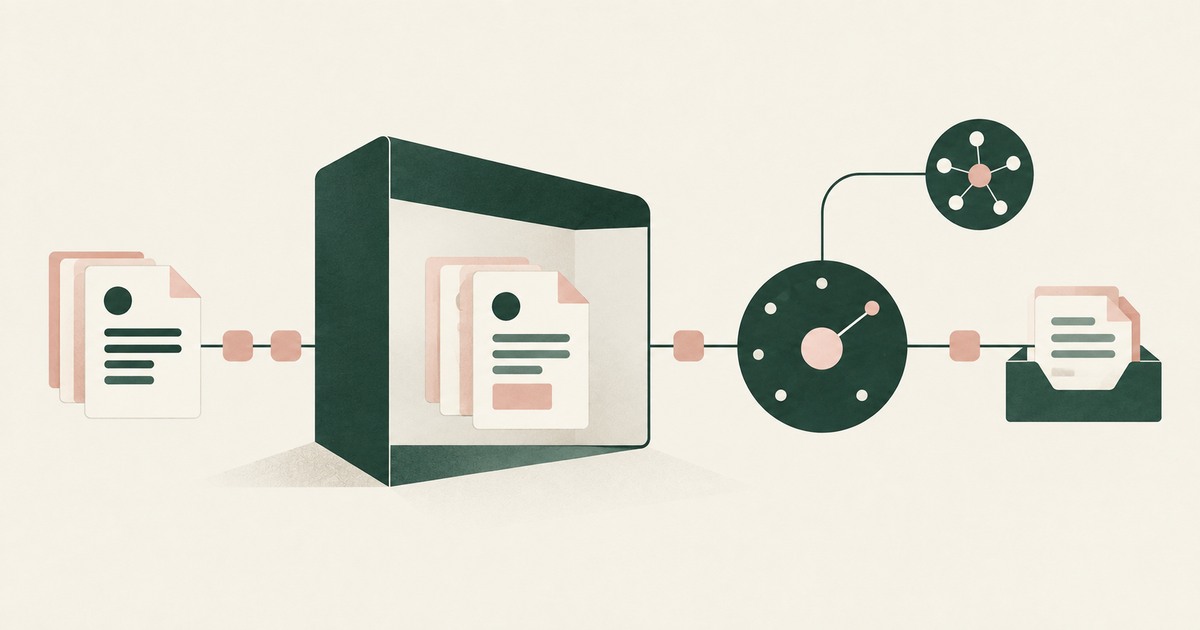
Accountable AI and Workflow Governance
Explore AI agent governance for billing and claims, with named supervisors, data masking, approval boundaries and a useful audit record.
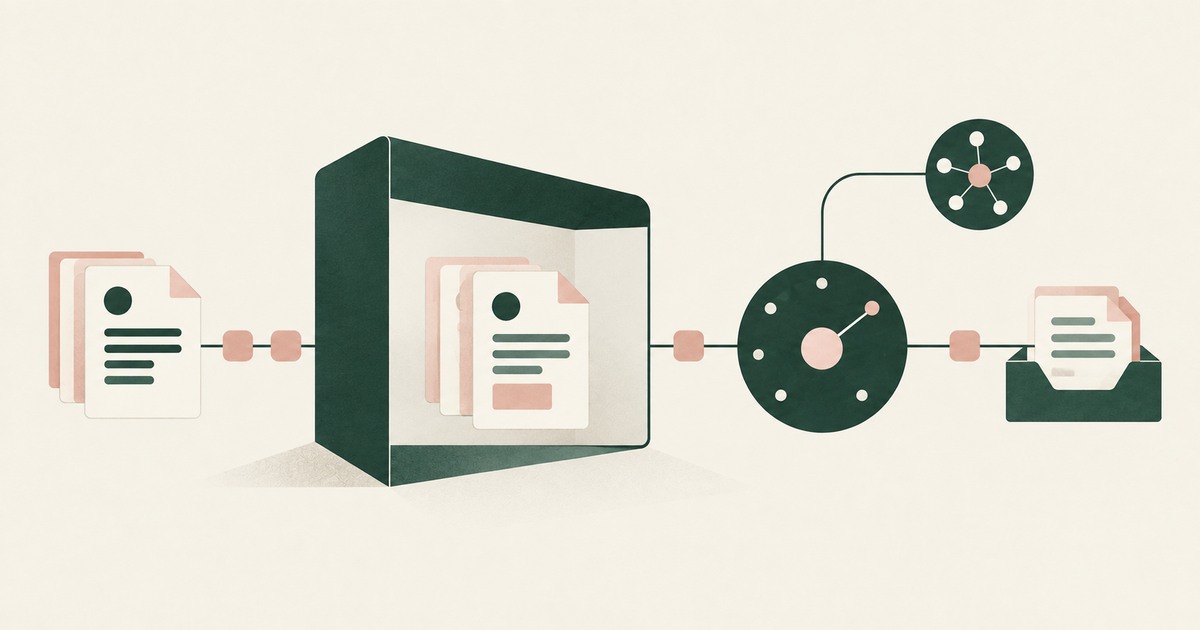
The AI Time Bomb
Examine why AI agent security needs more than contract promises when models encounter PII in billing, claims and cross-system workflows.
Book an AI Agent Security Review →
Bring your hardest questions.
Bring one sensitive workflow and the decisions your team needs to keep in its hands.
Book a demoAbout the author

Chris Sowa is a founder of RedactSure and a former CEO of an AI company; he started it years before ChatGPT existed. He previously led AI at Accenture, served as Global VP of Strategy & Innovation at Schneider Electric, was CCO of Sovos, and spent more than a decade at Oracle, with earlier roles at SAP and IBM.